









Introduction
Glamping Statistics: Glamping, a blend of the terms “Glamorous” and “Camping,” signifies a luxurious style of camping that merges the experience of being surrounded by nature with the conveniences and comforts usually associated with high-star hotels.
In contrast to traditional camping, where individuals often endure the elements in tents or campers, glamping provides upscale accommodations such as yurts, treehouses, safari tents, and even boutique hotels, frequently equipped with plush bedding, air conditioning, private bathrooms, and gourmet dining options.
This transformation of the camping experience attracts a diverse audience, particularly those desiring an outdoor getaway without compromising on comfort. Comes to target audiences, it includes Millennials, families, and environmentally aware consumers.
Although the sector encounters challenges, including regulatory matters, seasonality, and sustainability issues, it is anticipated to maintain its upward trend. Advancements in accommodation design and an emphasis on distinctive experiences will further propel growth within this segment of the travel industry.
Editor’s Choice
- 60% of leisure travelers in North America who have engaged in glamping over the last two years belong to the Millennial or Gen Z demographic.
- 90% of teenage campers intend to continue camping as they transition into adulthood.
- In 2022, the Glamping market was assessed at USD 2.7 billion.
- Beginning with a revenue of USD 36.25 billion in 2017, the market underwent gradual growth, achieving USD 37.36 billion in 2018 and USD 38.80 billion in 2019.
- The United States holds a significant lead, generating USD 25,810 million.
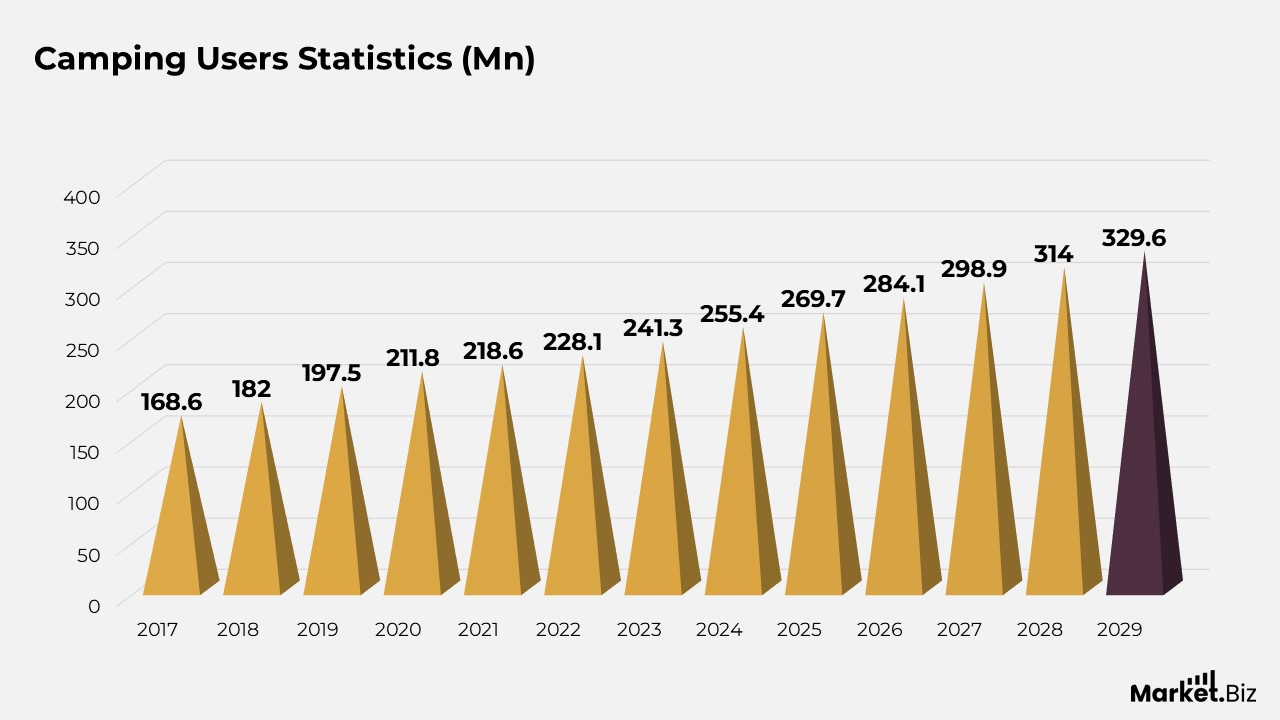
- In 2017, the total number of camping users was recorded at 168.6 million, reflecting a penetration rate of 2.3%.
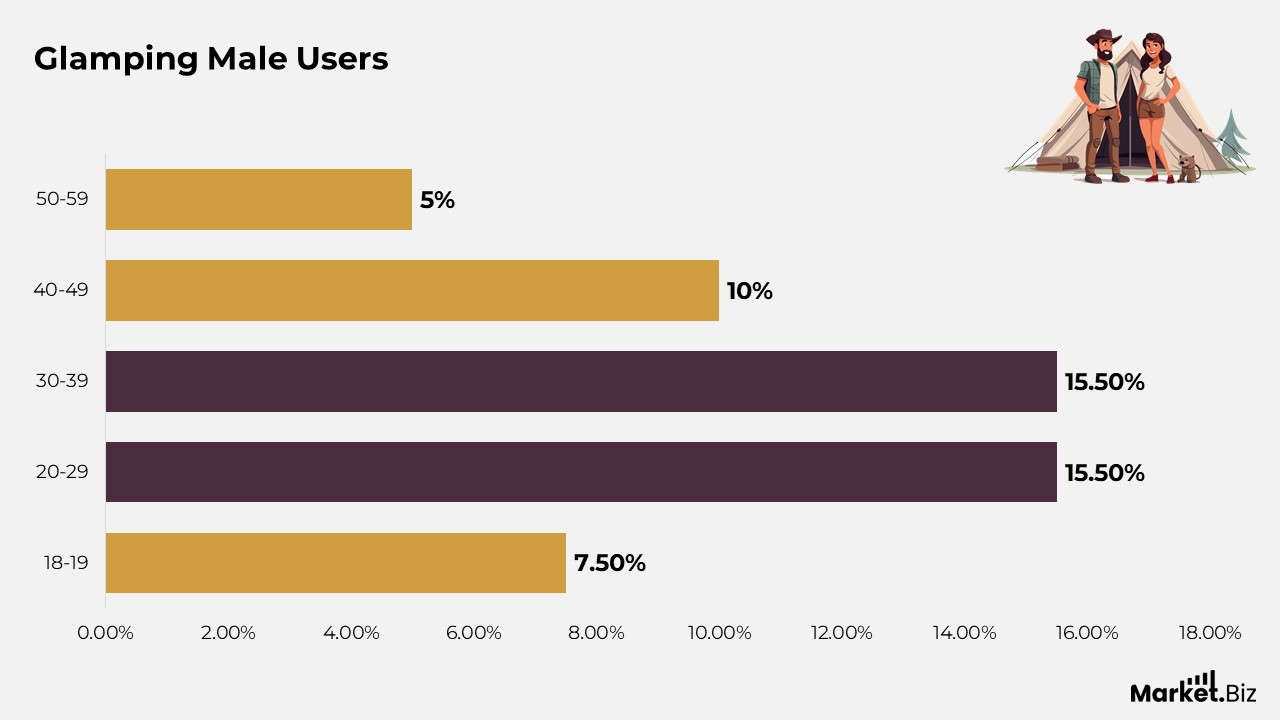
- The demographic of individuals aged 18 to 19 comprises 7.50% of males who have engaged in glamping.
What is Glamping?
Glamping represents a distinctive and creative approach to travel that transforms the conventional camping experience. It merges the splendor of the outdoors with the conveniences of contemporary living, resulting in a memorable adventure. The types of glamping accommodations are diverse, ranging from inviting yurts and safari tents to treetop lodges and opulent eco-friendly lodges.
In contrast to traditional camping, glamping enables travellers to appreciate picturesque views and inhale fresh air while enjoying the comforts of luxurious beds, exquisite dining, and private restrooms. It deviates significantly from the typical resort experience and can turn your journey into a genuine adventure.
General Glamping Statistics
- 60% of leisure travelers in North America who have engaged in glamping over the last two years belong to the Millennial or Gen Z demographic.
- Half of those who partake in glamping emphasize the importance of a reliable Wi-Fi connection during their stay.
- There has been a remarkable increase of over 400% in Google searches for “glamping holidays UK” and “UK staycation,” while online inquiries regarding glamping have risen by 143% in the past three years.
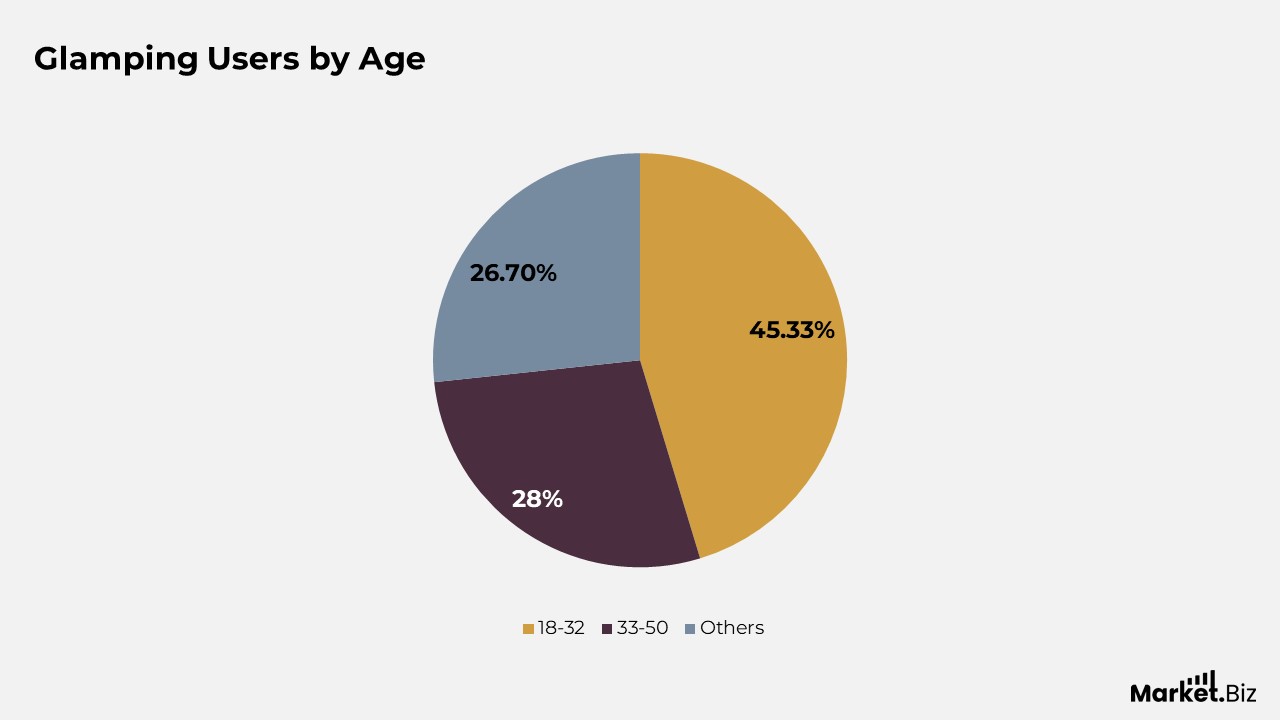
- In 2023, individuals aged 18-32 represented 45.33% of the global revenue generated from glamping.
- The demographic of individuals aged 33-50 constituted 28% of the global glamping market in 2023, with families and older adults making up the remaining 26.7% of glamping patrons.
- A significant 79% of glampers believe that glamping is well-suited for multi-generational travel, and more than half of glamping sites promote communal areas for guests.
- While 71% of glampers do not require constant connectivity, they prefer to have access to technology when needed.
Moreover
- The 18-32 age group stands out as the largest demographic within the global glamping market, accounting for 44.5%.
- Among Baby Boomers, 72% favor camping as a means of social distancing compared to other travel options.
- 41% of campers perceive camping as an economical travel choice, and in 2023, 40% of campers organized their trips around natural events, while 36% sought experiences related to food and culinary tourism.
- Family camping with children has seen a 17% increase over the past five years, with 66% of teenagers and 51% of children expressing enthusiasm for camping.
- The average age for a child’s first camping trip is 10, with approximately 48% of campers being introduced to camping by family members or others.
- Europe represents 40% of the global adventure tourism market.
- Half of Millennials indicated that life changes, such as increased income or parenthood, have made camping more accessible.
- 90% of teenage campers intend to continue camping as they transition into adulthood.
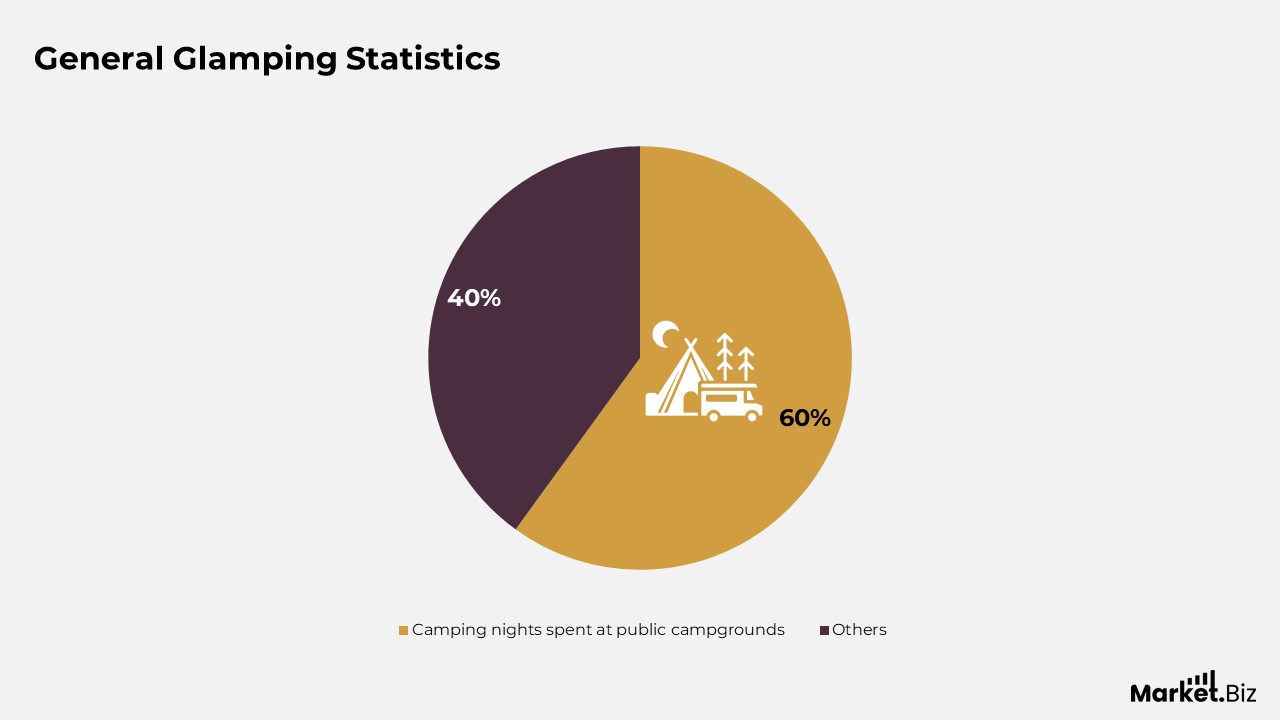
- 54% of campers travel within a 100-mile radius of their homes for camping excursions, and 60% of camping nights are spent at public campgrounds or on public land.
- 90% of campers participate in activities such as sightseeing, dining, or other forms of outdoor recreation during their trips.
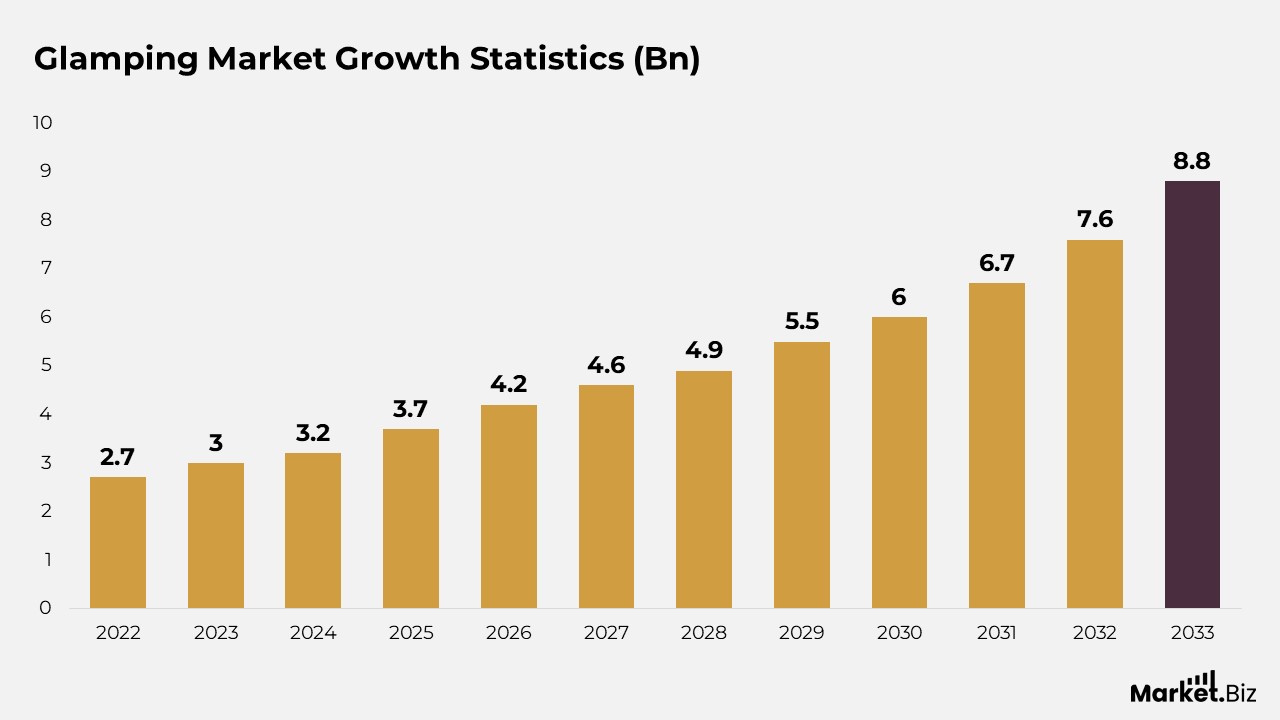
Glamping Market Growth Statistics
- In 2022, the market was assessed at USD 2.7 billion.
- It experienced an increase to USD 3 billion in 2023 and further escalated to USD 3.2 billion in 2024.
- The growth trajectory persisted, with the market size advancing to USD 3.7 billion in 2025 and USD 4.2 billion in 2026.
- By 2027, the market size attained USD 4.6 billion, and it further increased to USD 4.9 billion in 2028.
- The upward trend continued, with notable growth observed as the market size rose to USD 5.5 billion in 2029, USD 6 billion in 2030, and USD 6.7 billion in 2031.
- The projections concluded with a market size of USD 7.6 billion by 2032.
- In 2023, Cabins & Pods represent the leading segment type, comprising 43.9% of the market, propelled by their blend of comfort and distinctive experience.
- In 2023, the 4-person capacity emerges as the most favored size, catering to the preferences of group travelers.
- The age group of 18-32 years dominates with a 40% market share in 2023, signifying a strong interest in glamping experiences among millennials.
- In 2023, North America commands the largest market share at 40%, reflecting the increasing demand for alternative travel options in the region.
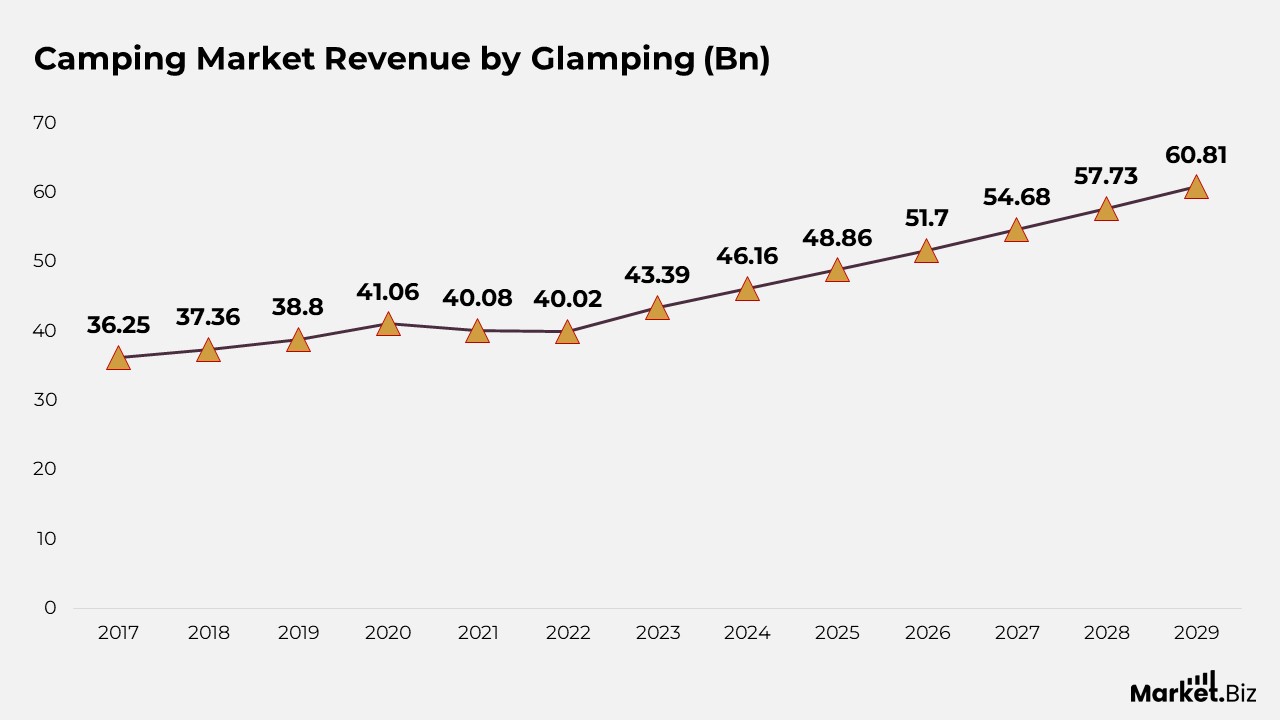
Camping Market Revenue by Glamping Statistics
- Beginning with a revenue of USD 36.25 billion in 2017, the market underwent gradual growth, achieving USD 37.36 billion in 2018 and USD 38.80 billion in 2019.
- Despite a minor increase to USD 41.06 billion in 2020, the market experienced a slight decline to USD 40.08 billion in 2021, maintaining a nearly stable level at USD 40.02 billion in 2022.
- The recovery began in 2023, with revenue rising to USD 43.39 billion, followed by a steady increase to USD 46.16 billion in 2024.
- Moreover, the upward trajectory persisted, with the market anticipated to grow to USD 48.86 billion in 2025, USD 51.70 billion in 2026, USD 54.68 billion in 2027, USD 57.73 billion in 2028, and projected to attain USD 60.81 billion by 2029.
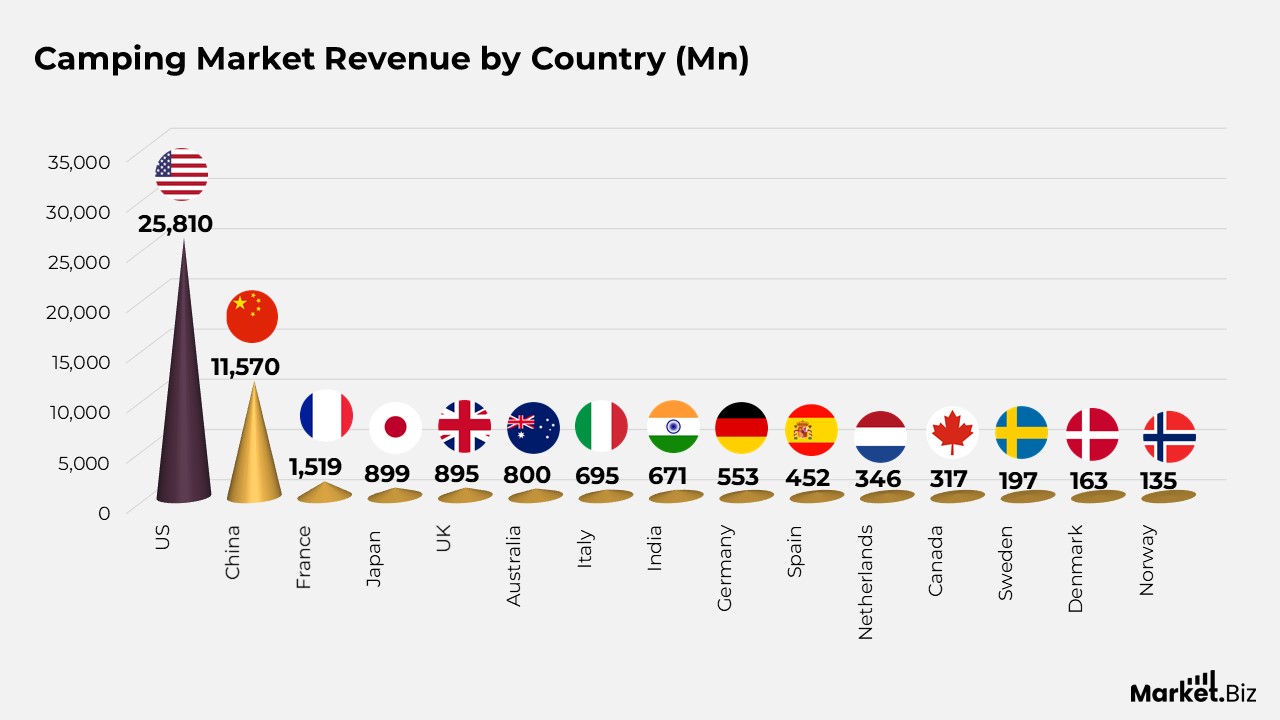
Revenue by Country in Camping Market
- The United States holds a significant lead, generating USD 25,810 million.
- China ranks as the second largest market with USD 11,570 million.
- European nations also make considerable contributions, with France generating USD 1,519 million, securing the third position.
- Japan and the United Kingdom are nearly equal, with revenues of USD 899 million and USD 895 million, respectively.
- Australia contributes a total of USD 800 million, whereas Italy reports an amount of USD 695 million, and India closely follows with USD 671 million.
- Germany’s market revenue is at USD 553 million, followed by Spain with USD 452 million.
- The Netherlands and Canada have smaller yet notable market revenues of USD 346 million and USD 317 million, respectively.
- In Sweden, Scandinavia, Denmark, and Norway exhibit smaller market sizes are USD 163 million, USD 197 million, and USD 135 million, respectively.
Camping Users Statistics
- In 2017, the total number of camping users was recorded at 168.6 million, reflecting a penetration rate of 2.3%.
- The user base expanded to 182 million in 2018, accompanied by a modest rise in the penetration rate to 2.5%.
- This positive trend persisted, culminating in 197.5 million users and a penetration rate of 2.7% in 2019.
- The growth trajectory was maintained throughout 2020, with the user count increasing to 211.8 million and the penetration rate slightly rising to 2.8%.
- By 2021, the number of users reached 218.6 million, with a penetration rate of 2.9%.
- The growth rate accelerated in the following years, with the user count climbing to 228.1 million in 2022 and a penetration rate of 3%, followed by an increase to 241.3 million users and a penetration rate of 3.1% in 2023.
- The growth pattern remained strong, with user numbers hitting 255.4 million and a penetration rate of 3.3% by 2024, further increasing to 269.7 million users and a penetration rate of 3.5% in 2025.
- The trend continued, with users rising to 284.1 million in 2026 and the penetration rate advancing to 3.6%.
- By 2027, the user count had reached 298.9 million, with a penetration rate of 3.8%.
- The upward progression persisted, reaching 314 million users by 2028 with a penetration rate of 3.9%, and peaking at 329.6 million users with a penetration rate of 4.1% by 2029.
Glamping Users by Age Statistics
- Individuals between the ages of 18 and 32 dominated the market, generating 45.33% of the total revenue.
- The subsequent notable segment consisted of individuals aged 33 to 50 years, who represented 28% of glamping involvement.
- The remaining portion of the market, which constituted 26.7%, was primarily made up of children engaging in family glamping experiences and older adults.
Male Users Glamping Statistics
- The demographic of individuals aged 18 to 19 comprises 7.50% of males who have engaged in glamping.
- The proportion increases notably within the 20 to 29 and 30 to 39 age brackets, with each group accounting for 15.50% of the overall total.
- Subsequently, this trend declines as age increases; men between the ages of 40 and 49 make up 10% of glamping participants, whereas those aged 50 to 59 represent the lowest percentage at 5%.
Glamping Female Users Statistics
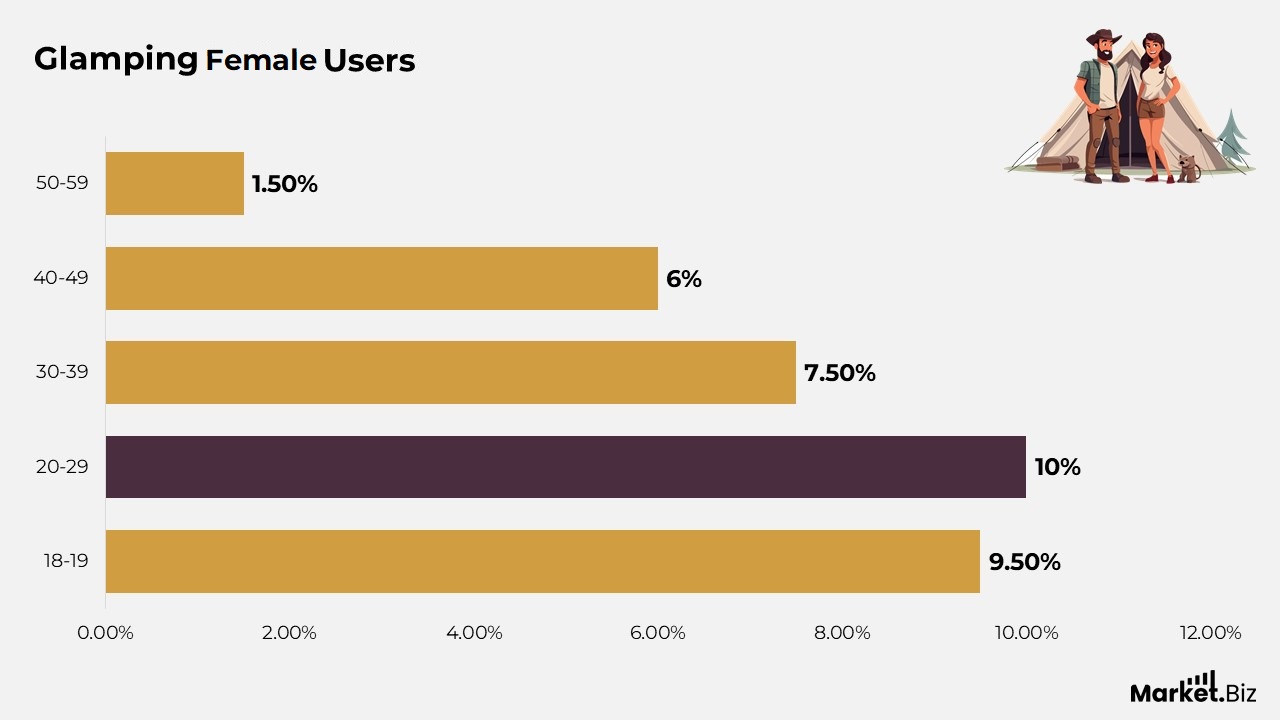
- The youngest group, consisting of individuals aged 18 to 19, exhibits the highest participation rate at 9.50%.
- This is closely trailed by women in the 20 to 29 age bracket, who make up 10% of those who have participated in glamping.
- A significant decrease in participation is observed among the following age categories, with 7.50% of women aged 30 to 39 having engaged in glamping.
- Individuals in the 40 to 49 age range account for 6% of the overall total, while the 50 to 59 age group holds the smallest proportion, at merely 1.50%.
Glamping in Different Countries
US Glamping Statistics
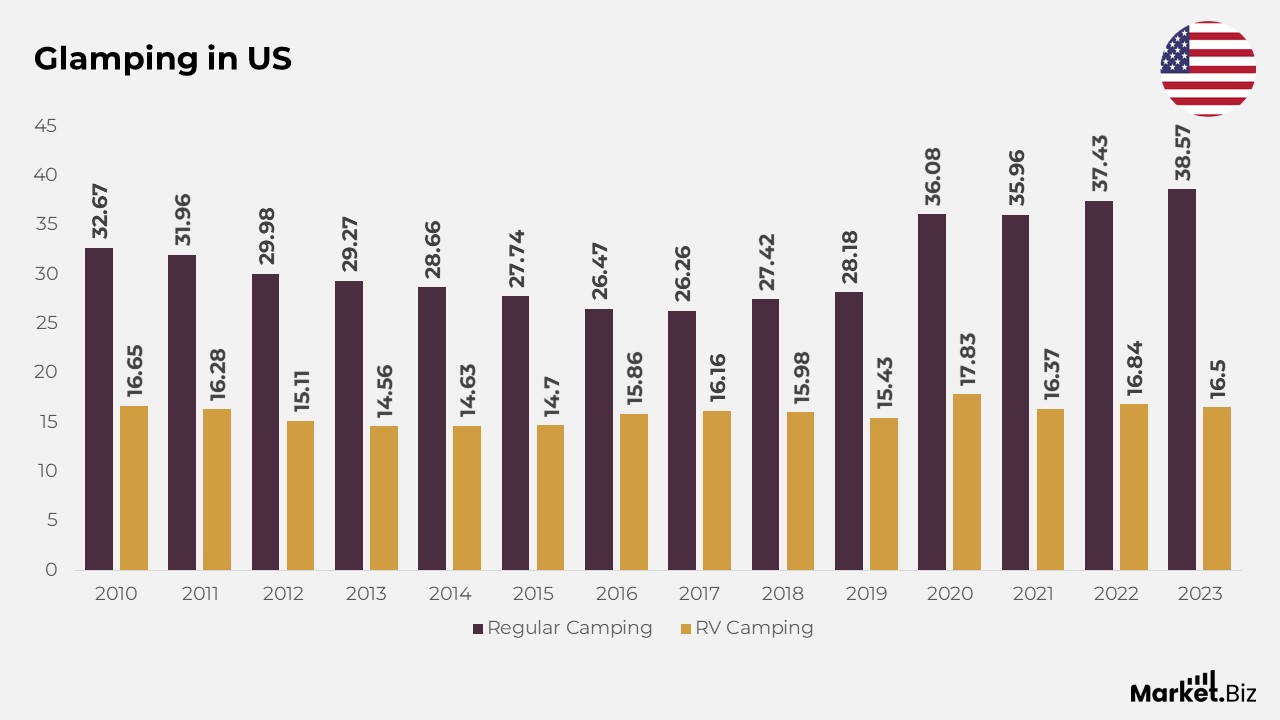
- In 2010, the number of individuals participating in regular camping was 32.67 million, which experienced a consistent decline over the years, reaching a low of 26.26 million in 2017.
- However, participation began to increase once more, achieving 38.57 million by 2023.
- RV camping exhibited a comparable pattern, commencing with 16.65 million participants in 2010, experiencing a slight decrease to 14.56 million by 2013, and subsequently rising gradually, culminating at 17.83 million in 2020 before stabilizing at 16.5 million in 2023.
Germany Glamping Statistics
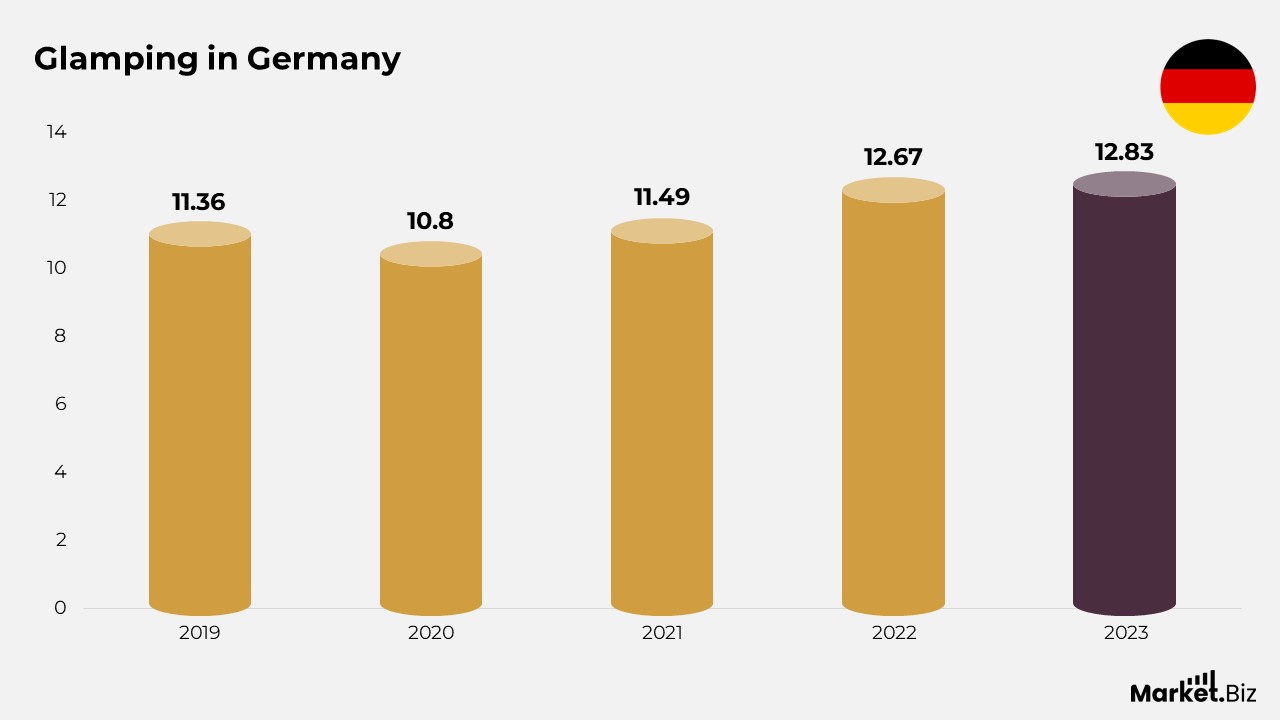
- In 2019, 11.36 million people expressed a preference for camping trips.
- This figure decreased in 2020 to 10.8 million, probably as a result of restrictions caused by global events.
- Nevertheless, the trend changed in 2021, with the number increasing to 11.49 million.
- By 2022, the inclination towards camping vacations continued to rise notably, reaching 12.67 million.
- This positive trend continued into 2023, with the total slightly rising to 12.83 million.
Australia Glamping Statistics
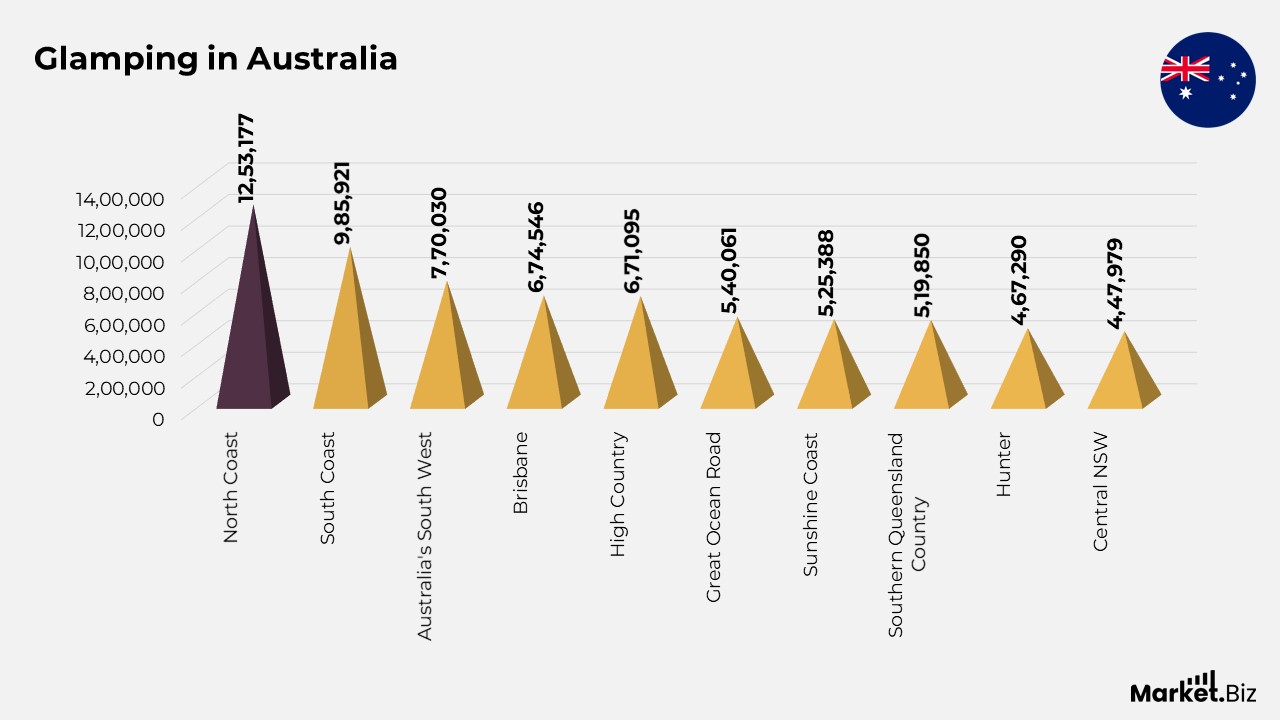
- The North Coast of New South Wales topped the list with a remarkable total of 12,533,177 overnight trips.
- The South Coast of New South Wales also demonstrated considerable camping activity, recording 9,859,921 trips.
- Western Australia’s South West region experienced 770,030 trips, establishing it as another popular destination.
- Brisbane in Queensland reported 674,546 overnight trips, closely trailed by Victoria’s High Country, which had 671,095 trips.
- The Great Ocean Road in Victoria noted 540,061 trips.
- Other significant areas included Southern Queensland Country and Queensland’s Sunshine Coast, with 519,850 and 525,388 trips, respectively.
- New South Wales’s Central and Hunter regions also stood out, with 447,979 and 467,290 trips, respectively.
Japan Glamping Statistics
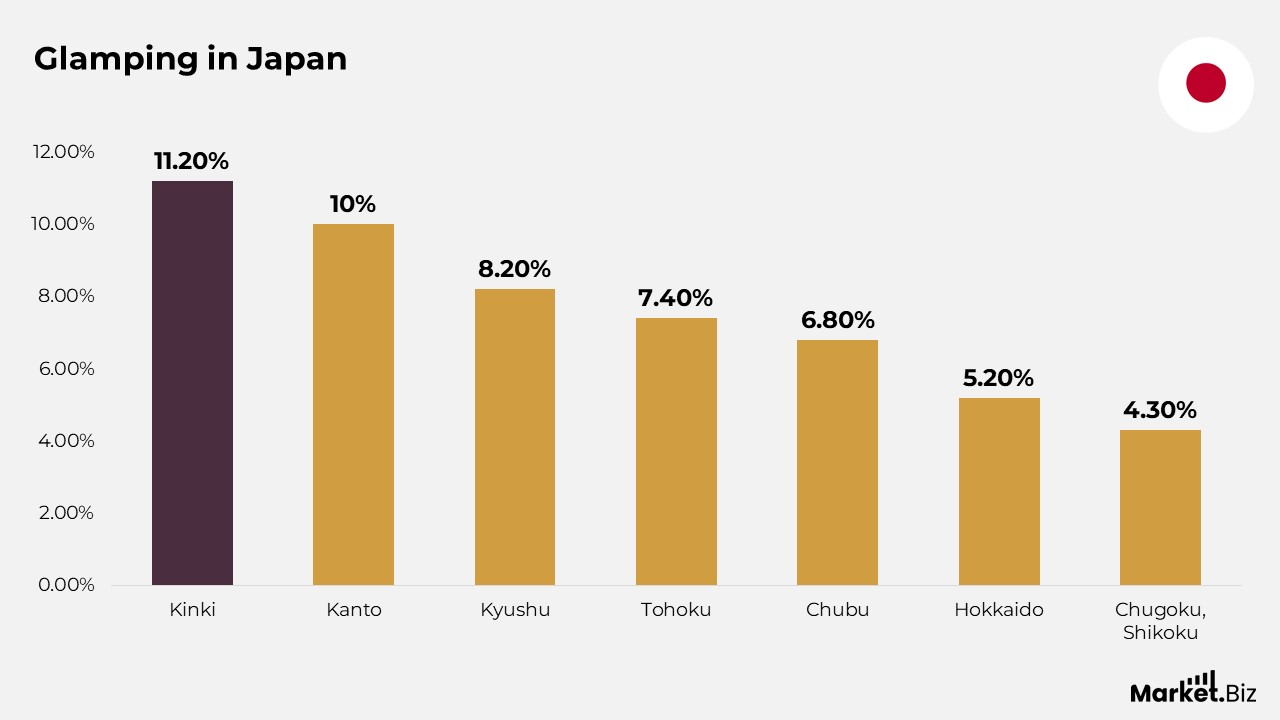
- The Kinki region had the largest proportion of participants, reaching 11.20%.
- This was closely succeeded by the Kanto region, which represented 10% of the glamping participants.
- Kyushu also maintained a notable share at 8.20%, while Tohoku contributed 7.40%.
- The participation from the Chubu region was marginally lower at 6.80%.
- Hokkaido recorded a share of 5.20%, and the combined regions of Chugoku and Shikoku exhibited the lowest participation rate at 4.30%.
Recent Developments
- In January 2025, Pebble, a company based in California, is poised to introduce the Pebble Flow, an electric RV travel trailer aimed at elevating the glamping experience through its environmentally friendly attributes. This trailer is equipped with a 45-kWh lithium-ion battery, allowing it to supply power to amenities for as long as seven days. It features an elegant design and opulent interiors, which comprise a bathroom, kitchen, and convertible dining and sleeping spaces. The functionalities can be controlled via a mobile application, with production and delivery expected in the first half of 2025.
- In September 2024, Quaint Glamping is set to open in Twin Mountain, New Hampshire, providing luxurious outdoor experiences throughout the year. The facility will feature 15 dome-shaped structures, each furnished with contemporary amenities including kitchenettes, complete bathrooms, and spaces for events. This initiative seeks to meet the growing interest in winter glamping.
- In April 2024, Collective Retreats broadened its glamping options by introducing a new retreat in Vail, Colorado. This new site boasts luxury tents equipped with premium amenities, designed for upscale travellers in search of distinctive outdoor experiences.
Conclusion
Glamping Statistics: The glamping sector is set for ongoing expansion as travellers increasingly desire distinctive, luxurious, and nature-oriented experiences. The combination of upscale accommodations with outdoor adventures addresses the rising demand for sustainable, immersive travel alternatives that appeal to a wide range of consumer preferences, including eco-conscious travellers, corporate groups, and wellness advocates.
Although the market encounters obstacles such as substantial startup expenses and regulatory challenges, it also offers considerable opportunities for innovation and growth, particularly in emerging markets and areas near urban centers. Ultimately, as it continues to develop, glamping is becoming a more significant component of the tourism industry, providing an appealing mix of nature and luxury that aligns with changing consumer preferences for unique and comfortable travel experiences.
FAQs
One significant factor contributing to the growth of the market is the heightened emphasis on sustainability, with numerous glamping locations implementing eco-friendly practices such as utilizing renewable energy and sustainable materials. This enables travelers to appreciate nature without causing adverse environmental effects.
The expenses associated with establishing a glamping site generally encompass land acquisition, the purchase of structures (approximately $5,000–$50,000 per unit), utilities, and furnishings.
The target demographic for glamping includes nature enthusiasts and outdoor lovers who desire a distinctive and comfortable camping experience.