








Introduction
Nail Polish Statistics: It serves as a cosmetic item designed to color and safeguard nails, usually made up of pigments, film-forming agents, solvents, plasticizers, and thickeners. It is available in a variety of finishes, such as cream, matte, glossy, glitter, metallic, and gel, each providing distinct aesthetic effects.
The application method typically includes the use of a base coat, followed by one or more layers of color, and ends with a top coat to enhance durability and shine. Nail polishes have progressed with advancements such as cruelty-free, vegan, and “free-from” formulations, in addition to longer-lasting, chip-resistant alternatives. Removal is generally accomplished with acetone-based removers, although gel polishes necessitate specialized techniques.
Editor’s Choice
- By the year 2033, it is anticipated that the global market for nail polish will reach a size of USD 25.8 billion.
- In 2017, the leading nail polish brands amongst female clients in the United Kingdom were dominated by Rimmel, which secured 43% of the market share.
- In 2023, the market size was estimated to be USD 11.1 billion, reflecting a year-over-year increase of around USD 1 billion.
- Bow nail designs experienced an exceptional increase, with search queries rising by 2,220%.
- A notable 36% of participants reported spending $25 or less each year on nail polish, whereas 20% allocated between $26 and $50.
- Nail polish dominated the market with sales of 136.49 million units, followed by implements and nail accessories, which reached a total of 94.74 million units.
General Nail Polish Statistics
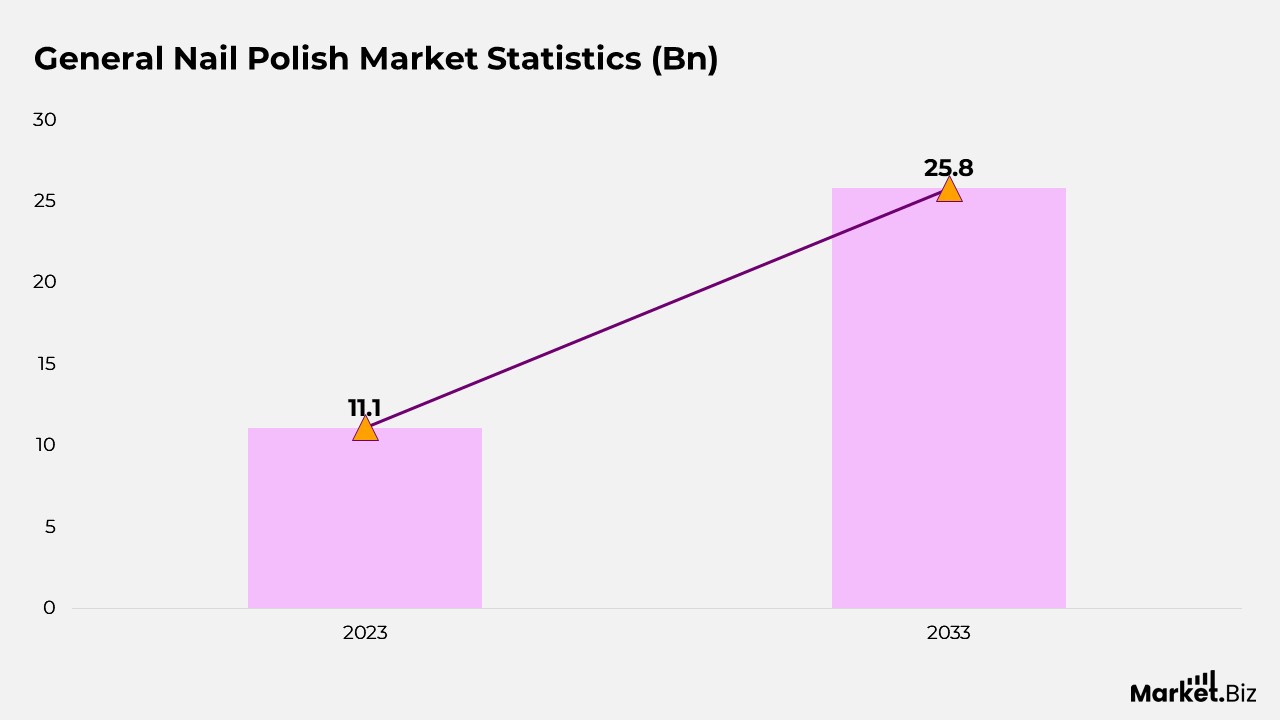
- By the year 2033, it is anticipated that the global nail polish market will reach a size of USD 25.8 billion.
- As of May 2017, women in the United States provided various reasons for their use of nail polish, with the predominant reason being to enhance their appearance, as indicated by 55% of respondents who stated they used it to “look better.”
- In 2017, the leading nail polish brands amongst female clients in the United Kingdom were dominated by Rimmel, which secured 43% of the market share.
- As of May 2017, there was a distinct preference among women in the United States for purchasing nail polish from drugstores, with 47% of respondents identifying this as their preferred shopping location.
- In 2017, brand recognition of nail polish products among women in the UK was highest for Rimmel, with 74% of respondents acknowledging the brand.
- As of May 2017, 36% of women in the United States reported that they spent $25 or less each year on nail polish products.
- In Europe, the regulation of cosmetics, which includes nail polishes, is governed by the EU Cosmetics Regulation (EC No 1223/2009), which requires that products be safe for use and imposes specific restrictions on harmful chemicals such as formaldehyde and toluene.
Nail Polish Market Growth Statistics
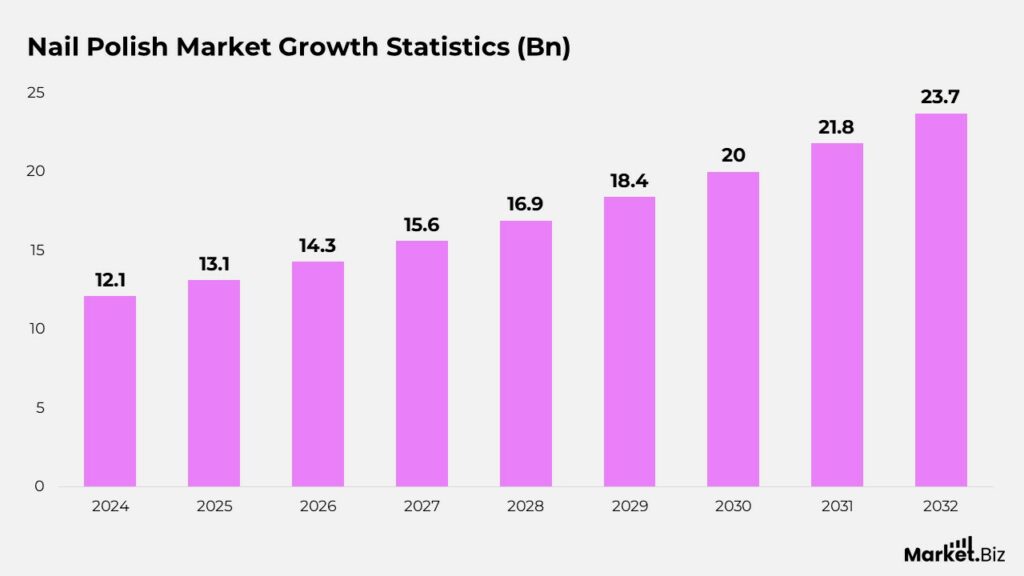
- In 2023, the market size was estimated to be USD 11.1 billion, reflecting a year-over-year increase of around USD 1 billion.
- By 2024, the market is anticipated to grow to USD 12.1 billion, with further expansion expected to USD 13.1 billion in 2025.
- The market maintains its upward trend, with forecasts suggesting it will reach USD 14.3 billion in 2026 and USD 15.6 billion in 2027.
- By 2028, the market is projected to increase to USD 16.9 billion, with this growth continuing to USD 18.4 billion in 2029 and USD 20.0 billion by 2030.
- The growth rate is expected to slightly accelerate, with the market size predicted to reach USD 21.8 billion in 2031 and ultimately USD 23.7 billion by 2032.
- By 2033, the global Nail Polish market is forecasted to attain USD 25.8 billion, indicating a steady and strong growth trajectory throughout this period.
Nail Polish Users by Age
- Among women aged 18 to 29 years, 14% indicated that they use nail polish on a daily basis, whereas 12% of women aged 30 to 59 years and 8% of those aged 60 years and above reported daily usage.
- The frequency of nail polish application several times a week was notably higher among younger women, with 12% of those aged 18 to 29 and 8% of those aged 30 to 59 engaging in this practice, in contrast to 6% of women aged 60 and older.
- Weekly usage was more prevalent among younger women, with 20% in the 18 to 29 age bracket compared to 14% in the 30 to 59 age group and 11% among those aged 60 and above.
- In terms of less frequent application, 18% of women aged 18 to 29 reported using nail polish 2 to 3 times a month, while 15% of those aged 30 to 59 and 13% of women aged 60 and older did the same.
- Monthly usage was noted by 12% of women aged 18 to 29, 10% of those aged 30 to 59, and 9% of women aged 60 and above.
- A greater percentage of older women reported using nail polish less regularly, with 24% of women aged 30 to 59 and 27% of those aged 60 and older stating they used it less often.
- Furthermore, 10% of women aged 18 to 29, 17% of those aged 30 to 59, and 27% of women aged 60 and older indicated that they never used nail polish.
Usage Statistics of Nail Polish
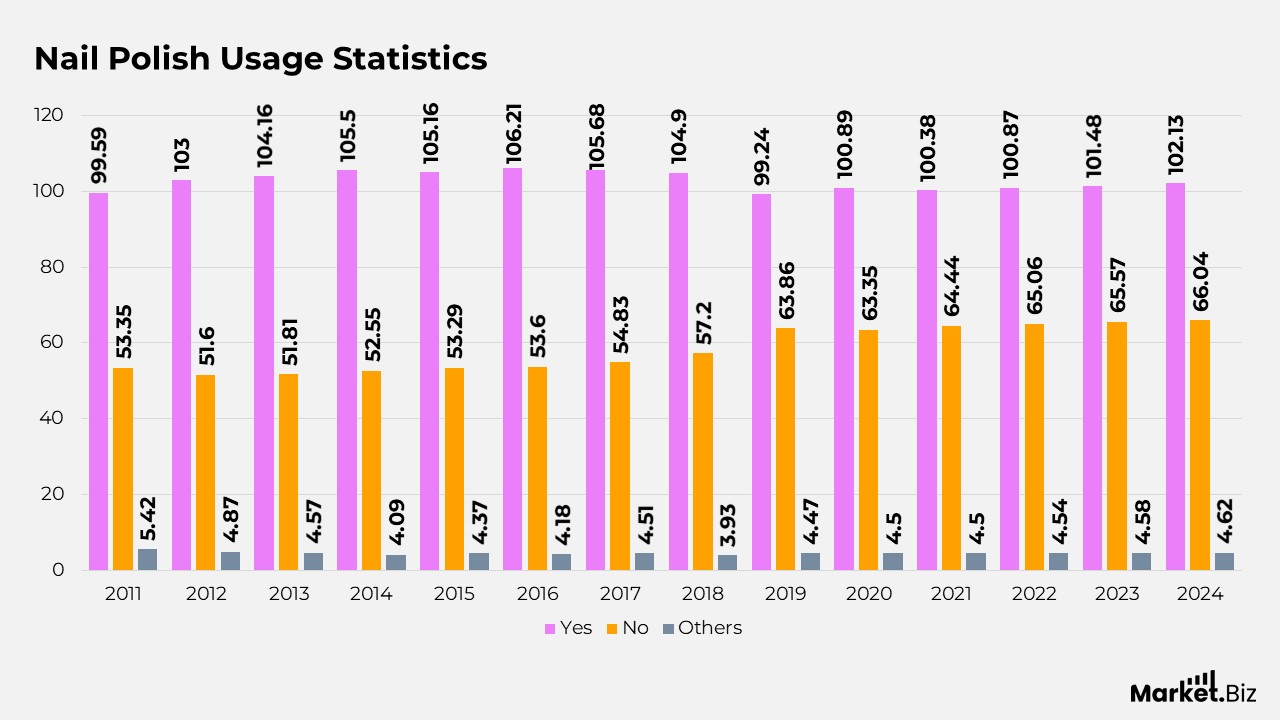
- In 2011, 99.59 million consumers indicated that they utilized nail care products, whereas 53.35 million did not use them, and 5.42 million either did not respond or were uncertain.
- By 2012, the user count increased to 103 million, while the number of non-users fell to 51.6 million.
- This positive trend persisted in subsequent years, with users rising to 104.16 million in 2013 and 105.05 million in 2014.
- Between 2015 and 2016, the consumer base remained consistent, with approximately 105 million users, while non-users stayed above 53 million.
- In 2017, 105.68 million individuals were reported as users of nail care products, but by 2019, the number of non-users had escalated to 63.86 million, leaving only 99.24 million users.
- The trend shifted in 2020, as the user count climbed to 100.89 million, and non-users experienced a slight decline to 63.35 million.
- This trend continued in the following years, with minor variations in the user count, reaching 102.13 million by 2024, while non-users gradually increased to 66.04 million.
Nail Polish Brand Statistics
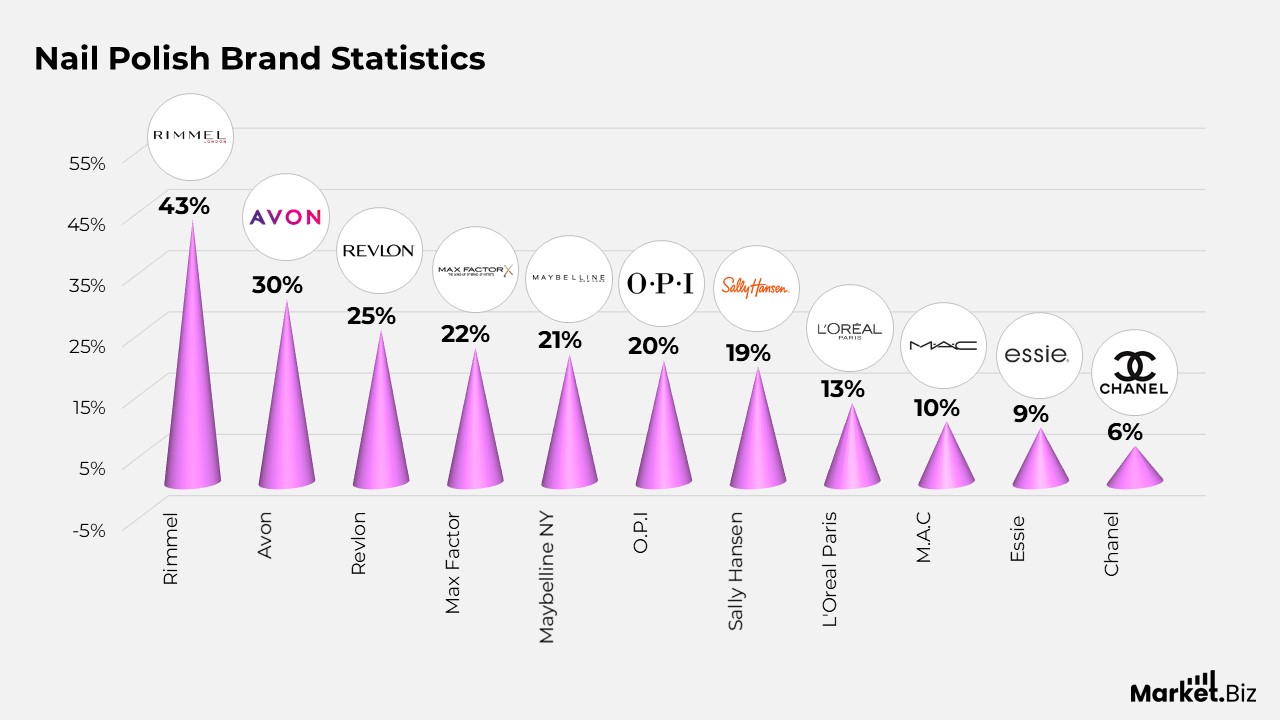
- In 2017, the leading nail polish brands among female customers in the United Kingdom were dominated by Rimmel, which captured 43% of the market share.
- Avon followed closely with 30%, while Revlon secured 25%.
- Maybelline New York and Max Factor held market shares of 21% and 22%, respectively. O.P.I. was utilized by 20% of respondents, with Sally Hansen at 19%.
- L’Oréal Paris represented 13% of the market, while M.A.C. accounted for a share of 10%.
- Other significant brands included Essie (9%), Estee Lauder (5%), Chanel (6%), and Orly (5%), with both Dior and Bobbi Brown each holding 4%.
Nail Polish Statistics by Locations
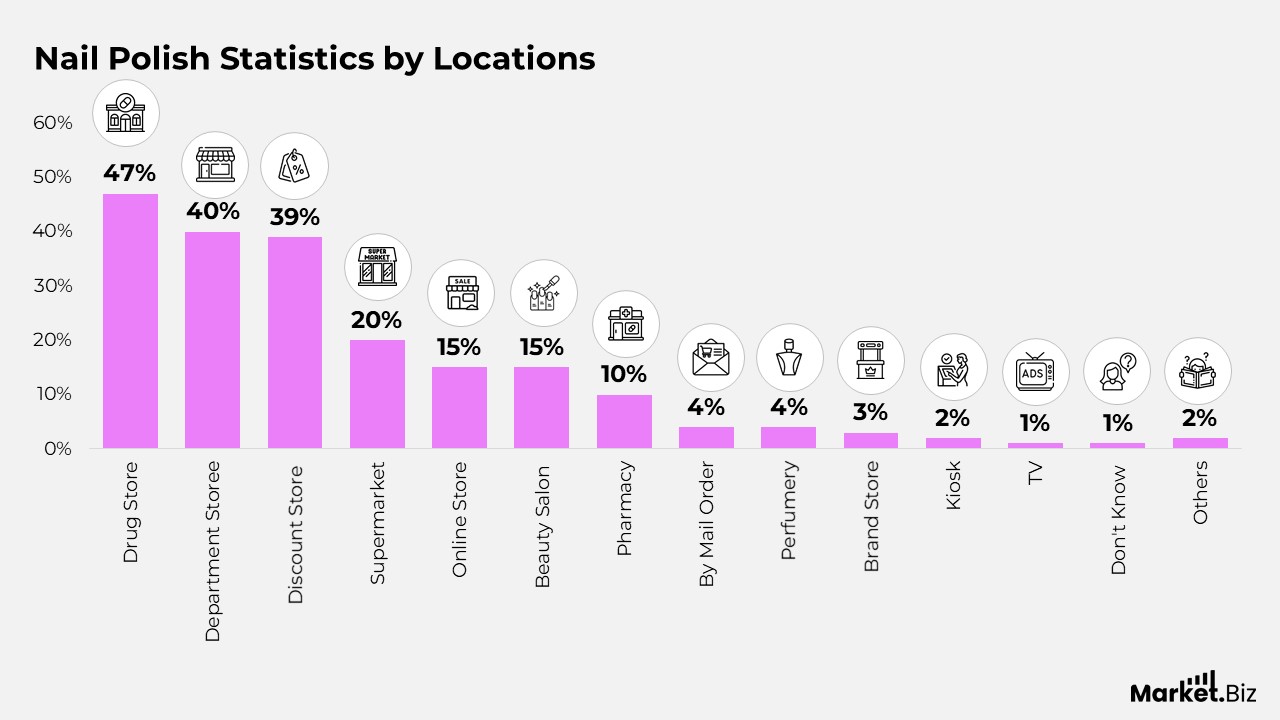
- Women in the United States demonstrated a distinct inclination towards acquiring nail polish from drugstores, with 47% of participants identifying this as their favored shopping venue.
- Department stores also emerged as a favored option, with 40% of women opting to purchase nail polish there, closely followed by discount stores at 39%.
- Supermarkets represented 20% of nail polish transactions, while online retailers and beauty salons each garnered 15% of the respondents’ preferences.
- Pharmacies were utilized less frequently, with only 10% of women purchasing nail polish from these establishments.
- Other less common purchasing venues included mail order or catalog (4%), perfumeries (4%), and brand-specific outlets (3%).
- Kiosks, television, and those unsure of their purchasing location each accounted for a minimal proportion of respondents, at 2%, 1%, and 1%, respectively.
- Furthermore, 2% of respondents indicated “other” as their preferred purchasing method.
Reasons to Use Nail Polish
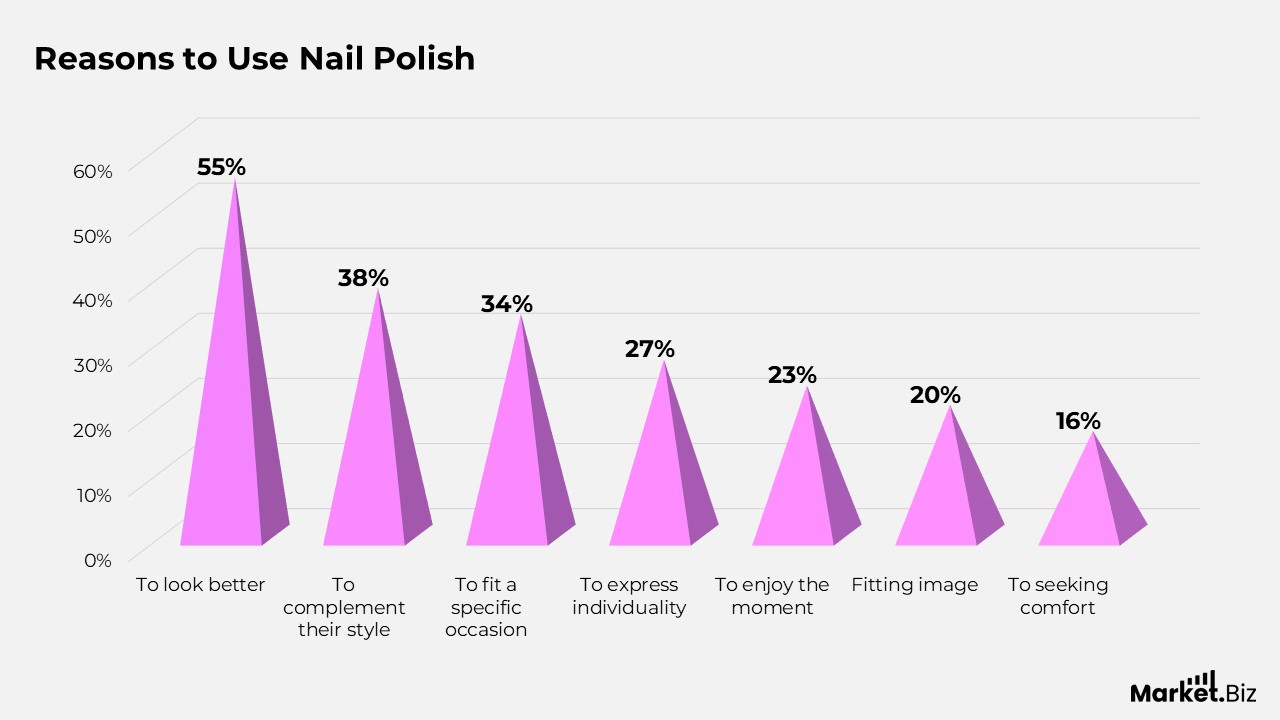
- As of May 2017, women in the United States provided various reasons for their use of nail polish, with the predominant reason being the enhancement of their appearance, as indicated by 55% of respondents who stated they used it to “look better.”
- Furthermore, 38% of women noted that they applied nail polish to complement their personal style, while 34% did so to suit a particular occasion.
- Nail polish was also perceived as a form of self-expression, with 27% of respondents identifying this as a reason, which was the same percentage that utilized it as part of their self-care routine.
- For 23% of women, the application of nail polish served as a means to savor the moment and elevate their confidence.
- Additional motivations included aligning with their image (20%), seeking comfort (16%), and relaxation (16%).
- A smaller segment of women used nail polish to attract others (14%), distinguish themselves (8%), conceal imperfections (7%), evade negative attention (5%), or delay signs of aging (4%)
- Finally, 4% of respondents mentioned that using nail polish allowed them to feel included in a group, while 2% cited other reasons.
Nail Polish Sales by Country Statistics
Japan
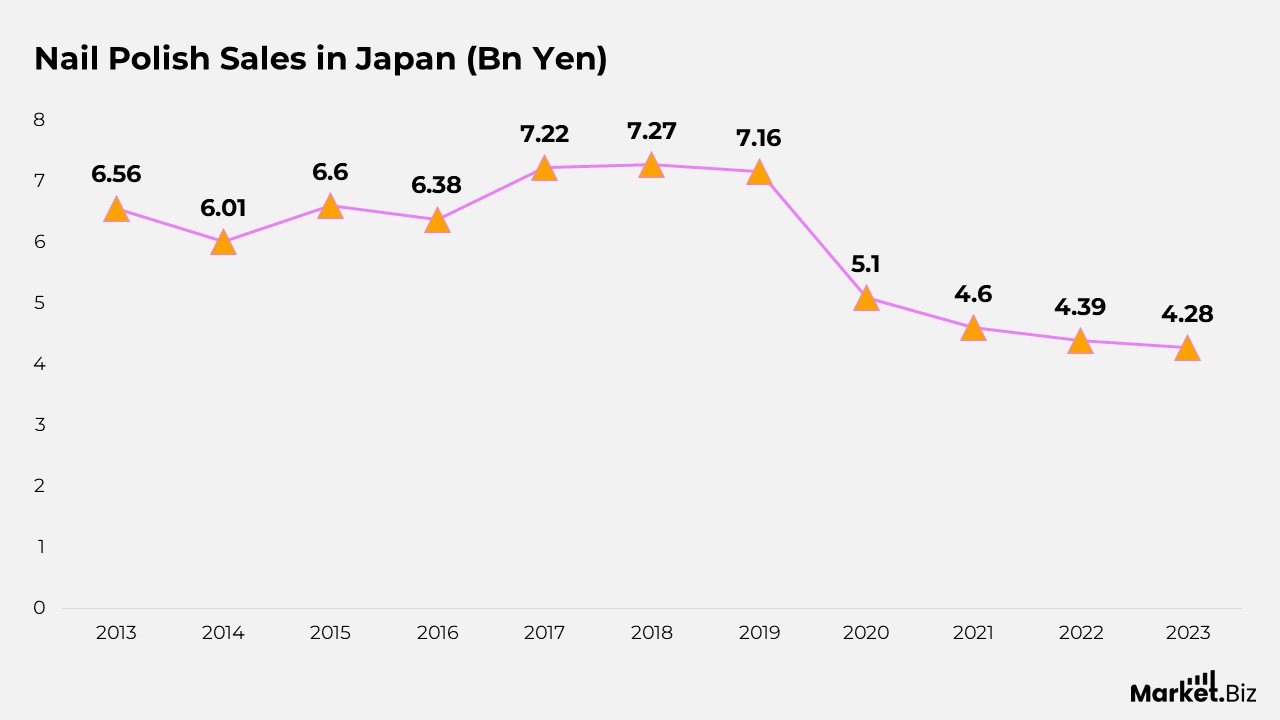
- Between 2013 and 2023, the wholesale sales value of nail makeup products and removers in Japan experienced various fluctuations.
- In 2013, the sales value stood at 6.56 billion Japanese yen, which saw a slight decrease to 6.01 billion yen in 2014.
- The market experienced a recovery in 2015, reaching 6.6 billion yen, followed by a minor decline to 6.38 billion yen in 2016.
- A more substantial increase was noted in 2017, with sales rising to 7.22 billion yen, and this upward trend continued in 2018, culminating at 7.27 billion yen.
- However, starting in 2019, the market began to shrink, with sales dropping to 7.16 billion yen in 2019, and then experiencing a significant decline in 2020 to 5.1 billion yen, likely due to the impact of the COVID-19 pandemic.
- Sales continued to decrease in the subsequent years, falling to 4.6 billion yen in 2021 and further declining to 4.39 billion yen in 2022.
- By 2023, the sales value had further diminished to 4.28 billion yen.
US
- Nail polish dominated the market with sales of 136.49 million units, followed by implements and nail accessories, which reached a total of 94.74 million units.
- Artificial nails and accessories contributed 57.79 million units, whereas nail polish removers recorded sales of 49.14 million units.
- Nail treatment products experienced sales of 26.06 million units, and nail polish accessories constituted a minor segment of the market, with only 0.21 million units sold.
Nail Polish Cost Statistics
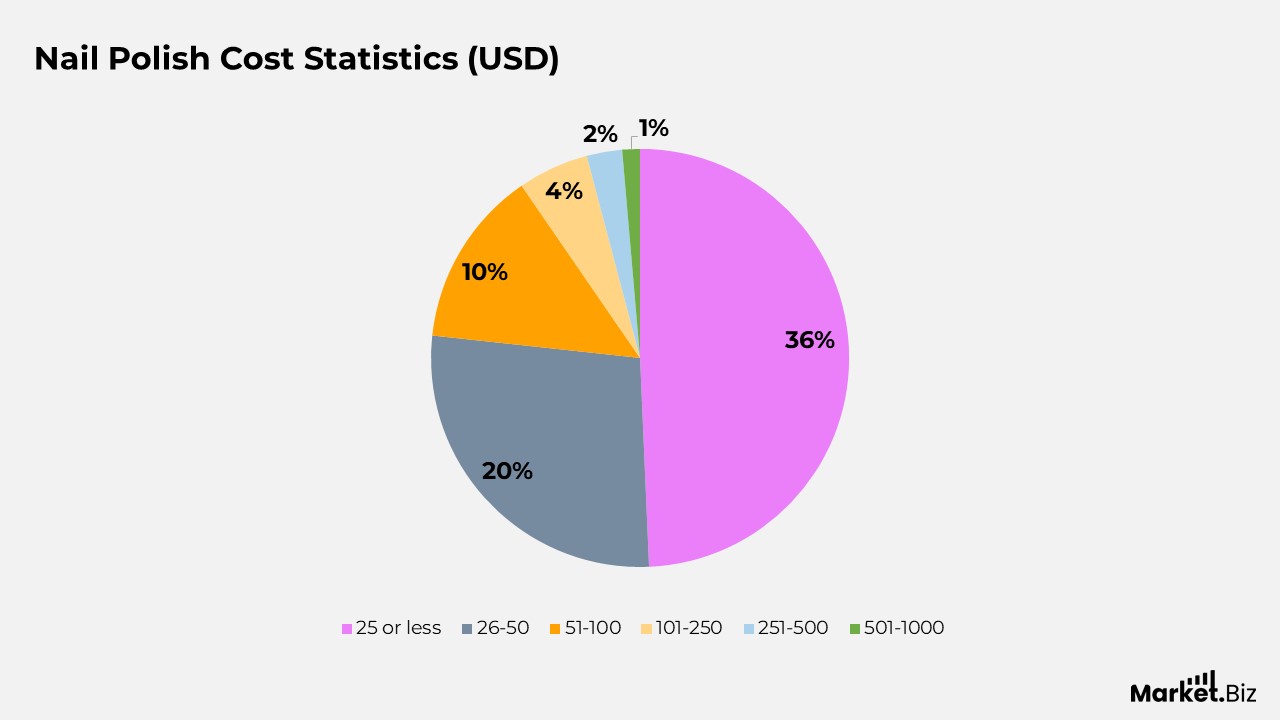
- A notable 36% of participants reported spending $25 or less each year on nail polish, whereas 20% allocated between $26 and $50.
- A lesser segment, 10%, indicated annual spending ranging from $51 to $100, and merely 4% spent between $101 and $250.
- Only 2% of women reported expenditures of $251 to $500, while 1% spent between $501 and $1,000.
- Furthermore, 26% of respondents stated they were unsure of their spending, and 1% opted not to disclose their expenditure.
Nail Art Statistics
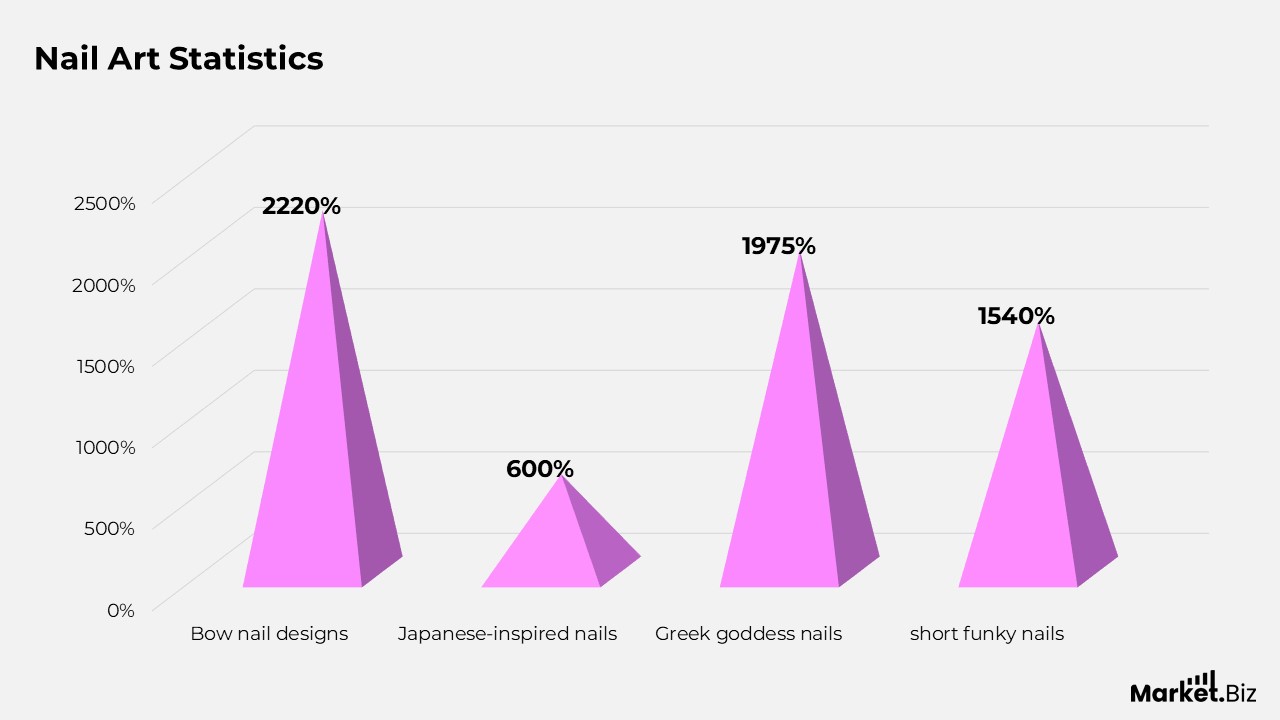
- Bow nail designs experienced an exceptional increase, with search queries rising by 2,220%.
- Japanese-inspired nail art also attracted significant interest, witnessing a 600% boost in searches.
- Greek goddess nail designs trailed closely behind, with a 1,975% rise in search activity, while short funky nails enjoyed a 1,540% increase in search interest.
Conclusion
The nail polish industry has seen consistent growth, propelled by an increasing consumer appetite for high-quality, long-lasting products, as well as a heightened interest in organic and environmentally friendly alternatives. Consumers are also seeking more tailored nail care experiences, showing a growing inclination towards premium and innovative offerings.
E-commerce and specialized retail channels have broadened access to a diverse array of nail lacquers, gel products, and treatments. As trends in self-care and grooming continue to progress, the sector is anticipated to sustain its upward momentum, driven by both innovation and evolving consumer behaviors across global markets
FAQs
The European Union has prohibited the use of a significant chemical component in specific gel nail polishes and various cosmetic products. Authorities have categorized this chemical, referred to as TPO, as a form of reproductive toxicant. TPO reacts to light and facilitates the setting of gel nail polish under ultraviolet light.
The use of nail polish is a debated topic among practicing Muslim women. Since nail polish creates a permanent barrier between water and the nail, it complicates the performance of wudu (a ritual body cleansing procedure that every Muslim must perform before salat, daily prayers).
Indeed, gel polish can be harmful to your nails due to the chemicals and UV light involved, which may lead to allergic reactions, brittleness, peeling, and dryness. The process of removal, particularly if done incorrectly by peeling off the gel, can also harm the nail plate and result in infections. Furthermore, exposure to UV light from curing lamps can heighten the risk of skin cancer and accelerate the aging of the hands.