









Introduction
Smartphone Statistics: Smartphones have become essential to daily life, particularly in developed nations, where approximately 75% of individuals possess one. Globally, smartphones account for nearly 90% of all mobile phones, with over 7.2 billion smartphones currently in use as of 2024. This expansion shows no indications of slowing down, as the smartphone market experienced a growth of 7.8% in the first quarter of 2024.
By the end of 2023, about 70% of the worldwide population owned a smartphone. A significant number of individuals own multiple devices, resulting in smartphone subscriptions exceeding 7 billion. It is anticipated that this figure could approach nearly 8 billion by 2028, indicating that smartphones remain in high demand and are crucial in our everyday lives. This report delves into the most recent statistics regarding smartphones.
Editor’s Choice
- It is projected that there will be more than 7.33 billion smartphones in use worldwide by 2023.
- Looking ahead to 2026, monthly data usage is forecasted to rise to 35 GB.
- The projection for 2026 estimates around 7.52 billion smartphone users.
- In the United States, 19 out of every 20 individuals possess some form of cell phone.
- In the United States, 80% of males and 75% of females owned smartphones.
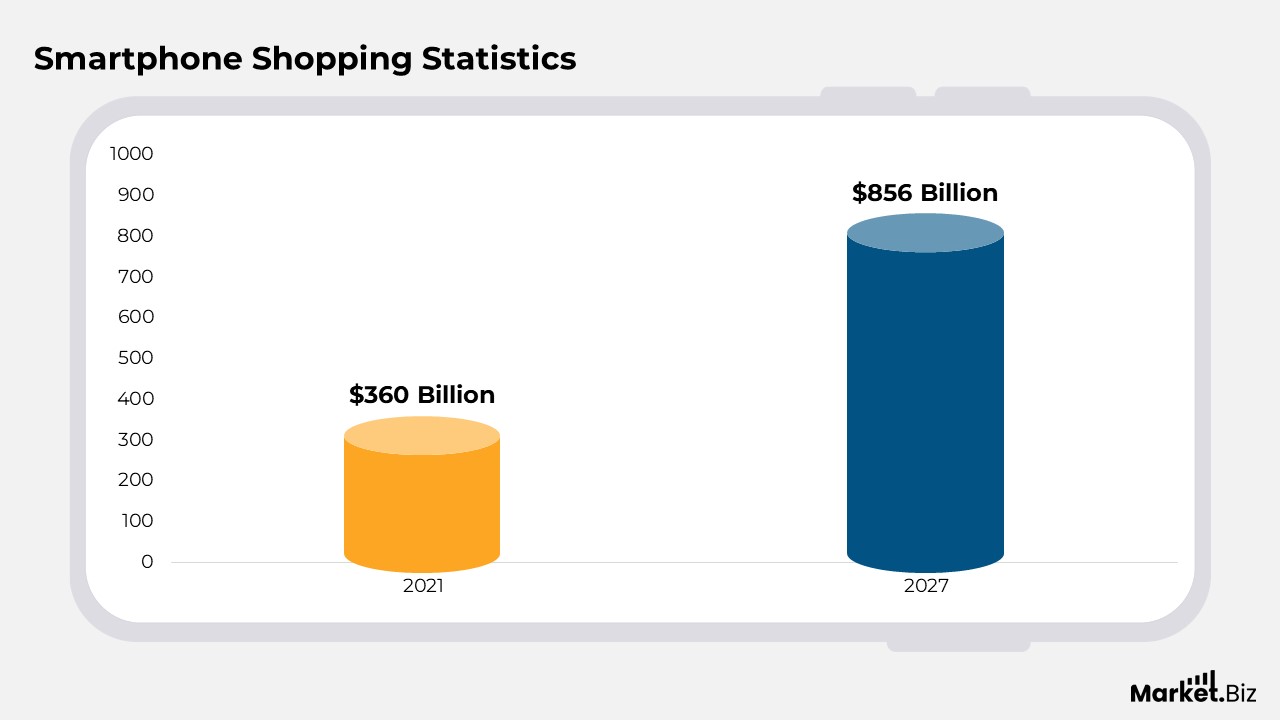
- By the year 2027, it is projected that mobile phone sales, referred to as m-commerce, will reach around $856 billion. In contrast, m-commerce sales were recorded at over $360 billion in 2021.
- In North America, mobile sources account for 57.58% of internet traffic.
- Mobile advertising spending is projected to hit 4 billion dollars by the year 2027.
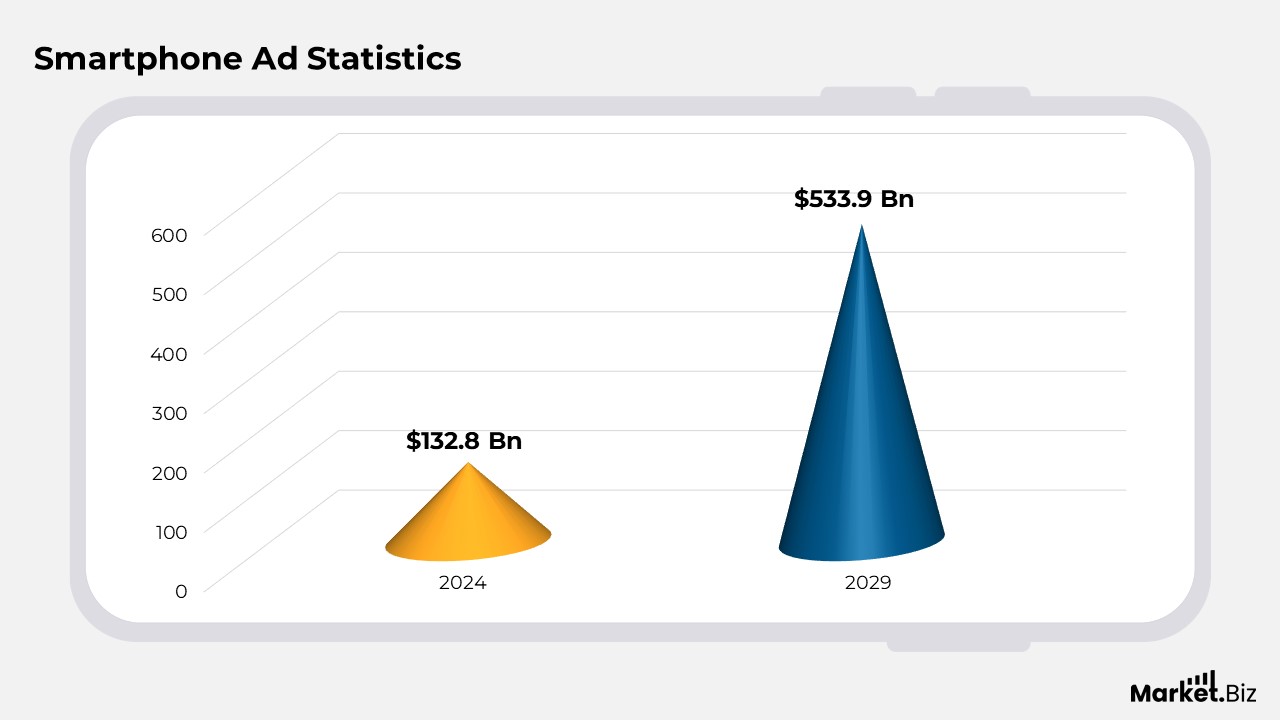
- The market is anticipated to witness an annual growth rate (CAGR 2024–2029) of 8.68%, resulting in a projected market volume of $533.90 billion by 2029.
- Around 18% of these users, or 49.55 million individuals, spent over 6 hours daily on their smartphones.
- By the year 2027, it is projected that there will be around 7.69 billion smartphone subscriptions.
General Smartphone Statistics
- A report indicates that during the first quarter of 2023, the global market share for smartphones has decreased by 14% compared to the previous year and by 7% from the last quarter, leading to a total of 280.2 million unit shipments.
- As of 2023, the smartphone sector has undergone significant transformations, creating over 14 million job opportunities.
- The evolution of the smartphone industry has also led to substantial growth in mobile gaming and social media applications.
- It is projected that there will be more than 7.33 billion smartphones in use worldwide by 2023.
- YouTube remains the most popular application on smartphones, commanding an 88% share, followed by platforms such as Facebook, LinkedIn, and Instagram.
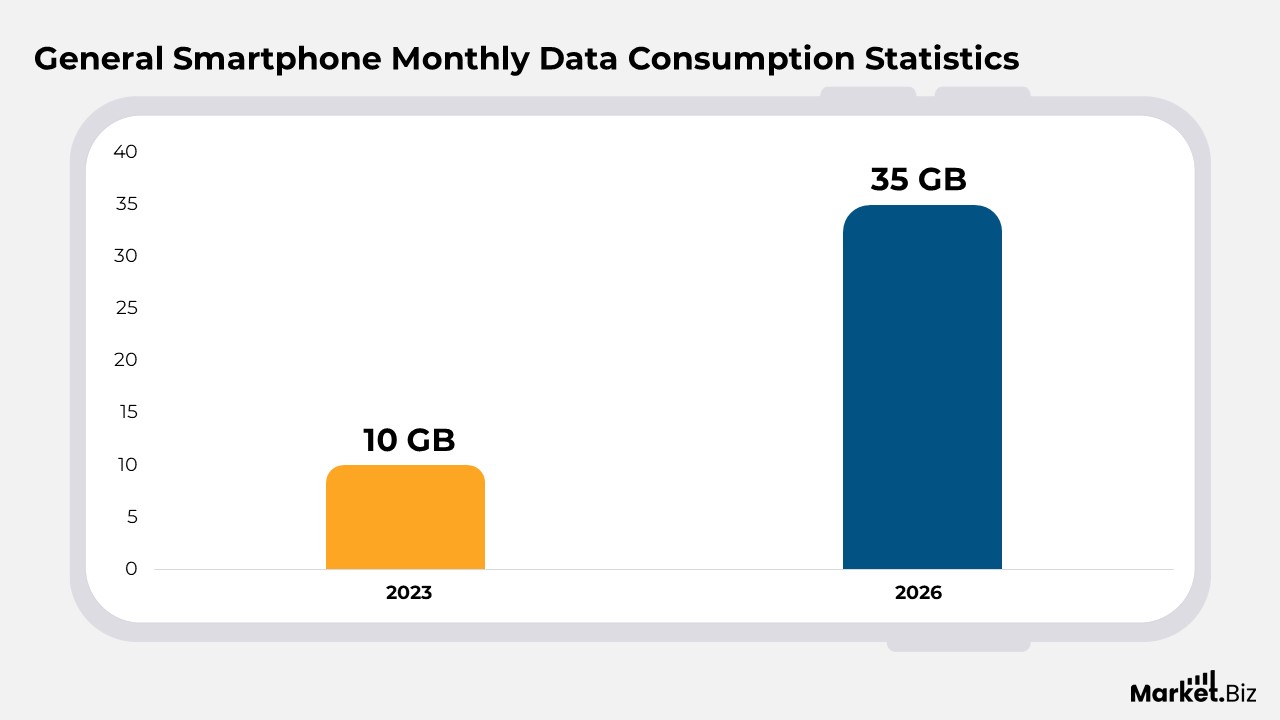
- The average monthly data consumption for smartphones is nearly 7.2 GB, and it reached 10 GB by the end of 2023.
- By the end of 2023, 5G technology was anticipated to become a leading trend in numerous countries.
- Looking ahead to 2026, monthly data usage is forecasted to rise to 35 GB.
- In 2023, it was estimated that 6.8 billion individuals would use smartphones globally.
Smartphone Usage Statistics
- Currently, there are approximately 6.94 billion cell phones in operation worldwide, as reported by Smartphone Usage Statistics.
- The number of individuals using cell phones has risen by nearly 6% annually over the past five years.
- It was expected that in 2024, the global count of cell phone users would reach 8.1 billion.
- China holds the record for the highest number of smartphone users, whereas Germany leads in smartphone usage per capita.
- Nearly 91% of university graduates possess a smartphone, and Android is a highly popular and widely adopted mobile operating system.
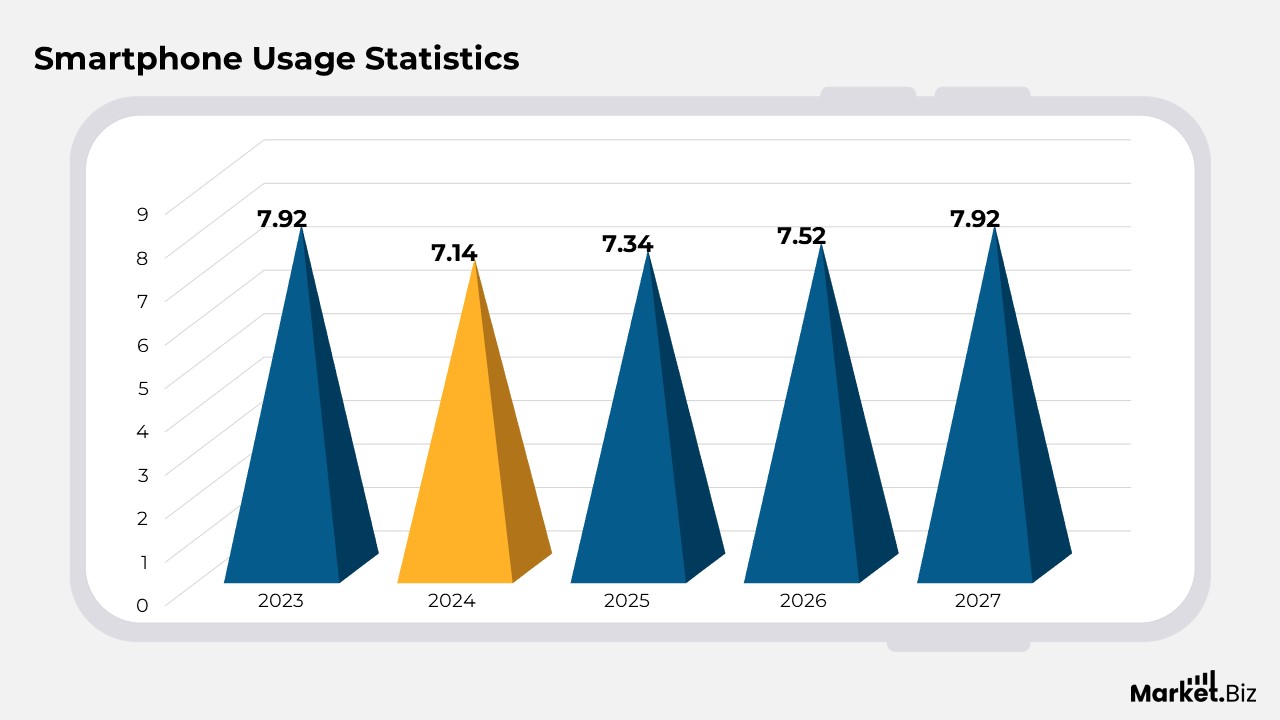
- In 2023, an estimated 7.92 billion individuals, or 86.74% of the global population, owned cell phones.
- This figure is projected to increase to 7.14 billion in 2024 and 2025, approximately 91.33% of the global population is expected to own cell phones, adding up to 7.34 billion users.
Moreover
- The overall number of cell phone users is forecasted to reach 7.92 billion by 2028, indicating fifteen consecutive years of growth.
- The projection for 2026 estimates around 7.52 billion smartphone users.
- In 2023, approximately 2 billion internet users accessed the web via smartphones, constituting 58.14% of all internet users.
- Among the teachers who participated in the survey, 67% observed that students frequently become negatively distracted by their mobile devices.
- In contrast, 89% of parents believe it is their duty to monitor their child’s cell phone usage.
- Within the age demographic of 18 to 29 years, 22% of smartphone users indicated that they check their phones every few minutes, which may imply a potential addiction.
- Approximately 36% of millennials stated that they spend two or more hours each workday on their phones for activities such as social media, texting, gaming, and interacting with marketing content.
- A notable 41% of teenagers feel overwhelmed by the volume of text alerts they receive daily, and 85% struggle to cease their use of technology, including the internet and smartphones, once they begin.
Smartphone Global Shipping
- In the first quarter of 2023, the global smartphone market shares were distributed as follows: Samsung at 22%, Apple at 21%, Xiaomi at 11%, OPPO at 10%, Vivo at 7%, and other brands collectively at 29%.
- In the second quarter of 2023, there were slight changes in the shares: Samsung maintained 20%, Apple decreased to 17%, Xiaomi increased to 12%, OPPO stayed at 10%, Vivo grew to 8%, and other brands rose to 33%.
- By the third quarter of 2023, both Samsung and Apple held shares of 20% and 16%, respectively. Xiaomi and OPPO each accounted for 14%, Vivo had 7%, and other brands remained at 29%.
- Overall, the smartphone market experienced a 1% decline compared to the previous year, with approximately 299.8 million units shipped in 2023.
- Samsung continued to be the leading player in the market, even with an 8% decline compared to the previous year, and maintained an 11% market share from the last quarter.
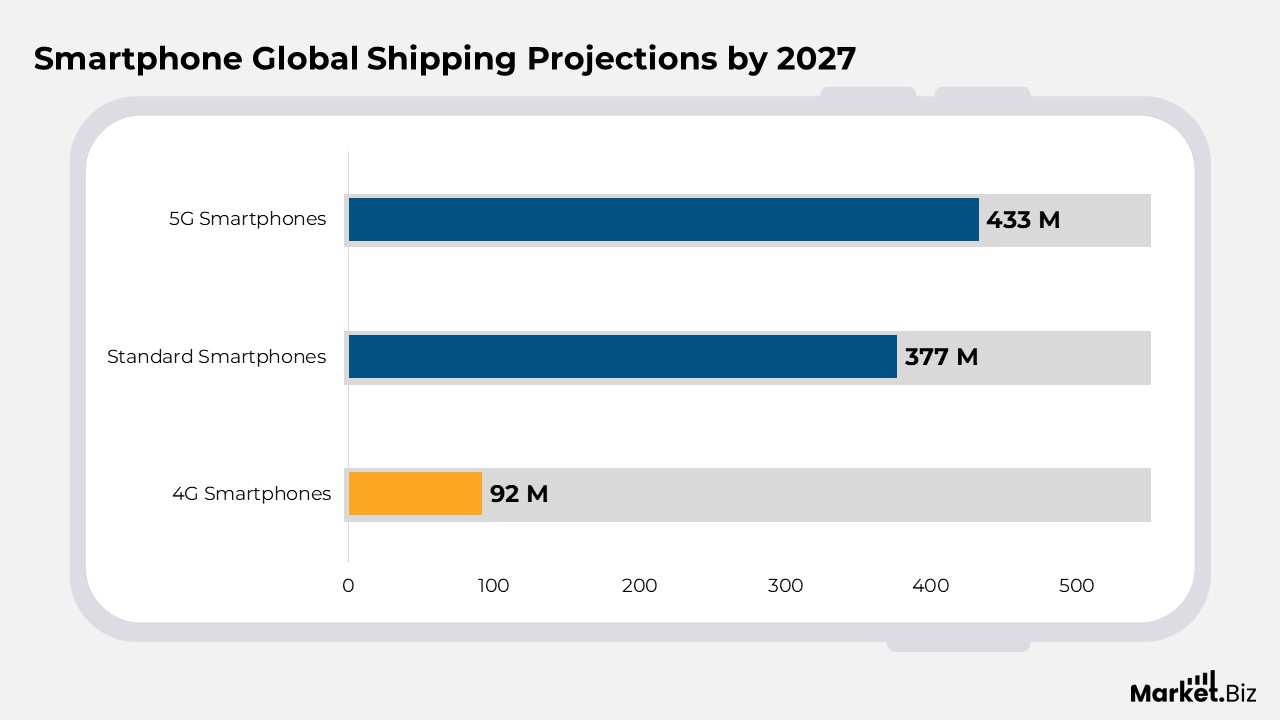
- Looking ahead to 2027, the expected revenue from smartphone shipments is forecasted to be: 4G at USD 92 million, standard smartphones at USD 377 million, and 5G smartphones at USD 433 million.
Smartphone Demographics Statistics
- In the United States, 19 out of every 20 individuals possess some form of cell phone.
- In June 2023, 94% of individuals aged 18 to 29 had acquired a smartphone.
- For other age demographics, 89% of individuals aged 30 to 49 used smartphones, followed by 73% of those aged 50 to 64, and 46% of individuals over the age of 65.
- Millennials showed the highest rate of smartphone usage at 94.4%, followed by Generation X at 88.8%, Generation Z at 72.8%, Generation Alpha at 17%, and Baby Boomers at 68.1%.
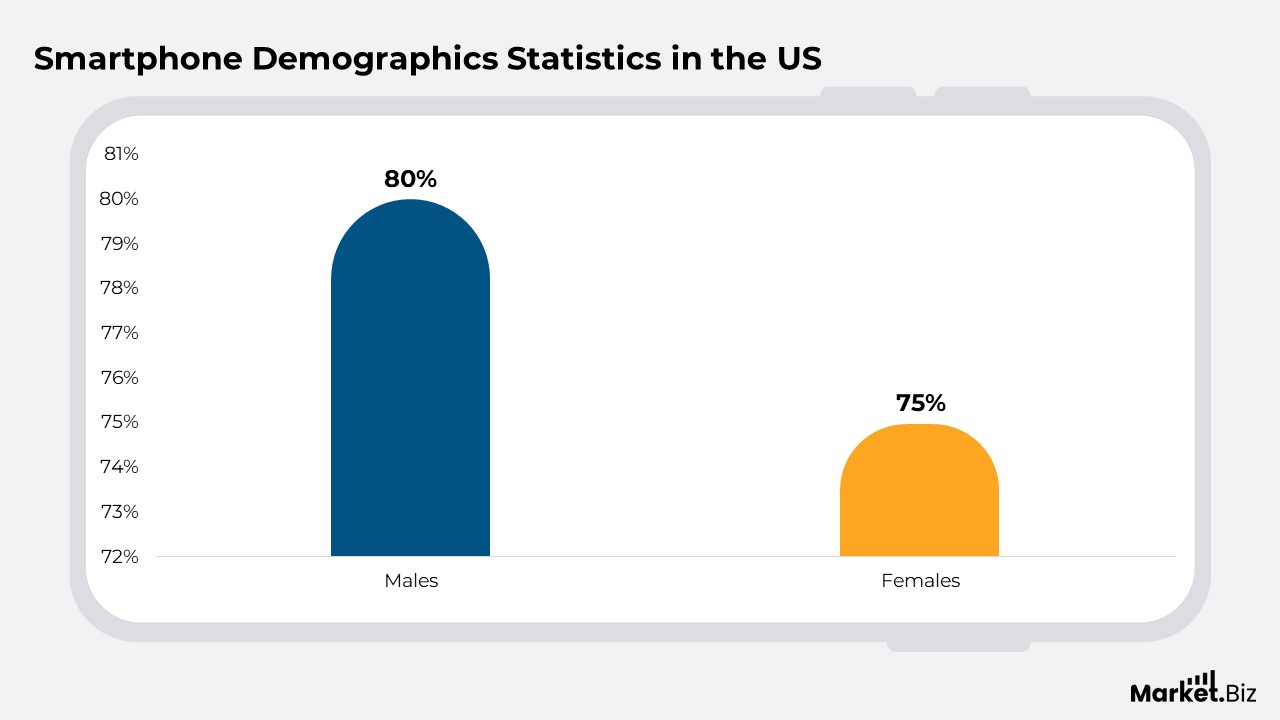
- In the United States, 80% of males and 75% of females owned smartphones.
- 83% of urban dwellers and 78% of suburban populations used smartphones, whereas 65% of individuals residing in rural areas owned one.
- In terms of ethnicity, smartphone ownership was recorded at 77% for both white and Hispanic individuals, and 75% for black individuals.
- Smartphone ownership varied by educational attainment, with the highest percentage among college graduates at 91%, followed by individuals with some college experience at 80%, high school graduates at 69%, and those lacking a high school diploma at 57%.
- Individuals with higher income levels were more inclined to possess smartphones. 93% of those earning over USD 75,000 annually owned a smartphone.
Most Used Smartphone Apps
- With over 2 billion active users, WhatsApp stands as the most widely used messaging application globally.
- Although its popularity among teenagers is waning, Facebook still has more than 2.8 billion active users each month across the globe.
YouTube
- With more than 2 billion active users each month, YouTube ranks as the second most widely used search engine, following Google.
- This application from China boasts more than 1.2 billion active users each month and serves purposes such as messaging, social networking, and mobile payment transactions.
- Instagram, boasting more than 1 billion active users each month, stands as the foremost photo-sharing application globally.
Smartphone Shopping Statistics
- By the year 2027, it is projected that mobile phone sales, referred to as m-commerce, will reach around $856 billion. In contrast, m-commerce sales were recorded at over $360 billion in 2021.
- More than half (62.79%) of internet traffic originates from mobile devices.
- In North America, mobile sources account for 57.58% of internet traffic.
- 76% of Americans have made a purchase online using their mobile phones. Individuals under the age of 50 are the most likely to shop online (92%). It is not surprising that in 2022, the Amazon shopping application was the most downloaded marketplace app in the United States.
- Approximately one-third (32%) of the U.S. population uses their phones to make online purchases at least once a week.
- Mobile retail sales reached an estimated $387 billion in 2022.
- M-commerce is particularly prevalent among U.S. users aged 30 to 49, with a participation rate of 92%, compared to 87% among users aged 18 to 29.
User Behavior Statistics
- Reports indicate that approximately 9 out of 10 (92.3%) internet users connect to the internet through a mobile phone, underscoring its status as the leading method of connectivity.
- Mobile devices account for 60.81% of online traffic, outpacing desktops, which contribute a mere 37.15%.
- India, Nigeria, Ghana, and Kenya are at the forefront of mobile-first internet traffic, with the majority of web traffic originating from mobile devices.
- Mobile devices dominate with over 50% of web traffic in African markets, while in the United States, they represent 45.49%.
- Globally, individuals spend an average of more than 3 hours each day on their mobile devices, which constitutes nearly one-third of their waking hours.
- Android holds a significant share of mobile web traffic at 70.48%, followed by Apple at 28.8%. Together, these two platforms account for 99.28% of all mobile web traffic.
- Data on device ownership reveals that 97.6% of internet users aged 16–24 possess a smartphone.
- While 90% of internet users access the internet via a laptop, desktop, or tablet, an impressive 98.1% do so on their mobile phones.
Smartphone Ad Statistics
- Mobile advertising spending is projected to hit 4 billion dollars by the year 2027.
- In 2023, the total annual spending on applications amounted to 171 billion US dollars.
- In December 2023, the count of brands promoting their mobile applications reached 326.1 thousand, marking a 50% increase compared to 216.2 thousand in 2022.
- By 2028, mobile advertising is expected to constitute $255.8 billion of the social media advertising sector.
- In 2024, the expenditure in the in-app advertising sector surpassed $352.20 billion.
- The market is anticipated to witness an annual growth rate (CAGR 2024–2029) of 8.68%, resulting in a projected market volume of $533.90 billion by 2029.
- The average advertising expenditure per mobile internet user in the in-app advertising sector is expected to exceed $53.88 by 2024.
- China is expected to lead in advertising expenditure, reaching $132.80 billion in 2024.
- The United States remains at the forefront of innovation and investment in in-app advertising, influencing trends and shaping the global market.
Time Spent by Smartphone Users
- In 2023, approximately 48% of individuals in the United States, equating to around 132.13 million smartphone users, dedicated 5 to 6 hours each day to their phones.
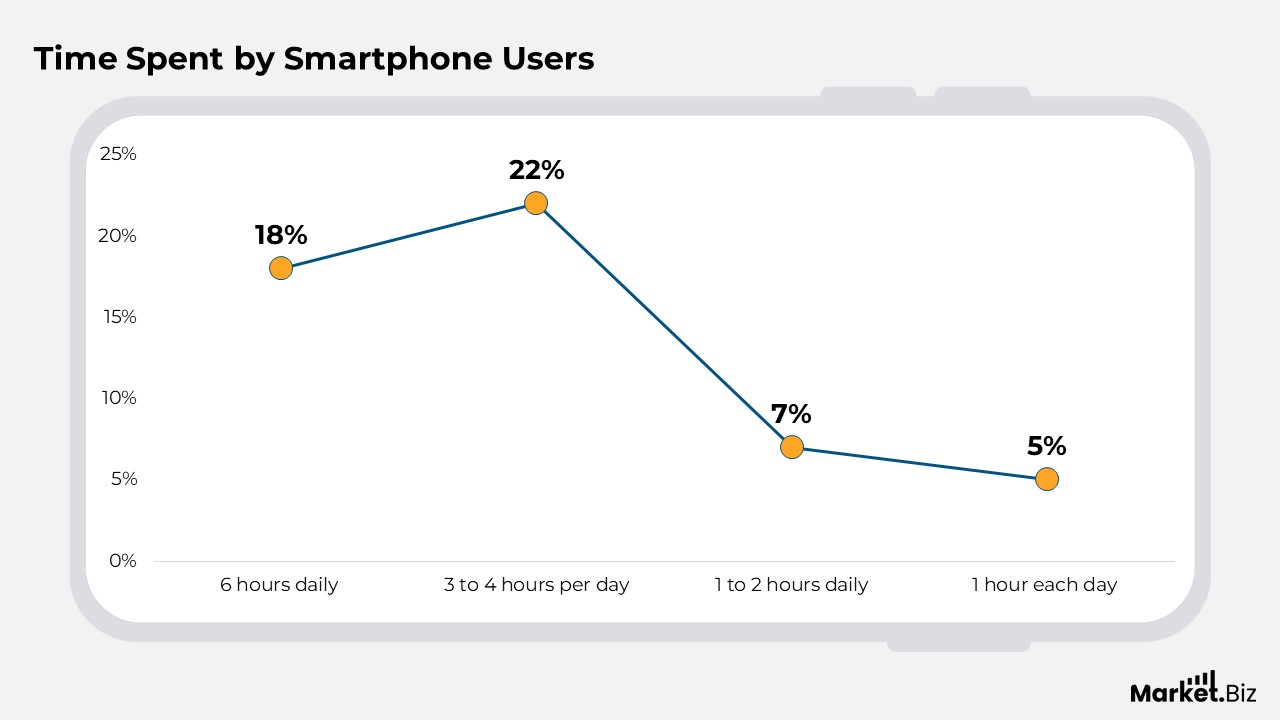
- Around 18% of these users, or 49.55 million individuals, spent over 6 hours daily on their smartphones.
- 22% of users, which amounts to 60.56 million people, used their smartphones for 3 to 4 hours per day.
- 7% of users, or 19.27 million individuals, engaged with their devices for 1 to 2 hours daily.
- 5% of users, translating to 13.76 million people, spent less than 1 hour each day on their smartphones.
- In 2023, the major use of smartphones was for digital media, with 94% of users playing games, 92% using social media, 83% engaging in entertainment, and 77% using their devices for educational purposes.
- In other nations, such as Colombia, the average usage was 5 hours and 9 minutes, while South Africa recorded an average of 5 hours.
- Argentina and Nigeria showed similar averages of approximately 5 hours and 4 minutes each, whereas Indonesia reported an average of 4 hours and 56 minutes of daily usage.
- The global average for daily smartphone use was 3 hours and 4 minutes, with countries like Romania averaging 3 hours and 41 minutes and Russia at 3 hours and 39 minutes, both falling below this global average.
Future Prediction of the Smartphone
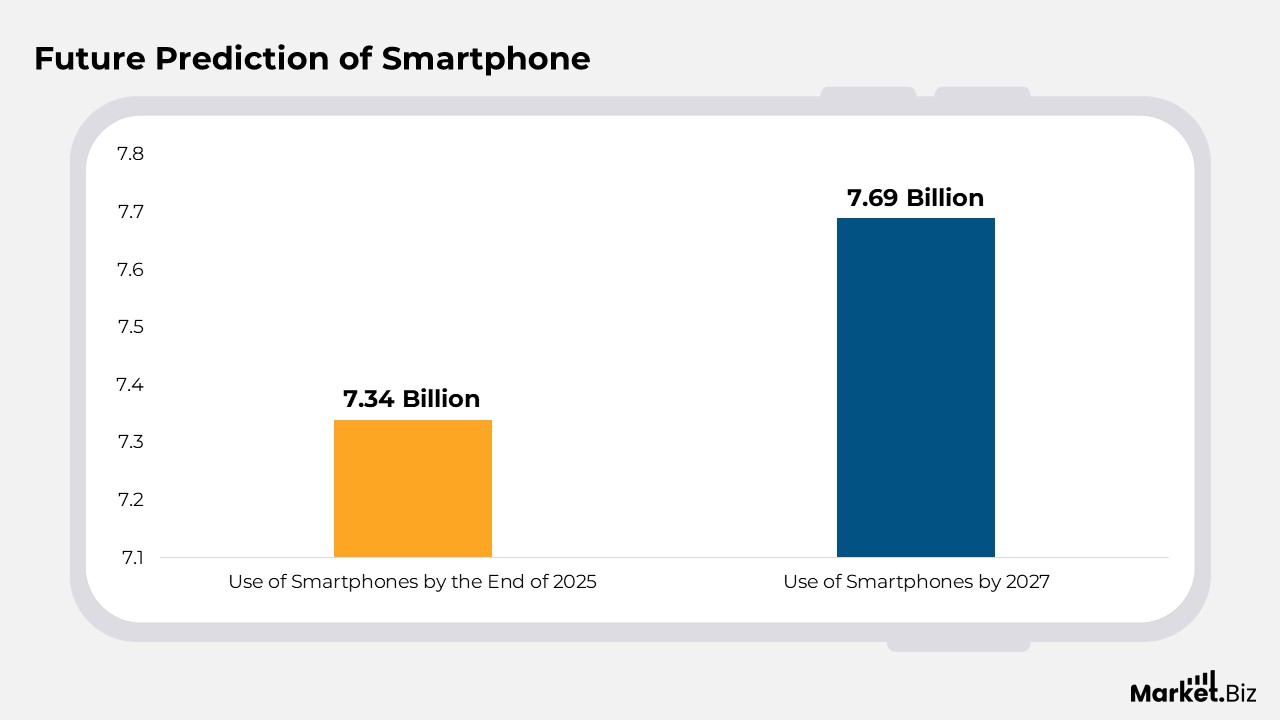
- The use of smartphones is anticipated to increase by 2% to 3%, reaching approximately 7.34 billion users by the end of the year 2025, as reported by Smartphone Usage Statistics.
- By the year 2027, it is projected that there will be around 7.69 billion smartphone subscriptions.
- In 2025, it is expected that about 72.6% of global smartphone owners will access the internet exclusively through their smartphones. Currently, there are approximately 10.37 billion mobile connections across the globe.
- In 2016, there were merely 3.67 billion smartphone users, which constituted 45% of the total population.
- As of 2023, this number has increased to encompass 85% of the world’s population. Since 2016, the global count of smartphone users has increased by 50%.
Conclusion
Smartphones are now all over, straightforwardly merged into both personal and professional aspects of modern life. With billions of users worldwide, they fuel a successful app economy and affect numerous sectors. Although their use provides considerable advantages, such as immediate access to information and improved communication, there are also growing concerns regarding addiction and its effects on mental health.
By examining the growth of mobile shopping and the transformation of digital advertising, one can gain insights into how consumers are using their mobile devices and what the future may hold. These Mobile Usage Statistics can assist you in formulating a mobile-first strategy to improve your dropshipping business.
FAQs
Some potential negative impacts may include alterations in cognitive function, difficulties with social or emotional skills, sleep disturbances, and mental lethargy. Although it is unlikely (or impractical) for individuals to completely abandon their phones, there are measures we can take to safeguard our brains from these harmful effects.
As of 2024, the estimated number of smartphone users globally stands at 4.88 billion, which equates to 60.42% of the global population owning a smartphone. Some individuals possess multiple smartphones, resulting in approximately 7.21 billion active smartphones currently in existence worldwide.
Experts on Quora generally advise that adults should restrict their smartphone usage outside of work to under two hours daily. For children, the recommended usage is even lower, with 1-2 hours suggested for those aged 6 and above, and even less for those younger than 6.