








Introduction
Lithium Ion Battery Statistics: A lithium-ion (Li-ion) battery serves as a rechargeable energy source that operates by facilitating the movement of lithium ions between a negative electrode (anode) and a positive electrode (cathode) through an electrolyte, thereby storing and releasing energy. This mechanism allows for a high energy density, making them suitable for devices such as smartphones, laptops, and electric vehicles.
These batteries are recognised for their lightweight nature, extended lifespan, and lack of ‘memory effect,’ which renders them ideal for contemporary portable electronics and transportation.
The global lithium-ion (Li-ion) batteries have become a fundamental component of modern energy storage solutions. Propelled by the swift adoption of electric vehicles (EVs), renewable energy systems, and portable electronic devices.
Li-ion batteries are prevalent due to their superior energy density, prolonged cycle life, and decreasing costs. Technological advancements play a crucial role in the shift towards electrification and decarbonisation. Bolstered by improvements in cathode materials (such as NMC and LFP) and battery management systems.
Editor’s Choice
- The Global Lithium-Ion Battery Market is projected to expand from USD 83.6 billion in 2024 to USD 448.8 billion by 2034. Reflecting a compound annual growth rate (CAGR) of 18.3%.
- In 2024, the global demand for lithium-ion batteries surpassed 950–1,000 GWh, which is over six times greater than the demand recorded in 2018 (approximately 160 GWh).
- By the end of 2024, the global manufacturing capacity for lithium-ion batteries had surpassed 3.8 TWh (terawatt-hours).
- In 2024, China was responsible for producing more than 75% of the world’s lithium-ion battery cells.
- In 2024, China was responsible for producing more than 75% of the world’s lithium-ion battery cells.
- The Asia-Pacific region constituted approximately 85% of the worldwide battery cell production capacity.
- In 2024, lithium-ion batteries utilised approximately 89% of the total global lithium production.
- Global has announced that the manufacturing capacity for lithium-ion batteries has exceeded 3.5–4.0 TWh (terawatt hours) by the conclusion of 2024.
- The worldwide trade in lithium-ion battery imports surpassed USD 140 billion in value in 2024.
- In 2024, China represented approximately 59% of the total value of global lithium-ion battery exports.
General Lithium Ion Battery Statistics
- In 2024, the global demand for lithium-ion batteries surpassed 950–1,000 GWh. Which is over six times greater than the demand recorded in 2018 (approximately 160 GWh).
- Electric vehicles constituted 71% of the total lithium-ion battery demand based on energy capacity in 2024.
- Stationary energy storage systems accounted for 13% of the overall consumption of lithium-ion batteries worldwide.
- Consumer electronics, including smartphones, laptops, and wearables, utilised 11% of lithium-ion batteries by volume.
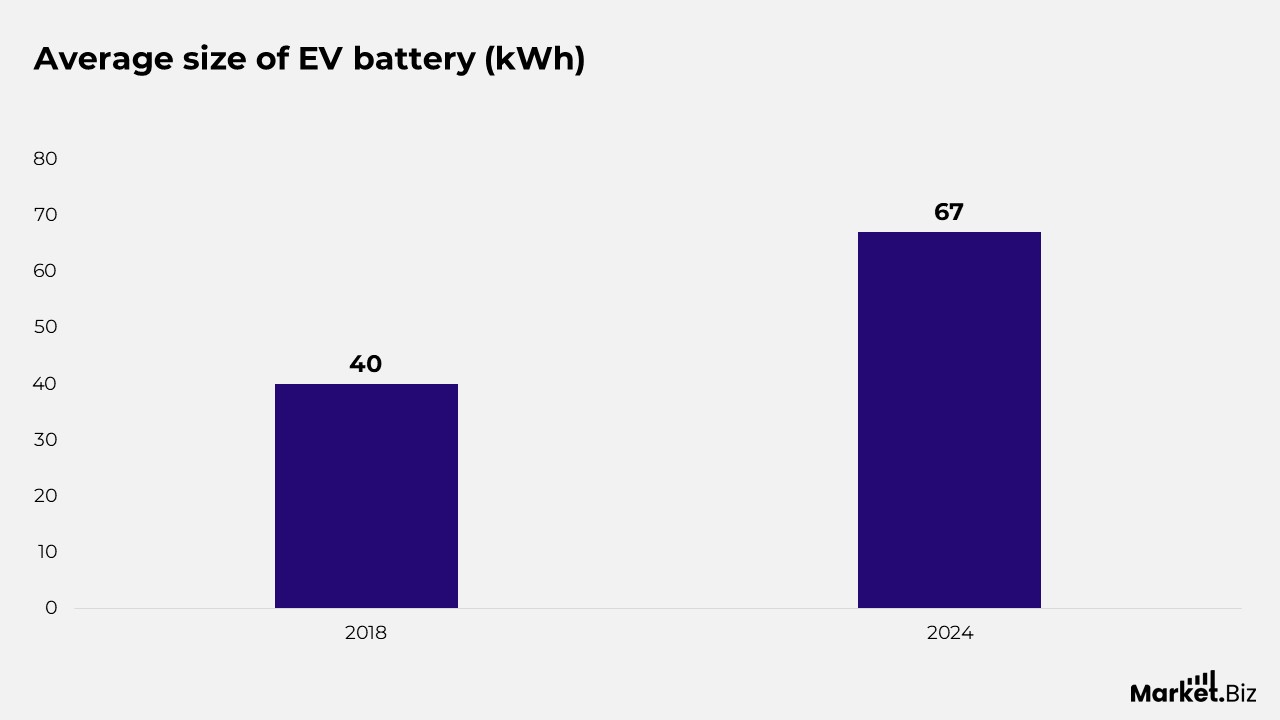
- The average size of EV battery packs rose from around 40 kWh in 2018 to approximately 67 kWh in 2024.
- Lithium-ion batteries comprise more than 90% of all rechargeable battery technologies utilised globally.
- Annually, over 6.5 billion lithium-ion cells are manufactured specifically for consumer electronics.
- In 2024, lithium-ion batteries consumed an estimated 86% of the total global production of lithium chemicals.
Lithium Ion Battery Market Size Statistics
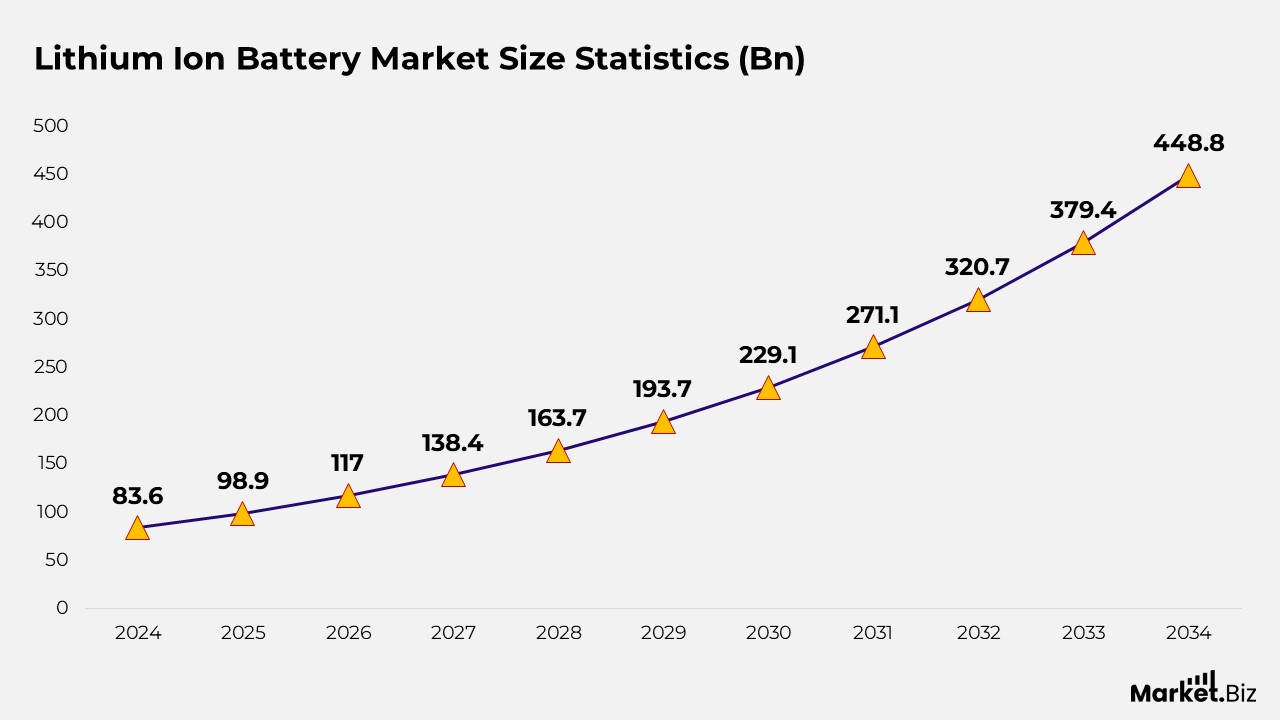
- The Global Lithium-Ion Battery Market is projected to expand from USD 83.6 billion in 2024 to USD 448.8 billion by 2034, reflecting a compound annual growth rate (CAGR) of 18.3%.
- Lithium Nickel Manganese Cobalt Oxide (NMC) commands a 42.4% share of the market. Primarily driven by applications in electric vehicles (EVs) and electronics.
- The segment for batteries with a capacity of 3,001–10,000 mAh accounts for 34.5% of the market share, spurred by the demand from consumer electronics.
- The automotive industry leads the market with a 44.2% share, supported by the global adoption of electric vehicles and various incentives.
- The Asia-Pacific region is at the forefront, holding a 48.5% market share and generating USD 39.4 billion, attributed to its robust manufacturing and research and development capabilities.
Lithium-Ion Battery Industry Growth Statistics
- By the end of 2024, the global manufacturing capacity for lithium-ion batteries had surpassed 3.8 TWh (terawatt-hours).
- The operational capacity accounted for merely 64% of the total announced battery manufacturing projects across the globe.
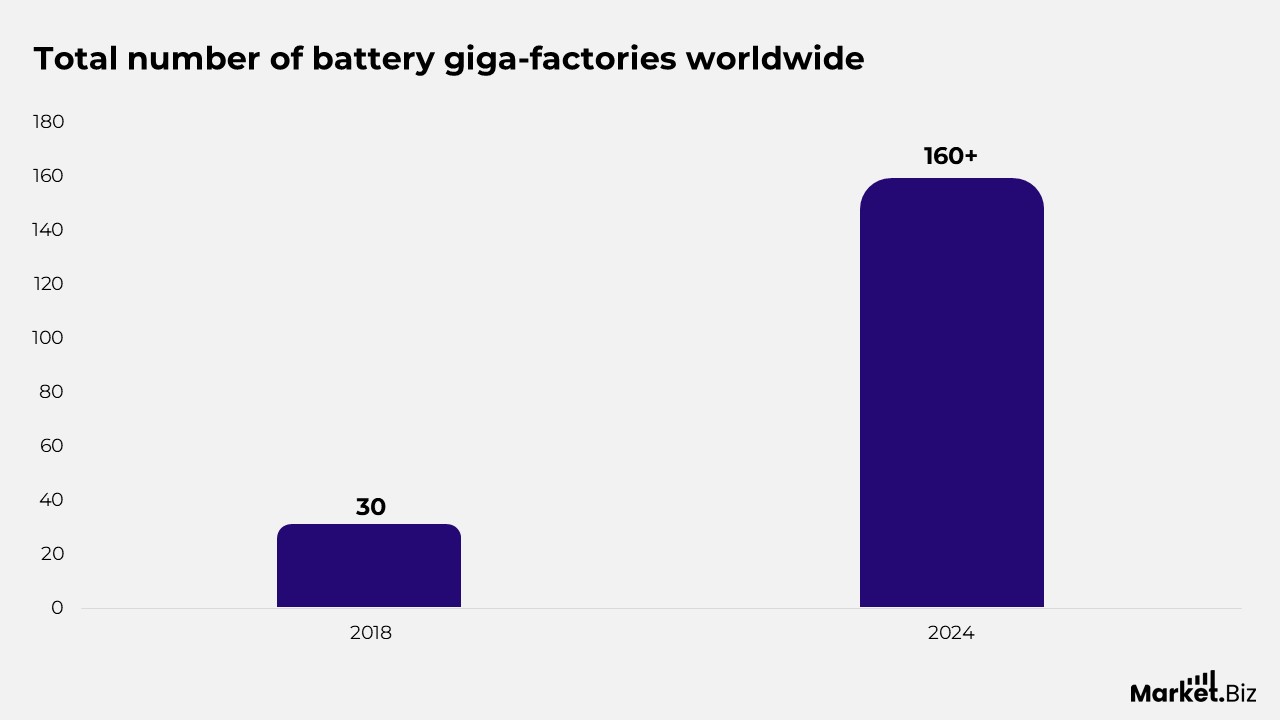
- The total number of battery giga-factories worldwide increased from approximately 30 in 2018 to more than 160 by 2024.
- The average size of giga-factories grew from 12 GWh to 45 GWh per facility over a span of six years.
- The prices of lithium-ion battery packs experienced a decline of approximately 87% from 2010 to 2024.
- The adoption of LFP battery chemistry rose from around 15% in 2019 to about 45% in 2024 of the total capacity.
- Recycling capacity for lithium-ion batteries exceeded 300 GWh equivalent; however, less than 10% of batteries were recycled.
- Over the past decade, battery energy density improved by approximately 55%, facilitating longer driving ranges for electric vehicles.
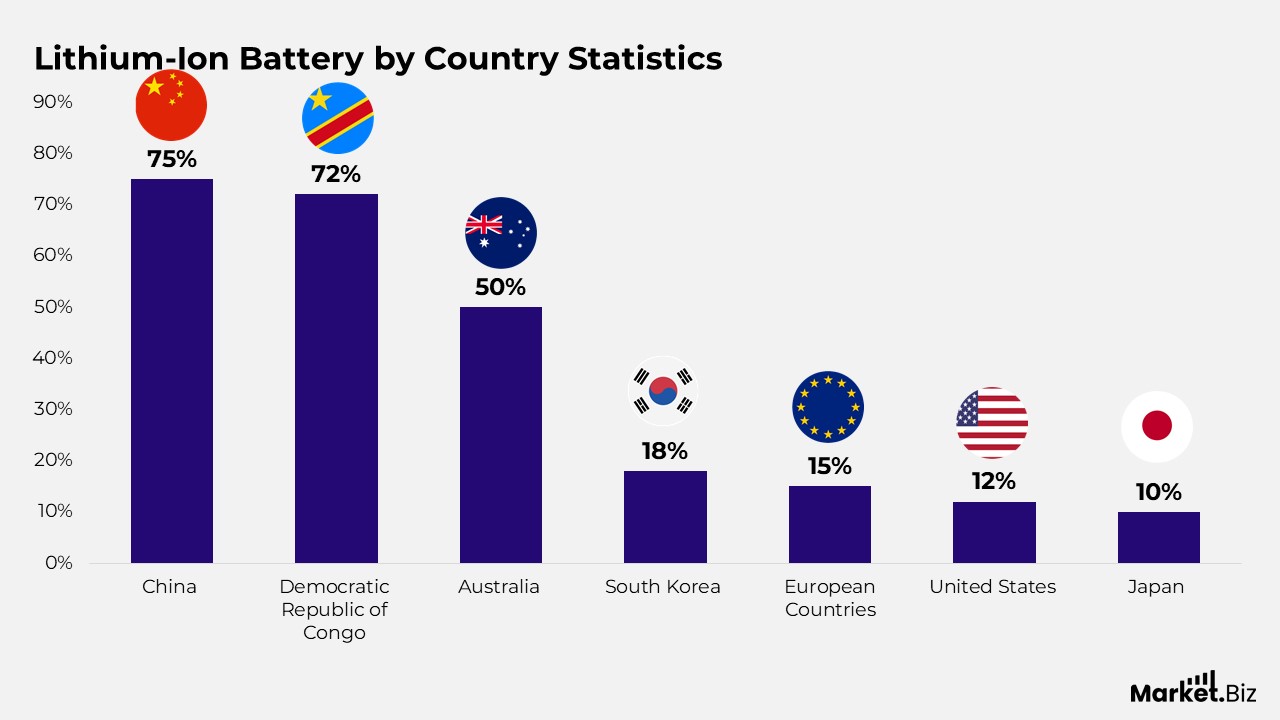
Country Statistics by Lithium-Ion Battery
- In 2024, China was responsible for producing more than 75% of the world’s lithium-ion battery cells.
- Additionally, China utilised approximately 56% of the total global lithium-ion battery production for domestic purposes.
- South Korea represented around 18% of the global manufacturing capacity for lithium-ion batteries.
- Japan contributed roughly 10% to the global production, with an emphasis on high-end chemistries.
- The United States accounted for about 12% of the global demand for lithium-ion batteries in 2024.
- Countries in Europe made up approximately 15% of the overall global battery demand, largely influenced by electric vehicle mandates.
- Australia provided nearly 50% of the lithium extracted worldwide that is utilized in battery manufacturing.
- The Democratic Republic of Congo was responsible for producing about 72% of the global cobalt supply, which is an essential raw material for batteries.
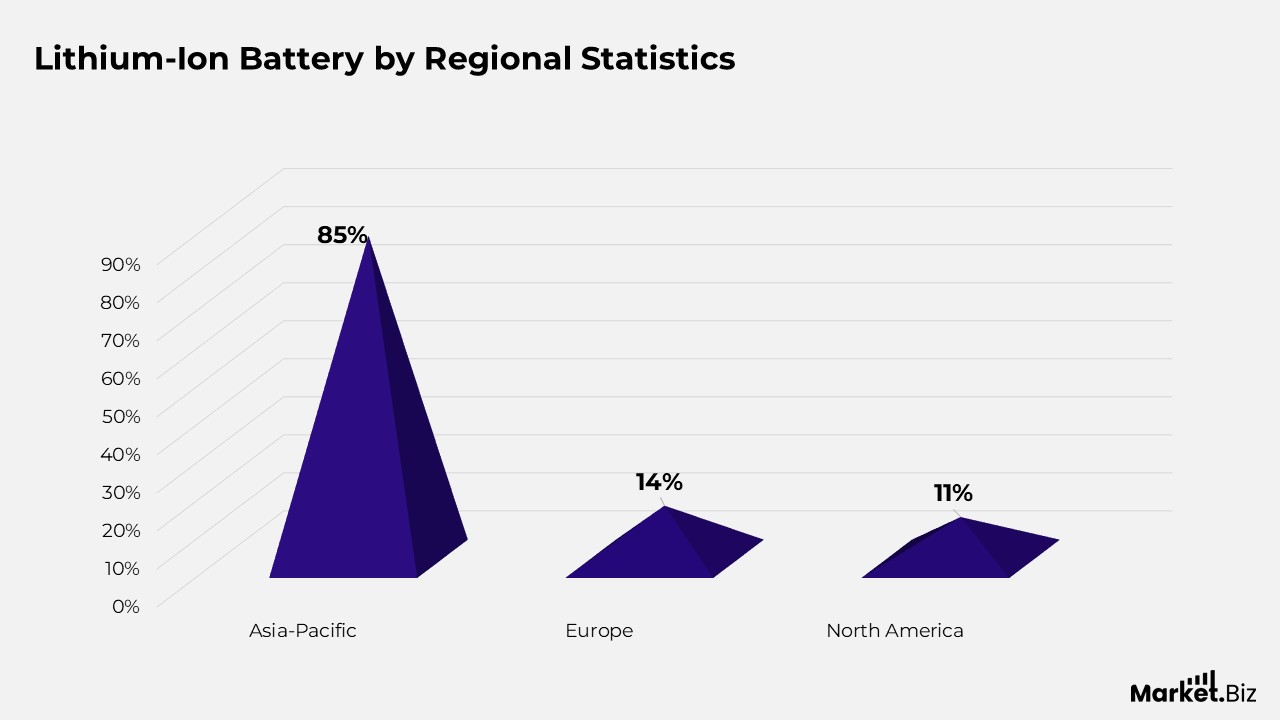
Lithium-Ion Battery by Regional Statistics
- The Asia-Pacific region constituted approximately 85% of the worldwide battery cell production capacity.
- Europe accounted for around 14% of the global demand for lithium-ion batteries. Primarily fueled by the adoption of electric vehicles and regulatory requirements.
- In 2024, North America represented about 11% of the total global battery demand.
- Southeast Asia and Latin America exhibited double-digit growth rates in battery demand, although starting from smaller bases.
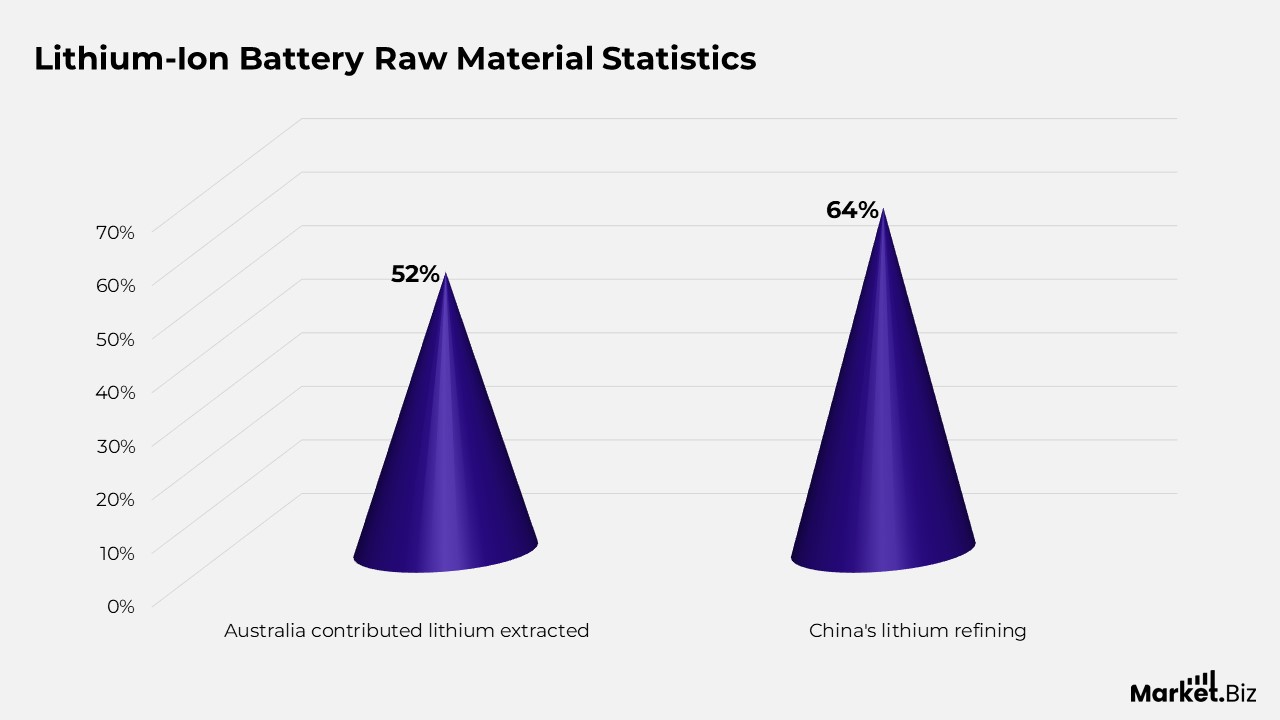
Lithium-Ion Battery Raw Material Statistics
- In 2024, lithium-ion batteries utilised approximately 89% of the total global lithium production.
- Battery production represented around 64% of the demand for cobalt and about 75% of the demand for Class-1 nickel.
- Australia contributed roughly 52% of the lithium extracted, whereas China led in refining, holding a share of approximately 64%.
- The Democratic Republic of Congo was responsible for about 71% of the world’s cobalt production, underscoring the risks associated with supply-chain concentration.
- Recycling accounted for less than 5% of the demand for lithium and nickel in 2024, reflecting a low level of circularity.
- The intensity of battery materials per kWh decreased as the chemistries transitioned towards a lower cobalt content.
Lithium Ion Battery Manufacturing Statistics
- Global has announced that the manufacturing capacity for lithium-ion batteries has exceeded 3.5–4.0 TWh (terawatt hours) by the conclusion of 2024.
- Only approximately 59% of the announced capacity was operational, which underscores a disparity between the planned and actual production levels.
- The average capacities of battery plants, commonly referred to as “giga-factories,” have risen from 13 GWh in 2018 to 45 GWh by 2024 for each facility.
- The leading 10 battery manufacturers accounted for over 76% of the global production of lithium-ion cells.
- Vertical integration, encompassing both cell-to-pack and cell-to-vehicle approaches, has led to a reduction in battery pack weight by 9% in newer designs.
- The yield rates in manufacturing have improved to over 93% at the foremost battery plants, which has contributed to a decrease in per-unit costs.
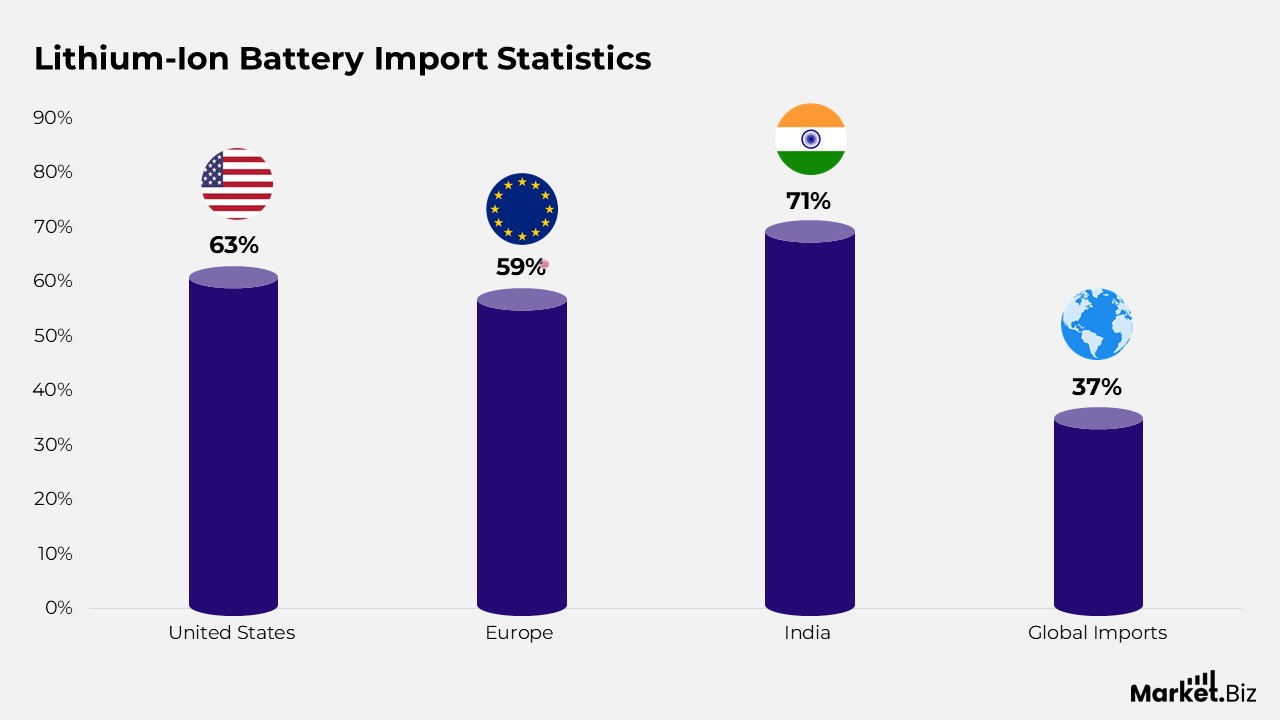
Lithium-Ion Battery Import Statistics
- The worldwide trade in lithium-ion battery imports surpassed USD 140 billion in value in 2024.
- The United States sourced over 63% of its lithium-ion batteries from China based on unit volume.
- Europe acquired around 59% of its battery cells and packs from manufacturers in Asia.
- India imported more than 71% of its lithium-ion battery needs, primarily for electric vehicles and electronics.
- Imports of battery-grade lithium saw an increase of approximately 28% year-over-year in key economies adopting electric vehicles.
- Globally, imports of lithium-ion batteries intended for energy storage systems grew by about 37% in 2024.
- Over 82% of the lithium-ion battery imports consisted of partially or fully assembled battery packs instead of raw cells.
- In several developing economies lacking domestic cell manufacturing, the import dependency ratios for lithium-ion batteries exceeded 94%.
Lithium-Ion Battery Export Statistics
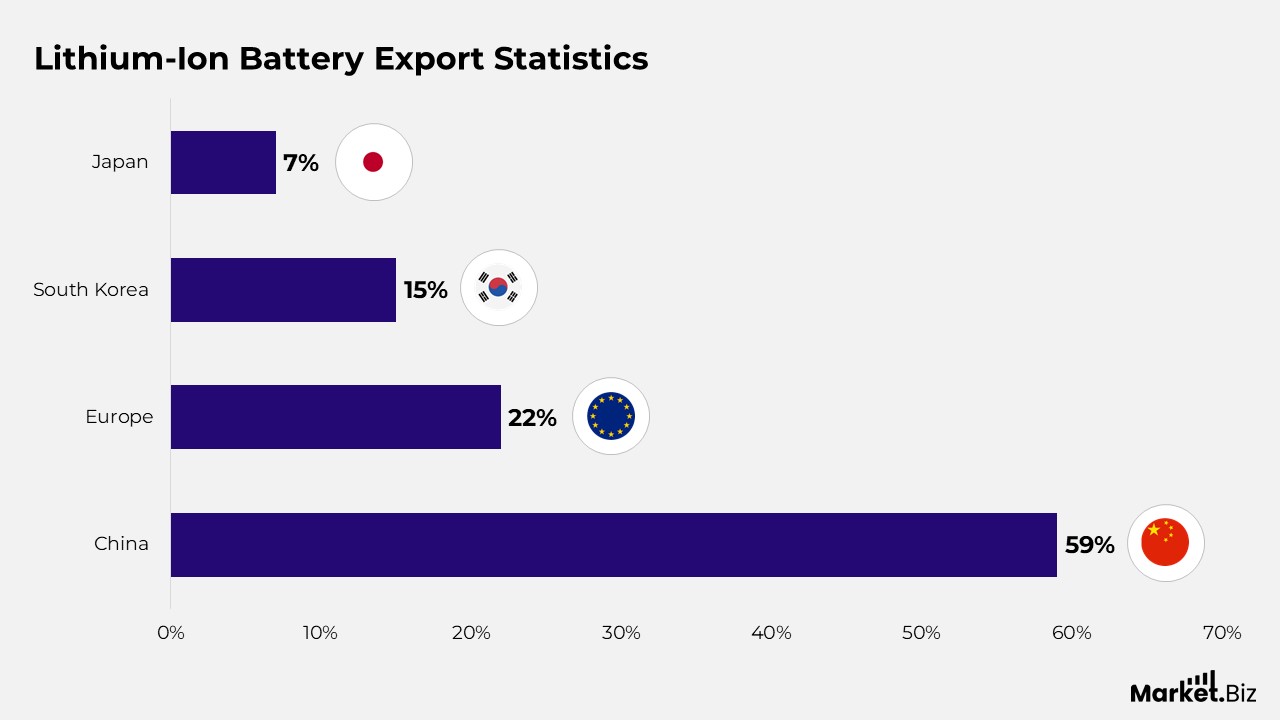
- In 2024, China represented approximately 59% of the total value of global lithium-ion battery exports.
- The global exports of lithium-ion batteries exceeded USD 150 billion in 2024, which is nearly double the value recorded in 2019.
- South Korea accounted for around 15% of the overall global lithium-ion battery exports.
- Japan maintained an export share of approximately 7%, primarily concentrating on high-performance battery cells.
- More than 75% of the lithium-ion batteries exported were utilised in electric vehicles and energy storage systems.
- Exports of batteries for electric vehicle applications experienced a year-over-year growth of about 40% in terms of volume.
- Europe’s lithium-ion battery exports rose by approximately 22%, bolstered by the establishment of new gigafactories.
- Finished battery packs constituted around 62% of the total export value of lithium-ion batteries. The remaining portion consists of cells and modules.
Recent Developments
- In 2025, BYD introduced a novel sodium-ion battery technology, which diminishes dependence on lithium and is focused on promoting sustainable innovation in electric vehicles.
- Further, in 2025, Toshiba released an enhanced SCiB lithium-ion battery featuring niobium-titanium oxide anodes, providing increased energy density and extremely rapid charging.
Lithium-Ion Battery Future Prediction
- By 2026, the lithium-ion battery (Li-ion) market is expected to experience sustained robust growth, fueled by decreasing costs (potentially falling below $100/kWh), advancements in technology such as larger cells (cell-to-pack), and an increasing demand for electric vehicles (EVs) and energy storage.
- By 2027, the lithium-ion battery market is anticipated to undergo substantial growth, propelled by the demand for electric vehicles and energy storage solutions, with an emphasis on enhanced energy density (providing greater range), quicker charging times (10-15 minutes), safer designs (incorporating fire protection), and the development of new materials such as silicon anodes.
- The outlook for Lithium-Ion (Li-ion) batteries appears strong, driven by the rise of electric vehicles (EVs) and the need for renewable energy storage, with significant market expansion expected throughout the 2030s.
Conclusion
Statistics regarding lithium-ion (Li-ion) batteries indicate remarkable growth, primarily fuelled by the demand for electric vehicles (EVs) and renewable energy storage solutions.
The market is anticipated to reach several hundred billion dollars by 2030, notwithstanding temporary overcapacity and price reductions, such as the record low of $115 per kWh observed in late 2024, attributed to increased manufacturing capacity.
Significant trends include the Asia-Pacific region’s dominance in battery manufacturing, particularly in China, the emergence of lithium iron phosphate (LFP) batteries, and continuous research aimed at developing more efficient, cost-effective, and durable materials and manufacturing processes.
Moreover, these advancements are essential to satisfy the substantial requirements for a fully renewable energy grid, while statistical models are employed to forecast battery performance and lifespan.
FAQ’s
Lithium-ion batteries employ lithium compounds within their electrodes, leading to enhanced energy density and more effective charge cycles. This characteristic allows them to retain a greater amount of energy over prolonged periods without substantial capacity degradation, rendering them suitable for both everyday gadgets and large-scale energy storage applications.
Typically, most Li-ion batteries are anticipated to last approximately 500 cycles. In contrast, LiFePO4 batteries boast longer lifespans and can endure thousands of cycles before their capacity is significantly compromised. For instance, the EcoFlow DELTA 2 Max is designed for 3,000 cycles before its storage capacity reduces to 80%.
The predominant cause of lithium-ion battery explosions is attributed to manufacturing defects. Inexpensive materials and inadequate quality control can lead to the introduction of impurities or foreign particles within the battery, potentially resulting in short circuits and heightening the risk of thermal runaway.