









Introduction
Digital Trust Statistics: Digital trust has become a foundational element of the modern online world, shaping how people engage with technology, brands, and digital platforms. As everyday life grows more connected through smart devices, cloud services, ecommerce, and AI-powered tools, consumer expectations around privacy, security, and responsible data use continue to rise.
Digital trust statistics provide valuable insight into how comfortable users feel sharing personal information, how secure they believe digital environments are, and how trust influences their online choices. These metrics help organizations identify changing consumer expectations, uncover trust gaps, and understand why clear communication, ethical data practices, and strong security measures are now essential for building lasting digital relationships.
Editor’s Choice
- 77% of global consumers do not fully understand how brands collect and use their personal data.
- 50% of organizations fall into the medium digital trust maturity band, showing major room for improvement.
- 67% of companies report a decline in reputation when digital trust is low.
- 71% say higher digital trust directly enhances their organizational reputation.
- 59% of organizations experience fewer cybersecurity incidents when trust measures improve.
- 44% of consumers trust the banking sector the most for handling personal information.
- 90% of employees in APJ and North America consider digital trust extremely important.
- 58% of high-income consumers place extreme importance on digital trust, the highest among all income groups.
- 53% of organizations struggle to build digital trust due to a lack of skills and training.
- Only 22% of organizations have achieved high digital trust maturity.
- 25% of global consumers are uncertain whether regulators can keep pace with Big Tech’s growing influence.
- Between 82% and 90% of consumers in India and the UAE have a strong awareness of how their data is used.
- Trust in social media companies drops to just 2% among consumers aged 55+.
Benefits of Digital Trust
- Organizations report a stronger positive reputation when digital trust is high, with 71% recognizing this impact.
- 60% say they gain more reliable data for improved decision-making.
- 60% experience fewer privacy breaches as trust measures improve.
- 59% report a reduction in cybersecurity incidents.
- 56% see higher customer loyalty due to increased trust.
- 44% note faster innovation because users have confidence in their technology and systems.
- 27% report an increase in revenue linked to stronger digital trust.
(Source: An ISACA Global Research Report)
Why a Lack of Digital Trust Damages Business Outcomes?
- 67% of organizations experience a decline in reputation when digital trust is low.
- 63% report experiencing more privacy breaches.
- 62% encounter an increase in cybersecurity incidents.
- 60% say they have suffered customer losses due to reduced trust.
- 57% receive less reliable data, making decision-making more difficult.
- 44% experience a negative impact on revenue.
- 36% report slower innovation as confidence in their systems decreases.
(Source: An ISACA Global Research Report)
How Digital Trust Is Evaluated Among Customers
- 54% of organizations assess digital trust through customer satisfaction surveys.
- 48% monitor trust by tracking issues raised with customer service teams.
- 38% measure trust by observing customer retention trends.
- 31% evaluate trust by analyzing patterns in customer behavior.
- 27% rely on customer recommendation surveys as a trust indicator.
(Source: An ISACA Global Research Report)
How Digital Trust Is Evaluated Inside Organizations
- 45% review internal trust-related processes and practices to assess trust.
- 39% gather insights through customer or client research.
- 35% benchmark their trust performance against other similar organizations.
(Source: An ISACA Global Research Report)
Top Factors Hindering Progress Toward Digital Trust
- 53% of organizations say a major barrier to building digital trust is the lack of proper skills and training.
- 44% struggle because leadership does not fully support digital trust initiatives.
- 44% report limited budgets as a key constraint in improving trust-related capabilities.
- 43% cite misalignment between digital trust efforts and broader enterprise goals.
- 39% admit that digital trust is not treated as a priority within their organization.
- 37% face challenges due to a shortage of technological resources.
- 37% struggle with weak or insufficient governance processes.
- 28% experience disruptions from staff shortages or high turnover.
- 10% point to increasingly sophisticated bad actors as a growing obstacle.
(Source: An ISACA Global Research Report)
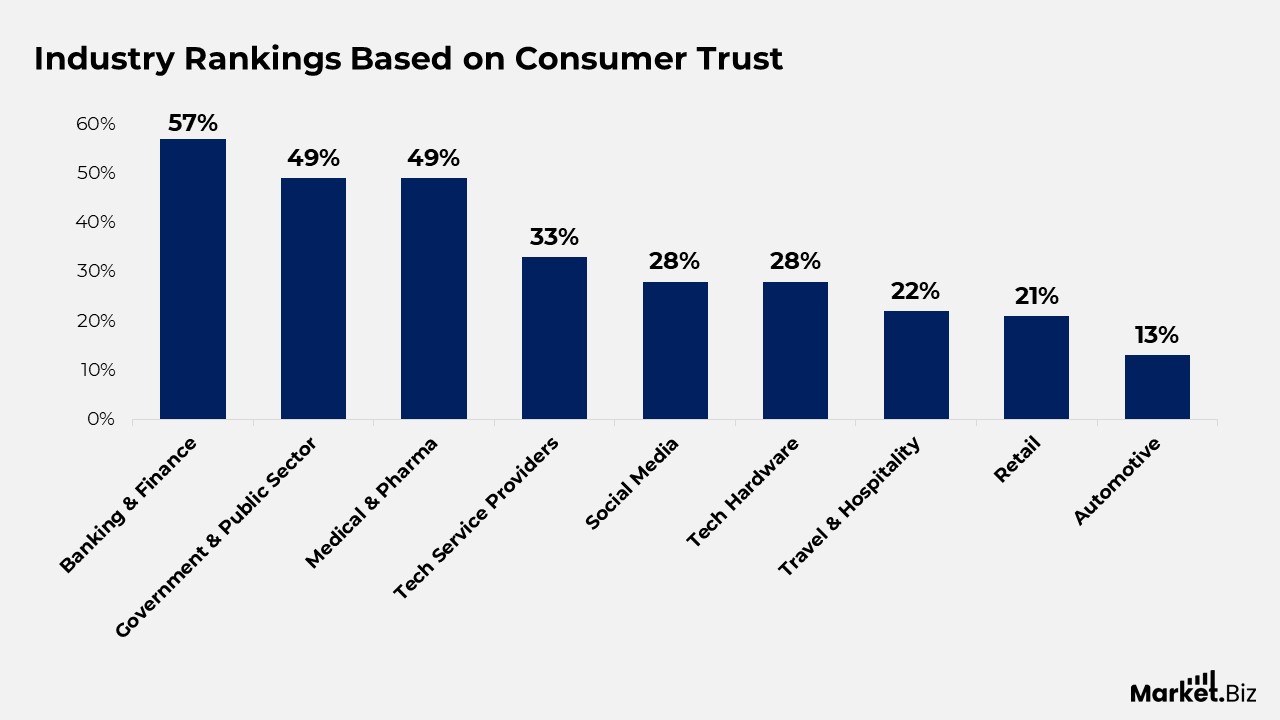
Industry Rankings Based on Consumer Trust
- 57% of consumers place the highest trust in the banking and finance sector.
- 49% view government and public sector organizations as trustworthy.
- 49% also express strong trust in medical and pharmaceutical companies.
- 33% say they trust technology service providers.
- 28% consider social media platforms to be trustworthy.
- 28% express trust in technology hardware companies.
- 22% trust brands in the travel and hospitality industry.
- 21% view retail companies as trustworthy.
- 13% show trust in automotive companies, the lowest among listed industries.
(Source: Usercentrics GmbH)
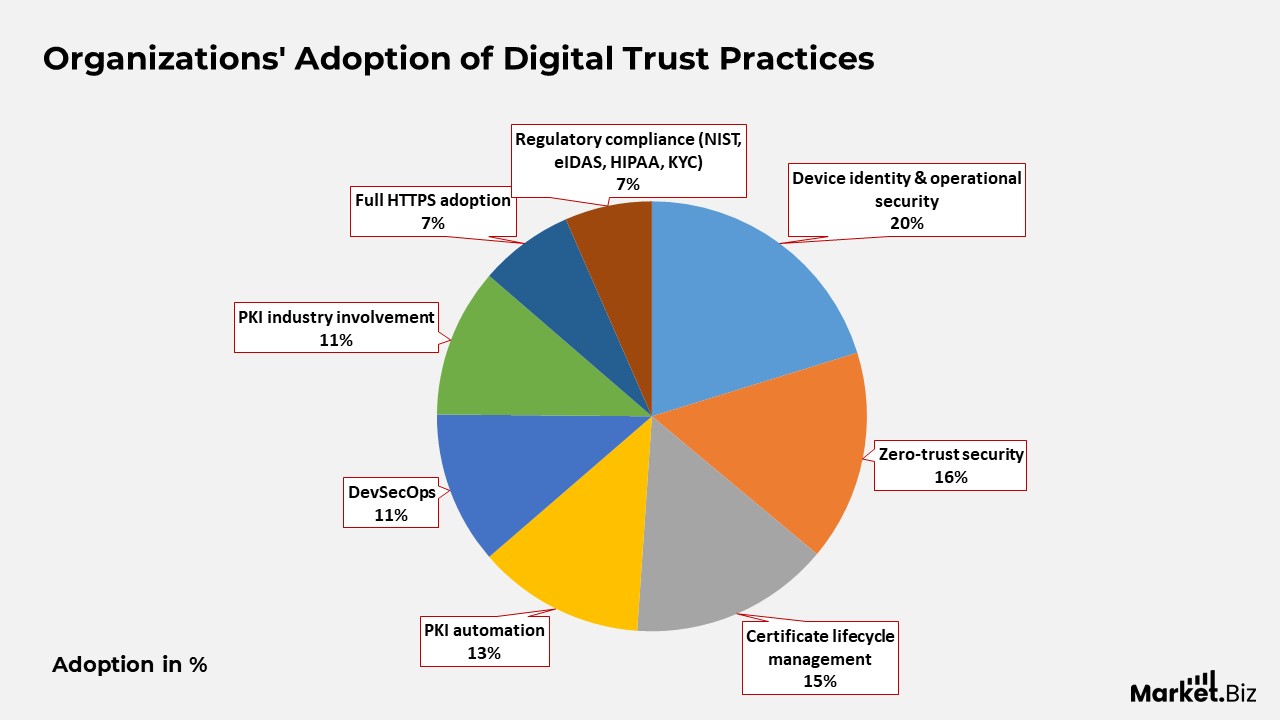
Organizations’ Adoption of Key Digital Trust Practices
- 74% have implemented device identity and operational security measures.
- 58% have adopted a zero-trust security framework.
- 55% are managing certificate lifecycles as part of their trust strategy.
- 46% have integrated PKI automation into their security processes.
- 42% are practicing DevSecOps to strengthen security across development cycles.
- 41% participate in industry groups that focus on PKI implementation.
- 26% have deployed HTTPS across all digital touchpoints.
- 24% comply with regulatory standards such as NIST, eIDAS, HIPAA, and KYC requirements.
(Source: digicert, Digital Trust Survey Report)
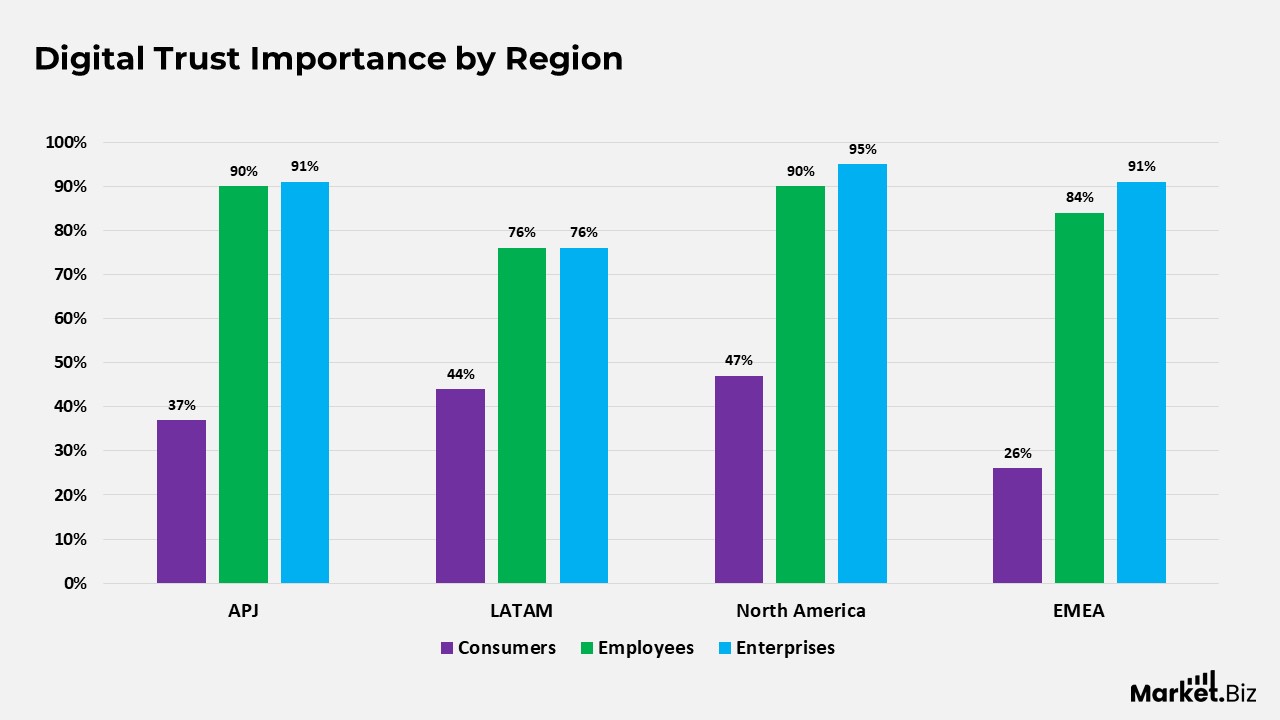
Digital Trust Importance by Region Statistics
- In the APJ region, 37% of consumers, 90% of employees and 91% of enterprises consider digital trust extremely important.
- Across LATAM, 44% of consumers, 76% of employees and 76% of enterprises view digital trust as highly significant.
- In North America, 47% of consumers, 90% of employees and 95% of enterprises rate digital trust as critically important.
- Within EMEA, 26% of consumers, 84% of employees and 91% of enterprises consider digital trust essential.
(Source: digicert, Digital Trust Survey Report)
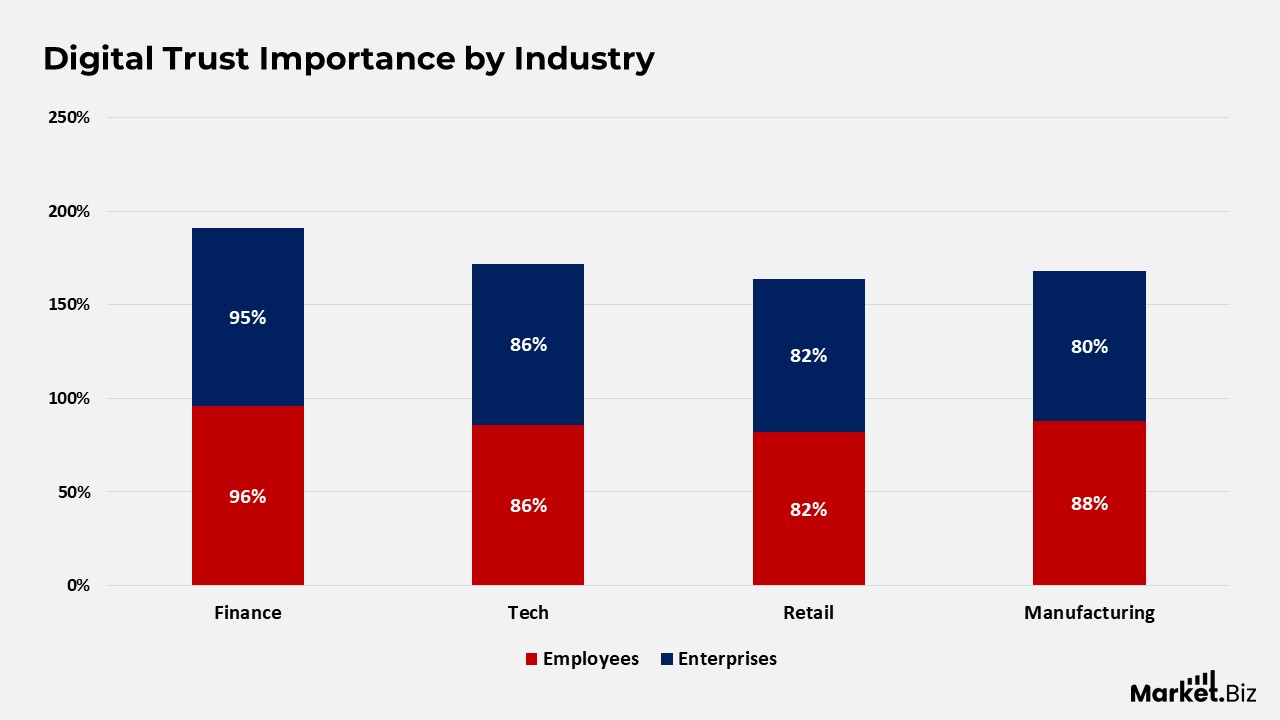
Digital Trust Importance by Industry Statistics
- In the financial sector, 96% of employees and 95% of enterprises see digital trust as extremely important.
- In the tech industry, 86% of employees and 86% of enterprises place strong importance on digital trust.
- In the retail industry, 82% of employees and 82% of enterprises value digital trust highly.
- In manufacturing, 88% of employees and 80% of enterprises recognize digital trust as a critical factor.
(Source: digicert, Digital Trust Survey Report)
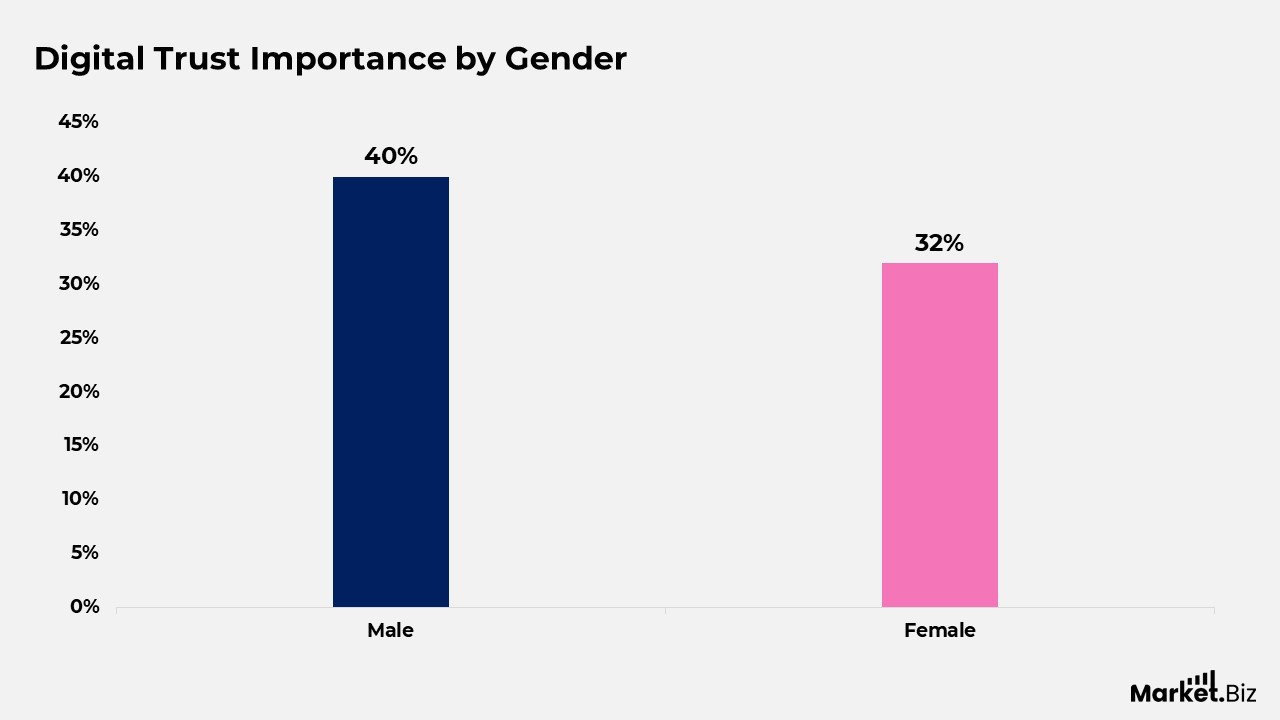
Digital Trust Importance by Gender Statistics
- 40% of male consumers consider digital trust extremely important.
- 32% of female consumers rate digital trust as highly important.
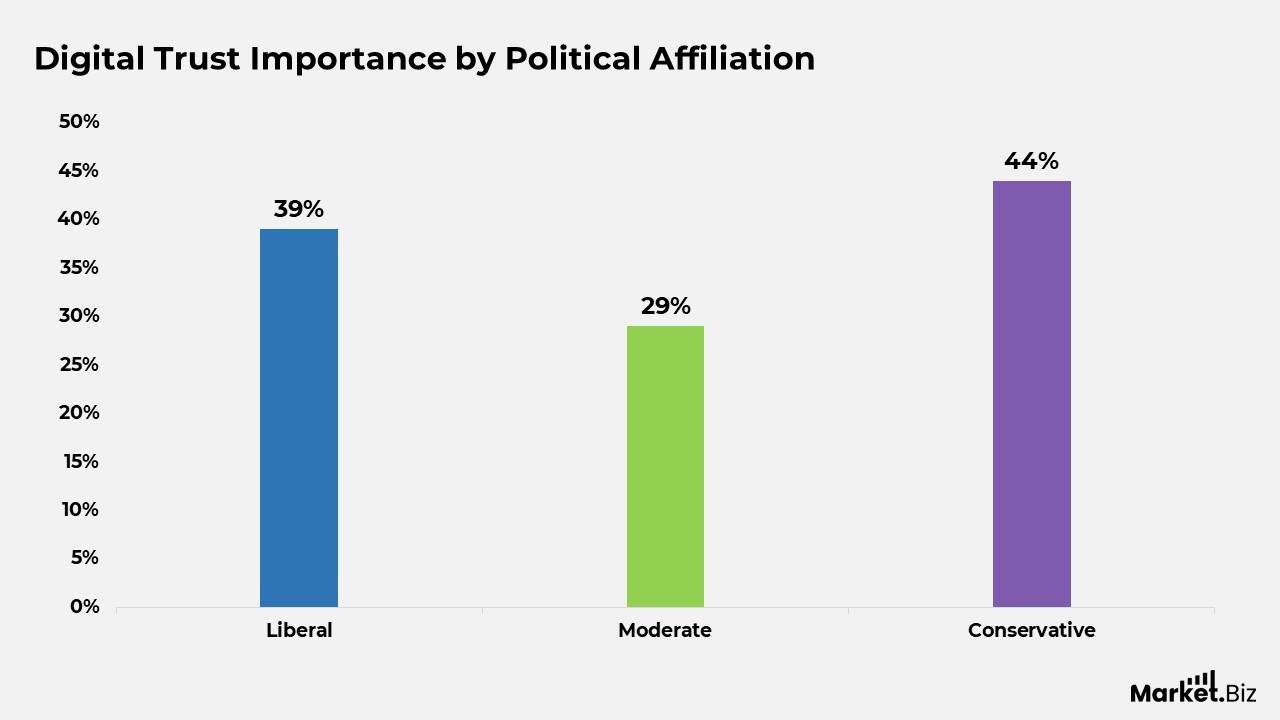
Importance by Political Affiliation
- 39% of liberal consumers view digital trust as extremely important.
- 29% of moderate consumers see it as a high priority.
- 44% of conservative consumers consider it extremely important.
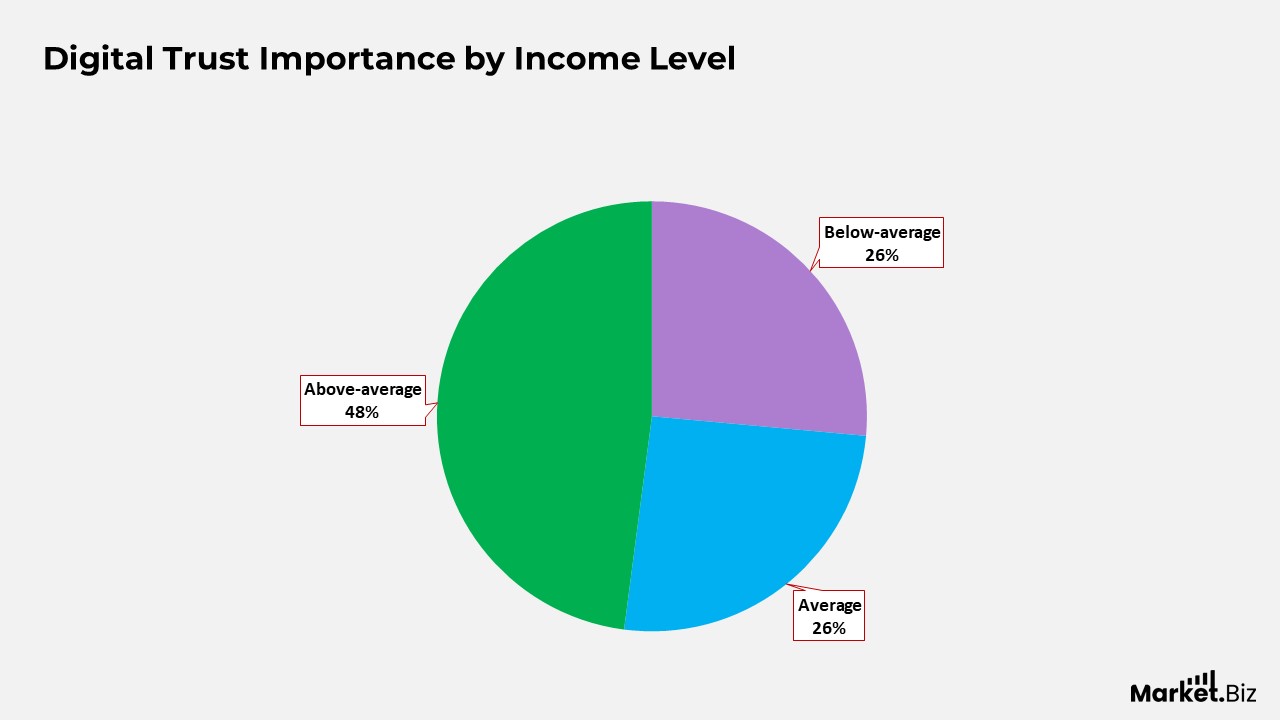
Digital Trust Importance by Income Level Statistics
- 32% of consumers with a below-average income rate place digital trust as very important.
- 31% of those with an average income share the same view.
- 58% of above-average earners consider digital trust extremely important.
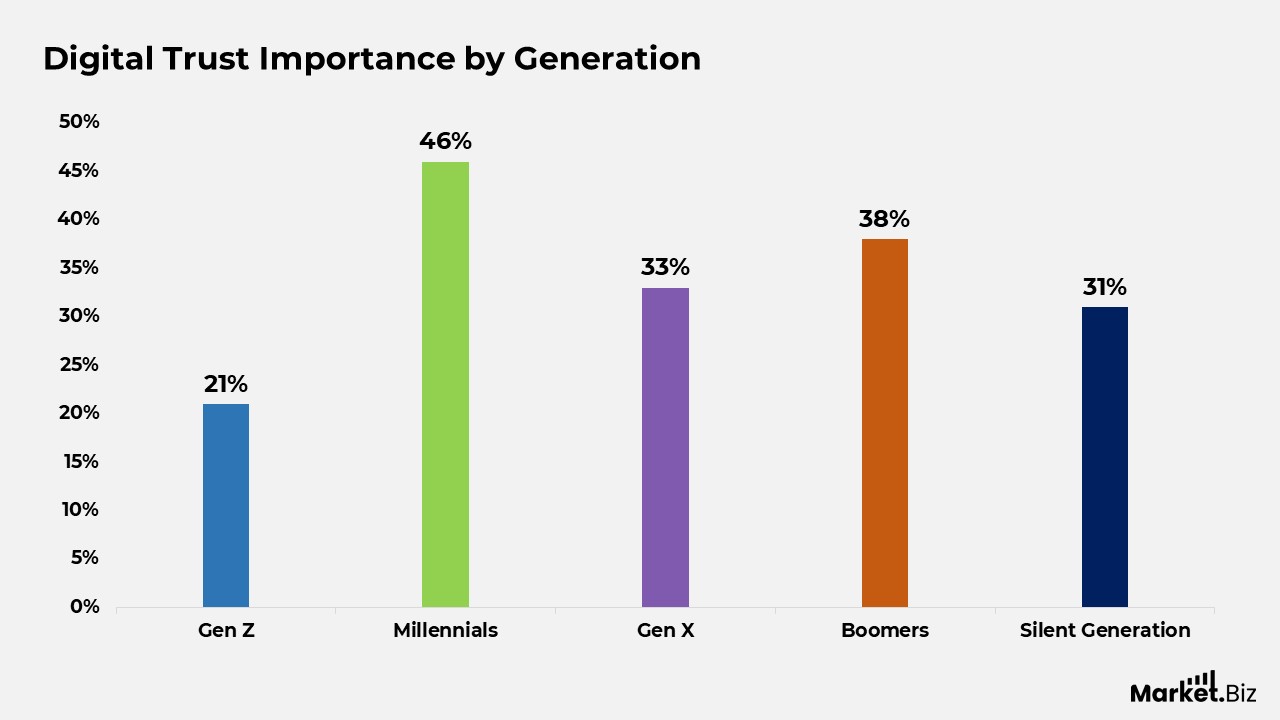
Digital Trust Importance by Generation Statistics
- 21% of Gen Z consumers place high importance on digital trust.
- 46% of millennials value digital trust highly.
- 33% of Gen X consumers view digital trust as extremely important.
- 38% of boomers consider digital trust very important.
- 31% of the silent generation also see digital trust as important.
(Source: digicert, Digital Trust Survey Report)
Organizational Roles Essential for Strengthening Digital Trust Statistics
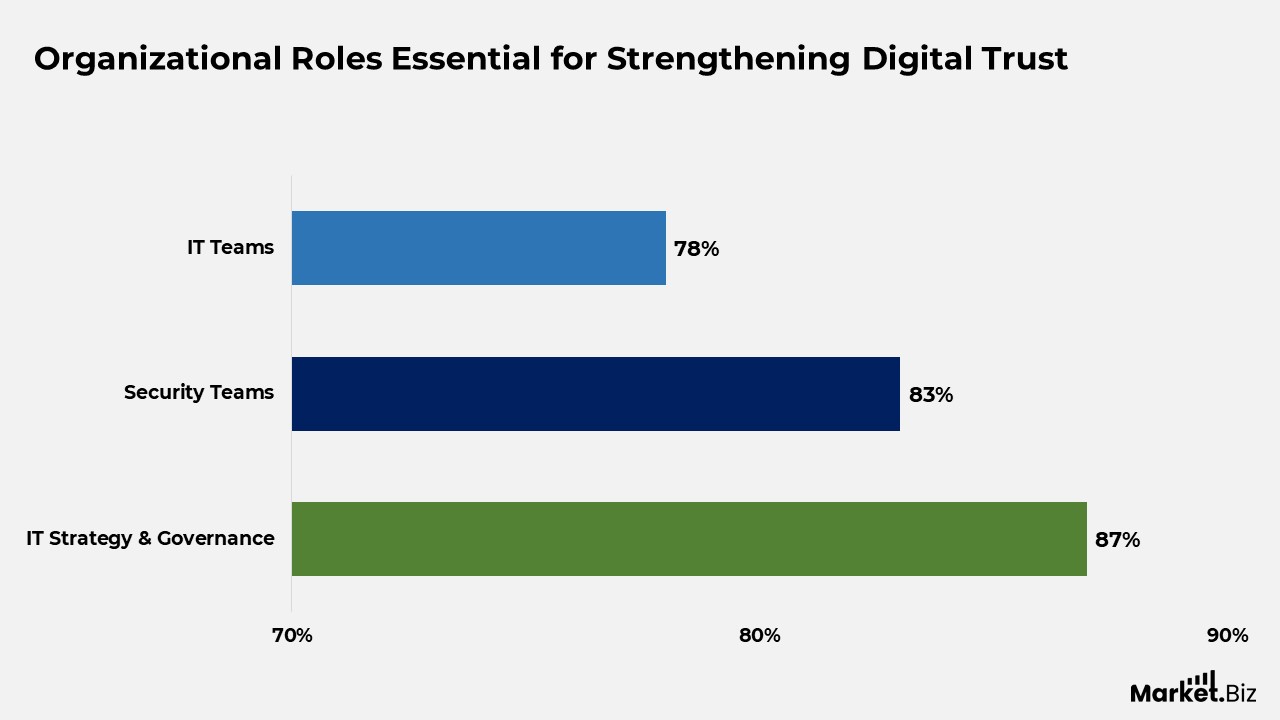
- 87% of respondents say IT strategy and governance play a crucial role in establishing digital trust.
- 83% believe that security functions are central to building and maintaining trust.
- 78% consider information technology teams vital to supporting digital trust initiatives.
(Source: digicert, Digital Trust Survey Report)
Global Digital Trust Maturity Statistics
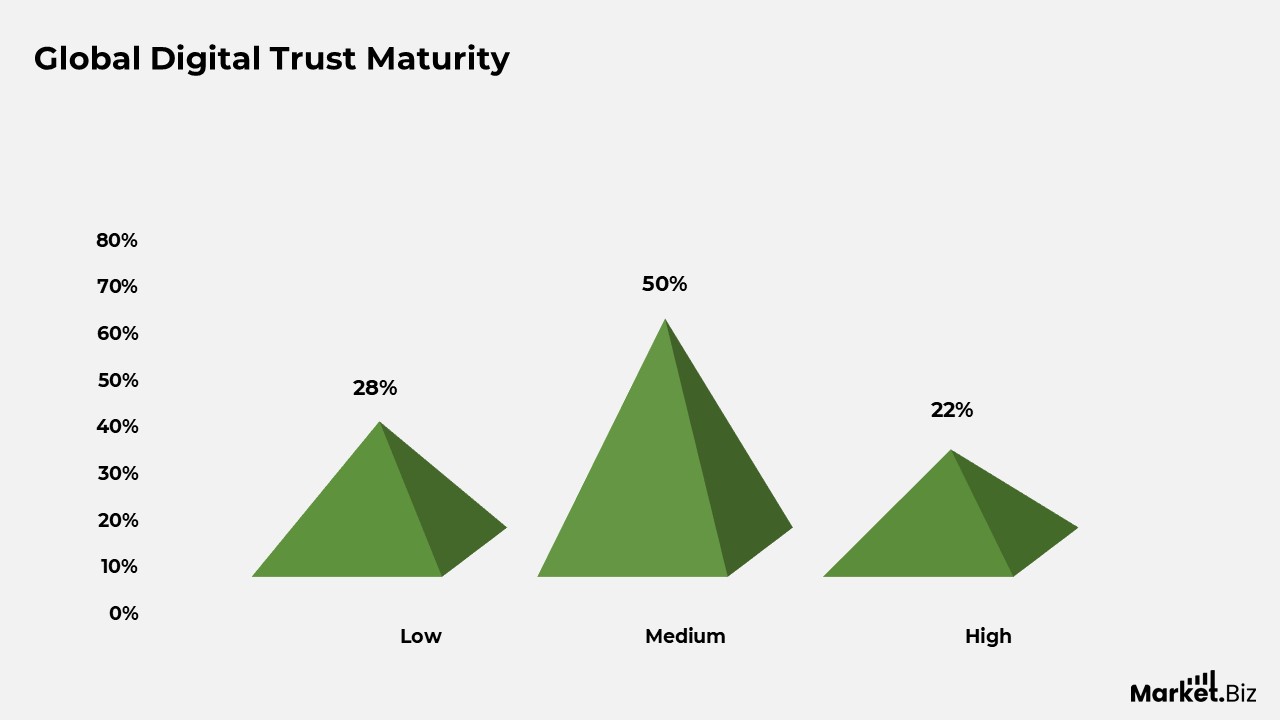
- About 28% of the 1,110 global respondents were categorized as having low digital trust maturity, indicating that foundational trust capabilities remain underdeveloped across many organisations.
- Nearly 50% of participants fell into the medium maturity segment, showing moderate progress but still lacking strong, advanced digital trust practices.
- Only 22% of respondents reached high digital trust maturity, indicating that a smaller proportion of organisations have fully established trust-focused frameworks.
- Overall, the results show that most organizations operate in the mid-range of digital trust maturity, with relatively few at the highest level.
(Source: Deloitte)
How Consumer Interactions Reflect Growing Digital Trust Issues Statistics
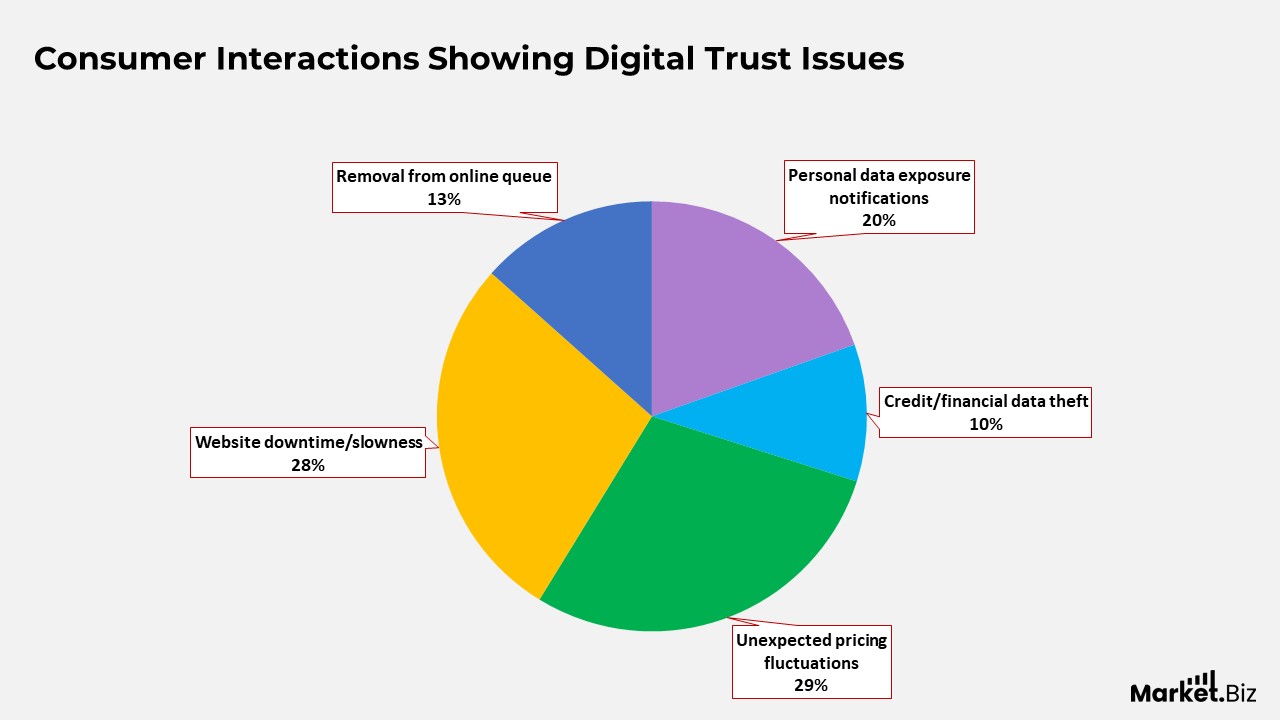
- 19% of consumers reported receiving notifications that their personal information had been exposed or compromised.
- 10% of consumers, roughly 1 in 10, have faced incidents where their credit card or financial details were stolen.
- 28% of consumers encountered unexpected pricing changes when attempting to purchase a product or service.
- 27% of consumers experienced slow website performance or temporary outages while using a brand’s digital platform.
- 13% of consumers were removed from an online waiting queue while trying to access a product or service.
(Source: Thales Digital Trust)
Consumer Trust Levels Across Key Sectors for Personal Data Sharing
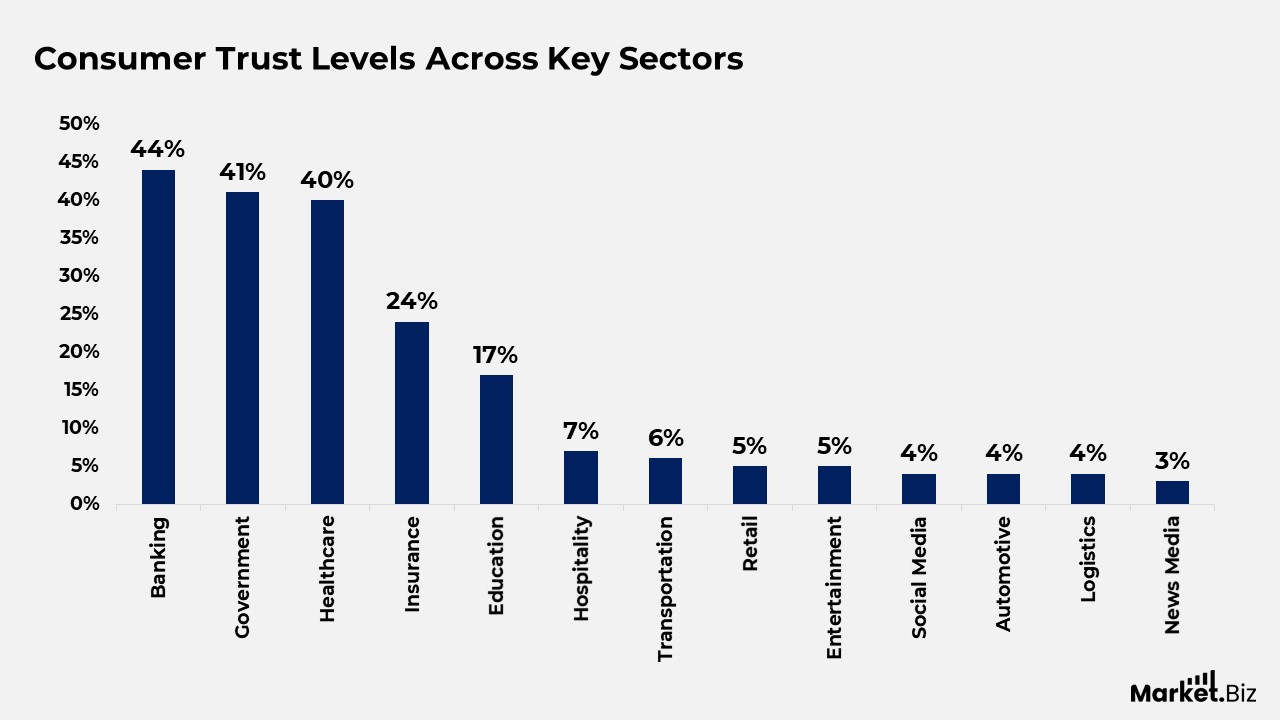
- Banking earns the highest level of trust, with 44% of consumers trusting the sector with their personal information.
- Government services follow closely, earning the trust of 41% of respondents.
- Healthcare ranks third, with 40% of consumers comfortable sharing their data with providers.
- Insurance companies are trusted by 24% of consumers.
- Educational institutions gain the trust of 17% of individuals.
- Hospitality services are trusted by 7% of consumers.
- Transportation providers, including airlines and rail services, receive trust from 6% of respondents.
- The retail and entertainment sectors each hold 5% of consumer trust.
- Social media platforms, automotive companies, and logistics providers are each trusted by 4% of consumers.
- News media organizations sit at the bottom, with only 3% of consumers willing to share their personal data.
(Source: Thales Digital Trust)
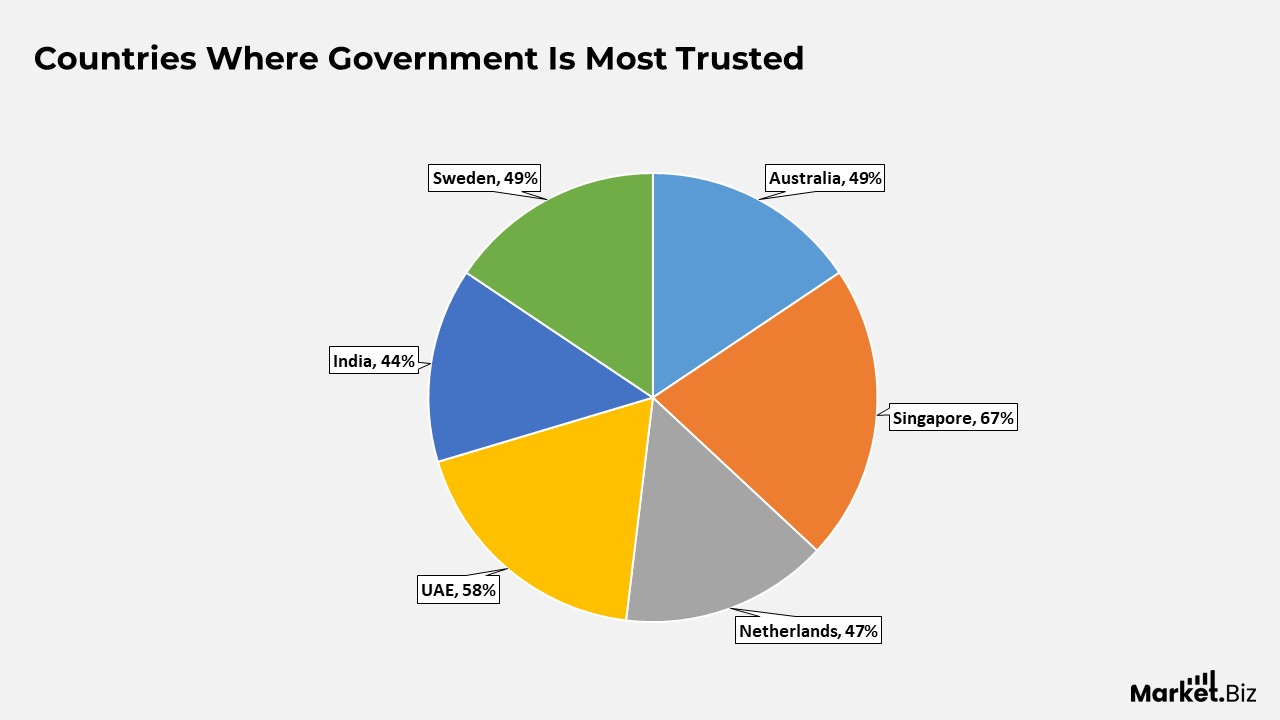
Where Consumers Place Their Greatest Trust in Government Bodies?
- In Australia, 49% of consumers consider the government the most reliable sector for sharing personal information.
- Singapore shows the strongest trust levels, with 67% of respondents placing their highest confidence in the government.
- In the Netherlands, 47% of consumers view government organizations as their most trusted option.
- The UAE reports a solid 58% trust rating for government institutions.
- In India, 44% of consumers prefer government bodies for safeguarding their data.
- Sweden matches Australia, with 49% of individuals ranking the government as their most trusted sector.
(Source: Thales Digital Trust)
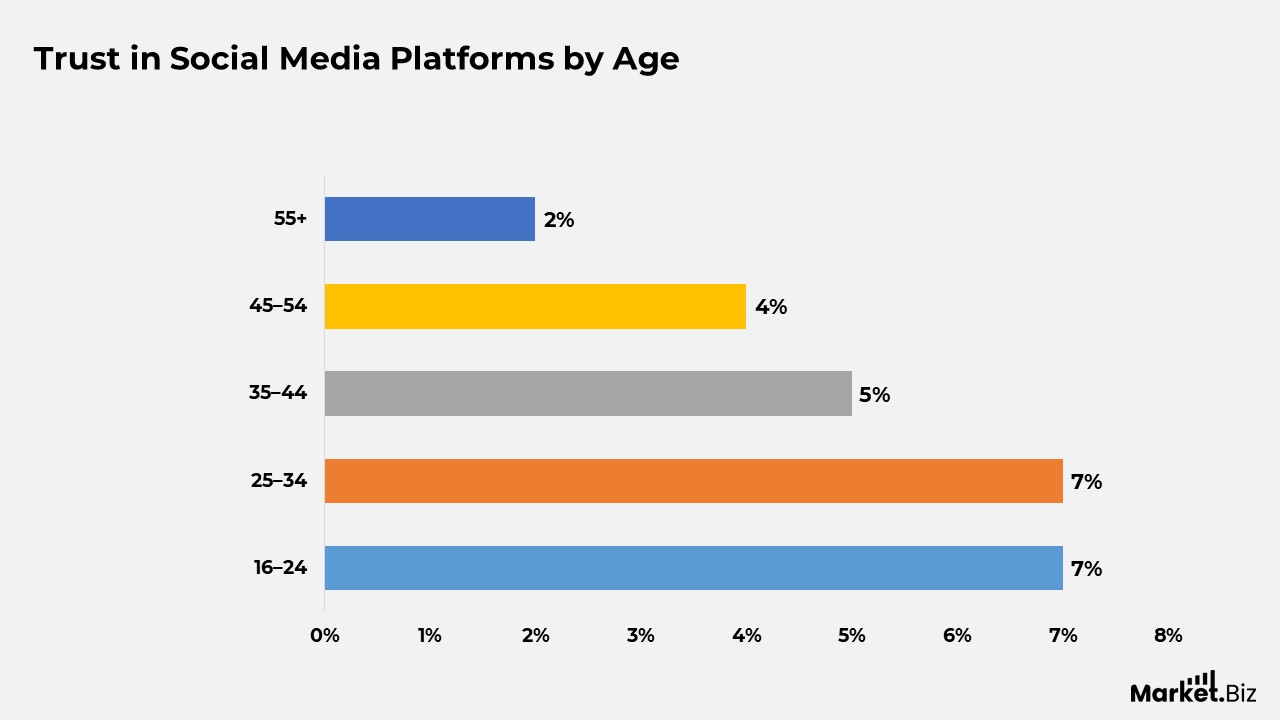
Age-Wise Consumer Trust Levels in Social Media Platforms
- Among consumers aged 16–24, trust in social media companies stands at 7%.
- Individuals aged 25–34 also show 7% trust, matching the youngest group.
- Trust declines to 5% among consumers aged 35–44.
- Those aged 45–54 express even lower confidence, with only 4% trusting social media platforms.
- The lowest level of trust is seen among consumers aged 55+, with only 2% trusting social media companies.
(Source: Thales Digital Trust)
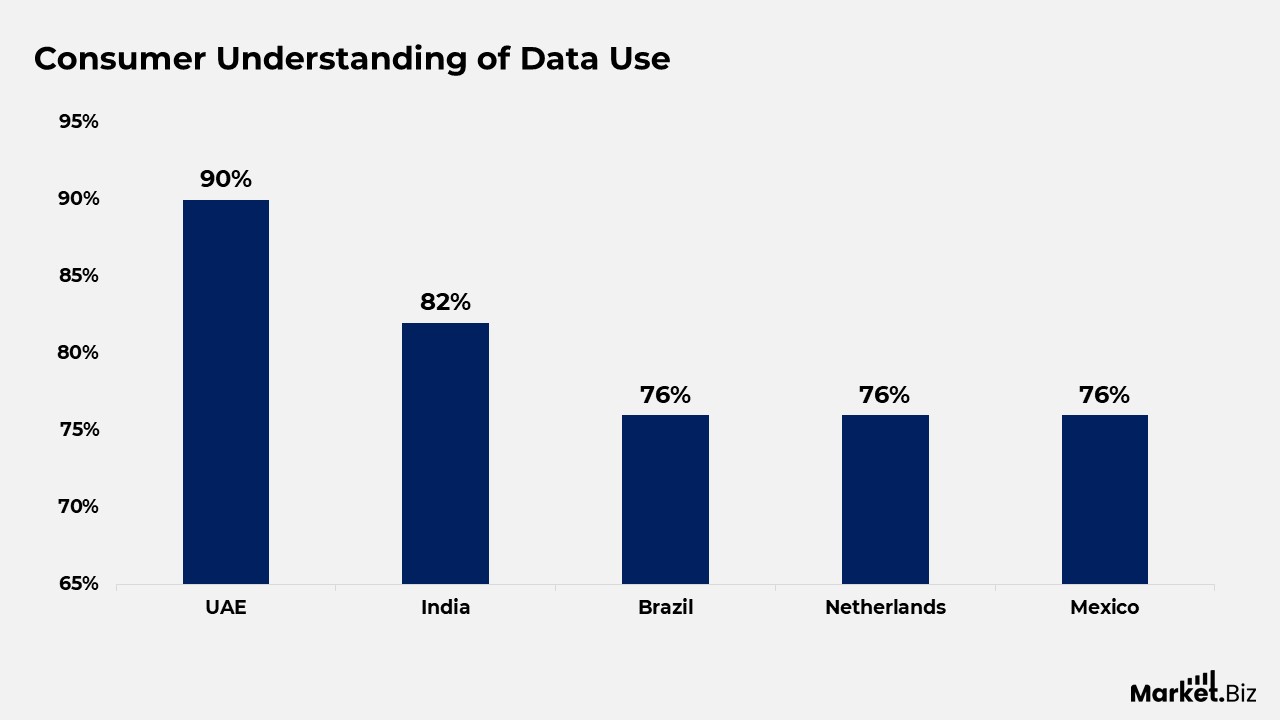
Global Markets Showing Strong Consumer Clarity on Data Use
- In the UAE, 90% of consumers report having a strong understanding of how their personal data is handled.
- India follows with 82% of individuals expressing high awareness of data usage practices.
- Brazil records a 76% awareness level among its consumers.
- The Netherlands also reports 76% of consumers who feel well-informed about how their data is used.
- Mexico matches this level, with 76% of respondents indicating a strong understanding of data use.
(Source: Thales Digital Trust)
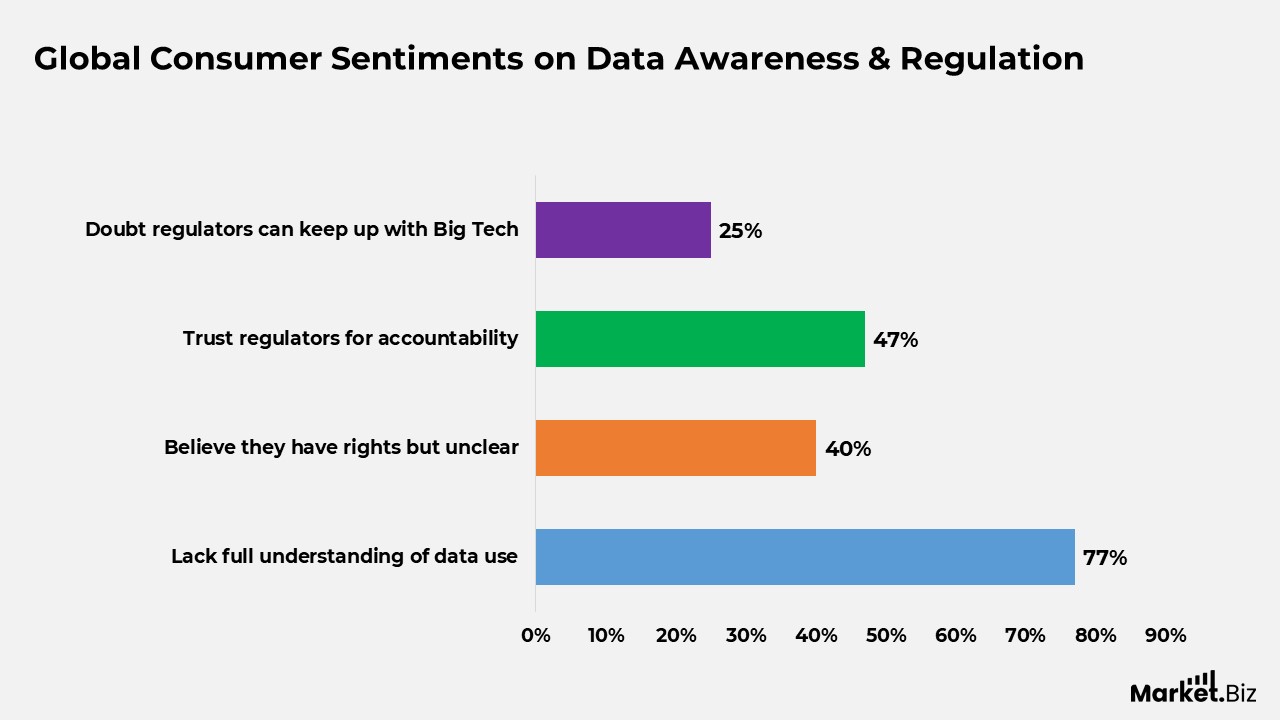
Global Consumer Sentiments on Data Awareness and Regulatory Trust
- 77% of consumers worldwide admit they do not fully understand how brands collect and use their personal data.
- 40% of individuals believe they have data rights but are unsure what those rights actually include.
- 47% of consumers trust regulatory bodies to safeguard them and ensure companies remain accountable.
- 25% of respondents are doubtful that regulators can keep pace with the growing influence and capabilities of major technology companies.
(Source: digicert, Digital Trust Survey Report)
Recent Developments
- In November 2025, Sanchar Saathi reported recovering over 50,000 mobile phones during October 2025, pushing the nationwide recovery total past 7 lakh, reinforcing India’s commitment to stronger digital security and citizen data protection.
- In November 2025, Kyndryl introduced its Kyndryl Agentic AI Digital Trust solution, designed to help enterprises securely deploy and scale agentic AI across hybrid and multi-cloud systems, enhancing operational stability, trust, and security.
- In February 2025, DEKRA rolled out the world’s first fully integrated Digital Trust Service, unifying safety, cybersecurity, and AI validation to raise global standards for digital transparency and compliance.
- In February 2025, iValue announced a strategic partnership with eMudhra to expand digital trust solutions across India, SAARC, and Southeast Asia, strengthening cybersecurity adoption through PKI, digital identity, certificate lifecycle management, and e-signature workflow automation.
- In October 2024, DigitalXForce secured USD 33 million in seed funding, enabling faster global scaling of its AI-driven security technologies, with investment participation from Innovating Capital, Kapital.io, and investors across India and the Middle East.
- In March 2020, First Digital Trust raised USD 3 million to advance its digital asset compliance infrastructure, aiming to set new industry standards for AML, KYC, and secure management of fiat and digital assets amid rising concerns over inadequate exchange-level safeguards.
(Source: Press Releases)
Conclusion
Digital Trust Statistics: Digital trust has emerged as a core pillar of modern digital interactions, shaping how organizations build relationships, deliver services, and create value. The statistics highlight that trust goes far beyond cybersecurity; it directly influences brand reputation, customer retention, innovation, and overall business performance.
As consumers become more conscious of privacy, data handling, and digital risks, companies must strengthen their governance, enhance transparency, and adopt secure, reliable technologies to maintain confidence. The variations in trust across regions, industries, and demographic groups also show the need for tailored strategies.
Ultimately, digital trust is a critical foundation for success in today’s connected world, determining how confidently people engage with brands and how effectively organizations can grow.
FAQ’s
Digital trust reflects the confidence people have that an organization’s digital systems, technologies, and data practices are secure, ethical, transparent, and dependable—allowing users to interact online with a sense of safety and assurance.
Digital trust is vital because transformation efforts only succeed when users feel protected, valued, and confident while sharing information or using digital services. Without that trust, adoption slows and digital engagement drops.
When digital trust is strong, customers interact more often, feel comfortable sharing information, and stay loyal to brands. When trust is weak, users hesitate, reduce engagement, or avoid digital platforms altogether.
Strong digital trust enhances a company’s reputation, improves operational efficiency, reduces risk exposure, and helps new technologies and innovations gain broader acceptance.
Digital trust grows through clear communication, strong privacy measures, solid cybersecurity, responsible data practices, and consistent, reliable experiences across all digital platforms.

