








Introduction
Identity Theft Statistics: Identity theft stands as one of the most prevalent and harmful cybercrimes in today’s technology-driven world. It refers to the unlawful use of someone’s personal or financial details to carry out fraudulent activities. With the expansion of digital transactions and cloud-based platforms, the likelihood of such crimes is steadily increasing.
Cybercriminals rely on methods like phishing, data leaks, impersonation, and social engineering to steal sensitive information. In India, the swift uptake of digital services has made individuals more susceptible to identity-related scams. These scams often involve fraudulent KYC processes and unauthorized access to mobile financial applications.
To counter this rising threat, there is a critical need for stronger cybersecurity protocols, greater public awareness, and robust regulatory enforcement.
Editor’s Choice
- The FBI recorded 27,922 identity theft victims in 2022.
- The FTC received 231,724 identity theft reports in Q4 2023 alone.
- In 2022, data breaches exposing personal information had one of the highest victim counts among all cybercrimes, per the Internet Crime Complaint Center.
- AI-powered identity theft scams are expected to rise significantly in 2024.
- In 2021, the Bureau of Justice Statistics found that 12% of individuals over 16 were informed their data was compromised in a breach.
- Nearly 1 in 3 Americans has experienced identity theft.
- Over 300,000 Americans become victims of phishing, smishing, or vishing attacks each year.
- The US experiences more than 50,000 personal data breaches annually.
- Identity theft is most common among US residents aged 30–39 years.
- A significant portion of Americans personally know someone affected by identity theft.
- Around 87% of individuals leave their personal information vulnerable online.
- About 33% of victims had to freeze their credit cards following identity theft.
- Roughly 94% of victims experienced at least one negative consequence.
- In the US, 82% of those who sought professional help reported feeling anxious or stressed.
- Nearly 18% of victims reported losing between US$1,000 and US$4,999 due to identity theft.
- Around 52% avoid clicking on suspicious email links or attachments, slightly down from 53%.
- Only 37% now make instant payments for self-initiated jobs, a decrease from 41%.
(Source: Insurance Information Institute, Inc., Gen Digital Inc., US Department of Justice, Semrush Inc.)
General Identity Theft Statistics
- As per the ITRC’s 2024 Annual Data Breach Report, the US recorded its second-highest number of data compromises since 2005, with five massive breaches each impacting between 100 and 560 million individuals, accounting for 83% of the 1.35 trillion victim notices issued.
- The FBI’s Internet Crime Report 2024 noted 859,532 cybercrime complaints, a 2.4% drop from the previous year, while reported financial losses surged to $16.6 billion, a sharp rise from $12.5 billion in 2023; Texas, California, and Florida topped the list of affected states.
- The FTC’s Consumer Sentinel Network documented over 6.47 million complaints in 2024, with 40% tied to fraud and 18% to identity theft; credit card misuse led the identity theft categories with 43.9%, followed by miscellaneous fraud at 32.4%, including e-commerce and social media scams.
- A significant 64% of identity theft victims lacked insurance coverage at the time of the incident.
- Legal proceedings were initiated by 44% of individuals after falling victim to identity-related crimes.
- A 2023 US News and World Report survey revealed that 1 in 3 respondents approximately 30% had been affected by a corporate data breach.
- Each year, over 300,000 Americans become targets of phishing attacks.
Moreover
- Nearly 87% of people unknowingly expose personal details while browsing or using the internet.
- Around 40% of Americans perceive public WiFi as a major risk for compromising their private data.
- According to recent findings, 50% of identity theft cases occur after online shopping, a concern echoed by 43% of those affected.
- Half of Americans admit they would hesitate to trust even close family members in financial loss situations linked to identity theft.
- Individuals in their 30s face the highest risk of falling prey to identity-related crimes.
- In the United States, a new identity theft case arises approximately every 22 seconds.
- In 2022 alone, over 40 million US residents were impacted by identity fraud schemes.
- An estimated 33% of Americans have personally experienced identity theft at some point in their lives.
(Source: US Department of Justice, Identity Theft Research Center (ITRC), Internet Crime Report, Federal Trade Commission, Consumer Sentinel Network, Statista, Comparitech, Identity Force, Enterprise Apps Today)
Identity Theft Protection Services Market Size
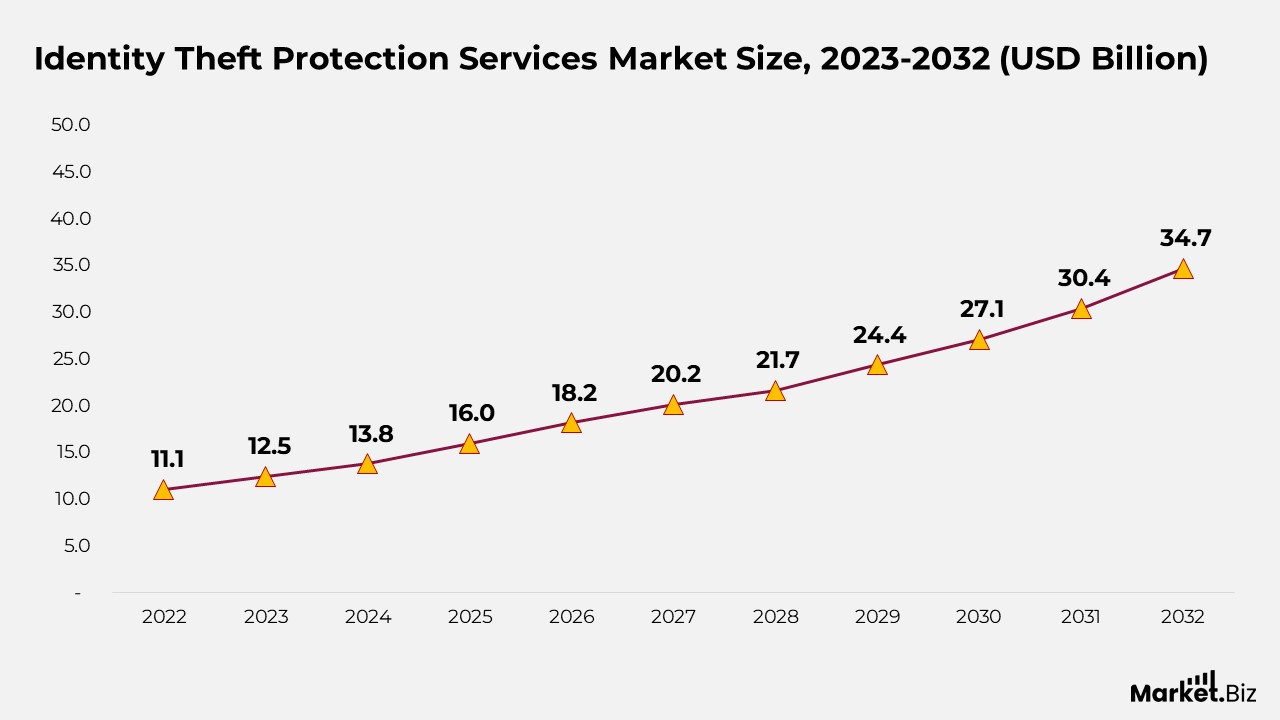
- According to Market.us, the global identity theft protection services market is expected to rise from $12.5 billion in 2023 to $34.7 billion by 2032, representing a CAGR of 12.4% from 2023 to 2032.
- Market growth is fueled by a surge in online transactions, widespread social media use, and increased digital device adoption.
- In 2022, the credit card fraud segment accounted for a dominant 44.3% share due to rising credit card usage.
- Bank fraud currently holds 26.1% market share and is expected to grow at a 5.3% CAGR from 2022 to 2030.
- Employment and tax-related frauds are increasing, driven by identity theft targeting loyalty schemes and retirement accounts.
- The consumer segment leads the market with a 55.3% revenue share, supported by growing online shopping, banking, and social media use.
- North America holds a commanding 32.5% share of the market based on regional analysis.
- The region’s lead is supported by strong digital infrastructure, major industry players, and rapid adoption of transaction management solutions.
(Source: Market.us)
Top Reported Identity Theft Categories
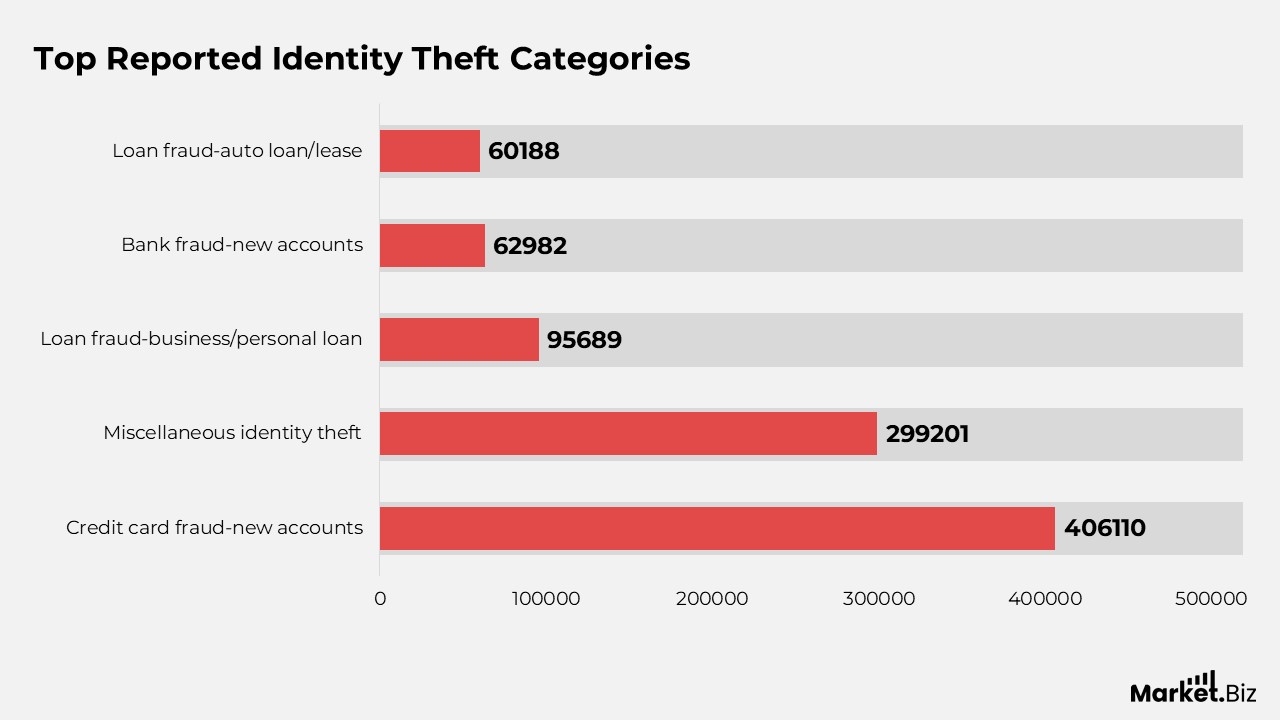
- In 2024, the most frequently reported identity theft involved the unauthorized opening of new credit card accounts, which accounted for 43.9% of the top five categories, with 406,110 reported cases.
- Second on the list were miscellaneous forms of identity theft cases that did not fit standard classifications, making up 32.4% with 299,201 incidents reported.
- Business and personal loan-related fraud followed, contributing 10.4% of these top cases, totaling 95,689 reports.
- New bank account fraud made up 6.8%, with authorities logging 62,982 such cases.
- Auto loan and lease fraud rounded out the list, comprising 6.5% of the top identity theft types, with 60,188 reported instances.
- Collectively, these five categories represented 924,170 identity theft reports, reflecting the ongoing and varied challenges posed by financial fraud.
(Source: Insurance Information Institute, Inc.)
Identity Theft Reports – by Age
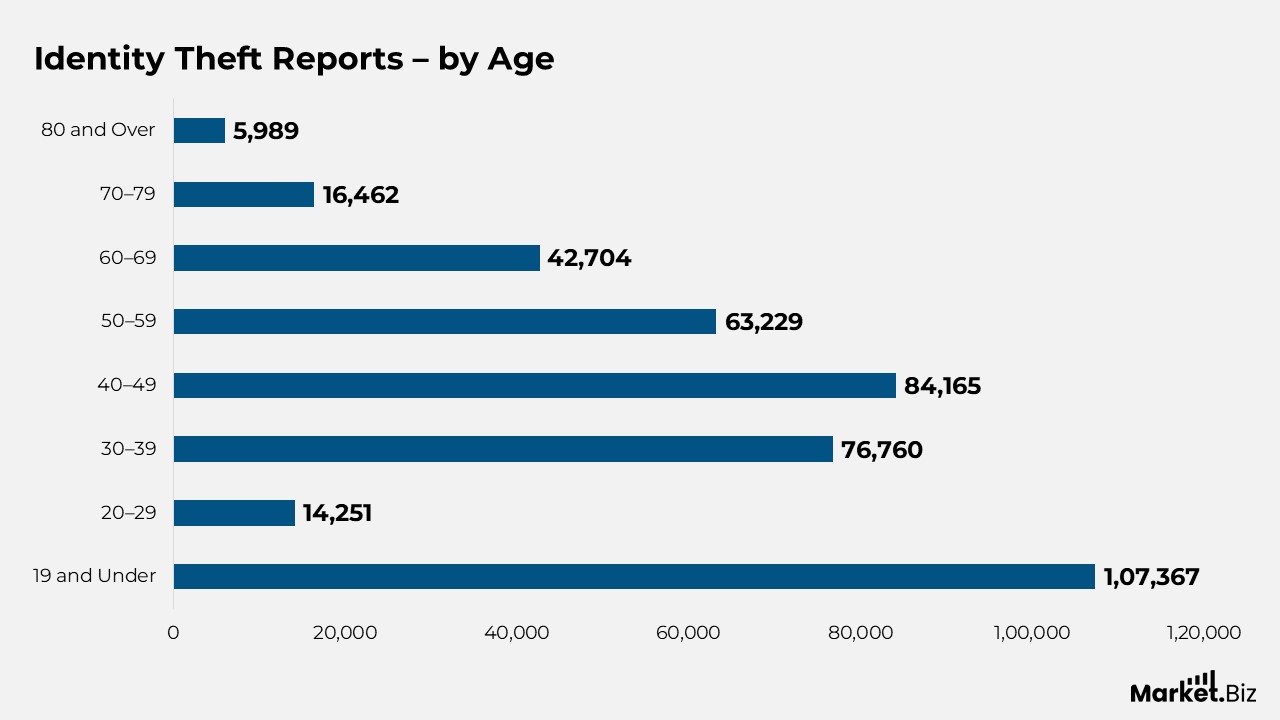
- In 2024, individuals aged 19 and under reported the most cases of identity theft, with a total of 107,367 incidents, highlighting growing risks among minors and teens.
- The 20–29 age group followed with 14,251 cases, reflecting relatively lower exposure but still notable vulnerability in early adulthood.
- Those in the 30–39 age range registered 76,760 reports, signaling substantial susceptibility during peak professional and financial activity years.
- People aged 40–49 filed 84,165 identity theft reports, marking one of the highest impacts among all adult age groups.
- For the 50–59 demographic, 63,229 cases were reported, showing that mid-life individuals remain highly exposed due to extensive digital and financial engagement.
- Adults between 60 and 69 years of age logged 42,704 incidents, confirming continued threats targeting older consumers.
- The 70–79 age group reported 16,462 cases, reflecting growing digital adoption among older people and associated fraud risks.
- Those aged 80 and above filed 5,989 reports, underscoring that even the oldest age groups are increasingly targeted in today’s connected environment.
(Source: Federal Trade Commission, Consumer Trade Commission)
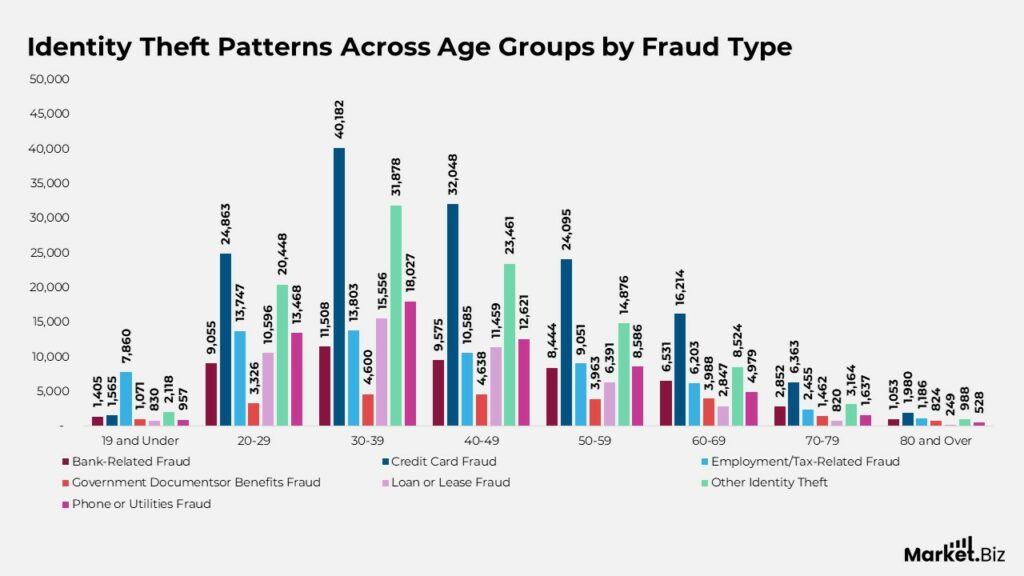
Identity Theft Patterns Across Age Groups by Fraud Type
- The highest volume of bank-related identity theft occurred among individuals aged 60–69, with 6,531 reported cases. The 50–59 age group followed closely behind with 8,444 reports. Even the under-20 demographic wasn’t immune, filing 1,405 cases, while those 80 and older accounted for 1,053 incidents, underscoring the age-spanning impact of this threat.
- The volume of credit card fraud-related identity theft occurred among individuals aged 60–69, with 16,214 reported cases. The 50–59 age group followed closely behind with 24,095 reports. Even the under-20 demographic wasn’t immune, filing 1,565 cases, while those 80 and older accounted for 1,980 incidents, underscoring the age-spanning impact of this threat.
- The volume of employment or tax-related identity theft occurred among individuals aged 60–69, with 3,988 reported cases. The 50–59 age group followed closely behind with 9,051 reports. Even the under-20 demographic wasn’t immune, filing 7,860 cases, while those 80 and older accounted for 1,186 incidents, underscoring the age-spanning impact of this threat.
- The volume of loan or lease fraud-related identity theft occurred among individuals aged 60–69, with 2,847 reported cases. The 50–59 age group followed closely behind with 6,391 reports. Even the under-20 demographic wasn’t immune, filing 830 cases, while those 80 and older accounted for 249 incidents, underscoring the age-spanning impact of this threat.
- Unclassified identity theft cases were led by the 50–59 demographic, with 14,876
- reports. The 60–69 and 40–49 groups followed with 8,524 and 23,461
- reports, respectively. Even the 19-and-under group was affected, logging 2,118 such incidents.
- Fraud targeting telecommunications or utility accounts was most common among those aged 50–59, with 8,586 reports, while 60–69 and 40–49 recorded 4,979 and 12,621 cases, respectively. Individuals under 20 experienced 957 incidents, highlighting how these schemes affect a wide age range.
(Source: Federal Trade Commission, Consumer Trade Commission)
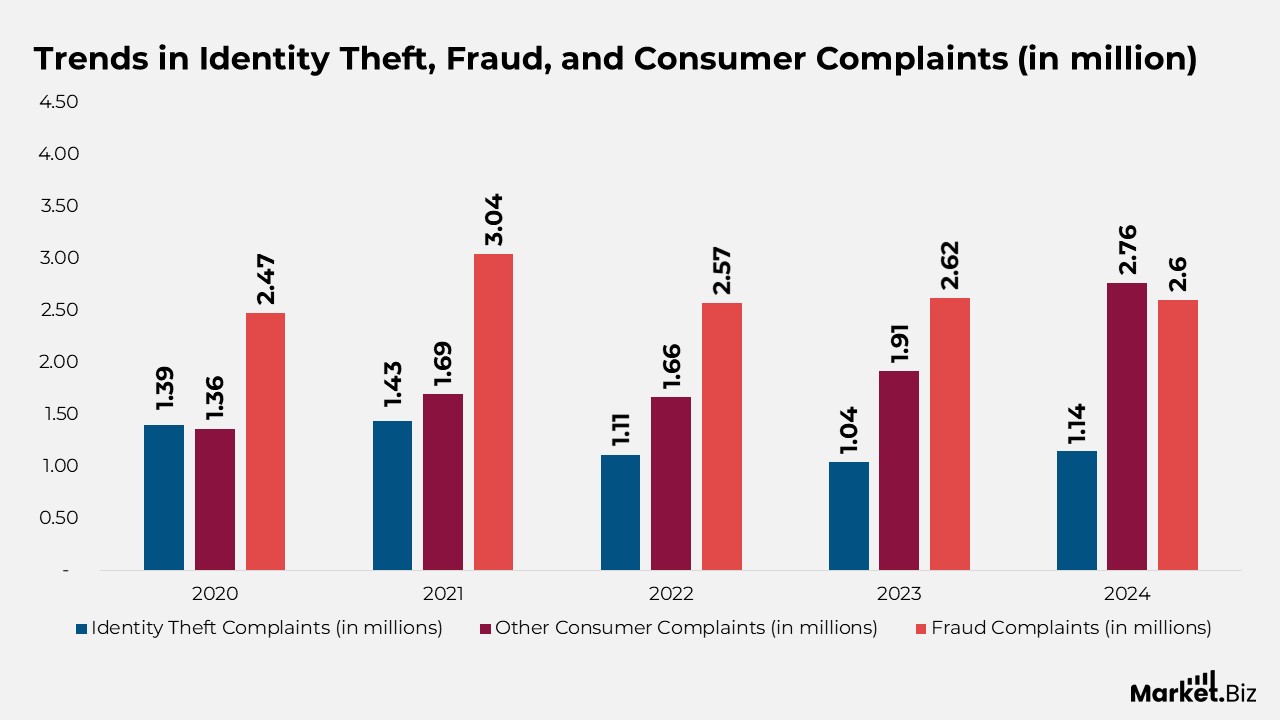
Trends in Identity Theft, Fraud, and Consumer Complaints
- In 2020, consumer complaints totaled approximately 5.2 million, with 1.39 million (27%) related to identity theft, 1.36 million (26%) categorized as other consumer issues, and 2.47 million (47%) involving fraud.
- In 2021, the volume of complaints rose to around 6.16 million. Of these, identity theft accounted for 1.43 million (23%), other consumer complaints reached 1.69 million (27%), and fraud-related reports climbed to 3.04 million (50%), marking the highest fraud share in the period.
- In 2022, total complaints slightly decreased to 5.34 million. Identity theft dropped to 1.11 million (21%), other consumer complaints totaled 1.66 million (31%), and fraud incidents stood at 2.57 million (48%).
- In 2023, the overall count rose modestly to 5.57 million, while identity theft declined further to 1.04 million (19%). In contrast, other consumer complaints increased to 1.91 million (34%), and fraud complaints remained high at 2.62 million (47%).
- In 2024, consumer complaints reached a peak of 6.5 million. Identity theft cases continued to decline to 1.14 million (17%), whereas other consumer complaints surged to 2.76 million (43%), making it the most reported category for the year. Fraud-related complaints slightly dipped to 2.60 million (40%), maintaining a significant share of overall reports.
(Source: Insurance Information Institute, Inc.)
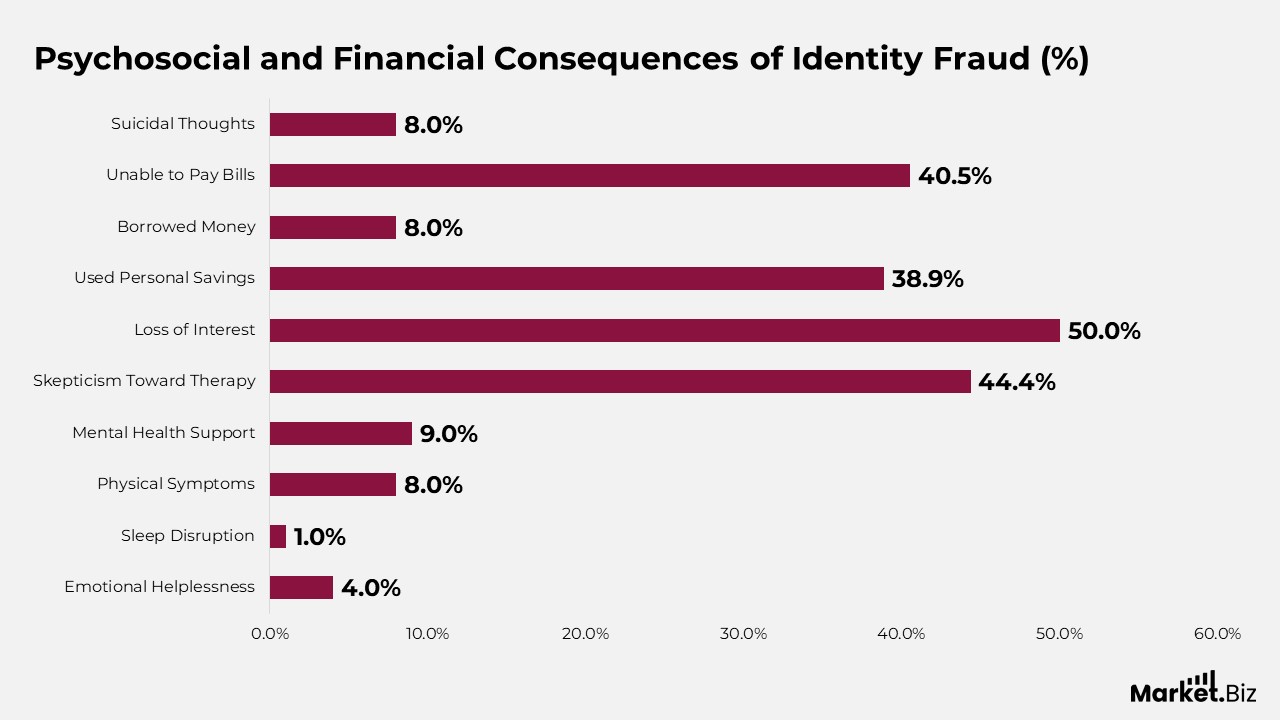
Psychosocial and Financial Consequences of Identity Fraud
- 4% of individuals who experienced identity theft reported feeling overwhelmed by a deep sense of helplessness and loss of control after the incident.
- 1% of identity fraud victims noted disruptions to their sleep patterns, indicating emotional distress tied to the experience.
- 8% of those affected by identity theft experienced physical symptoms such as headaches, stomach discomfort, or muscle cramps, linking the stress of fraud to health consequences.
- 9% of victims sought professional mental health support following the incident, while 44.4% of those who didn’t seek help believed therapy wouldn’t improve their situation.
- Half of the affected individuals (50%) reported losing interest in activities and hobbies they previously enjoyed, indicating signs of psychological and emotional impact.
- To meet basic financial needs post-theft, 38.89% of victims were forced to dip into their savings.
- Around 8% of identity theft victims had to borrow money, and 40.5% admitted they were no longer able to pay their bills on time.
- Alarmingly, 8% of those impacted by identity theft reported experiencing suicidal thoughts, revealing the severe mental toll the crime can take.
(Source: CompareCamp)
Damages Caused by Identity Theft
- On average, individuals affected by identity fraud spend approximately 15 hours and incur about $290 in personal costs to resolve the issue.
- Roughly 15% of people experience financial losses due to identity theft each year.
- In 2019, total fraud-related financial losses reached a staggering $16.9 billion in the United States.
- The year recorded 157,688 cases of credit card fraud across the US.
- An estimated 3% of identity theft victims reported experiencing emotional distress tied to the incident.
- New account fraud alone was responsible for $3.4 billion in losses in the US during 2018.
- In 2019, approximately 164.7 million sensitive records were exposed, increasing vulnerability to identity theft.
- Nearly 10,000 identity fraud incidents tied to social media platforms were reported in 2018, pointing to growing digital risks.
- The total number of identity theft reports in 2018 was 444,602, highlighting the widespread nature of this crime.
- Adults aged 50 to 59 lost more than $500 on average due to identity theft, indicating a higher financial impact among older victims.
(Source: CompareCamp, Statista)
Cost of Identity Theft
- In 2022, credit card theft in the United States resulted in reported financial losses amounting to $219 million.
- Among the 726,000 imposter scam cases reported across the US in 2022. 22% of victims suffered monetary losses, with total damages reaching $2.7 billion.
- American consumers lost a combined $189 million due to identity theft in 2022. Reflecting a decline from the $278 million recorded in 2021.
(Source: Federal Trade Commission, Panda Security)
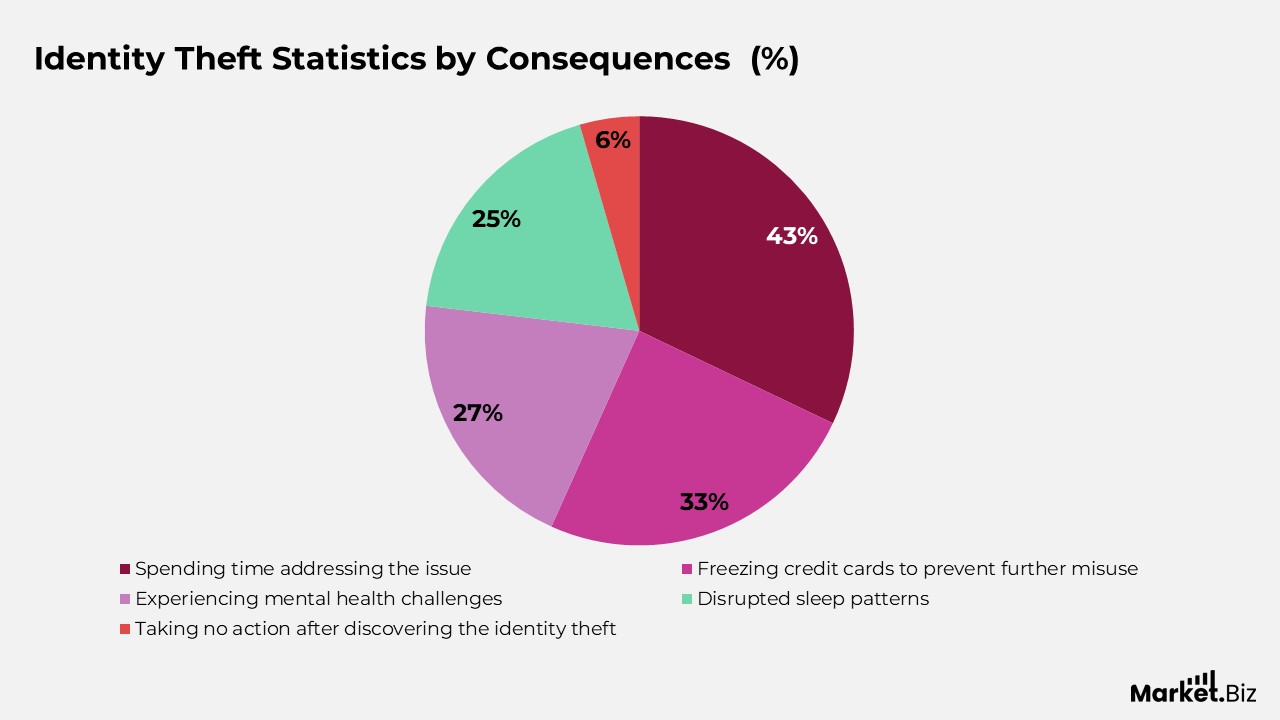
Identity Theft Statistics by Consequences
- As of 2023, the most common consequence of identity theft was spending time addressing the issue, reported by 43% of adults globally.
- Around 33% of individuals responded by freezing their credit cards to prevent further misuse.
- Nearly 27% of those affected reported experiencing mental health challenges as a result of the incident.
- 25% of victims noted that their sleep patterns were disrupted following the theft.
- Interestingly, 6% of survey participants admitted to taking no action after discovering the identity theft.
(Source: Statista, Enterprise Apps Today)
Conclusion
Identity theft continues to pose a growing and persistent challenge to digital security and consumer trust. Although the number of reported cases may show a slight decline, the complexity and intensity of these crimes are escalating. The increase in large-scale data breaches and the extensive exposure of personal information illustrate the evolving sophistication of these attacks.
No longer confined to isolated incidents, identity theft now spans multiple industries. Compromising sensitive data in areas such as finance, healthcare, and social services. This growing threat highlights the urgent need for more robust cybersecurity measures.
Greater public awareness around data protection and stronger collaboration among government bodies, financial institutions, and technology providers. Without unified and forward-looking action, identity theft will continue to erode digital confidence and impose lasting risks on individuals and organizations alike.
FAQ’s
Identity theft involves the unauthorized use of someone’s personal information, such as Social Security numbers, banking credentials, or health records, to carry out fraudulent activities. It has grown increasingly prevalent with the rise in digital dependence and frequent data breaches across sectors.
Industries like finance, healthcare, retail, and government services are among the most frequently targeted. These sectors hold sensitive personal and financial information, making them prime targets for cybercriminals seeking to exploit data for fraudulent purposes.
Although reported cases may vary slightly year to year, the overall trajectory shows a rise in the sophistication and impact of identity theft. Cybercriminals are adopting more advanced methods, including phishing scams and synthetic identity creation, making the issue more complex and widespread.
Some of the key obstacles include outdated cybersecurity systems, a lack of public understanding about data protection, insufficient real-time monitoring tools, and inconsistent collaboration between regulatory agencies and private entities. Poor password hygiene and unsafe digital practices also contribute significantly to the problem.
The consequences for victims can be severe and long-lasting. These include damaged credit history, unauthorized transactions, difficulty obtaining loans or services, and psychological stress. In many cases, the resolution process is slow and burdensome, often taking months or even years.