









Introduction
Autonomous Mobile Robots Statistics: Autonomous Mobile Robots (AMRs) are robotic systems capable of independent movement and navigation. Eliminating the necessity for human intervention. They utilise sensors to perceive their environment, generate maps, and autonomously make decisions.
AMRs find applications across various sectors, including manufacturing, healthcare, retail, agriculture, and construction. They offer advantages such as improved efficiency, safety, precision, and the possibility of reducing costs.
Nevertheless, the implementation of AMRs in operations necessitates an initial financial outlay and seamless integration with current systems. Despite these challenges, ongoing advancements in technology indicate a bright future for AMRs.
Editor’s Choice
- The market for autonomous mobile robots has experienced significant growth in recent years. Achieving a compound annual growth rate (CAGR) of 18.1%, with revenue consistently on the rise.
- In this environment, goods-to-person picking robots lead the market with a notable share of 47%.
- Professional cleaning robots, which have a usage rate of 41%, are transforming the cleaning sector by providing automated and effective solutions.
- Capital expenditure (capex) remained strong, with an anticipated average expenditure of around $1.27 million for the upcoming year, closely mirroring last year’s figures.
- The electrical and electronics sector took the lead with the highest number of installations, amounting to 109,000 units.
General Autonomous Mobile Robots Statistics
- The market for autonomous mobile robots has experienced significant growth in recent years. Achieving a compound annual growth rate (CAGR) of 18.1%, with revenue consistently on the rise.
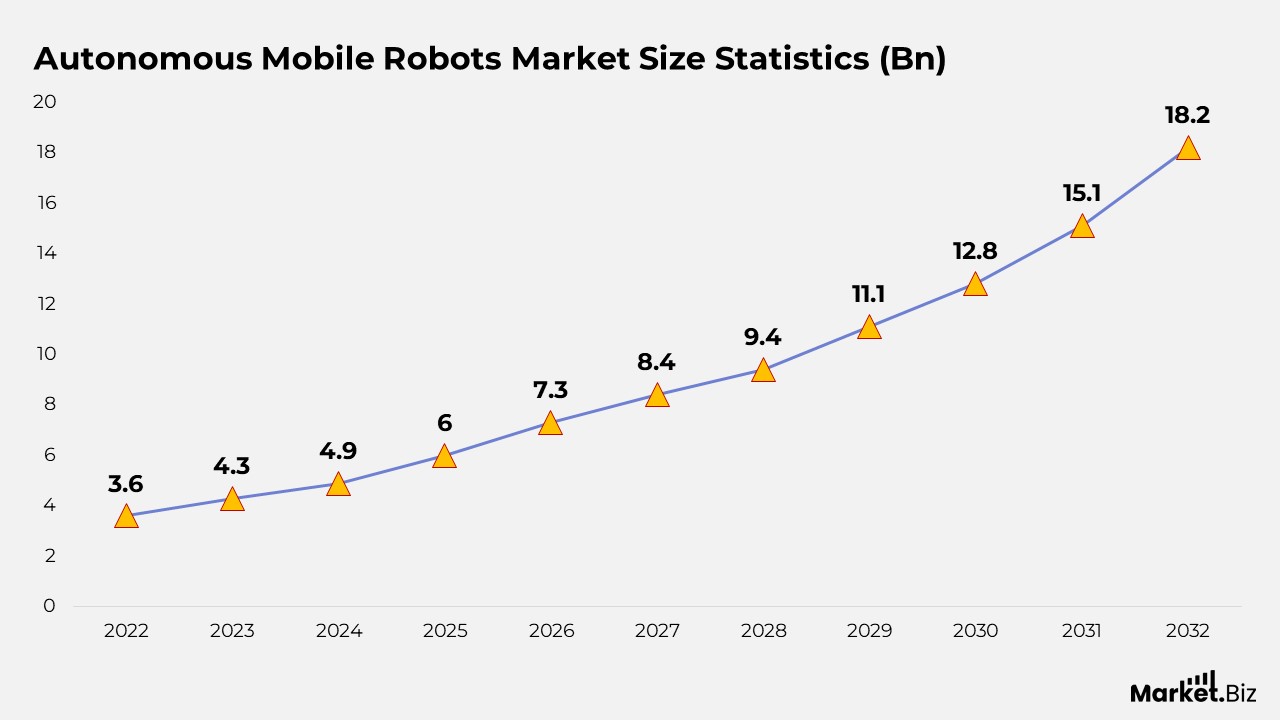
- In 2022, the market revenue reached USD 3.6 billion, and it has continued to grow substantially in the following years.
- In 2022, the overall market revenue was USD 3.6 billion, with hardware contributing USD 2.3 billion. Software accounting for USD 1.0 billion, and services making up USD 0.3 billion.
- Goods-to-person picking robots lead the market by type, holding a considerable market share of 47%.
- In 2018, global shipments of autonomous mobile robots (AMRs) surpassed 20,000 units. More than doubling the amount from the previous year, as reported by Interact Analysis in a quarterly report.
- Despite strong demand for AMRs in the supply chain and e-commerce sectors. Revenue growth was restricted to 10%, with Dematic identified as the leading supplier.
- Recent data indicates that logistic robots hold a significant portion of the market, representing 31% of service robot usage.
Autonomous Mobile Robots Market Size Statistics
- The market for autonomous mobile robots has experienced significant growth in recent years, achieving a compound annual growth rate (CAGR) of 18.1%. With revenue consistently on the rise.
- In 2022, the market revenue was recorded at USD 3.6 billion, and it has continued to grow considerably in the following years.
- By 2023, the revenue had increased to USD 4.3 billion. Followed by a notable surge to USD 4.9 billion in 2024.
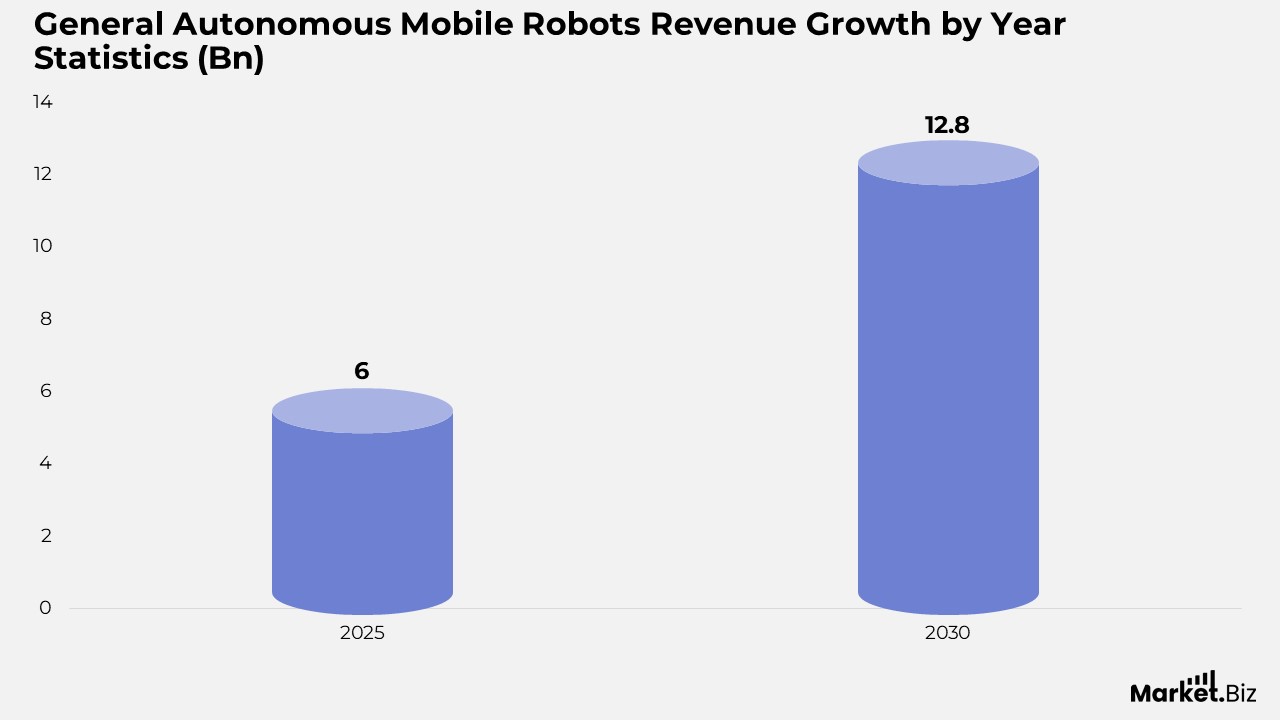
- This favorable trend is projected to persist in the upcoming years, with forecasts indicating revenues of USD 6.0 billion in 2025, USD 7.3 billion in 2026, and USD 8.4 billion in 2027.
- The market is expected to uphold its upward trajectory, reaching USD 9.4 billion in 2028, USD 11.1 billion in 2029, and USD 12.8 billion in 2030.
- Looking further into the future, the autonomous mobile robots market is anticipated to experience even greater growth, with revenue projections of USD 15.1 billion in 2031 and an impressive USD 18.2 billion in 2032.
Type Statistics of Autonomous Mobile Robots
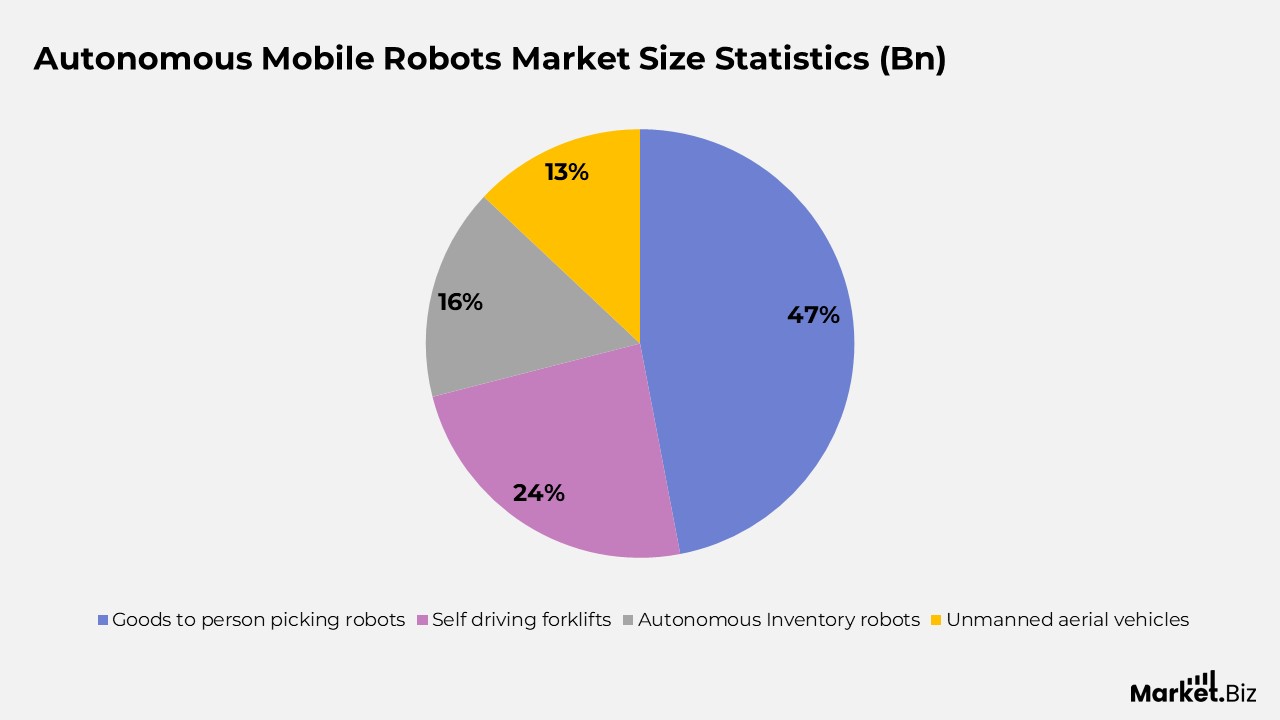
- In this environment, goods-to-person picking robots lead the market with a notable share of 47%.
- Self-driving forklifts closely trail, holding a 24% market share. These autonomous forklifts are essential in the realms of material handling and logistics.
- Autonomous inventory robots maintain a significant 16% market share, providing cutting-edge solutions for inventory management and tracking.
- Finally, unmanned aerial vehicles (UAVs) establish a specific niche with a 13% market share, catering to applications that include surveillance and delivery services.
Autonomous Mobile Service Robots for Professional Use
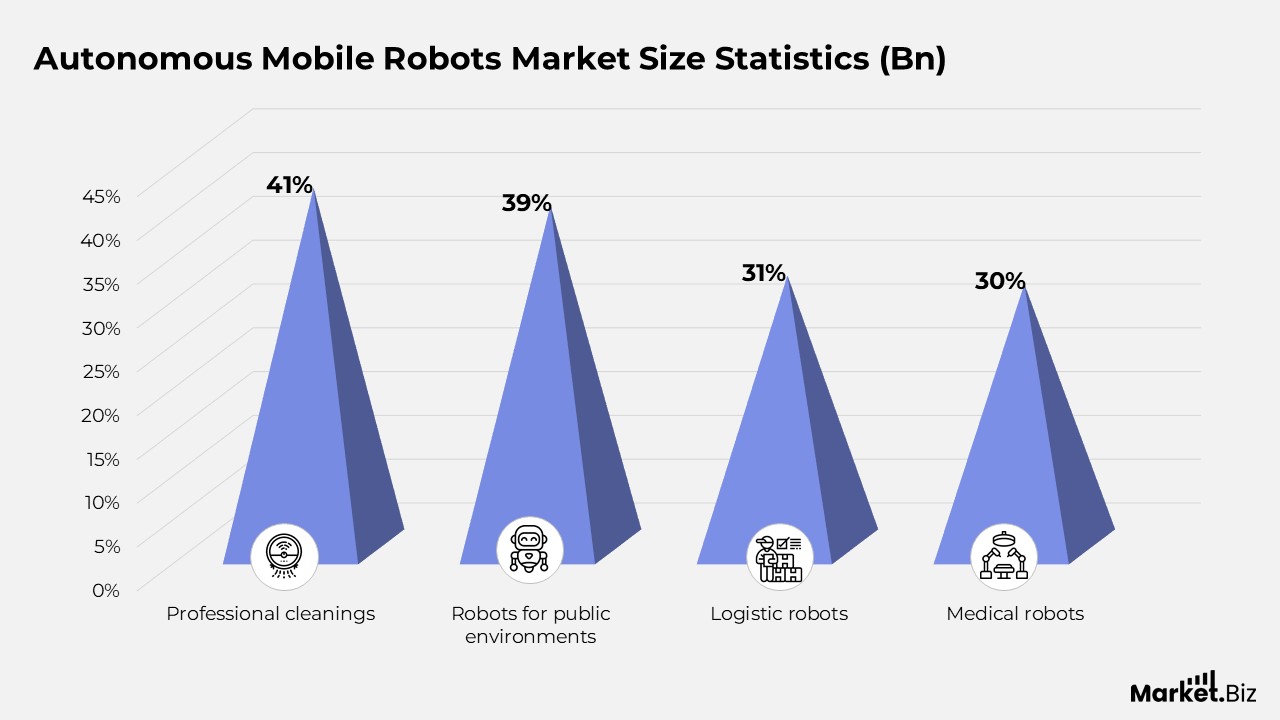
- Recent data indicates that logistic robots represent a significant portion, comprising 31% of service robot usage. These robots are essential in optimizing and enhancing logistics operations.
- Moreover, robots intended for public environments account for a notable 39%, improving efficiency and convenience in public areas.
- Professional cleaning robots, which have a usage rate of 41%, are transforming the cleaning sector by providing automated and effective solutions.
- In addition, medical robots, with a utilization rate of 30%, are being increasingly integrated into healthcare environments, aiding in a variety of tasks and procedures.
Installations of Industrial Robots
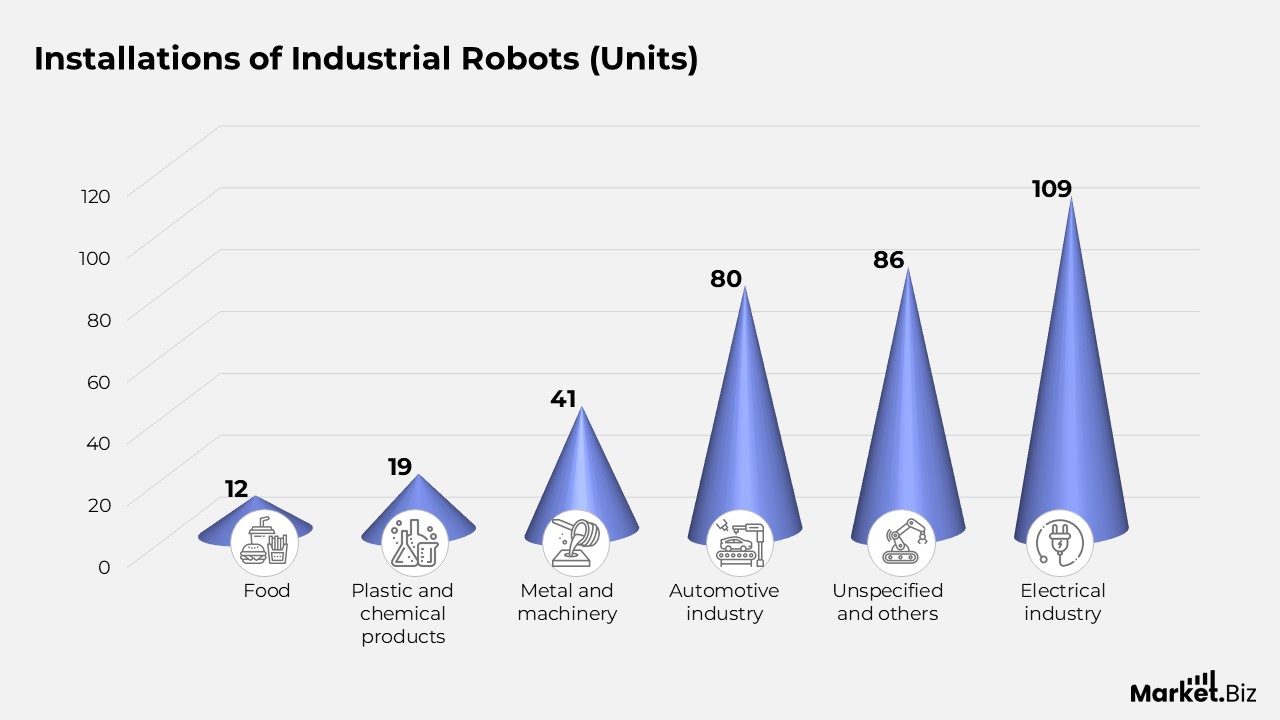
- In 2020, the global deployment of industrial robots exhibited varying levels of activity across multiple industries.
- The electrical and electronics sector took the lead with the highest number of installations, amounting to 109,000 units.
- This underscores the industry’s ongoing dependence on automation and robotics for its manufacturing processes.
- The unspecified and other sectors accounted for 86,000 installations, indicating a wide-ranging application of industrial robots across various fields.
- Meanwhile, the automotive sector, a long-standing advocate of automation, reported 80,000 installations, highlighting its dedication to efficient production.
- The metal and machinery sectors followed with 41,000 installations, further demonstrating the extensive use of robotics in heavy manufacturing.
- Moreover, the plastic and chemical products industry recorded 19,000 installations, while the food sector adopted automation with 12,000 new robot installations.
Business Operations on Autonomous Robots
- Concerning the expansion strategies for the forthcoming year, 79% of participants expressed their intentions to broaden their operations, reflecting a 3% increase in comparison to the previous year.
- Capital expenditure (capex) remained strong, with an anticipated average expenditure of around $1.27 million for the upcoming year, closely mirroring last year’s figures.
- Despite the average respondent representing a smaller business this year, 9% indicated intentions to invest $10 million or more.
- The main issue facing the industry remained the challenge of attracting and keeping a qualified hourly workforce, as indicated by 50% of respondents, despite a minor decrease in this percentage compared to the previous year.
- Notably, the challenge of finding competent supervisors experienced a significant increase, rising from 26% last year to 35% this year.
Recent Developments
- In 2023, Amazon stated its acquisition of Zoox, a startup focused on creating fully autonomous vehicles.
- In the year 2024, KUKA launched the KMR iiwa, a shared mobile robot engineered to operate in conjunction with humans within industrial settings.
- In mid-2023, Fetch Robotics successfully secured $46 million to improve its fleet of autonomous mobile robots targeted at warehouse automation.
- Miso Robotics gained recognition for its AI-driven kitchen automation and obtained $25 million to further develop autonomous mobile robots for the food service sector in early 2024.
Autonomous Mobile Robots Future Projections
- By the end of 2026, it is anticipated that 70% of mobile robots employed in logistics and manufacturing will incorporate IoT technology to improve their performance.
- The increase is fuelled by a growing acceptance of e-commerce, third-party logistics (3PL) services, and the demand for adaptable automation in manufacturing.
Conclusion
Autonomous Mobile Robots Statistics: In conclusion, Autonomous Mobile Robots (AMRs) exhibit significant promise as a revolutionary technology. Recent data reveal a consistent growth in the AMR market. With extensive applications across various sectors, enhancing both efficiency and safety. Although obstacles such as initial costs and integration challenges remain, continuous technological progress is facilitating the adoption of AMRs.
Moreover, the worldwide influence of AMRs is shaped by the evolving e-commerce landscape, necessitating the implementation of diverse picking technologies and warehouse management systems to meet changing demands. In summary, AMRs are poised to have a crucial impact on the future of automation in multiple industries.
FAQ’s
AMRs are robotic systems that can navigate and operate independently without the need for human intervention. They utilise sensors and sophisticated software to understand their environment, make decisions, and move on their own.
AMRs provide greater flexibility, scalability, and performance when compared to AGVs. They actively identify and map their locations using advanced sensors, which allows for real-time obstacle avoidance and adaptive navigation, whereas AGVs operate on predetermined paths and may require physical infrastructure for navigation.
Autonomous robots are devices that carry out tasks without the need for continuous human oversight. They employ sensors, artificial intelligence, and decision-making systems to adapt in real-time. The global market for autonomous mobile robots (AMRs) is expected to exceed $8.7 billion by 2030, indicating a rapid increase in adoption.

