









Introduction
Food Allergies Statistics: Food allergies are emerging as a significant global health issue, impacting people of all ages and backgrounds. These allergic reactions, triggered by the immune system’s response to certain foods, can vary widely in severity, ranging from mild symptoms to life-threatening anaphylaxis. Over the past several decades, the incidence of food allergies has increased significantly, prompting heightened concern among consumers, medical professionals, food producers, and regulatory agencies.
This statistical analysis examines the increasing prevalence of food allergies, key demographic insights, the most commonly reported allergens, trends in emergency treatment, and geographic variations. Gaining a clear understanding of these patterns is crucial for strengthening food safety regulations, improving labelling practices, and advancing allergy research and public health initiatives.
Editor’s Choice
- Peanut allergy stands out as one of the most prevalent and serious food allergies in the United States, impacting roughly 1 in every 50 children. It is a leading cause of anaphylactic reactions among school-aged youth, often necessitating urgent medical intervention.
- Australia reports some of the highest rates of food allergies globally, with studies showing that up to 10% of infants under one-year-old experience allergic reactions to certain foods, highlighting early onset and widespread impact.
- The incidence of anaphylaxis-related hospitalizations has surged in multiple countries. For instance, the United Kingdom has seen a dramatic 615% increase in such admissions over the last two decades, according to data from the National Health Service, reflecting growing awareness and severity.
- In the United States, an estimated 32 million individuals live with food allergies, indicating a substantial public health challenge that spans all age groups in 2021.
Further
- Each year, food allergies contribute to approximately 200,000 emergency room visits across the U.S., demonstrating the critical need for effective management and prevention strategies.
- Food allergies are particularly common among children, with about 1 in 13 American children diagnosed with a food allergy, making it a significant pediatric concern.
- Notably, nearly 40% of children with food allergies in the U.S. are allergic to multiple foods, complicating diagnosis and dietary management for affected families.
- It is estimated that around 220 million people worldwide live with food allergies, and it is important to note that a single food product may contain multiple allergens, increasing the complexity of diagnosis and management.
- In the United States alone, approximately 33 million individuals suffer from food allergies, including 1 in every 13 children, which is roughly equivalent to two children in every classroom.
- Data from the Centers for Disease Control and Prevention (CDC) shows that food allergies among U.S. children surged by 50% between 1997 and 2011, underscoring a growing public health concern.
(Source: National Institute of Health, National Allegy Centre of Excellence, National Health Services, Centers For Disease Control and Prevention)
Allergy Diagnostics Market Size
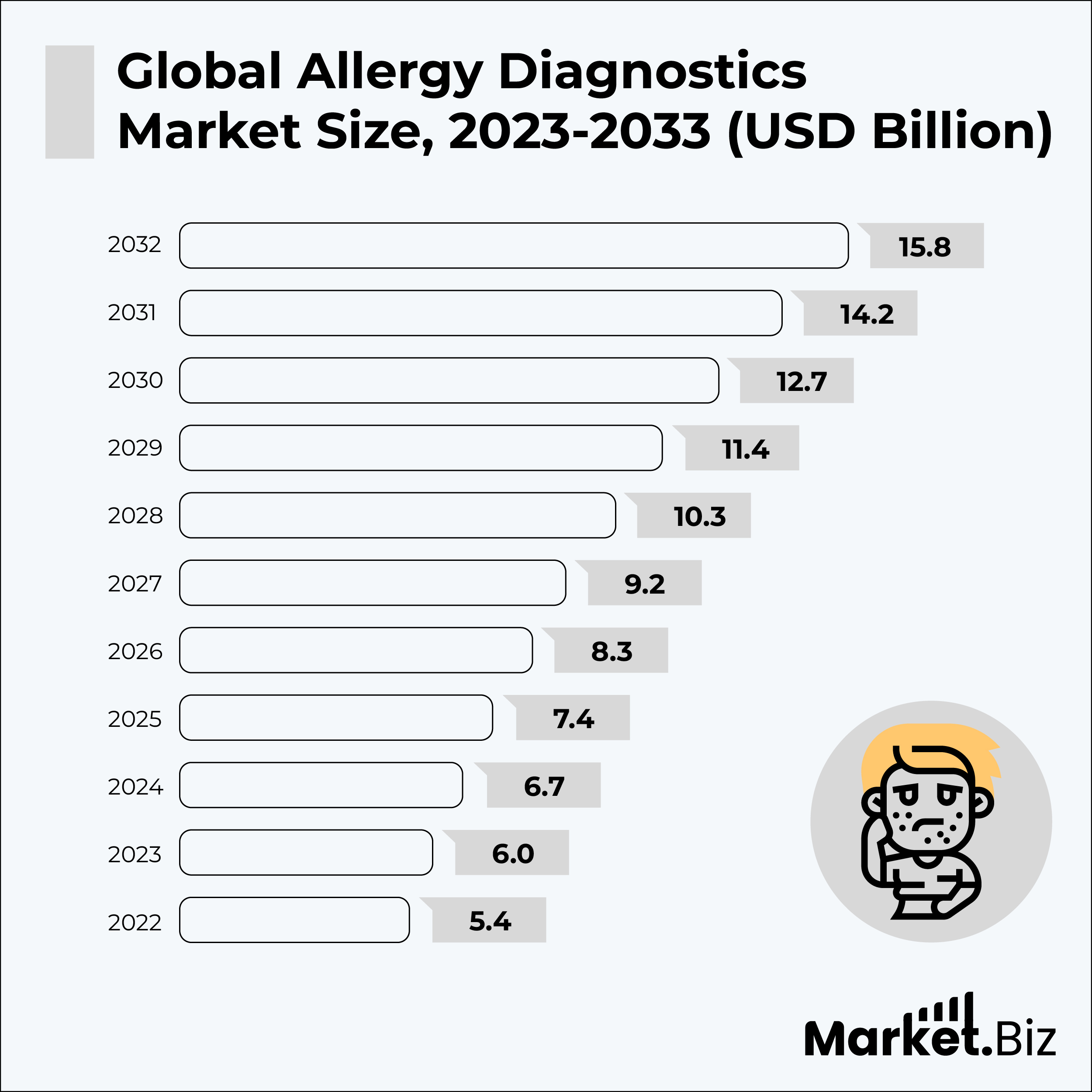
- According to Market.us, the global allergy diagnostics market is projected to grow from $7.4 billion in 2025 to $15.8 billion by 2032, representing a compound annual growth rate (CAGR) of 11.3% from 2023 to 2033.
- The allergy diagnostics market is experiencing steady growth, largely propelled by the increasing incidence of allergic disorders and advancements in diagnostic technologies that enable quicker and more accurate identification of allergens.
- Consumables represent the leading segment in the allergy diagnostics market, holding a 45% share. These include essential components such as reagents, assay plates, and testing kits that are critical for reliable diagnostics. The rising global burden of allergies has fueled a continuous demand for these diagnostic essentials.
- In Vivo testing methods currently dominate the testing landscape, accounting for 58% of the market share. This category includes procedures like skin prick tests, patch tests, and intradermal tests, where patients are directly exposed to allergens under medical supervision. These techniques remain foundational due to their effectiveness in identifying allergenic responses in real-time.
Moreover
- Inhaled allergens, such as dust mites, mold spores, pet dander, and pollen, account for the largest allergen type segment, with a 43% share. These airborne triggers are among the most common causes of respiratory conditions, such as asthma and allergic rhinitis, thereby sustaining a high demand for diagnostic solutions targeting these allergens.
- Diagnostic laboratories are at the forefront of allergy testing, commanding a 54% market share. Their prominence is due to the integration of advanced equipment and skilled personnel capable of conducting comprehensive tests for various types of allergens, including environmental, food, and drug-related allergens.
- North America led the allergy diagnostics market in 2023, securing a 35% share of total allergy drug revenue. This regional dominance is attributed to a rising prevalence of allergies, a strong healthcare infrastructure, and proactive government support. Additionally, the region benefits from significant investments by U.S.-based pharmaceutical companies, which focus on allergy-related research and development initiatives.
(Source: Market.us)
General Food Allergies Statistics
- Food allergies affect a significant portion of the global population, presenting ongoing challenges for healthcare systems, families, and economies alike. This overview highlights critical data points that illustrate the widespread nature, health implications, and financial costs associated with food allergies.
- The “Big 9” allergens, milk, eggs, peanuts, tree nuts, soy, wheat, fish, and shellfish, are responsible for the majority of severe allergic reactions and are mandated for labelling on packaged foods by the U.S. Food and Drug Administration (FDA).
- Every 2 to 3 minutes, an individual in the U.S. seeks emergency medical treatment due to food-induced anaphylaxis, highlighting the urgency and severity of allergic reactions.
- Approximately 1 in 12 American children receive a food allergy diagnosis, indicating a high prevalence among the youth population.
- More than half of adults with food allergies report that their condition developed after the age of 18, revealing that food allergies are not limited to childhood.
- Serious allergic reactions, including anaphylaxis, affect over 40% of children and more than 50% of adults with food allergies, pointing to significant health risks across age groups.
- The financial burden on families caring for children with food allergies is substantial, averaging over$4,000 per child annually, which collectively amounts to nearly $25 billion nationwide. Of this, $4.3 billion is attributed to direct medical expenses, while out-of-pocket costs for families total about $5.5 billion, with roughly a third spent on speciality food products.
- Overall, food allergies impose an economic cost of approximately $24.8 billion on the U.S. economy each year, encompassing healthcare, special foods, and lost productivity.
(Source: Regional Office For Africa, Food Allergy Organization, Centers For Disease Control and Prevention, National Institute of Health, The U.S. Food and Drug Administration)
Which Foods Are Commonly Known to Trigger Allergies?
Although numerous foods have the potential to trigger allergic reactions, the Food Allergen Labeling and Consumer Protection Act of 2004 (FALCPA) officially recognizes eight specific foods as major allergens.
- Eggs
- Milk
- Tree Nuts ( Walnuts, Almonds, and Pecans)
- Crustacean shellfish (Lobster, Crab, and Shrimp)
- Fish (Flounder, Cod, Bass)
- Sesame
- Soybeans
- Wheat
- Peanuts
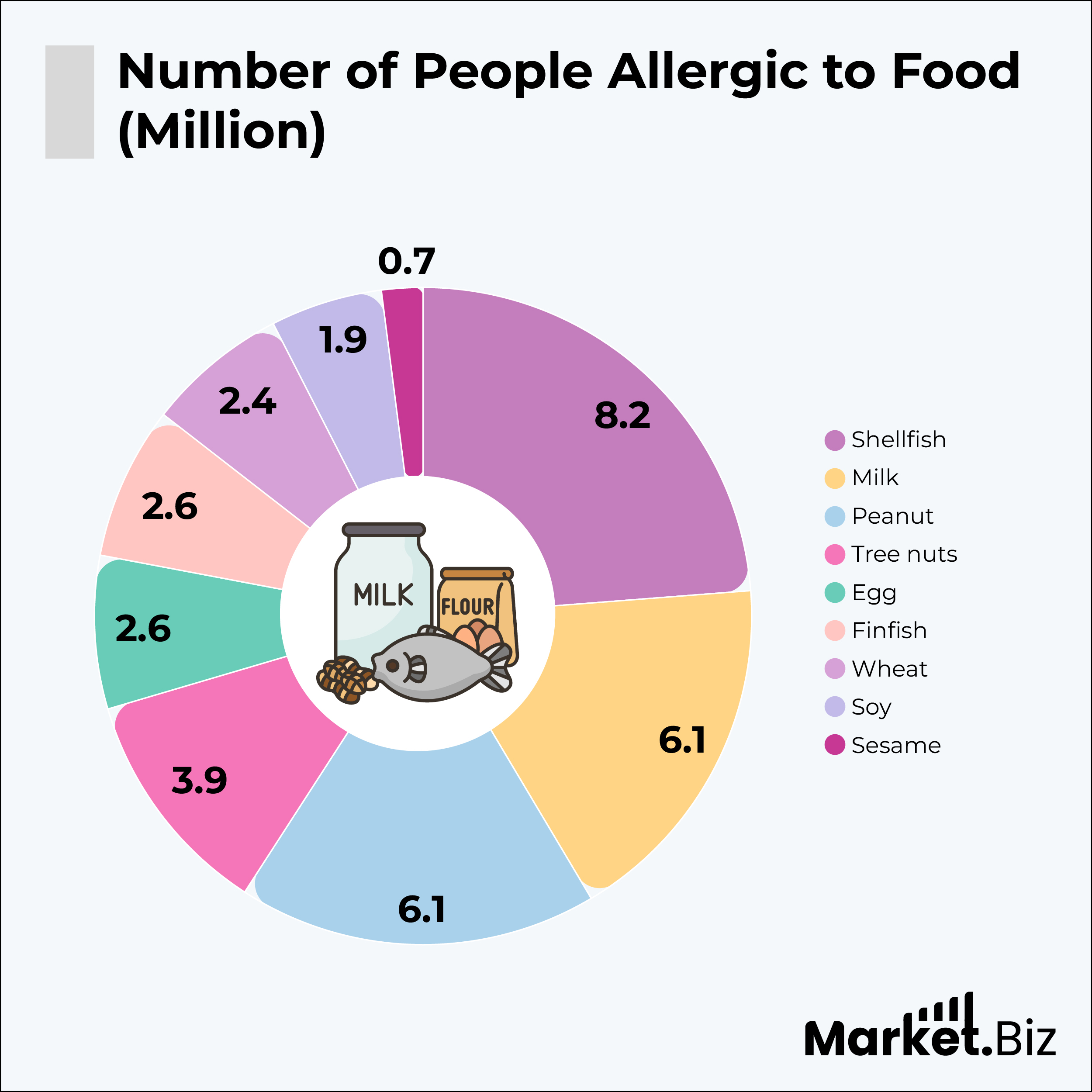
(Source: The United States Food and Drug Administration)
What are the Symptoms of Food Allergy?
Although numerous foods have the potential to trigger allergic reactions, food allergies can affect various parts of the body, including the skin, digestive system, respiratory tract, and cardiovascular system. Symptoms may appear individually or in combination and can include:
- Nausea, vomiting, or abdominal pain
- Raised, itchy welts or skin rashes (hives)
- Difficulty breathing or shortness of breath
- Wheezing or chest tightness
- Persistent or repetitive coughing
- Sudden drop in blood pressure or circulatory collapse
- Constricted or hoarse throat; difficulty swallowing
- Tongue swelling that may interfere with speech or breathing
- Weak or thready pulse
- Pale, bluish, or discolored skin tone
- Lightheadedness or sudden fainting
- Anaphylaxis
(Source: American College of Allergy, Asthma & Immunology)
Prevalence of Food and Other Allergies
- In the United Kingdom, 1 in 20 adults has a medically confirmed food allergy. At the same time, nearly one-third of the population reports some form of food sensitivity, according to the first comprehensive study of its kind.
- Food allergies affect approximately 4 to 6 per cent of children and around 4 per cent of adults globally.
- A U.S. electronic survey of self-reported food allergies among children under 18 revealed a prevalence rate of 8.0%, closely aligning with rates found in European studies based on systematic reviews.
- Each year, over 100 million Americans suffer from various allergies, including seasonal allergies, eczema, and food allergies.
- Nearly 1 in 3 U.S. adults and more than 1 in 4 U.S. children experience seasonal allergies, eczema, or food allergies, highlighting the widespread nature of these conditions.
(Source: The Guardian, American College of Allergy Asthma and Immunology)
Prevalence of Food and Other Allergies
Gender:
- A study by Hindawi found that among children with food allergies, 64.35% were male, and 35.65% were female, resulting in a male/female ratio of1.80.
- In contrast, within the adult population with food allergies,34.82% were male, while65.18% were female, yielding a male/female ratio of 0.53.
(Source: National Institute of Health)
Race:
- Food allergies are most prevalent among Asian (10.5%), Hispanic (10.6%), and non-Hispanic Black (10.6%) populations across all age groups.
- Among these groups, non-Hispanic Black individuals are the most likely to experience allergies to multiple foods, with 50.6% reporting such cases.
- The incidence of severe food allergy reactions tends to be lowest among Asian and non-Hispanic white individuals.
(Source: Northwestern University)
Age:
- Roughly 6% of children between birth and 2 years old have been reported to suffer from food allergies.
- The prevalence rises among 3 to 5-year-olds, with about 9% diagnosed with food allergies in this age group.
- For children aged 6 to 10 years, nearly 8% are affected by food allergies.
- In the pre-adolescent group (ages 11 to 13), approximately 8% have been identified as having food allergies.
- Among teenagers aged 14 to 18 years, the incidence increases slightly, with over 8.5% reporting food allergies.
(Source: American Academy of Allergy, Asthama, & Immunology)
Cost of Allergies
- The annual economic burden of nasal allergies ranges between $3 billion and $4 billion.
- A recent analysis estimates that the cost of caring for children with food allergies amounts to approximately $25 billion per year, which adjusts to about $34 billion in 2025 dollars.
- Families bear a total annual economic burden of $20.5 billion related to food allergies, encompassing lost work productivity, direct out-of-pocket costs, and forgone opportunities.
- Out-of-pocket expenses alone amount to approximately $5.5 billion annually, with nearly 31% of these costs attributed to the purchase of speciality foods designed to accommodate allergies.
- The estimated opportunity costs associated with caring for children with food allergies amount to approximately $14.2 billion per year, with a 95% confidence interval ranging from $10.5 billion to $18.4 billion.
- Caregivers express a willingness to spend up to $20.8 billion annually on allergy treatments for their children, which averages to about $3,504 per child per year.
(Source: Asthma and Allergy Foundation of America, National Institue of Health, National Institue of Health, Northwestern Scholars)
Recent Initiatives and Advances in Food Allergy Awareness and Treatment
- In May 2025, the Food Allergy and Anaphylaxis Connection Team (FAACT) launched the #FoodAllergiesDontDiscriminate campaign during Food Allergy Awareness Month. The initiative aims to empower patients and families to educate their communities and promote food allergy safety.
- In February 2025, Genentech and Novartis partnered with Food Allergy Research & Education (FARE) to introduce an educational campaign addressing food allergies. This campaign was inspired by survey findings revealing that many caregivers and individuals with food allergies feel community awareness is insufficient, contributing to feelings of insecurity and social exclusion.
- In May 2024, the Food Allergy Science Initiative (FASI) announced a transformative $5 million donation to support foundational and translational research in food allergies. This investment aims to improve the lives of millions living with food allergies worldwide.
- In February 2024, the U.S. Food and Drug Administration (FDA) permitted Xolair (omalizumab) injection for treating immunoglobulin E-mediated food allergies in certain adults and children aged one year and older. The treatment helps reduce allergic reactions, including lowering the risk of anaphylaxis from accidental exposure to allergens.
(Source: The U.S. Food and Drug Administration, Food Allergy and Anaphylaxis Connection Team, Genentech)
Conclusion
Food allergies pose a growing global public health concern, impacting millions across all age groups. The increasing rates, particularly among children, combined with the seriousness of allergic reactions and the substantial economic costs, highlight the pressing need for enhanced awareness, accurate diagnosis, and effective management. Since a few common allergens trigger most cases, the demand for reliable testing and targeted treatments remains high.
Addressing this multifaceted challenge requires coordinated efforts from healthcare professionals, policymakers, and other stakeholders. Progress in scientific research, stronger food labelling laws, and widespread public education will be vital in mitigating both the health risks and financial burdens associated with food allergies, ultimately enhancing the well-being of individuals and families affected by these conditions.
FAQ’s
Food allergies affect approximately 220 million individuals globally, with prevalence rates varying by geographic region and age. Over the past few decades, there has been a consistent increase in the number of diagnosed cases worldwide.
The majority of severe allergic responses are caused by the “Big 9” allergens: milk, eggs, peanuts, tree nuts, soy, wheat, fish, shellfish, and sesame. These allergens are mandated to be clearly labelled on packaged foods in many countries to protect consumers.
In the United States, approximately 1 in 13 children (about 7.5%) are affected by food allergies. Globally, the prevalence in children ranges from 4% to 10%, varying by region.
Food allergies pose a significant economic challenge, costing families and healthcare systems billions of dollars each year. In the U.S. alone, the total annual financial burden is estimated to be nearly $25 billion, encompassing medical treatments, specialized foods, and productivity losses.
While food allergies are predominantly diagnosed in children under the age of 18, a substantial portion of adults, about 50%, develop allergies later in life, highlighting that food allergies can arise at any age.

