









Introduction
Digital media subscription statistics illustrate the ongoing shift toward on-demand, digitally delivered content across entertainment, news, learning, and music platforms.
As streaming services and digital publishers expand their offerings, subscription models have become a core part of everyday media consumption. This transition away from traditional formats is driven by the appeal of flexible access, personalized content curation, cross-device convenience, and ad-free viewing experiences.
Growing reliance on smartphones, smart TVs, and connected ecosystems further accelerates adoption across all age groups. These insights highlight how digital subscriptions are reshaping consumer expectations, redefining revenue models, and influencing the competitive dynamics of the global media landscape.
Editor’s Choice
- Global video streaming subscriptions climbed to nearly 1.8 billion by 2025, reflecting the dominance of on-demand digital entertainment.
- Netflix surpassed 301.6 million subscribers in Q1 2025, reinforcing its position as one of the world’s leading streaming platforms.
- Spotify recorded around 276 million paying subscribers and approximately 696 million monthly active users by mid-2025, highlighting strong growth in digital music consumption.
- The global online population reached about 5.56 billion people in early 2025, meaning roughly 68% of the world was using the internet.
- U.S. cable TV penetration continued to fall, dropping to 49% after sitting at 63% just three years earlier.
- In 2025, around 65% of digital news audiences relied on social video for updates, while nearly 75% consumed news content through some form of video.
- In 2024, Americans streamed digital media for an average of 21 hours per week, essentially committing part-time–level hours to online entertainment.
- The global OTT video sector is projected to generate around USD 443.29 billion in revenue by 2029, reflecting sustained industry expansion.
Moreover
- Roughly 65% of video streaming occurs through mobile and TV apps rather than web browsers, signaling a strong shift toward app-based viewing.
- In the United States alone, OTT video revenue is expected to reach approximately USD 146.25 billion in 2025.
- Worldwide, there are an estimated 7.21 billion smartphones capable of supporting apps, with about 60.42% of the global population owning one.
- Average revenue per user (ARPU) in the global subscription video-on-demand market is projected to hit USD 78.97 in 2025.
- Ad-supported video-on-demand (AVOD) is expected to see 52.8% user penetration in 2025, rising to 61% by 2029.
- In 2024, 59% of OTT viewing happened through apps, up from 40% the previous year. Users consumed 1.5 billion minutes on mobile and TV apps, nearly double the 871 million minutes viewed on browsers.
- TV app users attend significantly more live-streamed events: 154% more than web viewers and 105% more than mobile users, while mobile viewers participate 24% more than those using web platforms.
- Creators who launch an OTT TV app typically experience an average earnings increase of 30%, highlighting the financial impact of multi-platform availability.
Trends in Social Media News Consumption Among U.S. Adults
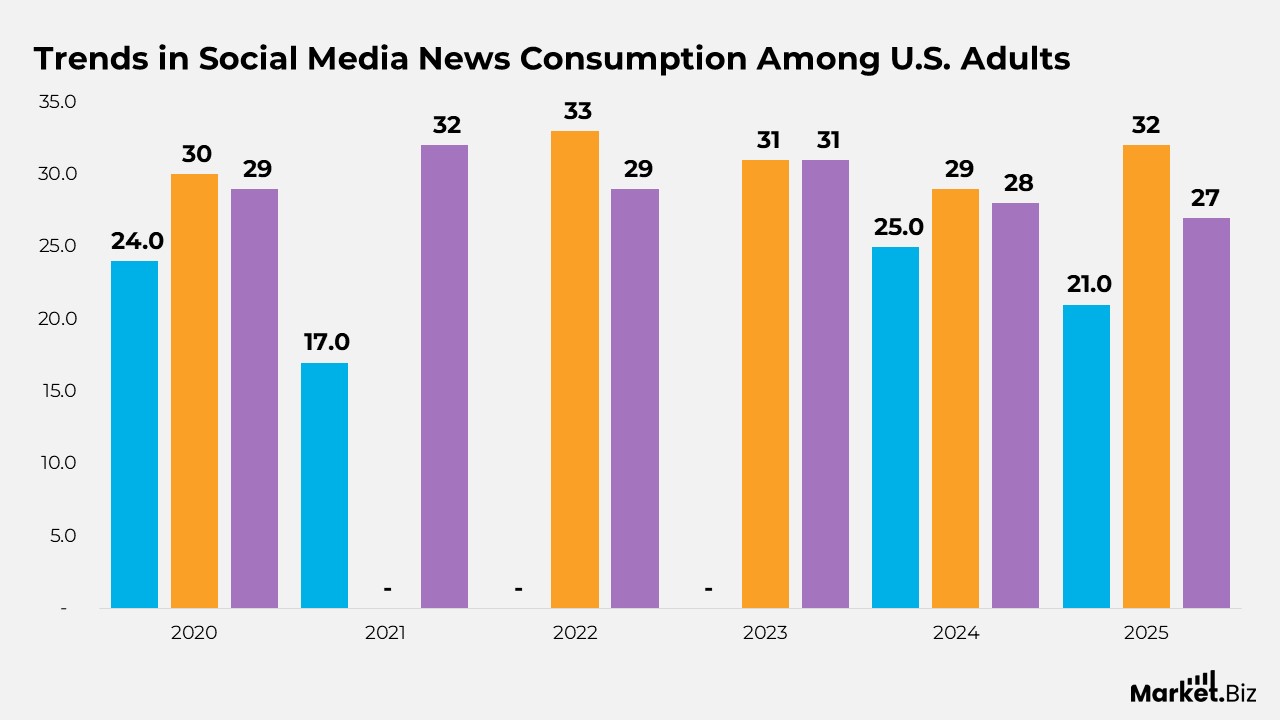
- In 2020, about 24% of U.S. adults often relied on social media for news, while 30% used it sometimes and 29% said they never used it for news.
- By 2021, the share of adults who never used social media for news rose to 32%, and only 17% reported using it often.
- In 2022, the percentage of adults who sometimes used social media for news climbed to 33%, while 29% still reported never using it.
- During 2023, 31% of adults occasionally consumed news via social platforms, and the proportion of those who never used social media for news increased slightly to 31%.
- In 2024, the proportion of frequent news consumers on social media grew to 25%, while 29% used it sometimes and 28% said never.
- By 2025, 21% reported often getting news from social platforms, 32% sometimes used them, and 27% never relied on social media for news.
(Source: Pew Research Center)
Global Streaming Platform Subscription Leaders
- Netflix tops the global streaming market with approximately 301.6 million subscribers, making it the most widely adopted paid platform.
- Amazon Prime Video follows closely with around 128 million subscribers, reflecting strong integration with Amazon’s broader ecosystem.
- Disney+ holds about 127.8 million subscribers, maintaining its rapid growth fueled by exclusive franchises and family-focused content.
- HBO Max records nearly 125.5 million subscribers, supported by its premium original programming and blockbuster releases.
- YouTube Premium registers roughly 125 million subscribers, driven by ad-free viewing and enhanced creator features.
- Tencent Video retains a significant presence with approximately 113 million users, solidifying its role in the Asian streaming market.
- Hulu reports around 55.5 million subscribers, strengthened by its hybrid library of TV shows, originals, and next-day broadcast access.
- ESPN+ reaches about 24.1 million subscribers, reflecting growing demand for live sports and exclusive sports streaming packages.
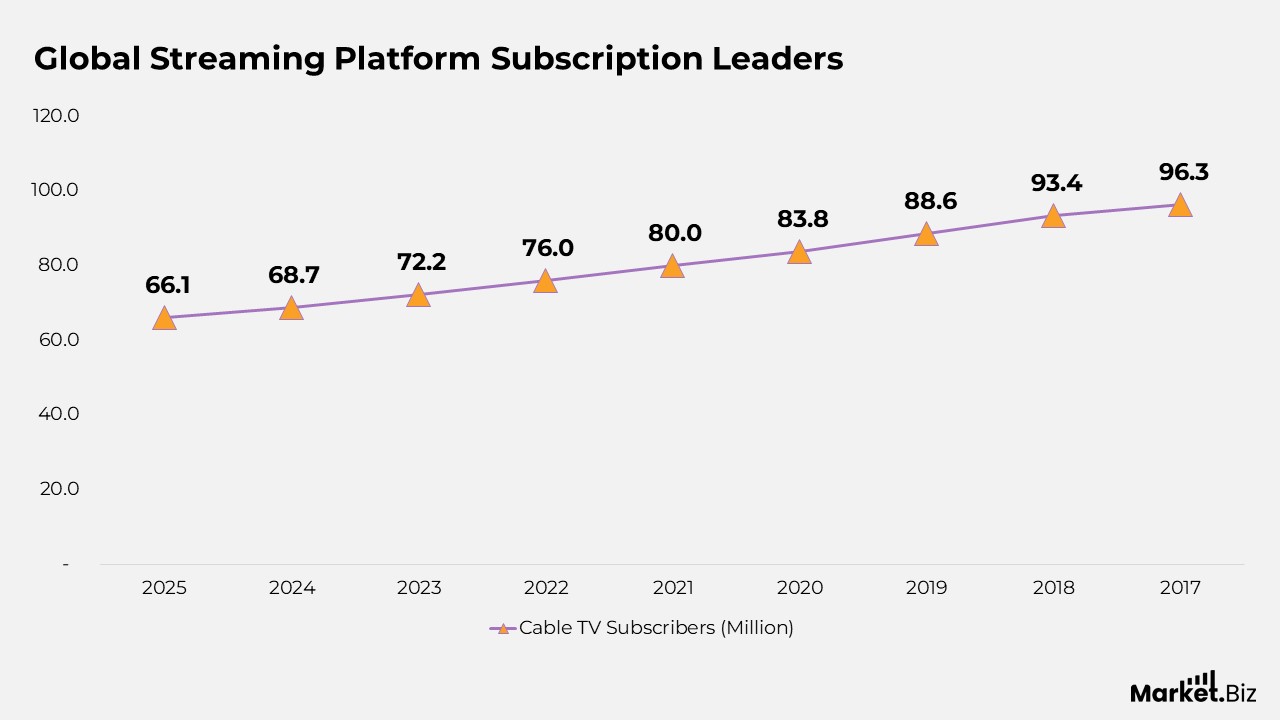
- Global video streaming subscriptions are projected to reach nearly 1.8 billion in 2025, underscoring the dominance of digital viewing.
- Streaming now accounts for about 36% of total TV usage, surpassing the combined share of cable and broadcast.
- Netflix’s ad-supported plan has grown rapidly, attracting 40 million active users and making up 40% of new subscriber signups.
- In the U.S. streaming landscape, Netflix holds roughly 27% market share, closely followed by Amazon at 26%, highlighting their continued leadership in the sector.
(Source: SQ Magazine)
Global Music Streaming Subscription and Usage
- By mid-2025, Spotify reached 276 million paying subscribers and 696 million monthly active users. Reflecting year-on-year increases of 12% in premium users and 11% in MAUs.
- At the end of 2024, Spotify reported 263 million paid subscribers and 675 million MAUs. Gaining 11% more premium users and adding 35 million new MAUs in Q4 alone.
- Spotify recorded its first full-year operating profit in 2024, supported by 16% revenue growth to €4.2 billion. Driven by increased subscriptions and stronger cost management.
- The company emphasized that pricing adjustments remain a strategic option. Introducing higher tiers alongside new offerings such as AI-driven DJ features and integrated audiobook access.
- Global music streaming expanded by 10.4% in 2023, marking the ninth consecutive year of industry growth.
- Apple Music is expected to reach around 124 million subscribers in 2025, representing a projected 10.7% increase from 2024.
- In the U.S., Apple Music’s market share climbed to roughly 32% by May 2025, up from 25% the previous year.
- Spotify controls an estimated 37% share of the global music streaming market, supported by more than 246 million premium users and 550 million MAUs.
- In 2024, Spotify’s total user base including both paid and free tiers reached approximately 626 million unique users.
(Source: SQ Magazine)
Distribution of Video Viewing Market Share Across Platforms
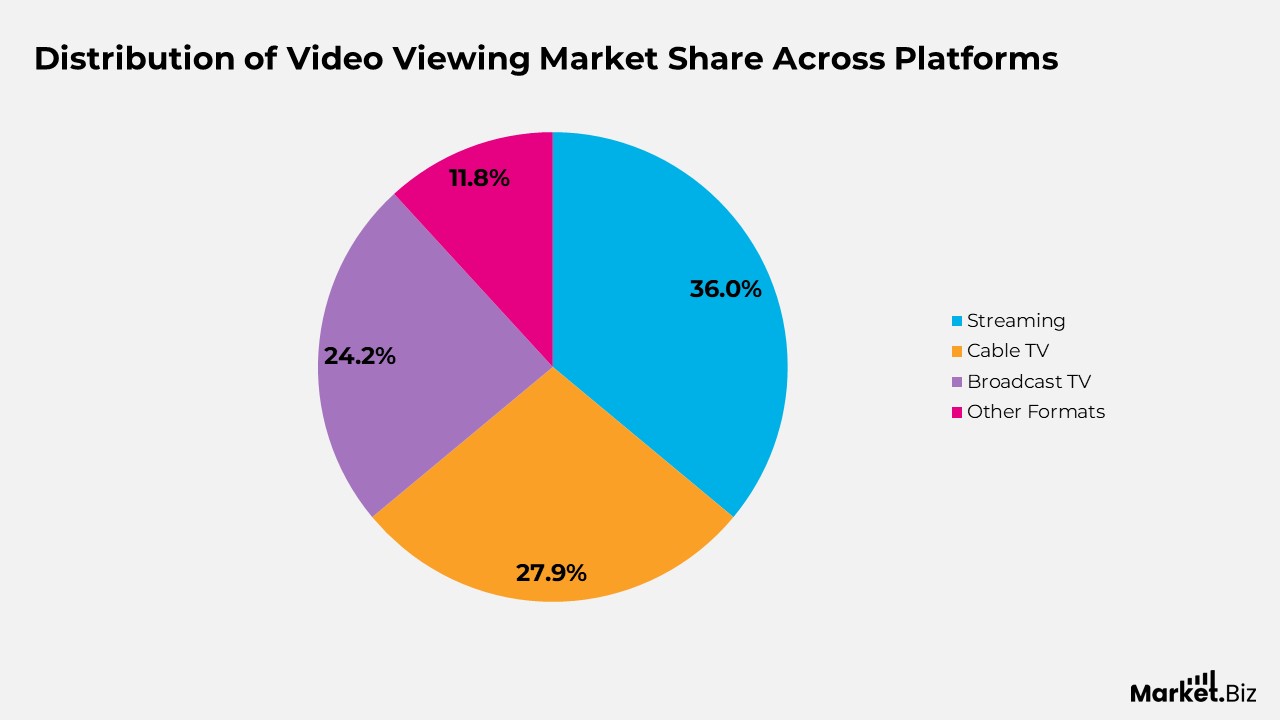
- Streaming platforms lead the market with a 36% share, showing their strong position in modern video consumption habits.
- Cable television accounts for approximately 27.9%, maintaining a sizable portion of viewer attention despite ongoing declines.
- Broadcast TV holds around 24.2%, reflecting continued reliance on traditional, over-the-air programming among many households.
- Other viewing formats, including niche and emerging platforms, make up the remaining 11.8% of total market share.
(Source: Exploding Topics, SQ Magazine)
Social Media Platforms Most Used for Regular News Consumption in the U.S.
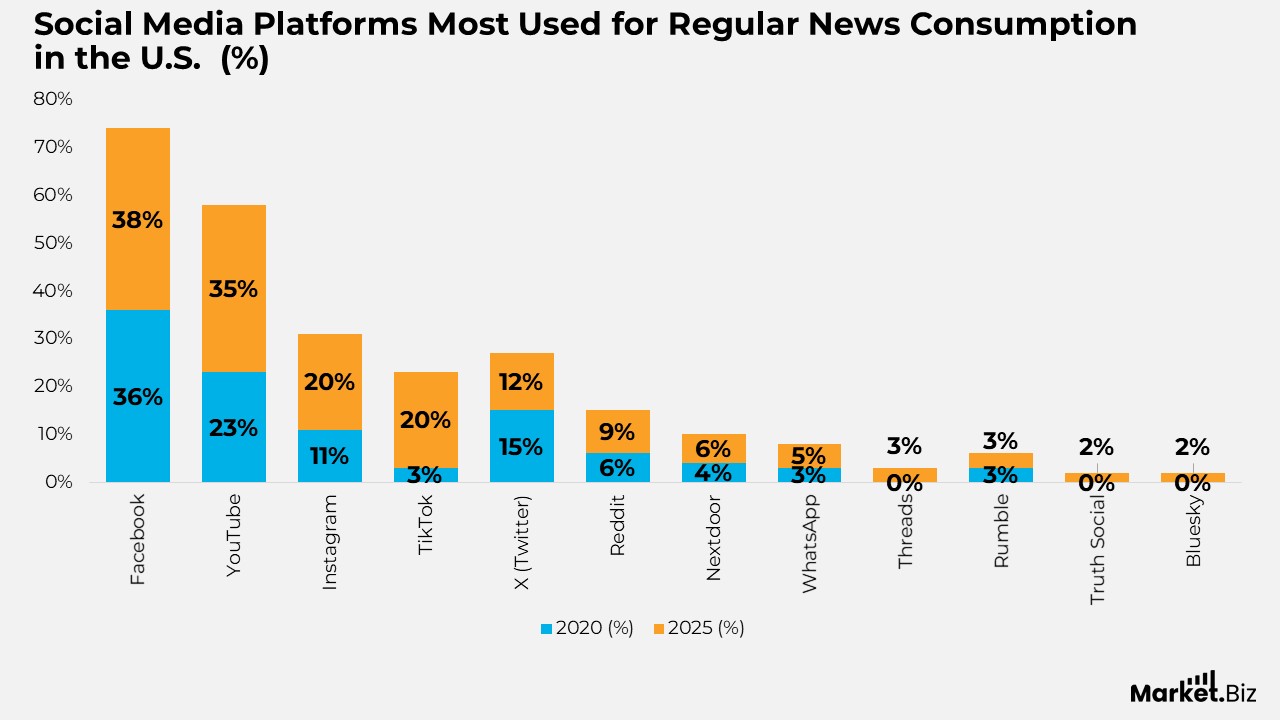
- Facebook remains a leading news source on social media, rising from 36% in 2020 to 38% in 2025 among adults who regularly get news from the platform.
- YouTube shows consistent growth, increasing from 23% in 2020 to 35% in 2025 as more users rely on video-based news.
- Instagram nearly doubles its news engagement, climbing from 11% in 2020 to 20% in 2025.
- TikTok sees a rapid rise in news consumption, moving from 3% in 2020 to 20% in 2025, reflecting its surge in popularity among younger audiences.
- X (Twitter) shows slight fluctuations, decreasing from 15% in 2020 to 12% in 2025.
- Reddit experiences moderate growth, with regular news consumption increasing from 6% to 9% across the same period.
- Nextdoor remains stable, moving from 4% to 6%, maintaining its role as a local news hub.
- WhatsApp shows gradual adoption, rising from 3% in 2020 to 5% in 2025 for news usage.
- Threads enters the news ecosystem modestly, reaching 3% by 2025.
- Rumble stays consistent at around 2–3%, showing limited but steady engagement.
- Truth Social maintains a steady 2% news consumption rate across the five-year period.
- Bluesky, a newer platform, gains modest traction at 2% by 2025.
(Source: Pew Research Center)
Consumer Interest in Unified Digital Subscription Bundles
- A recent survey shows that 66% of U.S. consumers are willing to shift to a single bundled service that combines streaming, fitness, security, and other digital offerings.
- Support for bundled solutions is especially strong among specific groups: 76% of households with children, 75% of adults aged 18–34, and 71% of adults aged 35–49 favor consolidated platforms.
- Over 56% of respondents expressed a desire for a centralized dashboard or tool to manage all their subscriptions in one place.
- About 41% said that juggling multiple subscriptions is difficult, leading to feelings of subscription fatigue and reduced satisfaction.
- Among heavy streaming users, interest in bundle options is even higher, with 71% preferring simplified billing and unified account management.
(Source: SQ Magazine)
Types of Subscriptions Consumers Most Often Forget About
- The most commonly overlooked recurring cost is mobile phone subscriptions, with 31% of users admitting they forget about them.
- Internet plans are forgotten by 30% of consumers, revealing how easily essential household services can go unnoticed.
- About 22% of people lose track of their TV or movie streaming services, reflecting subscription overload in the entertainment space.
- Despite widespread adoption, 16% of users forget they are still paying for Amazon Prime.
- Miscellaneous subscriptions slip through the cracks for 13% of consumers, contributing to unnoticed spending.
- Around 8% overlook digital software or app-based subscriptions, often due to auto-renewal settings.
- Music streaming services are forgotten by 7%, even though they remain highly popular.
- Gaming subscriptions go unnoticed by 6% of users, frequently because they renew automatically.
- The least forgotten category is news subscriptions, though 5% of consumers still lose track of them.
(Source: SQ Magazine)
Factors Influencing U.S. Consumers’ Streaming Platform Preferences
- Affordability ranks as the top priority for viewers, with 84% saying cost strongly influences their streaming choices.
- Ease of use matters to 81%, showing that simple navigation significantly improves the user experience.
- A diverse content library is important to 79%, reflecting demand for broad and engaging programming options.
- Streaming quality influences 77% of users, linking stable playback to consistent platform loyalty.
- Speed and responsiveness, such as fast loading and smooth menus, matter to 74% of consumers.
- Searchability and accessibility features shape decisions for 71%, helping viewers locate preferred content quickly.
- Device compatibility affects 58%, emphasizing the need for seamless viewing across multiple screens.
- Resolution quality, including HD and 4K options, matters to 56% of subscribers.
- Ad-skipping features are valuable to 52%, helping reduce interruptions during viewing.
- Fully ad-free streaming is preferred by 48%, reflecting rising frustration with forced ads.
- Offline downloads appeal to 40%, allowing flexible viewing without internet access.
- Smart menu recommendations attract 38%, highlighting interest in personalized content discovery.
- Live content availability is appreciated by 37%, showing steady demand for real-time programming.
(Source: SQ Magazine, Statista)
Emerging Trends in Digital Subscription Bundling and Platform Strategies
- About 66% of U.S. consumers now prefer unified bundles that combine multiple digital services, showing that convenience and simplicity strongly influence subscription choices.
- Interest in bundled offerings is especially notable among younger adults and households with children, indicating a demographic shift toward streamlined media and service management.
- Spotify is broadening its subscription ecosystem by enhancing its ad-supported plans and preparing a new “superfan” tier aimed at deeper audience engagement.
- TikTok is entering the subscription commerce space with features that offer recurring product discounts, reflecting broader industry momentum toward subscription-based purchasing models.
- The push for bundling aligns with growing AI-driven platform integration, encouraging users to remain within cohesive digital ecosystems rather than managing numerous standalone apps.
(Source: SQ Magazine, Deloitte, Nielsen)
Conclusion
Digital media subscription statistics highlight an industry undergoing constant transformation, driven by shifting user expectations, technological progress, and a strong desire for customizable, on-demand experiences. As consumers move further from traditional media, subscription-based services now form the core of how people access entertainment, information, education, and music.
Expanding device ecosystems, faster streaming capabilities, and the appeal of ad-free, flexible content continue to accelerate adoption. Even with rising competition among providers, the subscription market keeps growing as audiences prioritize convenience and curated offerings.
Together, these trends signal that digital subscriptions will remain essential to the global media framework, shaping future innovation and influencing how content is consumed and discovered worldwide.
FAQ’s
These statistics point to a strong movement toward individualized, on-demand content consumption. Users increasingly prioritize flexibility, convenience, and the ability to stream across multiple devices, moving away from traditional broadcast and physical media formats.
The surge in digital subscriptions is supported by advancements in streaming quality, widespread mobile access, and platform features such as tailored recommendations, ad-free viewing, and broad content selections.
Streaming has significantly reduced dependency on cable TV, physical formats, and scheduled programming. As audiences migrate to digital alternatives, traditional media experiences declining engagement and revenue.
Connected devices like smartphones, smart TVs, tablets, and gaming consoles make digital content instantly accessible, motivating consumers to subscribe to multiple services for different content needs.
Yes. Younger consumers are more likely to embrace digital subscriptions due to their comfort with technology, preference for flexible viewing patterns, and habit of consuming content on mobile devices.

