








Introduction
Cruise Statistics: A cruise represents a journey, usually on a sizable passenger vessel, intended for leisure or tourism purposes. It frequently features a range of entertainment, dining, and recreational activities, with stops at various locations. Cruises are designed to appeal to diverse demographics, from luxury seekers to families, and they differ in terms of length and destination choices.
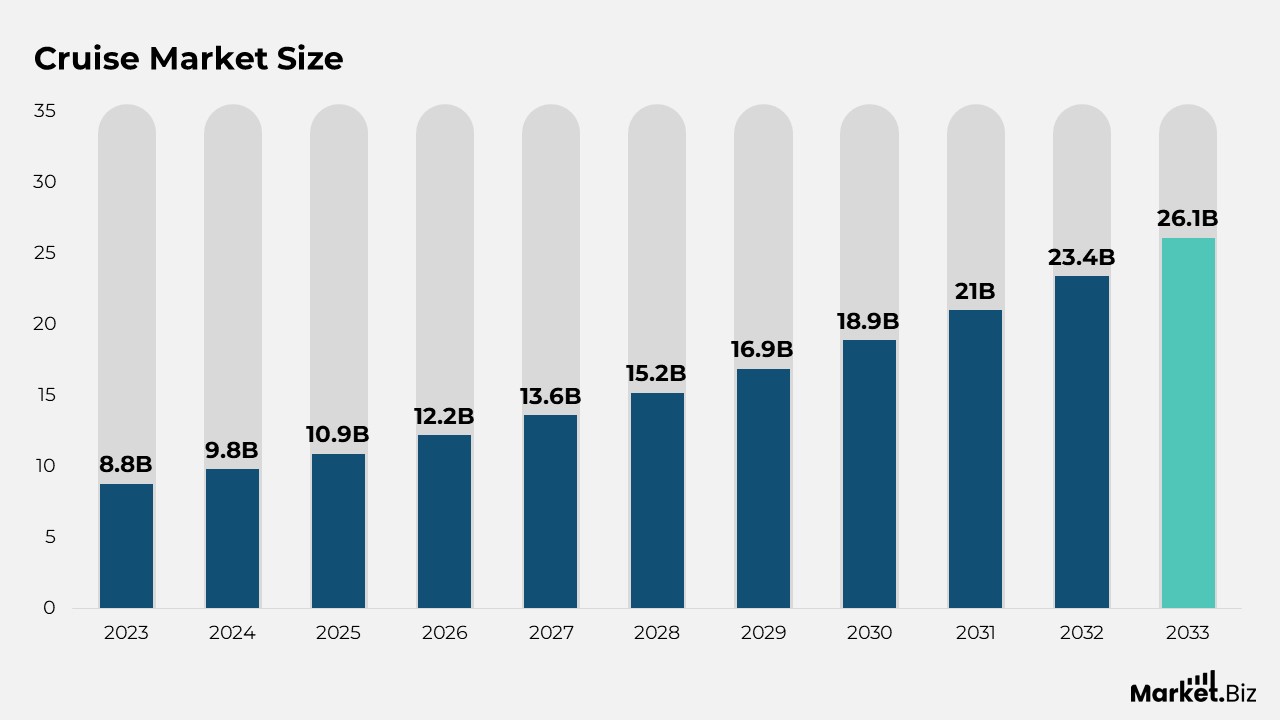
The Global Cruise Market is projected to reach approximately USD 26.1 billion by 2033, up from USD 8.8 billion in 2023, with a compound annual growth rate (CAGR) of 11.5% anticipated during the forecast period from 2024 to 2033. The cruise market encompasses the worldwide industry involved in the operation of cruise ships, providing travel experiences for passengers. This sector includes cruise operators, port facilities, and ancillary industries such as travel agencies and tour operators.
Editor’s Choice
- The total capacity of the cruise ship industry is nearly 500,000 guests.
- The typical cruise lasts about 7 days.
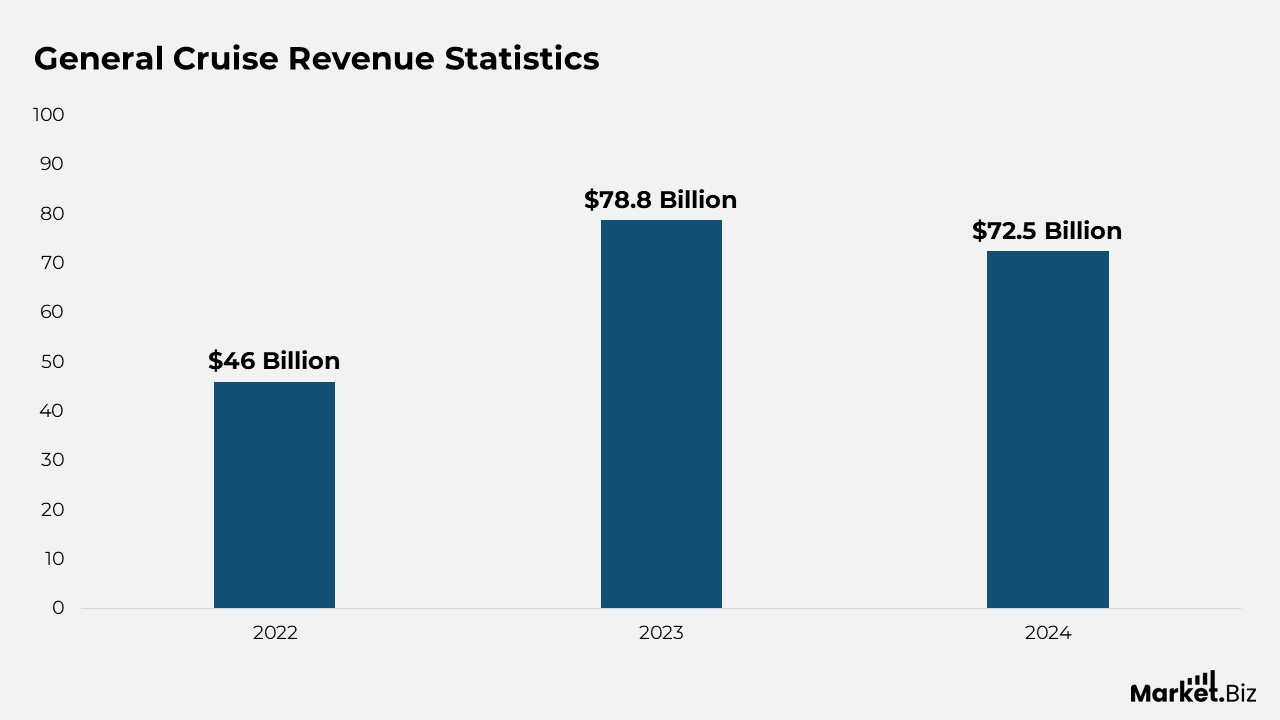
- The worldwide cruise sector generated an estimated $46 billion in revenue during 2022.
- The global luxury cruise market is expected to reach $15 billion in 2025, growing at a CAGR of 7%, driven by high-net-worth individuals.
- Cruisers typically spend approximately $385 in the port city prior to boarding a vessel.
- Most cruise line companies have pledged to reach net-zero emissions by 2050, with interim goals established for 2030.
- As of 2023, the largest cruise ship in the world is the Wonder of the Seas, boasting a gross tonnage of 236,857 GT.
- A cruise ship typically requires a construction period of 2 to 4 years.
- The largest cruise ship in the world possesses enough electrical wiring to span from coast to coast across the United States, totalling over 3,000 miles of wiring.
- The cruise industry is experiencing steady and responsible growth, with projections indicating that 37.7 million passengers will embark on cruises in 2025.
What is a Cruise?
A cruise represents a vacation journey lasting several days aboard a cruise ship that traverses the ocean or significant inland bodies of water, making stops at various tourist attractions along a designated path. In this type of maritime travel, the focus is not solely on transportation; rather, it emphasizes the experience of being on the ship and exploring the tourist sites. The cruise industry primarily consists of revenue generated from passenger ticket sales, excluding any onboard or additional revenue sources.
General Cruise Statistics
- At its height in 2019, the cruise industry served more than 30 million passengers.
- The total capacity of the cruise ship industry is nearly 500,000 guests.
- The cruise sector is the fastest-growing segment of the leisure travel market, experiencing a 7.4% year-over-year growth since 1980.
- One-quarter of U.S. citizens have enjoyed a cruise vacation.
- Cruisers typically wait about 3.5 years between their cruise vacations.
- In 2022, the global cruise industry generated around $46 billion in revenue.
- More than 30 million passengers traveled on cruise ships worldwide in 2019.
- The number of cruise ship passengers fell by 81% in 2020 due to the COVID-19 pandemic.
- The average age of a cruise passenger is 47 years.
- As of 2023, the largest cruise ship in the world is the Wonder of the Seas, boasting a gross tonnage of 236,857 GT.
- Royal Caribbean International is the top cruise line by passenger capacity, representing approximately 24% of global cruise capacity in 2022.
- The typical cruise lasts about 7 days.
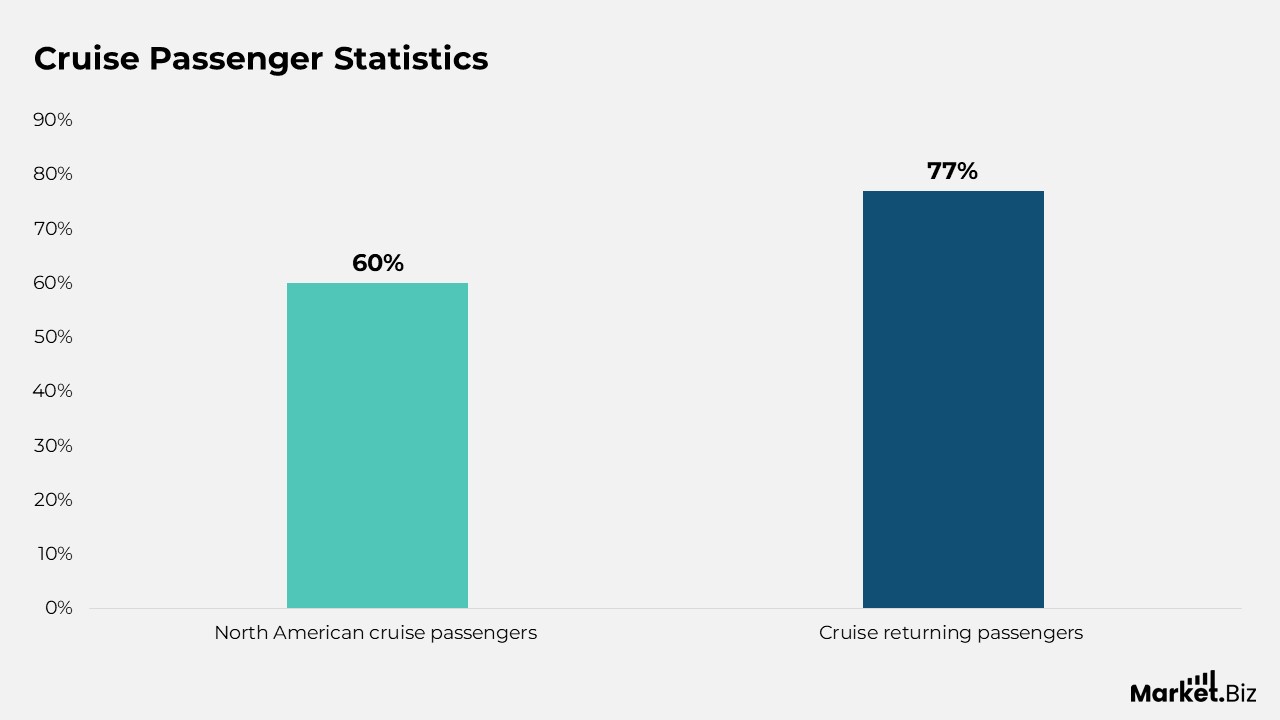
- Approximately 60% of cruise passengers hail from North America.
- Approximately 77% of cruise passengers are repeat customers.
- The cruise industry provides support for over 1.2 million jobs globally, encompassing direct, indirect, and induced employment.
- In 2022, the U.S. cruise market represented about 52% of global cruise passengers.
- The average price of a cruise ticket in 2022 was around $1,180 per person.
Cruise Market Size
- The worldwide cruise sector generated an estimated $46 billion in revenue during 2022.
- In 2019, over 30 million individuals traveled via cruise ships across the globe.
- The number of cruise ship travellers plummeted by 81% in 2020 as a result of the COVID-19 pandemic.
- Royal Caribbean International stands as the foremost cruise line in terms of passenger capacity, representing approximately 24% of the global cruise capacity in 2022.tourism following
- The Caribbean continues to be the most favored cruise destination, constituting nearly 42% of all cruise itineraries in 2022.
- The cruise sector provides support for more than 1.2 million jobs globally, encompassing direct, indirect, and induced employment.
- In 2022, the U.S. cruise market comprised about 52% of the total global cruise passengers.
- The average price of a cruise ticket in 2022 was roughly $1,180 per individual.
- The global maritime sector accounts for around 90% of international trade, with cruise ships representing a small yet prominent segment.
- The average occupancy rate of cruise vessels in 2022 was approximately 100%, attributed to the resurgence of tourism following the pandemic.
- In 2023, the passenger capacity of the global fleet exceeded 550,000 beds, including over 250 ships worldwide.
- Europe’s cruise market experienced a growth of approximately 6% in 2022, fueled by a heightened interest in northern and Baltic cruises.
- The global cruise industry saw an average annual growth rate of around 6% from 2010 to 2022.
Moreover
- As of 2023, the backlog of global cruise ship orders exceeds 100 vessels, valued at over $50 billion, indicating robust future growth.
- The Asia-Pacific cruise market is projected to expand at a compound annual growth rate (CAGR) of 8% through 2028, driven by rising disposable income and tourism.
- The total capacity of the global fleet is anticipated to reach approximately 600,000 beds by the end of 2025, an increase from about 550,000 in 2023, with new ships being regularly introduced.
- The cruise industry’s impact on the economies of primary port cities can enhance local GDP by 10–15% during peak seasons, contingent on port infrastructure.
- Onboard passenger spending averages around $120 per day, significantly contributing to overall cruise revenue.
- Common amenities available on board include entertainment venues, dining options, casinos, and wellness centers, with over 90% of ships providing at least three of these features.
Further
- Carnival Cruise Line holds a global market share of approximately 17%, positioning it as one of the largest cruise companies in the world.
- More than 50% of cruise passengers engage in onboard shore excursions, which greatly benefit local economies.
- The US ports of Miami, Fort Lauderdale, and Orlando account for over 50% of all North American cruise passenger embarkations.
- The global cruise ship maintenance market is valued at over $2 billion annually, reflecting the ongoing demand for upgrades and repairs.
- In 2023, the number of new cruise ship orders rose by about 20% compared to 2022, signaling optimism within the industry.
- The global luxury cruise market is expected to reach $15 billion in 2025, growing at a CAGR of 7%, driven by high-net-worth individuals.
- In 2022, the overall capital expenditure in the cruise sector was approximately $8 billion, encompassing new ships, upgrades, and technology investments.
- The share of regional cruises (such as those in Asia and South America) rose by 15% in 2022, demonstrating a broader range of destinations.
- Despite challenges posed by the pandemic, the worldwide cruise industry is anticipated to return to passenger levels seen before 2020 in 2024 or 2025, signifying a strong recovery.
Demographics
- 57% of individuals who take cruises hold a college degree.
- 83% of those traveling on cruises are married.
- Cruisers typically spend approximately $385 in the port city prior to boarding a vessel.
- On average, during a standard cruise, passengers expend around $750 per person in port cities.
- The average age of cruise passengers is 47 years.
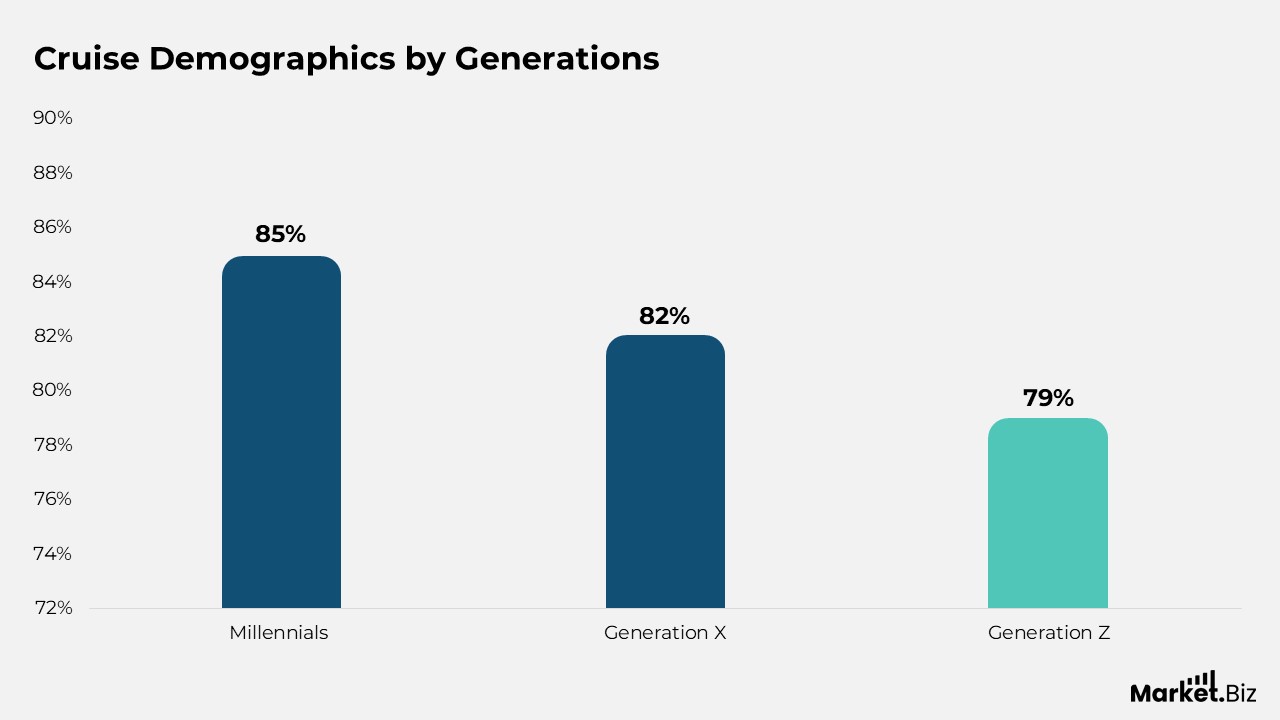
- 85% of Millennials intend to take a cruise in the future, in contrast to 82% of Generation X and 79% of Generation Z.
- 8 out of 10 cruisers are inclined to reserve their next holiday on a cruise ship.
- Approximately 70% of cruisers express a willingness to embark on a cruise ship in the upcoming year.
- Nearly 60% of individuals who have never been on a cruise indicate they are likely to take one in the next few years.
- 70% of cruisers report an annual household income exceeding $80,000.
Cruise Passenger Statistics
- The typical age of a cruise passenger is 47 years.
- The average length of a cruise is roughly 7 days.
- Approximately 60% of cruise passengers originate from North America.
- About 77% of cruise passengers are returning customers.
- The most popular itineraries are the Caribbean, Mediterranean, and Bahamas, in that sequence.
- In 2022, the share of luxury cruise passengers constituted about 15% of the total, while the remainder traveled on mass-market vessels.
- The interest in themed cruises, including music, wellness, and culinary experiences, surged by over 25% in 2022, indicating passenger preferences.
- Passenger satisfaction levels on cruise ships reached 89% in 2022, an increase from 80% in 2019, attributed to enhanced onboard services and health protocols.
- The fastest-growing sector in the cruise industry is adventure and expedition cruises, which are projected to grow at a CAGR of approximately 12% through 2028, fueled by nature tourism.
- The percentage of ships equipped with dedicated wellness and fitness centers rose from 65% in 2019 to over 90% in 2022, driven by health-conscious travelers.
Challenges in the Cruise Industry
- The ecological consequences of cruise ships are comparable to the emissions produced by a small city; for instance, an average cruise ship releases approximately 0.43 kg of CO2 for each passenger mile.
- The environmental standards governing cruise ships are becoming progressively more stringent, with the International Maritime Organization (IMO) enforcing new sulfur emission restrictions that took effect in 2020.
- On average, a typical cruise ship generates around 210,000 gallons of greywater and blackwater waste each year, necessitating adequate treatment.
- The typical gratuity given on a cruise ship is roughly $14 for each passenger per day, which plays a significant role in supporting crew salaries.
- The expense of equipping existing ships with scrubbers to mitigate sulfur emissions can vary between $2 million and $8 million per vessel, depending on its size.
- In the past three years, the number of cruise ships operating in the Arctic and Antarctic regions has risen by 10%, reflecting a growing interest in polar expeditions.
- Most cruise line companies have pledged to reach net-zero emissions by 2050, with interim goals established for 2030.
Facts about Cruise
- A cruise ship typically requires a construction period of 2 to 4 years.
- Cruise ships are constructed in blocks or sections, which are assembled similarly to LEGO to create the final vessel.
- On average, a cruise cabin block manufacturer can produce 12,000 cabins annually.
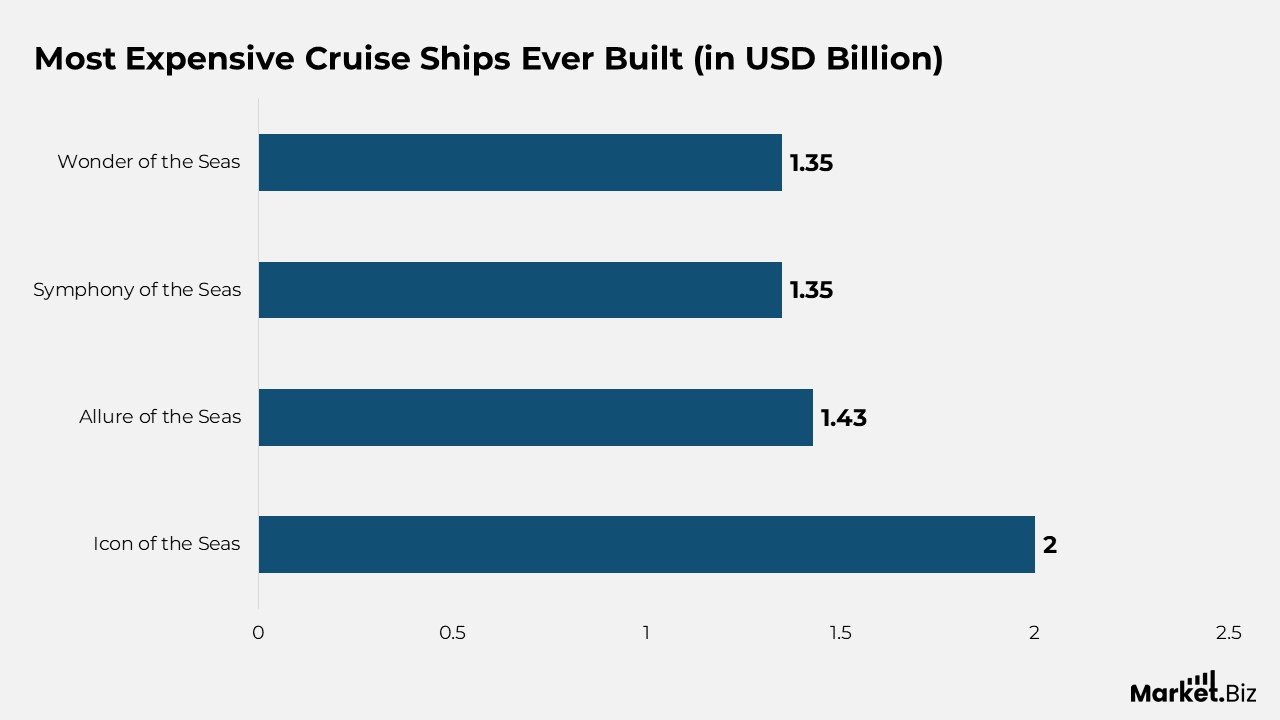
- The construction of a mega-cruise ship exceeds $1 billion in cost.
- Royal Caribbean’s Oasis of the Seas holds the record as the most expensive cruise ship ever constructed, with a price tag of $1.6 billion.
- The Royal Princess required 3 million business-hours for its construction.
- Cruise ship anchors can weigh over 17 tons, equivalent to the weight of four elephants.
- Typically, a cruise ship is equipped with more than 16 miles of sprinkler piping, six miles of fire hose, 5,000 sprinkler heads, 4,000 smoke detectors, five firefighting teams, and 500 fire extinguishers.
- On average, a cruise ship consumes approximately 18.3 gallons of fuel per minute, which translates to 1,100 gallons per hour.
- The fuel efficiency of a cruise ship is approximately 0.004 miles per gallon.
- A large cruise ship can store between 1 to 2 million gallons of fuel.
- Modern diesel-powered cruise ships are equipped with four to six medium-speed engines, each operating at 500 revolutions per minute.
- Each engine generates around 25,000 horsepower.
- The largest cruise ship in the world possesses enough electrical wiring to span from coast to coast across the United States, totalling over 3,000 miles of wiring.
Latest Trends in Cruising
- The cruise industry is experiencing steady and responsible growth, with projections indicating that 37.7 million passengers will go on board cruises in 2025.
- Consumers are demonstrating a strong desire to cruise, as evidenced by the fact that 82% of those who have cruised intend to do so again, while 68% of international travelers are contemplating their first cruise.
- The significance of cruise tourism to local communities is evident, with a global economic impact exceeding $168 billion and support for 1.6 million jobs.
- The growth of the industry is being propelled by first-time cruisers, who accounted for 31% of passengers over the past two years. This trend highlights the sector’s high satisfaction ratings and its effectiveness in attracting new clientele.
- Regarding intent to cruise, 82% of individuals who have previously cruised plan to embark on another cruise. Generation X and Millennials are particularly enthusiastic about cruising, drawn by the diverse experiences offered, the opportunity to visit multiple destinations and the overall value of a cruise vacation.
- Cruise holidays cater to multi-generational travel, with nearly one-third of cruise guests traveling with three or more generations.
- Cruise travel consistently receives higher satisfaction ratings compared to other vacation options, as indicated by repeat factors: 25% of repeat cruisers take two or more cruises annually; 14% cruise twice a year; and 11% enjoy three to five cruises each year.
- Currently, over 61% of the Cruise Lines International Association’s (CLIA) fleet is equipped to connect to onshore power, a figure projected to rise to 72% by 2028.
Conclusion
The cruise sector has shown exceptional resilience and robust growth, especially after navigating the difficulties brought on by the COVID-19 pandemic. Although the pandemic had a considerable effect on the industry, resulting in significant declines in passenger counts and revenue, cruise travel has made a strong recovery, with certain indicators surpassing levels seen before the pandemic.
As we look to the future, the industry is set for ongoing growth, fueled by elements such as younger demographics taking to cruising and the creation of innovative, tailored cruise experiences.
FAQs
Falling off a cruise ship is uncommon, yet it does occur. According to statistics from the cruise industry, around 19 individuals fall overboard each year, while millions travel without incident. Typically, these occurrences are attributed to excessive alcohol intake, reckless actions, or insufficient safety barriers.
In comparison to lines such as Carnival and Royal Caribbean, which have reported higher incident rates, the data indicate that Celebrity and Virgin are safer choices for passengers who prioritize onboard safety. One contributing factor to Celebrity Cruises’ impressive safety record is its rigorous security framework.
In general, cruise ship captains tend to work extended hours, particularly during active sailing periods or when critical navigational duties are required. On an average day, a cruise ship captain may work anywhere from 10 to 14 hours or even longer.

