









Introduction
Motorcycle Helmet Statistics: These are essential safety equipment for riders, available in various types such as full-face, open-face, and modular helmets, each providing different levels of protection. These helmets are composed of an outer shell designed to absorb impact, a comfort liner for added padding, an impact-absorbing liner, and a retention system to keep the helmet securely in place.
Safety standards like DOT, ECE, and Snell guarantee that helmets comply with strict requirements. Ensuring a proper fit and regular maintenance is vital, as helmets must fit snugly and be routinely checked for signs of wear and tear. By grasping these fundamental aspects, riders can emphasize safety and minimize the risk of head injuries while enjoying their rides.
Editor’s Choice
- The global revenue from the motorcycle helmet market is projected to reach USD 4.8 billion by the year 2033.
- The Asia-Pacific (APAC) region holds a commanding position with a significant 40% share, which reflects the high demand and extensive motorcycle user base in this area.
- As of 2023, the market revenue was recorded at USD 2.5 billion.
- In the United States, 66.5% of motorcycle riders utilized helmets that comply with DOT standards during the year 2022.
- In 29 states, helmet usage is only compulsory for specific age categories of motorcycle riders (those under the ages of 17, 18, or 21).
- In the United States, motorcycles represented 14% of all traffic-related fatalities, despite constituting only 3% of the total number of vehicles.
- In the year 2021, the United States recorded 5,932 fatalities among motorcycle riders.
- Thailand ranks first with 87% of households possessing a motorbike, closely trailed by Vietnam at 86% and Indonesia at 85%.
Motorcycle Helmet Statistics
- The global revenue from the motorcycle helmet market is projected to reach USD 4.8 billion by the year 2033.
- Several prominent companies play a crucial role in the motorcycle helmet market, each making a notable contribution to the total market share.
- HJC Europe S.A.R.L. is at the forefront, holding an 18% market share.
- The Asia-Pacific (APAC) region holds a commanding position with a significant 40% share, which reflects the high demand and extensive motorcycle user base in this area.
- In 2019, the percentage of motorcycle riders in the U.S. who wore helmets declined to 70.8%.
- The proportion of motorcyclists utilizing DOT-compliant helmets rose from 64.90% in 2021 to 66.50% in 2022, signifying an increasing preference for helmets that adhere to safety regulations.
- Research indicated that 43.30% of the general public consistently wear a helmet while operating a motorcycle.
- Price is a crucial factor, with 37.78% of respondents strongly agreeing and 35% agreeing that it influences their purchasing decisions.
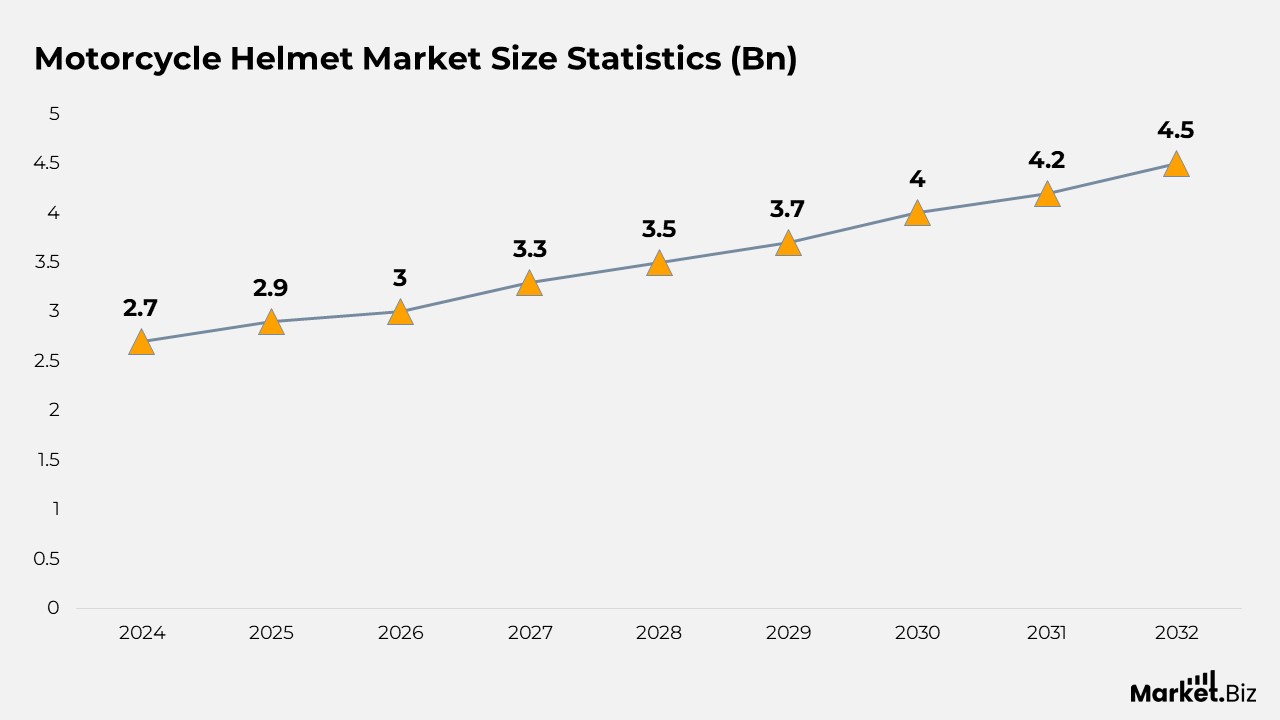
Market Size Statistics
- The global motorcycle helmet market has shown steady growth over the last ten years, achieving a compound annual growth rate (CAGR) of 6.80%, with revenue figures indicating a consistent upward trend.
- As of 2023, the market revenue was recorded at USD 2.5 billion.
- Forecasts suggest ongoing growth, with revenues projected to reach USD 2.7 billion in 2024 and USD 2.9 billion in 2025.
- By 2026, the market is anticipated to attain USD 3.0 billion in revenue, with further increases to USD 3.3 billion in 2027 and USD 3.5 billion in 2028.
- The upward trend is expected to persist, with market revenues of USD 3.7 billion in 2029 and USD 4.0 billion in 2030.
- Looking forward, the market is predicted to reach USD 4.2 billion by 2031, USD 4.5 billion by 2032, and USD 4.8 billion by 2033.
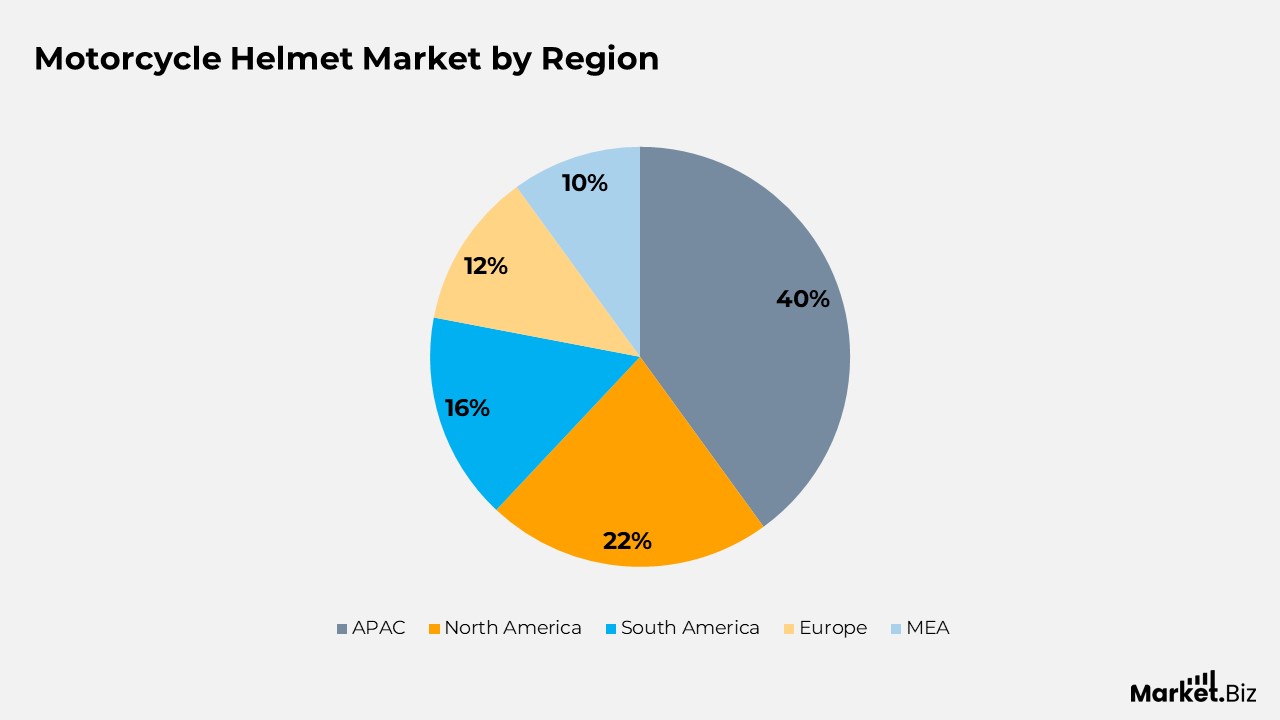
Motorcycle Helmet Market by Region
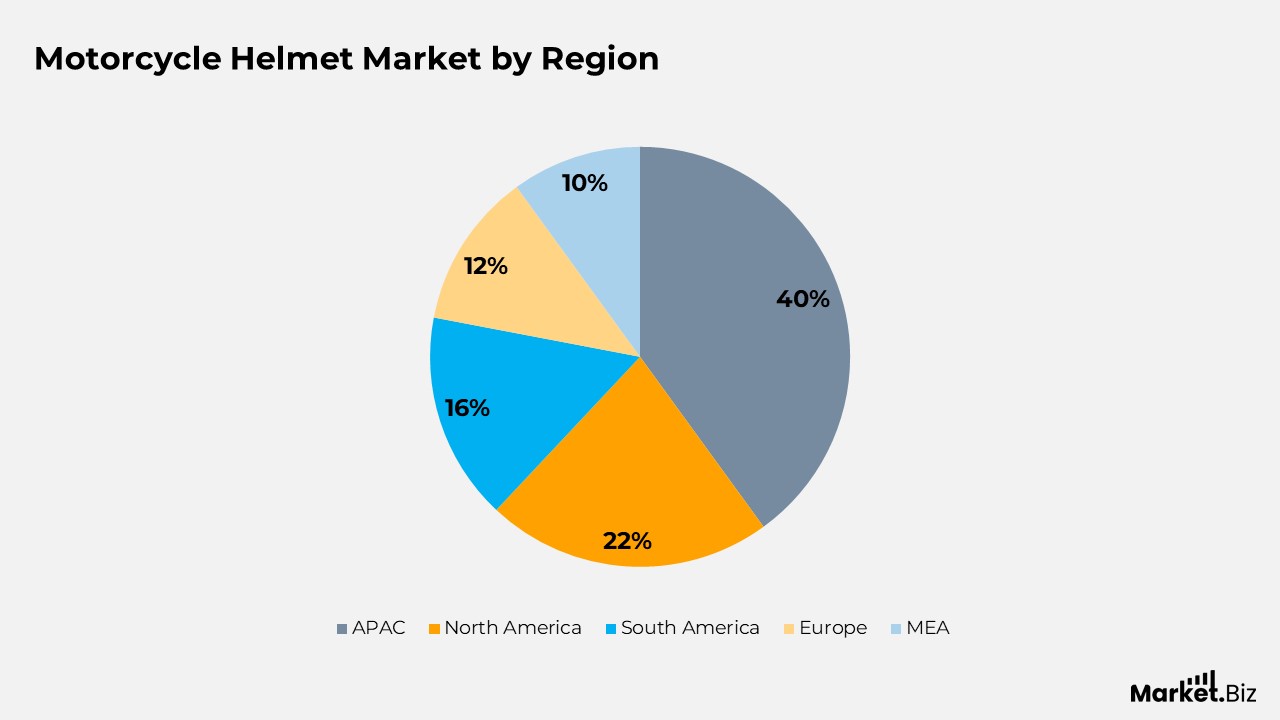
- The Asia-Pacific (APAC) region leads with a considerable 40% market share, which demonstrates the strong demand and extensive motorcycle user base in this area.
- North America comes next with a 22% share of the market, signifying notable market penetration and consumer awareness about helmet safety.
- South America possesses a 16% market share, whereas Europe represents 12% of the total market.
- The Middle East and Africa (MEA) region adds 10% to the overall market share.
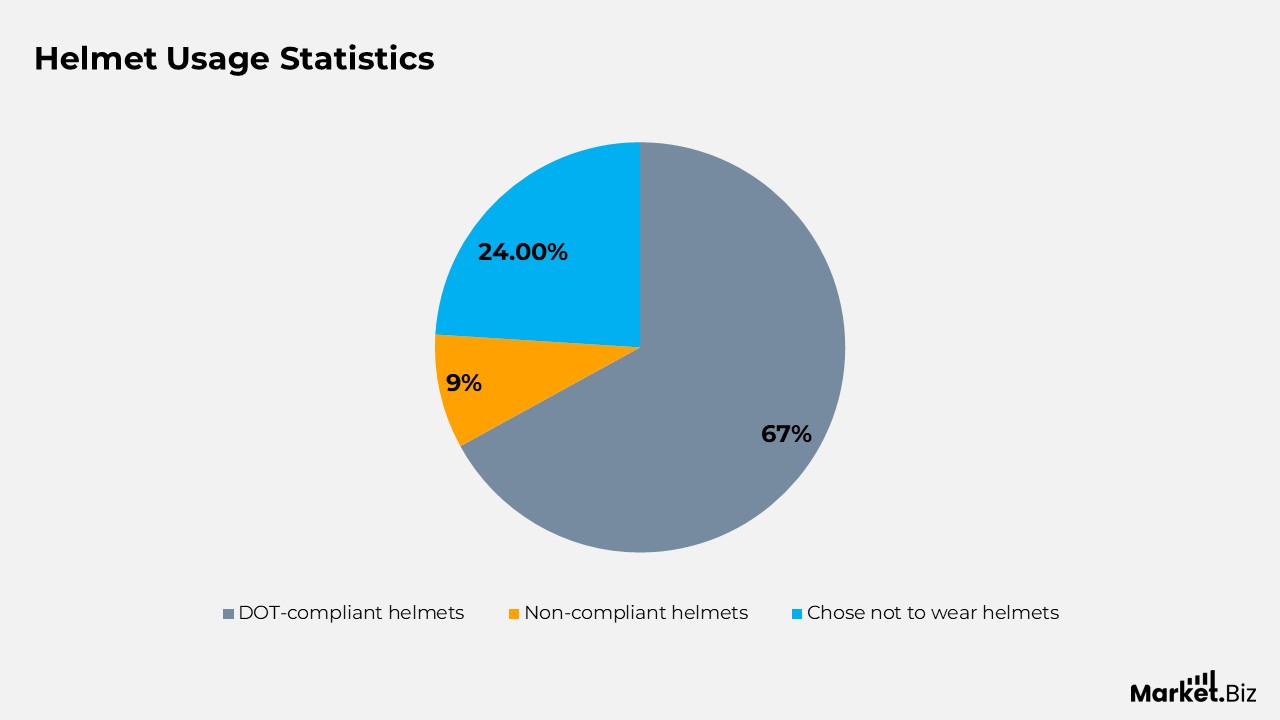
Helmet Usage Statistics
- In the United States, 66.5% of motorcycle riders utilized helmets that comply with DOT standards during the year 2022.
- 67% of motorcyclists were observed wearing DOT-compliant helmets, while 9% opted for non-compliant helmets, and 24% chose not to wear helmets at all.
- Eighteen states in the US have enacted laws that require helmets for all motorcyclists. Twenty-nine states have partial helmet laws that apply only to specific subsets or age groups. Additionally, three states do not have any helmet requirements for motorcyclists.
- In 2022, 92.8% of motorcyclists in states with mandatory helmet laws for all riders wore helmets. In contrast, helmet usage in states without such mandates was only 63.6%.
- The highest rate of helmet usage is found in the West, where 96.8% of motorcyclists wear helmets, whereas the Midwest region reports the lowest rate at 52%.
- Motorcycle helmet usage is more prevalent on expressways (88%) compared to surface streets (69%).
- Motorcyclists are more likely to wear helmets when navigating high-speed traffic.
- Helmets are shown to be 37% effective in reducing fatalities for motorcycle riders and 41% effective for motorcycle passengers.
Helmet Laws by States
- A total of 18 states enforce mandatory helmet use for motorcyclists: Alabama, California, Georgia, Louisiana, Maryland, Mississippi, Nebraska, Nevada, New Jersey, Massachusetts, New York, North Carolina, Oregon, Vermont, Virginia, Washington, Tennessee, and West Virginia.
- In 29 states, helmet usage is only compulsory for specific age categories of motorcycle riders (those under the ages of 17, 18, or 21).
- Additionally, in 3 states – Illinois, Iowa, and New Hampshire – there are no regulations regarding motorcycle helmet use.
Motorcycle Accident Statistics
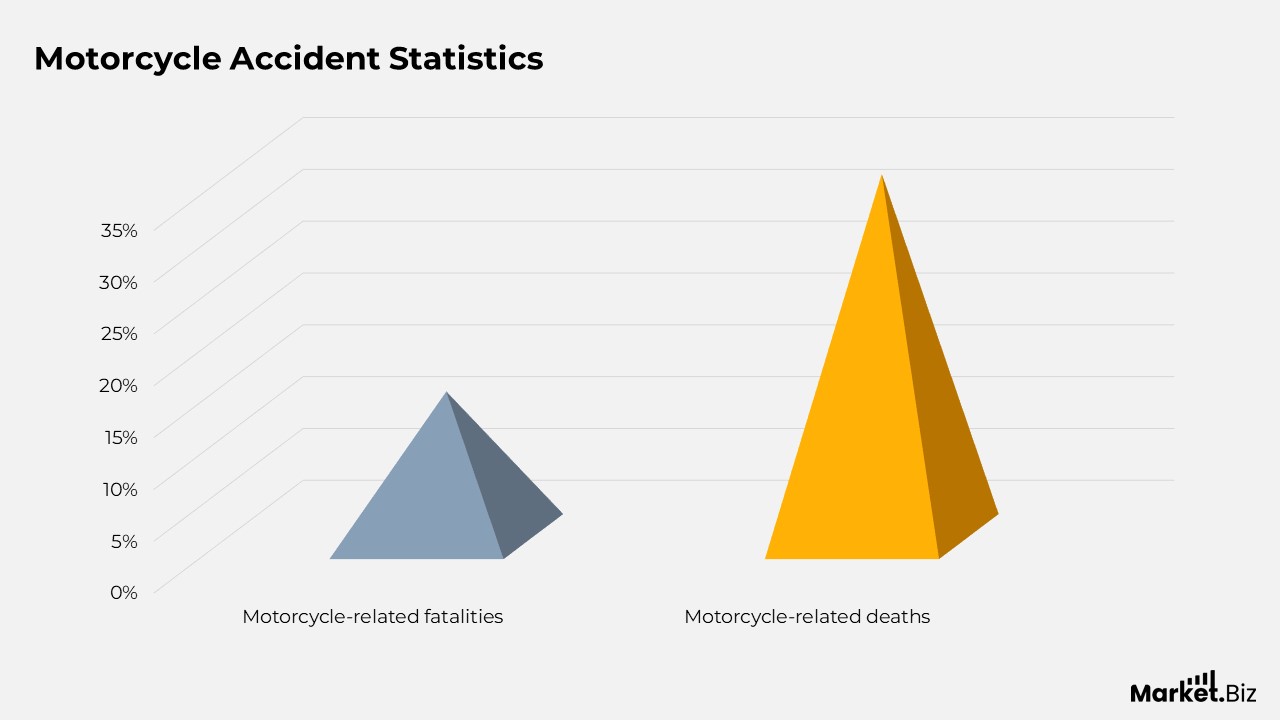
- In the United States, motorcycles represented 14% of all traffic-related fatalities, despite constituting only 3% of the total number of vehicles.
- The fatality rate per 100,000 registered motorcycles rose to 60, while the fatality rate per 100 million motorcycle miles traveled increased to 30.
- The injury rate per 100,000 registered motorcycles was recorded at 837, and the injury rate per 100 million motorcycle miles traveled had risen to 421.
- The fatality rate for motorcycles is five times greater than that of passenger cars per 100,000 registered vehicles, and 24 times higher per 100 million vehicle miles traveled.
- In the year 2021, the United States saw the highest number of motorcycle fatalities among individuals aged 25 to 34.
- 35% of motorcycle-related deaths occurred at intersections.
- Additionally, 29% of motorcycle fatalities involved alcohol impairment, defined as a blood alcohol concentration (BAC) of .08 g/dL or higher.
Cause of Motorcycle Accidents
- Failing to wear a helmet presents a considerable danger to motorcycle riders, as evidenced by 2,251 fatalities reported in incidents where helmets were absent.
- Helmets provide essential protection against head injuries, which are associated with high fatality rates.
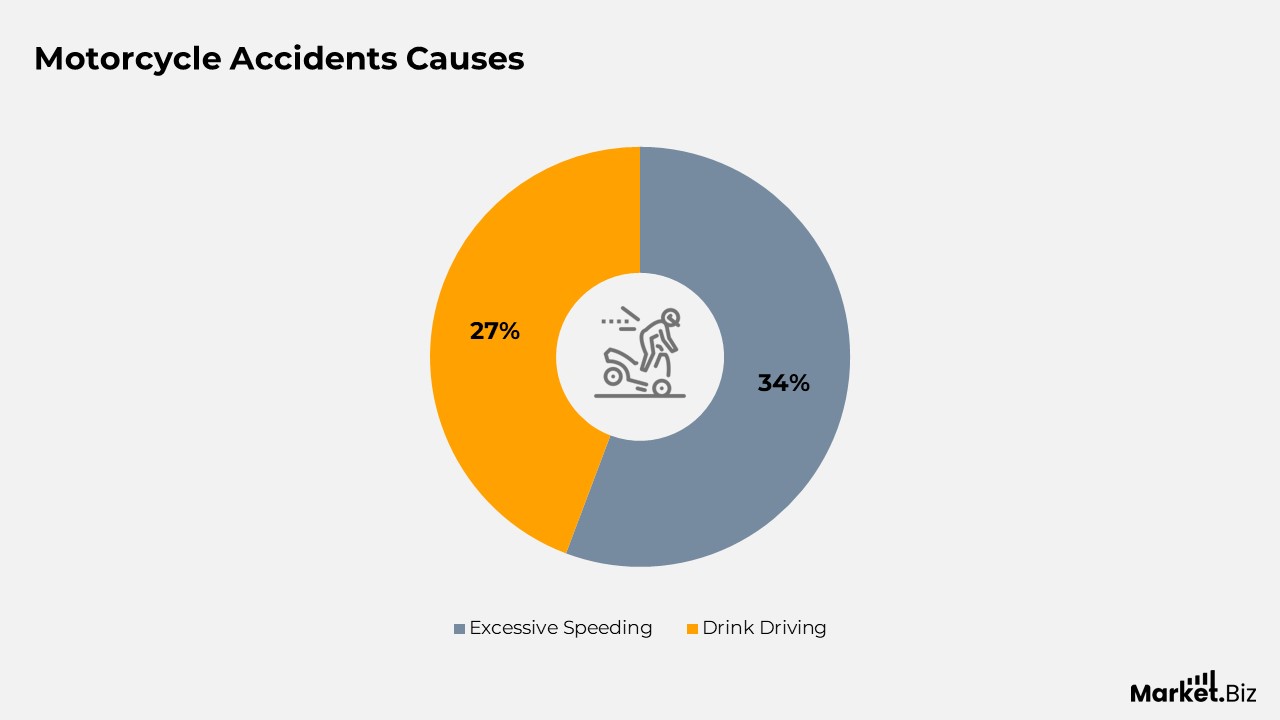
- Excessive speed represents another significant threat, with more than one-third of fatal motorcycle accidents (34%) linked to speeding.
- Speeding heightens the risk of collisions due to extended stopping distances and diminished control, thereby increasing the likelihood of fatal consequences.
- Driving under the influence of alcohol is a recognized danger, accounting for over a quarter (27%) of fatal motorcycle accidents.
- This statistic includes single-vehicle incidents, which made up 41% of alcohol-related motorcycle accidents and resulted in 880 rider fatalities in 2020.
- The evening hours experience a rise in incidents of drunk driving, rendering this period particularly perilous for motorcycle accidents.
- 40% of deaths from alcohol-related motorcycle crashes occur during the evening, with accidents being three times more likely to involve a disrupted driver at night compared to during the day.
- Weekend evenings present increased dangers, with 24% of fatal motorcycle accidents happening between 6 to 9 p.m., leading to 676 fatalities.
- On weekdays, crashes tend to happen earlier, with 26% of fatalities occurring between 3 p.m. to 6 p.m., resulting in a total of 1,263 deaths during this period.
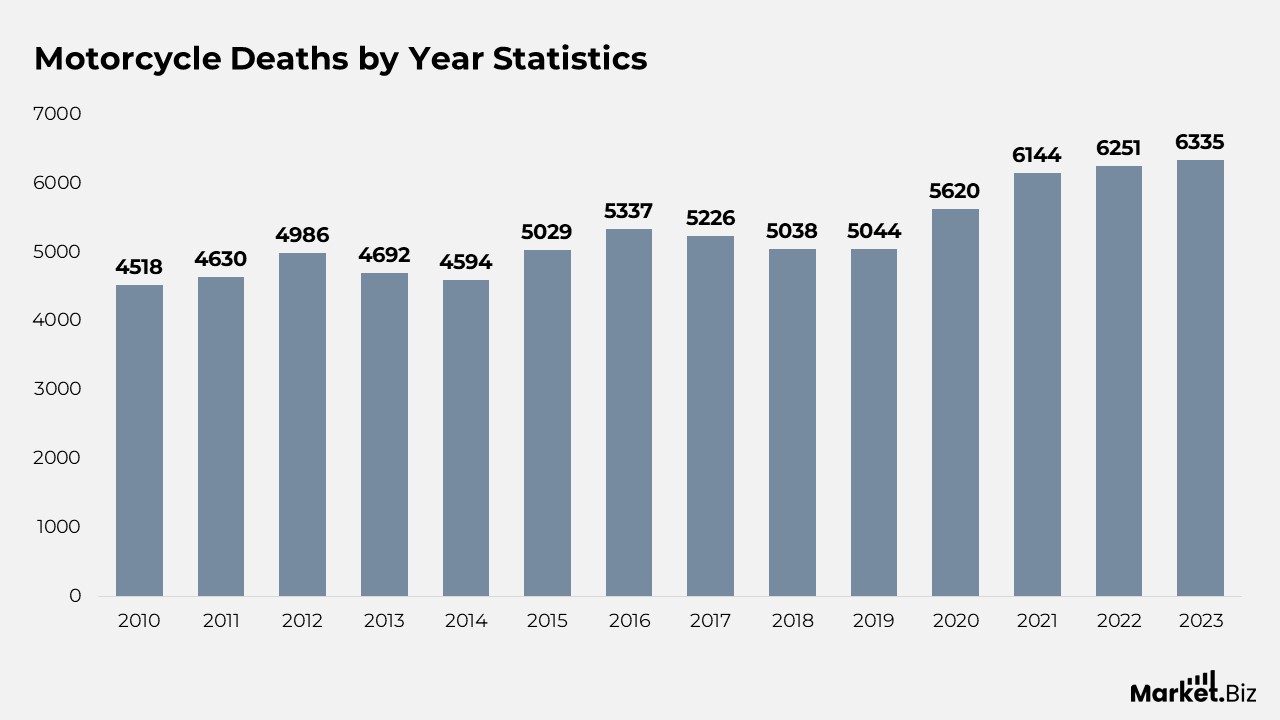
Motorcycle Fatalities by Year
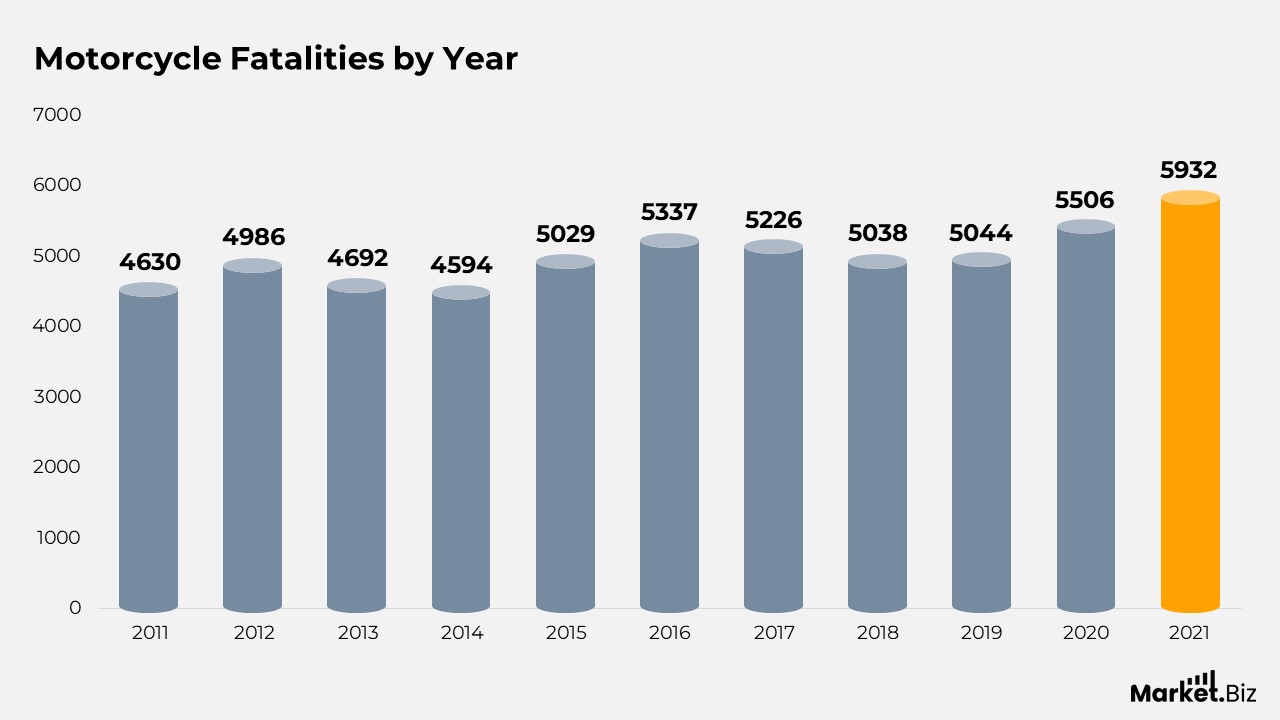
- In the year 2021, the United States recorded 5,932 fatalities among motorcycle riders.
- Motorcycles represented 14% of total traffic deaths, 18% of all occupant fatalities, and 4% of occupant injuries during that year.
- Despite constituting merely 3% of the registered vehicles in the US, motorcycles were responsible for 18% of occupant fatalities.
Fatalities Related to Motorcycle Helmet
- In 2021, motorcycle fatalities reached a record high of 5,932, marking a 21% increase from 2019, which constituted 14% of all deaths resulting from motor vehicle accidents, nearly three times the number recorded in 1997.
- Helmets were acknowledged for saving 1,872 lives, with an estimated 749 additional lives that could have been preserved had all riders utilized helmets.
- The use of helmets resulted in a 37% decrease in fatalities among motorcyclists and a 41% decrease in fatalities among passengers.
- Although motorcycles made up only 3% of registered vehicles, they were responsible for 14% of traffic fatalities, with motorcycle accidents leading to 18% of occupant deaths and 4% of occupant injuries.
- In 2017, helmet compliance stood at 65.2%, increasing to 87% in states with mandatory helmet laws, while it fell to 43.7% in states without such laws.
- The rates of helmet usage among fatalities varied in 2018, ranging from 89% in states with universal helmet laws to 26% in states lacking helmet regulations.
- The overall helmet usage rate in 2018 was 71%, with 83% in states enforcing mandatory laws and 56.9% in others.
- In 2017, helmet usage rates were recorded at 62% for motorcyclists and 41% for passengers, which saw a slight decline in 2018 to 60% and 51%, respectively.
- Across the nation in 2017, 39% of motorcycle accidents happened without the use of helmets, with state variations ranging from 0% to 76%.
- In fatal collisions, helmet usage rates varied from 62% to 100% in states with universal helmet laws and from 24% to 60% in states without such regulations.
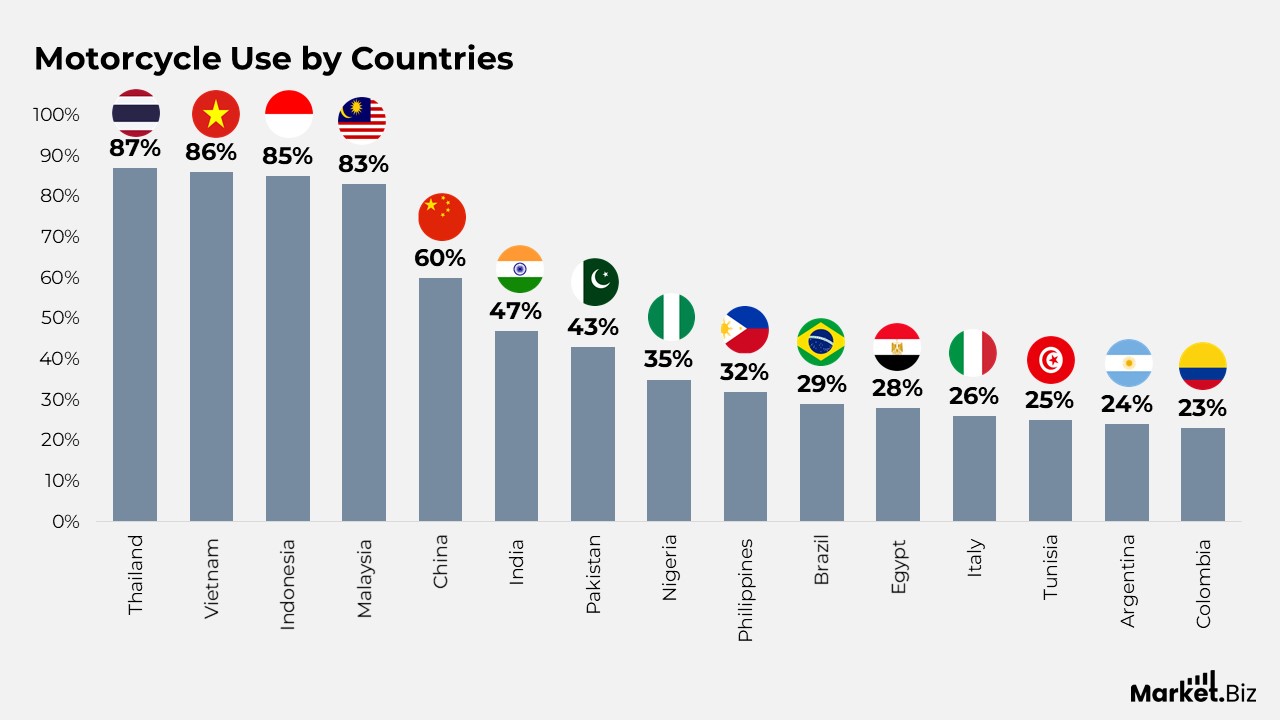
Motorcycle Use by Countries
- Thailand ranks first with 87% of households possessing a motorbike, closely trailed by Vietnam at 86% and Indonesia at 85%.
- Malaysia also demonstrates a significant ownership rate of 83%.
- In China, 60% of households have a motorbike, while Pakistan and India report ownership rates of 43% and 47%, respectively.
- In Nigeria, 35% of households own a motorbike, with the Philippines following at 32%.
- In Egypt and Brazil, motorbike ownership is recorded at 28% and 29%, respectively.
- Italy has 26% of households owning a motorbike, which is slightly above Tunisia’s 25%.
- In Colombia and Argentina, the ownership rates are 23% and 24% of households owning a motorbike, respectively.
Violence of Motorcycle Helmet Use
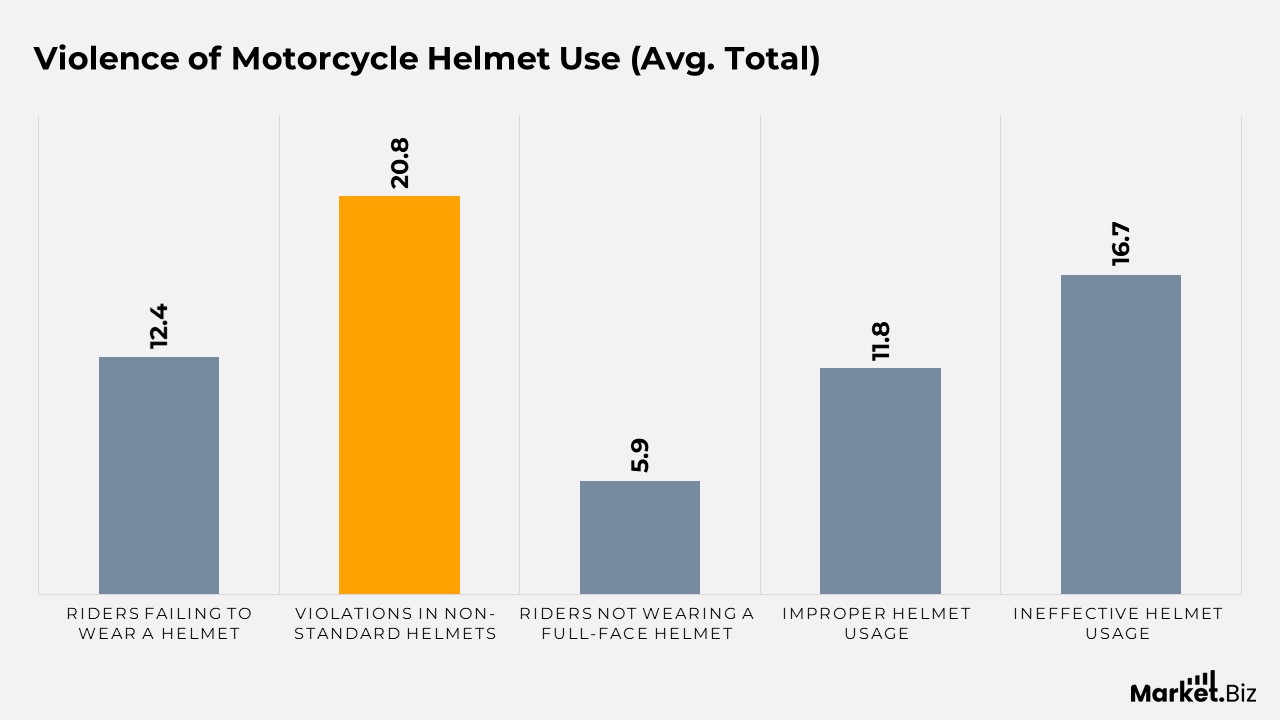
- Instances of helmet usage violations among both riders and pillion riders, measured per 100 person-minutes of observation, indicate a notable level of non-compliance.
- For riders, there were 6.9 recorded violations for failing to wear a helmet, whereas pillion riders showed 17.9 violations, leading to an overall average of 12.4 violations.
- The observation of non-standard helmets was noted in 27.1 riders and 14.5 pillion riders, resulting in an increasing total of 20.8 violations.
- The violations associated with not wearing a full-face helmet were recorded at 6.8 for riders and 5 for pillion riders, yielding an average of 5.9.
- Improper helmet usage was identified in 15.8 riders and 7.7 pillion riders, which resulted in a total of 11.8 violations.
- Finally, ineffective helmet usage was observed in 21.5 riders and 12 pillion riders, culminating in a total of 16.7 violations.
Recent Developments
- In February 2025, HJC introduced a new Replica Quartararo version derived from the RPHA 12 helmet, showcasing a more understated design in white, grey, and black while preserving the Monster Energy logo and the essential graphics of Fabio Quartararo. The RPHA 12, known for its heritage within the RPHA series and its compliance with the ECE 22.06 standard, featured an innovative multi-fiber shell crafted through HJC’s PIM EVO process.
- In December 2024, Scorpion released the EXO-JNR Air, a motorcycle helmet specifically designed for children, aimed at providing young riders with a combination of safety, comfort, and style. This helmet is equipped with an ECE 22.06 certification, a lightweight polycarbonate shell, and advanced features such as the KwikWick C inner liner to ensure riders remain cool and dry, along with the AirFit inflatable cheek pad system for a customized fit.
- In November 2024, Triumph Motorcycles collaborated with Arai to unveil a new collection of co-branded, high-framing helmets. This partnership resulted in four distinct models: the adventurous Tour X-5, the contemporary Concept-XE, the sporty Quantic, and the off-road MX-V Evo. These helmets, offered in sizes ranging from XS to XL, combine Arai’s esteemed performance in protection, wearability, and Triumph’s signature style and sophistication.
Conclusion
Motorcycle Helmet Statistics: The motorcycle helmet sector additions are due to hard safety standards and heightened consumer awareness. Technological progress is transforming helmet design, with lightweight materials and integrated features driving innovation. Comfort and aesthetics are increasingly important in consumer decision-making, leading manufacturers to prioritize ventilation, fit, and style.
The rise of smart helmet technology, featuring heads-up displays and connectivity options, signifies a notable trend. Emerging markets present significant opportunities, although challenges such as bogus goods and affordability remain. In summary, the future of the industry depends on tackling safety issues, embracing technological advancements, and capitalizing on market opportunities to ensure sustained growth and competitiveness.
FAQs
A review conducted by the Government Accountability Office (GAO) of various safety studies indicates that motorcycle helmets can decrease fatalities by 73% and diminish the incidence of “serious, severe, and critical injuries” by 85%. Additional reviews have identified a 42% reduction in the risk of fatal injuries and a 69% decrease in the risk of head injuries.
Motorcycle helmets are specifically designed to be more robust and durable compared to bike helmets, as the potential severity of injuries from motorcycle accidents is significantly greater than that resulting from bicycle accidents.
The drawbacks of wearing a helmet include increased heat and perspiration on the scalp, which may lead to hair problems or skin infections. Helmets may also limit peripheral vision and hearing, add weight that can strain the neck, and cause fogging or dirt buildup. Other disadvantages include the inconvenience of transporting the helmet, the possibility of disrupting hairstyles, and the concern that it may create a false sense of security.