









Introduction
Pickleball Statistics: Pickleball courts are increasingly appearing in various locations nowadays, and there are valid reasons for this trend. It is evident why the sport has gained popularity.
With straightforward rules, an inviting environment, and numerous health advantages, pickleball has emerged as a preferred choice for individuals of all ages and skill levels. As the sport continues to expand, it is also transforming communities and fostering connections among people in innovative ways.
This sport enjoys widespread popularity in the United States. Participants utilize solid paddles and a plastic ball, with the objective of scoring points through rallies. Each point commences with an underhand serve that must travel diagonally, clearing the net and landing in the opponent’s court.
Furthermore, volleys are allowed following the double-bounce rule, with the exception of the non-volley zone. In doubles play, effective communication and court coverage are crucial, whereas singles play requires a high level of individual court control.
Editor’s Choice
- According to the SFIA, pickleball participation has surged by an impressive 311% over the past three years.
- The global pickleball market has shown significant growth. Revenue has increased markedly over a ten-year forecast period, achieving a CAGR of 11.30%.
- In 2017, the overall count of pickleball players was around 3,132,000.
- The Pacific region, which comprises California, Oregon, and Washington, also has a significant number of enthusiasts, amounting to 780,000 players.
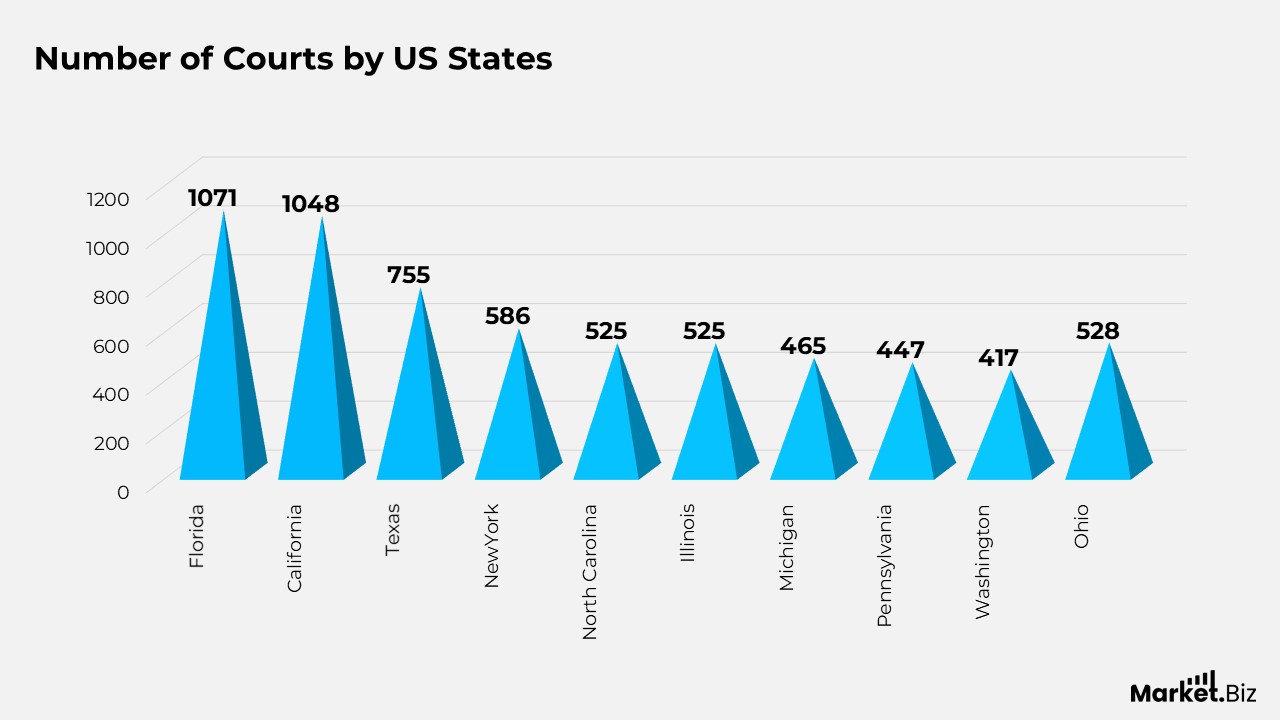
- Florida holds the top position with 1,071 locations, closely trailed by California, which has 1,048 venues for playing pickleball.
- The youngest demographic, comprising individuals aged 6 to 17, constitutes 21.20% of the overall player base, with 14.20% classified as core players and 23.90% as casual players.
- In 2023, it is estimated that injuries associated with pickleball will result in $377 million in healthcare costs in the United States, accounting for 5% to 10% of all unexpected medical expenses for the year.
What is Pickleball?
Pickleball is a dynamic sport that shares numerous characteristics with tennis, badminton, and table tennis (commonly known as Ping-Pong). The game is conducted on a perforated hollow plastic ball and a flat court using short-handled paddles, which are hit over a low net.
Matches can involve two individual players (singles) or two teams of players (doubles), and the game can be enjoyed both outdoors and indoors. Originating in the United States in 1965, pickleball saw significant growth in the early 21st century. Today, it is played globally by individuals of various ages and skill levels.
General Pickleball Statistics
- In 2024, it was estimated that there were 19.8 million pickleball players in the United States, as reported by the SFIA Topline Participation Report for 2025. This marks a significant increase of 45.8% compared to 2023.
- According to the SFIA, pickleball participation has surged by an impressive 311% over the past three years.
- For the last four years, pickleball has been recognized as the fastest-growing sport in America.
- The regular age of players is decreasing, with the 25-34 age demographic now accounting for the largest number of pickleball participants at 2.3 million, alongside an additional 1 million children who have taken up the sport.
- The typical age of a pickleball player is now 34.8 years.
- Currently, there are 68,458 pickleball courts in the United States, a figure that continues to rise, as per the Pickleheads court database, which has been validated by the USA Pickleball Annual Growth Report.
- In 2024, USA Pickleball approved 1,225 new paddles and 81 new balls, while also registering 476 new manufacturers and brands.
- The year 2024 witnessed substantial growth in pickleball infrastructure, with dedicated facilities increasing by 55% year-over-year.
- In 2024, 19.8 million individuals participated in pickleball in the US, reflecting a 45.8% rise from the figures recorded in 2023. This indicates an average participation increase of 311% over the last three years.
- In 2023, nearly 50 million adults engaged in pickleball in the US, representing an impressive 19% of the adult population. This was a 35% increase from the 2022 statistic of 36.5 million players.
- In 2023, men constituted 59.1% of the total pickleball player base, while women represented 40.9%.
Global Pickleball Market Size Statistics
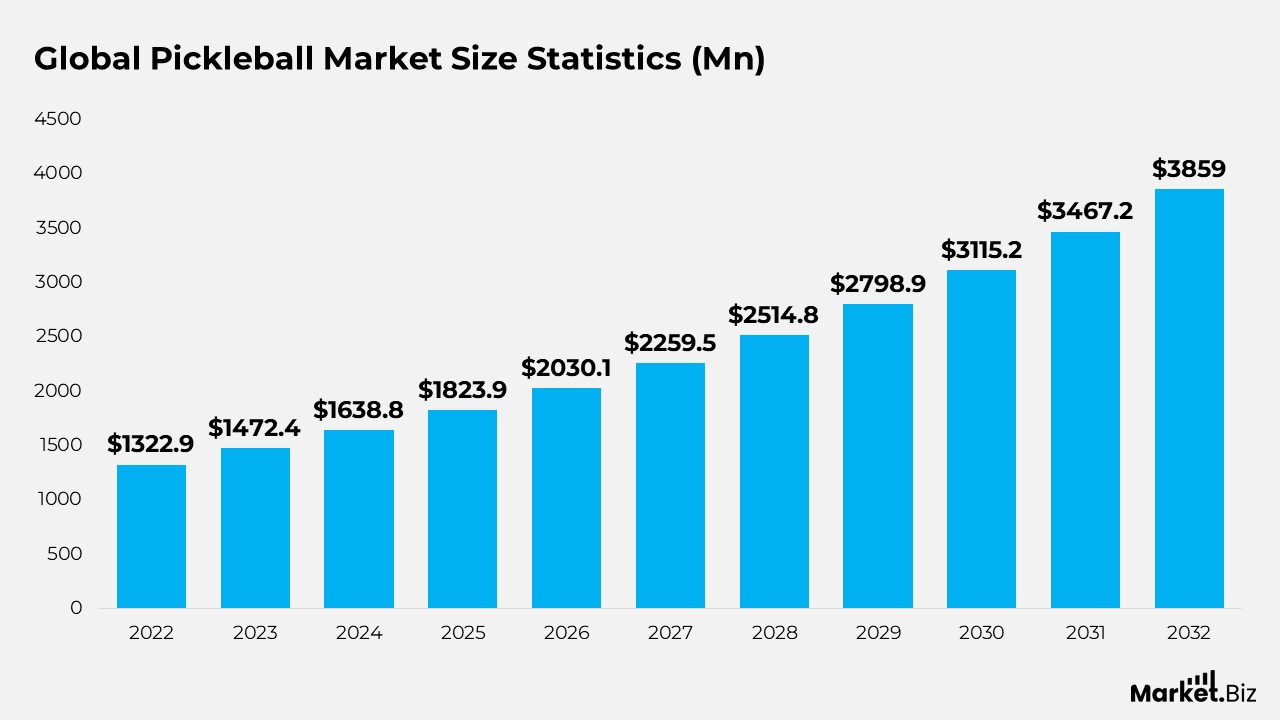
- The global pickleball market has shown significant growth. Revenue has increased markedly over a ten-year forecast period, achieving a CAGR of 11.30%.
- In 2022, the market was valued at around $1,322.9 million.
- This amount rose to $1,472.4 million in 2023 and is expected to further increase to $1,638.8 million in 2024. By 2025, the market is projected to reach $1,823.9 million.
- The upward trajectory persists, with the market anticipated to grow to $2,030.1 million in 2026, and by 2027, revenues are expected to rise to $2,259.5 million.
- Additionally, the market is forecasted to exceed the $2.5 billion threshold in 2028, with revenues estimated at $2,514.8 million. By 2029, it is projected to expand to $2,798.9 million.
- The momentum is expected to continue into the next decade, with the market anticipated to reach $3,115.2 million in 2030, $3,467.2 million in 2031, and approximately $3,859.0 million by 2032.
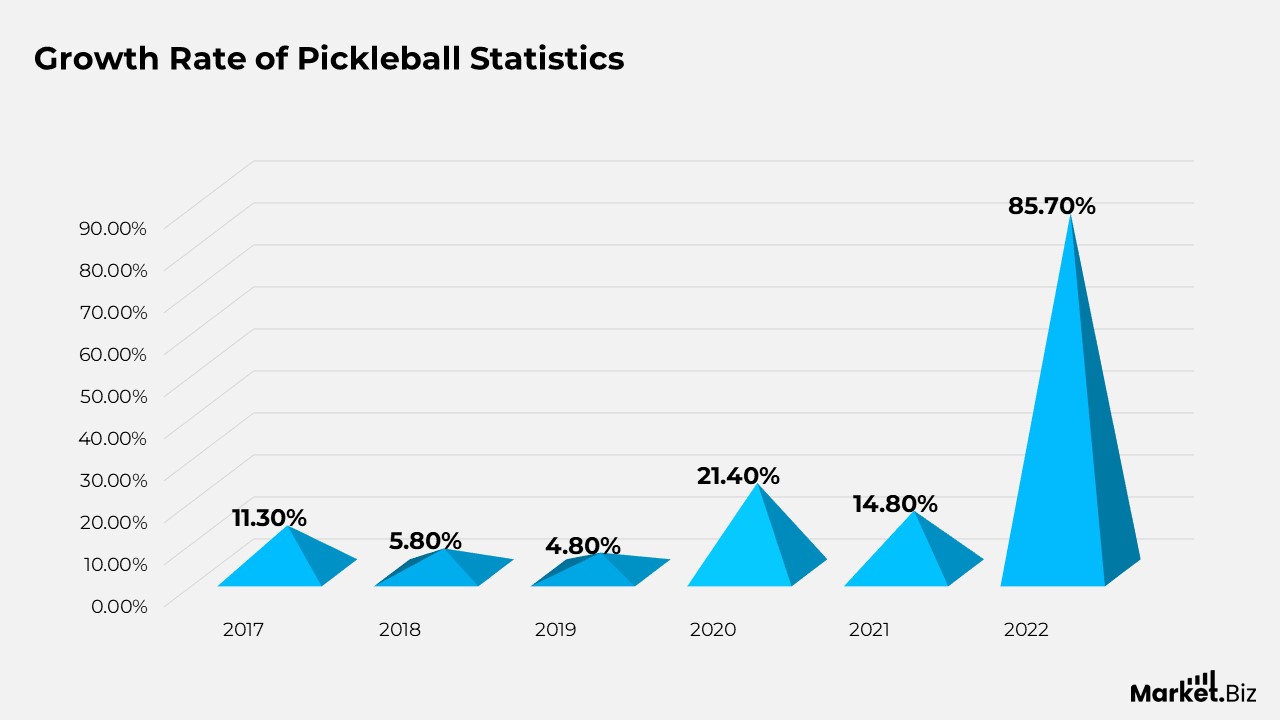
Growth Rate of Pickleball Statistics
- Beginning in 2017, the market experienced a growth of 11.30%. Subsequently, the growth rate slowed down over the following two years, decreasing to 5.40% in 2018 and further to 4.80% in 2019.
- Nevertheless, a notable increase took place in 2020, when the growth rate surged to 21.40%, likely influenced by shifts in consumer behavior and a heightened interest in outdoor and socially-distanced sports in response to global health crises.
- The growth persisted at a robust level in 2021, achieving a rate of 14.80%.
- The most remarkable rise occurred in 2022, when the growth rate soared to 85.70%, reflecting a substantial expansion in the market’s reach and consumer involvement, potentially driven by greater adoption and increased awareness of the sport.
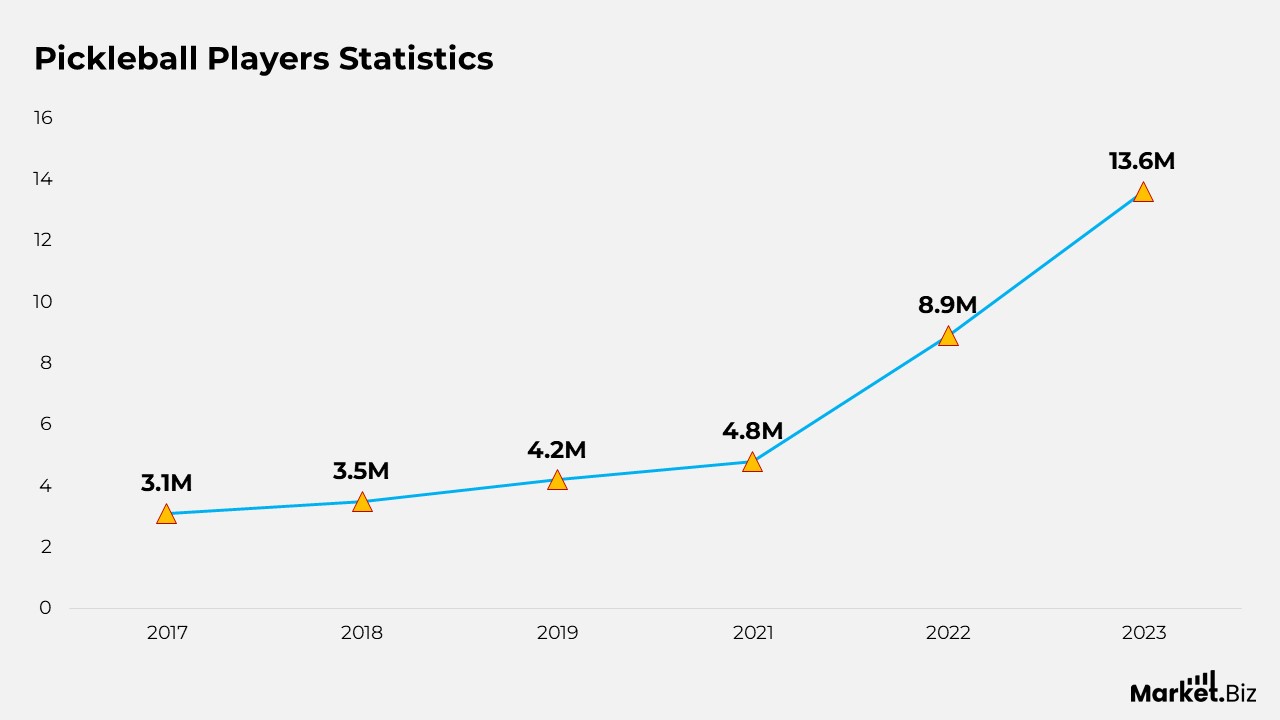
Pickleball Players Statistics
- In 2017, the overall count of pickleball players was around 3,132,000.
- This number saw a moderate increase over the subsequent two years, reaching 3,301,000 in 2018 and further rising to 3,460,000 by 2019.
- A notable surge took place in 2020, with the total climbing to 4,200,000 players, which reflects a heightened interest in the sport, likely due to its suitability for social distancing during global health crises.
- This upward trend persisted into 2021, when the player population grew to 4,820,000.
- The growth reached a dramatic peak in 2022, nearly doubling the total from the previous year to 8,900,000.
- By 2023, the player count had skyrocketed to an impressive 13,600,000, signifying a strong and expanding enthusiasm for pickleball throughout the United States.
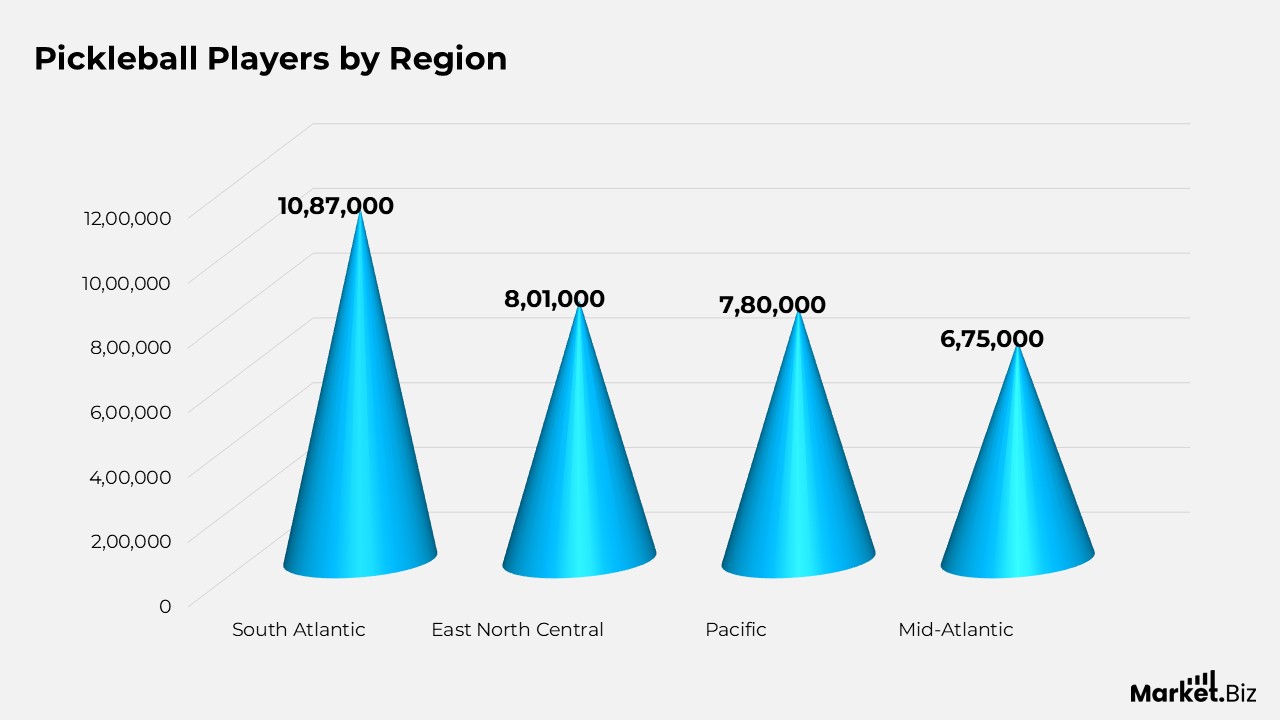
Pickleball Players by Region
- The distribution of pickleball players throughout various regions of the United States shows considerable variation, with the South Atlantic region at the forefront, boasting 1,087,000 players. This region includes states such as Florida, Georgia, South Carolina, North Carolina, Virginia, West Virginia, and the District of Columbia.
- Following closely is the East North Central region, which has 801,000 players spread across Wisconsin, Michigan, Illinois, Ohio, and Indiana.
- The Pacific region, which comprises California, Oregon, and Washington, also has a significant number of enthusiasts, amounting to 780,000 players.
- Finally, the Mid-Atlantic region, which consists of New Jersey, New York, Pennsylvania, and West Virginia, accommodates 675,000 players.
United States Pickleball Courts
- Florida holds the top position with 1,071 locations, closely trailed by California, which has 1,048 venues for playing pickleball.
- Texas occupies the third spot with 755 locations.
- New York and North Carolina each feature a considerable number of facilities. With 586 and 525 locations, respectively, while Illinois matches North Carolina with 525.
- Ohio slightly surpasses these figures with 528 locations.
- Michigan and Pennsylvania also enhance the national landscape with 465 and 447 locations, respectively.
- Washington State completes the list with 417 pickleball venues, demonstrating a strong national framework that supports the expansion of this sport.
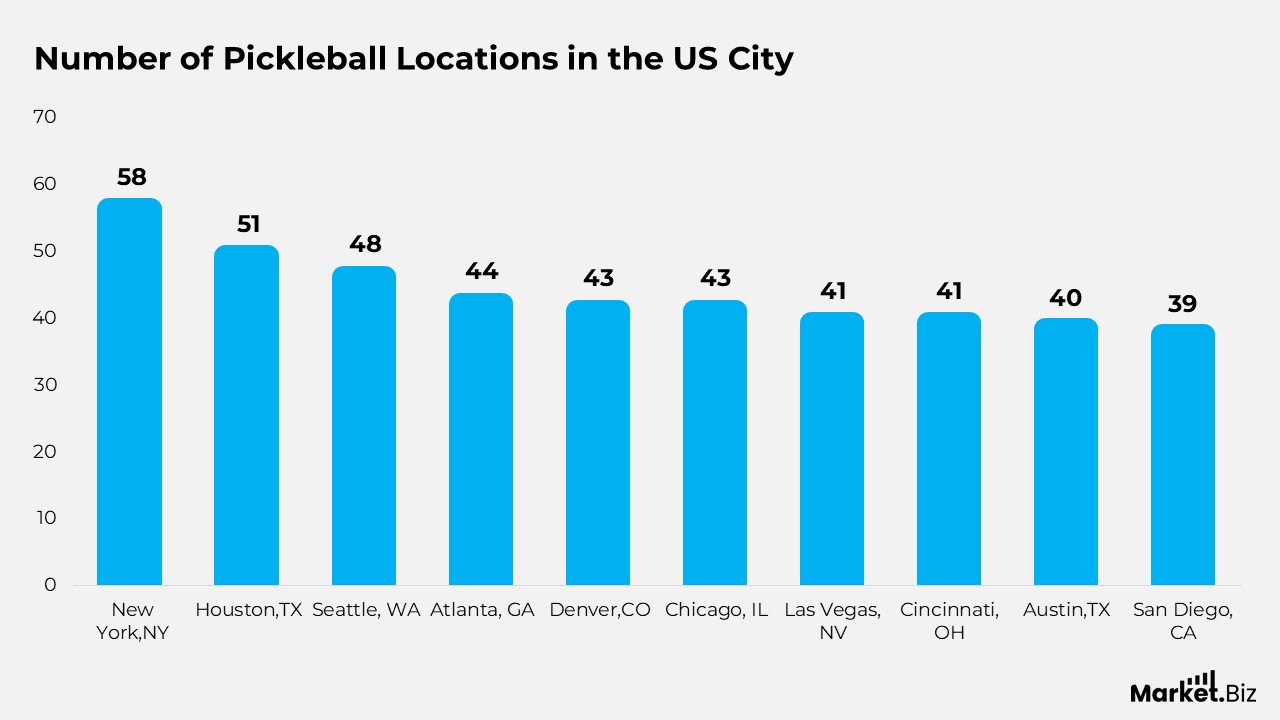
Pickleball Courts by US City
- New York, NY, holds the top position with the most locations at 58, closely trailed by Houston, TX, which boasts 51 pickleball venues.
- Seattle, WA, also demonstrates significant engagement with 48 locations.
- Atlanta, GA, and Denver, CO, each maintain a strong presence with 44 and 43 locations, respectively, with the latter figure equaled by Chicago, IL, Cincinnati, OH, and Las Vegas, NV, each provides 41 venues for play.
- Austin, TX, is not far behind with 40 locations, while San Diego, CA, adds to the national landscape with 39 pickleball venues.
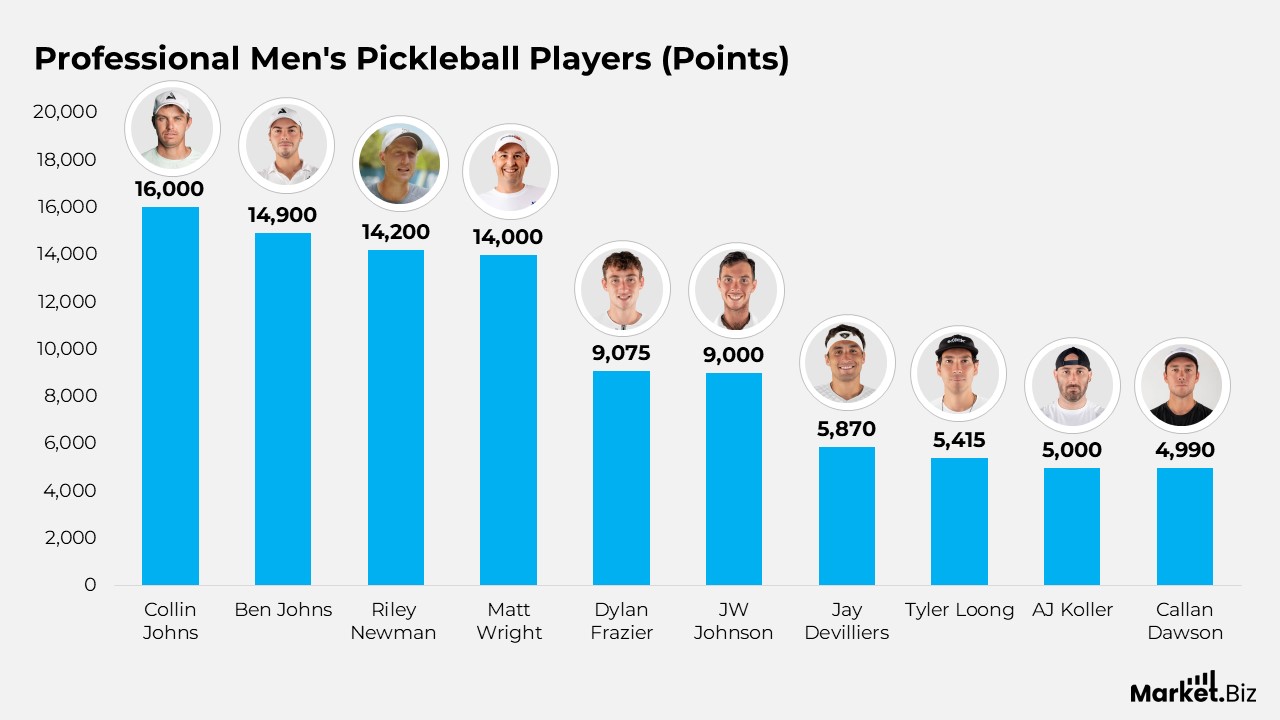
Professional Men’s Pickleball Players
- The ranking of pickleball players, determined by points, places Collin Johns in the lead with 16,000 points, backed by Electrum.
- Following him is Ben Johns, who has amassed 14,900 points and is supported by Joola.
- Riley Newman occupies the third position with 14,200 points, under the sponsorship of Takeya.
- Matt Wright, who is sponsored by Onix, closely follows with 14,000 points.
- In fifth place is Dylan Frazier, who has collected 9,075 points and is affiliated with Selkirk.
- JW Johnson, with 9,000 points, is sponsored by Franklin and holds the sixth position.
- The seventh and eighth ranks are taken by Tyler Loong and Jay Devilliers, both sponsored by Vulcan, with point totals of 5,415 and 5,870, respectively.
- Completing the top ten are Callan Dawson and AJ Koller, with Koller being sponsored by Fromuth and earning 4,990 points, while Dawson is just behind with 5,000 points, sponsored by ProKennex.
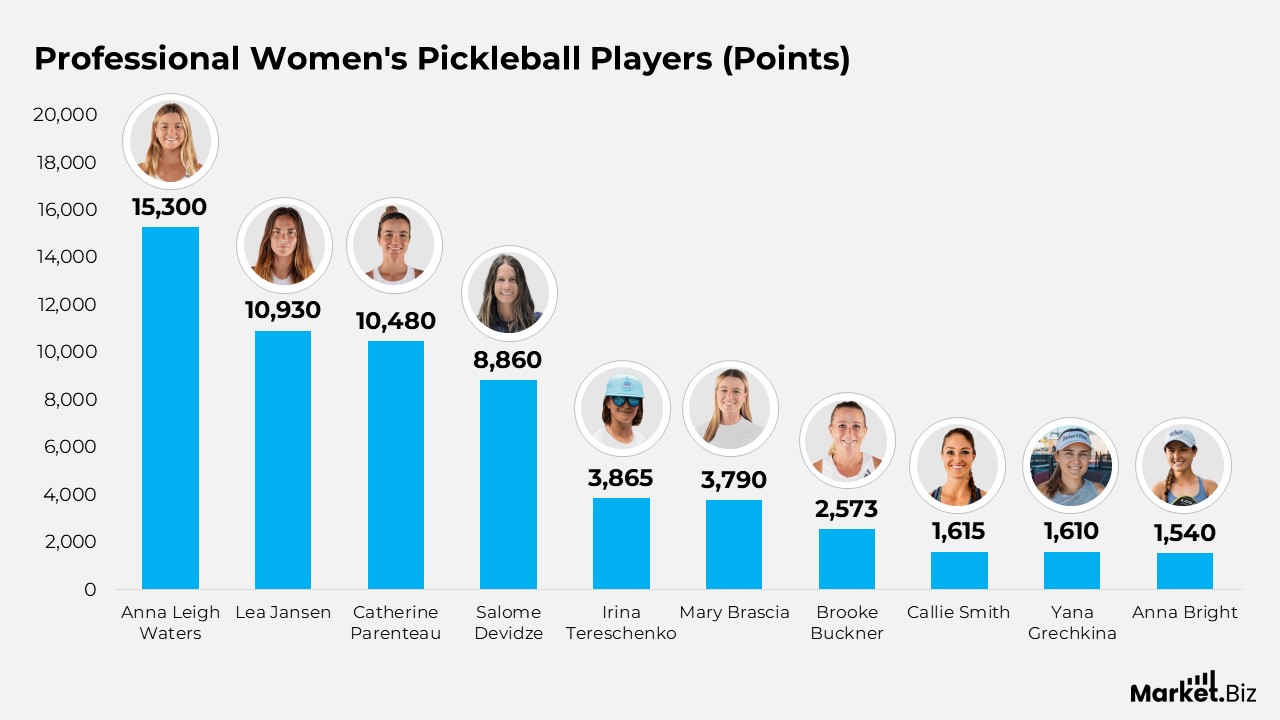
Professional Women’s Pickleball Players
- The foremost competitor in women’s singles pickleball is Anna Leigh Waters, who leads the rankings with a total of 15,300 points and is supported by Paddletek.
- In the second position is Lea Jansen, who has collected 10,930 points. Close behind in third place is Catherine Parenteau, with 10,480 points, who is backed by Selkirk sponsorship.
- Salome Devidze occupies the fourth position with 8,860 points and currently does not have a sponsorship. Irina Tereschenko, another player sponsored by Paddletek, ranks fifth with 3,865 points.
- Mary Brascia is closely trailing, having achieved 3,790 points while representing Selkirk. In seventh place is Brooke Buckner, who is sponsored by Joola and has gathered 2,573 points.
- Callie Smith of Onix holds the eighth position with 1,615 points. Yana Grechkina, demonstrating CRBN, is just five points behind Smith, totaling 1,610 points.
- Last but not least is Anna Bright, also from Joola, who has secured 1,540 points.
Pickleball Players Demographics Statistics
By Age
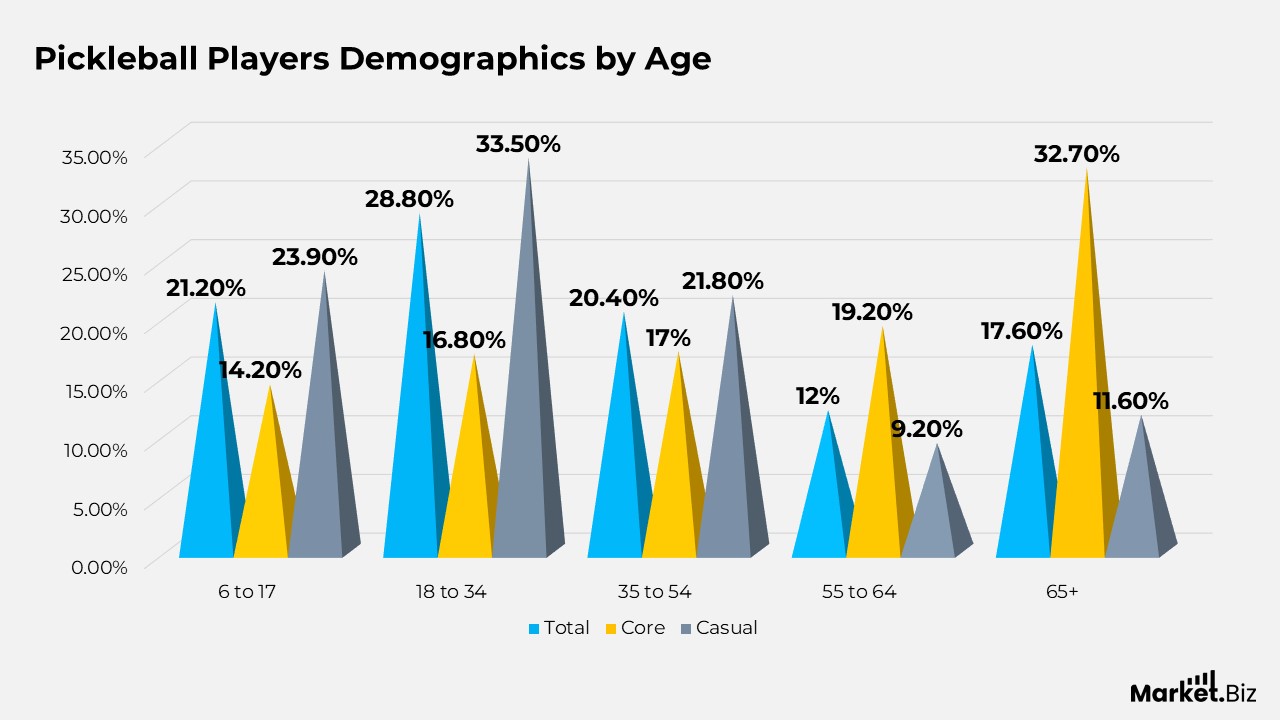
- The youngest demographic, comprising individuals aged 6 to 17, constitutes 21.20% of the overall player base, with 14.20% classified as core players and 23.90% as casual players.
- The age group of 18 to 34 represents the largest segment, accounting for 28.80% of players; within this category, 16.80% are identified as core players, while a notable 33.50% engage in casual play.
- Individuals aged 35 to 54 make up 20.40% of the total player population, with 17% categorized as core players and 21.80% as casual players.
- Adults in the 55 to 64 age range represent a smaller portion at 12%, yet they exhibit a higher ratio of core players at 19.20%, in contrast to 9.20% who are classified as casual players.
- Finally, the group aged 65 and above constitutes 17.60% of the player demographic, showcasing the highest proportion of core players at 32.70% and 11.60% as casual players.
By Gender
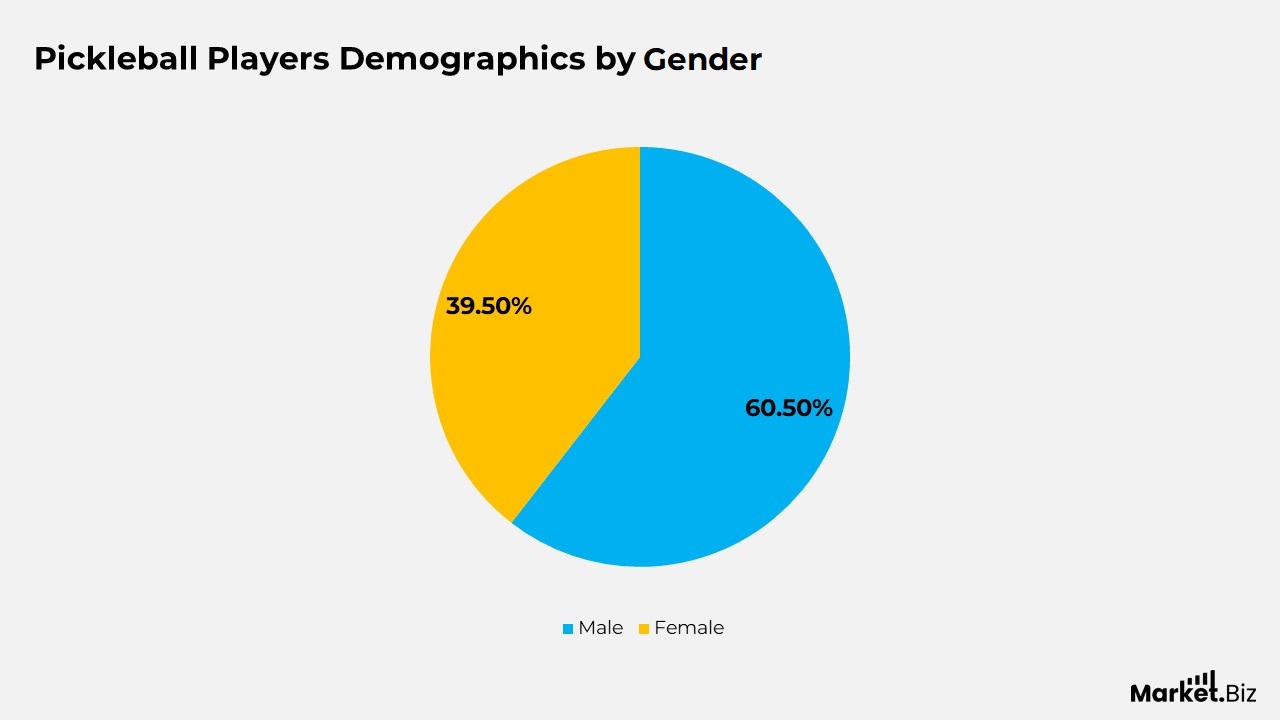
- The distribution of gender among pickleball players shows a notable imbalance, with males making up 60.50% of the participant population, whereas females represent 39.50%.
Pickleball Injuries Statistics
- In 2023, it is estimated that injuries associated with pickleball will result in $377 million in healthcare costs in the United States. Accounting for 5% to 10% of all unexpected medical expenses for the year.
- A study conducted in 2021 revealed that injuries from pickleball predominantly impact the older population. From 2010 to 2019, 86% of visits to emergency departments were made by individuals aged 60 and above.
- Approximately 60% of these injuries are classified as sprains, strains, and fractures.
- About 20% of the injuries are categorized as contusions, abrasions, or internal injuries, while lacerations and dislocations represent less than 10% of the total.
Recent Developments
- Pickleball Marketplace, a developing e-commerce platform focused on pickleball equipment, successfully secured $5 million in its Series A funding round. This investment will be directed towards broadening the company’s product range, improving its technological framework, and supporting marketing efforts to acquire a greater market share.
- Over the past year, there has been a significant rise in the number of participants in pickleball tournaments worldwide. Statistics show a 30% increase in tournament registrations year-over-year, highlighting the sport’s growing appeal and the expanding pickleball community.
- Furthermore, data reveal a 40% rise in the construction of pickleball courts over the last year. Underscoring the sport’s increasing popularity and accessibility.
Conclusion
Pickleball Statistics: In summary, pickleball has evolved from its humble origins in 1965 as a family game played in backyards to become one of the most rapidly expanding sports in the United States.
Its widespread appeal crosses generations, primarily due to its straightforward learning curve and the minimal physical strain involved in playing. This accessibility allows a diverse range of participants, including both olders and youths.
Nonetheless, the sport’s expansion is bolstered by a notable rise in the number of players. This increase has led to the creation of specialized equipment and the establishment of necessary infrastructure.
Furthermore, the economic ramifications are significant, with a flourishing market for pickleball-related products and the stimulation of economic activity through tournaments and events that draw participants from various areas.
FAQs
Pickleball was created in 1965 by three friends: Congressman Joel Pritchard, businessman Bill Bell, and inventor Barney McCallum. They developed the game on Bainbridge Island, Washington, to amuse their bored children by modifying a badminton court with a wiffle ball and homemade paddles.
Pickleball is not inherently costly; however, expenses may appear high due to the elevated prices of quality paddles and, in certain regions, limited court availability, which increases rental fees. The total cost is influenced by a player’s location and their investment in equipment, with some individuals finding it quite affordable while others encounter higher costs due to a scarcity of public courts and venues that charge premium rates during peak times.
As per the Sports & Fitness Industry Association’s 2025 Single Sport Report, the age group of 25-34 had the highest number of pickleball players last year, totaling 3.175 million. Older people represent the second-largest demographic participating in the sport we cherish, with the SFIA reporting that 3 million players are of higher ages.