









Introduction
Yacht statistics: offer essential financial and usage information regarding the yacht market, addressing elements such as market size, growth predictions, types of yachts, propulsion methods, and regional leadership. For instance, the global yacht market was estimated to be worth around USD 10.3 billion in 2023 and is anticipated to expand at a compound annual growth rate (CAGR) of approximately 5.8% over the forthcoming decade.
The statistics further indicate that superyachts represent a significant segment, with motor yachts being the most favored propulsion type, while Europe commands a considerable portion of the market. Yachts are advanced recreational vessels utilized for leisure cruising, racing, and social gatherings, including sailing yachts, motor yachts, catamarans, and superyachts.
The yacht market is propelled by rising disposable incomes, an increasing interest in adventure tourism, and advancements in technology. However, it also encounters challenges such as elevated maintenance costs and environmental regulations.
Editor’s Choice
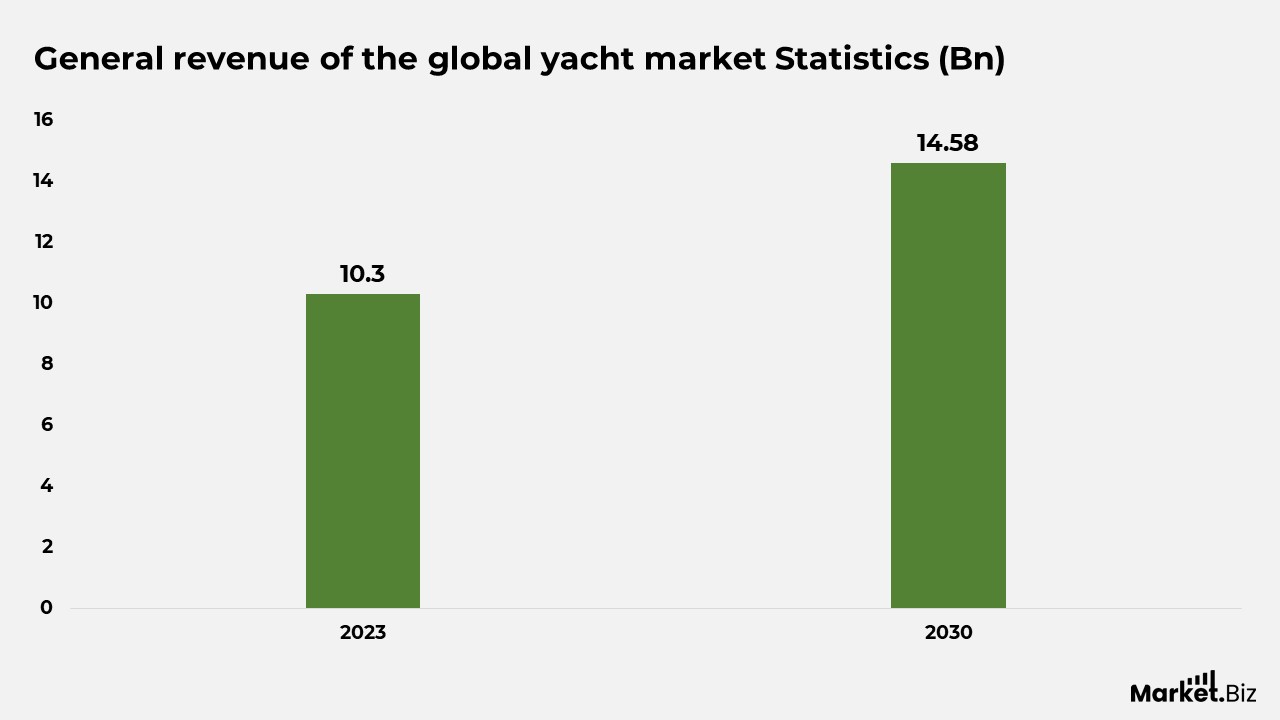
- In 2023, the revenue of the global yacht market reached $10.3 billion.
- It is anticipated that the revenue of the global yacht market will reach $14.58 billion by the year 2030.
- The global yacht market is anticipated to demonstrate a steady growth pattern from 2023 to 2033, with a compound annual growth rate (CAGR) of 5.8%.
- In 2023, the market was valued at around $10.3 billion.
- Beginning with a market size of $6.58 billion in 2019, there was a decrease to $5.91 billion in 2020, likely affected by economic conditions.
- The market is forecasted to further develop to $12.58 billion in 2027, $13.25 billion in 2028, $13.91 billion in 2029, and ultimately reach $14.58 billion by 2030.
- As of May 2022, the Cayman Islands stands out as the foremost jurisdiction for superyacht registrations, commanding a substantial 54% of the global market share.
- Malta ranks second with 9% of superyacht registrations, while the Marshall Islands holds 8%.
- Carver topped the list with the highest sales, achieving a total of 99 boats sold.
- Liberia imported goods valued at $11.2 billion, which accounts for 8.66% of the market. The United States closely follows with a similar import value but a slightly lower market share of 8.62%.
- China dominated the market with an export value of $26.1 billion, which constitutes 20.1% of the global share, closely followed by South Korea at $23.9 billion, representing 18.5% of the market.
General Yacht Statistics
- In 2023, the revenue of the global yacht market reached $10.3 billion.
- The distribution of market share in the global yacht market is notably diverse, particularly in relation to yacht length.
- Yachts that range from 20 to 50 meters in length dominate this market segment, representing a substantial 60% of the overall market share.
- It is anticipated that the revenue of the global yacht market will reach $14.58 billion by the year 2030.
- The list of the largest sailing yachts in the world is topped by several exceptionally long vessels, each exemplifying the grandeur and capabilities of modern yacht design as of January 2020.
- The “Sailing Yacht A” is distinguished by its remarkable length of 142.8 meters, which made it the largest sailing yacht in the world at that time.
- In 2024, the category of the largest motor yachts globally is characterized by extraordinary lengths that represent contemporary maritime luxury.
- Leading this category is the Azzam, which measures an impressive 181 meters, thereby securing the title of the longest motor yacht in the world.
- A study conducted in 2017 by the International University of Monaco in collaboration with the Rossinavi shipyard revealed that the average yacht owner was typically aged between 45 and 55 years.
- During the 2018 Route du Rhum yacht race held in France, a survey among fans regarding their preferred racers showed that Loick Peyron was the most favored, with a significant 38% of respondents indicating their preference for him.
- The market for hydrogen-powered yachts is projected to achieve a valuation of approximately USD billion by the year 2032.
Yacht Market Growth
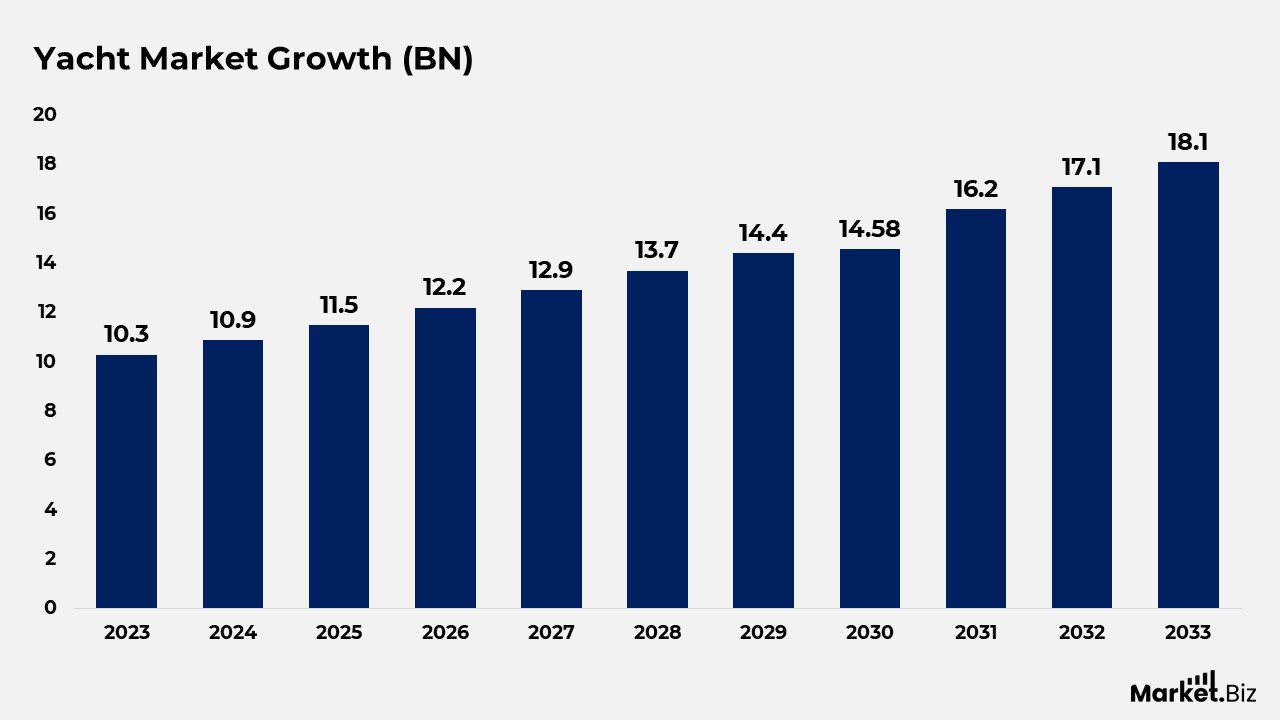
- The global yacht market is anticipated to demonstrate a steady growth pattern from 2023 to 2033, with a compound annual growth rate (CAGR) of 5.8%.
- In 2023, the market was valued at around $10.3 billion.
- A gradual rise is expected in the subsequent years, with the market projected to reach $10.9 billion in 2024 and further grow to $11.5 billion by 2025.
- This positive trend is forecasted to persist, with market valuations estimated at $12.2 billion in 2026, $12.9 billion in 2027, and $13.7 billion by 2028.
- By the conclusion of the decade in 2029, the market is anticipated to achieve a size of $14.4 billion, escalating to $14.58 billion in 2030.
- The growth momentum is expected to continue, with the market projected to rise to $16.2 billion in 2031, $17.1 billion in 2032, and reach $18.1 billion by 2033.
Luxury Yacht Market Size Statistics
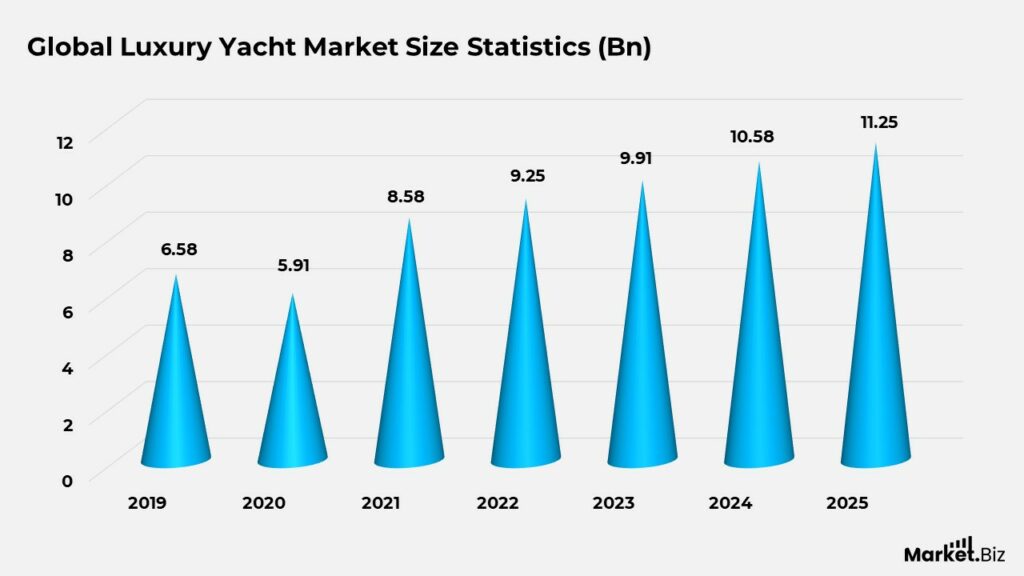
- Beginning with a market size of $6.58 billion in 2019, there was a decrease to $5.91 billion in 2020, likely affected by economic conditions.
- The market experienced a substantial recovery in 2021, achieving $8.58 billion, and maintained its upward trend in the subsequent years.
- By 2022, the market size grew to $9.25 billion, followed by an increase to $9.91 billion in 2023.
- The growth pattern is anticipated to continue, with the market size projected to rise to $10.58 billion in 2024, then to $11.25 billion in 2025, and $11.91 billion in 2026.
- The market is forecasted to further develop to $12.58 billion in 2027, $13.25 billion in 2028, $13.91 billion in 2029, and ultimately reach $14.58 billion by 2030.
Largest Sailing Yacht Worldwide by Year
2020
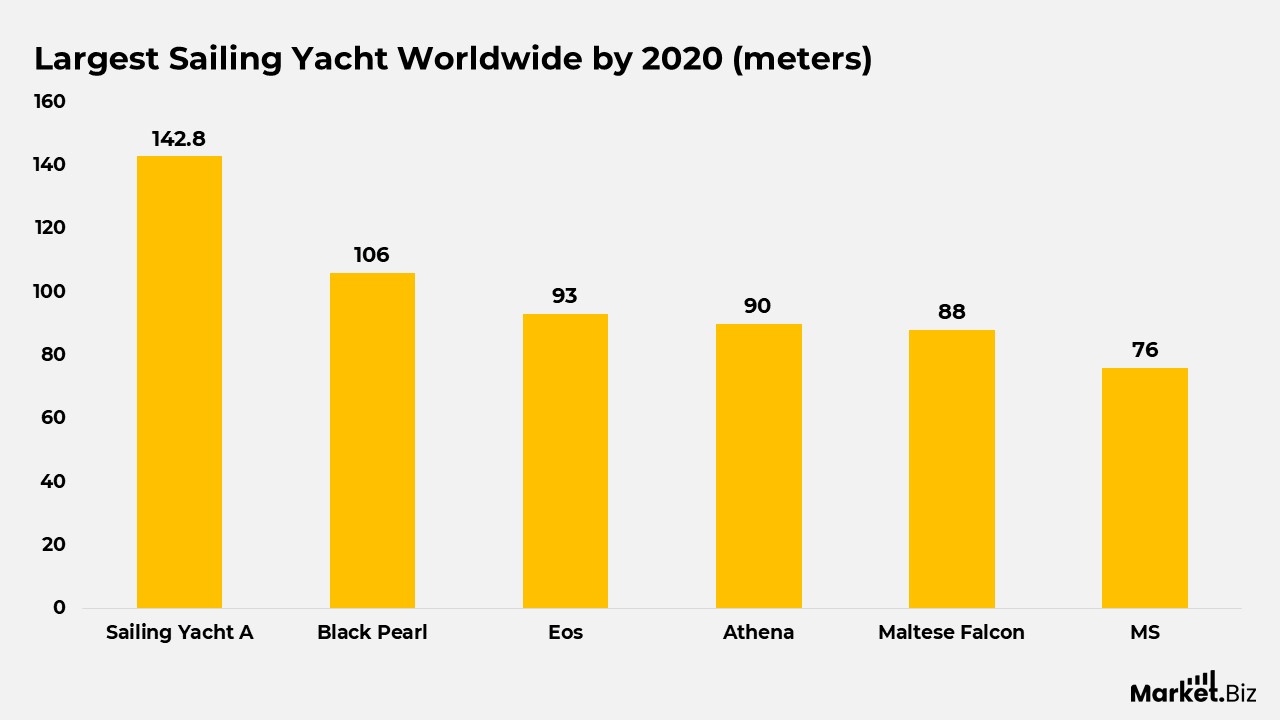
- The “Sailing Yacht A” stands at the forefront of the group with an impressive length of 142.8 meters, making it the largest sailing yacht in the world at that time.
- It is succeeded by the “Black Pearl,” which has a measurement of 106 meters.
- Next in line is the “Eos,” with a length of 93 meters, while the “Athena” and “Maltese Falcon” follow closely at 90 meters and 88 meters, respectively.
- Finally, the “MS” completes the list with a length of 76 meters.
2019
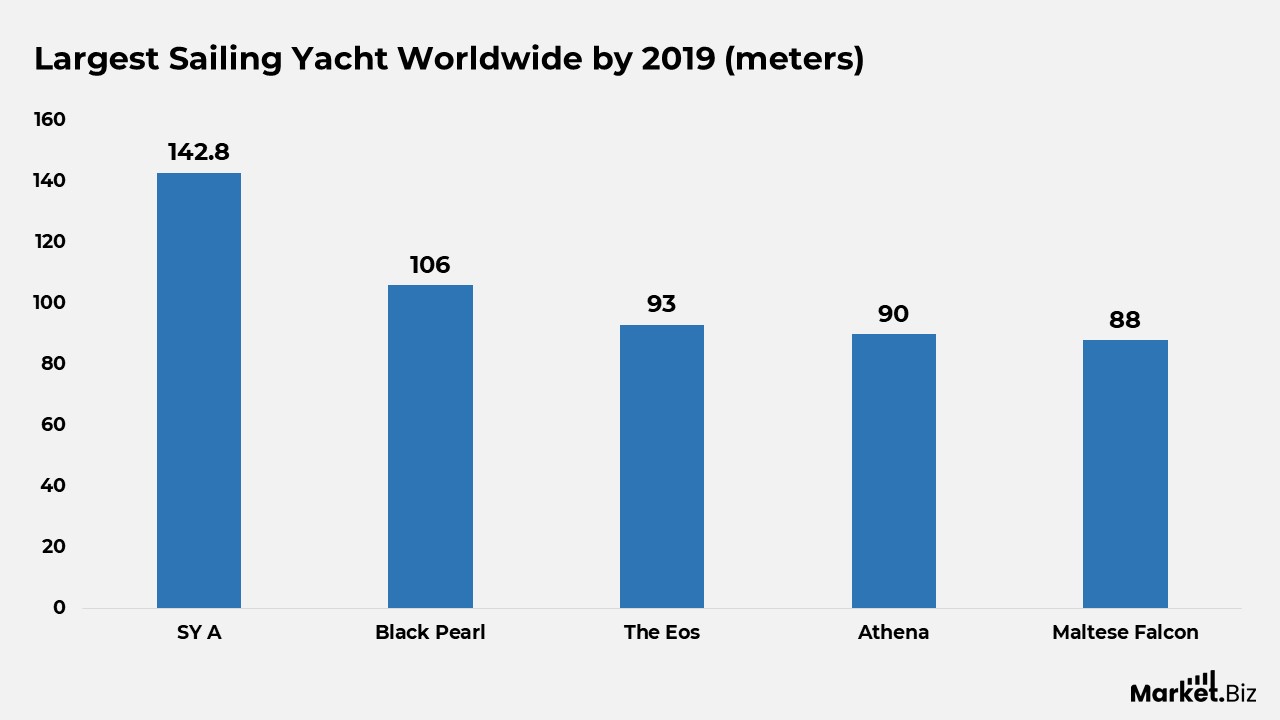
- In 2019, the largest sailing yachts in the world were recognized for their remarkable lengths.
- The SY A leads the rankings as the longest, measuring 142.8 meters.
- Following it is the Black Pearl, which extends to 106 meters.
- The Eos, another notable vessel, has a length of 93 meters.
- Just behind is the Athena, measuring 90 meters in length.
- The Maltese Falcon, also among the largest, measures 88 meters.
Yacht by Country Statistics
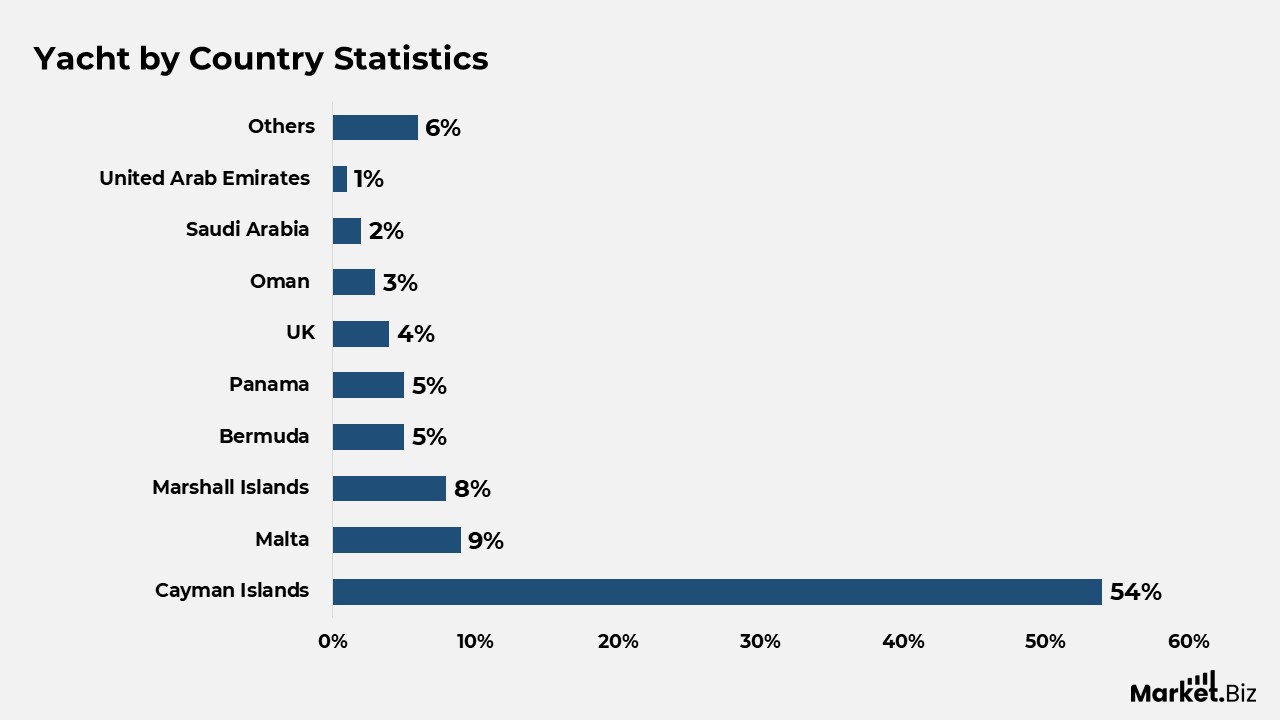
- As of May 2022, the Cayman Islands stands out as the foremost jurisdiction for superyacht registrations, commanding a substantial 54% of the global market share.
- Malta ranks second with 9% of superyacht registrations, while the Marshall Islands holds 8%.
- Bermuda and Panama each represent 5% of the world’s registered superyachts, indicative of their advantageous regulatory frameworks.
- The United Kingdom has 4% of these vessels registered under its flag.
- In contrast, Oman and Saudi Arabia possess smaller portions, with 3% and 2% respectively.
- The United Arab Emirates contributes 1% to the registrations, alongside an additional 1% categorized as ‘Unknown’.
- Other nations collectively make up 6% of superyacht registrations, highlighting a varied global distribution of yacht registrations.
Yacht Sales Statistics
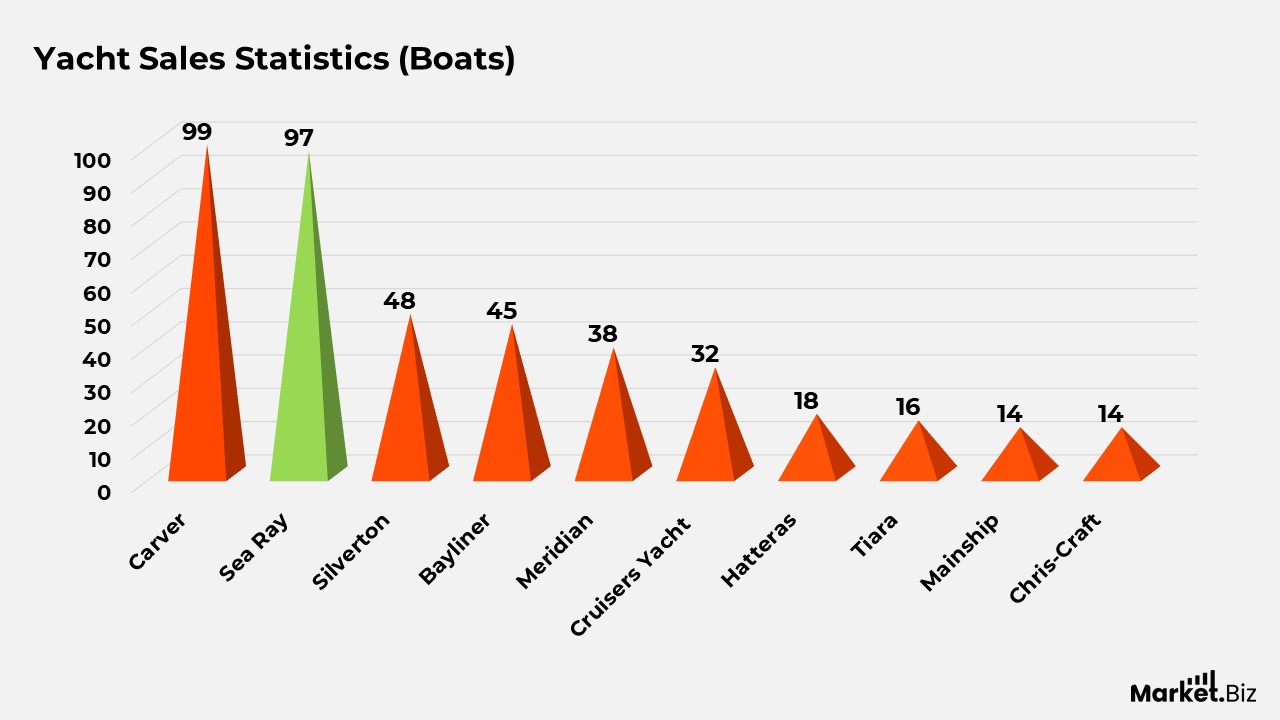
- Carver topped the list with the highest sales, achieving a total of 99 boats sold.
- Following closely was Sea Ray, which sold 97 boats, showcasing its robust market presence.
- Bayliner and Silverton also reported notable sales figures, with 45 and 48 boats sold, respectively, indicating their appeal among boating enthusiasts.
- Meridian successfully sold 38 boats, while Cruisers Yachts recorded sales of 32, reflecting a moderate yet consistent demand for their yachts.
- Sales figures declined further for some of the more specialized or premium brands: Hatteras sold 18 boats, Tiara sold 16, and both Chris-Craft and Mainship each sold 14 boats.
Statistics of Yacht Import
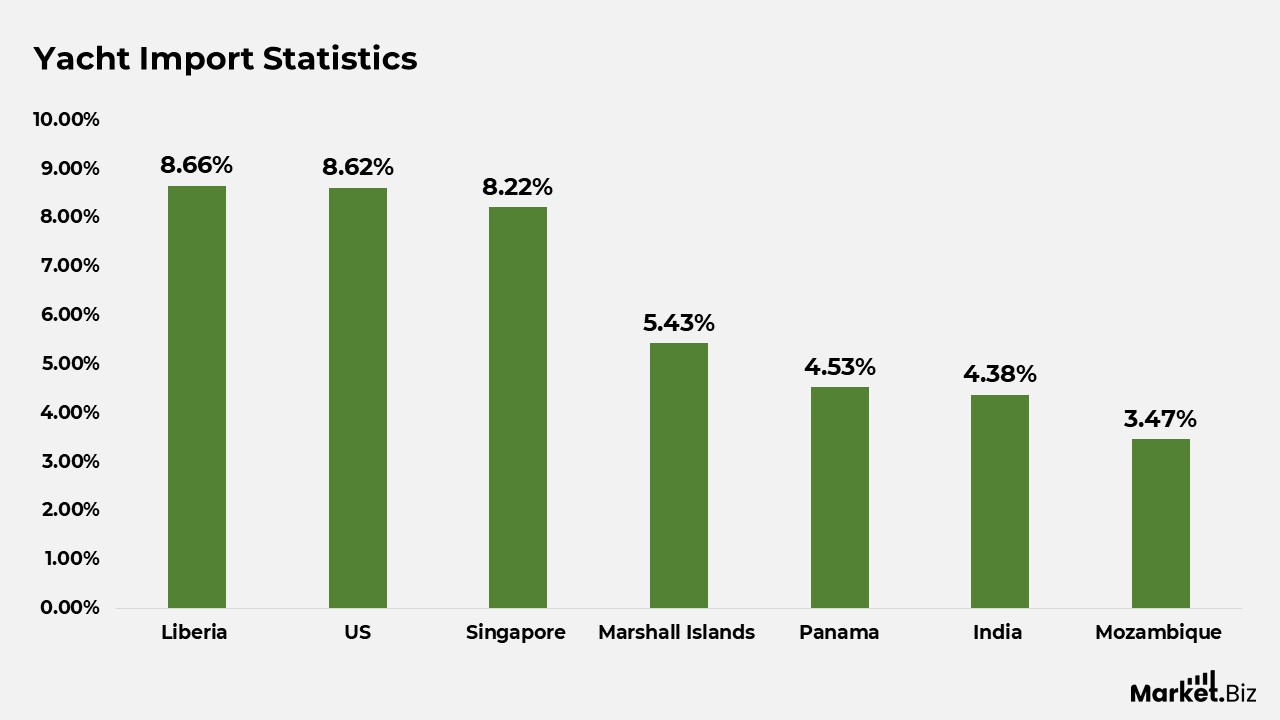
- Liberia imported goods valued at $11.2 billion, which accounts for 8.66% of the market. The United States closely follows with a similar import value but a slightly lower market share of 8.62%.
- Singapore demonstrated a robust presence with $10.6 billion in imports, securing 8.22% of the market.
- Other significant importers included the Marshall Islands and Panama, with import values of $7.04 billion and $5.87 billion, respectively, translating to market shares of 5.43% and 4.53%.
- India contributed further with imports totalling $5.68 billion, representing 4.38% of the market, while Mozambique imported $4.5 billion, which is 3.47% of the market.
- Notably smaller imports were recorded by Malta at $4.06 billion, Norway at $3.64 billion, and France at $3.39 billion, each making up approximately 2% to 3% of the market.
- The United Kingdom, Hong Kong, Germany, China, and Switzerland also engaged in the market, with imports varying from $2.09 billion to $3.1 billion, indicating a lesser yet still significant role in the global market for maritime structures.
Yacht Export Statistics
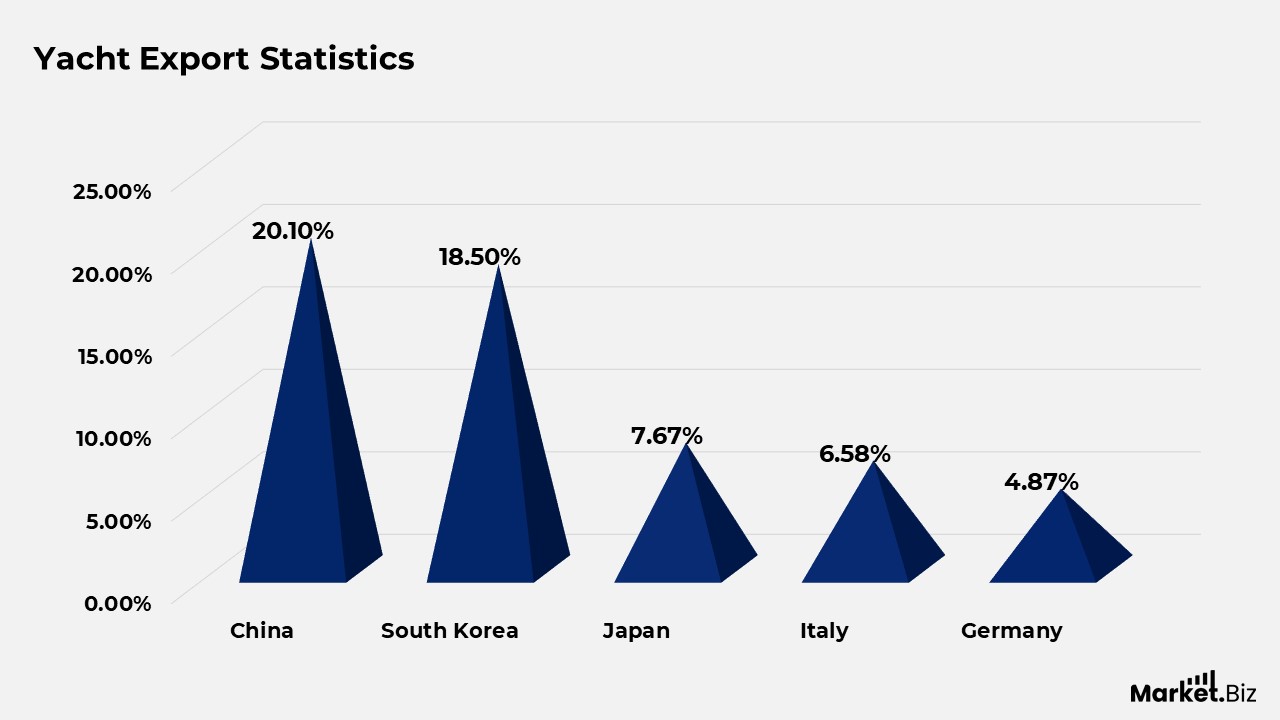
- China dominated the market with an export value of $26.1 billion, which constitutes 20.1% of the global share, closely followed by South Korea at $23.9 billion, representing 18.5% of the market.
- Japan also had a significant impact, contributing $9.94 billion to exports, equating to 7.67% of the market.
- Italy and Germany were other prominent exporters, with Italy exporting $8.53 billion worth of maritime equipment (6.58% of the market) and Germany contributing $6.31 billion (4.87%).
- France, Singapore, and India were also important participants, exporting $5.64 billion, $4.75 billion, and $3.3 billion, respectively.
- Smaller yet notable contributions were made by the United States, Poland, Spain, the United Arab Emirates, Norway, Finland, and the Netherlands, each providing between 1.34% and 2.21% to the global export figures in this sector.
Recent Development
- In 2023, Silent Yachts, a leader in solar-electric catamarans, successfully raised $50 million to enhance its production capabilities and innovate new electric-powered yachts. This investment will expedite the company’s initiatives in advancing sustainability within the yachting sector.
- In early 2024, Eco Yachts, a firm dedicated to sustainable yacht production, obtained $30 million to further refine its carbon-neutral yacht designs. This funding will facilitate increased production and broaden the company’s reach in the international market.
- By the end of 2025, it is anticipated that 30% of newly manufactured yachts will feature hybrid or fully electric propulsion systems, thereby reducing emissions and fuel usage. This movement is propelled by the growing demand for eco-friendly yachting alternatives.
Conclusion
Yacht Statistics: The yacht industry includes a vibrant array of activities, ranging from leisure boating to competitive racing. It reflects considerable growth and changes driven by economic trends, technological advancements, and shifting consumer preferences.
Importantly, the sector is witnessing the rise of a younger demographic, especially Millennials, who are set to take over the market. Additionally, events such as the Route du Rhum underscore the lasting allure of yacht racing, with competitors like Loick Peyron garnering significant followings due to their skill and charm.
FAQs
Billionaires acquire yachts for a variety of strategic and personal motivations, which include their function as mobile, secluded, and secure private spaces for both leisure and business activities, a significant emblem of status and affluence, a means for business networking and negotiations, as well as a distinctive lifestyle that enables them to travel and discover the world without the usual inconveniences and dangers associated with public venues.
The helm is regarded as one of the most vital components of a yacht. It is the mechanism that allows an individual to navigate the yacht while it is in motion on the water.
Yachts feature black sails because they are constructed from carbon fiber, which provides resistance to UV rays. The black color of the sails absorbs heat, minimizes glare, and imparts a sleek, elegant, and luxurious appearance. Additionally, some individuals link black sails with enhanced performance.

