









Introduction
Car Rental Statistics: Throughout the year 2024, the car rental sector has been changing. This indicates that it has become a vital component of the worldwide travel and transportation network.
The car rental industry is currently in a recognized phase of considerable transformation, as advancements in technology, the increasing significance of sustainable practices, and improvements in customer experience adaptation have begun to pave the way for its development. In recent years, the car rental market has witnessed substantial growth and change, influenced by a variety of factors.
With a global market size anticipated to reach USD 124.56 billion by 2026, based on recent projections, it is clear that the demand for rental vehicles is consistently increasing. By examining key statistics and trends within the car rental industry, we can acquire valuable insights into consumer preferences, market dynamics, and potential opportunities for growth and innovation.
Editor’s Choice
- By the year 2026, it is anticipated that the number of car rental users will reach 602.2 million.
- The United States contributes nearly 50% to the car rental industry annually.
- The average annual expense of vehicle ownership in the U.S. has exceeded USD 12,000, factoring in costs such as fuel, insurance, and maintenance.
- The global car rental market was estimated to be worth approximately $93 billion in 2022.
- The rental car market in Europe is anticipated to reach $24 billion by the end of 2025, with a CAGR of approximately 6%.
- Similar to earlier projections, an increase is expected, with an estimated 585.5 million users anticipated in 2025.
- In total, 62% of over 10,000 U.S. respondents affirmed the importance of car ownership.
- The statistics regarding car rentals indicate that the Asian market is projected to acquire a total of 348.9 million users by 2027.
- Based on car rental statistics, 53.4% of car rental agents are female, whereas 46.6% are male agents worldwide.
What is a Car Rental System?
A car rental system is a software application created to assist individuals in renting and reserving vehicles, primarily for short-term usage. These systems are important for car rental enterprises, offering a platform that improves operational efficiency and elevates the customer experience. The primary objective of a car rental system is to facilitate the management of rental cars.
It acts as the central point for managing all aspects related to rentals, including bookings, vehicle allocations, billing, and maintenance. Car rental systems hold significance for both large corporations and small businesses. They foster a fair and competitive landscape within the car rental sector by providing a reliable and user-friendly platform accessible to companies of all sizes.
General Car Rental Statistics
- By the year 2026, it is anticipated that the number of car rental users will reach 602.2 million.
- The most sought-after category of rental vehicles is economy cars, followed by executive and luxury options.
- In 2021, the demand share for economy cars was recorded at 36.07%.
- As of 2021, the global total of rented cars stood at 29.2 million.
- The car rental sector in the United States has over 2 million economy-class vehicles.
- The United States contributes nearly 50% to the car rental industry annually.
- Corporate clients account for 25% of the revenue generated.
- Daily rental prices for cars have increased by 76%, with tourist destinations experiencing a 278% increase.
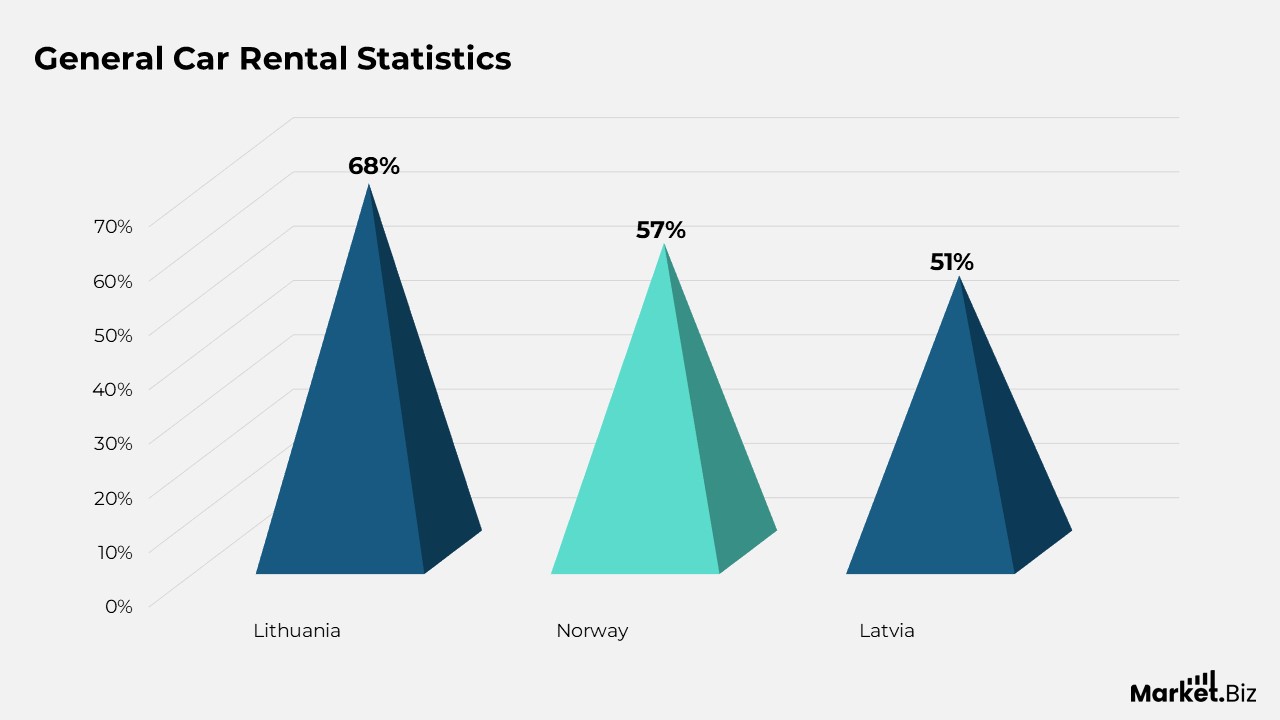
- In Lithuania, Norway, and Latvia, Volkswagen is the most favored rental car brand, with booking rates of 68%, 57%, and 51%, respectively.
- Conversely, in North America, particularly in Canada and the United States, Toyota is the preferred brand for car rentals.
- The market is projected to reach USD 280.7 billion by 2033, with a compound annual growth rate (CAGR) of 8.7% from 2024 to 2033.
- In 2023, around 48 million Americans, which is approximately 18% of the adult population in the U.S., rented vehicles. This figure is expected to rise to 52 million by 2028.
- The market comprises over 3,000 car rental companies.
- The average annual expense of vehicle ownership in the U.S. has exceeded USD 12,000, factoring in costs such as fuel, insurance, and maintenance.
- Economical cars dominated the vehicle type segment in 2023, representing 34.3% of the market, fueled by the demand for cost-effective travel options.
Car Rental Market Size
- The global car rental market was estimated to be worth approximately $93 billion in 2022.
- The car rental sector experienced a compound annual growth rate (CAGR) of roughly 8% from 2017 to 2022.
- The North American region represents about 50% of the worldwide vehicle rental revenue.
- In 2022, more than 2.9 million rental cars were available throughout the United States.
- Enterprise Holdings stands as the largest rental car company in the world, boasting a fleet of over 2.5 million vehicles.
- The rental car market in Europe is anticipated to reach $24 billion by the end of 2025, with a CAGR of approximately 6%.
- The car rental industry faced a revenue decline of nearly 50% during the early months of the COVID-19 pandemic in 2020.
- Fleet management automation solutions are projected to grow at a CAGR exceeding 9% through 2027, thereby improving efficiency in rental operations.
- The top five countries by rental car market size in 2022 were the US, China, Japan, Germany, and France.
Moreover
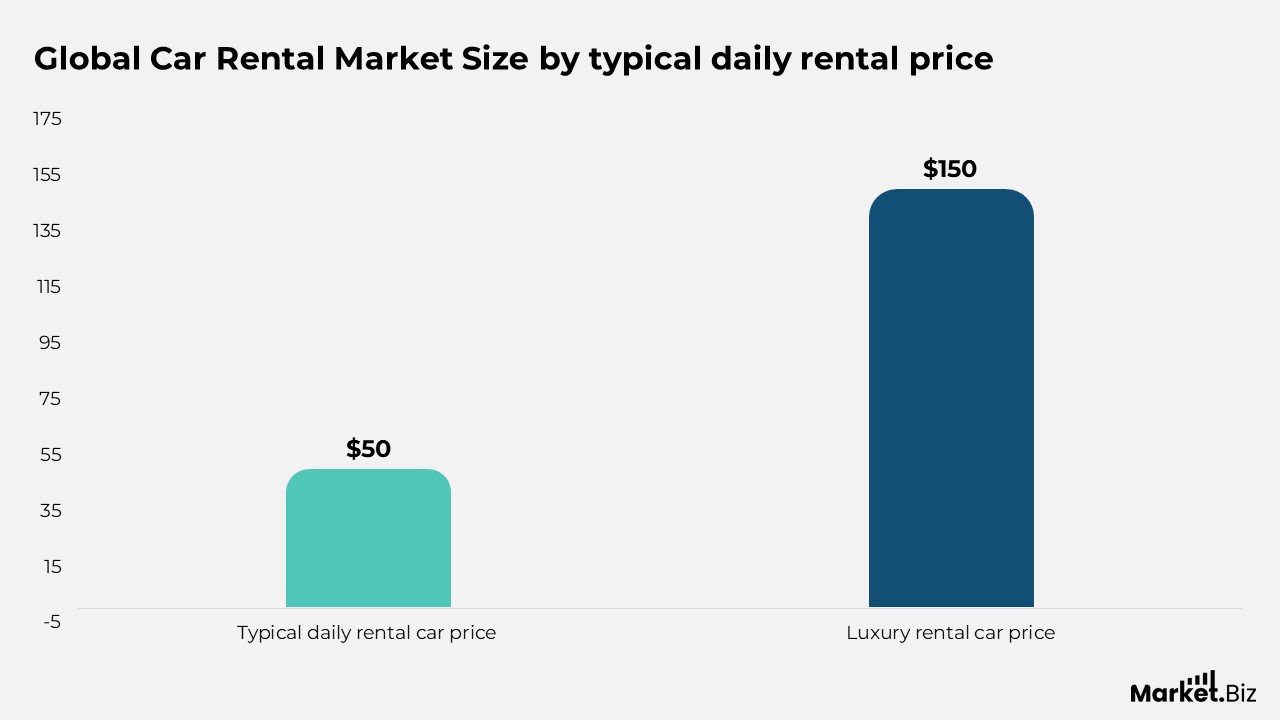
- The typical daily rental price for a compact vehicle in the United States is about $50, while luxury cars can exceed $150 per day.
- Rentals at airports make up nearly 60% of global rental car sales, highlighting the significance of airport locations.
- Fleet utilization rates within the rental sector generally remain around 75%, striving for an ideal equilibrium between supply and demand.
- Car sharing platforms in the rental market represent roughly 15% of total mobility market revenues in urban settings, with expectations for rapid expansion.
- The most frequently rented vehicle type worldwide is the standard compact car, which constitutes approximately 40% of rental inventories.
- The implementation of big data analytics in fleet management has enhanced profit margins by 12% in 2023, as reported by industry analyses.
- Employment within the rental car sector in the United States reached about 100,000 positions in 2022, indicating growth in the industry.
- The increase in electric vehicle charging stations at rental sites surged by 120% from 2021 to 2023, facilitating the growth of EV rentals.
- The rental car insurance sector generated around $15 billion in global revenue in 2022, with an anticipated annual growth rate of 7%.
Car Rental Users
- The worldwide count of car rental users was recorded at 412.7 million in 2019.
- However, there was a significant decline, with users dropping to merely 284.6 million. Naturally, the COVID-19 pandemic severely impacted travel and rental services throughout 2020.
- As travel began to recover, the user count rose to 339.7 million in 2021.
- The user base further expanded to 417.3 million in 2022, reflecting the ongoing growth and advancement of the industry.
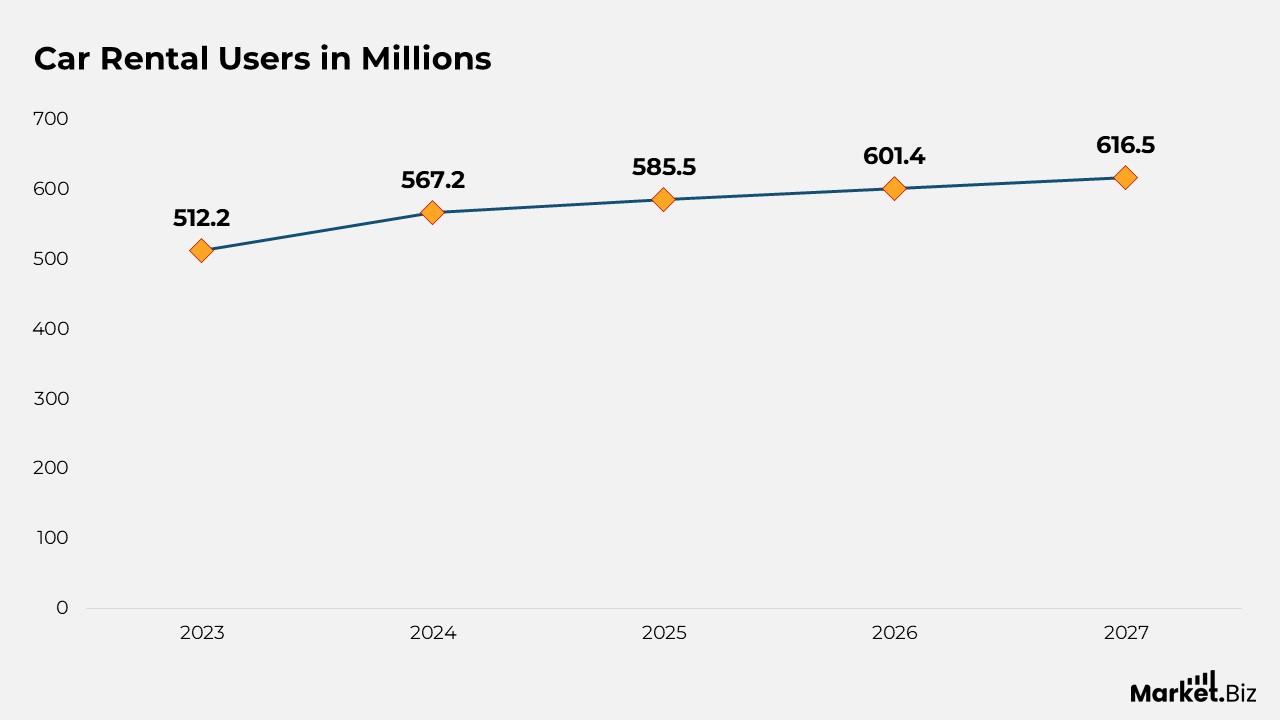
- In 2023, the user count is projected to reach 512.2 million, indicating a consistent recovery trend.
- The forecast for 2024 anticipated this number to rise to 567.2 million.
- Similar to earlier projections, an increase is expected, with an estimated 585.5 million users anticipated in 2025.
- By 2026, this figure is expected to reach 601.4 million users.
- By the end of this year, the anticipated growth is expected to culminate in 616.5 million users by 2027.
Car Rental Users by Generations
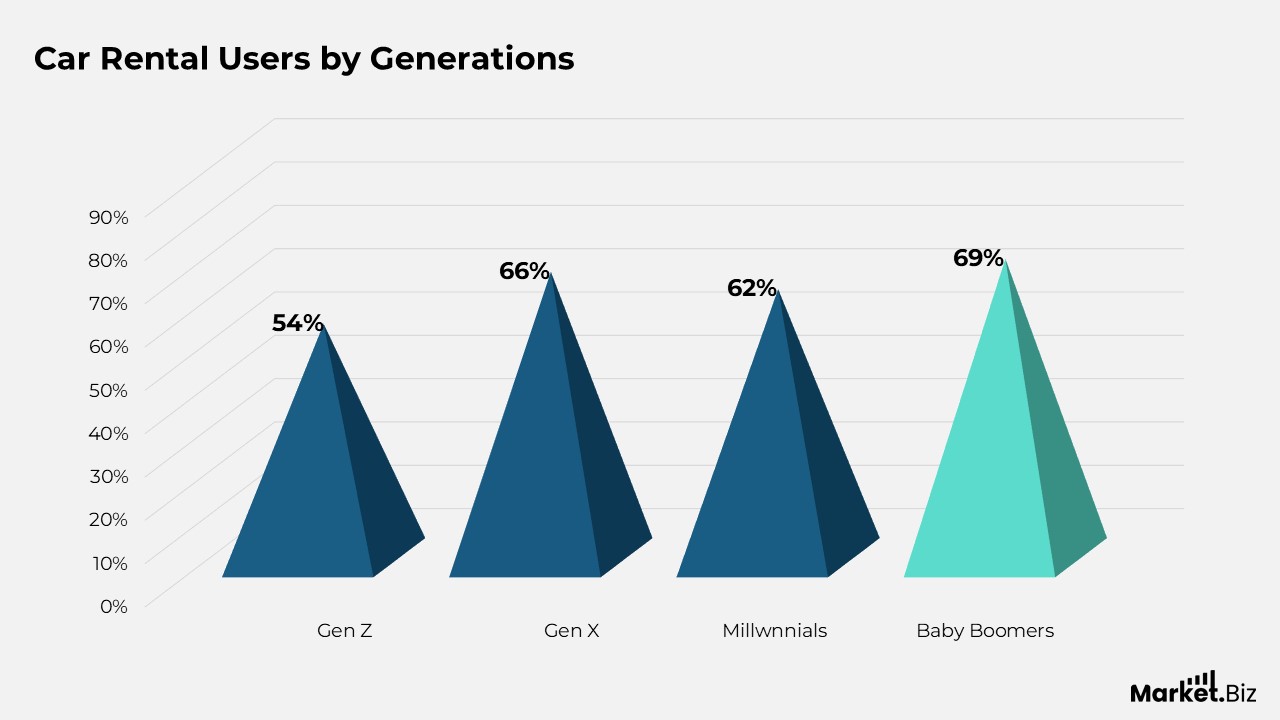
- Car rental statistics indicate that 54% of Gen Z participants in a Statista survey (July 2023 – June 2024) conducted in the U.S. consider car ownership important; this is in contrast to 69% of baby boomers.
- 66% of Generation X (born 1965–1979) concurred that owning a car holds significance. Approximately 62% of millennials expressed the same viewpoint.
- In total, 62% of over 10,000 U.S. respondents affirmed the importance of car ownership.
- Indeed, the shift in attitudes reflects a generational change regarding public transport accessibility in India.
- Federal funding for long-distance and regional transit systems aims to lessen dependence on personal vehicles, exemplified by the Brightline West High-Speed Intercity Rail System, which connects Greater Los Angeles to Las Vegas, and the Hudson Tunnel Project, enhancing links between New Jersey and New York.
- Such extensive public transport initiatives, however, encounter resistance from residents in certain car-dominant areas, especially in Los Angeles.
- At present, California’s statewide high-speed rail initiative is experiencing delays, with projections estimating costs exceeding 150 billion dollars since its announcement in 2008.
Statistics By Car Rental Revenue
- Between 2017 and 2021, the car rental sector witnessed varying income levels.
- Car rental data indicates that in 2017, the industry generated USD 85.89 billion, which saw a slight increase to approximately USD 88.45 billion in 2018, and further expanded to around USD 89.33 billion by 2019.
- However, the year 2020 experienced a significant downturn due to global circumstances.
- Earnings dropped to about USD 56.63 billion during that year.
- In 2021, there was a modest recovery, with revenues reaching approximately USD 70.62 billion, and by 2022, the industry began to regain its footing, achieving a revenue of USD 81.32 billion.
- The growth trend continued, with projections for 2023 estimating profits of around USD 99.54 billion.
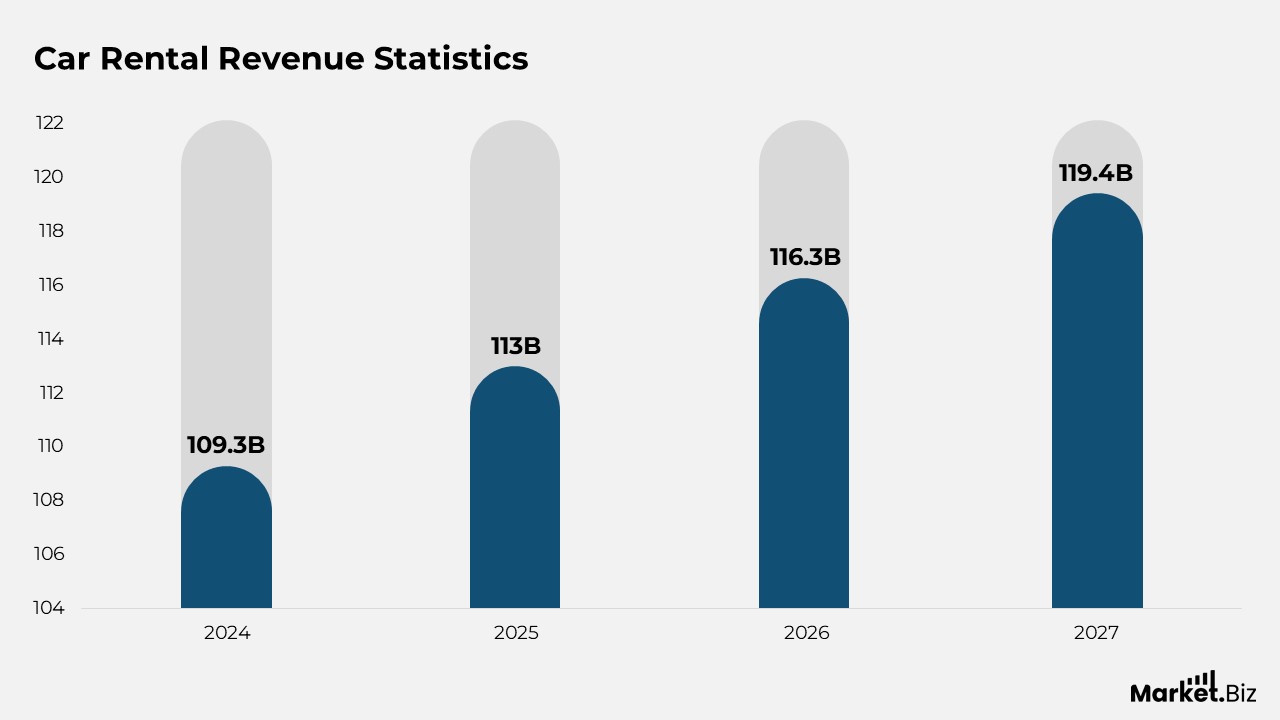
- Looking ahead, 2024 is anticipated to yield earnings of approximately USD 109.30 billion, followed by 2025 with expected revenues of about USD 113 billion, and 2026 is projected to see earnings rise to USD 116.30 billion.
- By 2027, it is expected that earnings will exceed USD 119.40 billion, with a consistent annual growth rate of 3% anticipated for the subsequent year. This illustrates the resilience and promising growth potential of the car rental industry.
Car Rental by Region
- The statistics regarding car rentals indicate that the Asian market is projected to acquire a total of 348.9 million users by 2027.
- By 2027, the Asian car rental sector is anticipated to derive 68% of its revenue from online transactions.
- As per car rental statistics, the annual growth rate in the Asian market is expected to achieve a CAGR of 6.08%, culminating in USD 51.71 billion by 2027.
- The anticipated user penetration for 2023 stands at 6.4%, which is expected to increase to 7.5% by 2027.
- By 2027, the total projected number of users in the car rental sector is expected to reach 63.4 million.
- By 2027, the European region is forecasted to account for 72% of the car rental industry’s revenue from online sales.
- The expected revenue generated from car rentals in the African region is projected to be USD 3.57 billion in 2023.
- The average revenue per user is estimated to be USD 53.90.
- Overall, car rental activities are expected to generate 56% of their revenue from online sales by 2027.
- Further statistics from the African car rental market suggest that there will be a total of 91 million users by 2027.
- In 2023, the anticipated revenue for the American car rental industry is USD 38.50 billion.
- The total number of users in the American market is expected to increase to 108.50 million by 2027.
- As of 2023, user penetration is at 9.8%, and it is projected to rise to 10.4% by 2027.
Car Rental Demographics
By Gender
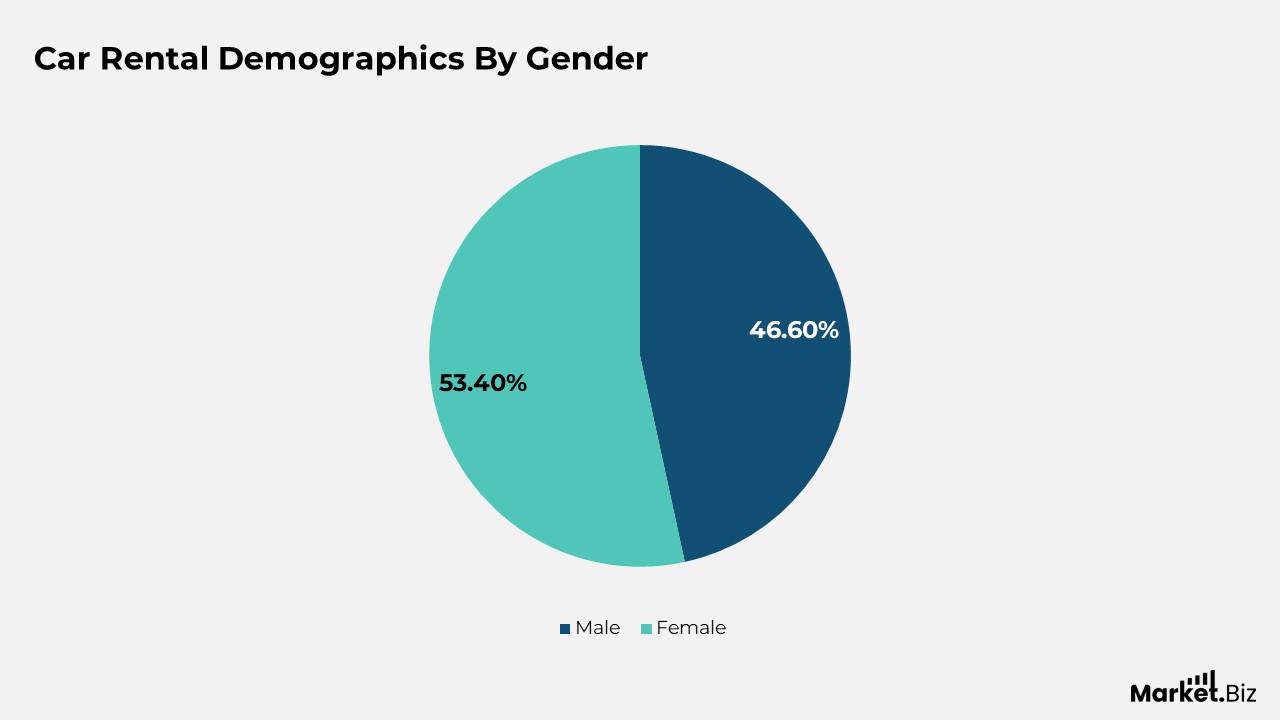
- Based on car rental statistics, 53.4% of car rental agents are female, whereas 46.6% are male agents worldwide.
- The above-mentioned figure indicates that the car rental industry is mostly female.
By Ethnicity
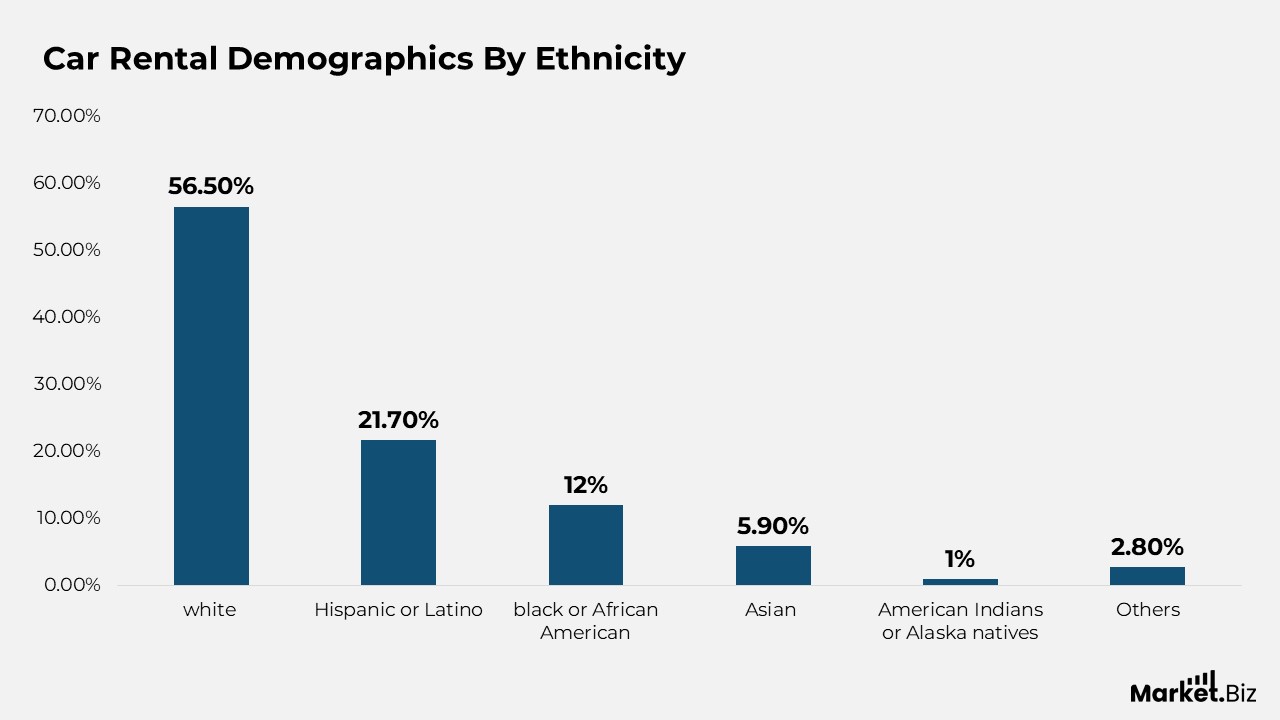
- Taking into account the ethnic composition of car rental agents, 56.5% are from the white demographic, whereas 21.7% identify as Hispanic or Latino.
- 12% are classified as black or African American, and 5.9% are Asian car rental agents.
- Additionally, 1% of the population consists of Native Indians or Alaska natives, while 2.8% have not disclosed their ethnic background.
Car Rental Company Statistics
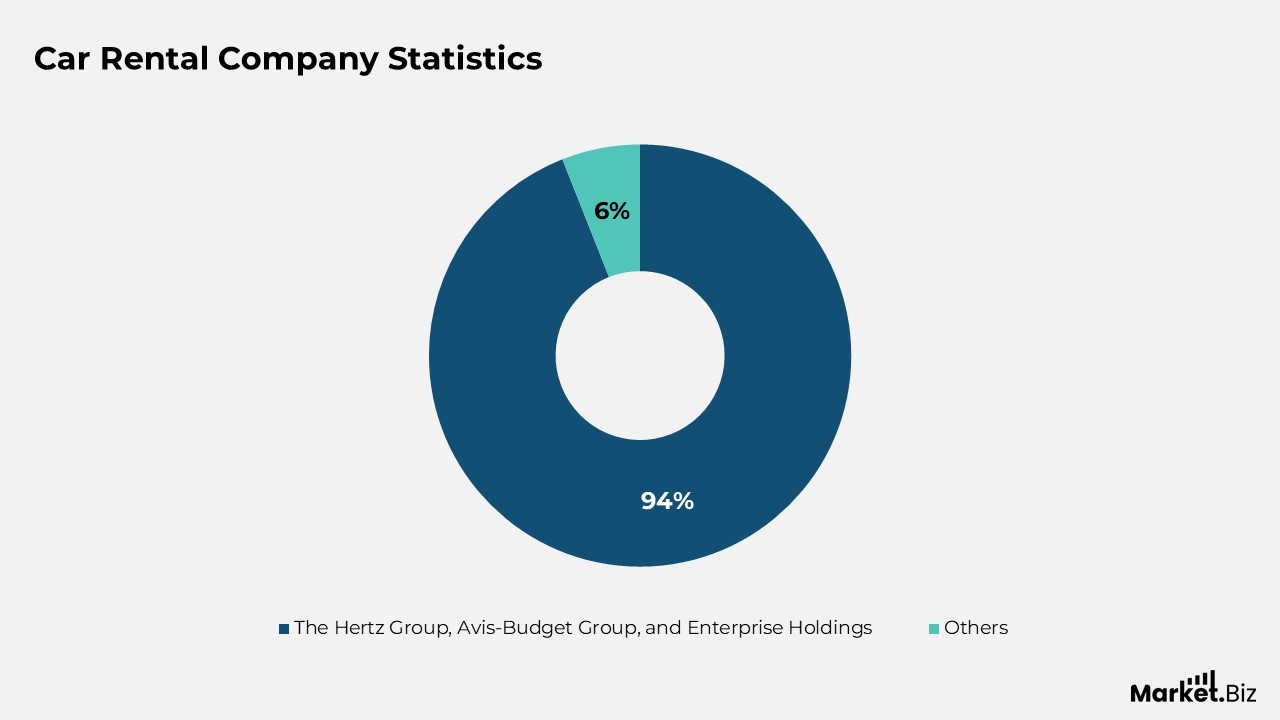
- The Hertz Group, Avis-Budget Group, and Enterprise Holdings collectively account for 94% of the car rental industry in the United States.
- 42% of Americans who have ever rented a vehicle have chosen Enterprise Holdings, which is the leading company in the car rental sector.
- In Europe, the car rental market exhibits greater diversity. In addition to the aforementioned three conglomerates, the Europcar and Sixt groups attract considerable customer interest.
- In response to the economic challenges posed by COVID-19, car rental companies opted to sell off a significant portion of their fleets in 2020.
- The fleets of most car rental companies have not yet fully recovered. For instance, the number of vehicles acquired in the United States in 2021 was 58% lower than in 2019.
- With 6,000 locations, Enterprise Holdings stands as the largest car rental firm in the United States, generating $14.72 million in revenue in 2020, despite the impact of the pandemic.
- Typically, car rentals from Enterprise Holdings last an average of 13.2 days.
- Enterprise Holdings boasts the highest customer satisfaction rating of 861 on a scale of 1,000 points. National Car Rental and Alamo follow closely, with scores of 852 and 837, respectively.
- Hertz, a prominent player in the global car rental market, faced a 56% drop in revenues compared to the previous year and filed for bankruptcy in May 2020.
- The adverse effects of COVID-19 were also apparent in other major car rental companies during 2020, including Avis Budget Group and Europcar, both of which experienced a 42% decrease in revenues.
- Due to the pandemic, Avis Budget Group’s revenues plummeted by 80%, prompting the company to make significant cuts to its costs and employee salaries.
Car Rental Recent Developments
- As the car rental sector is expected to experience only modest growth until 2030, companies are actively seeking faster-growing revenue opportunities to diversify their existing operations, which mostly depend on traveling renters.
- The trend of online car rental bookings is steadily increasing as consumers place greater importance on digital reservations. The high prevalence of smartphones and the widespread availability of the internet have facilitated this growth.
- By 2030, it is anticipated that 78% of car rental bookings will be made online. Although most car rental brands have established online booking platforms, there remain opportunities for further enhancements in functionality, convenience, and flexibility.
- In Australasia, nearly 90% of car rental bookings are expected to be conducted online by 2030, while in Latin America, this figure is projected to reach only 16%.
- The car rental industry is progressively adopting AI and big data across various business processes to enhance efficiencies. This includes the provision of more personalized and dynamic pricing models for customers, the use of predictive analytics for fleet management, and the implementation of more comprehensive car inspections through advanced computer vision and machine learning algorithms.
- 58% of business leaders are of the opinion that AI will exert the most significant influence on business within the next five years.
Conclusion
The car rental industry has demonstrated strong growth, marked by prominent firms such as Enterprise Holdings, Hertz, and Avis Budget Group, which possess extensive fleets and numerous locations. Demographically, there exists a balanced distribution of gender and a diverse racial makeup among car rental proprietors.
Current trends suggest a preference for offline reservations, although online platforms continue to play an important role. A cost analysis indicates that last-minute bookings tend to be more cost-effective compared to early reservations.
FAQs
Sixt SE is a corporation that offers automotive services in approximately 2,000 locations across more than 100 nations. It serves as the parent company of the Sixt Group, which operates globally in car rentals, car sharing, ride bookings, and service subscriptions. The majority of the company is owned by the Sixt family, who also manage its operations.
The ideal vehicle for a car rental business is contingent upon your target demographic and business objectives. Typically, vehicles that are reliable, fuel-efficient, and comfortable are preferred. Common selections include the Toyota Innova Crysta, Maruti Suzuki Dzire, and Honda Amaze. It is important to assess your specific requirements and budget when choosing a vehicle.
A car rental, hire car, or car hire agency is an establishment that leases automobiles to the public for brief durations, usually ranging from a few hours to several weeks.

