









Introduction
Smart Car Statistics: Smart cars represent sophisticated vehicles that incorporate technologies aimed at enhancing connectivity, automation, and efficiency. Additionally, they are equipped with IoT connectivity for navigation and communication, possess autonomous driving features supported by sensors and artificial intelligence, and include advanced safety mechanisms such as automatic emergency braking and collision detection.
The automotive market is progressively transitioning towards electric vehicles (EVs) to mitigate emissions. This shift is accompanied by substantial investments in autonomous technology from both automakers and technology firms. Nevertheless, challenges remain, including regulatory obstacles, consumer skepticism, and the necessity for compatible infrastructure.
The future of smart cars is anticipated to concentrate on ongoing technological innovations and enhanced communication networks. This will lead to safer and more environmentally sustainable transportation solutions.
Editor’s Choice
- The worldwide revenue for the smart car market reached USD 67.3 billion in 2023.
- The global smart car market is categorized by end-users, with passenger cars commanding the largest market share at 58%.
- In 2022, the market revenue was recorded at USD 57.5 billion, which is projected to increase to USD 67.3 billion in 2023.
- In terms of revenue generated by smart mini passenger cars across various countries, Turkey stands out with an impressive USD 1,251 million, indicating a strong market presence and high consumer demand.
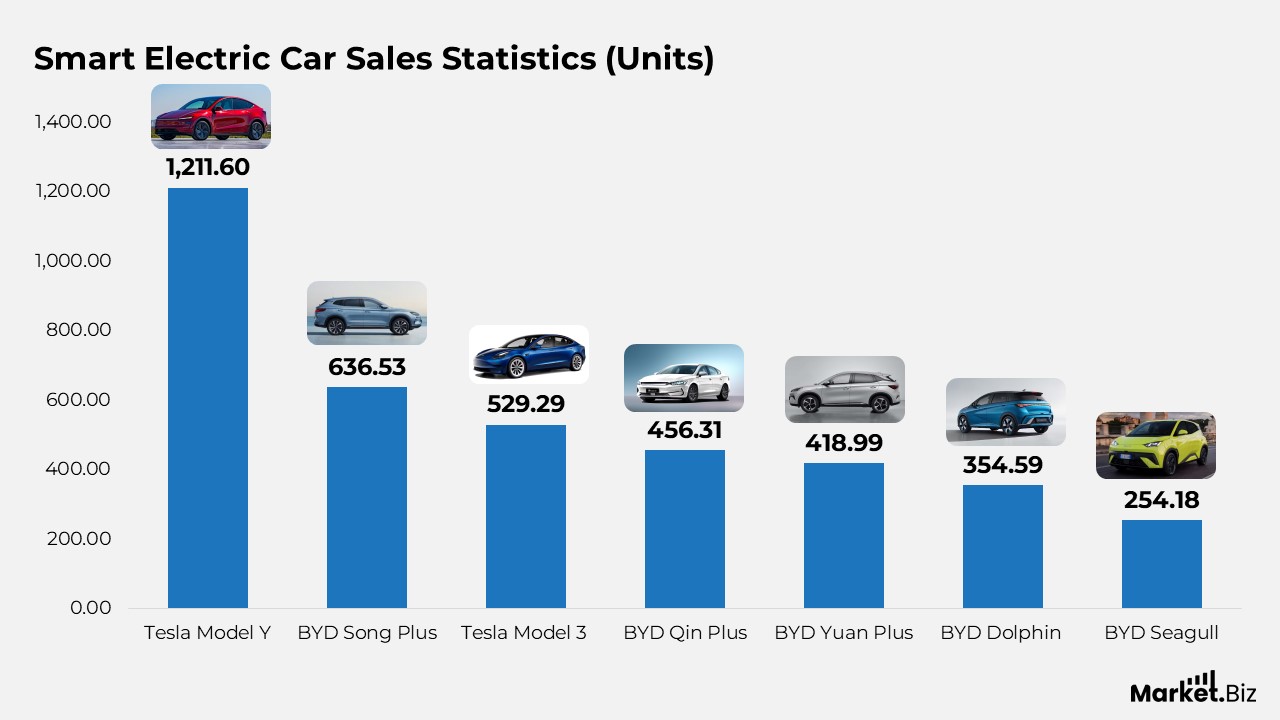
- The Tesla Model 3 also demonstrated robust performance, with sales hitting 529.29 thousand units.
General Smart Car Statistics
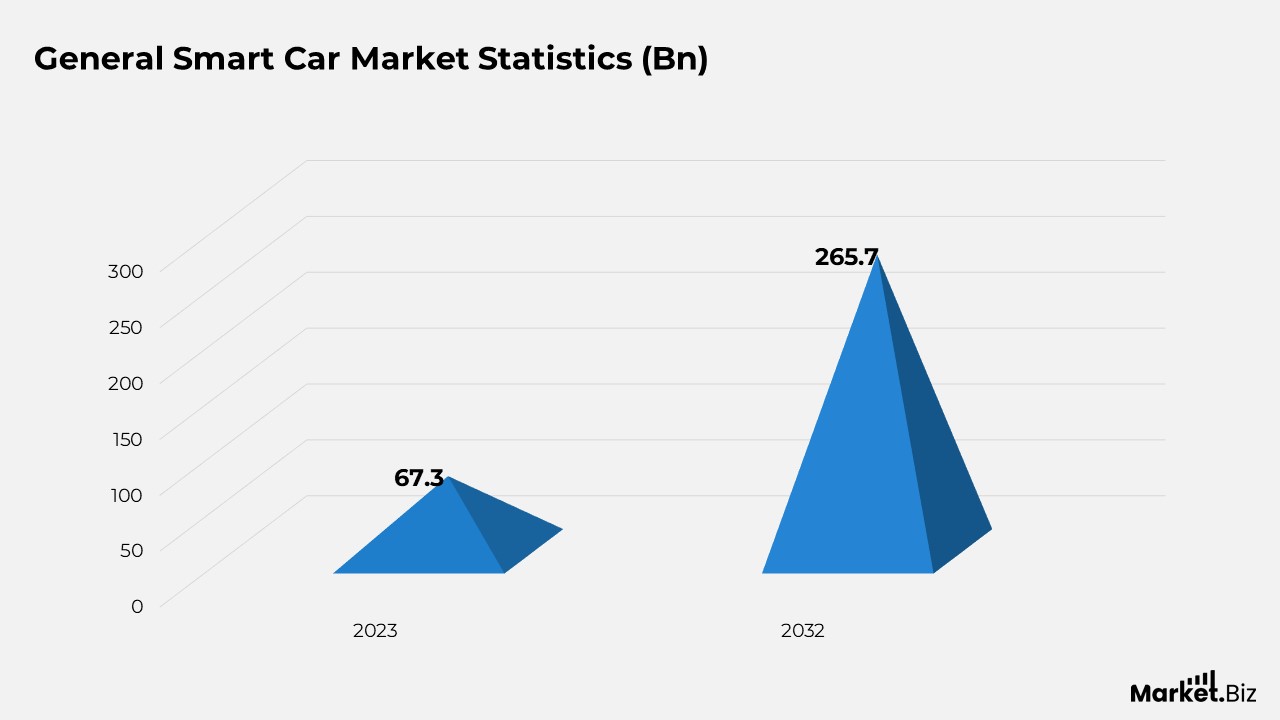
- The worldwide revenue for the smart car market reached USD 67.3 billion in 2023.
- By the year 2032, it is anticipated that the overall smart car market will achieve a value of USD 265.7 billion, where electric smart cars will contribute USD 130.19 billion. Autonomous vehicles are projected to account for USD 75.46 billion, while hybrid cars will represent USD 60.05 billion.
- The global smart car market is categorized by end-users, with passenger cars commanding the largest market share at 58%.
- Regarding revenue from smart mini passenger cars by country, Turkey stands out with a significant USD 1,251 million, indicating a robust market presence and strong consumer demand.
- In 2023, the Tesla Model Y emerged as the top-selling plug-in electric vehicle globally, achieving remarkable sales of 1,211.6 thousand units.
- The projected value of research and development investments in Japan’s connected smart car market is expected to reach 566 billion yen by 2025.
- BMW unveiled the i Vision DEE concept at CES 2023. It includes 240 customizable E Ink panels that enable the car’s exterior color to be altered.
Smart Car Market Growth
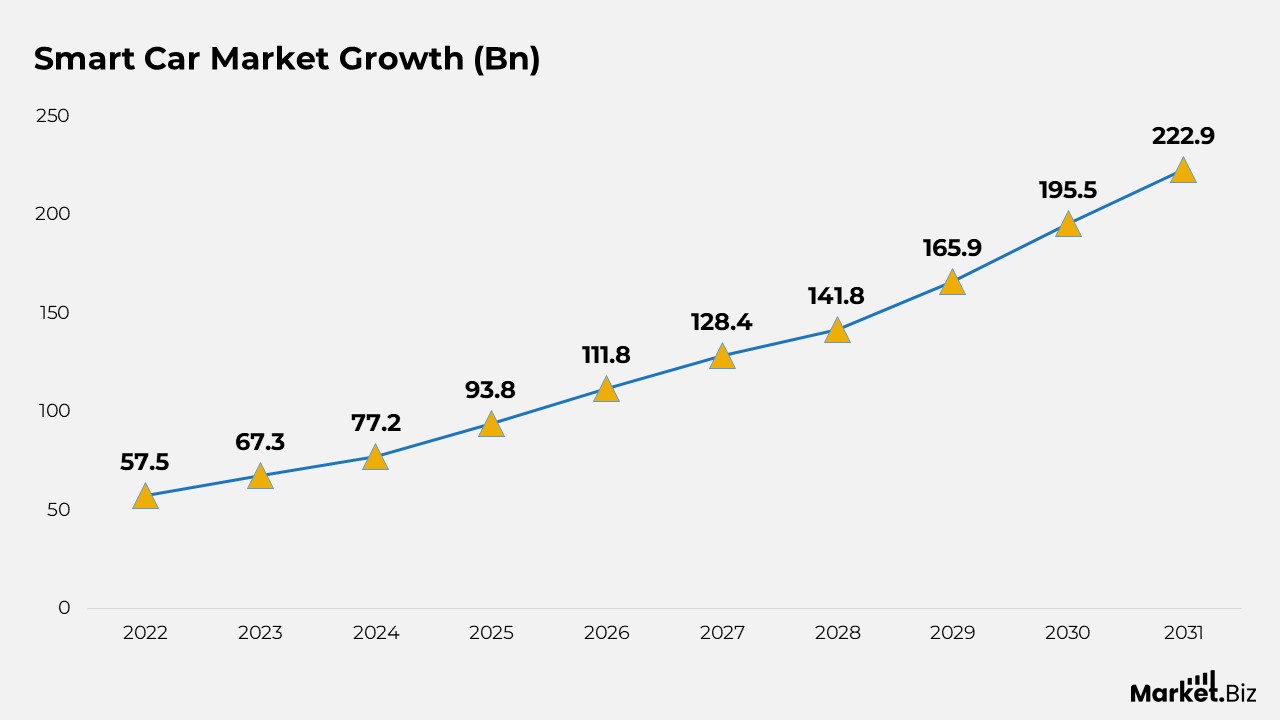
- The global smart car market has demonstrated a consistent upward trend in revenue, achieving a compound annual growth rate (CAGR) of 17%. This reflects the increasing adoption of advanced automotive technologies.
- In 2022, the market revenue was recorded at USD 57.5 billion, which is projected to increase to USD 67.3 billion in 2023.
- The trend persists, with forecasts suggesting that the market will attain USD 77.2 billion in 2024, followed by a notable growth to USD 93.8 billion in 2025.
- By 2026, the revenue is expected to reach USD 111.8 billion, continuing its growth to USD 128.4 billion in 2027.
- Further expansion is anticipated for 2028, with revenue projected to reach USD 141.8 billion, and by 2029, the market is expected to achieve USD 165.9 billion.
- As we enter the next decade, the market is anticipated to experience significant growth, reaching USD 195.5 billion in 2030 and USD 222.9 billion in 2031, ending in an impressive USD 265.7 billion by 2032.
Smart Passenger Car Statistics
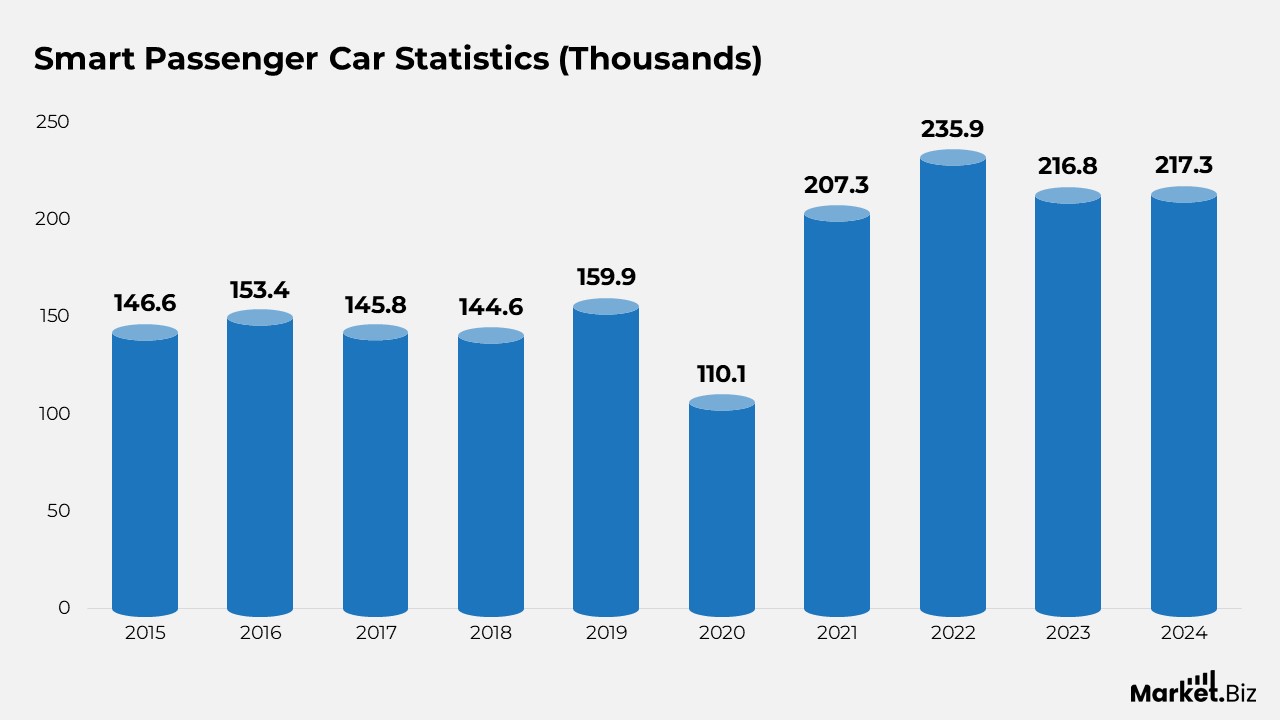
- In 2014, sales were recorded at 109.6 thousand vehicles, followed by a notable increase to 146.6 thousand in 2015 and 153.4 thousand in 2016.
- However, in 2017, sales experienced a slight decline to 145.8 thousand and continued to decrease marginally to 144.6 thousand in 2018.
- A recovery took place in 2019, with sales increasing to 159.9 thousand vehicles.
- In 2020, sales witnessed a significant drop to 110.1 thousand, primarily due to the impacts of the global pandemic.
- The market rebounded strongly in 2021, with sales reaching 207.3 thousand, and maintained its upward trend, achieving 235.9 thousand in 2022.
- In 2023, sales fell slightly to 216.8 thousand but are anticipated to stabilize and grow again in the forthcoming years.
- In 2024, sales are projected to reach 217.3 thousand, followed by further increases to 228.3 thousand in 2025, 236.9 thousand in 2026, 239.6 thousand in 2027, and 240.6 thousand in 2028.
Countries’ Revenue by Smart Passenger Car
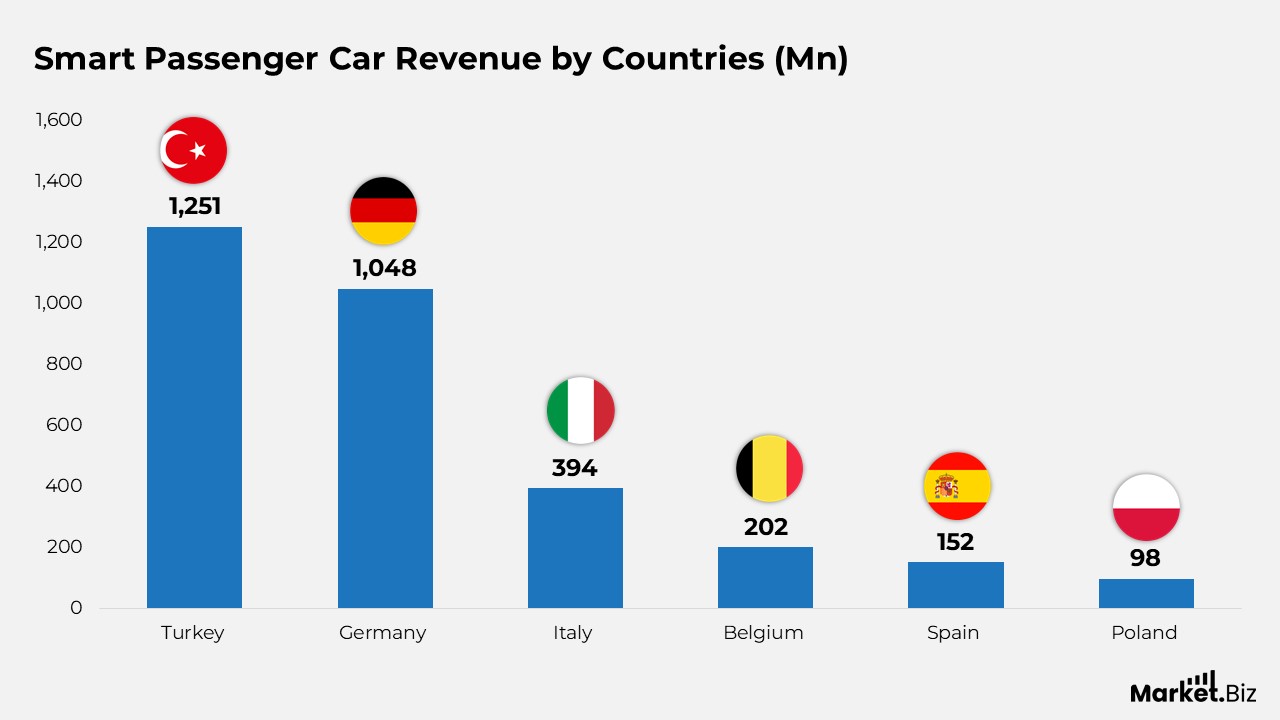
- In terms of revenue generated by smart mini passenger cars across various countries, Turkey stands out with an impressive USD 1,251 million, indicating a strong market presence and high consumer demand.
- Germany closely follows with a revenue of USD 1,048 million, highlighting its important position in the European automotive sector.
- Italy also demonstrates significant revenue at USD 394 million.
- Belgium and Spain contribute USD 202 million and USD 152 million, respectively, showcasing a strong interest in smart mini-passenger cars in these areas.
- Further down the rankings, Poland reported a revenue of USD 98 million, while Portugal and Sweden trailed closely with USD 85 million and USD 84 million, respectively.
- France and the United Kingdom exhibit lower revenue figures in this segment, with France generating USD 64 million and the United Kingdom USD 53 million.
- Finally, the Netherlands completes the list with a revenue of USD 43 million, indicating a smaller yet still notable market for smart mini-passenger cars.
Smart Electric Car Statistics
- In 2023, the Tesla Model Y emerged as the top-selling plug-in electric vehicle in the global market, achieving remarkable sales of 1,211.6 thousand units.
- This was succeeded by the BYD Song Plus, which encompasses both battery electric vehicle (BEV) and plug-in hybrid electric vehicle (PHEV) variants, with sales amounting to 636.53 thousand units.
- The Tesla Model 3 also demonstrated robust performance, with sales hitting 529.29 thousand units.
- The Wuling Hong Guang MINI EV and GAC Aion Y also showed strong results, with sales of 237.92 thousand units and 235.86 thousand units, respectively.
- The BYD Han (BEV + PHEV) and GAC Aion 5 achieved sales of 228.01 thousand units and 220.92 thousand units, respectively.
- Concluding the list was the Volkswagen ID 4, which sold 192.69 thousand units, underscoring a varied and competitive environment in the electric vehicle market for the year.
Smart Car Sales by Country Statistics
US
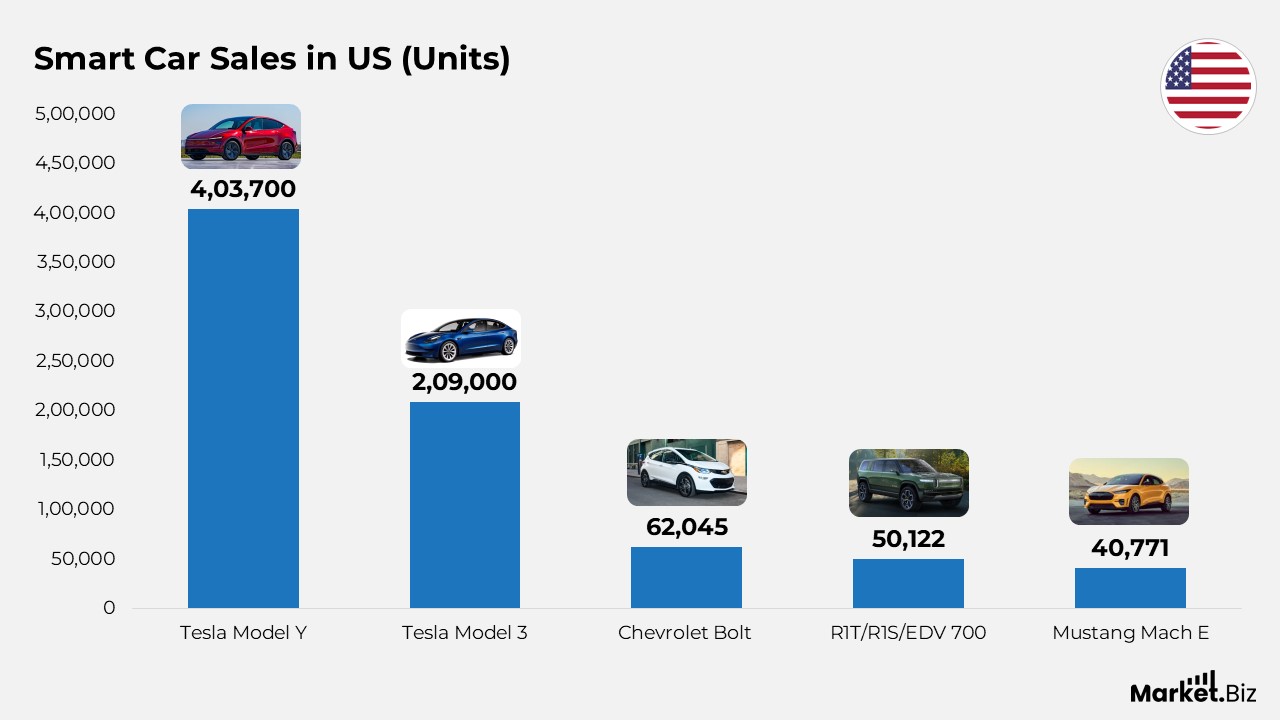
- In 2023, Tesla dominated the US market for battery-electric vehicles. The Model Y emerged as the top-selling model, achieving 403,700 new registrations.
- The Tesla Model 3 also enjoyed considerable popularity, with 209,000 units sold.
- Following closely was the Chevrolet Bolt from General Motors, which recorded 62,045 units, reflecting a strong performance.
- Rivian’s lineup, including the R1T, R1S, and EDV 700, made a notable impression with 50,122 units sold.
- The Ford Mustang Mach-E came in slightly lower with 40,771 units, while Volkswagen’s ID4 achieved 37,789 new registrations.
- The Hyundai IONIQ 5 registered 33,918 units, showcasing its increasing footprint in the electric vehicle sector.
Germany
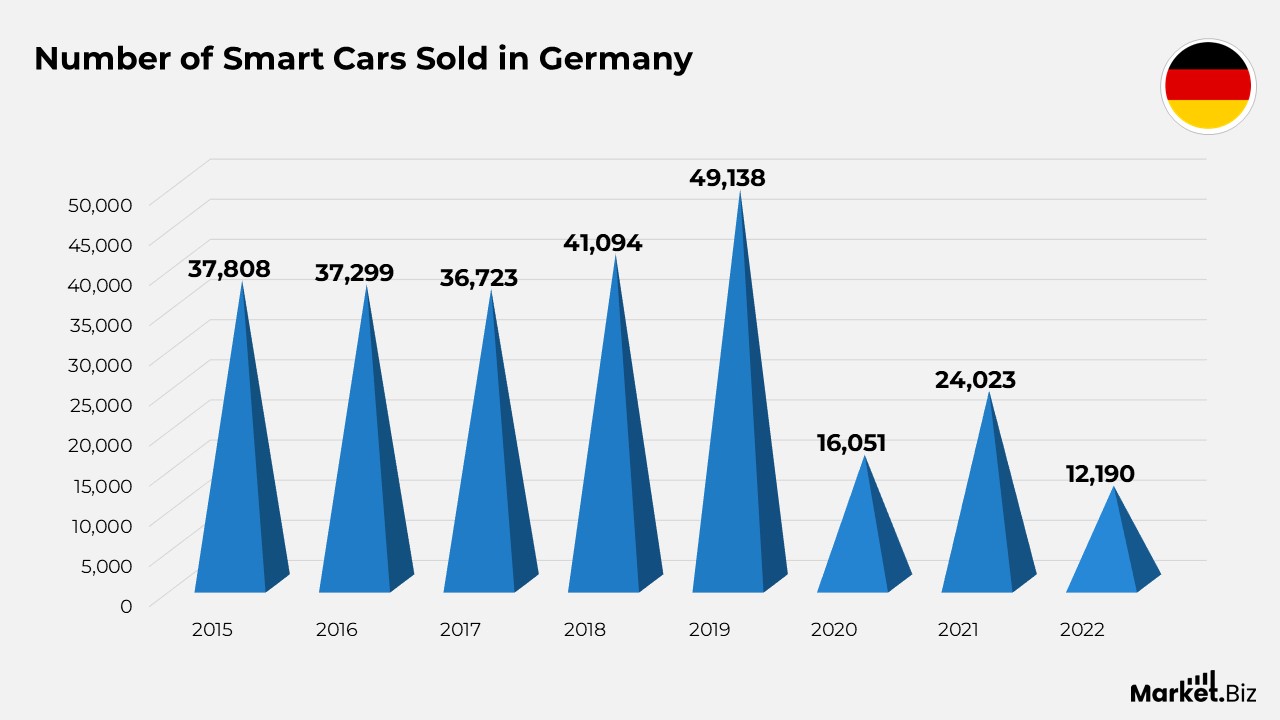
- Sales commenced strongly in 2008 with 33,805 units sold, and there was a slight increase in 2009 to 33,980 units.
- However, starting in 2010, a downward trend became apparent, with sales decreasing to 29,069 units in 2010 and further declining to 26,009 units by 2013. The lowest sales figure was recorded in 2014, with only 22,408 units sold.
- A notable resurgence in sales occurred in 2015, when the number rose to 37,808 units, maintaining a similar level throughout 2016 and 2017.
- Sales experienced significant growth in 2018, reaching 41,094 units, and then peaked at 49,138 units in 2019.
- However, a sharp decline ensued in 2020, with sales dropping to 16,051 units, likely attributable to the effects of the COVID-19 pandemic.
- A partial recovery was observed in 2021, with 24,023 units sold, but another steep decline took place in 2022, with sales falling to 12,190 units, marking the lowest annual sales figure since the beginning of this recorded period.
UK
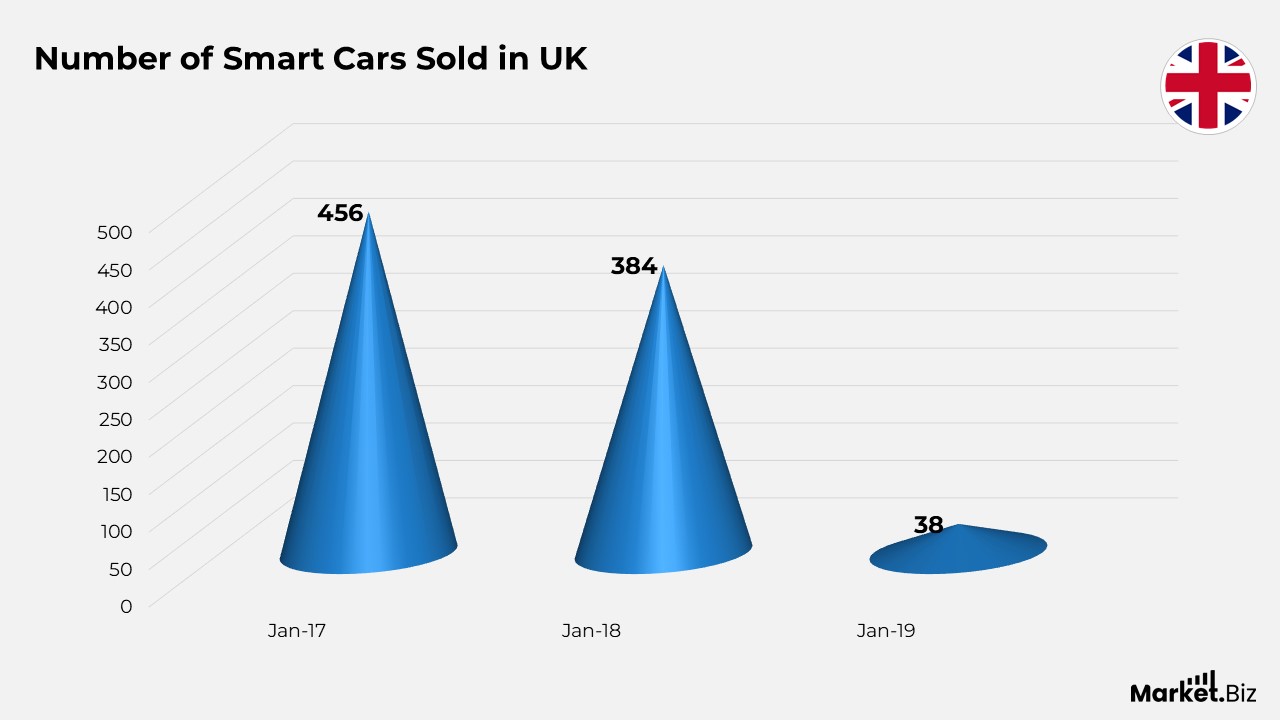
- The sales commenced at 873 units in July 2016 and experienced variations, peaking notably in September 2016 when 2,381 units were sold.
- This elevated level was nearly reached again in March 2017 with 2,172 units and in September 2017 with 1,701 units sold.
- Throughout 2018, March and September once more exhibited higher sales figures, recording 1,201 and 1,583 units, respectively, in contrast to other months, which typically remained below 1,000 units.
- In 2019, a marked decline in sales momentum was apparent, starting the year with 490 units in January and plummeting to as low as 38 units by December.
China
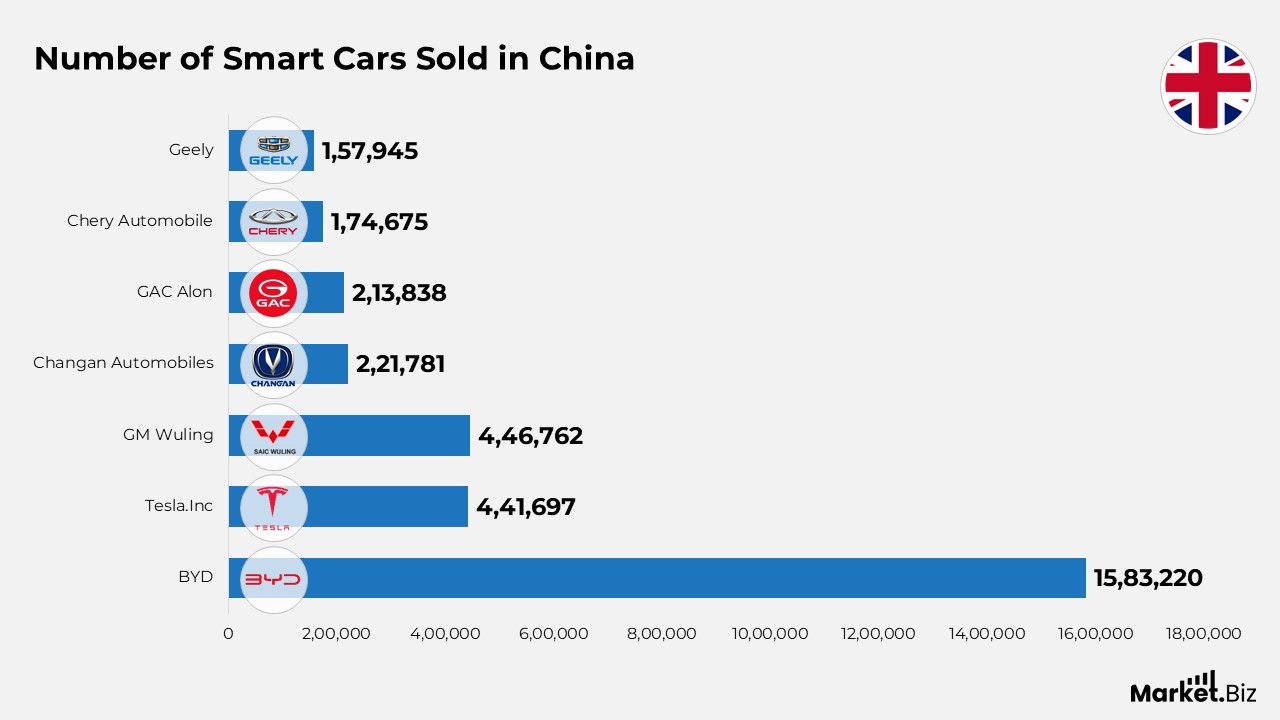
- In 2022, the sales of new energy vehicles in China were primarily led by several prominent original equipment manufacturers (OEMs), with BYD taking the lead by selling 1,583,220 vehicles.
- This figure was considerably higher than that of other manufacturers, underscoring BYD’s robust position within China’s electric vehicle market.
- Tesla Inc. also made a notable contribution with sales totaling 441,697 vehicles, closely trailed by GM-Wuling, which recorded sales of 446,762 vehicles.
- Changan Automobile emerged as another significant contender, achieving sales of 221,781 vehicles.
- GAC Aion followed closely, with 213,838 vehicles sold. Chery Automobile and Geely also reported impressive sales figures, with 174,675 and 157,945 vehicles sold, respectively.
- Smaller yet significant contributions were made by Hozon and Li Auto (Ideal), who sold 146,099 and 135,296 vehicles, respectively. Xpeng rounded out the list with 120,449 vehicles sold, highlighting a competitive and varied market for new energy vehicles in China during the year.
Recent Developments
- In 2023, Hyundai completed its acquisition of Boston Dynamics for $1.1 billion. This acquisition is intended to incorporate robotics and artificial intelligence into smart car platforms, with an emphasis on improving autonomous driving capabilities and in-car AI systems.
- In early 2024, Aptiv, a firm that specializes in smart car electronics and software, secured $500 million to enhance its connected car solutions, concentrating on advancing AI and IoT integration for future smart vehicles.
- By 2025, it is anticipated that 60% of new smart cars will be equipped with 5G technology, facilitating quicker data transmission, real-time vehicle-to-vehicle communication, and enhanced in-car connectivity.
Conclusion
Smart Car Statistics: The smart car market is undergoing rapid evolution, propelled by advancements in connectivity, automation, and sustainability.
The increasing global demand for electric, autonomous, and connected vehicles is driving growth, supported by substantial R&D investments, particularly in Japan and China. Moreover, significant trends indicate a transition towards electric and hybrid models, with consumers emphasizing safety, navigation, and convenience features.
Prominent automakers such as Tesla and BYD are at the forefront of innovation, while regional differences in adoption highlight varying consumer preferences. Ultimately, the outlook is optimistic as smart car technology continues to enhance vehicle efficiency and adaptability to contemporary needs.
FAQs
With a fuel consumption rate of 3.3 litres (NEDC) per 100 kilometres (equivalent to 71.2 mpg) and CO2 emissions of merely 88 grams per kilometre, it boasts the lowest CO2 emissions of any current production car globally, particularly after Audi and Volkswagen discontinued their 3-cylinder models, the A2 1.2 TDI and the Lupo 1.2 TDI respectively.
The Smart brand was officially established when the renowned Swiss watchmaker Swatch collaborated with the well-known German automaker Mercedes-Benz. Daimler-Benz consented to produce the vehicles, facilitating the watchmaker’s entry into the automotive sector. The name of their microcar, Smart, is an acronym representing “Swatch Mercedes Art.”
Artificial Intelligence and machine learning are increasingly becoming essential components in smart cars: AI-driven systems are set to play a significant role in smart vehicles. By the year 2026, it is anticipated that 45% of new cars will feature AI-based predictive maintenance. Additionally, advanced safety features and driver assistance systems are being incorporated as standard equipment.