









Introduction
Physical Security Statistics: Physical security is a vital component of comprehensive security strategies. It includes measures aimed at safeguarding physical assets, individuals, and information from unauthorised access, harm, theft, and damage. This includes access control, surveillance, perimeter protection, security personnel, intrusion detection, locks, alarm systems, and secure storage. All these measures are intended to mitigate threats such as vandalism, break-ins, workplace aggression, and natural disasters.
Physical security frequently aligns with other security areas, including cybersecurity, and requires compliance with relevant regulations. Evaluating risks is essential for tailoring security measures to meet specific needs. Simultaneously, ongoing maintenance and evaluation are crucial to adapt to changing threats and ensure the effectiveness of protective mechanisms.
Statistics related to physical security indicate a burgeoning market dedicated to safeguarding individuals, property, and data from threats such as vandalism, theft, and disasters. This is achieved through the use of technology like surveillance, access control, and biometrics. Data reveals a trend of increasing investments and costs associated with security breaches. Underscoring the foundational importance of physical security in conjunction with digital defenses.
Editor’s Choice
- A considerable 75% of organisations regard physical security as one of their top priorities.
- In 2022, the market revenue was recorded at USD 132.5 billion. With an expectation to rise to USD 143 billion in 2023.
- The Managed Security Services Market is projected to reach approximately USD 74.2 billion by the year 2032.
- Incidents can result in modifications to business hours, with about 2% of occurrences requiring such changes.
- Access control is the leading factor in the commonly utilised physical security solutions, commanding a considerable market share of 50%.
- 47% of enterprises have implemented security video cameras, employing advanced surveillance technology to oversee and protect their facilities.
General Physical Security Statistics
- A considerable 75% of organisations regard physical security as one of their top priorities.
- Over the last five years, 60% of organisations have experienced breaches in their physical security protocols.
- The average estimated cost to rectify a physical security breach is around $100,000.
- To improve physical security, 40% of organisations have adopted security measures such as surveillance systems, including security cameras.
- Access control systems, including biometric scanners and keycard systems, have been utilised for physical security by 30% of organisations.
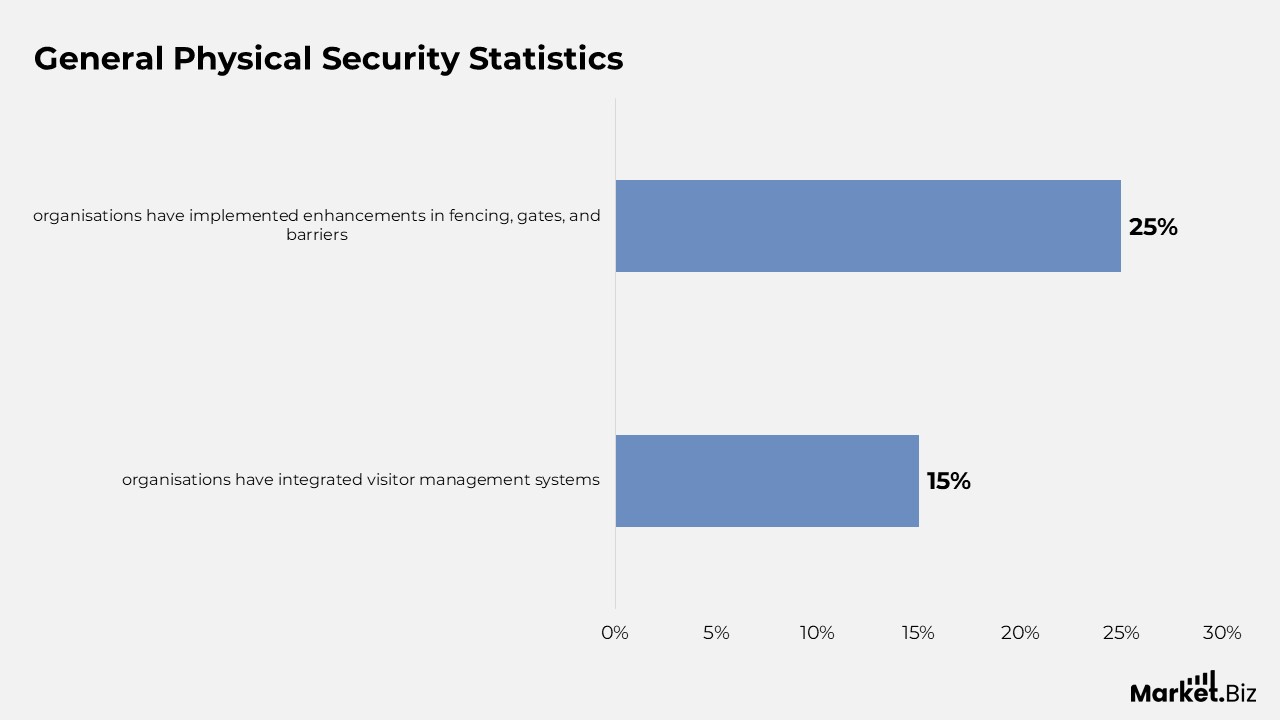
- To strengthen physical security, 25% of organisations have implemented enhancements in fencing, gates, and barriers.
- A significant 20% of organisations have committed resources to educate their employees on best practices for physical security.
- For physical security purposes, 15% of organisations have integrated visitor management systems.
Physical Security Market Size Statistics
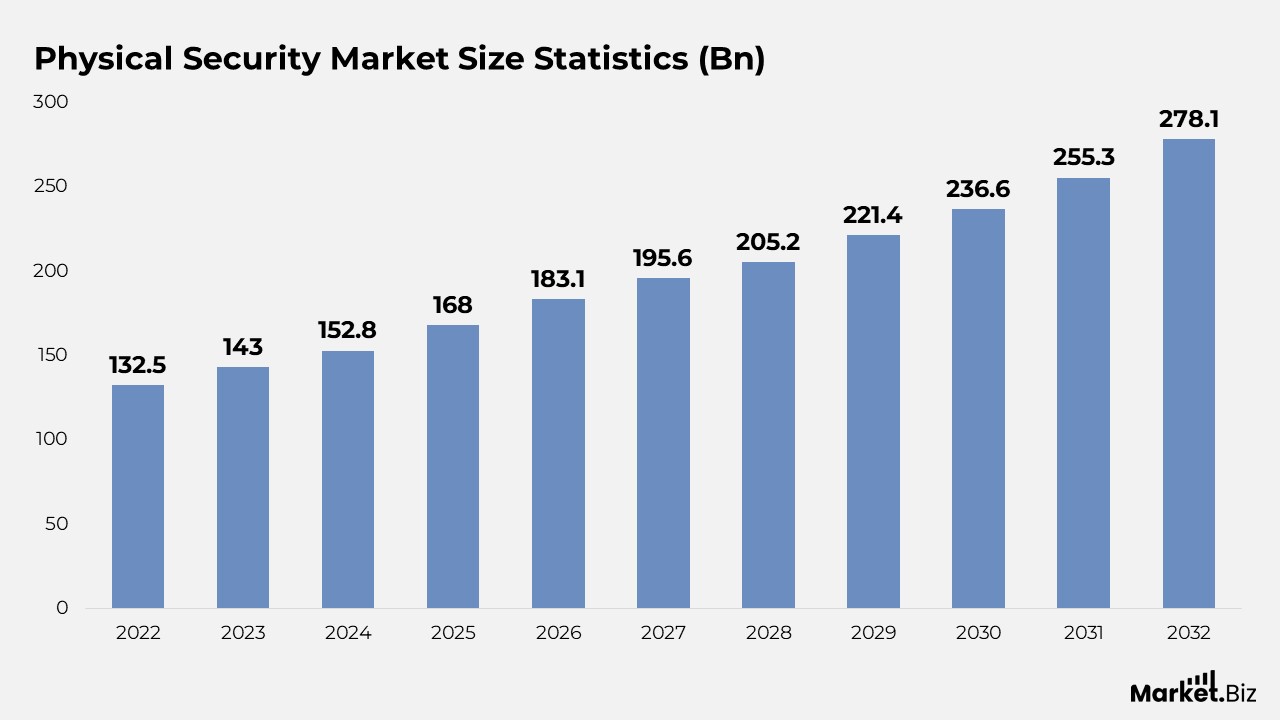
- In 2022, the market revenue was recorded at USD 132.5 billion. With an expectation to rise to USD 143 billion in 2023.
- The upward trend persists, with projected revenues of USD 152.8 billion in 2024 and USD 168.0 billion in 2025.
- The market is forecasted to gain further momentum, achieving USD 183.1 billion in 2026 and USD 195.6 billion in 2027.
- Looking forward, the forecasts indicate revenues of USD 205.2 billion in 2028 and USD 221.4 billion in 2029.
- The market is set to surpass USD 236.6 billion in 2030 and maintain its growth trajectory. Reaching USD 255.3 billion in 2031 and USD 278.1 billion in 2032.
Physical Security Revenue Statistics
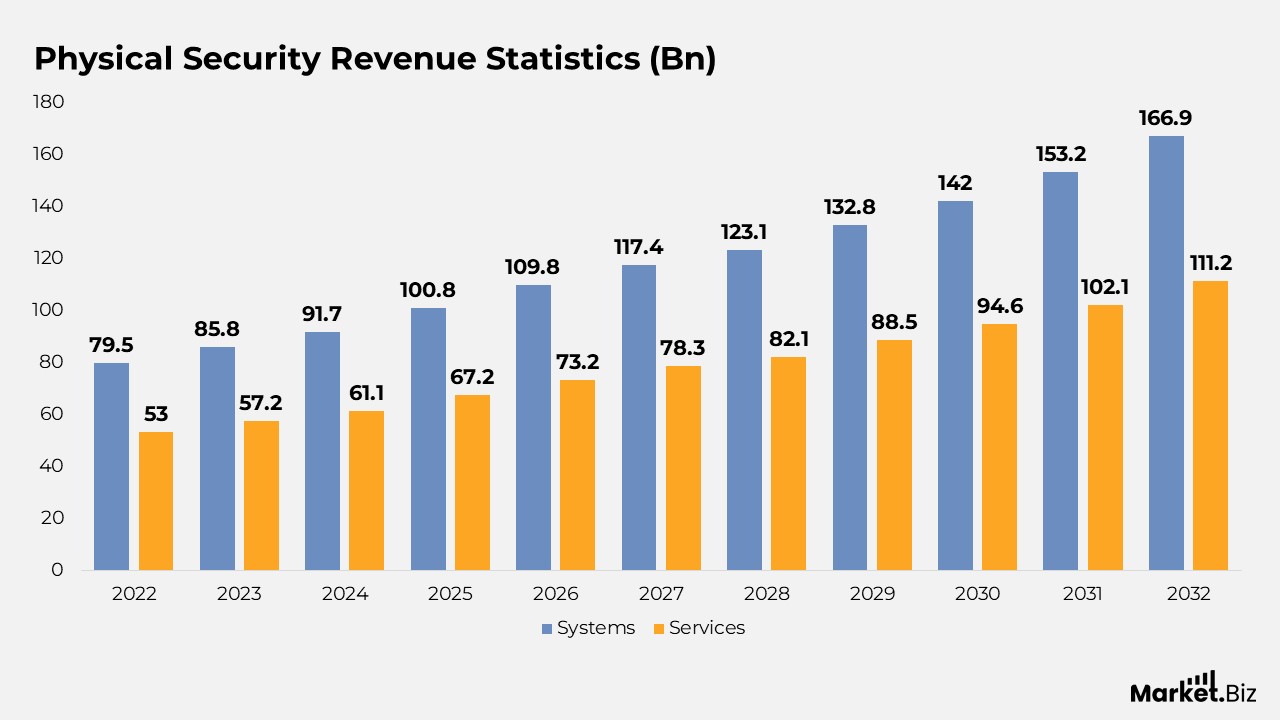
- The global physical security market has experienced notable expansion in recent years. The total revenue reached USD 132.5 billion in 2022.
- This revenue is mainly driven by two primary components: systems and services, which contributed USD 79.5 billion and USD 53 billion, respectively, to the overall market.
- The market is anticipated to maintain its upward trend. Total revenue is expected to reach USD 143.0 billion in 2023, indicating a consistent increase.
- Systems are projected to generate USD 85.8 billion, while services are forecasted to contribute USD 57.2 billion in 2023.
- In the coming decade, the market is predicted to undergo significant growth. With total revenue expected to reach USD 255.3 billion by 2031.
- Both systems and services will be crucial, with estimated contributions of USD 153.2 billion and USD 102.1 billion, respectively, in that year.
Region Statistics by Physical Security Services
- The Managed Security Services Market is projected to reach approximately USD 74.2 billion by the year 2032.
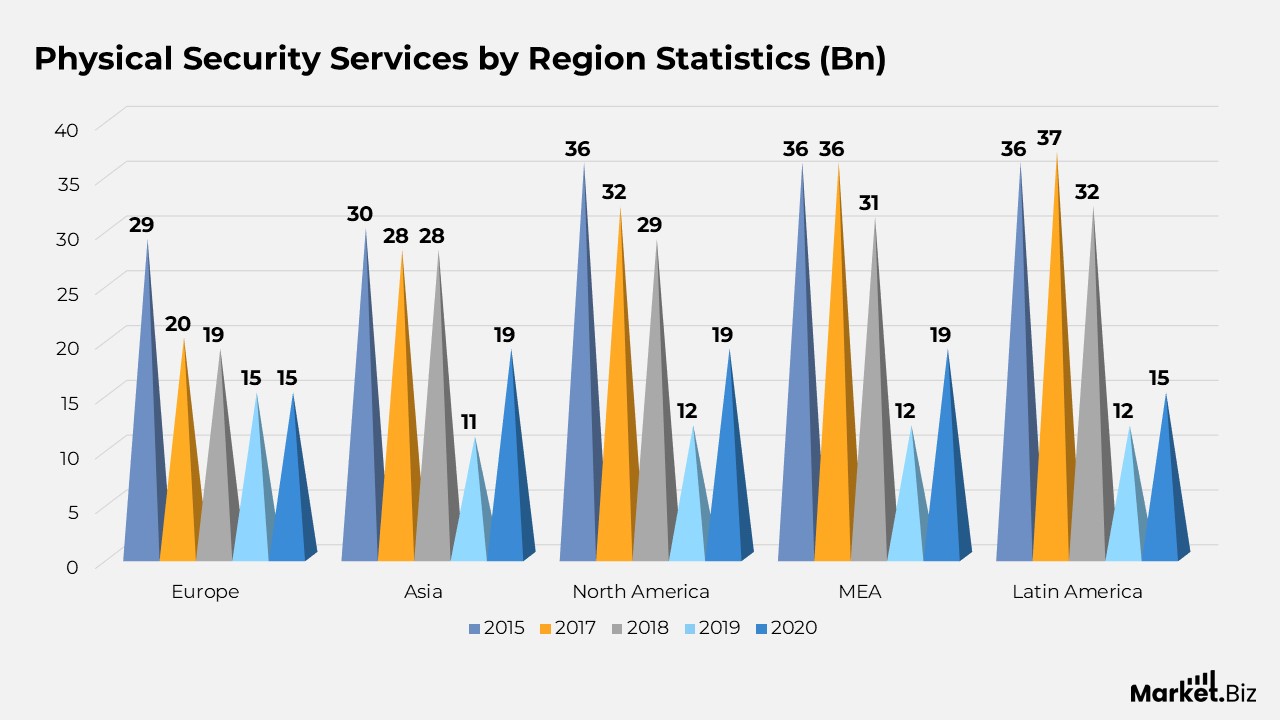
- The data illustrates the market size of security services across different regions from 2015 to 2020, quantified in USD billions.
- In Europe, the market size was recorded at 29 billion USD in 2015. Which saw a decrease to 20 billion USD in 2017 and further fell to 19 billion USD in 2018.
- It continued to decline to 15 billion USD in 2019 and remained steady at 15 billion USD in 2020.
- In Asia, except Japan, the market in 2015 began at 30 billion USD and experienced various variations over the years, getting 28 billion USD in 2018. However, it dropped significantly to 11 billion USD in 2019 before recovering to 19 billion USD in 2020.
- North America had a market size of 36 billion USD in 2015. Which declined to 32 billion USD in 2017 and further to 29 billion USD in 2018.
- In 2019, it experienced a notable decrease to 12 billion USD but bounced back to 19 billion USD in 2020.
- The Middle East & Africa region exhibited a relatively stable market size, fluctuating between 36 to 31 billion USD from 2015 to 2018.
- Latin America commenced at 36 billion USD in 2015 and maintained a relatively stable market size through 2018, averaging around 32 billion USD.
Physical Security Usage Statistics
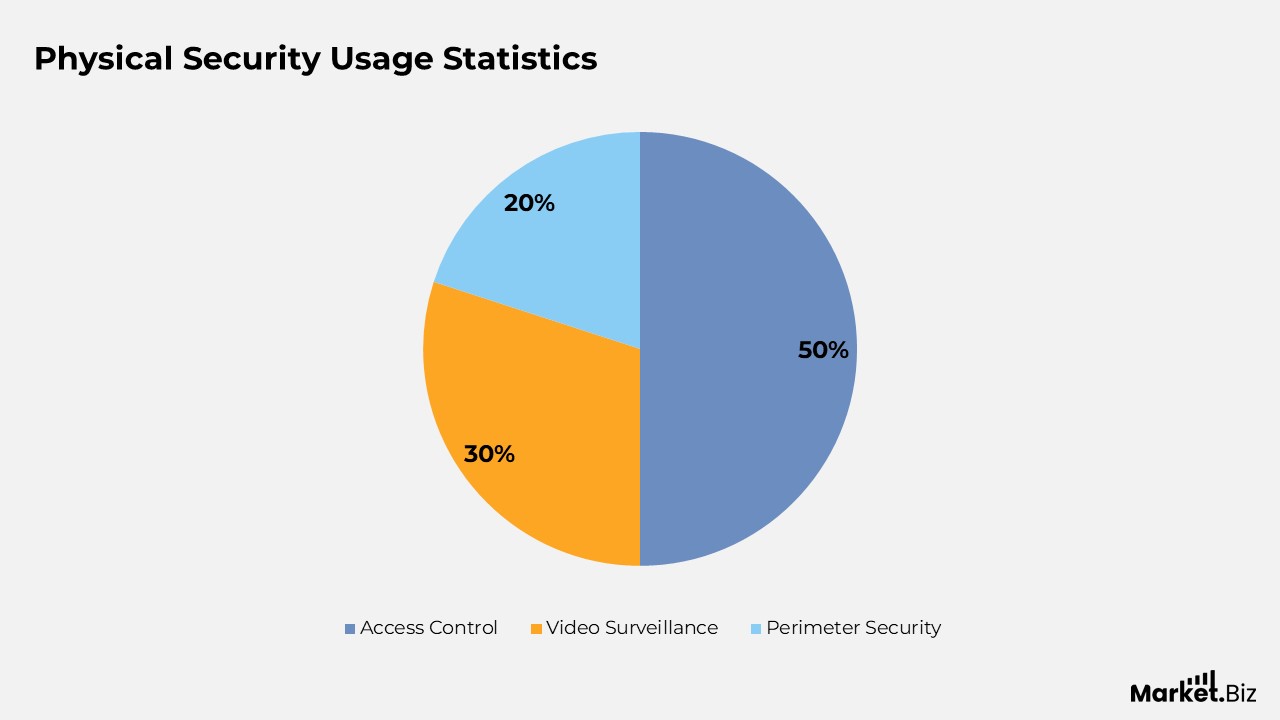
- Access control is the leading factor in the commonly utilized physical security solutions, commanding a considerable market share of 50%.
- Access control systems are essential for regulating and managing access to secured areas, rendering them a vital element of security strategies across diverse sectors.
- Video surveillance closely follows, capturing a notable 30% market share.
- The widespread use of video surveillance highlights its importance in monitoring and documenting activities in both public and private environments, thereby enhancing security and deterring incidents.
- Perimeter security solutions, which hold a 20% market share, also serve a critical function in protecting the boundaries of properties and facilities, thwarting unauthorised access and potential threats.
Business Security Incidents Statistics
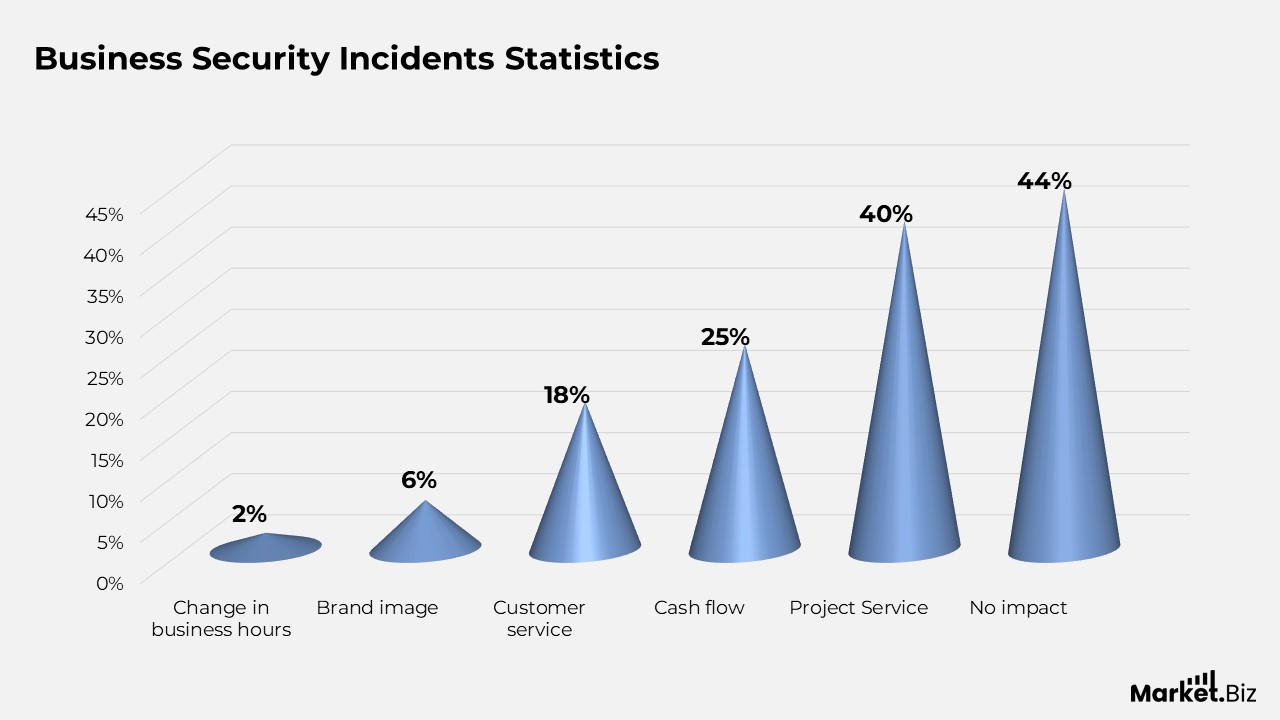
- Incidents can result in modifications to business hours, with about 2% of occurrences requiring such changes.
- Moreover, brand damage may arise in 6% of cases, impacting a company’s reputation and trustworthiness.
- In addition, customer service can be significantly affected, with nearly 18% of incidents altering the quality of service offered to clients.
- The financial dimensions of a business are also at risk, with cash flow being compromised in 25% of situations due to security incidents.
- Project delays represent another major issue, with roughly 40% of incidents leading to interruptions in project schedules.
- Interestingly, in 44% of cases, security incidents might not produce any noticeable effect on the business.
Physical Security Improvement Statistics
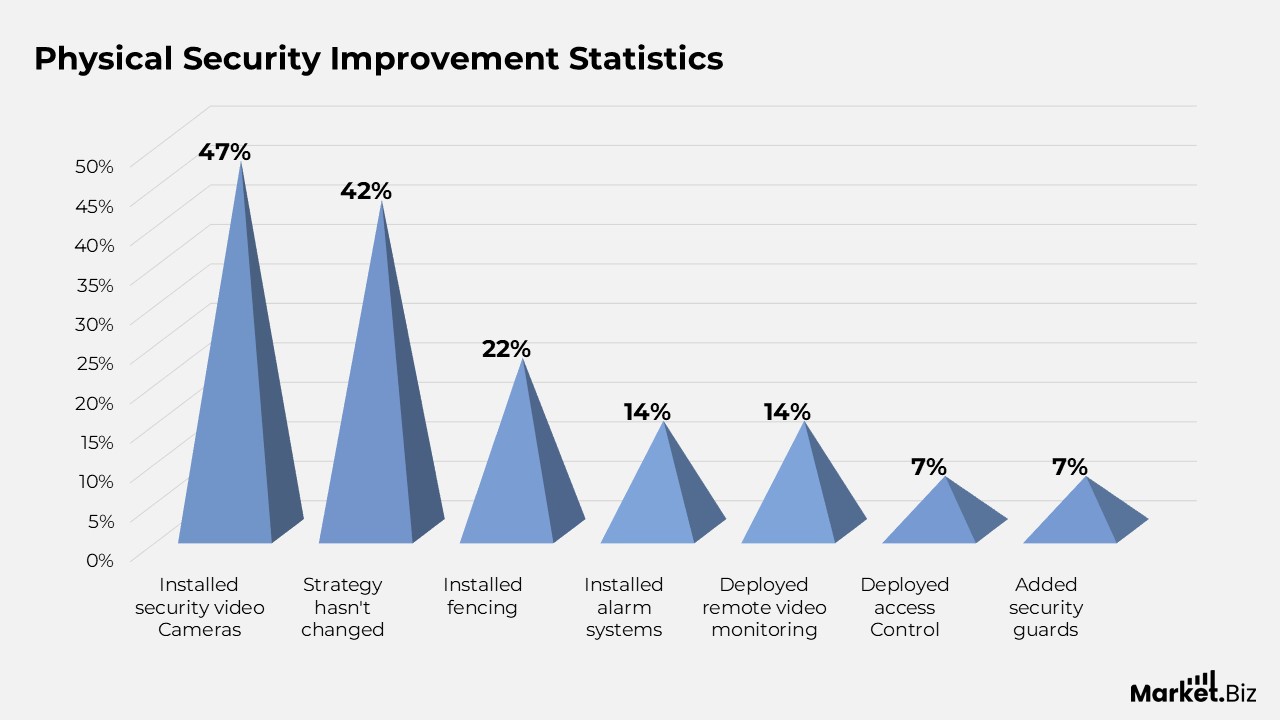
- 47% of enterprises have implemented security video cameras, employing advanced surveillance technology to oversee and protect their facilities.
- Furthermore, 22% of enterprises chose to enhance their security by building a fence to reinforce their perimeters against potential threats.
- A notable segment, 14%, embraced remote video monitoring (RVM) systems, enabling real-time surveillance from distant locations.
- Alarm systems also became increasingly popular, with another 14% of enterprises deciding to install them, offering immediate notifications in the event of security breaches.
- Additionally, 7% of enterprises introduced access control systems to manage and limit entry to designated areas. Simultaneously, an equivalent percentage bolstered their security workforce by incorporating security guards into their teams.
- Interestingly, 42% of enterprises indicated that their security strategy had not changed.
RVM for Physical Security Statistics
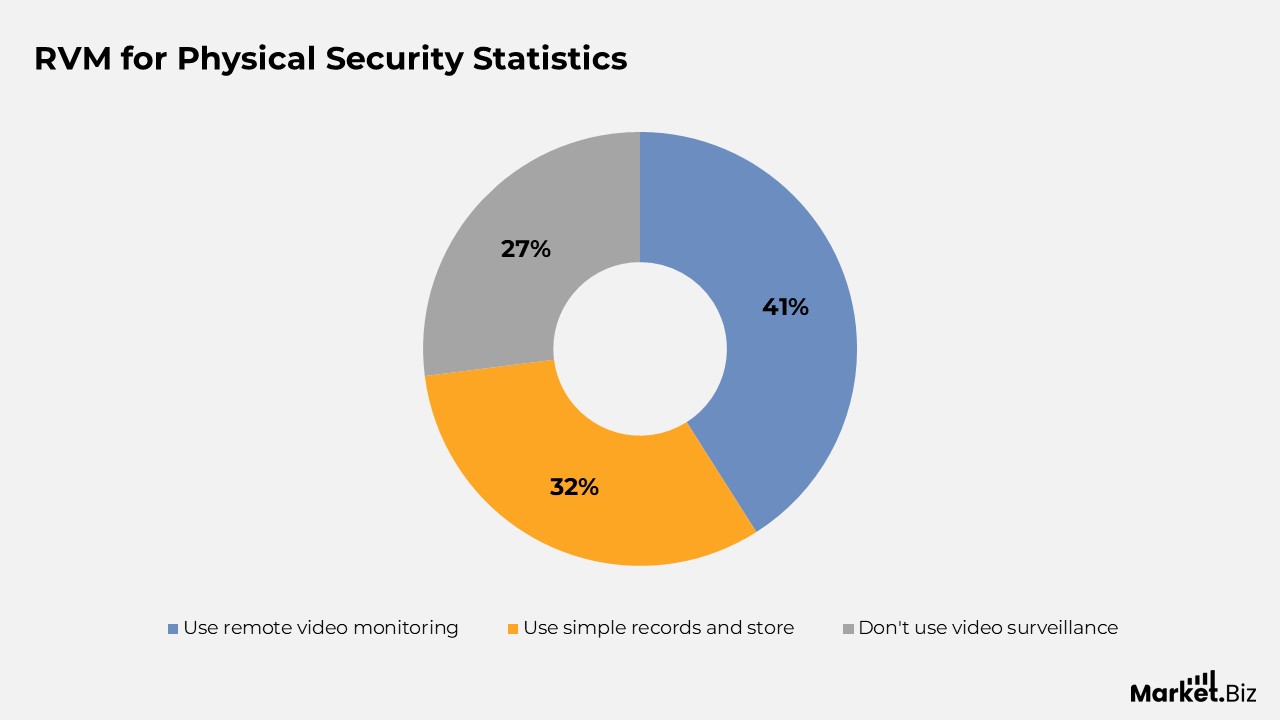
- 41% of businesses utilize remote video monitoring, enabling real-time surveillance and proactive responses to security incidents.
- In contrast, 27% of businesses indicated that they do not employ video surveillance as a security measure.
- Meanwhile, 32% of businesses take a more basic approach, choosing simple video recording and storage without real-time monitoring.
- Among those currently using remote video monitoring (RVM) as part of their security strategy, nearly half (45%) have expanded its use beyond security functions, thereby increasing its value to their business operations.
- For example, respondents have reported using RVM to monitor worksite conditions (28%) and track foot traffic flow (17%), among various other applications.
- However, the majority of businesses (55%) have not yet tapped into the potential of RVM for purposes beyond security, indicating a missed opportunity to improve their overall business operations and optimize the return on investment from their current video technology infrastructure.
Workplace Security Statistics
- In 2024, a survey conducted by U.S. Envy.com involving over 440 executives revealed that 96% of businesses require on-site work, whereas 33% continue to manage the majority of workplace operations manually.
- Additionally, 78% of companies intend to streamline their technology stacks to reduce expenses.
- Furthermore, 56% are of the opinion that incorporating biometric security features will enhance workplace safety within the next five years.
- Moreover, 48% of organizations identify security and compliance as primary challenges, while 47% face difficulties in adapting to emerging technologies.
- Finally, 51% of those surveyed anticipate that artificial intelligence (AI) will significantly transform workplace operations in the coming decade.
Physical Security Recent Development
- At the beginning of 2023, Allied Universal finalized its acquisition of G4S, a prominent global security firm, for a total of $5.3 billion.
- In the middle of 2023, Johnson Controls purchased Silent-Aire, a company specialising in custom HVAC and data center solutions, for $870 million.
- During 2023, Rhombus Systems, which offers cloud-managed physical security solutions, secured $40 million in funding to broaden its product offerings, improve its AI capabilities, and expedite its market expansion initiatives.
- At the start of 2024, Hikvision introduced a new series of AI-driven security cameras aimed at providing enhanced surveillance.
Physical Security Future Predictions
- Recent studies indicate that expenditures on cybersecurity within the global physical security market are expected to increase at a compound annual growth rate (CAGR) of 10.4% from 2020 to 2027.
- The market is anticipated to surpass USD 236.6 billion by 2030 and maintain its growth trend, reaching USD 255.3 billion in 2031 and USD 278.1 billion in 2032.
- Over the next five years, 66% of businesses worldwide anticipate that physical security will evolve into sophisticated surveillance technologies.
Conclusion
Upon concluding the discussion, it can be inferred that physical security is instrumental in safeguarding various critical assets from unauthorised access. Following the implementation of this system, numerous global organisations have successfully mitigated several risk factors and managed threats with greater efficacy.
Physical security relies on contemporary technology and multiple layers of protection to ensure the safety of individuals, property, and vital assets against theft. Instruments such as CCTV cameras, access control systems, barriers, and fire safety measures contribute to maintaining security, minimising losses, and enhancing the overall safety, efficiency, and resilience of facilities and their operations.
FAQ’s
There are various forms of physical security measures, but the primary types can be classified into four main categories: Deter, Detect, Delay, and Respond. As illustrated in the diagram, these different physical security techniques function collaboratively in stages.
Robust physical security measures are crucial in preventing unauthorized access, theft, vandalism, and other security threats that may disrupt operations and result in considerable financial losses.
Workplace security ensures the safety of your employees and physical premises from potential harm. Therefore, your workplace security strategy should protect your business’s vital data and information from hackers and other cybersecurity threats. Additionally, it helps maintain compliance with the latest laws and regulations applicable in your country or region.