








Introduction
Nuts Statistics: Nuts, defined as seeds that are encased in hard shells, are renowned for their rich nutritional profile, which includes protein, healthy fats, and vitamins. They come in a variety of forms such as almonds, walnuts, and cashews, and are widely enjoyed around the world, both as snacks and in various culinary applications.
Nuts provide potential health advantages, and their popularity is on the rise. They are utilized in a range of culinary endeavors, including cooking, baking, and as ingredients in numerous food products.
Nevertheless, the industry encounters challenges such as the impacts of climate change and issues related to allergies. The nuts market is subject to stringent regulations to guarantee the safety and quality of products.
Editor’s Choice
- The Global Nuts market achieved a revenue of USD 63.2 billion in 2023.
- In 2019, North America was at the forefront with a market value of 7,639 million U.S. dollars, and this amount consistently grew each year, culminating in 10,764 million U.S. dollars by 2026.
- During the 2012-2013 season, almond production was approximately 1,072,135 metric tons, maintaining a similar level in the following years.
- In the 2012-2013 season, production was recorded at 28,880 metric tons, but it started to vary in the years that followed.
- The United States was the leader in almond consumption, with a significant 330,258 metric tons consumed, highlighting its popularity among American consumers.
General Nuts Statistics
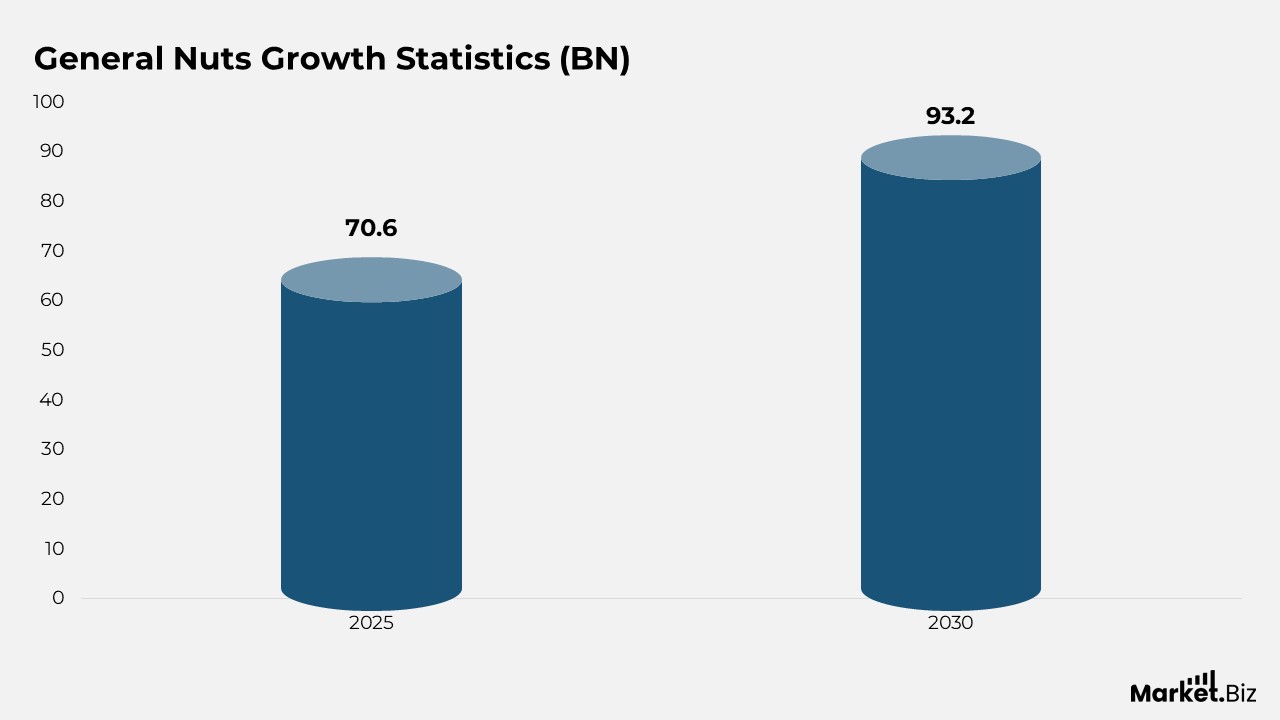
- The Global Nuts market achieved a revenue of USD 63.2 billion in 2023.
- Offline distribution, which encompasses traditional brick-and-mortar stores and physical retail outlets, holds a significant majority with a considerable market share of 84.6%.
- In 2019, North America was at the forefront with a market value of 7,639 million U.S. dollars. This amount consistently grew each year, reaching 10,764 million U.S. dollars by 2026.
- The seasons of 2021-2022 and 2022-2023 experienced a downturn in almond production, with outputs of 1,675,839 metric tons and 1,477,505 metric tons, respectively.
- Significantly, during the 2021-2022 season, cashew production saw a remarkable increase, achieving an impressive 10,86,270 metric tons. This upward trend persisted into the 2022-2023 season, with production reaching 10,95,030 metric tons.
- India was the leader in cashew consumption, with a notable 3,22,160 metric tons consumed, reflecting a strong preference for cashews in the Indian market.
- Cashews stood out as the clear favorite, with 31.15% of respondents identifying them as their preferred choice.
Nuts Market Size Statistics
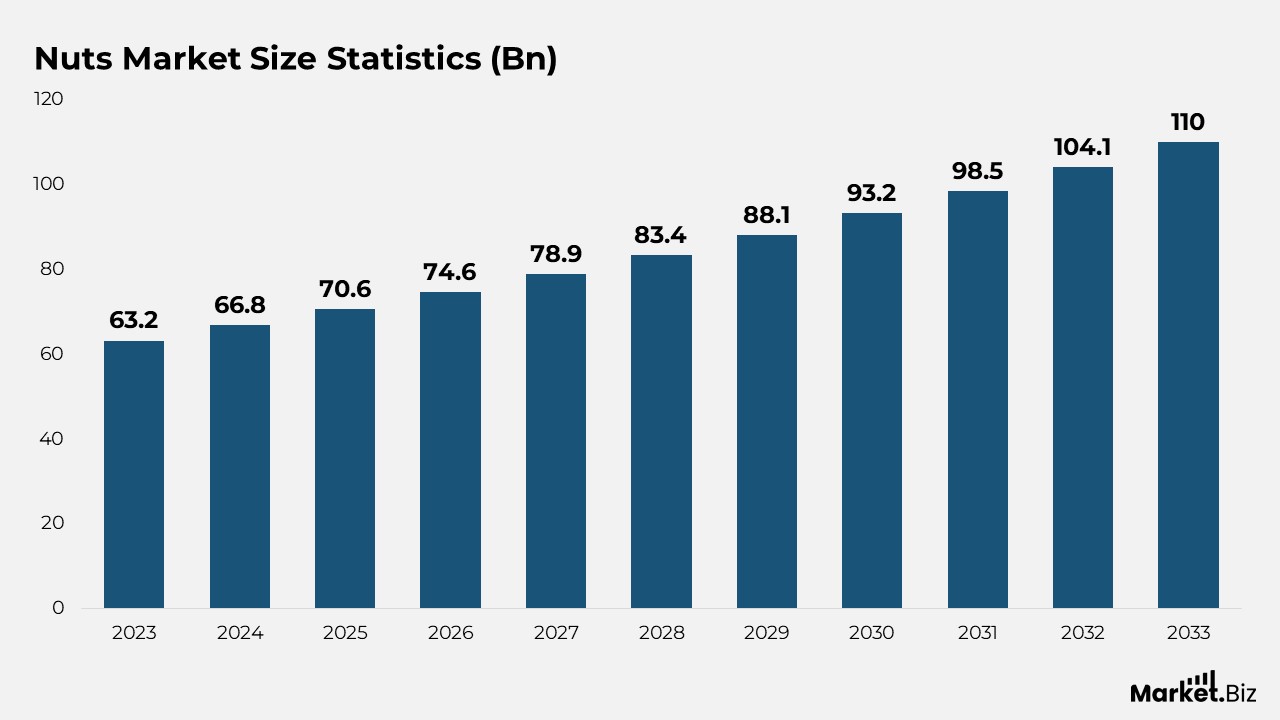
- In 2023, the market’s revenue is projected to be USD 63.2 billion, with an anticipated increase to USD 66.8 billion in 2024.
- The growth trend continues, with expected revenues of USD 70.6 billion in 2025 and USD 74.6 billion in 2026.
- In the following years, the market is predicted to grow further, reaching USD 78.9 billion in 2027, USD 83.4 billion in 2028, and USD 88.1 billion in 2029.
- The favorable trend continues with forecasted revenues of USD 93.2 billion in 2030 and USD 98.5 billion in 2031.
- By 2032, the global nuts market is projected to achieve a revenue of USD 104.1 billion, ultimately exceeding the USD 110.0 billion threshold in 2033.
Market Revenue by Regional Statistics
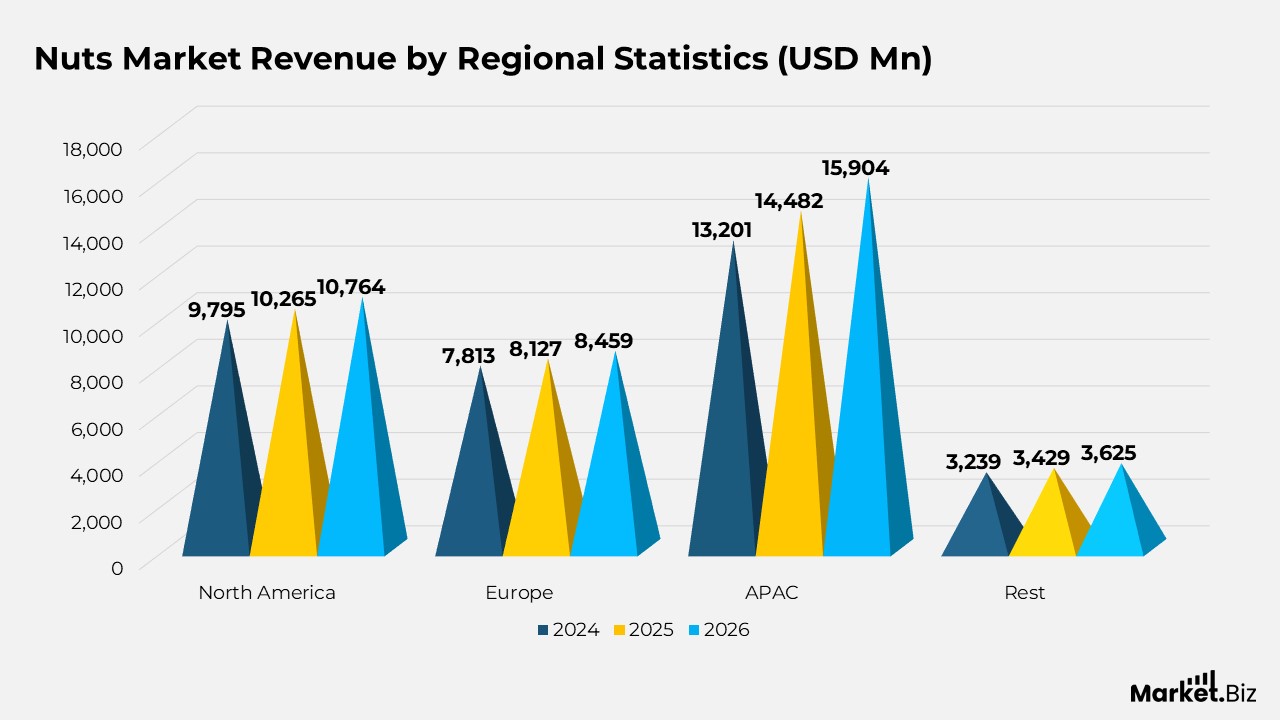
- In 2019, North America was at the forefront with a market value of 7,639 million U.S. dollars, which consistently rose each year, ultimately reaching 10,764 million U.S. dollars by 2026.
- Conversely, Europe commenced with a market value of 6,396 million U.S. dollars in 2019 and experienced a steady upward trajectory, culminating in a value of 8,459 million U.S. dollars in 2026.
- The Asia-Pacific region exhibited significant growth during this timeframe, beginning at 8,303 million U.S. dollars in 2019 and soaring to an impressive 15,904 million U.S. dollars in 2026, thereby becoming a major contributor to the global market.
- Meanwhile, the Rest of the World region also saw growth, though at a somewhat slower rate, starting at 2,494 million U.S. dollars in 2019 and reaching 3,625 million U.S. dollars in 2026.
Nuts Nutritional Statistics
- FoodData Central offers detailed nutritional data for “Nuts, mixed nuts, oil roasted, with peanuts, with salt added (SR Legacy, 168600)” in a serving size of 100 grams.
- This nut and seed product comprises 2.08 grams of water and delivers an energy value of 607 calories (which is equivalent to 2540 kJ).
- It is abundant in protein, containing 20 grams per 100 grams, and provides a significant fat content of 54 grams, which includes saturated, monounsaturated, and polyunsaturated fats.
- Carbohydrates are present at 21 grams, with dietary fiber making up 7 grams and total sugars at 4.15 grams, encompassing various types such as sucrose and glucose.
Nuts Production Statistics
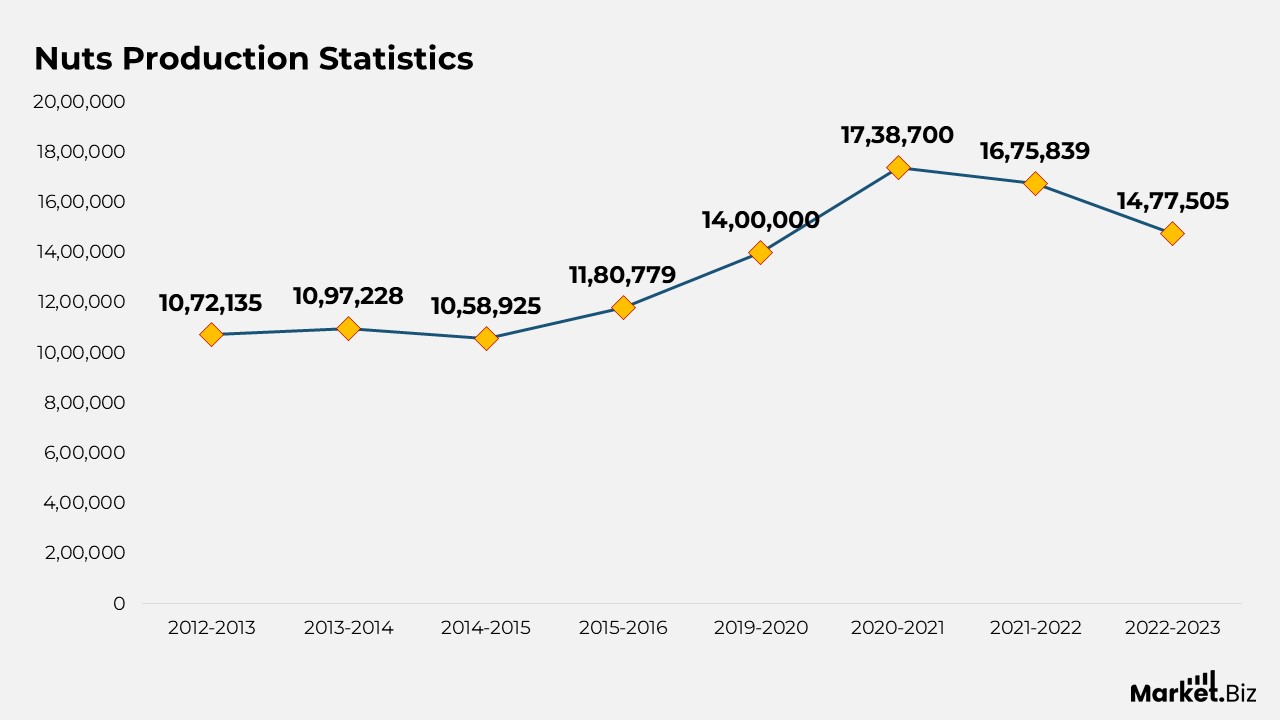
- During the 2012-2013 season, almond production was approximately 1,072,135 metric tons, maintaining a similar level in the following years.
- Nevertheless, a slight increase was observed in the 2013-2014 season, with production reaching 1,097,228 metric tons.
- The subsequent years experienced fluctuations, with production varying between 1,058,925 metric tons in the 2014-2015 season and 1,180,779 metric tons in the 2016-2017 season.
- Following this period, global almond production exhibited a steady upward trajectory, exceeding 1,400,000 metric tons in the 2019-2020 season and further escalating to an impressive 1,738,700 metric tons in the 2020-2021 season.
- However, the seasons of 2021-2022 and 2022-2023 recorded a downturn in almond production, with figures of 1,675,839 metric tons and 1,477,505 metric tons, respectively.
Brazil Nuts Production
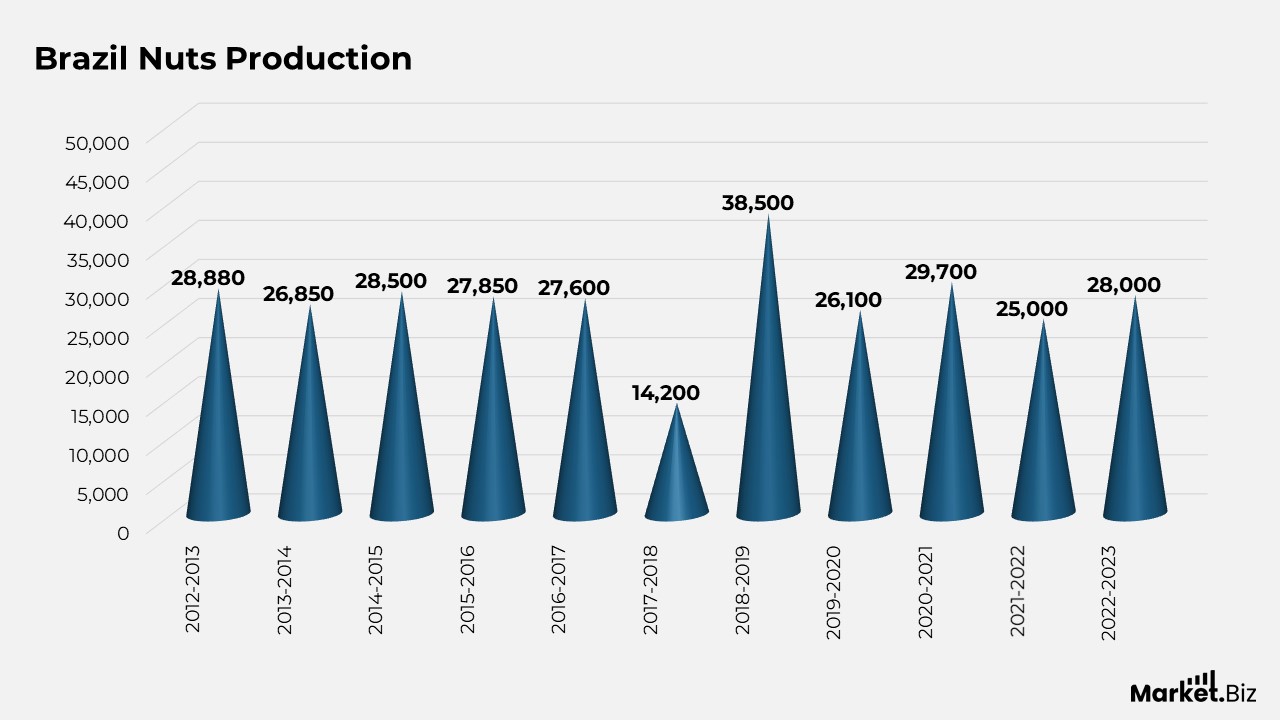
- During the 2012-2013 season, production totaled 28,880 metric tons; however, it began to show fluctuations in the following years.
- A decrease was noted in the 2013-2014 season, with production falling to 26,850 metric tons, succeeded by a minor recovery in the 2014-2015 season, which recorded 28,500 metric tons.
- Nevertheless, the period from 2015-2016 to 2017-2018 exhibited a relatively stable production range, maintaining levels between 27,850 and 14,200 metric tons.
- A remarkable increase was observed in the 2018-2019 season, where production peaked at 38,500 metric tons. This was, however, succeeded by a significant decline in the 2019-2020 season, which saw production drop to 26,100 metric tons.
- The following years demonstrated a degree of stability, with production figures fluctuating between 29,700 metric tons in 2020-2021 and 25,000 metric tons in 2021-2022.
- The 2022-2023 season experienced a moderate rise in Brazil nut production, achieving a total of 28,000 metric tons.
Nuts Consumption Statistics
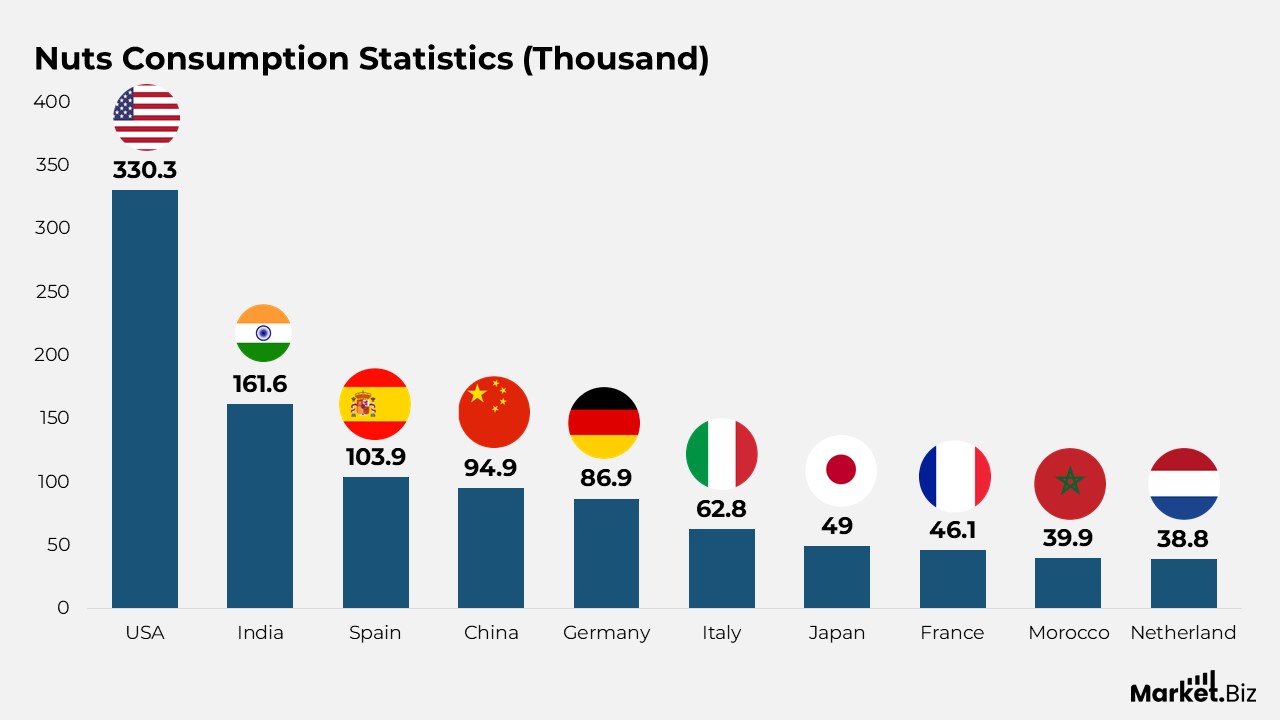
- The United States was at the forefront of almond consumption, with a remarkable total of 330,258 metric tons consumed, highlighting its popularity among American consumers.
- India ranked second with 161,590 metric tons, reflecting a strong demand for almonds in the Indian market.
- Spain and China also showed significant almond consumption, with figures of 103,935 metric tons and 94,947 metric tons, respectively.
- Germany and Italy added to the European almond consumption, with 86,933 metric tons and 62,841 metric tons consumed, respectively.
- In Asia, Japan recorded an almond consumption of 49,047 metric tons, while France accounted for 46,123 metric tons in Europe.
- Additionally, Morocco and the Netherlands demonstrated their fondness for almonds, with consumption levels of 39,945 metric tons and 38,793 metric tons, respectively.
Consumer Preferences Statistics
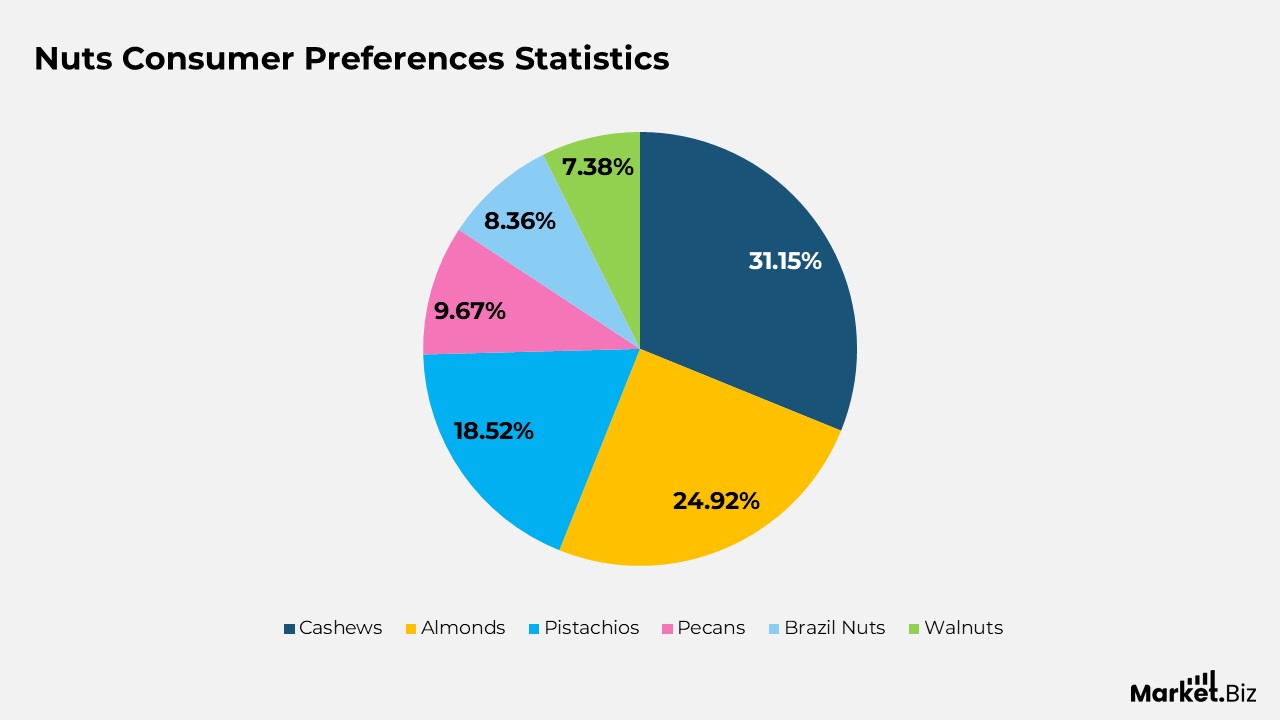
- According to the results of a Health Digest survey that included 610 participants, it seems that individuals have diverse preferences regarding healthy nuts.
- Out of those surveyed, 7.38% indicated a preference for walnuts.
- In contrast, Brazil nuts, which are viewed as a less favored option, received support from only 8.36% of the respondents.
- Pecans were favored by 9.67% of participants as their healthy nut of choice, while 18.52% preferred pistachios. Almonds were the top choice for 24.92% of those surveyed.
- Ultimately, cashews stood out as the most popular option, with 31.15% of respondents naming them their favorite healthy nut in the survey.
Nuts Recent Statistics
- The overview of flavored nut mixes featuring advanced seasoning blends by snack companies is set for January 2024, providing consumers with unique taste experiences.
- A Series C funding round for a nut butter startup that specializes in artisanal nut spreads is taking place in February 2024, with the aim of raising $40 million to enhance production capacity and distribution channels.
- Seed funding for a sustainable nut farming initiative is being secured in April 2024, amounting to $12 million for the research and development of eco-friendly farming practices.
- Venture capital investments in nut startups reached a total of $3 billion in 2023, concentrating on companies that provide innovative nut-based products and promote sustainable farming practices.
- Strategic partnerships and acquisitions among nut brands, food retailers, and wellness companies represented 60% of the total investment activity in the nut market during 2023.
Future Predictions
- The summary of flavored nut mixes that incorporate advanced seasoning blends from snack companies is scheduled for January 2024, offering consumers distinctive taste experiences.
- A Series C funding round for a nut butter startup, which focuses on artisanal nut spreads, is occurring in February 2024, with the objective of raising $40 million to improve production capacity and distribution networks.
- Seed funding for a sustainable nut farming initiative is being obtained in April 2024, totaling $12 million for the research and development of environmentally friendly farming methods.
- Venture capital investments in nut startups amounted to $3 billion in 2023, focusing on companies that deliver innovative nut-based products and advocate for sustainable farming practices.
- Strategic acquisitions and partnerships among food retailers, nut brands, and wellness companies accounted for 60% of the overall investment activity in the nut market throughout 2023.
Conclusion
In conclusion, the nuts industry provides a wide variety of nutritious seeds that are enclosed in hard shells, attracting consumers worldwide due to their health advantages and adaptability in numerous recipes and snacks.
Although the outlook for this sector seems optimistic with anticipated revenue increases, it also encounters obstacles such as the effects of climate change and concerns regarding allergens.
Strict regulations are in place to guarantee the safety and quality of products. As consumer inclinations shift towards healthier and more natural food options, the nuts industry is strategically positioned to fulfill these needs and prosper in the changing global food marketplace.
FAQs
Q. What are nuts, and how are they defined?
Nuts are seeds that are edible and are encased in hard shells. Botanically, they are categorised as dry fruits that contain a single seed.
Q. What are the nutritional benefits of nuts?
Nuts are abundant in protein, healthy fats (both monounsaturated and polyunsaturated), fiber, vitamins (including vitamin E), and minerals (such as magnesium and potassium). Additionally, they provide a source of antioxidants.
Q. Do nuts have health benefits?
Indeed, nuts are linked to numerous health advantages, such as promoting heart health, aiding in weight management, and lowering the risk of chronic illnesses like diabetes. Their unsaturated fats are especially advantageous.