









Introduction
Diabetic Food Statistics: Diabetic nutrition necessitates meticulous monitoring of carbohydrates, controlling portion sizes, and prioritising fibre-dense foods such as vegetables and whole grains to maintain stable blood sugar levels. Incorporating lean proteins like poultry and fish, along with healthy fats from sources such as avocados and nuts, is essential for promoting satiety and enhancing insulin sensitivity.
It is crucial to limit added sugars and sweets, maintain consistent meal timings, and ensure adequate hydration with water as fundamental practices. Individuals are encouraged to collaborate with healthcare professionals to create tailored meal plans, regularly monitor blood sugar levels, and make educated dietary decisions to effectively manage diabetes.
Over 90% of individuals with diabetes have Type 2, which is significantly affected by dietary choices, with approximately 11.1% of adults (537 million people) currently living with this condition, a figure projected to increase to 1 in 8 by 2050. Major risk factors include a high intake of refined wheat, processed meats, and sugary drinks, while diets abundant in fiber, legumes, and low-fat dairy products are advised for effective management.
Editor’s Choice
- By the year 2033, it is projected that the global market for diabetic food will reach revenues of USD 24 billion.
- North America is expected to maintain the largest share of the market, representing 37.5% of the overall market.
- In the context of global health in 2021, the incidence of diabetes among adults aged 20 to 79 shows significant variations across different countries and regions.
- In 2019, the retail sales value of Canada’s dairy and soy food sector for products related to digestive health and diabetic/dietetic needs was approximately 1.7 billion U.S. dollars.
General Diabetic Food Statistics
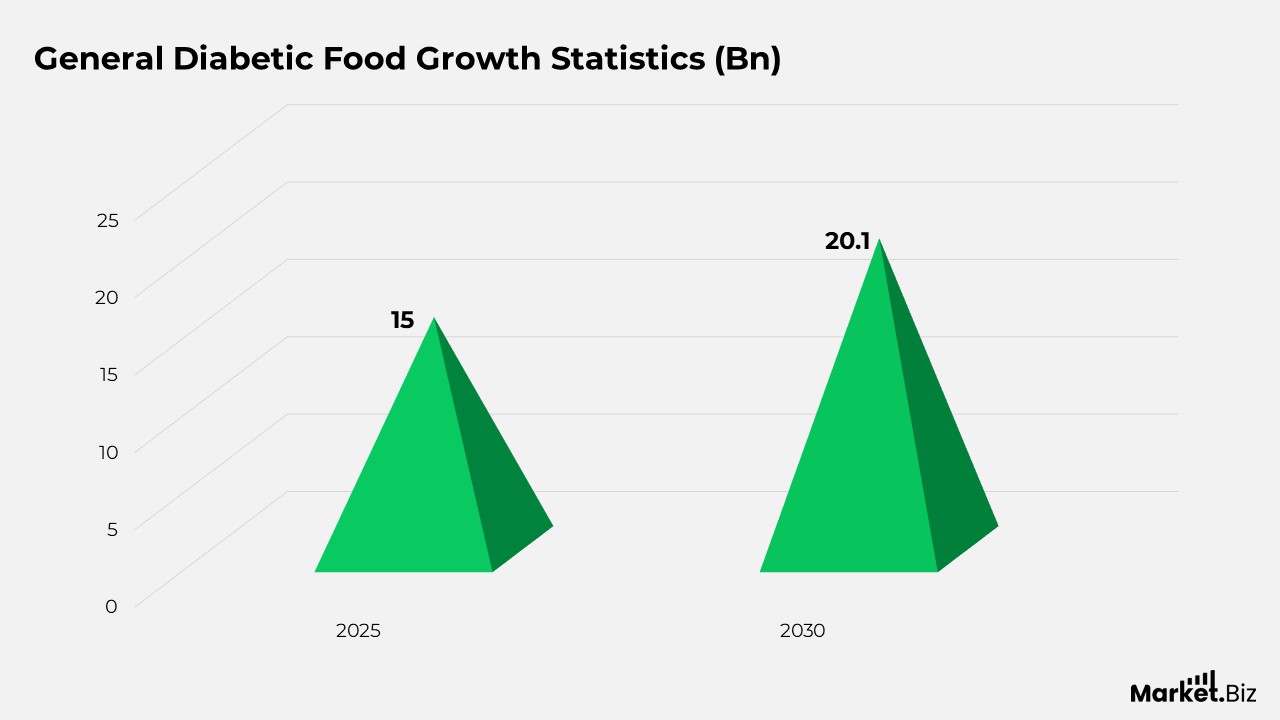
- By the year 2033, it is projected that the global market for diabetic food will reach revenues of USD 24.0 billion.
- North America is expected to maintain the largest market share, representing 37.5% of the overall market, influenced by factors such as a high incidence of diabetes and growing consumer awareness about healthy eating habits.
- In the competitive arena of the diabetic food sector, the Kellogg Company stands out with an 18% share of the market.
- Pakistan is at the forefront of diabetes issues, with an alarming 30.8% of its population classified as diabetic.
- Generally, specialists recommend adhering to a daily caloric intake of 1200 to 1500 calories to assist in regulating blood glucose levels and achieving a healthy weight. However, these guidelines may vary for individuals.
- In 2019, the packaged bakery and cereals sector emerged as the leading contributor to retail success in the U.S., achieving the highest sales in products aimed at digestive health and dietetic needs, amounting to around 6.9 billion U.S. dollars.
- Research published in PLoS Medicine, which involved over 200,000 participants in the U.S. over a span of 20 years, indicated that individuals who primarily followed plant-based diets had a 20% lower likelihood of developing type 2 diabetes compared to other participants in the study.
Diabetic Food Market Size Statistics
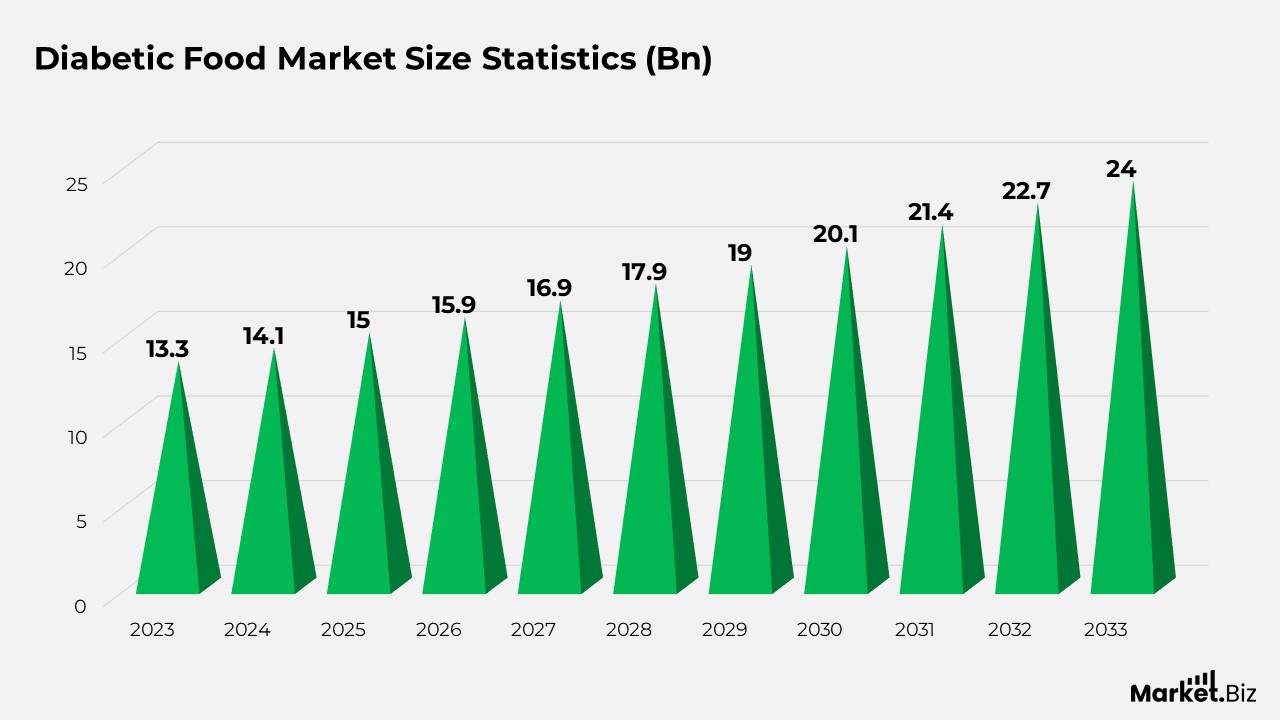
- The worldwide market for diabetic food has experienced consistent revenue growth over the last ten years, achieving a compound annual growth rate (CAGR) of 6.1%. In 2023, revenues reached USD 13.3 billion and are anticipated to rise to USD 14.1 billion in 2024.
- This upward trend is projected to persist, with revenues expected to hit USD 15.0 billion in 2025, USD 15.9 billion in 2026, and USD 16.9 billion in 2027.
- By the year 2030, the market is predicted to exceed the USD 20 billion threshold, with revenues estimated at USD 20.1 billion.
- In the following years, continued growth is anticipated, with revenues projected to reach USD 21.4 billion in 2031 and USD 22.7 billion in 2032.
- By 2033, the global diabetic food market is expected to generate revenues of USD 24.0 billion.
Diabetic Food Regional Market Statistics
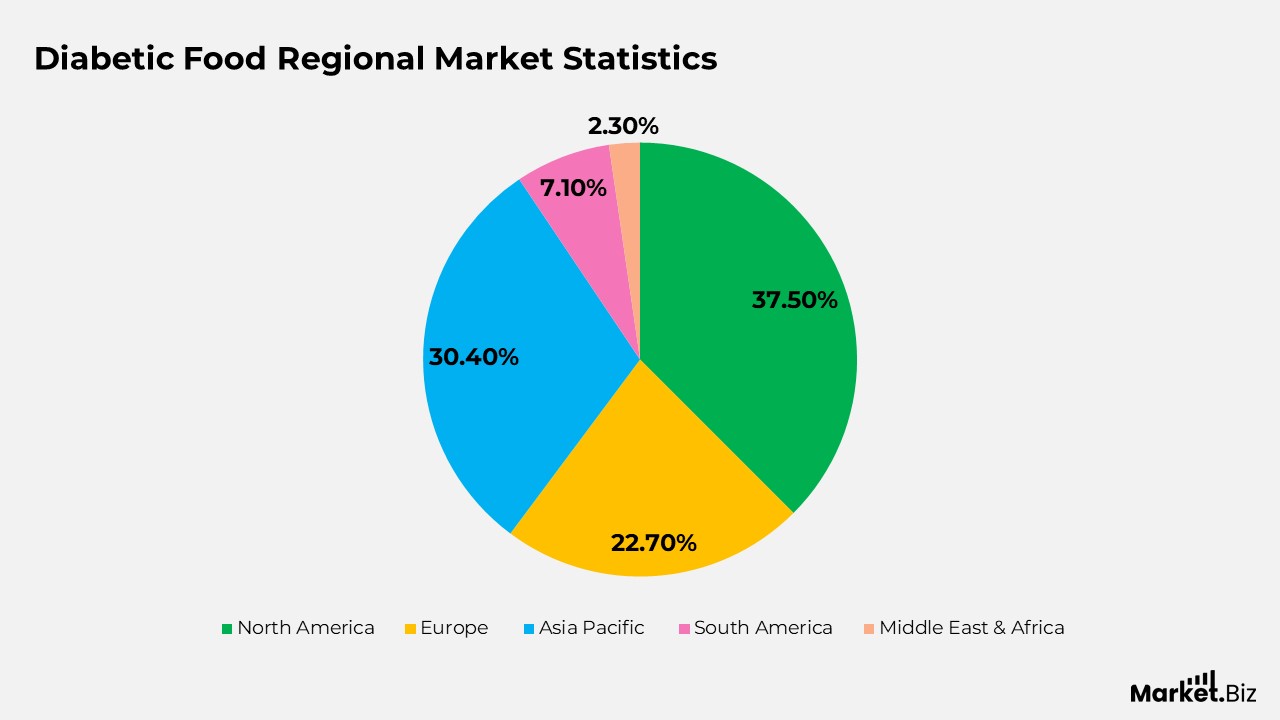
- North America commands the largest market share, representing 37.5% of the overall market, influenced by elements such as a high incidence of diabetes and a growing consumer awareness of healthy eating habits.
- In second place, Europe maintains a considerable market share of 22.7%, supported by an increasing diabetic population and rigorous regulatory frameworks that encourage the uptake of diabetic-friendly food options.
- The Asia Pacific (APAC) region also plays a crucial role, accounting for 30.4% of the market share, due to factors including lifestyle changes, urbanization, and an increasing focus on preventive healthcare initiatives.
- Meanwhile, South America and the Middle East & Africa (MEA) regions possess smaller yet significant shares, with South America contributing 7.1% and MEA contributing 2.3%, respectively.
Diabetes by Nations Statistics
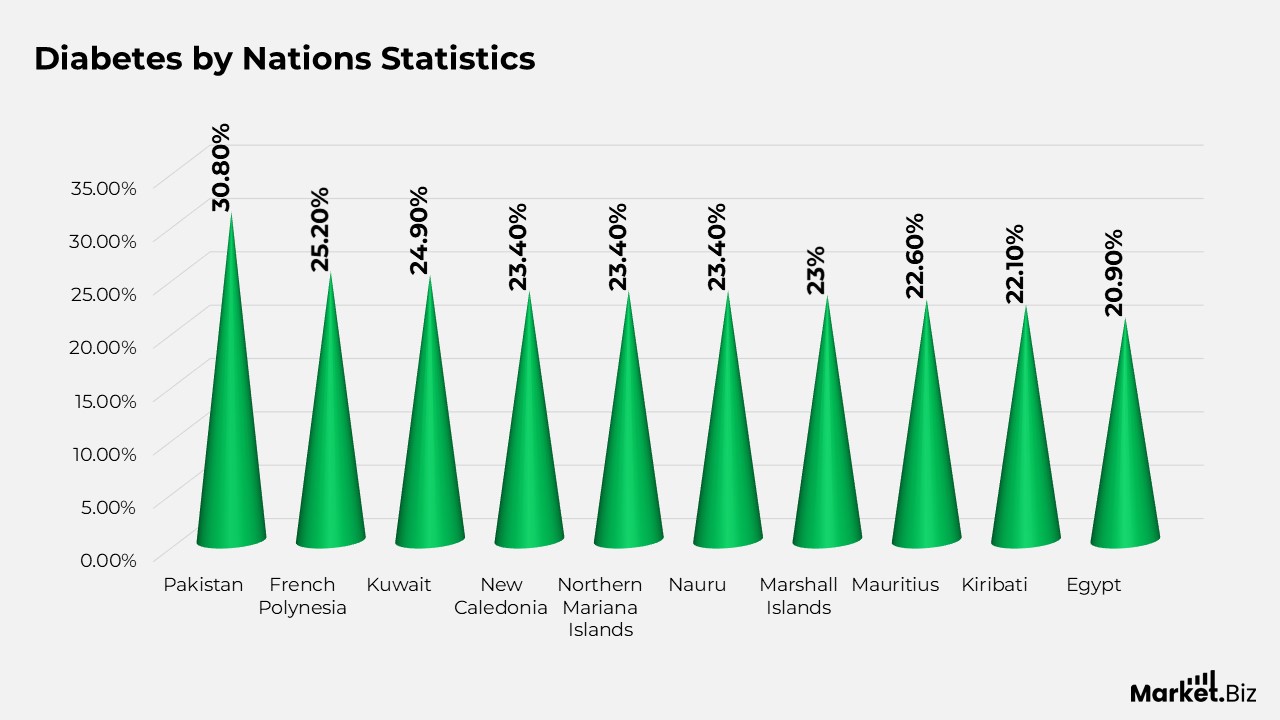
- In the domain of global health in 2021, the incidence of diabetes among adults aged 20-79 reveals significant variations across different countries and regions.
- At the center of this issue is Pakistan, where an alarming 30.8% of the population is classified as diabetic.
- Close behind is French Polynesia, with 25.2% of its adult population impacted by the disease, followed by Kuwait at 24.9%.
- New Caledonia, the Northern Mariana Islands, and Nauru all report the same prevalence rate of 23.4%, highlighting the considerable challenge of diabetes in these areas.
- The Marshall Islands are not far off, with an incidence rate of 23%, while Mauritius and Kiribati follow closely at 22.6% and 22.1%, respectively.
- Egypt completes the top 10, with 20.9% of its adult population facing the challenges of diabetes.
Retail Sales Value of Dietetic Food Products Statistics
- In 2019, the packaged bakery and cereals sector became the foremost catalyst for retail success in the U.S., achieving the highest sales in dietetic products and digestive health, amounting to nearly 6.9 billion U.S. dollars.
- Trailing closely, the packaged dairy and soy food industry demonstrated impressive performance, with sales reaching approximately 6.3 billion U.S. dollars for digestive health and dietetic items, solidifying its position as the second-largest market contributor.
- Following closely, the bakery and cereal segment lagged behind with sales of about 870 million U.S. dollars.
- In 2019, the UK saw packaged bakery and cereals as the leading seller of packaged digestive health and dietetic products, totaling roughly 1.7 billion U.S. dollars.
- Close behind, the dairy and soy food category generated sales of around 1.3 billion U.S. dollars.
- In 2019, the packaged confectionery sector emerged as the top retail seller of digestive health and dietetic products in Germany, contributing approximately 2.3 billion U.S. dollars in sales.
Benefits of Diabetic Food Consumption Statistics
- According to a study published in PLoS Medicine, which involved over 200,000 participants in the United States over a span of 20 years, individuals who primarily followed plant-based diets were 20% less likely to develop type 2 diabetes in comparison to other participants in the study.
- Furthermore, those who adhered to the most nutritious plant-based diets, which were abundant in fruits, vegetables, nuts, beans, and whole grains, saw a 34% decrease in their risk of developing type 2 diabetes.
- On the other hand, individuals who made less healthy dietary choices, such as the consumption of sugar-sweetened beverages and refined grains, exhibited a 16% increased likelihood of developing type 2 diabetes when compared to the other participants.
Diabetic Food Recent Statistics
- Over 50 new food products tailored for diabetics have been launched, encompassing a variety of options from snacks to meal replacements, to meet the diverse dietary requirements of individuals with diabetes.
- Noteworthy introductions include snacks with a low glycemic index (GI), sugar-free desserts, and ready-to-use meal kits specifically crafted for diabetics.
- Startups focused on diabetic food have garnered substantial investment, with total funding surpassing $30 million in the last year.
- Sales via e-commerce platforms have seen a 25% year-on-year growth, indicating an increasing preference for convenient shopping solutions among diabetic consumers.
Conclusion
In summary, the market for diabetic food is transforming in response to increasing diabetes prevalence, heightened consumer health consciousness, and a growing demand for convenient yet nutritious choices.
Market projections indicate consistent growth, with major players concentrating on innovation to cater to the unique dietary requirements of diabetic individuals. Regional differences underscore the necessity of comprehending local preferences and regulations.
Research that highlights the advantages of plant-based diets in managing type 2 diabetes points to the potential for improved eating habits. Collaboration among industry stakeholders, healthcare professionals, and policymakers is crucial to fostering accessible, nutritious, and affordable diabetic food options for enhanced health outcomes.
FAQs
Diabetic food refers to food items specifically formulated to cater to the dietary requirements of individuals diagnosed with diabetes. These products usually contain regulated levels of carbohydrates, sugars, and fats to assist in managing blood glucose levels.
Examples of diabetic food include sugar-free sweets, dietary drinks, low-calorie desserts, diabetic-friendly snacks, and items made with sugar alternatives. Furthermore, whole grains, lean proteins, fruits, vegetables, and fiber-rich foods are frequently recommended for those with diabetes.
Diabetic food products are typically safe for consumption when included in a well-balanced diet. Nevertheless, it is crucial to examine labels meticulously and be mindful of any possible allergens or additives. Seeking advice from a healthcare provider or nutritionist can also help in making appropriate food selections.

