








Introduction
Four-Day Workweek Statistics: The four-day work week is coming through as an exciting new method of changing the workforce today. The latest of these trials is a study in the UK where 61 companies, among other businesses, have reported an improvement in productivity levels of 35%, while absenteeism reduced by 40%.
Countries such as Iceland and Japan have already hit international headlines regarding the general success of trials that have encouraged other countries. As well as specific companies, to adopt them. Although employee satisfaction levels were already high, over 80% of employees were willing to accept a cut in pay to enjoy a shorter working week.
In fact, market data indicate that this trend is reflected in transforming the recognized traditional labour models to suit the changing demands of flexibility, well-being, and operational efficiency. Even as businesses respond, a four-day working week already forms part of the indicators of emerging future-of-work strategies.
Editor’s Choice
- A four-day working week improved productivity by 35% and cut absenteeism by 40% for 61 UK companies.
- A pay cut, certainly, would be acceptable to 80% of employees, should it guarantee a shorter work week.
- 85% of the employees are in favour of a four-day work week for better work-life balance.
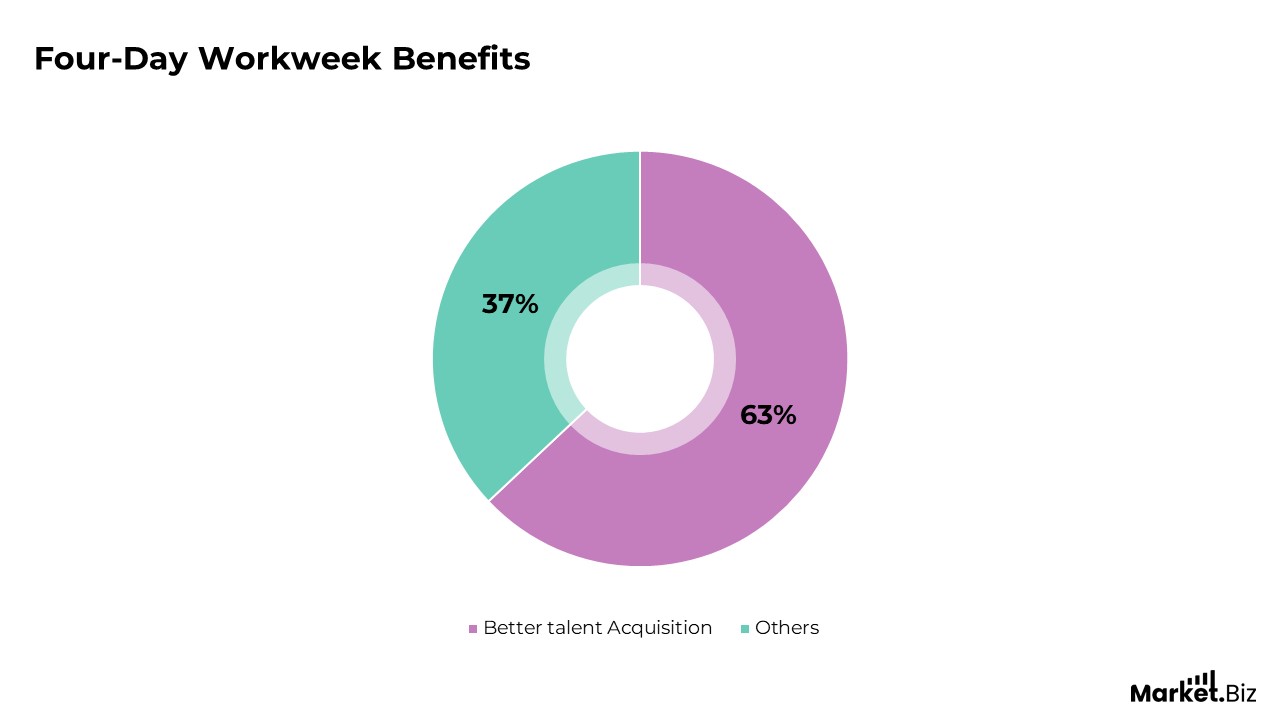
- It was also found that 63% of the organizations find it easier to attract and retain talent in their organizations because of a four-day workweek.
- Increased long-term four-day working week experiment burnout reduction by 71%.
- 90% of employing firms will apply this four-day workweek as a permanent change.
- More than half of Gen Z employees said that they would be advocating a four-day workweek in the near future.
- 64% opt for a four-day week against a pay increase.
- There was a reduction of the sick leave by 27% and also an increase of 20% in employee engagement following the trials.
- Reducing carbon emissions by 20% by four-day workweeks.
- As of 2024, not more than 2% of global companies have adopted the four-day workweek.
- It allows companies to experience productivity improvements of 25-40%, with Microsoft Japan topping the list at 40%.
What is a Four-Day Workweek?
The four-day workweek is an up-to-date model of the workplace where instead of the usual five days. An employee is expected to work for four days but is paid as before and has the same productivity requirements. The model focuses more on productivity, enhanced well-being, and a balance between work and non-work environments. It does not refer to compressed workweeks, as this has been truly reduced in hours.
The emerging concept is gaining acceptance not only from technology but also finance, as well as from professional services. Improvements have been reported in order to engage employee’s better, increase job satisfaction among them, and in the long run, reduce burnout after organizations have started implementing it. In tandem with how the environment of remote and hybrid work settings changes with time, the four-day workweek positively mirrors the transformed preferences of the workforce.
This is perceived increasingly as a competitive approach that companies adopt to win over the best talent and make them stay within the fold.
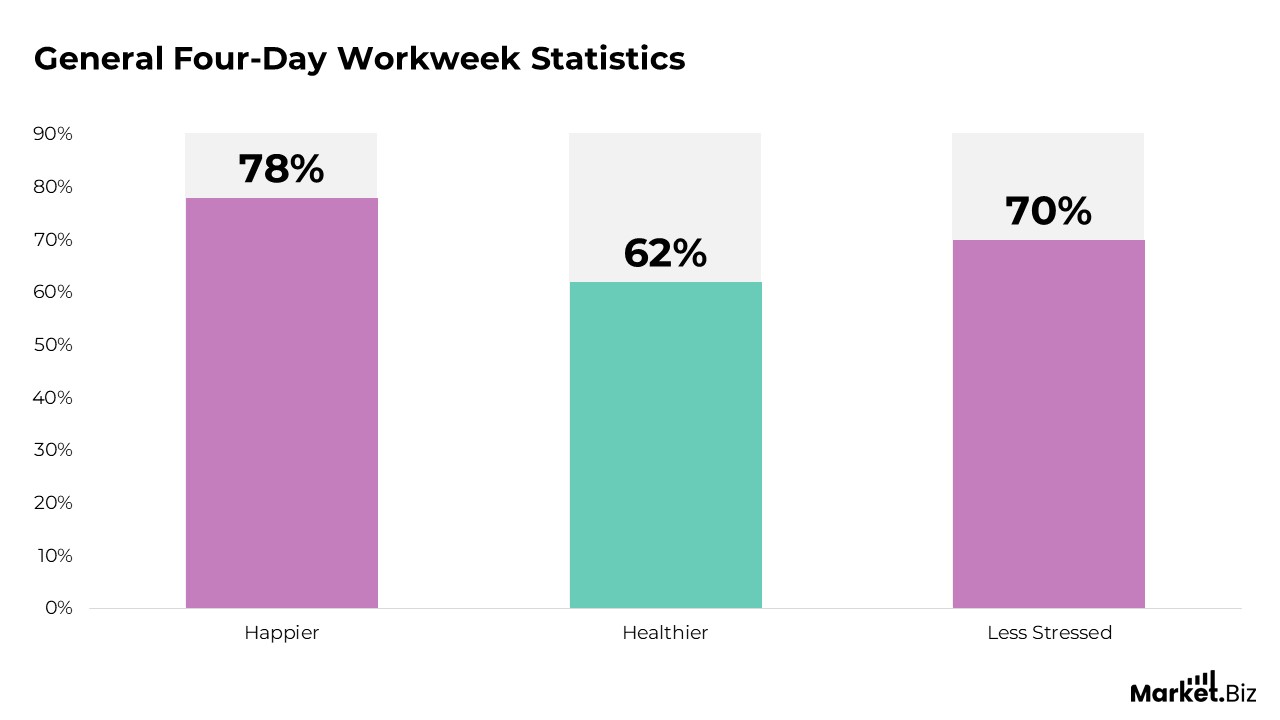
General Four-Day Workweek Statistics
- An overwhelming majority of 85% of employees also favoured a four-day workweek to attain work-life balance and mental well-being.
- Productivity has risen as high as 35% for those emboldened by the switch to a 32-hour workweek.
- A considerable 63% of firms found it easier to attract and retain talent with a shortened workweek.
- Reported burnout in four-day workweek trials dropped by 71%.
- Over 90% of employers intend to retain the four-day model on a permanent basis after trialing it.
- Most host-models showed no change or an increase in productivity.
- Gen Z workers are keen to four-day workweeks during their job search: over half.
- Condensed weekly frame yielded a stark productivity leap of 40% and reduced operational costs.
- 64% of the employees would prefer a four-day week to a pay raise of the same value.
- The model reduced the average sick leave usage by 27%.
- Employee engagement scores were higher by over 20% post-implementation.
- With the added bonus of reduced commute emissions of up to 20%, this schedule showed some environmental gains.
- Revenue maintained its stable growth, while employee happiness levels improved during trials for the shorter workweek.
- More than 80% of managers reported greater focus and goal alignment among teams.
- Customer satisfaction scores remain the same or improved in almost eight out of ten companies.
(Source: SquareSpace)
Global Adoption Rates
- Only less than 2% of global companies would have instituted a permanent four-day workweek as of 2024.
- More than 90 companies have taken part in the UK pilot which covers more than 3,300 employees.
- The public sector in Iceland was indeed the early adopter as 86% of its workers can-now be signed up to a reduced-hour contract.
- Limited adoption took place in Japan with only 6% of the workforce taking up the offer to work four days a week.
- After successful pilots, New Zealand launched a 20% adoption by mid-sized firms.
- The current figure for associations with adoption in Canada has risen up to 8% by businesses, especially confined to tech and creative sectors.
- A €50 million program was kicked off by the Spanish government for the transition of SMEs to a four-day working week.
- In Australia, only 4% of organisations have officially adopted a four-day week, despite the increasing interest in it.
- Below 5% of U.S. employees have access to the adoption, but the federal trial legislation is gathering momentum.
- The four-day week was legalized in Belgium in 2022 and allows workers to condense hours while keeping their wages intact.
- In Germany, trial testing of over 45 companies will be participating in pilot studies with reduced hours.
- Internationally, it is still experimental with only a handful of countries pushing those four-day week policies at national level.
Four-Day Workweek on Productivity
- The trial on four-day working has led the companies to an average productivity increase between 25 and 40% across different sectors.
- A pilot study in the UK has found that of the firms taking part, 55% report improved productivity despite reduced working hours.
- Microsoft Japan had its closure of four days in a week bring forth a productivity gain of 40% in just one month.
- Time reduced allocated to meetings and focused assignment work resulted in an increase in task completion rates of 35%.
- More than 70% of employees in trials involving a four-day workweek would say that they are more efficient and less distracted at work.
- Short workweek companies have reported a fall of 27% from absenteeism in general, which has contributed better overall performance.
- Employee error rate fell by about 15% and was a result of more rest and life balance at work.
- Delivery timelines of projects improved by 20% as teams were able to optimize their collaboration within limited hours.
- 70% of managerial positions have seen an increase in pro-activeness and goal-orientation behaviour as exhibited by employees in a four-day working schedule.
- 22% improvement in time management skills was noted by organizations after adopting a four-day workweek.
- Less burnout was correlated with producing consistent productivity over 6-month trials.
- Over 90% of trial global companies found no productivity change or increase after going to a four-day working week.
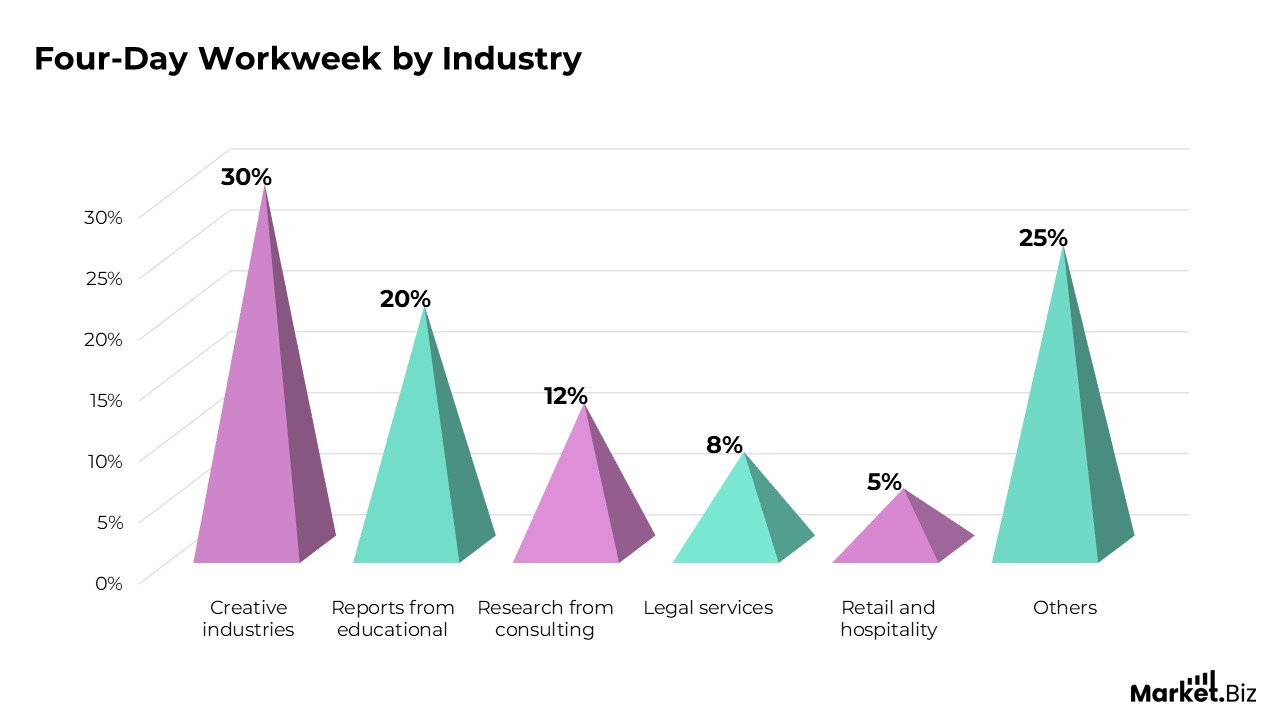
Industry By Four-Day Workweek
- To date, more than 15% of companies in technological innovation have employed a four-day work schedule citing more output and retention of talents.
- Creative industries including marketing and design seem to be piloting four-day flexible work programs, leading among others with almost 30%.
- They include resistance from healthcare adoption, with less than 3% having adopted it because of continuous patient care requirements.
- Reports from educational sectors in rural U.S. districts show more than 20% adoption, cited predominantly as cost-cutting measures and to boost teacher retention.
- Industries like financial services, only 6% have tried establishing four-day weeks, most often limited to back-office functions.
- Structural issues prove a challenge for retail and hospitality, with fewer than 5% testing shorter hours.
- Research from consulting firms indicates increased client delivery metrics, with 12% of them now using rotation models of four-day weeks.
- Manufacturing industries have witnessed less than 4% implementation, mostly in non-continuous production environments.
- About 10% above all non-profit organizations are looking into four-day weeks so as to fight burnout and attract talent.
- Legal services are witnessing increased interest, with more than 8% of boutique firms having adopted shorter weeks in a bid to improve work-life balance.
Four-Day Workweek Benefits
- The findings of this experiment by Microsoft Japan showed 40% improvement in employee productivity on a four-day workweek versus a regular five-day working week.
- Statistical evidence showed that organizations with a four-day workweek record 25% absenteeism due to poor work-life balance.
- According to a 2020 survey, 78% of employees reported feeling less stressed and more revitalized after employing a shorter workweek.
- As revealing by the Gallup report in 2021, organizations that give an option to work only four days a week have recorded reduced employee turnover of up to 50%.
- On the other hand, companies also saved money on overhead not spending in particular around 20% to 30% since they reduce energy and office-related expenses.
- A 2022 Perpetual Guardian study found that switching to a four-day workweek improves employee engagement by 35%.
- The week with fewer working hours contributes to reducing by 20% in carbon emission per employee due to fewer commuting trips made.
- 61% of job seekers say they are likely to apply with a company offering a four-day workweek, thus making it a strong incentive in the recruitment battle.
- 69% of employees reported significant enhancement in work-life balance leading to increased overall “happiness” as they perceived it.
- Employees are often forced to accomplish much within a brief period, thus making available higher quality work product while spending lesser time on distractions.
- There was a 33% decrease in burnout rates reported by companies with a four-day work week compared to companies with a more traditional work schedule.
- Currently, there are over 60 companies that have moved to a four-day workweek worldwide, with trial programs expanding by 30% each year, making it one of the fastest-growing trends globally.
(Source: Getmarlee)
Four-Day Workweek Challenges
- Four week days have 30% of employees feeling more pressure to adapt.
- According to statistics, 22% of firms have witnessed reduced teamwork among the members after four-day workweeks.
- 38% of small businesses are not able to support the customers since employees are absent.
- Almost 25% of the healthcare and retail companies have challenges in availing services because of four days’ workweek.
- Employees suffer overburden by longer hours in a compressed schedule up to a total of 30%.
- About 34% of the workers cannot take advantage of the reduced hours because they are hourly workers.
- 27% of essential organizations are flagged with operation interruptions during short-week work;
- 41% of employees have had to go through deadlines with a compressed time scale.
- 18% always face legal impediments to the reduction of working hours.
- 21% of the workers fear losing an income or benefits with a reduced number of hours worked.
Financial Costs of Four-Day Workweek
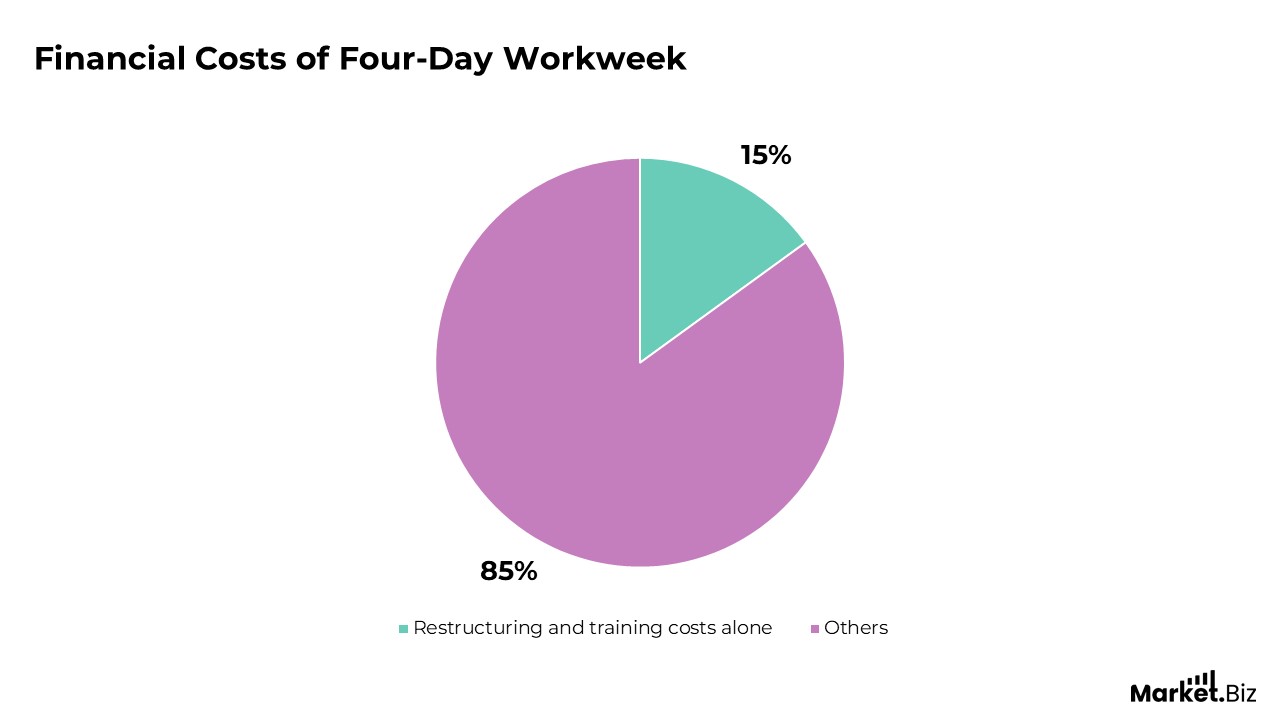
- Transitioning employees to a four-day workweek incurs initial costs of as high as 15% on restructuring and training alone.
- According to reports from 27% of companies, overtime expenditure has increased because of longer working hours that employees have to put in.
- Payroll expenditures could increase from 10%-20% if organizations want to keep the entire workforce employed even for fewer hours.
- Replacement costs could rise by 5%-10% in conditions of intense market competition in labour.
- Certain sectors, could witness a decline in productivity of say 10-15% by a shorter work hour.
- A four-day workweek can save you energy consumption costs of up to 20%, especially in high-energy-consuming industries.
- Companies will spend about 10-15% less on their office space and running costs since not all employees are on site.
- 34% of small businesses face cash flow problems while changing to a four-day workweek.
- 25% absenteeism reduction offset costs in four-day workweek companies.
- Within 6-12 months through higher engagement and lower costs, firms recover the investment made.
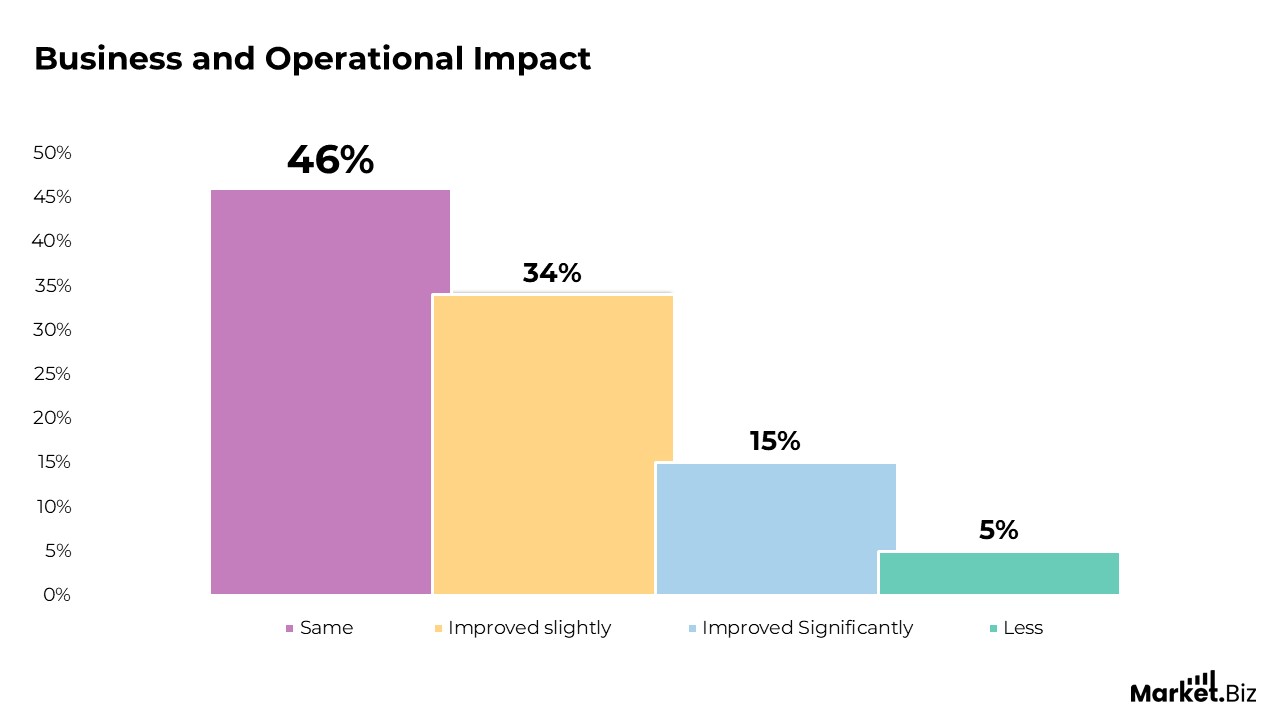
Business and Operational Impact
- Those enterprises that shifted to a four-day workweek found that 63% of them had more concentrated work hours and consequently better efficiencies.
- An increment of 20% was witness in employee satisfaction, which in turn improved morale and efficiency.
- 45% of the surveyed operates called themselves “businesses” for cutting down operational costs in terms of how much they spent on utilities for buildings and structures.
- 30% increase in collaborative efforts by teams working more efficiently on shorter schedules.
- Retention rates increased with 58% experiencing a halving of turnover.
- 10-12% customer satisfaction improvement characterized by employees energized.
- 15% increased innovation in tech companies adopting a four-day workweek.
- Burnout and absenteeism went down by 25%; workers felt more well-rested.
- Customer service has become a common problem for 33% of the companies that operate at reduced hours.
- 20% improvement in work-life balance and well-being, which reduces stress.
(Source: MiroMedium)
Impact of AI in Four-Day Workweek
- AI implementation within a four-day workweek enhances productivity by an astonishing 25% by helping in all tedious task automation so that employees may engage themselves in higher-value work.
- 40% of businesses reported low operational costs by managing their work schedule and workflow with the help of AI tools employed in a curtailed workweek.
- AI helps companies in maintaining efficiency in customer support, with about 30% using AI applications such as chatbots to cover for gaps in staffing during reduced working hours.
- Some 35% of workers found AI-powered tools that aided their productivity during a compressed work schedule to make them feel much more empowered.
- Through AI-enabled data analysis, companies are able to monitor performance to achieve high productivity in a four-day workweek. 28% were reported to have experienced better performance results.
- Almost 55% of the businesses using AI adapted to a four-day workweek and witnessed a 20% improvement in task completion rates owing to effective management of resources.
- AI creates a reduction of stress by an 18% rate by taking on monotonous and tedious tasks and supporting refining their workflow for important tasks.
- AI project management tools increase team collaboration by 30% in shorter workweeks through automated task prioritization and communication.
- 22% of organizations report that AI helps them manage workloads better. In such a scenario, service levels are maintained even if staff hours are reduced.
- AI-led decision-making fosters business agility, enabling 40% of companies to adapt to ever-changing demands in a four-day workweek.
- The integration of AI brings a 15% reduction in time spent on every task in administrative procedures. Allowing employees to devote the rest of their time during the compressed schedule to work on strategic projects.
Recent Trends in Four-Day Workweek
- At present, 60% of organizations worldwide are either testing or learning about the four-day workweek model as part of the increasing interest in alternative working arrangements.
- In a survey conducted in 2023, it was found that 80% of respondents said that they were more satisfied with their jobs with a four-day workweek.
- Of all companies experimenting with the four-day schedule, 45% noted increased productivity because employees completed more work in less time.
- As 38% fund flexible working arrangements outside office premises. One can say remote work is contained within the four-day workweek concept.
- According to the survey, 70% of tech companies have already implemented the four-day working week. Fundamentally because of the competitive advantage to attract the best talent for organizations.
- Like an increasing number of foreign companies, Unilever and Microsoft Japan are likewise touting a 30% rise in employee engagement through a four-day workweek.
- 25% of firms that adopted a four-day workweek noticed lower employee turnover, thus improving talent retention rates.
- 50% of the companies that adopted the model found no effect on customer service quality as gaps are filled through AI and automation.
- A report released in 2022 shows that half of UK businesses that tried the four-day workweek will be converting to this permanently.
- In 35 organizations with a four-day workweek at present, there has been a marked decrease in employee stress levels, contributing further to an enhancement in mental health.
- Over 60% of employers believe that they have now found a competitive advantage when it comes to recruiting talent within the job market by adopting a four-day workweek.
- Research shows that businesses with a four-day workweek can benefit from as much as a 20% reduction in environmental impact compared with their five-day workplace counterparts, resulting from fewer office days and lower commuting.
Conclusion
With increased productivity and decreased absenteeism reported by companies, the four-day workweek is being implemented around the world. Though limited, the majority of employers plan to make the model permanent following success during trial runs.
An employee-favoured shorter week allows greater balance between working life and home life and is said to have impacts on sick leave and carbon emissions. In some industries, there have been challenges in adoption; however, the model indicates great promise for improving productivity, with reductions in burnout and enhanced employee retention.
FAQs
When it comes to realizing productivity enhancement, companies have hailed as much as a 40% increase after subscribing to the four-day workweek, depending on how well employees are making do with the work assigned them and the shorter time frame within which they have to do it.
Trial participants using the newly four-day workweek have demonstrated that they balance their work with their lives better and have 71% less burnout in comparison to most of the participants. 85% say it improves their mental health.
Although tech, creative, or professional services are first in the adoption of the four-day workweek, industries such as healthcare and retail still face problems in securing the application of the model due to their unique characteristics, requiring continuity in service delivery.
It is being hailed as bringing about a 20% reduction in carbon emissions, most of which is said to be due to fewer days of commuting and less energy use in the office.
Companies with a four-day workweek have experienced a decrease in their employee turnover of 25%, seeing this as one of the main features in the recruitment and retention of top talent.