









Introduction
Workplace Happiness and Well-Being Statistics: Workplace happiness and employee well-being are essential factors driving organizational performance in today’s competitive environment. Only 23% of employees globally report feeling truly engaged at work, indicating a widespread satisfaction gap.
Studies show that happy employees can be up to 13% more productive, and companies with strong well-being initiatives often experience a 67% boost in employee satisfaction. With nearly 1 in 5 employees facing mental health challenges, businesses are focusing more on work-life balance, job satisfaction, and holistic wellness strategies. Exploring workplace happiness and well-being statistics helps organizations create more positive, engaged, and resilient workforces.
Editor’s Choice
- 23% of employees globally are engaged at work, signalling a need for better well-being initiatives.
- Companies prioritizing well-being see 41% lower absenteeism, leading to higher productivity.
- Happy employees are 13% more productive, directly influencing business growth.
- Organizations with high satisfaction report 21% higher profitability, showcasing a link between happiness and performance.
- 60% of employees cite work-life balance as the key factor in job satisfaction and mental health.
- 52% of employees experience burnout, underlining the need for stress management and wellness programs.
- Businesses with wellness programs report 67% higher morale and job satisfaction.
- 70% of employees say recognition and appreciation boost their happiness at work.
- Workplaces with flexibility see 55% higher engagement and retention rates.
- Teams with strong social connections report 50% higher happiness, enhancing collaboration.
- Companies offering mental health support see a 60% reduction in stress-related absenteeism.
- 68% of employees find job security crucial for their happiness and reduced stress.
- Organizations investing in career development report 44% higher retention and employee happiness.
- Nordic countries lead global happiness rankings, with Finland topping the list for several years.
General Statistics
- Only 23% of employees worldwide report being engaged and happy at work, indicating a critical need for well-being initiatives.
- Companies that prioritize employee well-being experience 41% lower absenteeism, leading to improved workforce efficiency.
- Happy employees are up to 13% more productive, contributing directly to business growth and profitability.
- Organizations with high employee satisfaction report 21% higher profitability, showing a direct link between happiness and performance.
- Over 60% of workers cite work-life balance as the top factor affecting their overall job satisfaction and mental health.
- Burnout affects nearly 52% of employees, highlighting the growing need for stress management and wellness support.
- Businesses with strong wellness programs see a 67% increase in employee morale and job satisfaction.
- 70% of employees state that recognition and appreciation significantly boost their workplace happiness.
- Workplaces promoting flexibility and autonomy see 55% higher levels of employee engagement and retention.
- Teams with strong social connections report 50% higher happiness levels, improving collaboration and company culture.
- Companies that offer mental health resources see a 60% reduction in stress-related absenteeism.
- Job security remains one of the top contributors to employee happiness, impacting nearly 68% of the workforce.
- Physical well-being support, such as gym memberships and health screenings, leads to a 34% rise in job satisfaction.
- Employees who feel heard are 4.6 times more likely to feel empowered to perform their best work.
- Organizations that invest in career development report a 44% increase in employee happiness and retention.
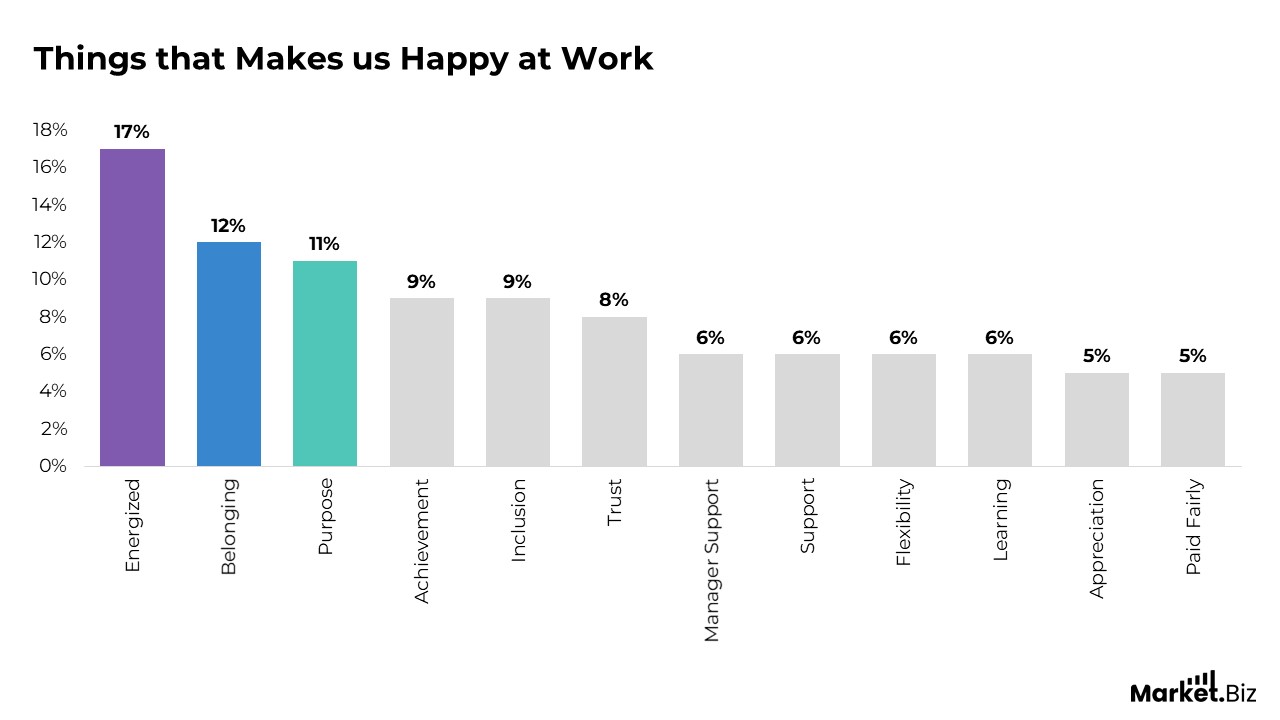
(Source: Ethicssage)
Global Workplace Happiness Trends
- Nordic countries consistently lead global workplace happiness rankings due to strong work-life balance, with Finland topping the list for several consecutive years.
- In the Asia-Pacific region, workplace happiness is rising, with over 45% of employees valuing flexibility and hybrid work arrangements as key to well-being.
- Western Europe reports high employee satisfaction, driven by inclusive workplace cultures and generous well-being benefits.
- In North America, only 33% of workers feel truly engaged at work, highlighting the growing need for improved workplace mental health initiatives.
- Remote work adoption has improved job satisfaction globally, with 59% of workers saying flexibility contributes positively to their happiness.
- Latin American countries show an upward trend in employee morale, with purpose-driven roles and community impact cited as key drivers.
- Workplace happiness is 25% higher in organizations that prioritize diversity, equity, and inclusion across all regions.
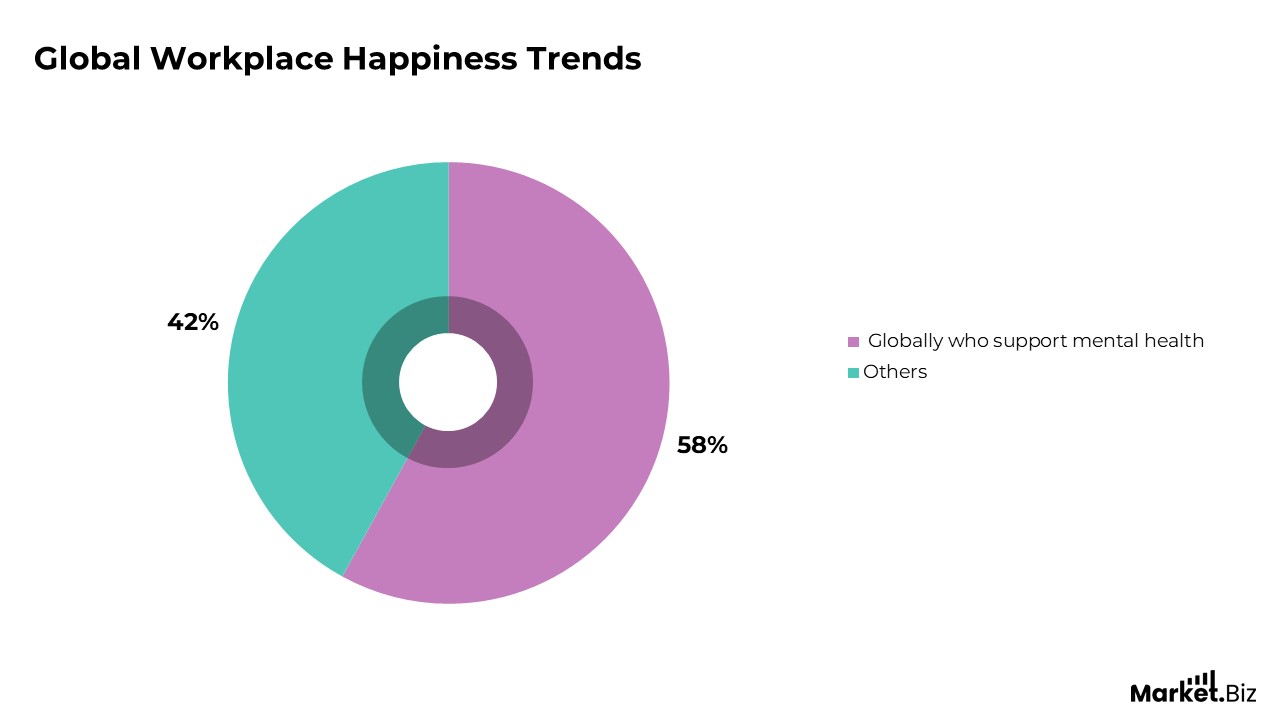
- Globally, 58% of employees prefer employers who support mental health openly and provide access to counselling services.
- Countries with shorter average working hours, such as the Netherlands and Denmark, report significantly higher workplace happiness scores.
- The Middle East and Africa are seeing a growing focus on employee wellness, with 40% of organizations implementing well-being programs in the last two years.
- The rise of Gen Z in the workforce is shifting global happiness trends, with over 70% seeking purpose, flexibility, and mental health support in their roles.
- Worldwide, companies investing in holistic well-being strategies report an average 20% increase in employee satisfaction year-over-year.
Importance of Workplace Well-Being
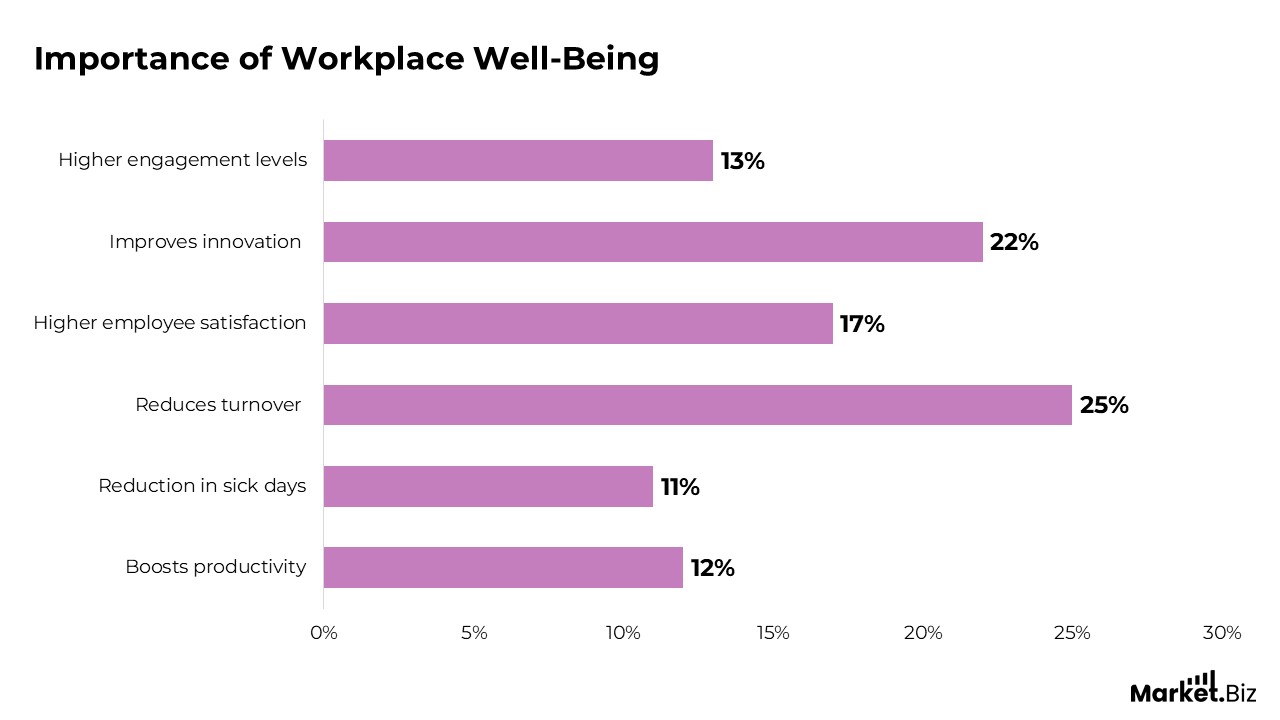
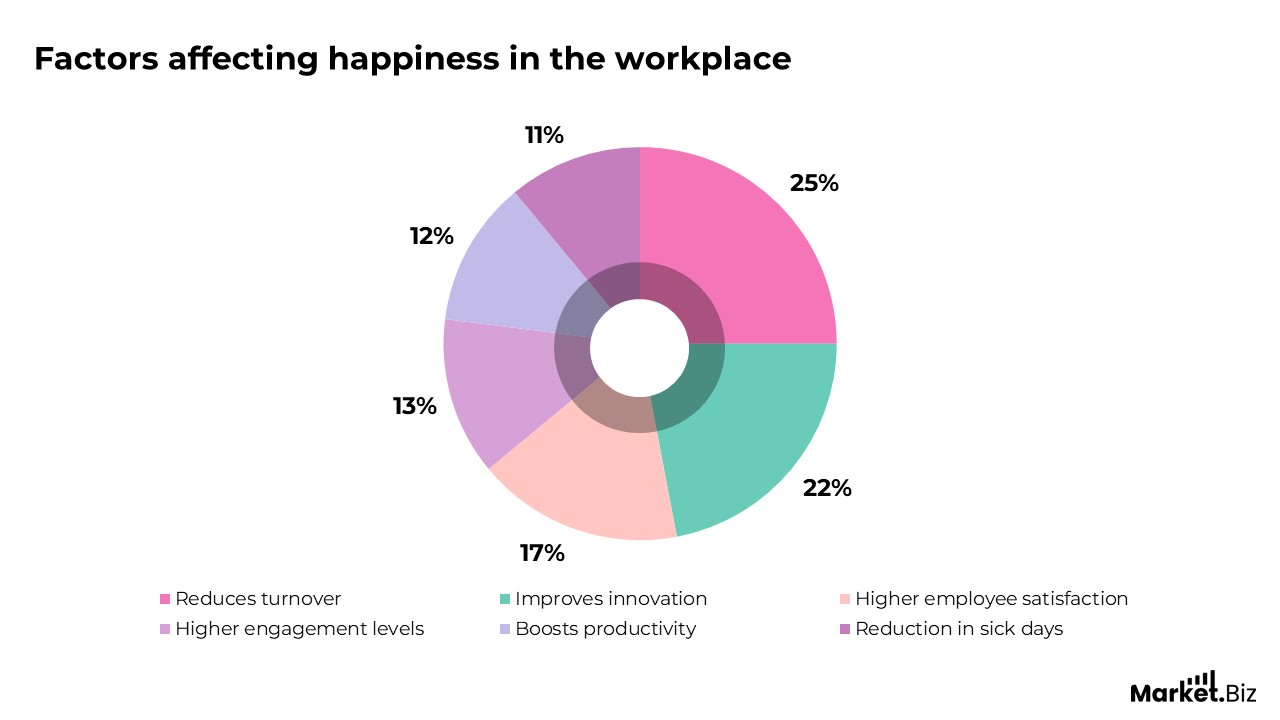
- Workplace well-being boosts productivity, with companies reporting up to a 12% performance increase when employees feel healthy and supported.
- Organizations that invest in employee wellness see a 11% reduction in sick days, improving overall operational efficiency.
- Mental health support in the workplace reduces turnover by up to 25%, reinforcing employee retention strategies.
- Companies with strong well-being programs experience up to 17% higher employee satisfaction, driving engagement and loyalty.
- 80% of employees are more likely to stay with employers who actively support their health and well-being.
- Well-being initiatives contribute to a reduction in burnout, which affects nearly half of the global workforce.
- A culture of wellness leads to lower healthcare costs, with businesses saving an average of $3.27 for every $1 spent on wellness programs.
- Employees who feel cared for are 4 times more likely to recommend their workplace to others, enhancing employer branding.
- Work-life balance, a core part of workplace well-being, leads to a 23% increase in job satisfaction.
- Providing flexible work options improves well-being and results in up to 13% higher engagement levels.
- Physical wellness programs, including fitness incentives, result in a 34% improvement in overall morale.
- Leaders who prioritize well-being create more resilient teams, especially during periods of change or uncertainty.
- Prioritizing employee well-being improves innovation by 22%, as happier teams are more creative and proactive.
Factors Affecting Happiness in the Workplace
- Work-life balance is a top factor, with 12% of employees saying it’s essential for their workplace happiness.
- Managerial support influences employee well-being, as workers who feel supported by their managers are 2.5 times more likely to be happy at work.
- Recognition and appreciation drive morale 12% of employees say they’d work harder if they were better appreciated.
- Job security significantly impacts happiness, with 15% of employees reporting reduced stress when they feel their position is stable.
- Career development opportunities enhance satisfaction, with 18% of employees citing growth as a key driver of happiness.
- Team relationships matter. Strong social connections at work can boost happiness by up to 20%.
- Autonomy and flexibility improve happiness, as employees with control over their schedules report 30% higher satisfaction levels.
- Fair compensation remains critical, with 11% of workers saying salary directly influences their job satisfaction.
- A positive work culture increases engagement, with companies scoring high in culture metrics enjoying 3 times more employee happiness.
- Physical environment affects the mood of employees in well-designed spaces, reports 5% more job satisfaction.
- Open communication fosters trust, and employees who feel heard are 4.6 times more likely to feel empowered and happy.
- Workload management is key, as 14% of employees say unreasonable expectations harm their workplace well-being.
- Mental health resources contribute to happiness, with employees who receive support reporting an 18% reduction in work-related stress.
Tips for Measuring Happiness in the Workplace
- Conduct regular employee satisfaction surveys to track workplace happiness—companies that do this see up to 20% higher engagement.
- Use Employee Net Promoter Score (ENPS) to gauge loyalty and satisfaction; scores above 30 indicate a highly positive workplace.
- Monitor turnover and retention rates, as lower attrition often signals higher levels of employee happiness.
- Implement pulse surveys monthly or quarterly to gather real-time insights on mood, engagement, and morale.
- Track absenteeism and presentism rates—high absenteeism may reflect low job satisfaction or poor well-being.
- Use well-being index tools that assess physical, mental, and emotional health through structured questionnaires.
- Analyse employee feedback trends through open-ended survey responses to uncover key satisfaction drivers.
- Observe participation in wellness programs—higher participation often correlates with a positive workplace culture.
- Measure team collaboration scores through peer evaluations, as social cohesion is linked to higher happiness.
- Conduct stay interviews, which help understand what keeps employees engaged and satisfied before issues arise.
- Use HR analytics dashboards to track changes in happiness-related metrics like engagement, recognition, and workload.
- Monitor employee involvement in voluntary initiatives, as high engagement in such activities reflects emotional investment.
- Include anonymous feedback channels, which boost honesty—over 70% of employees are more open when feedback is confidential.
Tips To Improve Workplace Wellbeing
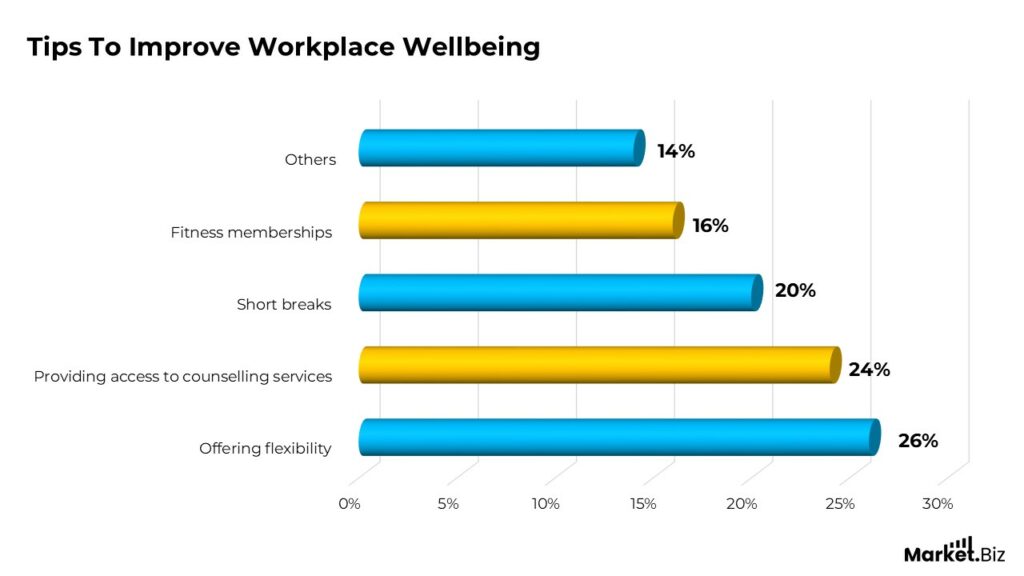
- Organizations offering flexibility see a 26% boost in employee satisfaction and reduced burnout.
- Providing access to counselling services and mental health workshops can lower stress levels by up to 25%.
- Short breaks every 90 minutes can increase focus and energy by over 20%.
- Fitness memberships or step challenges as part of wellness programs can improve morale by 16%.
- Training managers in emotional intelligence improves team well-being and reduces conflict by up to 14%.
- Frequent employee appreciation leads to a 63% increase in engagement and job satisfaction.
- Access to training and development opportunities increases job satisfaction for over 70% of employees.
- Improved office ergonomics and comfort can enhance productivity by 15–20%.
- Strong workplace relationships through team-building can raise employee happiness by 50%.
- Providing healthy food options or nutrition education improves energy and cognitive performance.
- Transparent communication from leadership results in up to 25% higher trust and morale.
- Regular well-being assessments through surveys and feedback tools help align initiatives with employee needs.
Advantages of Happiness in the Workplace
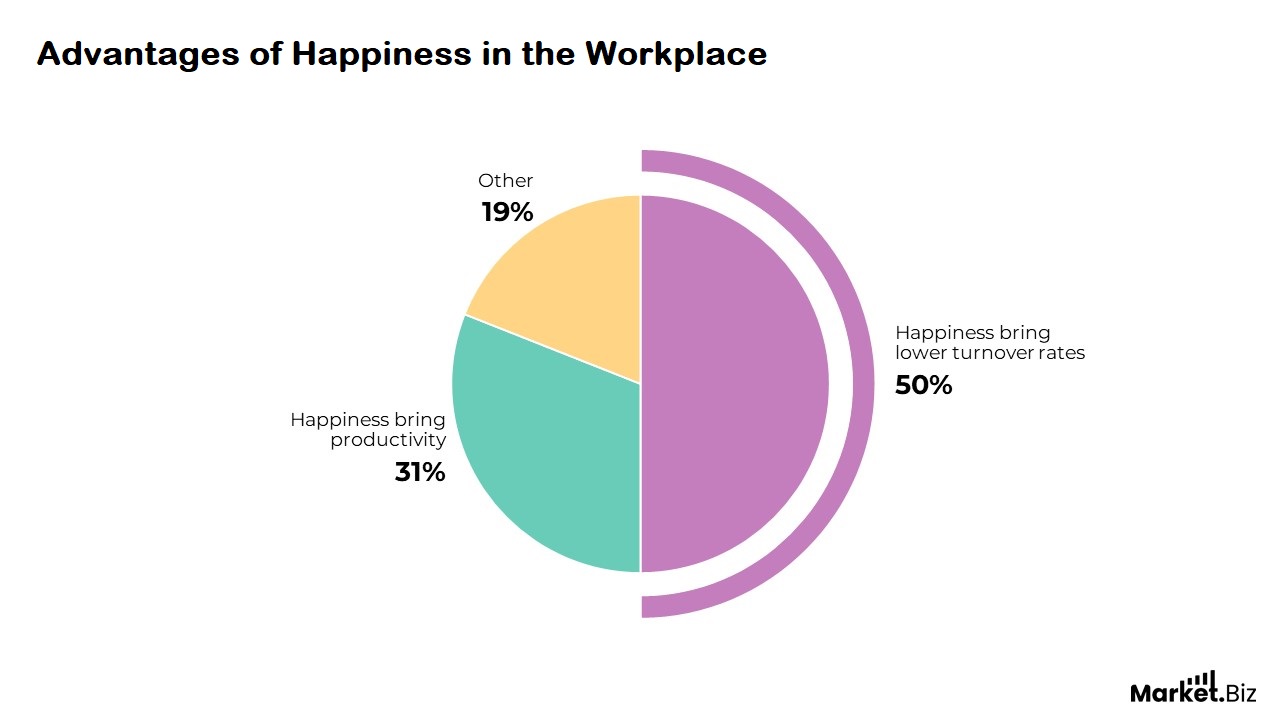
- Happy employees are 31% more productive, leading to higher efficiency and better overall company performance.
- Organizations with higher workplace happiness experience 50% lower turnover rates, reducing recruitment costs and retaining talent.
- Workplace happiness contributes to a 22% increase in profitability, as engaged employees are more motivated to achieve company goals.
- Happy teams are 35% more innovative, as positive environments encourage creativity and problem-solving.
- Companies with happy employees see 32% lower absenteeism, contributing to consistent workforce availability and reduced operational disruptions.
- Employees who feel valued are 3 times more likely to stay with their employer, resulting in a more stable workforce.
- Organizations that promote happiness enjoy 28% higher customer satisfaction, as happy employees tend to provide better customer service.
- Happy workers experience 50% less stress, leading to better mental and physical health, which directly impacts job performance.
- A positive work culture driven by happiness increases collaboration by over 40%, leading to more effective teamwork.
- Workplace happiness leads to 20% higher employee engagement, encouraging more proactive and committed workers.
- When employees are happy, they are 6 times more likely to recommend their employer to others, enhancing the company’s reputation.
- Companies that foster employee happiness see a 14% higher stock performance, reflecting the financial benefits of investing in well-being.
Benefits of workplace wellness programs
- Workplace wellness programs can reduce healthcare costs by 25%, as they promote healthier lifestyles and lower chronic disease rates.
- Employees who participate in wellness programs are 28% more likely to report higher job satisfaction and work-life balance.
- Companies with wellness initiatives experience up to 40% lower absenteeism, as healthier employees are less likely to miss work.
- Employees who engage in wellness programs show 33% higher productivity, leading to increased output and efficiency.
- Wellness programs can reduce stress levels by 31%, helping employees manage workplace pressure and maintain focus.
- Over 60% of employees report that wellness programs improve their mental health, creating a more positive and supportive work environment.
- Employee retention improves by 20% in organizations that offer wellness programs, as employees feel valued and cared for.
- Wellness initiatives promote stronger team collaboration, as employees who feel physically and mentally healthy are more engaged.
- Companies offering wellness programs see a 23% decrease in turnover rates, lowering recruitment and training costs.
- Offering mental health resources through wellness programs can reduce workplace anxiety, with over 50% of employees reporting less stress.
- Regular wellness initiatives can enhance employee creativity by 15%, fostering innovation and problem-solving across teams.
- Wellness programs improve employee morale by 30%, helping to boost overall workplace happiness and job satisfaction.
- Companies with wellness programs have 12% higher customer satisfaction due to increased employee energy and positive attitudes.
- A focus on wellness leads to a 5:1 return on investment (ROI), with each dollar spent on wellness generating five dollars in savings from increased productivity and lower healthcare costs.
Effects of Remote Work on Happiness
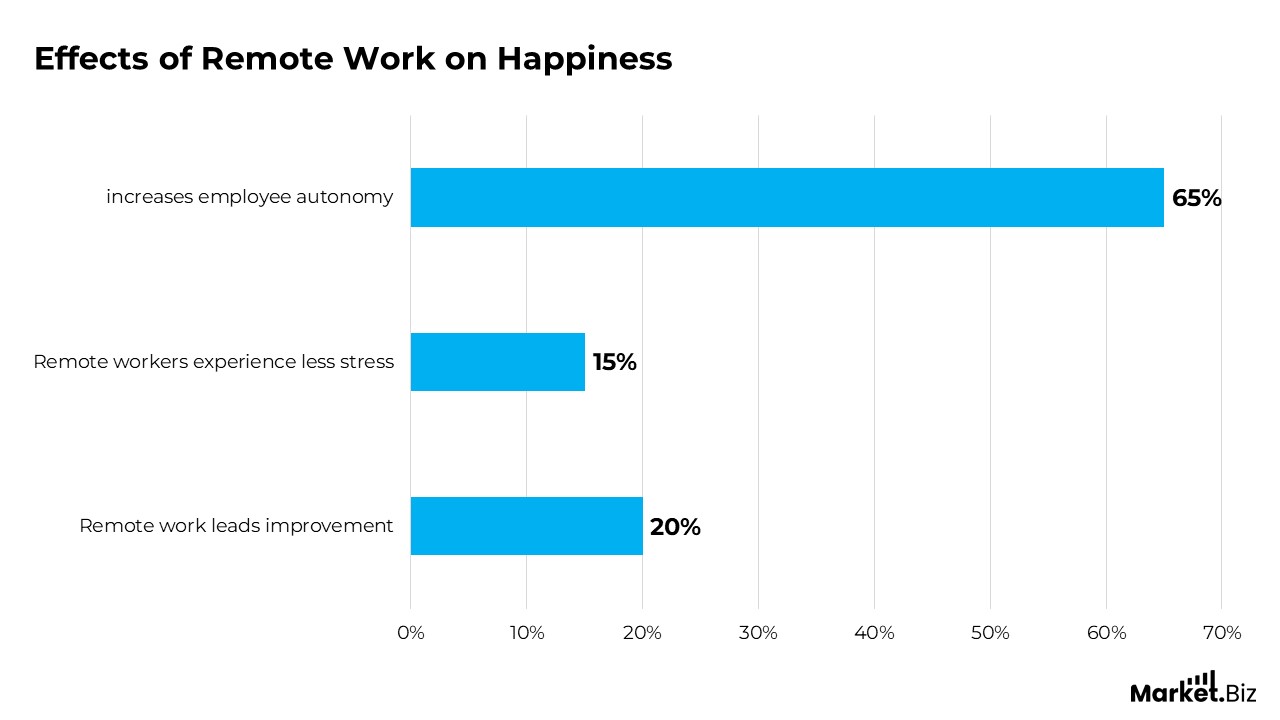
- Remote work leads to a 20% improvement in work-life balance, as employees have more flexibility to manage personal and professional commitments.
- Employees working remotely report higher job satisfaction, with 64% of remote workers saying they are happier compared to office-based workers.
- Remote workers experience 15% less stress, as they avoid daily commutes and the pressure of office environments.
- The ability to work from home increases employee autonomy, with 65% of remote workers stating that flexibility is a key factor in their happiness.
- Work-from-home options have led to 45% higher productivity, as employees can tailor their workspaces for maximum comfort and focus.
- 34% of remote workers report stronger feelings of trust and empowerment in their roles, as remote work fosters a sense of responsibility.
- Mental health improves for 49% of remote workers, as they experience fewer distractions and more time for personal well-being.
- Remote work can enhance social connections through virtual meetings, with 41% of workers saying they feel more connected to their teams remotely.
- The reduction in commuting allows employees to reclaim approximately 200 hours per year, contributing to greater satisfaction and a better work-life balance.
- Remote work boosts employee engagement, with companies that offer flexible work arrangements reporting a 21% increase in overall engagement.
- Despite the benefits, 24% of remote workers report feelings of isolation, highlighting the need for proactive team-building and social interaction.
- 41% of remote employees express that they have a greater sense of purpose and motivation when working from home, as they feel less micromanaged.
- Employees working remotely can achieve a 25% increase in family time, which contributes to overall happiness and well-being.
- Organizations offering remote work options see 20% higher employee retention, as employees value the flexibility and improved quality of life.
Happiness by Technology
- Technology boosts work-life balance by offering 56% of employees the flexibility to manage their schedules and work from anywhere.
- Employees using collaboration tools like Slack and Zoom report 15% higher engagement, thanks to streamlined communication and connectivity.
- Health apps promoting fitness and mental well-being have led to a 29% increase in happiness by helping users stay healthy and reduce stress.
- AI-powered wellness programs are linked to up to 40% improvement in employee well-being, as personalized recommendations help reduce stress and improve lifestyle habits.
- Social media platforms can improve happiness when used positively, with 54% of users reporting stronger social connections and a sense of community.
- Gamification in the workplace boosts morale, with 70% of employees saying gamified tasks make their work more engaging and enjoyable.
- Virtual reality (VR) therapy has been shown to reduce anxiety by 30%, providing an innovative solution for stress relief and emotional well-being.
- Remote work technology, such as cloud tools and project management software, enhances happiness by 45%, as employees feel more empowered and less micromanaged.
- Music streaming services improve mood and productivity, with 62% of employees reporting that music helps them focus and stay positive during work.
- Smart home devices contribute to happiness by streamlining daily tasks, with 50% of users claiming they feel more relaxed due to the time-saving benefits of smart technology.
Happiness by Social Connections
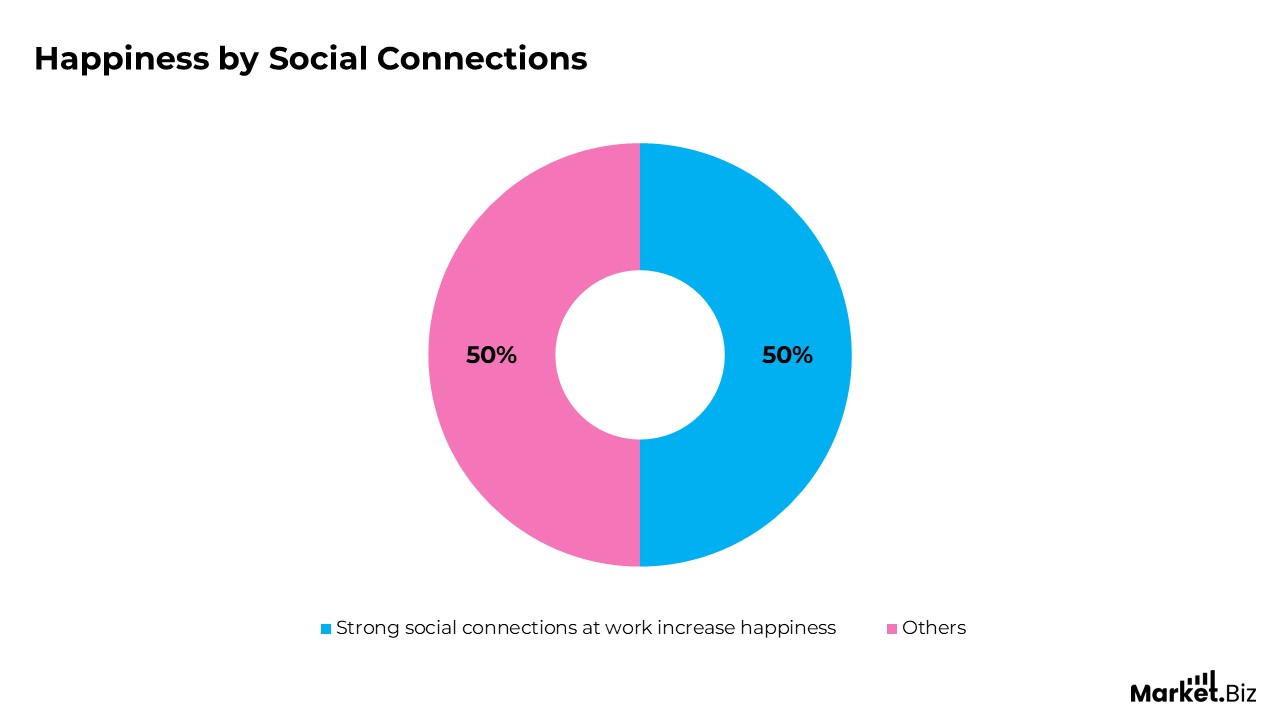
- Strong social connections at work increase happiness by 50%, as employees who feel supported by colleagues are more likely to stay engaged.
- Socializing with friends and family is linked to 20% higher life satisfaction, as personal relationships provide emotional support and fulfilment.
- Employees with close work friendships report up to 30% greater job satisfaction, fostering trust and teamwork within organizations.
- Volunteering and community engagement increase happiness levels by 40%, as helping others creates a sense of purpose and belonging.
- Social support networks can reduce stress by 50%, providing individuals with the resources to cope better during difficult times.
- Peer mentorship programs improve happiness by 22%, as mentees feel valued and supported while mentors experience satisfaction from helping others.
- Socializing at work can enhance creativity and innovation, with 34% of employees reporting better ideas and solutions after team interactions.
- Strong social connections in retirement are linked to a 42% lower risk of depression, showing the long-term impact of maintaining relationships.
- People with strong social networks experience higher resilience, with 60% of individuals stating that friendships help them recover from setbacks.
- Remote workers with virtual social interactions report 20% higher happiness compared to those who feel isolated, as regular digital connections help combat loneliness.
Conclusion
Workplace happiness and employee well-being are essential to organizational success, with a significant portion of employees feeling disengaged at work. Companies that prioritize wellness initiatives see notable benefits, including lower absenteeism and higher employee morale. Investing in mental health support, flexible work options, and career development leads to increased employee retention and higher profitability.
As organizations shift towards supportive, inclusive environments, employees report higher levels of happiness, resulting in greater productivity and improved overall performance. This highlights the critical role of well-being initiatives in fostering a resilient, engaged workforce.
FAQs
Only a small percentage of employees globally report feeling truly engaged and happy at work, highlighting the need for stronger well-being initiatives.
Happy employees are significantly more productive, with studies showing that workplace happiness can boost employee output by over 10%.
Key factors affecting workplace happiness include work-life balance, managerial support, recognition, job security, and career development opportunities.
Yes, businesses with robust wellness programs experience increased employee morale, job satisfaction, and retention, fostering a more positive work culture.
Providing mental health resources and support is crucial, as it can reduce stress-related absenteeism and enhance overall workplace happiness.