









Introduction
Workplace Productivity Statistics: Workplace productivity is a critical measure of business success, reflecting the efficiency and output of employees within a given time frame. In recent years, productivity has shown steady improvement, with global workplace productivity growing at an average rate of 2.5% annually.
Key factors influencing productivity include technology, employee engagement, and work environment, with highly engaged employees being 21% more productive. Additionally, companies investing in employee wellness programs see a 12% boost in productivity. By understanding workplace productivity statistics, businesses can implement data-driven strategies to enhance efficiency, reduce costs, and foster innovation.
Editor’s Choice
- Global workplace productivity grows 2.5% annually, driven by tech and engagement.
- Remote workers at a Chinese agency saw a 13% productivity boost.
- Wellness programs increase productivity by 12%.
- AI and automation may raise productivity by 40%.
- Hybrid work models boost productivity by 25%.
- Cloud tools improve productivity by 35%.
- 65% of employees say sustainability initiatives increase productivity.
- Effective leadership increases productivity by 25%.
- Upskilling programs lead to a 22% productivity boost.
- Cybersecurity investments improve productivity by 15%.
General Workplace Productivity Statistics
- Remote workers at a Chinese travel agency experienced a 13% productivity increase compared to their in-office counterparts.
- 12.3% of employed individuals in the European Union aged 15–64 primarily worked from home, with Finland leading at 25.1%.
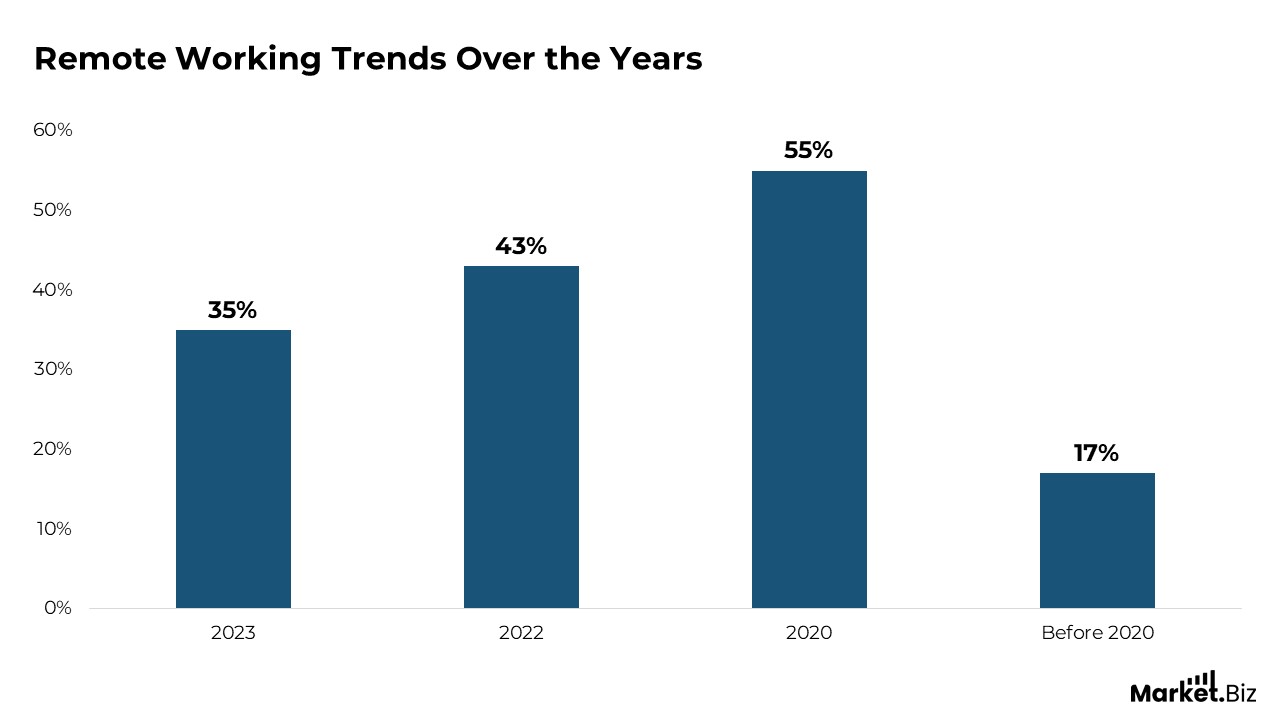
- 45% of full-time U.S. employees worked remotely, with 91% expressing a desire to continue post-pandemic.
- In 2022, a survey of 56 UK offices found that 51% had no mandatory office attendance policy, while 18% required two days per week.
- 36% of employees experienced increased efficiency due to the adoption of artificial intelligence tools.
- The U.S. economy saw a 2% rise in labor productivity in Q3 2024, marking a consistent 2% year-over-year increase over five consecutive quarters.
- The shift to remote work during the pandemic contributed to the U.S.’s productivity surge, aided by increased technological adoption and labor market adjustments.
- Sectors like transport and administration services saw productivity gains, while others like retail and health declined.
- Small businesses leveraging AI tools reported significant productivity improvements, with some, like a Boston gym, increasing revenue by 30%.
- Experts predict that U.S. labor productivity will continue to grow at an average rate of 2.5% to 3.0% in 2025, driven by technological innovations and favorable economic policies.
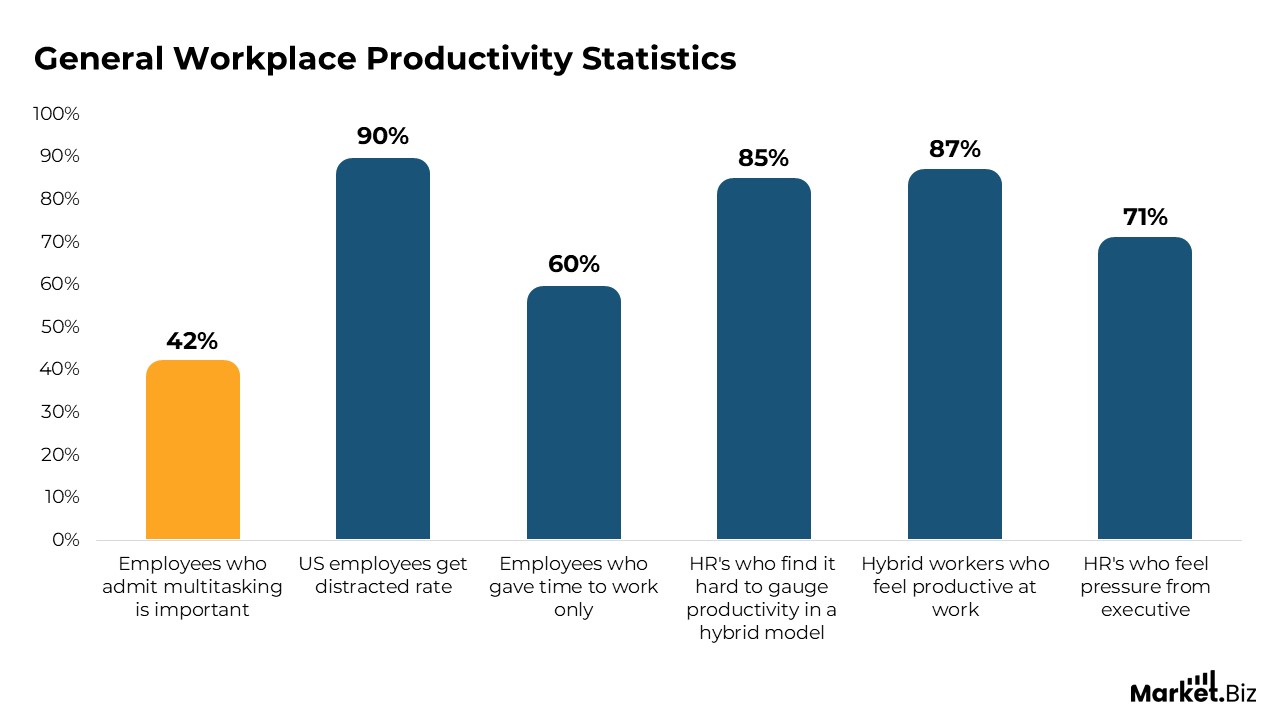
- According to 71% of organizational leaders, executives are pressuring them to increase worker productivity.
- An employee spends 60% of their time at work on work-related activities, which are tasks that aren’t part of their job description.
- According to 87% of hybrid workers, they are productive every single day.
Global Productivity Trends
- The global labour productivity growth rate has averaged 2.0% annually over the past decade, though this has slowed in recent years due to economic disruptions.
- The Asia-Pacific region, especially China and India, has been the most significant contributor to global productivity growth, driven by rapid industrialization and technological adoption.
- Companies that implemented digital transformation strategies reported up to 30% higher productivity rates, with automation and AI being key drivers.
- In developed economies like the U.S. and EU, productivity growth has been stagnating at 1% annually since 2010, largely due to aging populations and slower technological adoption.
- The shift to remote work during the pandemic resulted in a 13% increase in productivity in sectors like IT, with hybrid models maintaining productivity levels 5-7% higher than pre-pandemic norms.
- Global productivity in the services sector has outpaced that of manufacturing, driven by advancements in cloud computing and digital tools that enhance efficiency.
- There remains a significant productivity gap between advanced economies and emerging markets, with productivity in advanced economies being 2.5 times higher on average.
Moreover
- The adoption of AI in manufacturing industries has boosted output by 25-30% in certain regions, showcasing the power of automation in increasing productivity.
- The education and healthcare sectors have seen minimal productivity gains due to a lack of widespread automation and digital tools, making these sectors a challenge for future growth.
- Economies globally are shifting toward knowledge-based industries, where productivity is expected to rise by 4-5% annually, driven by higher investment in education, training, and R&D.
- By 2030, a lack of skilled individuals may leave almost 85 million jobs unfilled worldwide.
- The retail, lodging, and food services quit rates in the consumer services sector are 26% higher than the national average for the United States.
- Fifty percent of workers worldwide are productive for fewer than five hours per day.
- The productivity of American workers is 10% higher than that of British workers.
- Employers lose an average of 47 minutes of productivity every day as a result of the 73% of workers who report using social media at work.
- According to international standards, Luxembourg has the highest labor productivity rates, followed by the United States, Singapore, Norway, Ireland, and the U.S. Virgin Islands.
(Source: Notta)
Technology in Workplace Productivity
- The integration of cloud computing has improved workplace productivity by up to 40%, enabling real-time collaboration and reducing time spent on manual tasks.
- AI-powered tools are boosting productivity in data processing and customer service, with companies reporting a 25% increase in efficiency through automation.
- The use of collaborative software like Microsoft Teams and Slack has reduced meeting times by 15-20%, streamlining communication and decision-making processes.
- Mobile technology has increased flexibility, with remote work tools enabling a 30% rise in productivity among employees working from home.
- Businesses adopting project management tools like Asana or Trello have seen a 20% improvement in task completion rates due to better task tracking and team coordination.
- The automation of repetitive tasks in industries like manufacturing has led to a 50% increase in production rates, freeing up human resources for more strategic work.
Moreover
- Advanced data analytics platforms have allowed companies to make data-driven decisions, increasing productivity by an average of 18% in sectors like finance and marketing.
- Virtual Reality (VR) training programs are reducing employee training time by 40%, while improving learning outcomes and retention rates.
- Integrating AI chatbots for customer support has decreased response times by 60%, enabling businesses to handle more inquiries with fewer resources.
- Cybersecurity advancements have reduced downtime due to security breaches by 30%, ensuring that systems remain operational and employees stay productive.
- The most productive individuals are 242% more likely to employ AI than their less productive peers, according to Slack.
- According to 77% of workers, automating repetitive chores would increase their output.
- Automation saves workers 3.6 hours a week on average worldwide.
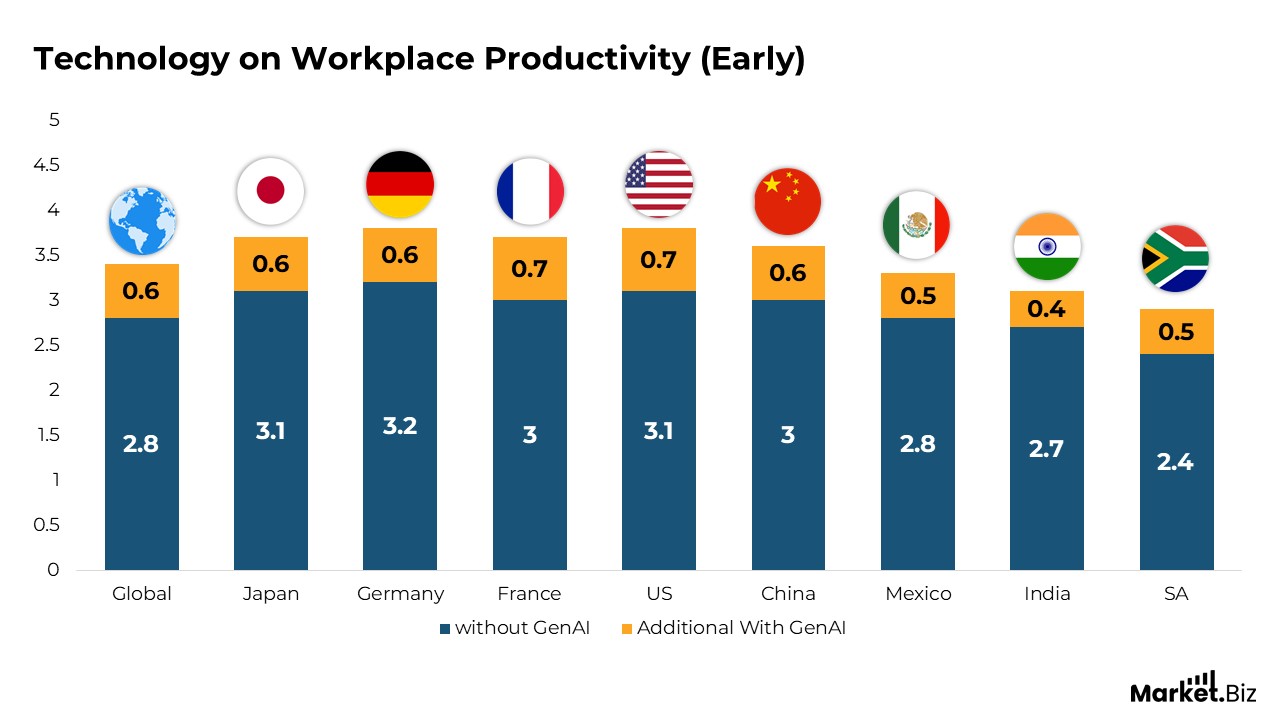
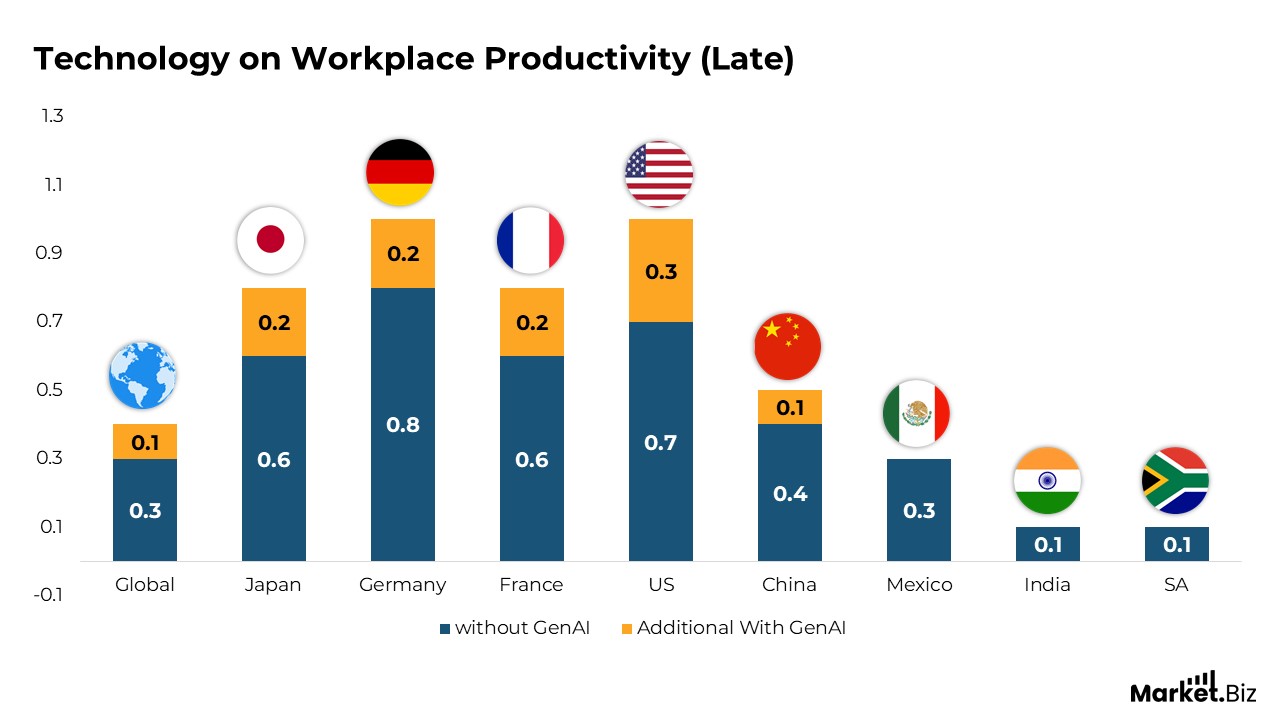
- Depending on how quickly the technology is adopted and how much time employees redistribute to other pursuits, generative AI may allow labor productivity growth of 0.1 to 0.6 percent per year through 2040.
- Work automation could increase productivity by 0.5 to 3.4 percentage points a year when generative AI is combined with all other technologies.
(Source: McKinsey)
Remote Work on Productivity
- Remote work has led to a 13% increase in productivity, as employees report fewer distractions and more focused work environments compared to traditional offices.
- Studies show that employees working remotely have a 25% faster task completion rate, primarily due to a flexible schedule that reduces commuting time.
- A survey revealed that 78% of remote workers feel more productive due to a better work-life balance, leading to greater job satisfaction and output.
- The flexibility to design a personalized workspace has resulted in a 20% increase in efficiency, with workers selecting environments that enhance focus and comfort.
- Remote work has decreased employee absenteeism by 30%, as flexible hours and home offices allow workers to manage personal commitments without sacrificing work.
- Companies that transitioned to remote work during the pandemic saw a 17% rise in employee productivity, driven by better use of digital tools and technology.
- With remote work, businesses have reported a 10-15% reduction in operational costs, reallocating those savings into employee training and productivity-enhancing tools.
- A remote work environment has been linked to a 40% reduction in workplace stress, allowing employees to maintain higher levels of mental clarity and focus.
- Video conferencing tools have improved collaboration, leading to a 12% increase in productivity within teams by cutting down on unnecessary in-person meetings.
- A hybrid work model, combining remote work and office days, has resulted in a 30% improvement in employee productivity, as workers report better time management and engagement.
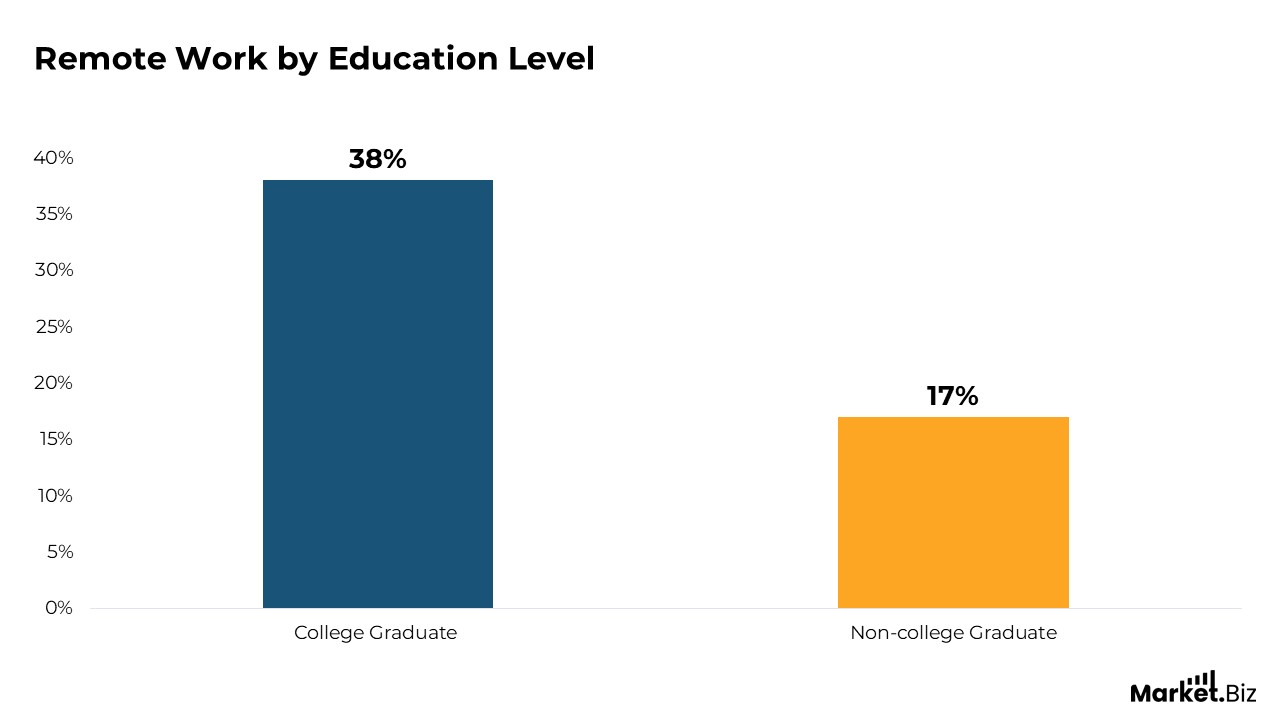
(Source: Zippia)
Office Environment and Productivity
- A well-lit office can improve productivity by 15%, with natural light being particularly beneficial for enhancing focus and reducing eye strain.
- Open office layouts have been linked to a 10-15% decrease in productivity due to increased distractions, whereas quieter spaces support better concentration.
- Ergonomic furniture, including chairs and desks, can improve workplace productivity by up to 20%, reducing physical strain and discomfort during long working hours.
- Offices with proper ventilation and air quality see a 12% increase in productivity, as employees experience fewer fatigue-related symptoms and are more focused.
- Temperature control is crucial, with studies showing that offices maintained between 20-22°C (68-72°F) can improve productivity by up to 18%.
- Plants and greenery in the office environment can boost productivity by 15%, helping reduce stress and increasing employee well-being and engagement.
- A clutter-free, organized workspace leads to a 25% improvement in productivity, as employees spend less time searching for materials and can focus better on tasks.
- Break areas with comfortable seating and entertainment options have been shown to increase productivity by 10%, providing necessary mental breaks for employees.
- High noise levels in offices can decrease productivity by 30%, with quiet zones or soundproofing contributing to a significant improvement in concentration.
- Offices with access to healthy snacks and hydration options see a 12% increase in productivity, as employees experience fewer energy dips and maintain focus throughout the day.
Impact of Workload on Productivity
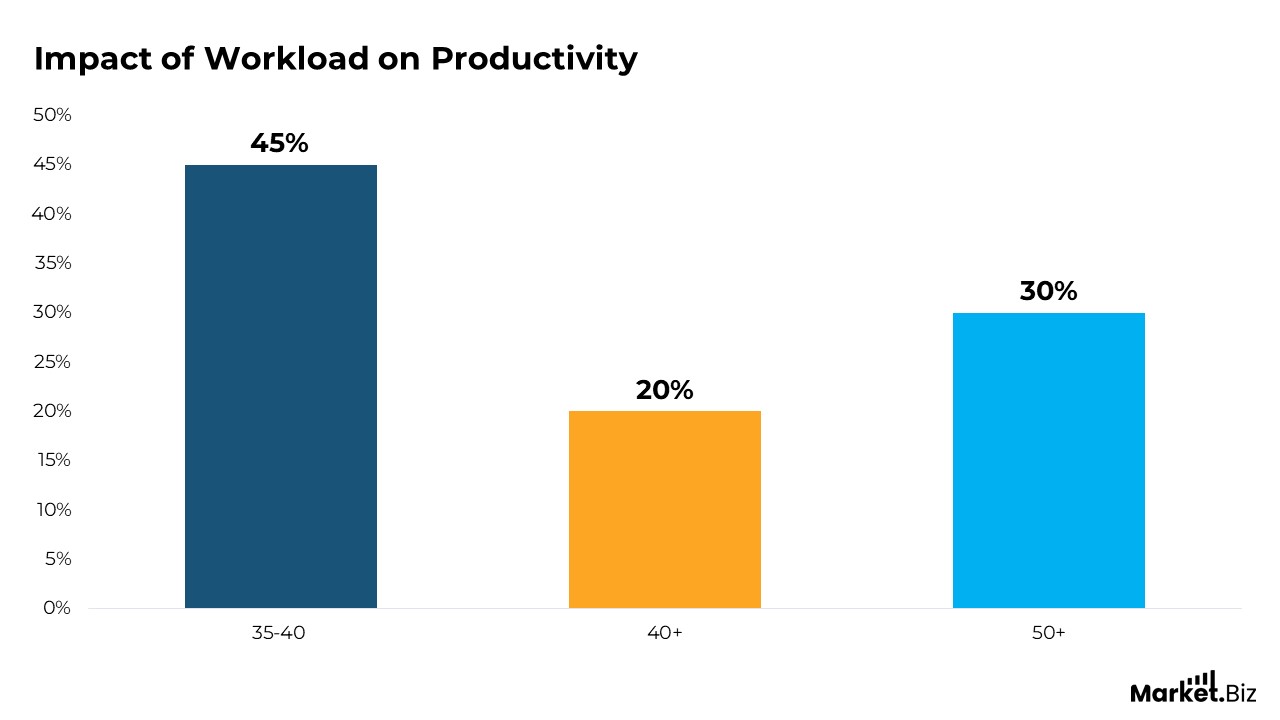
- Employees working beyond 40 hours a week see a 20% drop in productivity due to burnout and fatigue.
- When employees are given more than 50 hours of work per week, productivity per hour decreases by 30%.
- 60% of workers report feeling stressed when workloads increase, leading to higher absenteeism and reduced morale.
- An optimal workload of around 35-40 hours per week enhances focus and performance, leading to higher productivity levels and job satisfaction.
- Effective workload distribution and prioritization can improve productivity by 25%, as time is managed efficiently.
- Excessive workloads contribute to mental health issues, with 45% of workers experiencing anxiety or depression due to stress from overwork.
- Companies with balanced workloads report 40% higher employee innovation and creativity, as employees have more time to think and experiment.
- Overloading employees can lead to burnout, with 38% of workers reporting physical health issues, including fatigue, headaches, and back pain.
- Workers experiencing high workloads produce 15% more errors compared to those with manageable workloads, affecting overall work quality.
- Firms with high workloads see a 25% increase in turnover rates due to job dissatisfaction, which can be costly for recruitment and training.
Workplace Collaboration and Productivity
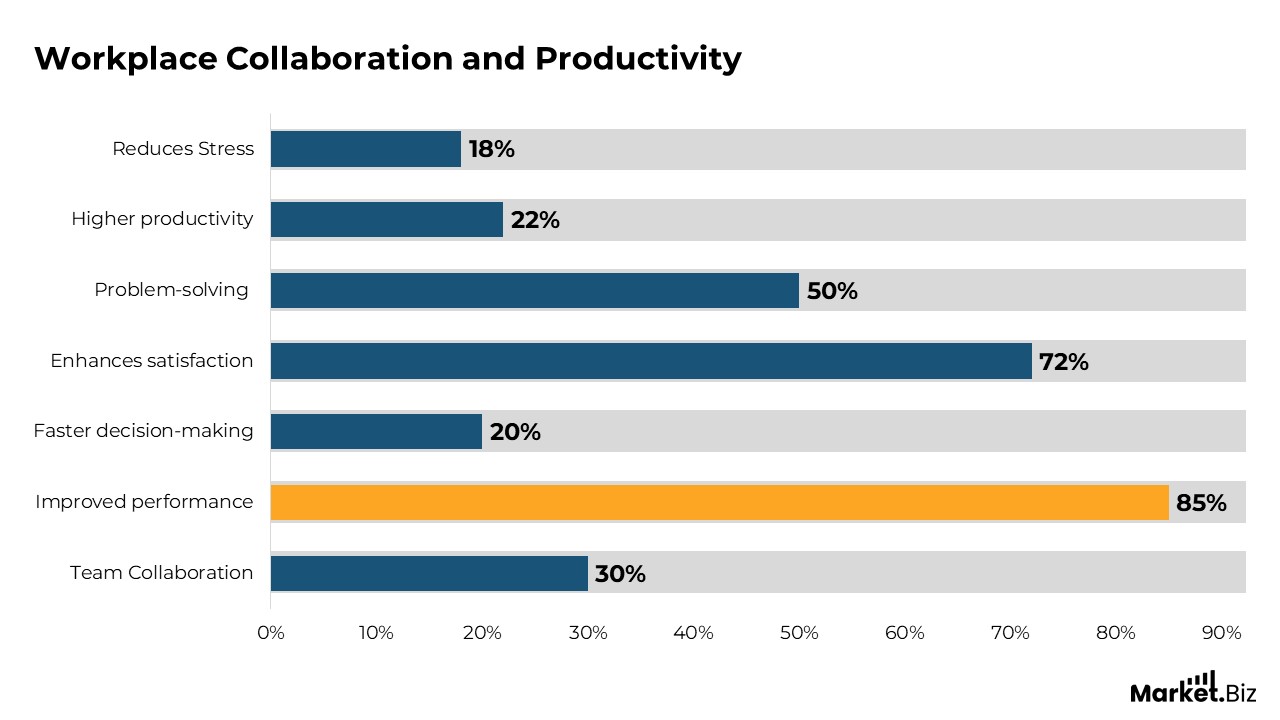
- Teams that collaborate effectively are 30% more productive compared to those working in isolation.
- 85% of employees believe that collaboration drives innovation, resulting in more creative solutions and improved performance.
- Workplace collaboration tools can reduce communication time by up to 20%, leading to faster decision-making and more efficient workflows.
- 72% of engaged employees say that regular collaboration with colleagues enhances their work satisfaction and overall productivity.
- Collaborative teams are 50% more effective in problem-solving compared to individuals working alone, as diverse perspectives lead to better solutions.
- Companies with flexible collaboration environments report 22% higher productivity, as employees can work together seamlessly from different locations.
- Collaboration fosters team synergy, leading to a 30% increase in output when employees share knowledge and skills effectively.
- Collaborative work reduces individual stress by 18%, as tasks are shared and workloads become more manageable.
- 68% of businesses using advanced collaboration tools report an improvement in employee performance and productivity due to streamlined communication.
- Companies with globally distributed teams experience a 25% increase in productivity by leveraging virtual collaboration tools to bring together diverse skill sets.
Role of Leadership in Productivity
- Effective leadership can boost productivity by 25%, as leaders influence employee motivation, engagement, and performance.
- Leaders who provide clear goals and direction can increase team efficiency by 30%, reducing confusion and enhancing focus on key objectives.
- 65% of employees report that they are more productive when their leader provides regular feedback and acknowledges their contributions.
- Transformational leadership can drive up productivity by 22%, as leaders inspire and empower teams to exceed expectations through a shared vision.
- Leaders who invest in employee development see a 20% increase in productivity, as skill-building programs enhance efficiency and work quality.
- Positive leadership behaviors, such as offering support and creating trust, can reduce turnover by 40%, leading to more consistent and higher productivity.
- Companies with strong leadership are 15% more likely to achieve their strategic goals, as leaders provide the guidance and resources needed to succeed.
- Leaders who encourage collaboration and teamwork increase productivity by 18%, as employees work more effectively together and solve problems faster.
- 58% of employees say that leadership is the most significant factor in their job satisfaction, directly correlating with higher productivity and retention rates.
- When leaders model a strong work ethic and commitment, employees are 35% more likely to mirror these behaviours, leading to a more productive work environment.
Impact of Breaks on Productivity
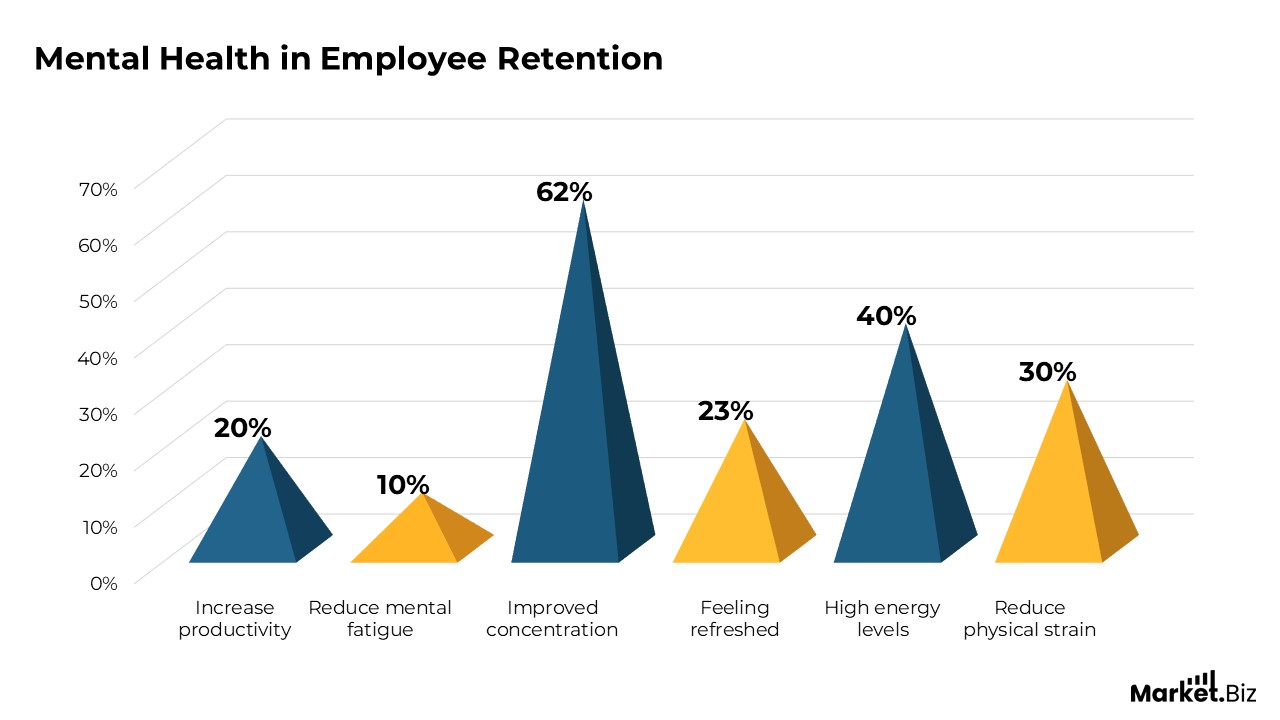
- Taking regular breaks can increase productivity by up to 20%, as they help refresh employees and improve focus throughout the workday.
- Employees who take a 15-minute break every 2 hours are 10% more productive, as breaks help reduce mental fatigue and maintain energy levels.
- 62% of workers report that short breaks improve their concentration, allowing them to complete tasks more efficiently and with higher quality.
- Studies show that taking breaks every 90 minutes enhances performance, as the human brain can focus intensely for around 90 minutes before needing a rest.
- Workers who take lunch breaks away from their desks are 23% more likely to return to work feeling refreshed, leading to increased productivity in the afternoon.
- The Pomodoro Technique, which involves 25-minute work intervals followed by a 5-minute break, can improve productivity by 40% by maintaining high energy levels.
- 55% of employees believe that taking breaks positively impacts their mental health, reducing stress and boosting overall work performance.
- Physical breaks, such as short walks, can increase productivity by 30% as they help improve circulation and reduce physical strain from long hours of sitting.
- Companies that encourage regular breaks see a 25% improvement in employee engagement, as breaks support both physical and mental well-being.
- Research shows that employees who take longer breaks (20-30 minutes) have 14% higher output than those who work without interruptions, as extended breaks lead to better problem-solving and decision-making.
Major Factors Influencing Productivity In 2025
- Automation and AI tools are expected to increase productivity by up to 40% by streamlining repetitive tasks and enhancing decision-making efficiency.
- 70% of employees prefer hybrid work environments, with flexibility leading to a 25% increase in productivity due to better work-life balance and reduced commute time.
- Companies that prioritize employee health and well-being see a 30% increase in productivity, as wellness programs reduce burnout and improve focus.
- 90% of high-performing companies use data analytics to inform decisions, leading to a 20% increase in operational efficiency and resource allocation.
- The use of cloud-based collaboration tools improves productivity by 35%, as teams can work seamlessly across locations and share real-time updates.
- Diverse teams are 35% more likely to outperform their peers, as varied perspectives contribute to creative problem-solving and more efficient workflows.
- Companies that invest in employee training see a 22% increase in productivity, as upskilling ensures employees remain adaptable and efficient in a rapidly evolving market.
- Effective leadership is linked to a 25% boost in productivity, as managers who provide clear guidance and motivation foster higher employee engagement.
- 72% of employees feel more motivated when working for companies with sustainable practices, leading to higher productivity and long-term company loyalty.
- With rising cybersecurity threats, 85% of businesses investing in robust cybersecurity measures report a 15% improvement in productivity, as employees feel safer and more focused on their tasks.
Future of Workplace Productivity
- The integration of AI and automation tools is expected to increase workplace productivity by 40%, as routine tasks are automated, freeing employees for more strategic work.
- 85% of businesses will invest in hybrid work solutions by 2025, which will lead to a 25% increase in overall productivity due to greater flexibility and reduced commute time.
- Employees in workplaces that prioritize mental health and well-being programs are 30% more productive, with 65% of workers expressing a preference for employers offering wellness initiatives.
- 70% of organizations will adopt cloud-based collaboration tools by 2025, leading to a 35% improvement in productivity as teams can work seamlessly from any location and access real-time data.
- The rise of remote work is projected to contribute to a 20% productivity boost, as workers experience fewer distractions and more control over their work environment.
- As companies invest in continuous learning and upskilling programs, productivity could increase by 22%, as employees gain new skills and adapt to evolving job demands.
- 72% of employees believe that sustainability initiatives in the workplace will increase their productivity, as working for environmentally conscious companies boosts morale and engagement.
- 65% of businesses will adopt advanced cybersecurity measures by 2025, with a 15% productivity boost reported in companies that reduce security risks, allowing employees to work more efficiently without concerns over data breaches.
Conclusion
The future of workplace productivity is heavily influenced by technological advancements, flexible work models, and employee well-being initiatives. Remote work and hybrid models have proven to boost productivity, while AI and automation are expected to enhance efficiency.
Companies that prioritize wellness programs see productivity improvements, and cloud collaboration tools further enhance output. Additionally, leadership, upskilling, and cybersecurity investments play a crucial role in driving higher productivity. As businesses continue to embrace these trends, productivity is set to grow, shaping a more efficient and innovative work environment.
FAQ’s
Remote work has been linked to a 13% increase in productivity, as employees experience fewer distractions and more control over their work environment. The flexibility provided by remote work models allows for better work-life balance, which enhances focus and efficiency.
AI and automation are expected to boost productivity by up to 40%, with automation of repetitive tasks allowing employees to focus on more complex and strategic work. This technological shift helps businesses streamline operations and improve decision-making efficiency.
Companies investing in employee wellness programs see a productivity increase of 12%. Wellness initiatives reduce burnout and enhance focus, leading to higher job satisfaction and improved overall work performance.
Cloud-based collaboration tools have been shown to increase productivity by 35%, as they facilitate real-time communication, task tracking, and seamless collaboration across different locations, boosting efficiency in team-based tasks.
Effective leadership boosts productivity by 25%. Leaders who provide clear direction, regular feedback, and support contribute to higher employee engagement and performance, leading to improved efficiency and goal achievement across teams.