









Introduction
Workplace violence statistics: Workplace violence is a serious issue that affects many industries worldwide. Each year, around 20,000 workers are injured in nonfatal violent incidents, according to the U.S. Bureau of Labor Statistics.
In fact, workplace violence is the second leading cause of death on the job, making up about 17% of all workplace fatalities. Healthcare, retail, and public service jobs are particularly at risk, with these industries accounting for nearly 70% of nonfatal injuries.
These numbers highlight why it’s so important for employers to focus on preventing violence through better policies, employee training, and awareness programs. Creating a safer workplace benefits both employees and organizations.
Editor’s Choice
- Workplace violence costs the U.S. economy $121 billion annually in medical, legal, and productivity losses.
- Healthcare workers face 75% of nonfatal workplace assaults, highlighting the need for better safety protocols.
- Workplace homicides increased by 5% in 2024, particularly in healthcare and retail sectors.
- 40% of workers report verbal abuse, especially in customer-facing roles like healthcare and retail.
- Companies with violence policies see a 25% reduction in incidents, stressing the need for formal safety programs.
- Employees aged 18-24 are most vulnerable to physical assaults, especially in retail and hospitality.
General workplace violence statistics
- Workplace violence accounts for 17% of all workplace fatalities in the United States, according to the National Safety Council.
- Around 2 million U.S. workers are affected by workplace violence annually, as reported by the Occupational Safety and Health Administration.
- Healthcare workers face the highest risk, with up to 75% of all nonfatal workplace assaults occurring in this sector, based on OSHA data.
- Retail workers are also highly vulnerable, with 13% of them experiencing violence on the job, according to the Bureau of Labor Statistics.
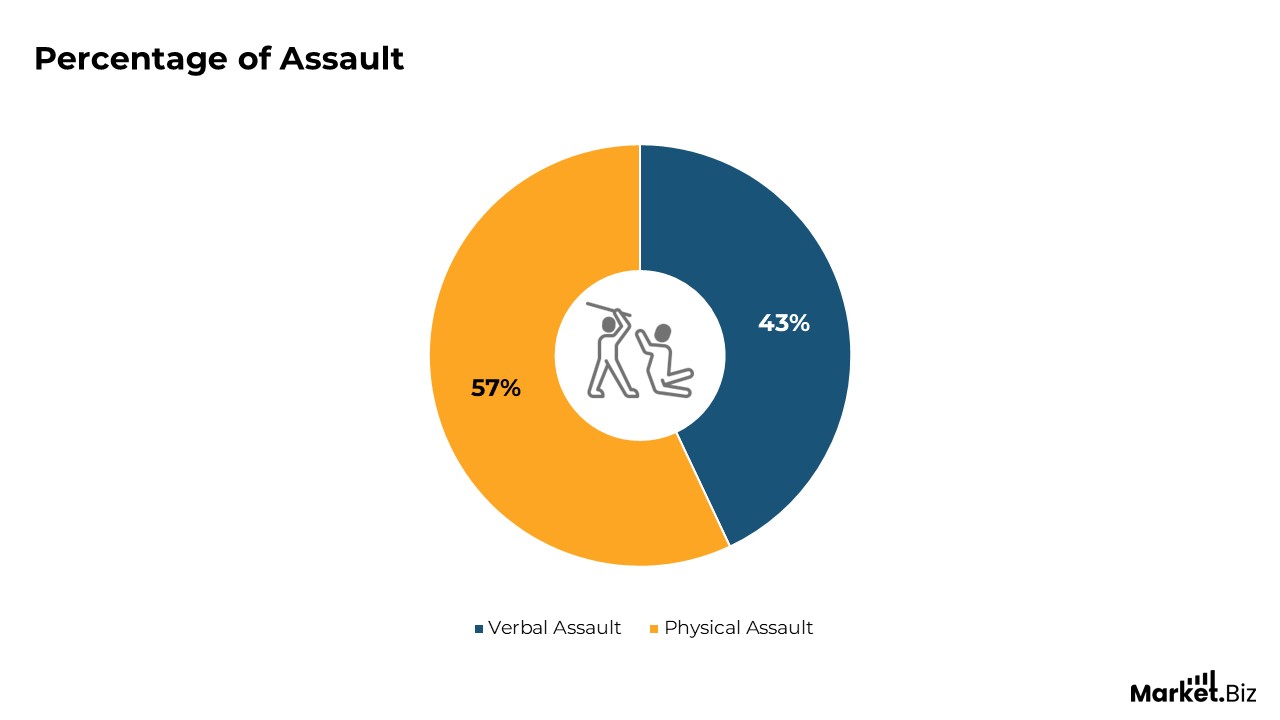
- The most common type of workplace violence involves physical assaults, which make up 52% of all reported incidents
- The workplace homicide rate is approximately 1 per 1 million workers in the U.S. each year.
- Men are more likely to be perpetrators, accounting for about 80% of workplace violence incidents.
- Employees in law enforcement and correctional facilities experience the highest rates of workplace violence, with nearly 4 times the national average.
- Verbal abuse is a frequent issue, with 37% of employees reporting having experienced verbal abuse at work.
- The economic cost of workplace violence is estimated at $121 billion annually, including medical costs, lost productivity, and legal fees.
- Between 2011 and 2018, workplace violence-related deaths in the U.S. increased by 10%, according to the BLS.
- Workplace violence is a leading cause of nonfatal injuries that require days off work, especially in industries like healthcare and retail.
- Injuries caused by workplace violence account for around 1 in 7 workplace injuries that require time away from work.
- Most workplace violence incidents occur in public-facing roles, with workers in customer service, healthcare, and education being most at risk.
- Proper training and workplace policies have been shown to reduce the risk of violence by as much as 30% in high-risk industries.
Workplace Violence, Assault, and Fatality Statistics
Assault Statistics
- Nearly 20,000 workers are assaulted every year in nonfatal workplace violence incidents, according to the U.S. Bureau of Labor Statistics.
- Healthcare workers are the most targeted, with 70% of nonfatal assaults occurring in the healthcare and social assistance sectors.
- Workplace violence assaults in retail account for about 15% of nonfatal injuries, according to the BLS.
- Public service workers like law enforcement and corrections officers experience higher assault rates, with more than 4 times the national average.
- Verbal assaults are prevalent, with nearly 40% of workers reporting verbal abuse at the workplace.
- Injuries from workplace assaults lead to an average of 15 days of missed work, as reported by the NSC.
- Women are more likely to be victims of nonfatal workplace assaults, with about 60% of assault victims in the workplace being female.
- Physical assaults are the most common form of workplace violence, accounting for 52% of all reported workplace violence incidents.
Fatality Statistics
- Workplace violence accounts for 17% of all workplace fatalities in the U.S., making it the second leading cause of workplace death.
- In 2020, 392 workplace homicides occurred, representing a slight increase from previous years, as per the BLS.
- The transportation and warehousing sector has the highest fatality rate from workplace violence, contributing to about 40% of workplace homicides.
- Women in healthcare and social services are at increased risk of fatal workplace violence, with homicides in these sectors rising by 11% between 2018 and 2020.
- Nearly 80% of workplace homicide victims are men, with transportation, manufacturing, and construction being the most affected sectors.
- The number of workplace fatalities due to violence has increased by over 10% between 2011 and 2018.
- Workplace violence fatalities in education have seen a steady rise, particularly in K-12 and higher education settings, due to violent incidents involving students.
Workplace Violence by Demographics
Violence by Age
- Workers aged 25-34 are the most likely to experience workplace violence, accounting for 25% of all violent incidents.
- Employees over 55 report a lower rate of workplace violence, making up less than 10% of total incidents.
- Young workers (18-24) experience a higher frequency of physical assaults, particularly in the retail and hospitality sectors.
- Workers in the 35-44 age group experience a significant amount of verbal abuse, making up 30% of reported cases.
- Employees aged 45 and above report fewer workplace violence incidents but tend to experience more severe assaults when they do occur.
Violence by Gender
- Women are more likely to experience nonfatal workplace violence, especially in healthcare, retail, and education, with 60% of workplace violence victims being female.
- Men account for 80% of workplace violence perpetrators, often in sectors like law enforcement and manufacturing.
- Verbal abuse is more common for women, with 40% of women reporting verbal assaults in the workplace compared to 30% of men.
- Women in healthcare are disproportionately affected by workplace violence, with studies showing that nearly 70% of nonfatal assaults occur in this sector.
- Men, however, face a higher rate of fatal workplace violence, particularly in high-risk sectors like transportation, construction, and manufacturing.
Workplace Violence by Region
- The West experiences the highest rates of workplace violence-related injuries, with a significant number occurring in public-facing industries such as healthcare and retail.
- The Northeast has a relatively lower rate of fatal workplace violence but sees a higher number of assaults in healthcare facilities.
- The South sees a surge in workplace violence in the retail and food service sectors, often related to robberies or customer confrontations.
- The Midwest reports a high incidence of violence in agriculture and manufacturing sectors, often tied to workplace disputes or equipment-related accidents.
- Workplace violence fatalities are most common in the South and West regions, with these areas seeing higher homicide rates in sectors like transportation and warehousing.
Workplace Violence by Industry
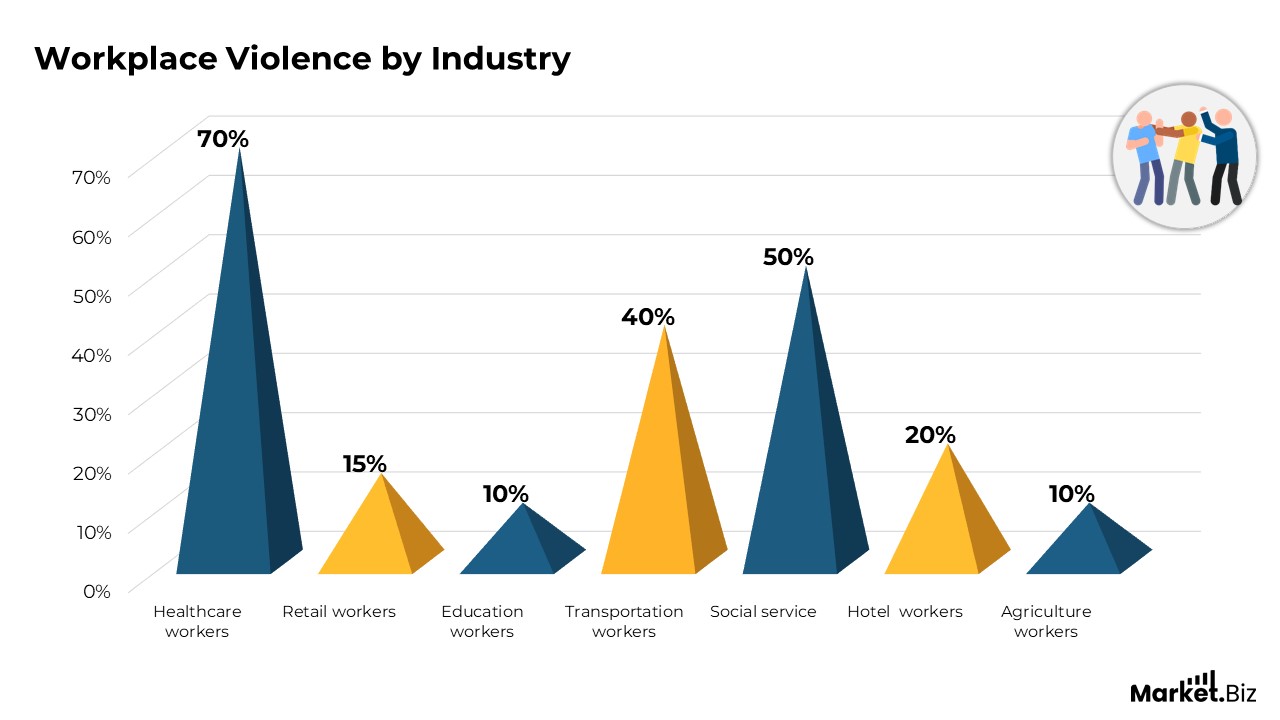
- Healthcare workers face the highest rates of workplace violence, with nearly 70% of nonfatal assaults occurring in this sector, particularly in psychiatric hospitals and emergency rooms.
- Retail workers are at significant risk, with incidents of violence increasing by 15% during the holiday season, particularly from customer altercations and robberies.
- Law enforcement and correctional facilities experience more workplace violence than any other sector, with correctional officers facing nearly 4 times the national average of violent incidents.
- Education workers, especially those in K-12 schools, are increasingly affected by physical and verbal violence, with a 10% rise in incidents over the past five years.
- Transportation workers, particularly truck drivers, face high rates of workplace violence, accounting for 40% of all workplace homicides.
- Manufacturing workers are frequently involved in violent incidents, especially in industries like construction, with disputes and accidents contributing to many assaults.
- Social service and public administration workers, including caseworkers, are at high risk for workplace violence, with 50% of reported injuries involving assaults.
- Financial services employees face a higher risk of violent incidents, often related to robberies, with the banking industry particularly vulnerable.
- Hotel and food service workers are regularly exposed to workplace violence, with customer disputes and violent interactions contributing to nearly 20% of incidents.
- Warehouse workers, especially in logistics and distribution centers, experience violence due to work-related stress, disputes, and occasional criminal activity.
- Construction workers are increasingly affected by workplace violence, with conflicts between workers and accidents contributing to a higher incidence of injuries.
- Agriculture workers report higher rates of physical assaults, often from workplace disputes or safety issues in the field, with a 10% increase in violent incidents over the last decade.
Cost of Workplace Violence
- Workplace violence costs the U.S. economy $121 billion annually, including medical expenses, lost productivity, and legal costs.
- Employers lose approximately 1.8 million workdays each year due to injuries related to workplace violence, contributing to significant financial losses.
- The direct medical costs of workplace violence are estimated at over $30 billion annually, covering emergency treatments, hospital stays, and long-term care.
- Employers face high legal costs, with settlements, litigation, and workers’ compensation claims adding millions of dollars in expenses each year.
- Psychological and emotional damage from workplace violence contributes to productivity loss, with an estimated 2.3 million workers suffering from stress-related conditions.
- Companies report an average of $500,000 in lost revenue per violent incident, factoring in both short-term disruptions and long-term brand damage.
- Workplace violence-related fatalities lead to an average of $1 million in legal and compensation costs per incident, especially in high-risk sectors like healthcare and transportation.
- Preventive measures can reduce workplace violence-related costs by up to 30%, including investments in training, security, and mental health programs.
Corporate Policies on Workplace Violence Statistics
- Around 60% of U.S. companies have a formal workplace violence policy in place, according to a 2020 survey by the National Safety Council.
- 45% of organizations with workplace violence policies report a decrease in incidents after implementing clear guidelines and training programs.
- Healthcare organizations with workplace violence prevention programs experience a 50% reduction in assaults, according to a study by the Joint Commission.
- Large corporations (with over 500 employees) are more likely to have comprehensive workplace violence policies, with 80% reporting the implementation of such policies.
- Small businesses (under 100 employees) report lower policy adoption rates, with only 35% having a formal workplace violence prevention plan.
- Training is a key component, with 68% of businesses offering workplace violence training to employees, resulting in a 25% reduction in violent incidents.
- Zero-tolerance policies are present in 50% of organizations, leading to improved incident reporting and stricter disciplinary actions for offenders.
- 92% of healthcare providers report having a formal policy addressing workplace violence, driven by the high risk of assaults in this sector.
- 85% of companies with workplace violence policies conduct regular risk assessments to identify and address potential violence risks.
- Workplace violence policies that include employee support programs reduce stress and absenteeism, with a 30% improvement in employee retention rates.
- Businesses that involve employees in policy creation see a 40% higher adoption rate of safety protocols and reporting procedures.
- Workplace violence policies with clear reporting procedures increase incident reporting by 60%, ensuring quicker responses to emerging threats.
Workplace Violence on Employees and Organizations Impact
Impact on Employees
- Physical injuries from workplace violence lead to an average of 15 days off work for victims, according to the National Safety Council.
- Mental health effects are significant, with 35% of employees reporting post-traumatic stress disorder (PTSD) symptoms following violent incidents at work.
- Increased absenteeism occurs among employees affected by workplace violence, with some reporting a 25% higher rate of missed workdays.
- Emotional distress and anxiety are common, with 40% of employees who witness violence in the workplace experiencing long-term psychological effects.
- Decreased job satisfaction is linked to workplace violence, with 60% of victims reporting a decline in their overall job satisfaction and motivation.
- Increased risk of substance abuse is reported by 20% of employees who have experienced workplace violence, as they cope with the emotional trauma.
- Victims of workplace violence are more likely to develop chronic health issues, including high blood pressure and sleep disorders, with studies showing a 15% increase in such conditions post-incident.
Impact on Organizations
- Increased healthcare costs for organizations are a direct consequence of workplace violence, with the financial burden reaching $121 billion annually in the U.S.
- Productivity loss due to workplace violence results in an average of 1.8 million lost workdays per year across various industries.
- Legal and settlement costs associated with workplace violence-related claims can reach over $500,000 per incident, especially in high-risk industries like healthcare.
- Higher employee turnover is reported in organizations with frequent violence incidents, with turnover rates increasing by 20% in such workplaces.
- Damage to corporate reputation occurs, with 40% of companies experiencing negative public perception after incidents of workplace violence become public.
- Decline in employee morale is linked to workplace violence, with a 30% reduction in team cohesion and collaboration after such incidents.
- Investments in training and safety programs show a 25% reduction in workplace violence incidents, proving that proactive measures can help mitigate these impacts.
Categories and Causes of Workplace Violence
Categories of Workplace Violence
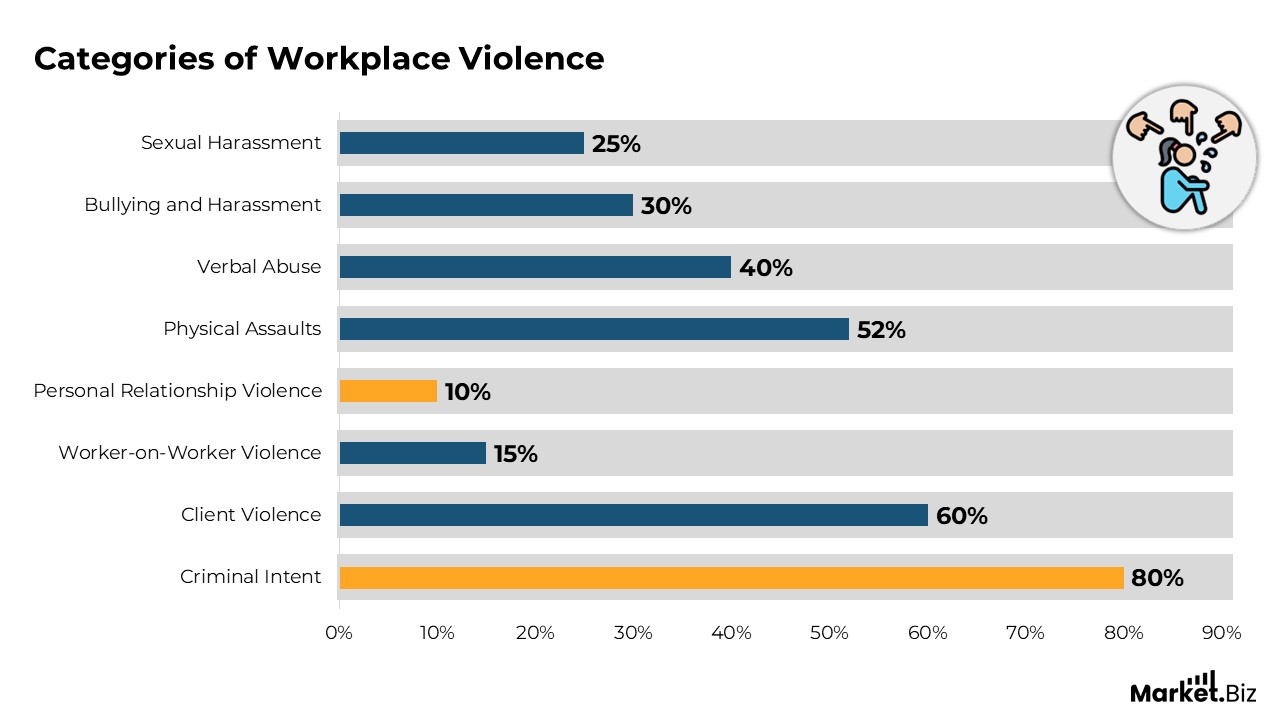
- Criminal Intent: Involves acts of violence by individuals with no legitimate relationship to the workplace, such as robberies and assaults. These account for 80% of workplace homicides.
- Customer/Client Violence: Occurs when customers or clients attack workers, most commonly in the healthcare, retail, and social services sectors, with over 60% of these incidents happening in healthcare.
- Worker-on-Worker Violence: Refers to violence between employees, including physical altercations or bullying, which accounts for 15% of workplace violence incidents.
- Personal Relationship Violence: Involves violence from individuals who have a personal relationship with the victim, such as domestic violence, impacting up to 10% of workplace incidents.
- Physical Assaults: The most common type of workplace violence, accounting for 52% of all incidents, often results in serious injuries.
- Verbal Abuse: A significant issue, with nearly 40% of workers experiencing verbal abuse at work, particularly in customer service and healthcare.
- Bullying and Harassment: Around 30% of employees report workplace bullying, which can escalate to violent behavior, especially in high-stress environments.
- Sexual Harassment: Often categorized as workplace violence, affecting about 25% of female employees in certain industries, leading to emotional distress and physical confrontations.
Causes of Workplace Violence
- High levels of stress due to heavy workloads and tight deadlines contribute to 40% of workplace violence incidents, particularly in high-pressure industries like healthcare and retail.
- Poor management and lack of support systems are responsible for 30% of worker-on-worker violence, as employees may feel undervalued or mistreated.
- Employees under the influence of alcohol or drugs contribute to approximately 20% of workplace violence, with incidents rising sharply in sectors involving heavy machinery or customer interaction.
- 50% of violent incidents are triggered by unresolved interpersonal conflicts between workers or between workers and supervisors.
- The presence of weapons in the workplace increases the likelihood of violence, with workplace homicides involving firearms making up 10% of all incidents.
- Workers facing uncertainty about their jobs or layoffs are more likely to engage in violent behavior, contributing to 15% of incidents in industries facing downsizing.
- Lack of proper security measures, such as limited surveillance or inadequate staff training, is linked to 25% of workplace violence cases.
- Workplace violence often stems from gender or cultural biases, with 20% of incidents arising from discrimination, harassment, or cultural misunderstandings.
Recent Trends in Workplace Violence Statistics
- Workplace violence fatalities have seen a 5% increase in 2024, with 406 reported deaths, especially in high-risk industries like healthcare and retail, highlighting the need for stronger prevention measures.
- New OSHA regulations are under development to require all businesses to conduct workplace violence risk assessments, with a focus on healthcare, retail, and public service sectors, affecting approximately 30% of employers.
- State-level mandates have risen significantly, with over 60% of U.S. states now requiring healthcare facilities to have comprehensive workplace violence prevention programs in place by 2025.
- The adoption of workplace violence technology has surged, with 35% of companies now using AI-driven surveillance systems to identify potential threats and report early signs of violence, reducing incident rates by 20%.
- Mental health support programs are becoming more integrated into workplace violence prevention, with 20% more organizations providing counseling services and stress management workshops, reflecting a growing understanding of the connection between stress and violent behaviour.
- Zero-tolerance policies are becoming increasingly common, with 45% of companies enforcing strict penalties for violent or disruptive behavior, leading to a 20% decline in workplace violence cases in sectors like manufacturing and healthcare.
- Federal government attention to domestic violence-related incidents at work has increased, with 25% of businesses now legally required to provide training and support for employees affected by domestic violence, helping mitigate the risk of these incidents spilling over into the workplace.
Conclusion
Workplace violence affects over 2 million workers annually, with healthcare and retail employees at the highest risk. The U.S. economy loses $121 billion each year due to related costs. With fatalities rising by 5% in 2024, stronger prevention measures are crucial. Companies with zero-tolerance policies have seen a reduction in incidents. Investing in employee training and support is key to reducing workplace violence and its impact.
FAQs
Injury and illness that is not lethal. The annualized incidence rate of workplace violence necessitating days away from work, job limitation, or transfer (DART) was 2.9 instances per 10,000 full-time equivalent employees for the 2021–2022 period, with 57,610 nonfatal occurrences.
Some workers may be more vulnerable to violence at specific workplaces due to variables that have been discovered by research. These elements include dealing with erratic, unstable individuals and trading money with the general population. Working alone or in remote locations may potentially increase the risk of violence.
Between 1970 and 2023, the average number of worker deaths in America decreased from approximately 38 per day to 15 per day. Between 1972 and 2023, the number of worker illnesses and injuries has decreased from 10.9 incidents per 100 workers to 2.4 events per 100.