









Introduction
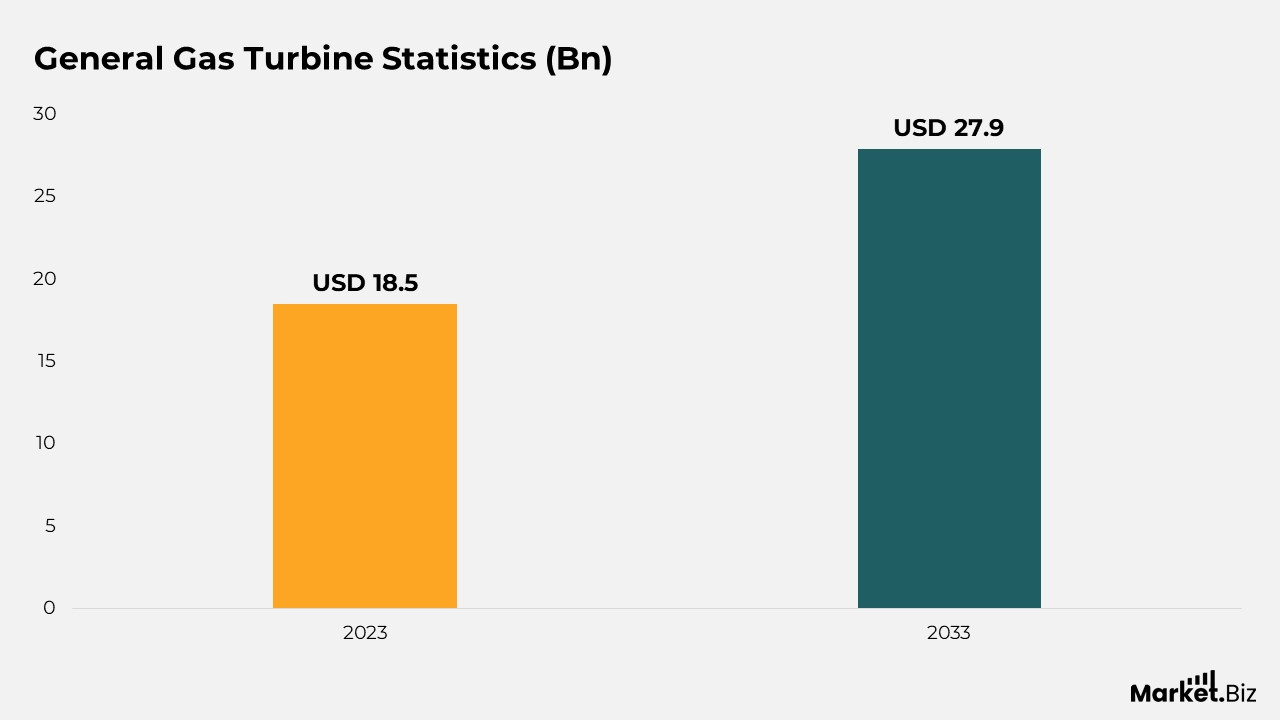
Gas Turbine Statistics: The Global Gas Turbine Market is anticipated to attain a valuation of USD 27.9 billion by the year 2033, increasing from USD 18.5 billion in 2023, which indicates a compound annual growth rate (CAGR) of 4.2% throughout the forecast period spanning from 2024 to 2033. In 2023, the Asia-Pacific region stood out as the dominant market, securing a 38.2% share and generating USD 7.0 billion in revenue.
A gas turbine is classified as a type of internal combustion engine that transforms natural gas into mechanical energy. This mechanical energy is subsequently utilized to produce electricity, propel aircraft, or operate mechanical equipment in sectors such as oil and gas.
The technology functions by compressing air, combining it with fuel, and igniting the resulting mixture, which generates high-pressure exhaust gases that rotate turbine blades. Renowned for their efficiency, dependability, and capacity to produce power rapidly, gas turbines play an essential role in both the energy and industrial sectors.
Editor’s Choice
- Heavy-duty gas turbines dominated the market, holding a significant 52.4% share, which underscores their extensive use in large-scale applications.
- The total installed capacity of wind power worldwide amounts to 743 gigawatts.
- The wind sector in the United States provides employment for approximately 120,000 full-time workers annually.
- Combined cycle gas turbines (CCGT) attain efficiencies ranging from 50% to 60%, greatly exceeding the 34% efficiency of simple cycle gas turbines.
- Contemporary turbines can endure temperatures surpassing 1,500°C, which enhances both energy production and dependability.
- Research shows that combining natural gas with as much as 30% hydrogen leads to a significant reduction in CO2 emissions, with initiatives in place to attain 100% hydrogen compatibility within the next decade.
- Gas turbines serve as the foundation for combined cycle power plants, which employ both gas and steam turbines to produce electricity.
What is the gas turbine market?
The gas turbine market means the worldwide industry focused on the manufacturing, distribution, and servicing of gas turbines for diverse applications, such as power, aviation, generation, and mechanical drives in industrial processes. This market includes a broad spectrum of participants, comprising manufacturers, component suppliers, and service providers.
It is categorized by capacity, technology (combined cycle, simple cycle), fuel type, application, and end-use industry. The growth of the gas turbine market is intricately linked to the development of energy infrastructure, the implementation of cleaner power solutions, and technological innovations that improve turbine efficiency and performance.
General Gas Turbine Statistics
- The Global Gas Turbine Market is expected to attain USD 27.9 billion by the year 2033, an increase from USD 18.5 billion in 2023, with a compound annual growth rate (CAGR) of 4.20% anticipated from 2024 to 2033.
- Heavy-duty gas turbines dominated the market, holding a significant 52.4% share, which underscores their extensive use in large-scale applications.
- The segment categorized as “Above 300 MW” emerged as the largest capacity segment, representing 36.6% of the market share, propelled by the rising demand for high-capacity control generation systems.
- Combined cycle technology led the market with an impressive 87.4% share, highlighting its enhanced efficiency and the increasing preference for minimizing emissions in power generation.
- The power and utilities sector maintained the largest share at 48.3%, indicating its essential role in fulfilling global energy requirements and ensuring grid stability.
- The Asia-Pacific region was at the forefront of the gas turbine market, securing a 38.2% market share and generating USD 7.0 billion in revenue.
Gas Turbine Market Statistics
- The Asia Pacific region has established itself as the leading force in the global gas turbine market in 2023, holding a significant market share of 38.2%, which translates to a market valuation of around USD 7.0 billion.
- China, notably, has made substantial investments in combined cycle power plants to satisfy its increasing energy requirements while moving towards more sustainable energy solutions, thereby boosting the demand for gas turbines.
- Meanwhile, Japan and South Korea are proactively adopting cutting-edge gas turbine technologies to improve energy efficiency and lower carbon emissions.
Wind Energy Facts and Statistics
- Wind energy contributes to the avoidance of 305 million metric tons of CO2 (carbon dioxide) emissions in the United States each year.
- The wind sector in the United States provides employment for approximately 120,000 full-time workers annually.
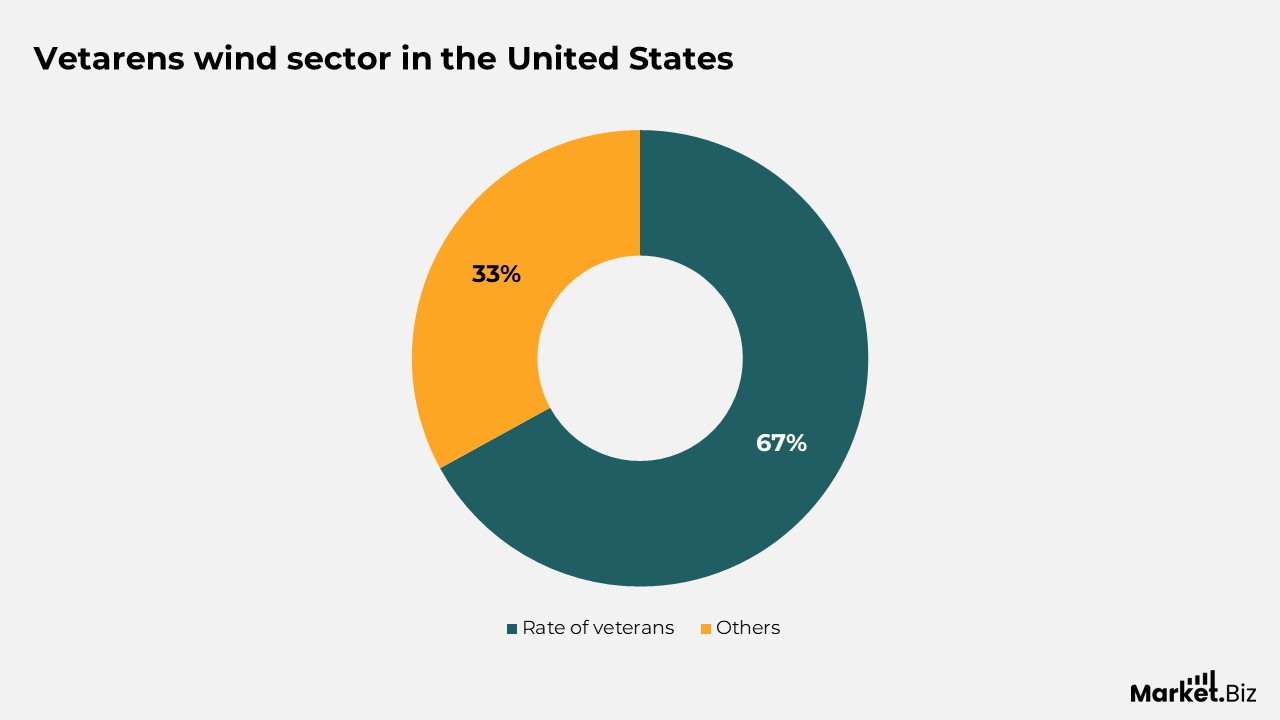
- The wind sector in the United States hires veterans at a rate that is 67% higher than the national average.
- Globally, wind power experiences an annual increase of 20% (equivalent to an impressive 60.4 gigawatts).
- The total installed capacity of wind power worldwide amounts to 743 gigawatts.
- A wind turbine with a capacity of 1.5 MW produces around 3,285,000 kWh of electricity each year, which is enough to supply power to 500 homes annually.
- Iowa derives 57% of its electricity from wind energy each year, ranking it second in the nation for annual wind energy production.
- In the United States, wind power has overtaken hydroelectric power as the leading source of renewable electricity generation.
- The average yearly salary for wind turbine technicians in the United States is $56,230.
- Wind speeds are greater at higher elevations and decrease near the earth’s surface, which is why the typical hub height of modern wind turbines is 90 meters.
Combined Cycle Gas Turbine Statistics
- Combined cycle gas turbines (CCGT) attain efficiencies ranging from 50% to 60%, greatly exceeding the 34% efficiency of simple cycle gas turbines.
- State-of-the-art CCGT facilities can achieve maximum thermal efficiencies of as much as 64% during base-load operations.
- CCGT systems make use of waste heat to drive a secondary steam cycle, which considerably improves efficiency.
- In comparison to conventional coal-fired power plants, CCGT technology generates lower emissions and realizes higher fuel efficiency.
Design and Advancements of Gas Turbine
- Contemporary turbines can endure temperatures surpassing 1,500°C, which enhances both energy production and dependability.
- Onshore combined cycle gas turbine (CCGT) facilities utilize supplementary pressure levels and reheat circuits to reach efficiencies of up to 60%.
- The incorporation of combined heat and power (CHP) systems enables gas turbines to attain efficiencies as high as 65%.
- CCGT facilities necessitate comparatively low capital expenditures, around $1,000 per kW, rendering them economically viable alternatives.
Gas Turbine Trends
- Research shows that combining natural gas with as much as 30% hydrogen leads to a significant reduction in CO2 emissions, with initiatives in place to attain 100% hydrogen compatibility within the next decade.
- Gas turbines are being increasingly utilized to support renewable energy systems such as wind and solar.
- These turbines can reach full capacity in under 10 minutes, guaranteeing a steady energy supply.
- Predictive maintenance has the potential to decrease downtime by 20–30% while also cutting operational expenses. This development is improving reliability and reducing unforeseen outages in power plants.
- Aeroderivative gas turbines, which are modified from jet engines, are becoming more popular due to their compact size, lightweight construction, and increased adaptability.
- These turbines are well-suited for decentralized power generation and industrial applications, boasting thermal efficiencies that surpass 40%.
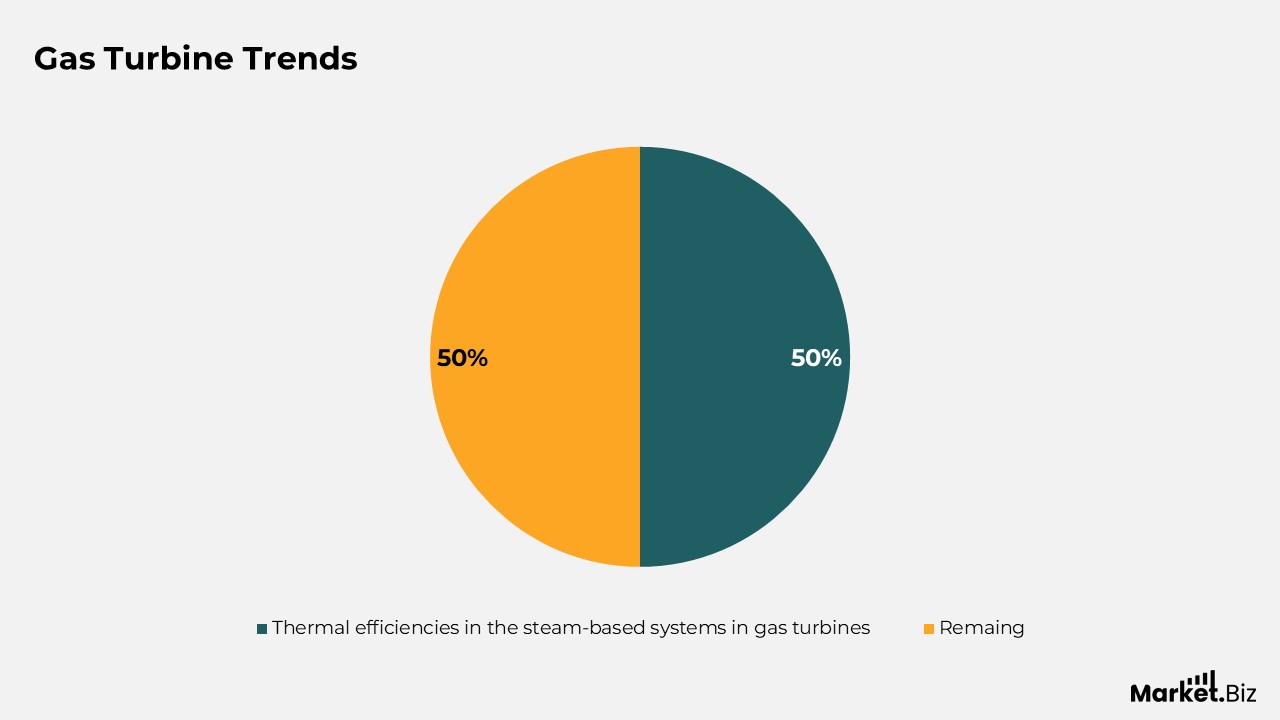
- Supercritical CO2 (sCO2) cycles are currently being investigated as a more efficient substitute for steam-based systems in gas turbines.
- These systems can achieve thermal efficiencies of up to 50%, leading to lower fuel consumption and emissions.
Use of Gas Turbines
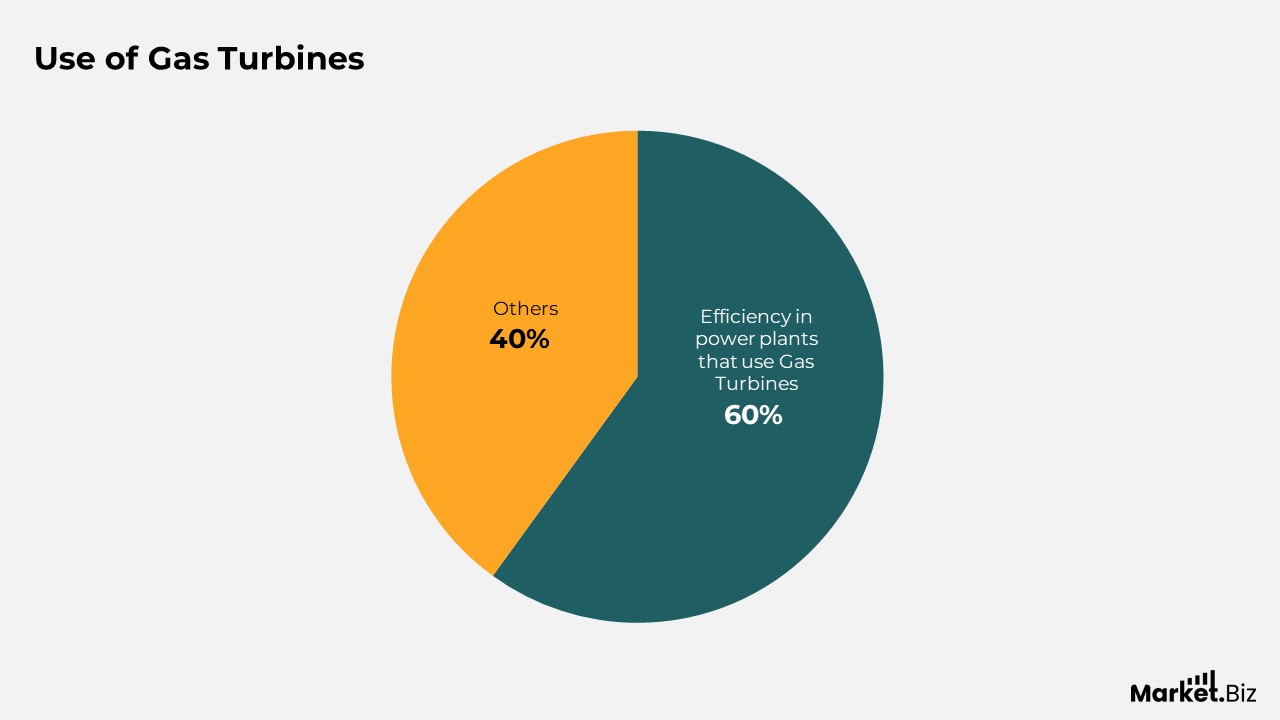
- Gas turbines serve as the foundation for combined cycle power plants, which employ both gas and steam turbines to produce electricity.
- These plants achieve efficiencies exceeding 60%, which is considerably higher than conventional power generation techniques, and are utilized in areas with substantial electricity needs, including the U.S., China, and India.
- Gas turbines are extensively implemented in combined heat and power (CHP) systems for industrial purposes.
- Sectors such as chemicals, oil refining, and paper production depend on CHP to lower energy expenses and minimize carbon emissions.
- Offshore platforms depend on gas turbines due to their compact design and capability to function in challenging environments, with power outputs ranging from 1 MW to more than 50 MW.
Recent Developments
- In February 2025, GE Vernova unveiled its next-generation HA gas turbine, engineered for improved efficiency and lower carbon emissions, thereby facilitating cleaner energy generation in process plants.
- In 2024, Siemens Energy launched sophisticated digital twin technology intended to enhance gas turbine performance and predictive maintenance schedules, thereby increasing operational reliability and cost-effectiveness.
- In 2024, Black & Veatch declared a collaboration with Baker Hughes at ADIPEC to create an LNG solution that integrates Baker Hughes’ LM9000 turbine technology with Black & Veatch’s PRICO® liquefaction system.
Conclusion
The worldwide gas turbine market is set for consistent growth, propelled by rising energy needs, a global transition towards cleaner and more efficient power generation, and innovations in turbine technology. Gas turbines have established themselves as an essential solution for a range of applications, such as power generation, industrial processes, and aviation, providing reliability, flexibility, and efficiency.
As markets move towards decarbonisation, the integration of hydrogen-based fuels, hybrid systems, and digital maintenance solutions will create new opportunities for innovation and market growth.
FAQs
Wind energy, also known as wind power, pertains to the mechanism through which wind turbines transform the kinetic energy of wind into electrical energy. The phenomenon of wind arises from the uneven heating of the atmosphere by the Sun, the irregularities present on the Earth’s surface, and the Earth’s rotation. Wind serves various human purposes, including sailing vessels, water pumping, and electricity generation. Wind turbines effectively convert the kinetic energy of moving air into electrical power.
The prominent participants in the gas turbine market include Caterpillar Inc. (Solar Turbines Incorporated), Ansaldo Energia, Capstone Green Energy, General Electric Company, IHI Corporation, Kawasaki Heavy Industries Ltd., Harbin Electric Company Limited, Mitsubishi Hitachi Power Systems, Ltd. (MHPS), Rolls-Royce Holdings Plc, MTU Aero Engines (Vericor Power Systems), Siemens AG, Bharat Heavy Electricals Limited, Volkswagen Group (MAN Energy Solutions), and Wartsila.
The key factors influencing the growth of the gas turbine market include the increasing demand for clean and efficient power generation, a heightened focus on combined-cycle power plants, rising electricity demand, the availability of natural gas, and the development of infrastructure.

