









Introduction
Swimwear Statistics: Swimwear has transcended its role as merely a seasonal requirement; it has evolved into a vital component of contemporary lifestyles, merging fashion, practicality, and sustainability in ways that mirror changing consumer values. As we approach 2025, the swimwear sector is set for considerable expansion, fueled by innovations in design, advancements in fabric technology, and alterations in consumer behaviour.
The global swimwear market is an expanding industry, anticipated to attain $45.4 billion by 2033, propelled by elements such as an increasing focus on sun protection, the rise of online shopping, and a demand for specialised features like UV protection and slimming capabilities. Key materials utilised include nylon and polyester, with the market generating substantial revenue from women’s swimwear and accessories.
The growth of the industry is also influenced by shifting trends and regional preferences, with the Asia-Pacific region commanding the largest market share in 2022.
Editor’s Choice
- In 2021, the U.S. swimwear market was valued at USD 6.5 billion.
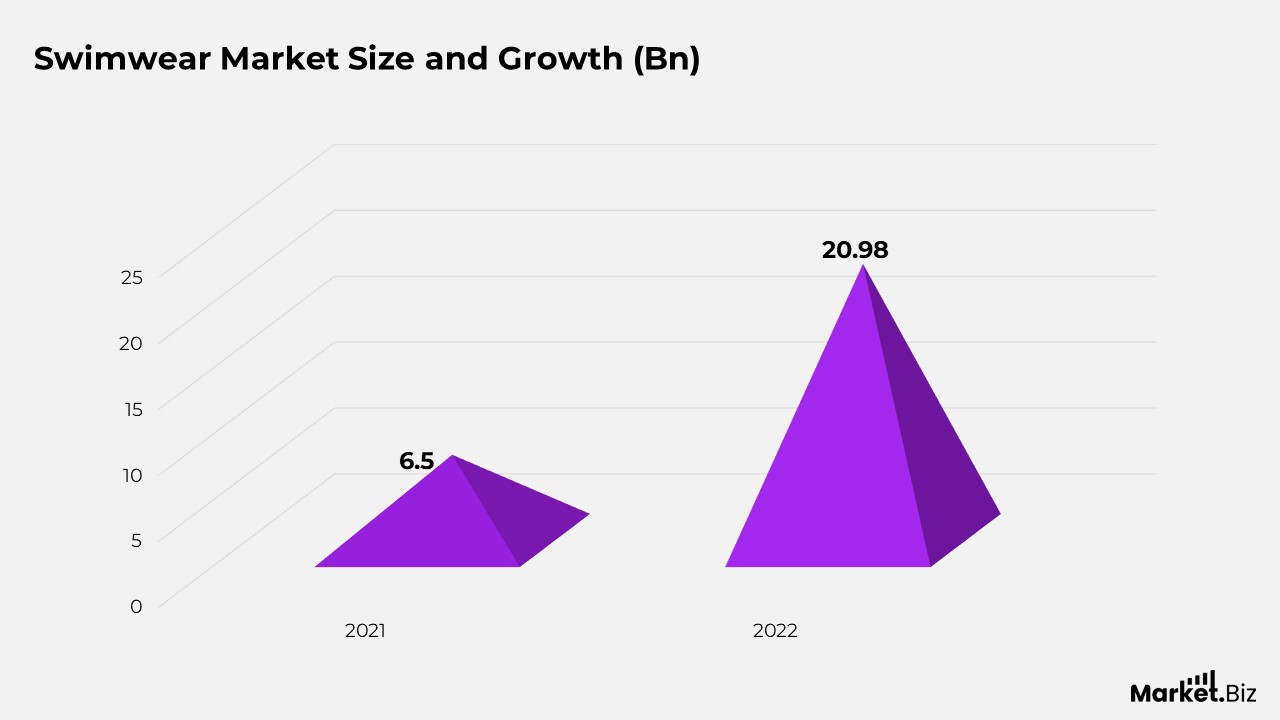
- The global swimwear market was assessed at USD 20.98 billion in 2022.
- In 2023, the market experienced a notable increase, reaching USD 92.48 billion.
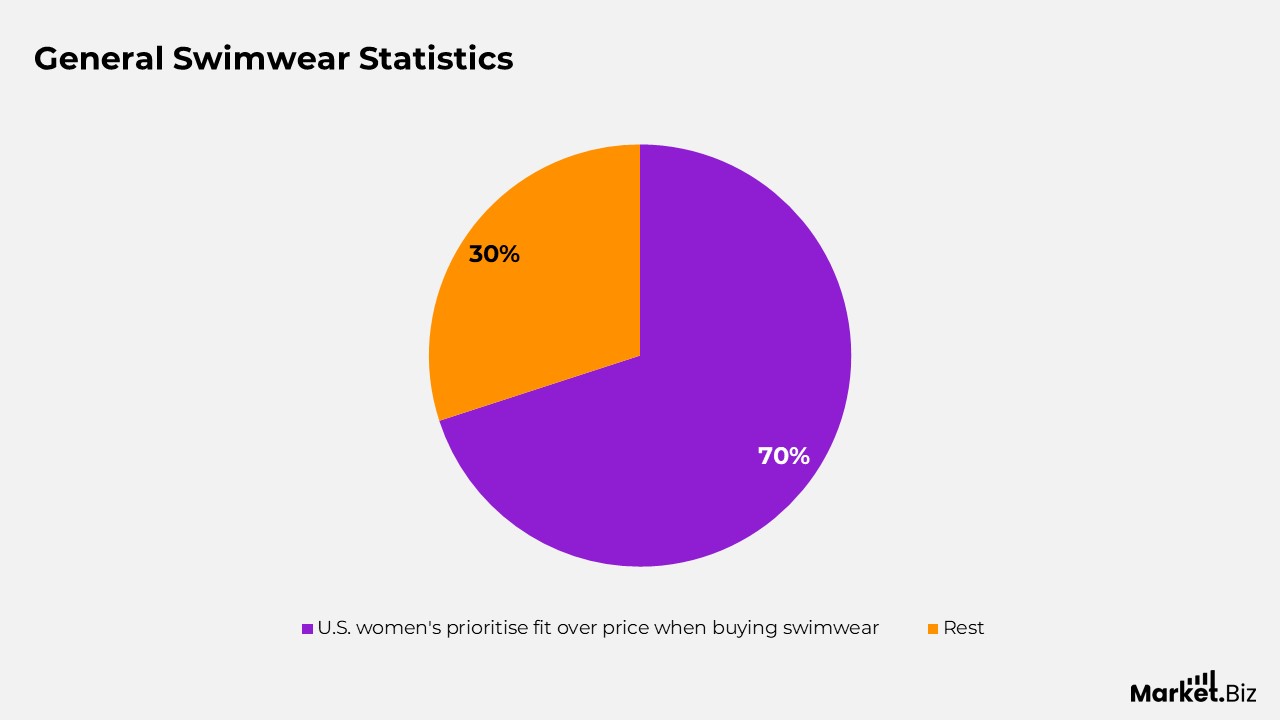
- 70% of women in the U.S. prioritise fit over price when buying swimwear.
- 28% of swimwear shoppers regard sustainability as a significant factor.
- In 2021, there was a 19% increase in online distribution channels for swimwear sales.
- In 2022, e-commerce accounted for 32% of global swimwear sales.
- In 2018, the cost of men’s swimwear was noted at USD 12.69.
- China dominated the export market with a total trade value of USD 122.45 million, which translates to 34,249,200 units.
General Swimwear Statistics
- The global swimwear market was assessed at USD 20.98 billion in 2022.
- The swimwear sector is anticipated to expand at a compound annual growth rate (CAGR) of 5.2% from 2023 to 2030.
- In 2022, women’s swimwear represented more than 60% of the global market share.
- North America accounted for over 35% of the global swimwear market share in 2021.
- Online sales channels for swimwear experienced a growth of 19% in 2021.
- The U.S. swimwear market was valued at USD 6.5 billion in 2021.
- 70% of women in the U.S. prioritise fit over price when buying swimwear.
- Sustainable swimwear saw a year-over-year growth of 22% in 2022.
- 28% of swimwear consumers regard sustainability as a significant consideration.
- The Asia Pacific region is expected to exhibit the highest CAGR in the swimwear market until 2030.
- The competitive swimwear segment is projected to reach USD 7 billion by 2030.
- More than 55% of consumers utilise social media to find new swimwear brands.
- Instagram is the leading platform for swimwear marketing, influencing 47% of consumers.
Swimwear Market Size and Growth Statistics
- The global swimwear market was assessed at USD 20.98 billion in 2022.
- The swimwear sector is anticipated to expand at a compound annual growth rate (CAGR) of 5.2% from 2023 to 2030.
- In 2021, the U.S. swimwear market was valued at USD 6.5 billion.
- Sustainable swimwear experienced a year-over-year growth of 22% in 2022.
- The competitive swimwear segment is projected to achieve a valuation of USD 7 billion by 2030.
- Sales of high-waisted bikinis rose by 15% in 2022.
- The global men’s swimwear market reached a value of USD 5.6 billion in 2022.
- Digital swimwear brands, such as Summersalt, reported a 50% increase in online sales in 2023.
- Sales of plus-size swimwear grew by 18% in 2022.
- The children’s swimwear market attained a value of USD 4.2 billion in 2022.
- Swimwear exports from China fell by 7% in 2022 due to inflationary pressures.
- The swimwear market experienced a 38% recovery in 2021 following the COVID pandemic.
- Swimwear designed for competitive sports, such as triathlons, is expected to grow by 9% annually.
- Sales of men’s swim trunks increased by 12% year-over-year in 2022.
Moreover
- Tankini sales declined by 8% in 2022 compared to previous years.
- UV-protective swimwear is witnessing an annual growth rate of 13%.
- “Slow fashion” swimwear brands gained 25% in popularity in 2022.
- The global swimwear market is projected to reach USD 29.1 billion by 2028.
- The market for smart swimwear featuring embedded technology is estimated to grow at a CAGR of 18%.
- The designer swimwear segment is expected to achieve a valuation of USD 5 billion by 2026.
- Swimwear rental platforms experienced a growth of 60% in 2022.
- The Middle East swimwear market is anticipated to grow at a CAGR of 5.8% until 2030.
- Functional swimwear with compression features saw a growth of 14% in 2022.
- Swimwear resale platforms reported a year-over-year growth of 40%.
- French swimwear manufacturers experienced an 11% increase in export growth in 2022.
- Swimwear designed for post-mastectomy use grew by 20% in 2022.
- Bralette-style bikini tops experienced a 19% increase in sales in 2022.
Women’s Swimwear Market Statistics
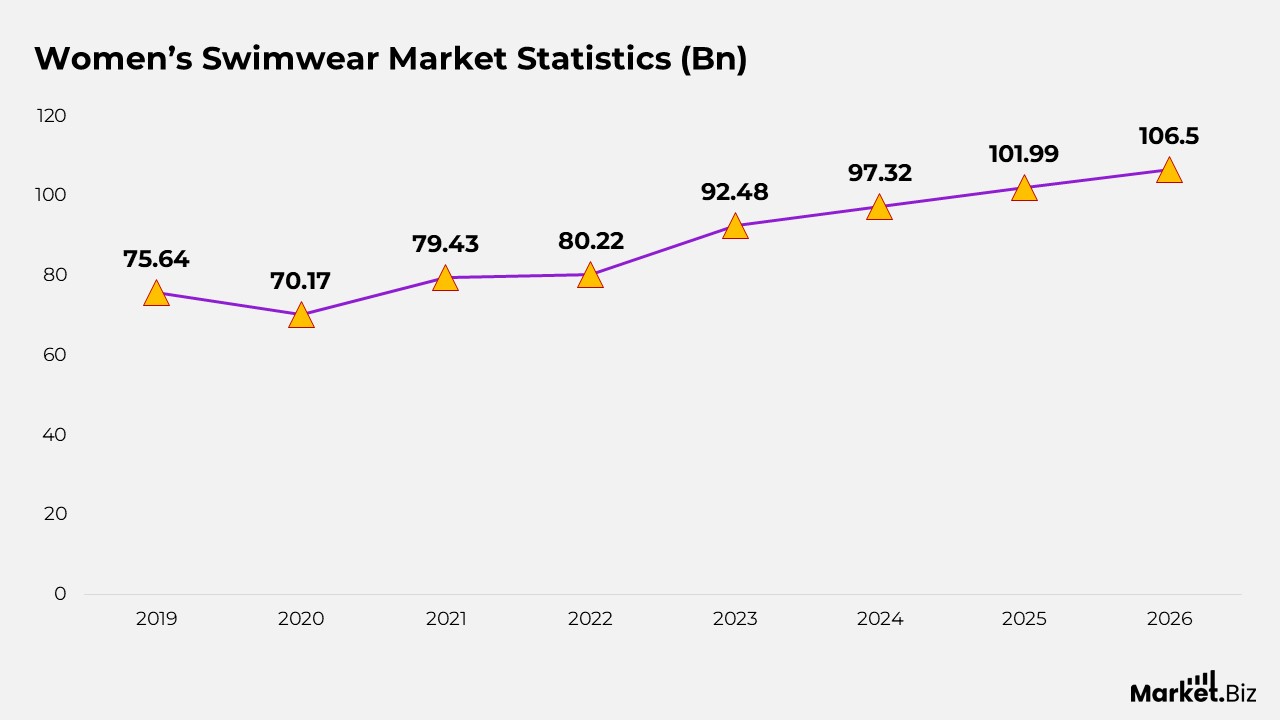
- In 2019, the market generated USD 75.64 billion; however, in 2020, it experienced a decline to USD 70.17 billion, likely due to the effects of the COVID-19 pandemic.
- The market swiftly rebounded in 2021, achieving USD 79.43 billion, and maintained its upward trend in 2022, with revenues amounting to USD 80.22 billion.
- In 2023, the market experienced a notable increase, reaching USD 92.48 billion.
- Forecasts suggest ongoing growth, with the market projected to attain USD 97.32 billion in 2024.
- By 2025, revenues are expected to further increase to USD 101.99 billion, and this favourable trend is anticipated to continue into 2026, with an estimated revenue of USD 106.5 billion.
- The growth is expected to persist through 2027, with projected revenues of USD 111.02 billion, followed by USD 115.53 billion in 2028.
- By 2029, the women’s sports and swimwear segment is anticipated to generate USD 120.5 billion, indicating a strong and sustained growth trend throughout the forecast period.
Swimwear Product Segmentation
- In 2022, women’s swimwear represented over 60% of the global market share.
- 70% of women in the U.S. prioritise fit over price when buying swimwear.
- The typical cost of women’s designer swimwear is $120.
- Swimwear constitutes 14% of the overall U.S. women’s activewear market.
- Materials resistant to chlorine now make up 21% of swimwear fabric sales.
- Rash guards account for 12% of total global swimwear sales.
- Almost 50% of Gen Z consumers favour minimalist designs in swimwear.
- The colour black is the most favoured in swimwear, selected by 37% of consumers.
- Branded swimwear represents 65% of global sales.
- Bikinis hold a dominant 75% market share in the two-piece swimwear category.
- Returns of swimwear purchased online are 30% higher than the average for apparel.
- Seamless swimwear designs experienced a 17% increase in market share from 2020 to 2022.
- On average, consumers possess 3.2 pieces of swimwear.
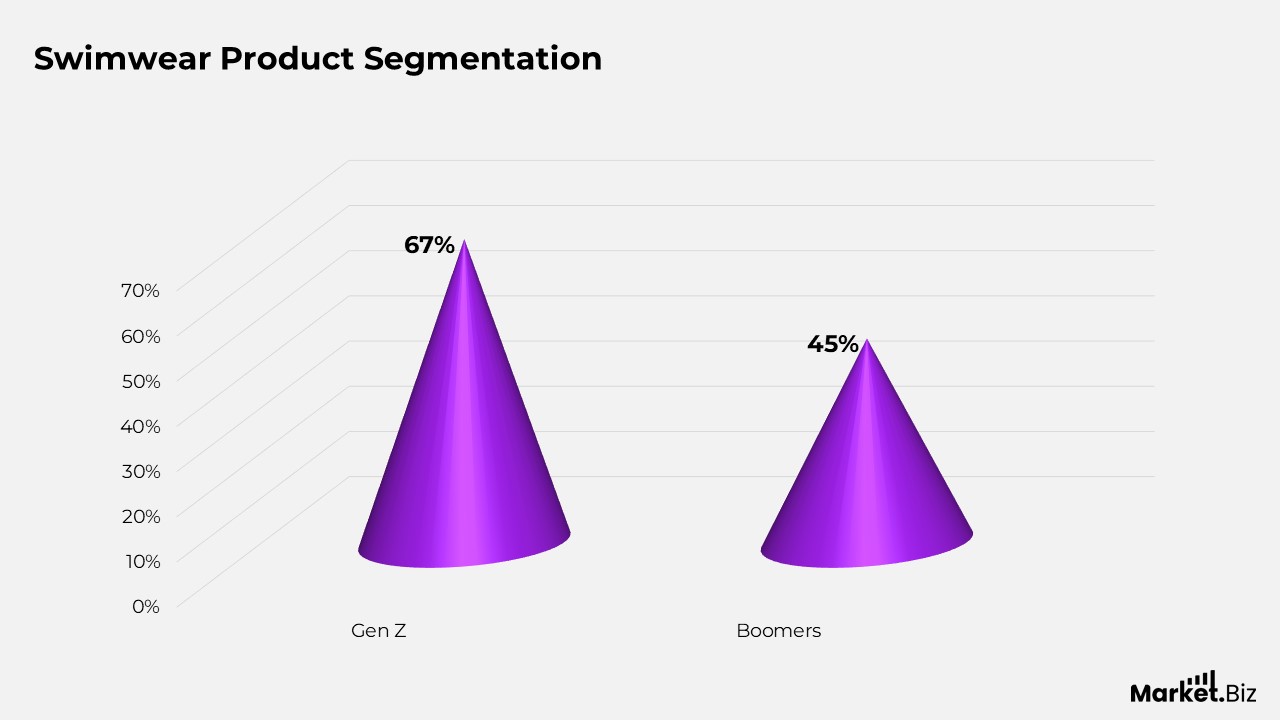
- Brand loyalty for swimwear is greater among Gen Z (67%) compared to Boomers (45%).
- The average frequency of swimwear purchases is once every 18 months.
- Swimwear sold in sets achieved 22% more sales than individual items in 2022.
- Influencer-driven swimwear brands accounted for 15% of new product launches in 2022.
- In Australia, swimwear comprises 25% of annual beachwear sales.
Trends and Innovations Swimwear
- 28% of swimwear shoppers regard sustainability as a significant factor.
- More than 55% of consumers utilise social media to find new swimwear brands.
- In 2022, 92% of swimwear brands raised their digital advertising expenditures.
- The use of high-tech fabrics in swimwear is fostering innovation, achieving a 10% compound annual growth rate (CAGR).
- Swimwear purchases reach their highest levels during late spring and early summer each year.
- Celebrity endorsements influence 48% of U.S. consumers when selecting swimwear.
- Approximately 65% of women experience anxiety when shopping for swimwear.
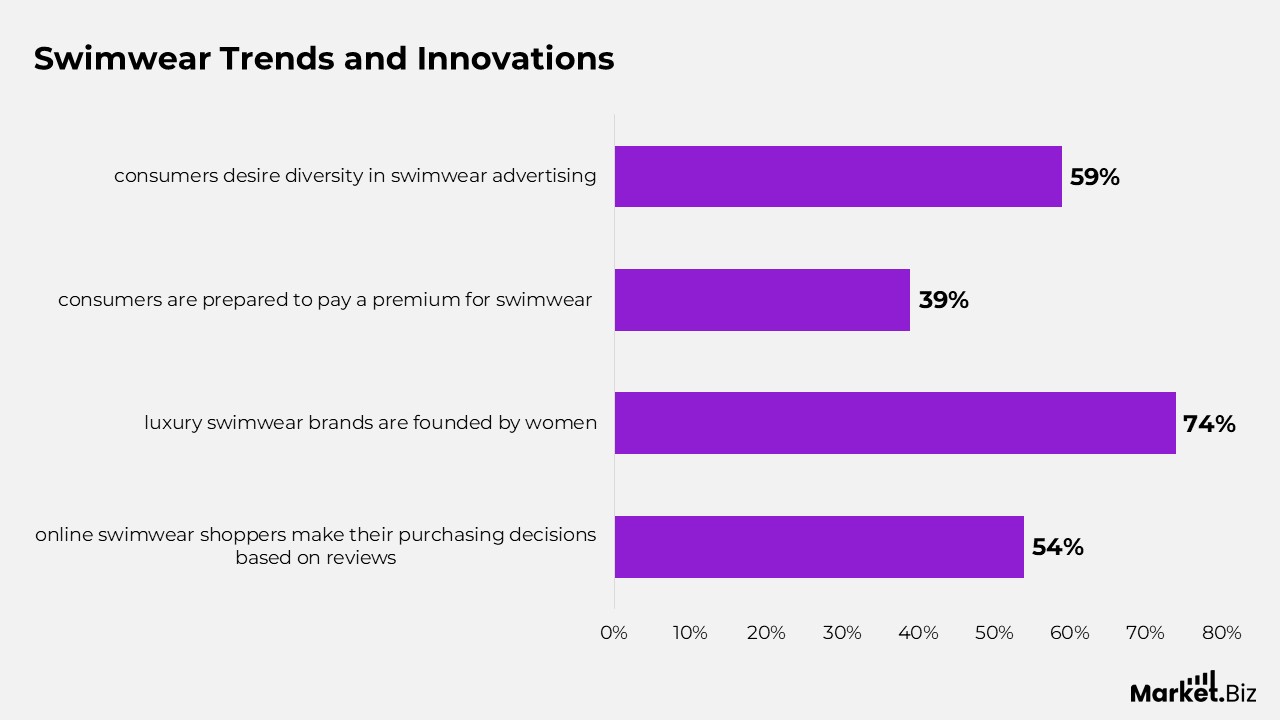
- 54% of online swimwear shoppers make their purchasing decisions based on reviews.
- 74% of luxury swimwear brands are founded by women.
- 39% of consumers are prepared to pay a premium for swimwear that is ethically produced.
- 59% of consumers desire diversity in swimwear advertising.
- The use of eco-friendly materials in swimwear production increased by 30% in 2022.
- 31% of millennial consumers prefer local brands for their swimwear needs.
- In warmer climates, 21% of consumers wear swimwear as outerwear.
- 90% of Gen Z shoppers take brand ethics into account when purchasing swimwear.
- Demand for swimwear that emphasizes modesty trends rose by 11% in 2022.
- Innovations in swimwear fabrics that focus on recycled plastic saw a 33% increase in 2022.
- The concept of swimwear as resort wear contributed to a 10% rise in per-ticket spending at luxury hotels.
Swimwear Distribution Channels
- In 2021, there was a 19% increase in online distribution channels for swimwear sales.
- Instagram became the leading platform for swimwear marketing, holding a 47% influence.
- Around 43% of swimwear revenue in the United States is derived from department stores.
- In 2022, e-commerce accounted for 32% of global swimwear sales.
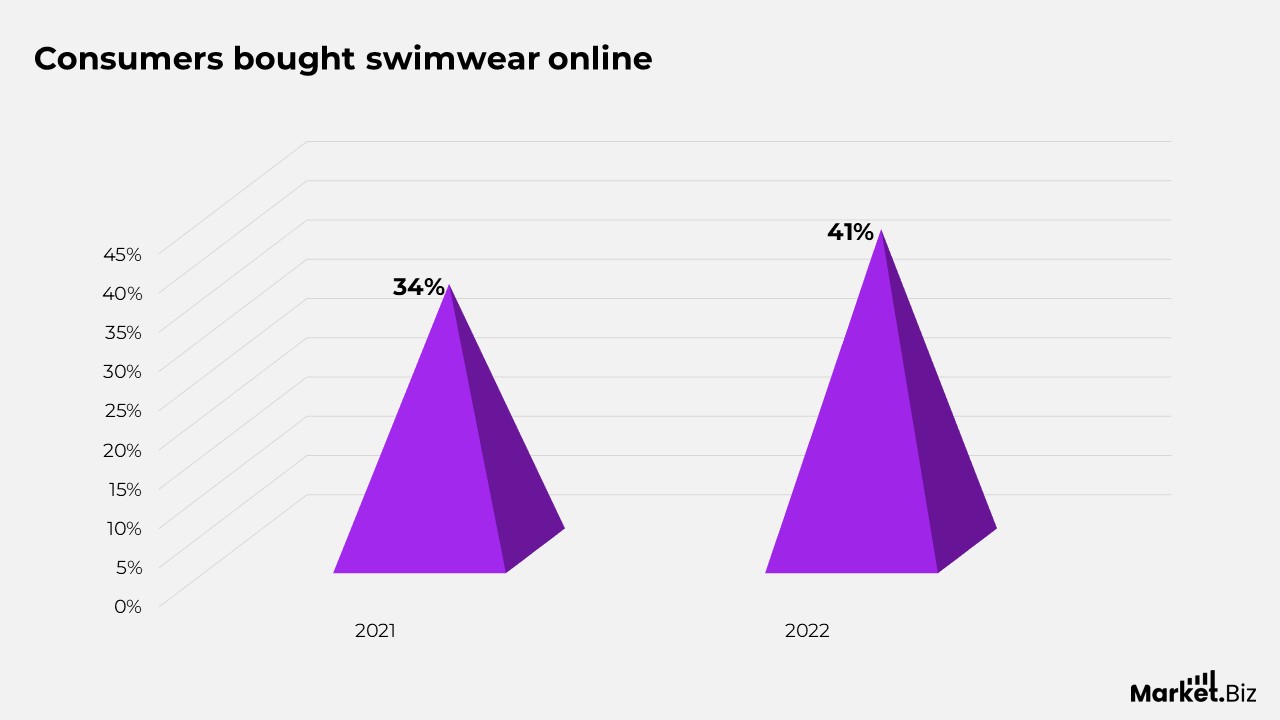
- In 2022, 41% of consumers bought swimwear online, up from 34% in 2021.
Swimwear Sales Statistics
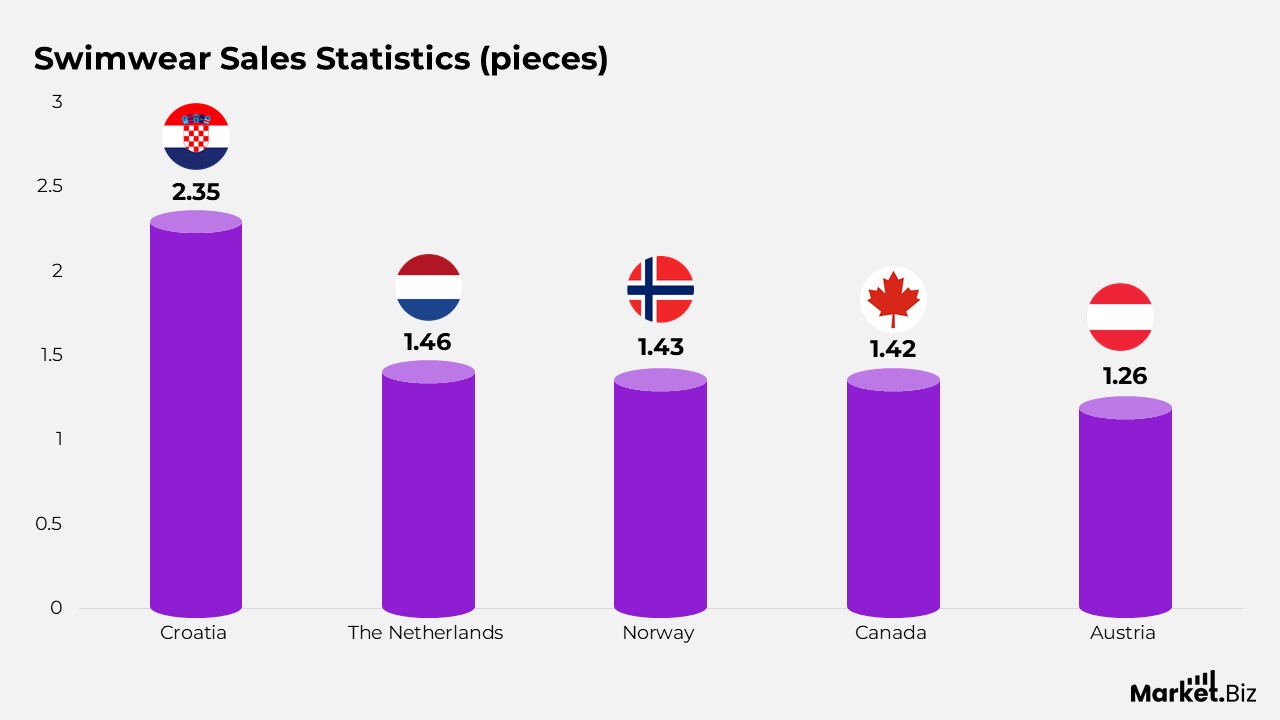
- The Netherlands and Croatia achieved per-capita volumes of 1.46 and 2.35 pieces, respectively.
- Other countries with significant volumes include Norway (1.43 pieces), Canada (1.42 pieces), and Austria (1.26 pieces).
- Portugal and the United Kingdom reported volumes of 1.14 and 1.16 pieces, respectively, while Hungary and Germany recorded 1.05 and 1.06 pieces.
- Finland (0.99 pieces), Italy (1.02 pieces), and Denmark (0.95 pieces) also demonstrated strong per-capita sales.
- In contrast, nations such as South Korea (0.93 pieces), Spain (0.91 pieces), and Sweden (0.90 pieces) exhibited relatively lower sales volumes.
- As the per-capita volumes continued to decline, Belgium (0.77 pieces), Estonia (0.79 pieces), and France (0.80 pieces) were among the countries with reduced figures, with Japan, Australia, and Greece noting 0.77, 0.77, and 0.69 pieces, respectively.
Price Statistics of Swimwear
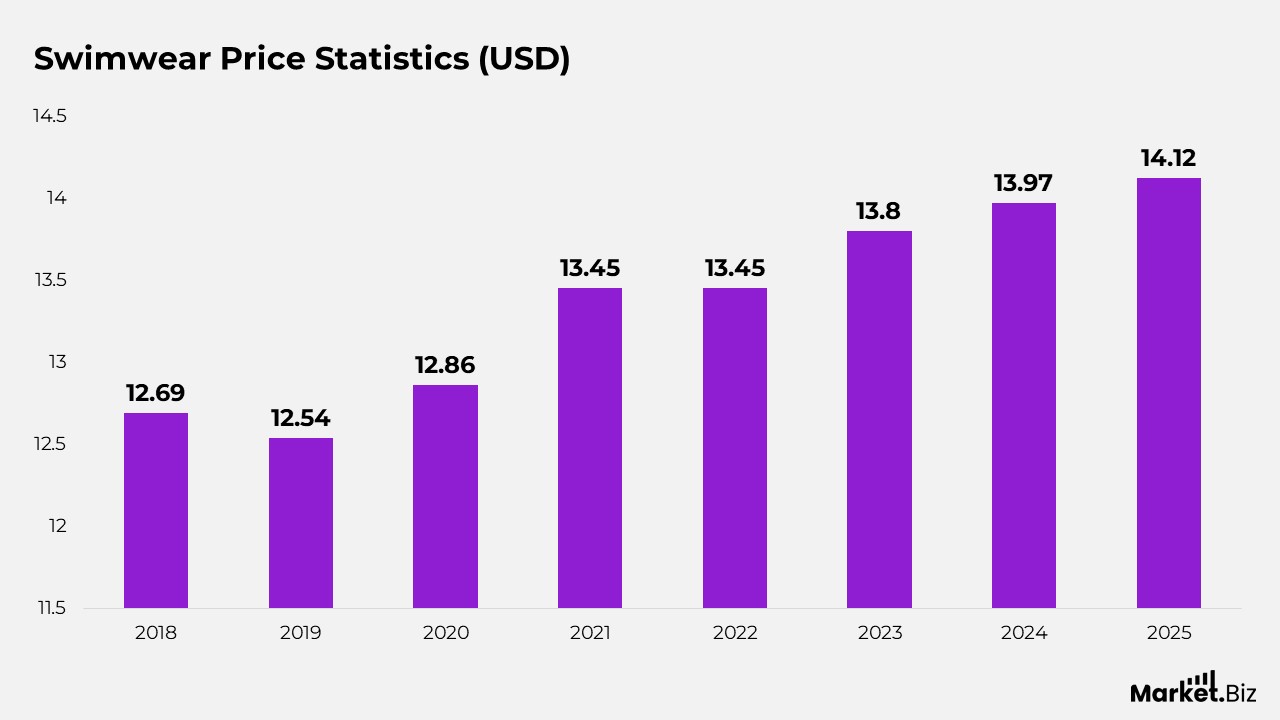
- In 2018, the cost of men’s swimwear was noted at USD 12.69.
- This amount saw a slight decline to USD 12.54 in 2019, followed by a moderate rise to USD 12.86 in 2020.
- By 2021, the prices of swimwear experienced a more significant increase to USD 13.45, which remained stable through 2022.
- In 2023, the price rose again, reaching USD 13.80, and continued to ascend in 2024 to USD 13.97.
- Looking ahead, the trend of gradual increases continued, with the price anticipated to reach USD 14.12 in 2025, USD 14.28 in 2026, and USD 14.42 in 2027.
- By 2028, the price is expected to further rise to USD 14.57, and by 2029, it is projected to reach USD 14.70.
Swimwear Export Statistics
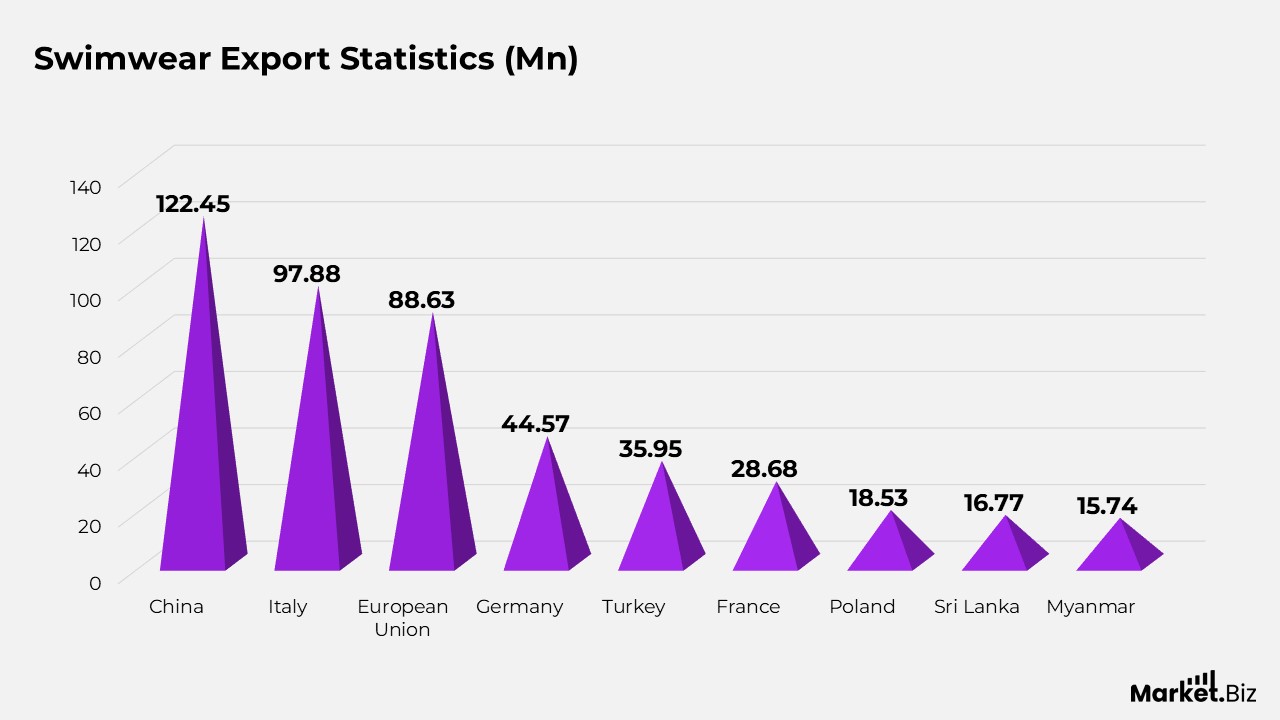
- China dominated the export market with a total trade value of USD 122.45 million, which translates to 34,249,200 units.
- Italy achieved the second rank with a trade value of USD 97.88 million, exporting 3,667,460 units.
- The total exports from the European Union reached USD 88.63 million, equivalent to 3,074,920 units.
- Germany’s export value amounted to USD 44.57 million, with 3,114,720 units dispatched globally.
- Turkey’s export of swimwear reached a total value of USD 35.95 million, which corresponds to 4,559,080 units.
- France’s export figures amounted to USD 28.68 million, encompassing a total of 1,277,220 units.
- Poland’s export trade was valued at USD 18.53 million, representing 1,597,680 units.
- Sri Lanka’s swimwear exports totaled USD 16.77 million, with an overall count of 2,322,340 units, whereas Myanmar’s exports were valued at USD 15.74 million, with 3,886,230 units distributed globally.
Swimwear Import Statistics
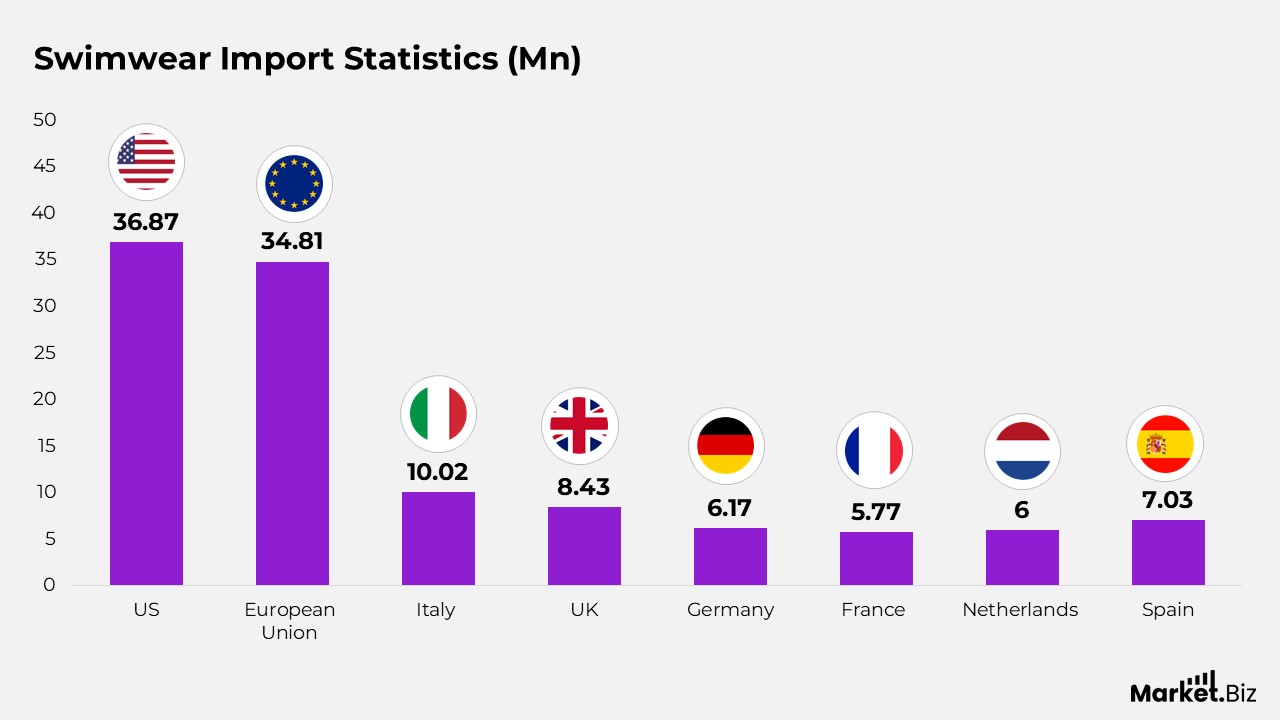
- In 2023, the United States was at the forefront of global imports of men’s and boys’ swimwear, achieving a trade value of $200.27 million and importing 36.87 million items.
- The European Union closely trailed, with imports amounting to $198.87 million and 34.81 million items.
- Italy secured the third position with a trade value of $77.26 million, bringing in 10.02 million items.
- The United Kingdom’s imports of swimwear reached $58.91 million, totaling 8.43 million items, whereas Germany’s imports were valued at $57.78 million, corresponding to 6.17 million items.
- France imported swimwear worth $48.45 million, comprising a total of 5.77 million items.
- The Netherlands imported swimwear valued at $46.01 million, followed by Spain, which recorded $42.66 million in imports and 7.03 million items.
Recent Development
- In 2024, advancements in swimwear featured trends such as eco-conscious and recycled materials, the emergence of adaptable and versatile designs, an emphasis on comfort and inclusive sizing, as well as a colour palette inspired by nature.
- In 2024, Saudi Arabia held its inaugural swimsuit fashion show.
Swimwear Future Prediction
- In Cancún, Puerto Vallarta, Playa del Carmen, and Acapulco, the implementation of all-encompassing women’s swimwear solutions is rapidly increasing within tourism sectors and among fashion-aware consumers. The market exhibits robust growth momentum, projected at a CAGR of 3.0% until 2035.
- The United States shows the highest growth potential in the Women’s Swimwear Market, with a CAGR of 3.3% anticipated through 2035.
Conclusion
Swimwear Statistics: The worldwide swimwear industry is anticipated to experience substantial growth, fueled by a rising demand for fitness, fashion, and sun protection, alongside robust expansion in online retail and areas such as the Asia-Pacific.
Primary factors driving the market include the increase in online shopping, the popularity of long-sleeve and performance-focused designs, and a consumer transition towards sustainable and inclusive alternatives.
Additionally, the market is witnessing the emergence of distinct regional trends, including the escalating significance of tourism markets in Latin America and the consistent, strong demand from well-established markets like North America.
FAQs
Young Adults (18-34 years): This group likely represents the largest segment, shaped by current trends, social media influences, and an emphasis on fitness and recreational activities.
Characterised by vibrant colour blocking and striking shades, particularly pinks and reds, one-piece swimsuits, such as this model from Chlore, are expected to take precedence, while bikinis and other styles will continue to be vital.
The Resurgence of High-Cut and Vintage Styles. Nostalgic references to the ’80s and ’90s persist in shaping luxury swimwear, with high-cut bikinis and retro-inspired designs making a significant return. These styles serve to elongate the legs and accentuate the waistline, providing a universally flattering appearance.