









Introduction
Digital Photography Statistics: Digital photography has become widespread, propelled by the growth of social media and the increasing use of smartphones. Worldwide, the digital photography market is witnessing substantial expansion, with forecasts suggesting a market value of $161.82 billion by 2032, reflecting a compound annual growth rate (CAGR) of 4.4% from 2025 to 2032.
Although smartphones are the primary devices for capturing images, the market includes diverse sectors such as professional, commercial, and medical photography, where software and processing equipment are essential components.
With an anticipated total of over 1.81 trillion photographs to be captured worldwide this year, the significance of images has increasingly become integral to everyday life, encompassing both personal recollections and professional content development. Having these statistics, digital photography is evolving faster than ever.
Editor’s Choice
- In 2021, over 1.4 trillion photographs were captured worldwide.
- The typical smartphone user takes about 950 pictures each year.
- The adoption of AI in photography is anticipated to grow at a compound annual growth rate (CAGR) of 25% from 2023 to 2030.
- The leading photography festivals around the globe draw more than 200,000 attendees each year.
- The typical cost of a professional photography session is about $300, with wedding photography averaging around $1,500.
- Drones are utilized by 70% of professional landscape photographers.
- Roughly 42% of photo sharing occurs on social media platforms like Instagram and Facebook.
- About 55% of smartphone photographers do not consistently back up their images.
- The resolution of smartphone cameras has risen by 150% in the last five years.
What is Digital Photography?
Digital photography is defined as the method of capturing images through electronic devices rather than conventional film. The origins of visual storytelling date back thousands of years; however, the invention of the camera transformed the way images were documented. The late 19th century saw a pivotal change with George Eastman’s introduction of film, which made photography widely available to the public through devices such as the Kodak Brownie.
The late 20th century witnessed the rise of digital photography, highlighted by the launch of the first consumer digital camera, the Dycam Model 1, in 1990. Digital cameras utilize electronic photodetectors to capture images, which are then stored on solid-state memory devices in formats such as RGB color space or raw data, the latter preserving extensive metadata for improved editing. The shift to digital photography presents numerous benefits, including immediate image review and the capacity to take an unlimited number of photos without the constraints of film.
Furthermore, digital images can be effortlessly edited with software, enhancing both the quality and visual appeal of photographs. While some photographers continue to favor traditional film for its distinctive characteristics, both digital photography and analog techniques can coexist, catering to a variety of preferences within the photographic community. As advancements in technology persist, digital photography continues to be a vibrant and evolving art form.
General Digital Photography Statistics
- In 2021, over 1.4 trillion photographs were captured worldwide.
- The typical smartphone user takes about 950 pictures each year.
- Approximately 95 million images are uploaded to Instagram daily.
- The global market for photography equipment is expected to reach $15 billion by 2025.
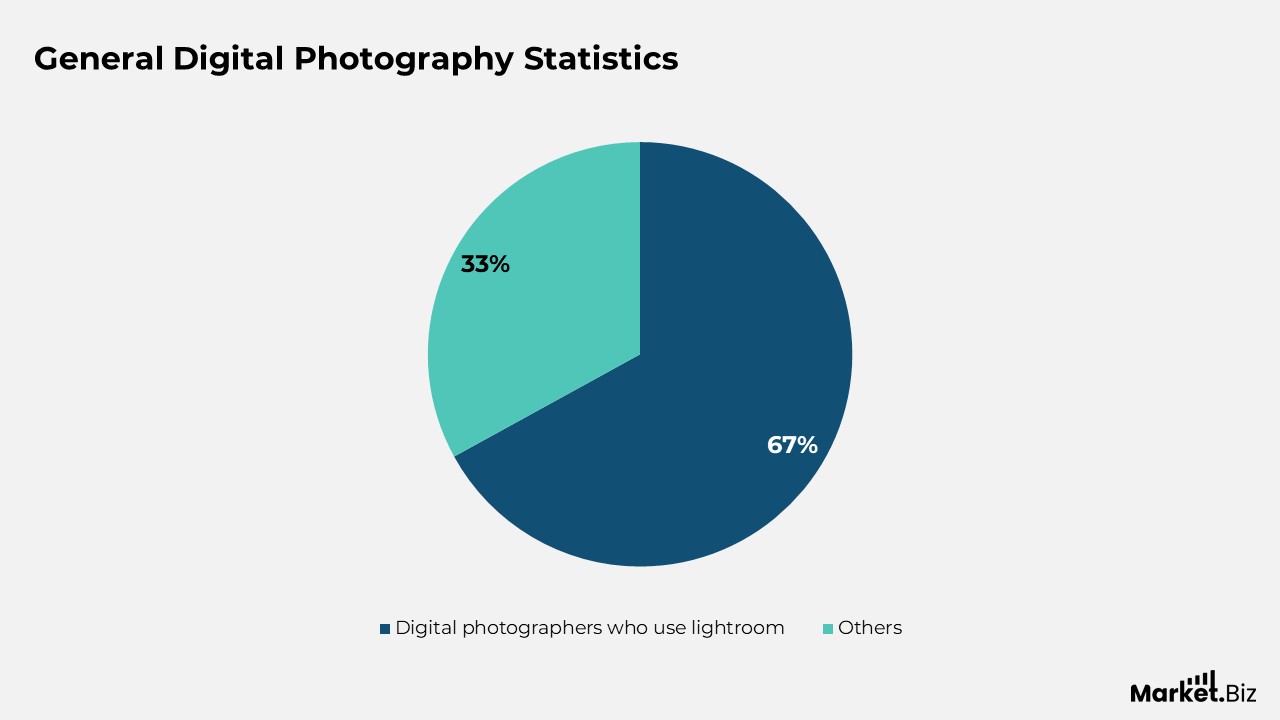
- Lightroom is utilized by 67% of professional photographers for editing their images.
- 70% of professional landscape photographers employ drones in their work.
- Canon is the most favored camera brand among photographers globally, holding a market share of 44%.
- Photographers stored approximately 90% of the images that are now in digital format.
- The average cost of a professional camera body has risen by 15% over the past five years.
- About 42% of photo sharing takes place on social media platforms such as Instagram and Facebook.
- The adoption of AI in photography is anticipated to grow at a compound annual growth rate (CAGR) of 25% from 2023 to 2030.
- Approximately 55% of smartphone photographers fail to back up their images consistently.
- The global stock photography market was valued at $4 billion in 2020.
Digital Photography Market Size
- In 2021, more than 1.4 trillion photographs were captured worldwide.
- The global market for photography equipment is anticipated to attain a value of $15 billion by the year 2025.
- Currently, around 90% of the images archived by photographers are in digital format.
- Over the past five years, the average cost of a professional camera body has risen by 15%.
- The integration of artificial intelligence in photography is expected to expand at a compound annual growth rate (CAGR) of 25% from 2023 to 2030.
- In 2020, the global stock photography market was appraised at $4 billion.
- The worldwide demand for portrait photography is projected to grow at a CAGR of 6% until 2027.
- The introduction of mirrorless cameras has resulted in a 25% decline in DSLR sales from 2018 to 2023.
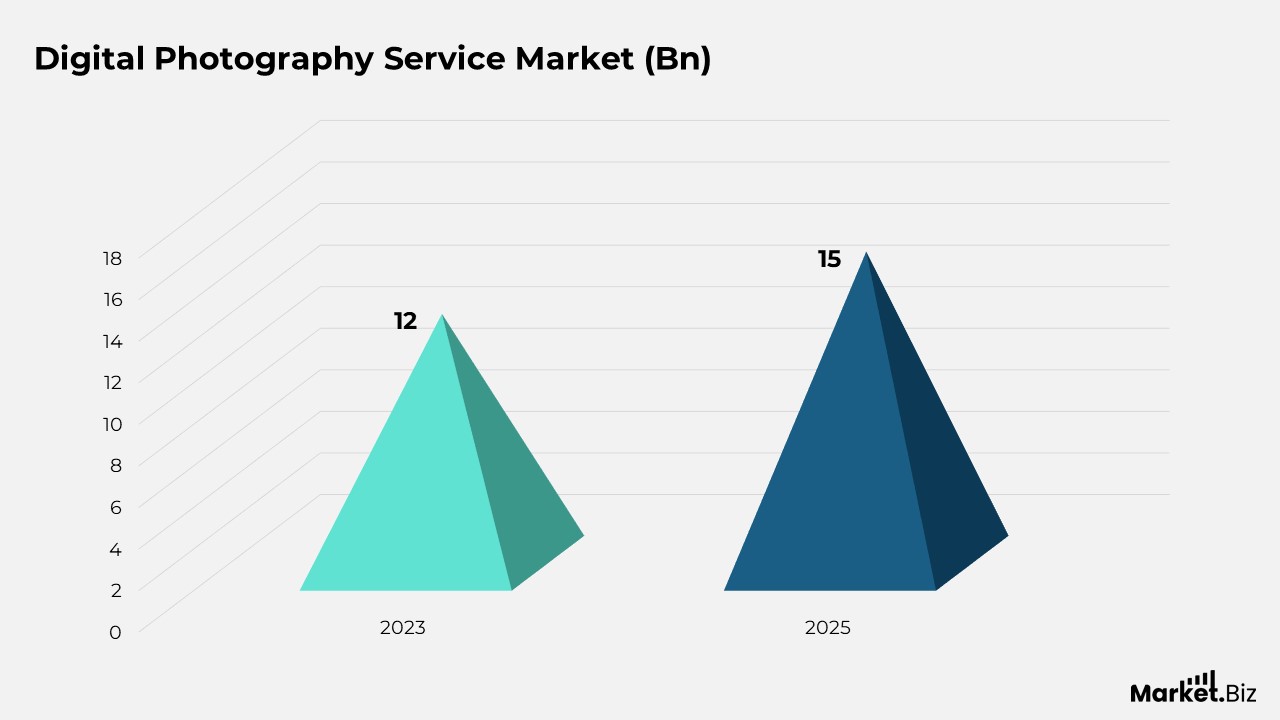
- As of 2023, the global market for business photography services is valued at $12 billion.
- In the last three years, the adoption of mirrorless cameras among professional photographers has surged by 40%.
- The leading photography festivals around the globe draw more than 200,000 attendees each year.
- The global drone photography market is forecasted to reach $3 billion by 2026.
- Due to the rise of digital storage, the photo printing industry has experienced a decline of approximately 25% over the past decade.
Moreover
- The average price for stock images varies between $5 and $50 per image, contingent on resolution and licensing terms.
- The global virtual reality photography market is projected to grow at a CAGR of 30% through 2028.
- Over the last five years, the number of professional wildlife photographers has risen by 20%.
- The typical cost of a professional photography session is about $300, with wedding photography averaging around $1,500.
- The top 10 photography festivals worldwide generate total revenues exceeding $100 million each year.
- Participation in crowdsourced photo contests has increased by 40% over the last two years.
- The global underwater photography market is estimated to be valued at approximately $1.2 billion in 2023, with consistent growth anticipated.
- The global 3D photography market is expected to reach $2.4 billion by 2027, growing at a CAGR of 20%.
- The number of photography enthusiasts has grown by 15% over the past three years, largely due to advancements in smartphone camera technology.
Commercial Photography Markets
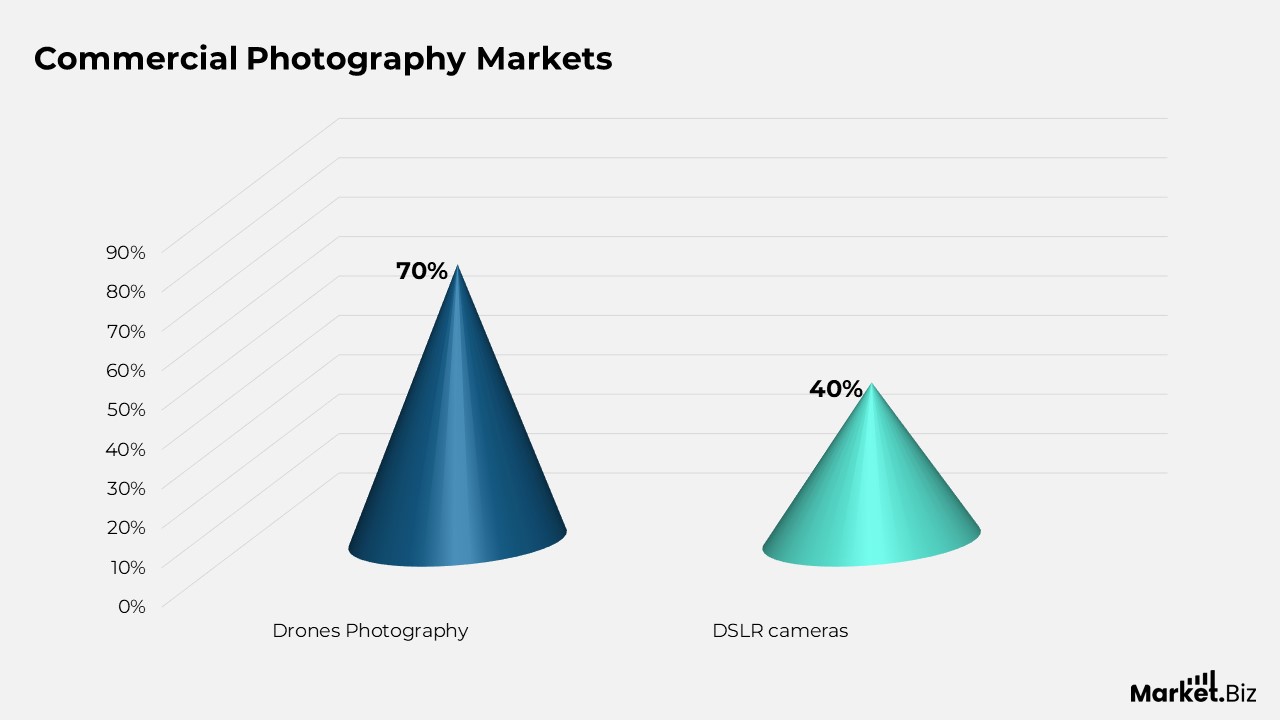
- Drones are utilized by 70% of professional landscape photographers.
- DSLR cameras represented roughly 40% of the professional camera market share in 2022.
- Approximately 90% of professional photographers depend on tripods for stability during shooting.
- About 25% of professional wedding photographers employ drones to obtain aerial shots.
- The typical duration of a professional photo shoot is about 2 hours.
- In 2023, Adobe Photoshop continues to be the most favored photo editing software among professionals, with over 80% usage among elite photographers.
- Commercial photography now constitutes approximately 45% of the overall photography revenue.
- Around 50% of all professional photographers provide videography services in addition to still photography.
Consumer Behaviour
- Daily, around 95 million images are uploaded to Instagram.
- A significant 67% of professional photographers make use of Lightroom for their photo editing needs.
- Canon stands as the foremost camera brand among photographers worldwide, commanding a market share of 44%.
- Roughly 42% of photo sharing occurs on social media platforms like Instagram and Facebook.
- About 55% of smartphone photographers do not consistently back up their images.
- Photography accounts for nearly 40% of all content found on the internet.
- Almost 80% of millennial consumers show a preference for purchasing products that showcase professionally captured photographs.
- It is estimated that in the United States, around 60% of photographers are hobbyists rather than full-time professionals.
- Nearly 80% of Instagram users follow at least one brand or business, many of which rely on photography for their marketing initiatives.
- Half of photographers make use of cloud services for the storage and editing of their images.
- Approximately 60% of all landscape photographers use handheld stabilizers to capture improved shots.
- 35% of consumers indicate a greater likelihood of buying a product that features professional-quality photos on social media.
- 56% of professional photographers claim that they mainly utilize social media as their marketing platform.
- Approximately 62% of all wedding photographers have reported that clients’ needs for outdoor and aerial photography have risen in recent years.
- 48% of smartphone users indicate a preference for editing photos directly on their devices instead of transferring them to a computer.
- The majority of business marketing campaigns now feature at least 10% original photography content.
- More than 65% of professional photographers have adopted smartphones for client previews and quick drafts.
- In 2022, the global average number of photos taken per person was around 300.
- Using instant cameras has increased by 25% among young adults over the past three years.
Technological Advancements
- The resolution of smartphone cameras has risen by 150% in the last five years.
- The typical lifespan of a professional camera is approximately 7 years with consistent usage.
- On average, a professional photographer possesses between 2 and 4 camera bodies.
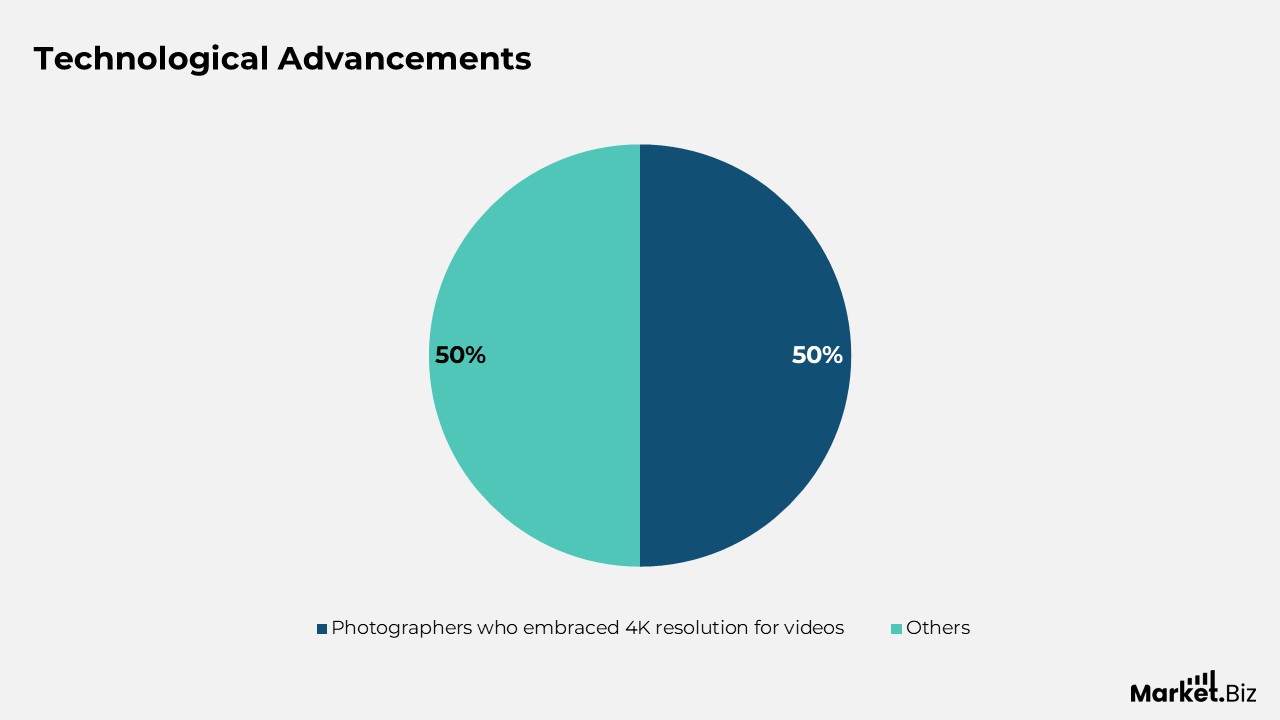
- More than 50% of photographers have embraced 4K resolution for video in their professional endeavors.
- 65% of professional photographers intend to enhance their equipment within the upcoming year, primarily concentrating on mirrorless systems.
Conclusion
The worldwide digital photography market is witnessing significant expansion, fueled by the extensive use of smartphones and the rising trend of social media.
Although smartphones have predominantly taken the place of conventional cameras for routine photography, the total market, which includes software, processing, and various associated products, is anticipated to attain USD 161.82 billion by the year 2032.
FAQs
Advancements in camera technology will allow photographers to capture even more breathtaking and detailed images. The integration of artificial intelligence will transform the workflow of photographers. Innovations in smartphone cameras, the emergence of online platforms, and global connectivity offer new opportunities on an international scale.
Generating income from selling photographs online is an excellent method to create passive income for yourself while also establishing your brand as a photographer. If you have been uncertain about selling your photos or are unsure whether it is worth your time, now is the perfect moment to begin.
ISO regulates the amount of light that your camera allows in, thus influencing the brightness or darkness of your images. Here are some key tips for calculating the correct exposure: Low values, such as ISO 100, are ideal for sunny outdoor photography. For nighttime shooting or indoor settings with low light, an ISO of 1600 or higher is recommended.
Various types of photography are highly sought after, with wedding, portrait, and event photography consistently being popular options. Additionally, product photography is a strong competitor due to its widespread use in e-commerce and advertising.

