









Introduction
Trampoline Statistics: Trampolining is a widely enjoyed recreational activity and competitive sport that entails bouncing on a flexible surface. It includes various types of equipment, including recreational trampolines designed for backyard enjoyment, gymnastics trampolines intended for competitions, and mini trampolines used for exercise.
Ensuring safety is of utmost importance, and it is advisable to implement measures such as safety pads, net enclosures, and adult supervision. Fundamental techniques consist of vertical jumps, tuck jumps, and seat drops, which can advance to more complex maneuvers like flips and twists.
Participating in trampolining offers a multitude of health benefits, improving cardiovascular fitness, strength, and coordination, while also providing enjoyment and easing stress. As an Olympic sport, trampolining enables participants to advance through various skill levels, demonstrating their expertise in routines and techniques.
Editor’s Choice
- In the year 2000, trampolining made its opening event at the Sydney Games, solidifying its reputation as a worldwide sport.
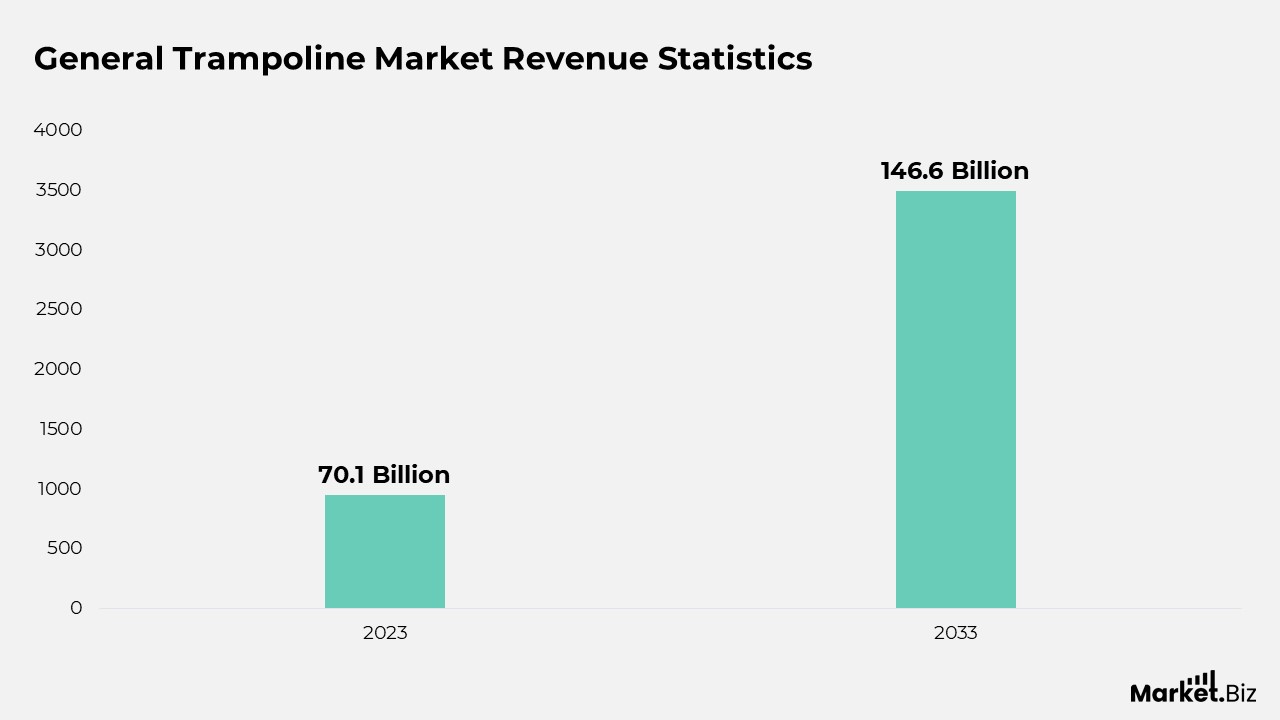
- By the year 2033, the global trampoline market is projected to expand to USD 5.15 billion.
- The global trampoline market has witnessed consistent growth from 2017 to 2033, with a compound annual growth rate (CAGR) of 4.62%.
- The global trampoline park market is anticipated to witness substantial growth from 2023 to 2033, with a compound annual growth rate (CAGR) of 13.90%.
- In Men’s Artistic Gymnastics, there are 434 in age groups and 1,177 senior men, resulting in a total of 1,611 active male participants.
- Children within the age range of 6 to 10 years constituted the largest demographic, representing 35% of all jumpers.
- Approximately 22% of these injuries occur in children younger than 6, and within this age group, half result in broken bones or dislocations.
What is a Trampoline?
A trampoline consists of a mat made from stretchable or webbed materials, like canvas, which is secured by springs to a metal frame. It serves the purpose of tumbling. An individual executes acrobatic maneuvers after bouncing into the air from the trampoline. This activity is referred to as trampolining or rebound tumbling.
While anyone can enjoy using a trampoline for leisure, athletes engage in trampolining routines during competitions. Due to the tumbling techniques involved, trampolining is considered a component of the broader sport of gymnastics.
General Trampoline Statistics
- In the year 2000, trampolining made its opening event at the Sydney Games, solidifying its reputation as a worldwide sport.
- By the year 2033, the global trampoline market is projected to expand to USD 5.15 billion.
- In 2033, the revenue from the global trampoline park market is anticipated to reach USD 3,491.5 million.
- In 2018, the distribution of trampoline parks in the Netherlands by chain revealed a diverse landscape.
- JumpXL emerged as the foremost chain, commanding a 30% share of all trampoline parks, thereby indicating its dominant market position.
- The 2023 Men’s Trampoline Gymnastics rankings showcase a varied group of athletes from across the globe.
- At the top of the rankings is WANG Zisai from China, who has accumulated a total of 230 points.
- During a three-month study conducted from April to June 2019 across fifty trampoline parks, data uncovered distinct trends in participant demographics.
- The most prevalent age among jumpers was identified as nine years old.
- Each year, approximately 100,000 trampoline-related injuries occur in the United States, resulting in around 3,000 hospital admissions.
Trampoline Market Size Statistics
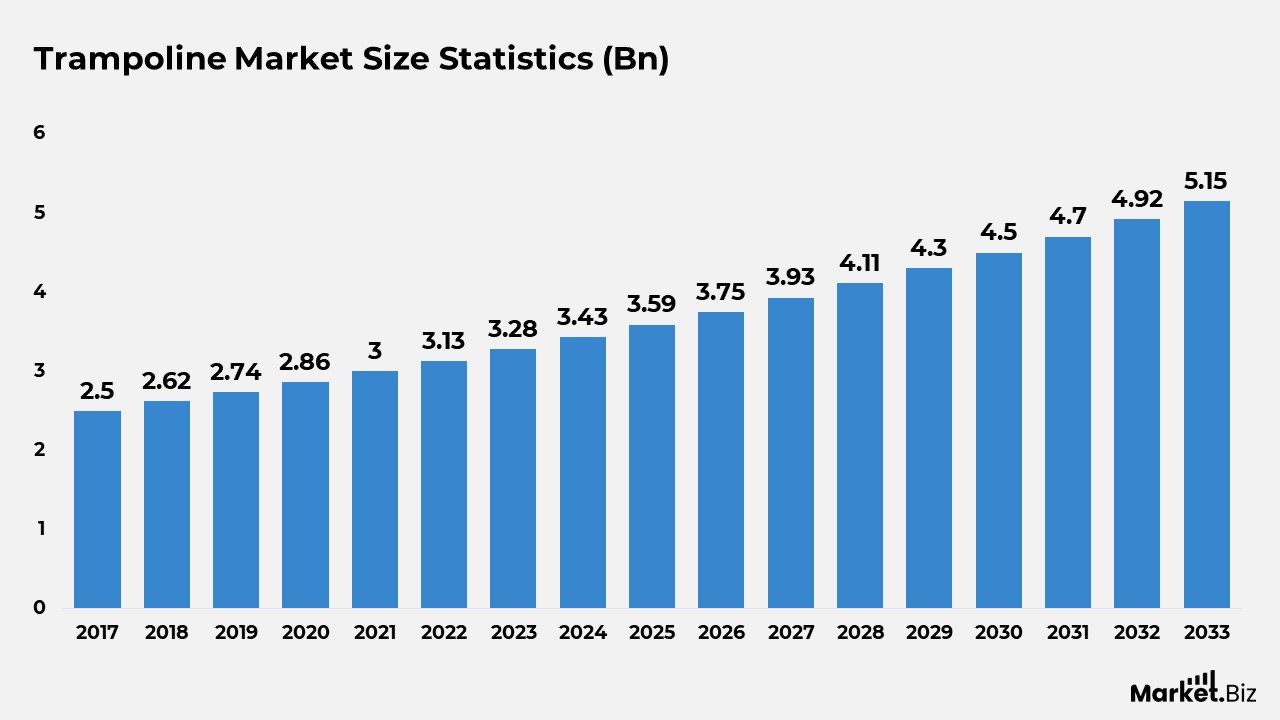
- The global trampoline market has witnessed consistent growth from 2017 to 2033, with a compound annual growth rate (CAGR) of 4.62%.
- In 2017, the market was valued at USD 2.50 billion, and by 2018, it increased to USD 2.62 billion.
- This positive trend continued, with the market size reaching USD 2.74 billion in 2019 and USD 2.86 billion in 2020.
- In 2021, the trampoline market attained a value of USD 3.00 billion, which further expanded to USD 3.13 billion in 2022 and USD 3.28 billion in 2023.
- The growth trajectory is expected to persist, with market size estimates projected to reach USD 3.43 billion in 2024, USD 3.59 billion in 2025, and USD 3.75 billion in 2026.
- By 2027, the market is anticipated to grow to USD 3.93 billion and further increase to USD 4.11 billion in 2028.
- Projections for 2029 and 2030 indicate that the market size will reach USD 4.30 billion and USD 4.50 billion, respectively.
- This expansion is expected to continue through 2031, with a market size of USD 4.70 billion, and by 2032, it is anticipated to reach USD 4.92 billion.
- By 2033, the global trampoline market is forecasted to grow to USD 5.15 billion.
Trampoline Park Market Size Statistics
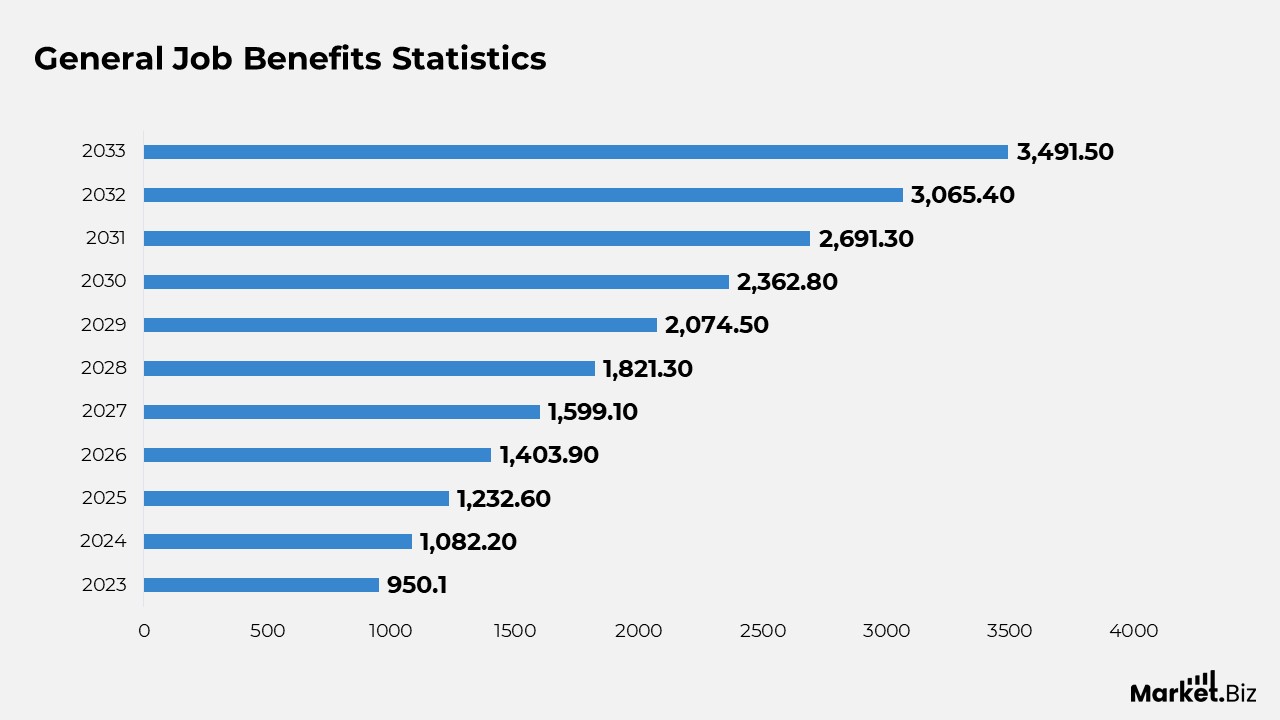
- The global trampoline park market is anticipated to witness substantial growth from 2023 to 2033, with a compound annual growth rate (CAGR) of 13.90%.
- In 2023, the market was valued at USD 950.1 million.
- By 2024, it is projected to rise to USD 1,082.2 million, followed by further growth to USD 1,232.6 million in 2025.
- The market is expected to maintain its upward trend, reaching USD 1,403.9 million in 2026 and USD 1,599.1 million in 2027.
- A continued expansion is forecasted, with the market size anticipated to reach USD 1,821.3 million in 2028 and USD 2,074.5 million in 2029.
- As we approach the next decade, projections indicate that the market size will increase to USD 2,362.8 million in 2030, USD 2,691.3 million in 2031, and USD 3,065.4 million in 2032.
- By the end of the forecast period in 2033, the global trampoline park market is expected to attain a value of USD 3,491.5 million.
Trampolining Users
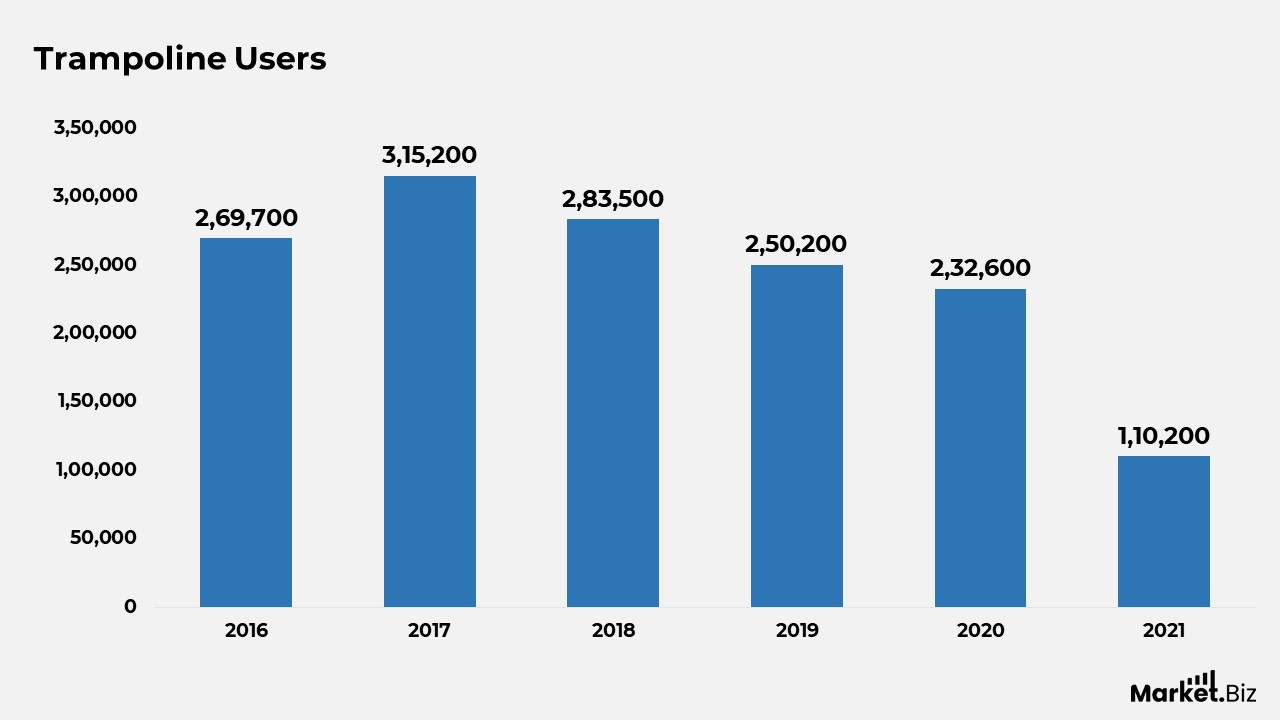
- Trampoline statistics provide an overview of the number of users in trampolining from 2016 to 2021, highlighting fluctuations in users over the years.
- In 2016, there were 269,700 users, followed by a significant increase to 315,200 in 2017; this period marked the peak of users.
- Subsequently, users dropped to 283,500 in 2018 and further decreased to 251,200 in 2019. The trend continued downward into 2020, with users recorded at 232,600.
- The most significant decline occurred in 2021, when the number of users fell to 110,200.
- This substantial decrease may have been influenced by external factors, such as the closure of sports facilities and limited access to training opportunities during the COVID-19 pandemic.
- This indicates that after reaching peak users in 2017, there was a consistent decline, closing in a sharp drop in 2021.
Trampoline Users Demographics
By Gender
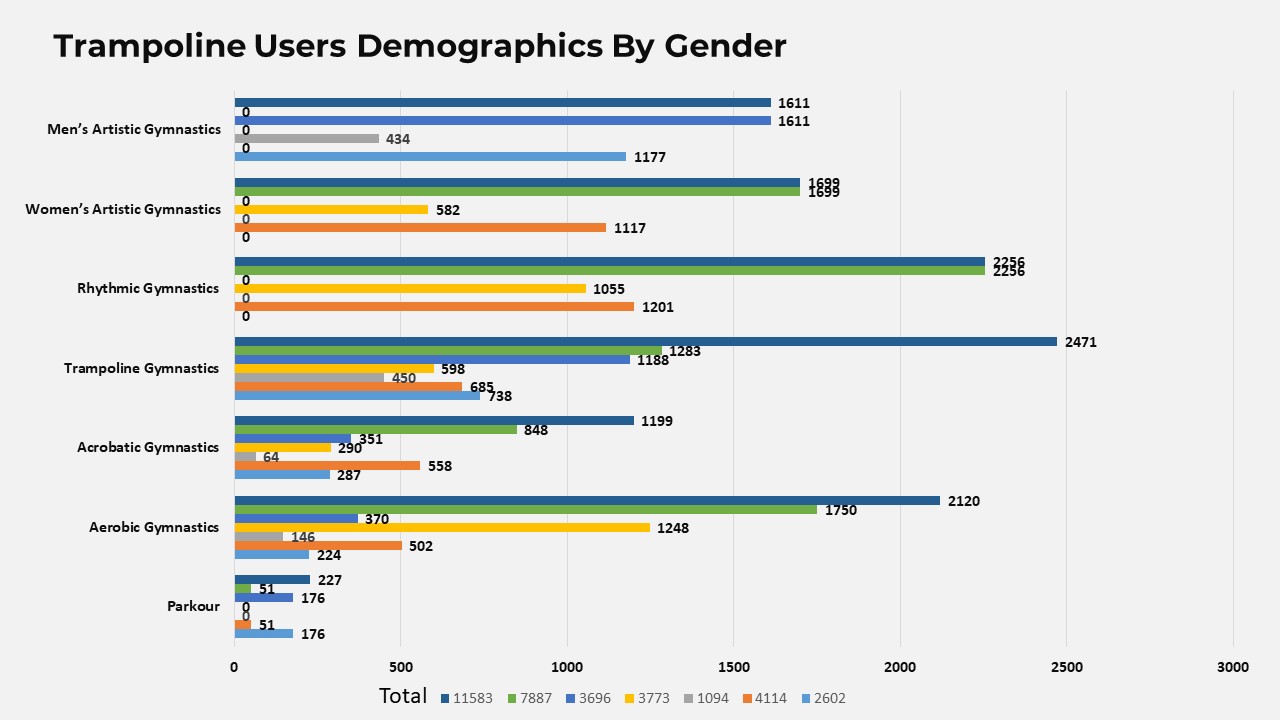
- In Men’s Artistic Gymnastics, there are 434 in age groups and 1,177 senior men, resulting in a total of 1,611 active male participants.
- Women’s Artistic Gymnastics does not include senior men but comprises 582 in age groups and 1,117 senior women, ending in a total of 1,699 active female participants.
- Rhythmic Gymnastics is exclusively for women, featuring 1,201 senior women and 1,055 in age groups, which totals 2,256 active participants.
- Trampoline Gymnastics consists of 738 senior men and 685 senior women, along with 598 women and 450 men in age groups, leading to a combined total of 2,471 active participants.
- Acrobatic Gymnastics includes 287 senior men and 558 senior women, with younger participants totaling 64 men and 290 women, resulting in 1,199 total active athletes.
- Aerobic Gymnastics presents 224 senior men and 502 senior women, with 146 men and 1,248 women in age groups, aggregating to 2,120 active participants.
- Finally, Parkour has 176 senior men and 51 senior women, resulting in a total of 227 active participants.
- In summary, the total number of active athletes through all disciplines is 11,583, with a gender supply of 4,114 women and 2,602 men in senior categories, alongside 3,773 women and 1,094 men in age groups.
By Age
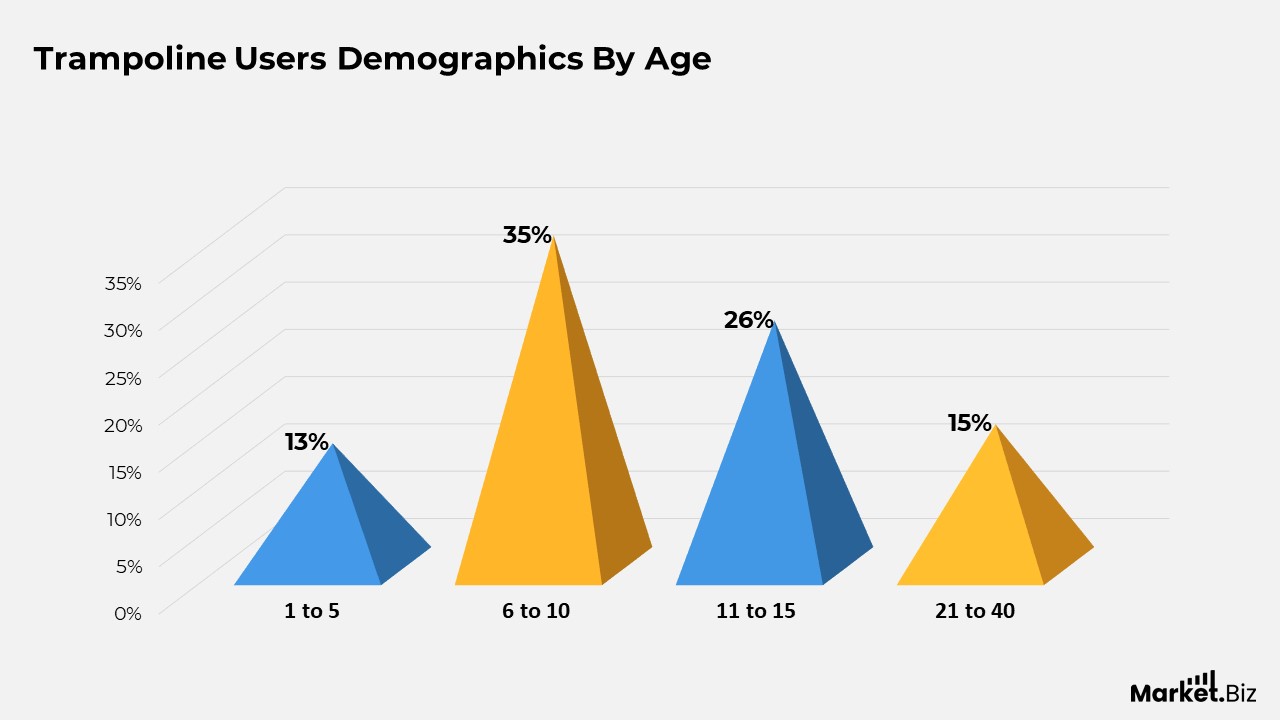
- The main age for jumpers was identified as nine years old.
- Children within the age range of 6 to 10 years constituted the largest demographic, representing 35% of all jumpers.
- Adolescents aged 11 to 15 years formed the second largest cohort, accounting for 26% of the participants.
- Significantly, toddlers aged 1 to 5 also made a notable contribution, comprising 13% of the total jumps.
- Additionally, adults in their 20s and 30s showed an increasing interest in trampolining, making up 15% of all jumpers.
Types of Trampoline Injuries
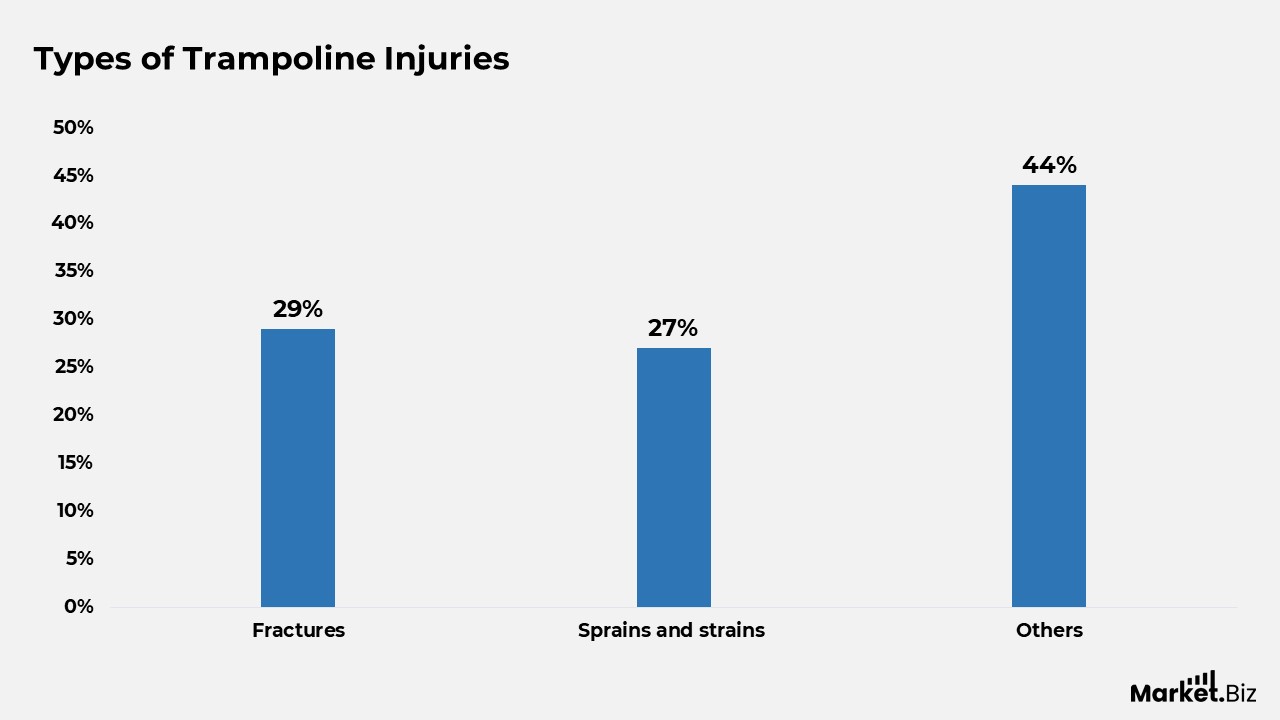
- 29% are fractures, while sprains and strains are also common, making up 27%.
- About 10-17% of injuries impact the head and neck, while 20% are contusions and bruises, and 5% are cuts.
- Ankle injuries are the most common, accounting for 30% of all leg-related injuries from trampolines.
- In total, injuries to the legs and arms each account for 30% of all trampoline-related injuries, while soft tissue injuries, such as bruises to muscles and tendons, constitute 35%.
- Fractures of the arms alone make up 60% of all broken bones resulting from trampoline use. Head injuries lead to 10-15% of all emergency room visits associated with trampolines.
- Additionally, leg injuries represent 40% of all trampoline-related injuries. Spinal cord injuries, though less frequent, are still significant, accounting for 1-2% of injuries.
- Moreover, around 20% of all spinal cord injuries from recreational activities and sports are linked to trampolines, and concussions represent 10% of trampoline injuries that necessitate emergency medical care.
Locations of Trampoline Injuries
- The majority of trampoline injuries, approximately 95%, occur in domestic settings, with half of these incidents taking place directly on the mat where individuals jump.
- An additional 27% of injuries arise when a person lands on the harder components of the trampoline, such as the springs or frame; this statistic includes another figure indicating that 25% of injuries specifically involve these components.
- A significant portion of trampoline injuries, 80%, is associated with large outdoor trampolines.
- For very young children under the age of 5, 90% of their trampoline-related injuries also occur at home.
- Trampoline parks have experienced a notable surge in injuries, with a staggering 1500% increase from 2011 to 2017, and overall, 20% of trampoline injuries are reported to happen in public facilities or trampoline parks.
Age-Specific Trampoline Injuries
- Trampoline injuries are prevalent among children, particularly those under the age of 14.
- Approximately 22% of these injuries occur in children younger than 6, and within this age group, half result in broken bones or dislocations.
- Children aged 5 to 14 are the most susceptible to trampoline injuries, with the highest incidence of bone fractures occurring in those aged 5 to 9.
- Boys exhibit a slightly higher tendency to sustain trampoline injuries compared to girls, with boys representing 52% of the total injuries.
- The typical age of a child who suffers an injury on a trampoline is nine years, and very young children under six are at a significantly elevated risk, being 14 times more likely to be injured than their older counterparts.
- Children aged 6 to 14 account for 67% of trampoline injuries overall, while those under 10 years old endure 75% of these injuries.
- The average age for severe injuries, such as spinal cord damage, is 11 years.
Recent Developments
- Altitude Trampoline Park has announced its intention to establish Connecticut’s inaugural indoor trampoline park at the Brass Mill Center, located in Waterbury. This expansive 35,000-square-foot facility will be constructed within a repurposed Macy’s department store. The venue will include trampolines, soft play areas, and an indoor electric go-kart track.
- Altitude Trampoline Park has also disclosed multi-unit franchise agreements across various regions in the United States, such as Long Island (New York), South Florida, the Bay Area (California), Connecticut, and South Carolina. These agreements encompass both the development of new parks and enhancements to existing locations, with openings anticipated throughout 2025.
- Furthermore, Altitude Trampoline Park has formed an exclusive technology partnership with Intelliplay, which will introduce “Intellibands,” RFID-enabled wristbands designed to gamify trampoline experiences. This innovative system monitors jumps, calories expended, duration of each activity, and facilitates interactive competition among users. The pilot program at the Mason, Ohio, park has demonstrated early success in boosting user engagement, increasing dwell time, and generating additional revenue through the promotion of interactive game modules.
Conclusion
Trampoline Statistics: The trampoline industry has seen significant expansion, fueled by a growing enthusiasm for leisure activities and fitness. Improvements in design and safety features, along with the increasing popularity of home fitness and outdoor recreation, have broadened its attractiveness. There are growth prospects in both the residential and commercial markets, with trampoline parks and fitness facilities showcasing the versatility of the product.
Nonetheless, safety regulations and concerns regarding injuries continue to pose challenges. In summary, ongoing innovation and an emphasis on safety are anticipated to support market growth, propelled by the demand for engaging, fitness-focused recreational products.
FAQs
Pediatricians strongly advise against the use of trampolines at home; however, if children do engage in trampoline activities, it is recommended that only one jumper be allowed on the mat at any given time.
Over 75% of trampoline injuries happen when multiple children are jumping simultaneously and collide with one another. Other frequent causes of trampoline injuries include: falling onto the frame, trampoline mat, or springs, as well as attempting somersaults, flips, and other dangerous stunts that may result in accidents.
Trampolining promotes physical development, cognitive advancement, and social interaction. It can enhance coordination, balance, emotional regulation, and self-esteem in children across all age groups.

