









Introduction
Virtual Tour Statistics: Virtual tour software is extensively utilised for the exploration of properties, vehicles, tourist destinations, and more. This software employs images, audio, videos, and 3D maps to generate a 360-degree perspective of a location.
It offers panoramic visuals of sites and their characteristics. The increasing demand for smartphone-enabled virtual tourism. Along with the expansion of virtual tour software within the real estate sector, has contributed to a rise in its global market share.
Statistics regarding virtual tours indicate significant growth, with the market reaching billions and expanding swiftly (CAGR 25-34%) as users appreciate immersive experiences, particularly in real estate (90% more views) and travel.
Resulting in extended site visits (5-10 times longer), improved conversion rates, and enhanced brand value, propelled by VR/AR technology and consumer interest in digital exploration. Important metrics encompass heightened user engagement (hotspot clicks, duration on site). Improved search/map visibility (Google prioritizes them), and accelerated return on investment (ROI).
Editor’s Choice
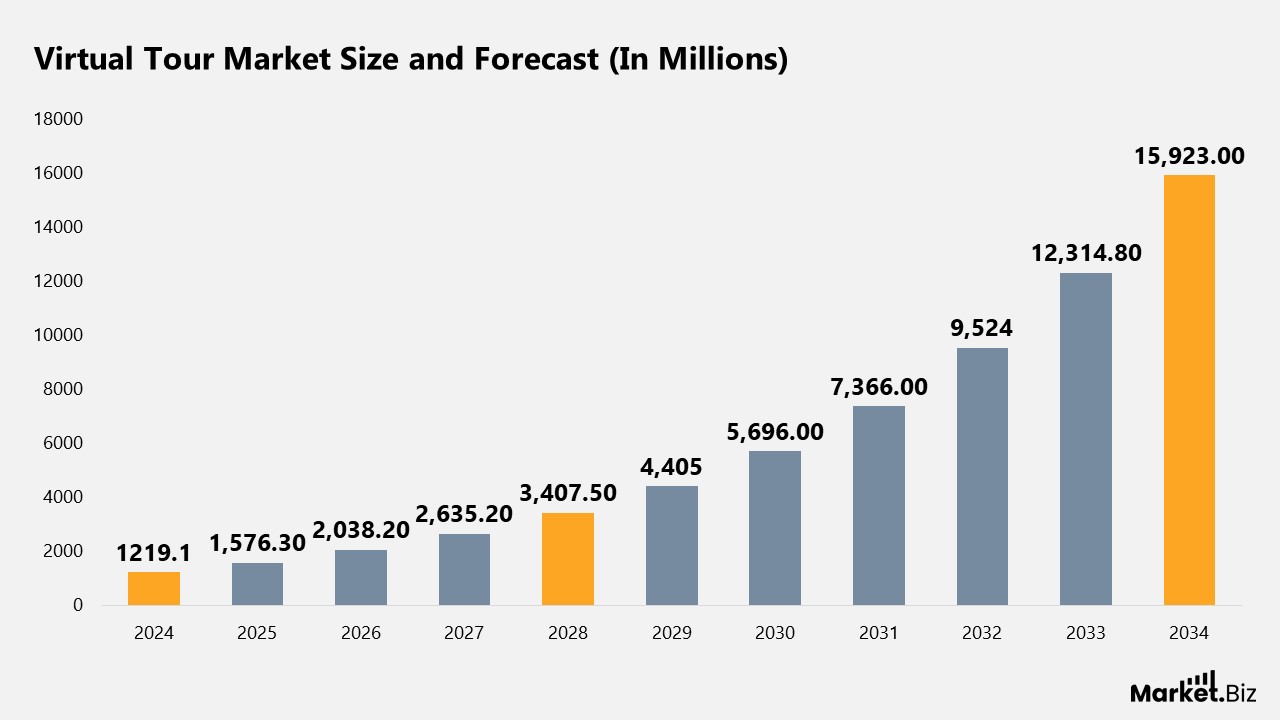
- The global virtual tour market is projected to reach around USD 15,923.0 million by 2034, rising from USD 1,219.1 million in 2023. With a strong 29.3% CAGR during the 2025 to 2034 period, indicating rapid adoption across multiple industries.
- In 2024, North America maintained a leading position in the virtual tour market. Accounting for over 35.7% of the total share and generating approximately USD 435.2 million in revenue, supported by high digital usage and advanced virtual viewing tools.
- Virtual tour statistics show that nearly 73% of participants in virtual events reported satisfaction. Reflecting improved user experience and growing trust in immersive digital environments.
- The online event sector is expected to expand by nearly USD 2.3 trillion by 2026. Highlighting strong momentum for virtual engagement platforms, including tours and digital exhibitions.
- Data indicates that 360 panoramic photography helps reduce unnecessary physical site visits by about 40%. Improving efficiency for real estate, tourism, and commercial property stakeholders.
- 360 virtual tours collectively attract more than 5 million visits per day, demonstrating high user engagement and consistent global demand for interactive visual content.
- Around 92% of potential homebuyers conduct online research before contacting a real estate agent. Emphasizing the growing importance of virtual tours in early decision-making and property evaluation.
General Virtual Tour Statistics
- Virtual tour statistics show that nearly 73% of people who joined virtual events reported that they were satisfied with their overall experience, indicating strong acceptance of this format.
- Some participants still feel that virtual events are less effective than in-person gatherings, mainly due to limited social interaction, reduced location discovery, and lower physical immersion.
- Virtual college tours have increased by 258%, reflecting a strong shift toward digital platforms for campus exploration and student decision-making.
- According to Google data, viewership of online exhibits and virtual tours has grown by 4,106%, highlighting a sharp rise in global digital engagement.
- Online exhibits are drawing significantly closer attention, with audience numbers increasing by more than 4,000% compared to earlier periods.
- The travel industry is increasingly moving toward online platforms, allowing travelers to plan, explore, and experience destinations digitally before making travel decisions.
Further
- Around 48% of event organizers plan to host more virtual events in the future, showing sustained confidence in online event formats.
- A large 84% of individuals prefer events that offer a virtual participation option alongside physical attendance.
- Virtual tours and online exhibitions are considered more affordable and convenient, as they remove travel costs, accommodation expenses, and logistical challenges.
- About 93% of participants were satisfied with how virtual events were managed by hosts. Indicating improved event organization and digital presentation quality.
- Research findings suggest that most participants are comfortable with virtual tours and events. Especially when guided by knowledgeable and well-prepared hosts.
- Around 75% of people believe that live and online events deliver good value, while 64% show a preference for pre-recorded digital content.
- Nearly 30% of participants express concerns about technical problems, such as connectivity issues or platform limitations, during virtual events.
- The online event industry is expected to expand by approximately USD 2.3 trillion by 2026, reflecting strong long term growth potential.
Moreover
- Virtual tourism and online event platforms continue to improve in quality while remaining cost-effective for both organizers and participants.
- About 72% of individuals plan to attend the same number or a higher number of virtual events in the future, signaling stable demand.
- Survey data confirms that 73% of virtual event participants were satisfied, suggesting that virtual experiences can deliver engagement levels similar to physical events.
- The 258% growth in virtual college tours highlights increasing reliance on digital tools for education-related decisions.
- More than 30% of Generation Z and millennial users have tried virtual reality, and among them, nearly 80% describe their experience as positive, indicating a strong interest in immersive technologies.
Virtual Tour Market Size
- According to Market.us, the global virtual tour market is projected to grow from USD 1,219.1 million in 2023 to around USD 15,923.0 million by 2034, expanding at a CAGR of 29.3% during the 2025 to 2034 period.
- In 2024, North America held a leading position with more than 35.7% market share. Generating approximately USD 435.2 million in revenue due to strong digital infrastructure and early adoption of immersive technologies.
- The 360 virtual tour format dominated the market in 2024, accounting for 43.9% share. As it delivers a more immersive and interactive experience compared to static visuals.
- The tourism and hospitality segment remained the largest application area in 2024, capturing over 38.8% share. Supported by the growing use of virtual previews for hotels, resorts, and travel destinations.
- Europe followed North America with a 30.5% market share, while Asia Pacific accounted for 26.8%. Reflecting rising digital engagement across travel, education, and real estate sectors.
- Latin America held a smaller share of 4.7%, and the Middle East and Africa represented 2.2%, indicating early-stage adoption with future growth potential.
Moreover
- More than 50% of adults have experienced a virtual tour, showing that this technology has moved into mainstream use, especially in real estate and travel planning.
- Around 67% of home buyers prefer property listings that include a virtual tour. As it improves clarity and reduces uncertainty before physical visits.
- Businesses using virtual tours report increases in bookings and conversion rates ranging from 16% to 67%, highlighting strong commercial benefits.
- Young adults aged 18 to 34 are 130% more likely to book a property when a virtual tour is available, reflecting higher digital comfort among younger users.
- Nearly 50% of internet users rely on virtual tours during decision-making, showing the technology’s influence on consumer behavior.
- Websites with virtual tours see engagement levels that are 5 to 10 times higher than sites without them, resulting in longer visit durations and stronger user interest.
- About 67% of consumers want more businesses to adopt virtual tours, indicating clear demand across multiple industries.
- Global daily visits to virtual tours exceed 5 million, demonstrating the large-scale reach and growing popularity of this format.
- Virtual tours can double interest in business listings, helping brands gain visibility and attract more qualified leads.
Moreover
- In real estate, virtual tours have reduced unnecessary physical property visits by around 40%, improving operational efficiency.
- Listings on Google Maps that include virtual tours receive about 12% higher engagement compared to those without virtual experiences.
- A global study by Kaltura shows that 73% of users were satisfied with virtual event experiences, confirming strong acceptance of digital participation.
- Virtual college tours have increased by 258%, indicating a shift among students toward online campus exploration before making enrollment decisions.
- Online exhibits have recorded a 4,106% increase in viewership, reflecting strong interest in digital access to cultural and historical content.
- According to the U.S. Travel Association, 68% of trip planners use online tools to discover activities, reinforcing the role of virtual tours in travel planning.
- Virtual events saw a surge of nearly 1,000% in 2020, and continued adoption suggests that digital engagement is becoming a long term industry standard.
- Demand remains strong, with 84% of consumers expressing interest in having virtual alternatives available for events, tours, and experiences.
Virtual Tour 360 Panoramic Photography Statistics
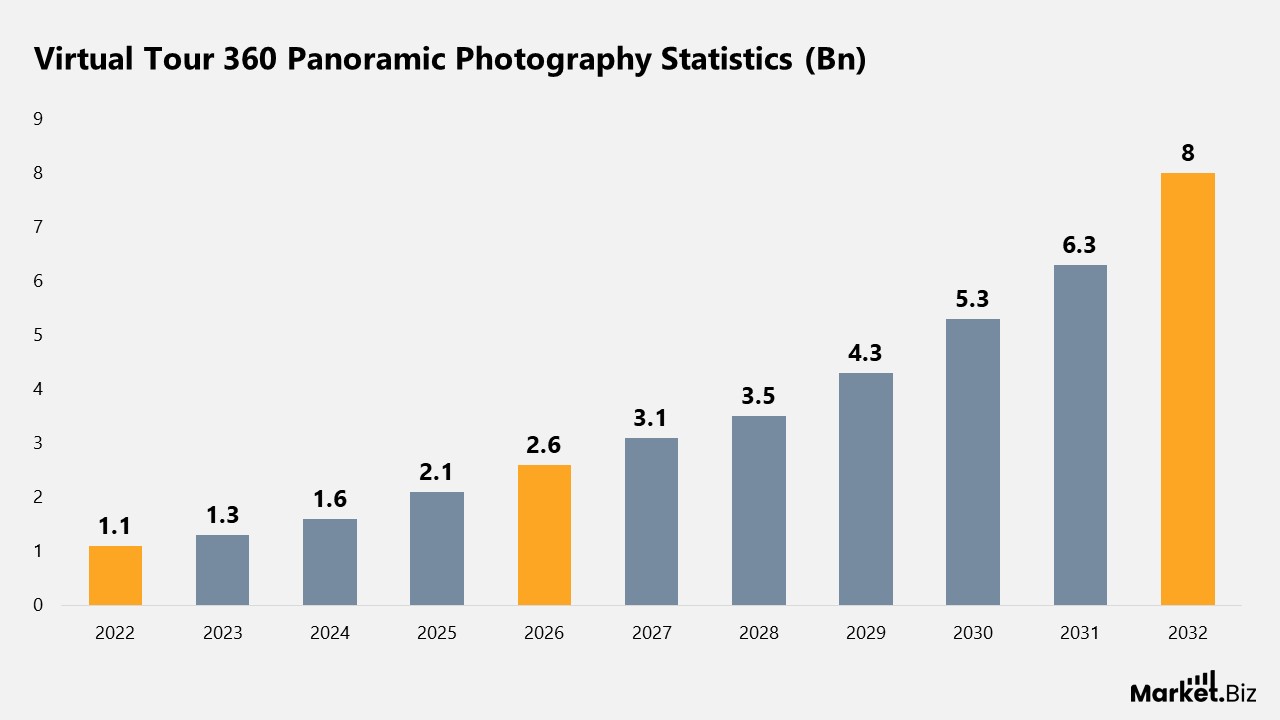
- Virtual Tour Statistics indicate that 360 Panoramic Photography reduces wasted viewings by 40%.
- The Return on Investment (ROI) for 360 Panoramic Photography is generally observed in under 4 weeks.
- Despite only 15% of hotel bookings occurring online, 65% of all travel bookings are researched via the internet.
- 360 Virtual Tours can enhance online bookings by as much as 85%.
- 75% of individuals surveyed visited 3-4 hotel websites prior to making a final decision on where to book.
- Virtual Tour Statistics reveal that approximately 2% of travelers utilize the internet to gather information when planning their trips.
- 360 Virtual Tours receive over 5 million visits daily.
- Nearly 80% of online shoppers assert that images are crucial when deciding to purchase or utilize a company’s product or service.
- A well-executed 360 Virtual Tour can extend the duration visitors spend on your website and, more significantly, encourage their return.
- 80% of consumers seek information online, indicating that you should allocate at least 60% of your marketing budget towards enhancing your online presence.
- Almost 47% of individuals believe that virtual tours are very important when reviewing a listing.
- Data from realtor.com indicates that listings featuring virtual tours receive 40% more clicks compared to those without.
Real Estate Virtual Tour Statistics
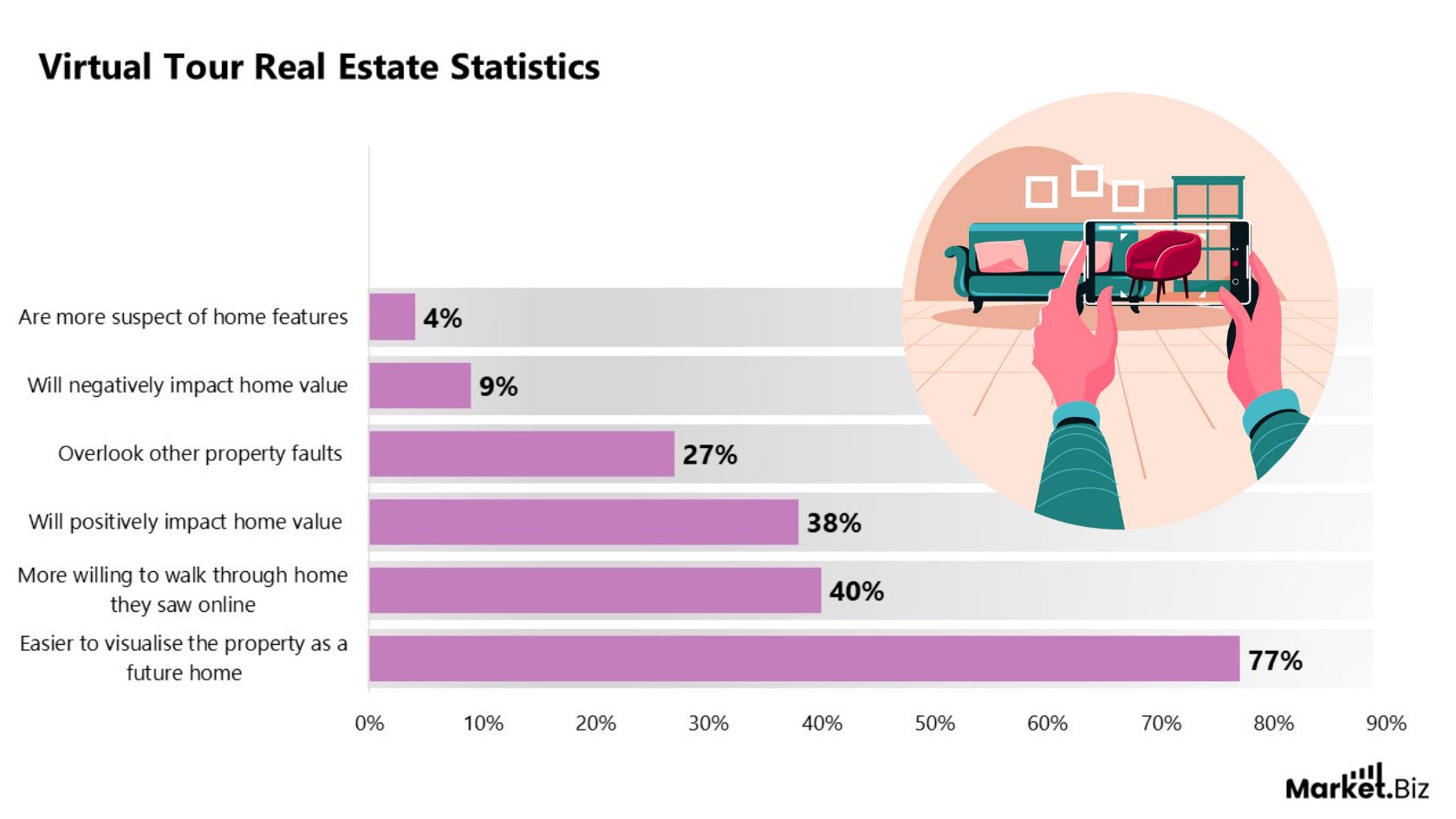
- According to Virtual Tour Statistics, 92% of prospective homebuyers conduct their research online prior to reaching out to an agent.
- The majority of buyers initially search online before arriving at a decision, particularly in the realm of real estate.
- Real estate firms ought to provide as much information as possible on their websites, including virtual tours, to offer clients a comprehensive experience.
- In the United States, 50% of adult internet users have participated in a virtual tour.
- Half of the adult population in the US considers virtual tours beneficial when evaluating a real estate listing.
- A significant 54% of buyers will not even contemplate a property unless it features virtual images.
- High-quality photographs are also crucial, as 89% of individuals find them useful, and 85% prefer comprehensive property details.
- Statistics regarding real estate photography indicate that 80.2% of individuals believe the front image of a listing is the most critical.
- Virtual Tour Statistics indicated that approximately 75% of customer choices are swayed by virtual tours.
- Virtual Tour Statistics also revealed that nearly 54% of purchasers will not contemplate a property unless it features virtual images.
- Half of the respondents believe that virtual tours significantly aid in their decision-making process.
- This aligns with a study conducted by Realtor.com, which discovered that listings accompanied by a virtual tour receive 87% more views compared to those that do not.
- Property Week found that virtual tours reduce unnecessary viewings by 40%, thereby enhancing the likelihood of visitors making a purchase.
- Planet Home’s ‘Trend Study’ demonstrated that 75% of prospective buyers regard virtual tours as a crucial element in their buying decision.
Virtual Tour Regional Statistics
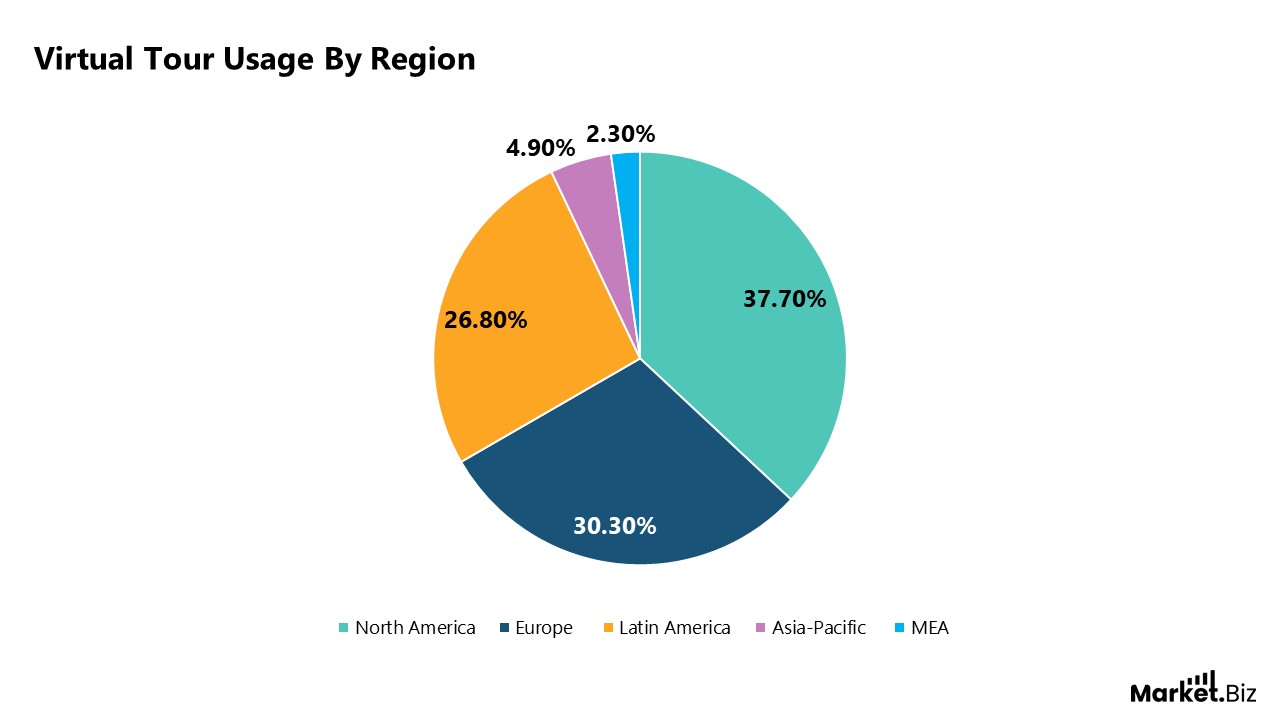
- In 2023, North America emerged as the leader in the Virtual Tour Market. Capturing 37.7% of the market with a revenue of $336.5 million.
- This dominant position is primarily attributed to the region’s advanced technology and the high level of digital skills among its population.
- According to Virtual Tour Statistics, the market share in the Middle East and Africa was 2.3%, but it is experiencing steady growth.
- Virtual Tour Statistics also indicated that North America maintains its leading position due to key companies in virtual tour technology that continuously innovate and enhance their offerings.
- In 2023, Europe represented 30.3% of the Virtual Tour Market, a success largely driven by a robust tourism sector.
- With a strong economy and consumers eager for digital, interactive experiences, the virtual tour market in North America is expanding rapidly.
- The Asia-Pacific region held a smaller share of 4.9% in 2023, yet it is anticipated to grow swiftly.
- Europe, with its high internet usage, plays a significant role in the global virtual tour market.
- In Latin America, the market accounted for 26.8% of the share in 2023.
- Furthermore, the rollout of 5G networks in the region is expected to enhance the quality and accessibility of virtual tours, supporting continued market growth in the coming years.
Virtual Tour Recent Development
- In October 2023, Starts360 announced enhancements to its mobile application, introducing additional features for creating and viewing virtual tours on mobile devices.
- Eye Revolution Ltd partnered with a prestigious art museum in December 2023 to develop a collection of virtual tours highlighting its most recent exhibitions.
- RealTourVision introduced a new subscription-based pricing structure for its virtual tour offerings in July 2023.
Conclusion
Virtual Tour Statistics: Virtual tours are revolutionising various industries by providing advantages such as enhanced customer engagement and increased sales or bookings.
As this technology advances, its significance will grow in sectors like real estate, tourism, education, and retail. With a rising demand for interactive digital experiences, businesses are beginning to recognize the value of virtual tours in attracting more customers and assisting them in their decision-making processes.
As different regions increasingly embrace this technology, virtual tours will assume an even more prominent role in the future of online marketing and customer experiences globally. This article has sufficiently illuminated the statistics surrounding virtual tours.
FAQs
48% of consumers in the U.S. have experienced VR. 13% of households in the U.S. possess a VR headset. 88% of VR users engage with their device multiple times each month. 60% utilize it more than once a week.
3D Virtual Tours: 3D virtual tours, often referred to as 3D digital twins, offer a realistic and navigable representation of a property, frequently incorporating precise measurements and spatial accuracy.
As reported by Market.us, the global virtual tourism market is projected to attain USD 29.1 billion by the year 2035. With a compound annual growth rate (CAGR) of 7.4% throughout the forecast period. The long-term economic benefits of virtual reality within the tourism sector are substantial.

