









Introduction
Employee Recognition Statistics: Employee recognition plays a huge role in creating a positive and motivated workplace. Studies show that 79% of employees say they’d work harder if they were better recognized, emphasizing just how important acknowledgment is for boosting effort and morale.
In fact, companies with recognition programs see 31% lower turnover rates. Plus, according to a 2024 Gallup report, businesses with highly engaged employees are 21% more profitable. As workplaces evolve, making recognition a priority can help improve employee satisfaction, reduce turnover, and drive business success.
Editor’s Choice
- 79% of employees are motivated to work harder when recognized, emphasizing the link between recognition and productivity.
- Companies with strong recognition cultures experience 31% lower turnover rates, demonstrating how recognition fosters long-term commitment.
- 64% of employees say recognition from managers boosts job satisfaction, leading to improved performance and engagement.
- Companies with recognition programs are 22% more profitable due to enhanced productivity and employee engagement.
- 82% of employees feel more motivated when recognized by peers, enhancing teamwork and performance.
- 86% of employees prefer non-monetary recognition like praise over financial rewards, highlighting the value of genuine acknowledgment.
- 73% of employees globally report higher engagement when their performance is recognized, improving productivity and retention.
- 58% of employees feel demotivated when they don’t receive enough recognition, which could lead to decreased morale and turnover.
- Recognition programs correlate with 20% higher employee engagement, improving overall business outcomes.
- Employees who feel recognized are 32% more likely to exhibit high job performance, benefiting the company’s bottom line.
General Employee Recognition Statistics
- 75% of employees say that recognition boosts their motivation and performance, directly impacting productivity and engagement.
- 64% of employees feel that recognition from their managers is crucial for their job satisfaction and overall happiness at work.
- Companies with a strong recognition culture experience 31% lower employee turnover, fostering long-term commitment and stability.
- 58% of employees say they don’t receive enough recognition, leading to decreased morale and potentially higher turnover.
- Employees who are regularly recognized are 5 times more likely to feel valued and stay with the company long-term.
- 65% of employees state they are more likely to go above and beyond if their efforts are recognized by leadership.
- 80% of employees claim they would work harder if they received more regular and meaningful recognition at work.
- Organizations with comprehensive recognition programs are 22% more profitable due to increased employee engagement and productivity.
- 70% of employees agree that their workplace would improve if there was more recognition for their efforts.
- 90% of employees believe that recognition is a key factor in developing a positive work environment and culture.
- Employees who feel recognized are 32% more likely to exhibit high job performance, benefiting the overall business.
- 79% of employees say they would feel more loyal to their employer if their contributions were more frequently acknowledged.
- A survey found that50% of employees are willing to contribute more if their achievements are acknowledged more often.
- Companies with effective recognition programs report a 43% higher retention rate, proving their impact on loyalty and satisfaction.
- 86% of employees prefer receiving non-monetary recognition, such as praise or acknowledgment, rather than financial rewards.
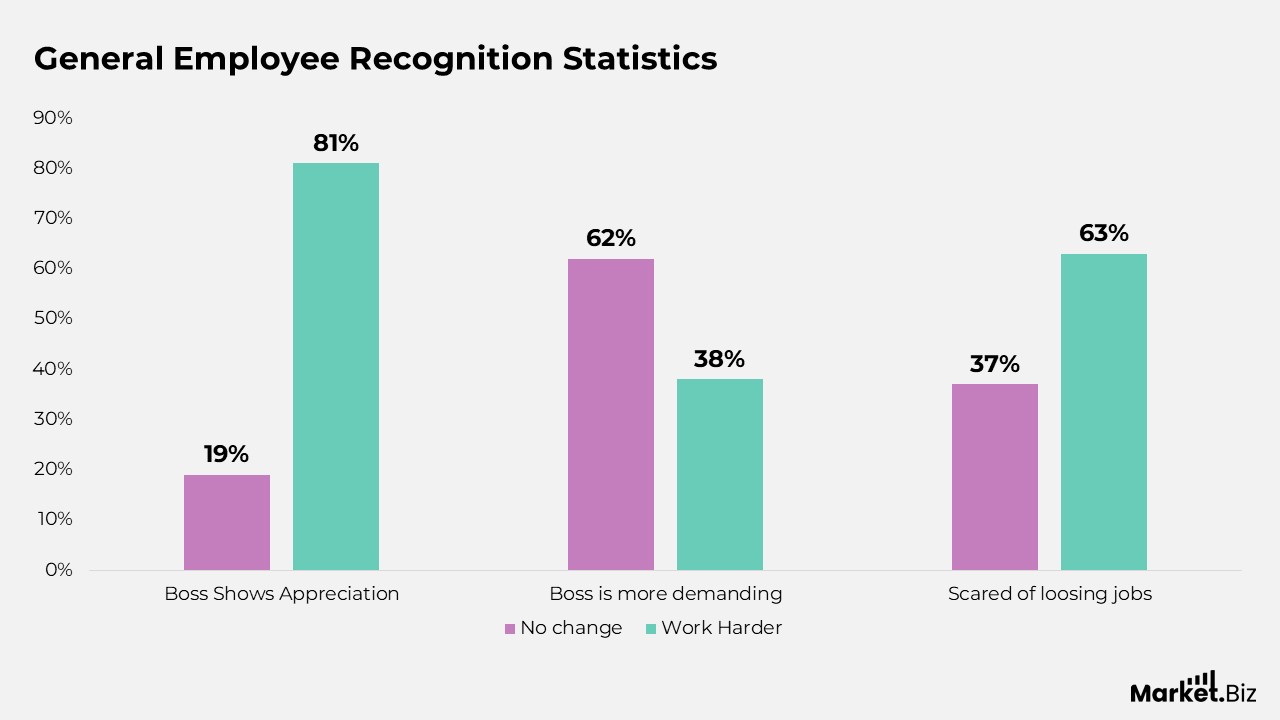
(Source: Coolest-Gadgets, WP-Content)
Statistics on Employee Recognition and Profitability
Employee Recognition
- 79% of employees state that being recognized makes them feel more motivated and dedicated to their work.
- 65% of employees say they are more likely to be engaged and committed when their work is regularly recognized.
- 50% of employees report that they would be willing to do more for an organization that consistently recognizes their contributions.
- Companies with a strong recognition culture see 31% lower employee turnover, fostering long-term workforce stability.
- 70% of employees believe that their productivity would increase if they received more regular recognition.
- 64% of employees say that recognition from managers improves their job satisfaction and overall performance.
- 77% of employees would prefer non-monetary recognition such as praise or acknowledgment over monetary rewards.
- Employees who receive frequent recognition are 5 times more likely to stay with their company and feel valued.
Employee Profitability
- Organizations with high employee engagement due to recognition see a 21% higher profitability, according to Gallup.
- Companies with strong recognition programs are 22% more profitable due to enhanced employee productivity and morale.
- Recognized employees are 12% more productive, translating to a direct impact on a company’s bottom line.
- 70% of employees say that being recognized for their work leads to an increase in their individual productivity.
- 35% of companies with robust recognition strategies report higher customer satisfaction rates, directly influencing profitability.
- Businesses that focus on employee recognition enjoy 14% higher employee performance, leading to better financial outcomes.
- Companies with engaged and recognized employees have 21% higher profitability due to stronger overall performance and reduced turnover costs.
- 61% of companies with recognition programs report higher revenue growth, emphasizing the link between employee appreciation and business success.
Peer-to-Peer Recognition Statistics
- 82% of employees feel more motivated when recognized by their peers, creating a more collaborative and productive work environment.
- Companies with peer-to-peer recognition programs experience 23% higher employee engagement, resulting in improved performance and morale.
- 60% of employees agree that receiving peer recognition makes them feel more connected to their co-workers and the company.
- 90% of employees believe peer recognition boosts workplace morale and creates a positive and supportive culture.
- 55% of employee’s report that peer-to-peer recognition makes them feel valued and appreciated, contributing to overall job satisfaction.
- 76% of organizations with peer recognition programs have seen an increase in employee retention, reducing turnover costs.
- Peer recognition can increase 29% employee productivity, as employees feel empowered and motivated by their colleagues’ acknowledgment.
- 68% of employees agree that peer-to-peer recognition contributes to a sense of belonging within the company.
- 72% of employees say that peer recognition leads to stronger teamwork and collaboration, boosting overall work performance.
- 65% of employees feel more satisfied with their jobs when they experience regular peer recognition.
- Peer-to-peer recognition programs help 83% of employees feel more engaged and committed to their roles.
- 71% of organizations that implemented peer recognition programs have noticed a noticeable improvement in employee relationships and communication.
- 54% of employees report that they are more likely to go above and beyond when their peers recognize their efforts.
Employee Recognition Program Statistics
- 79% of employees say they feel more motivated and productive when their efforts are recognized through a formal program.
- Companies with structured employee recognition programs see a 14% increase in employee performance, leading to overall success.
- 68% of organizations report that employee recognition programs have significantly improved workplace culture and employee morale.
- Businesses with recognition programs experience 31% lower turnover rates, showing the retention power of such initiatives.
- 86% of employees agree that recognition programs positively influence their job satisfaction and loyalty to the company.
- Companies with recognition programs report 22% higher profitability due to increased engagement and improved employee performance.
- 75% of employees say recognition programs help them feel more valued and respected by their employers.
- 70% of employees feel more engaged and connected to the company when they are part of a formal recognition program.
- 83% of HR leaders say employee recognition programs help improve company culture and increase employee happiness.
- 92% of employees agree that timely and specific recognition boosts their motivation and strengthens their commitment to the company.
- Organizations with recognition programs report a 24% higher level of employee satisfaction, leading to a more positive work environment.
- 90% of employees believe recognition programs are a key factor in maintaining a positive workplace atmosphere and team collaboration.
- Companies with employee recognition programs see 15% higher productivity, as employees are more motivated and engaged.
- 69% of employees believe that formal recognition programs help build trust between employees and management, improving communication.
- 56% of employees claim that recognition programs lead to increased collaboration and support from their colleagues, enhancing team dynamics.
Employee recognition Statistics across countries
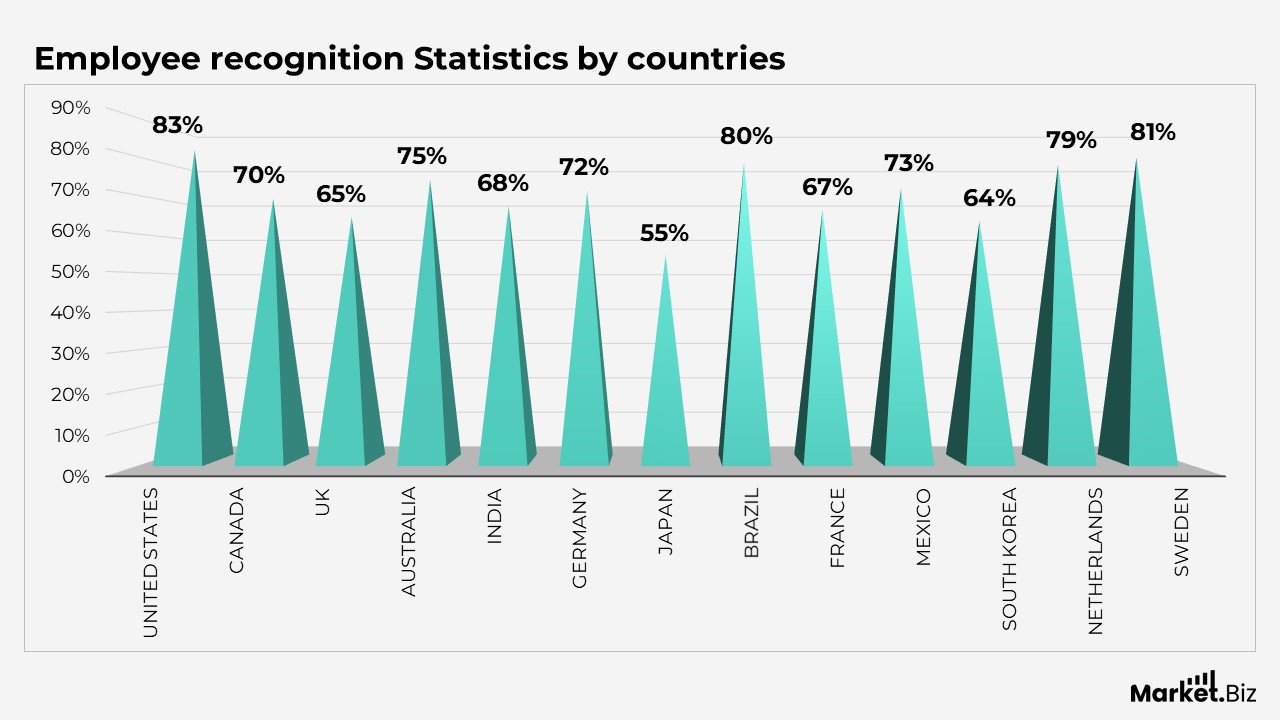
- In the United States, 83% of employees report that they feel more engaged and motivated when their contributions are recognized.
- In Canada, 70% of employees believe that regular recognition from their employers improves their job satisfaction and productivity.
- In the UK, 65% of workers say they would be more likely to stay at their company if they received more recognition for their efforts.
- In Australia, 75% of employees say that recognition from peers and managers has a positive impact on their job performance.
- In India, 68% of employees believe that a lack of recognition would decrease their motivation and productivity at work.
- In Germany, 72% of workers agree that recognition from colleagues helps foster a collaborative and positive workplace culture.
- In Japan, 55% of employees value recognition from their managers more than any other form of employee appreciation.
- In Brazil, 80% of employees say that frequent recognition leads to increased commitment to their company and reduces turnover rates.
- In France, 67% of employees feel that a formal recognition program would improve their performance and engagement levels.
- In Mexico, 73% of employees say they would be more likely to go above and beyond if their efforts were regularly acknowledged.
- In South Korea, 64% of employees feel that peer-to-peer recognition contributes to a more positive and productive workplace environment.
- In the Netherlands, 79% of employees believe recognition programs help reduce employee stress and improve overall work-life balance.
- In Sweden, 81% of employees agree that consistent recognition from their supervisors increases their motivation and overall job satisfaction.
Recognition Statistics Related to Employee Engagement
- Employees who receive regular recognition are 71% more likely to stay engaged and maintain a positive attitude toward their work.
- Recognition programs make 60% of employees feel more connected to the company’s goals, boosting overall engagement.
- 52% of employees agree that recognition is a key factor in their emotional commitment to the company, which enhances engagement.
- 77% of employees believe that recognition encourages them to take initiative and be more proactive, improving engagement.
- Recognition makes 65% of employees feel more passionate about their work, leading to higher engagement and creativity.
- 67% of managers say that recognizing employees frequently directly increases their team’s engagement levels.
- Employees who feel valued through recognition are 73% more likely to collaborate and contribute to team efforts, driving engagement.
- Companies that implement recognition programs see a 20% increase in employee engagement, correlating to better business outcomes.
- 58% of employees claim that a lack of recognition leads to disengagement, negatively impacting productivity and company culture.
- 81% of employees believe that effective recognition programs are essential for creating a culture of engagement.
- Recognition for achieving goals makes 65% of employees more enthusiastic and engaged with their work.
- 56% of employees feel that recognition fosters trust between them and their managers, which enhances engagement levels.
- 69% of employees say that recognition is crucial for feeling valued and engaged, especially when linked to team success.
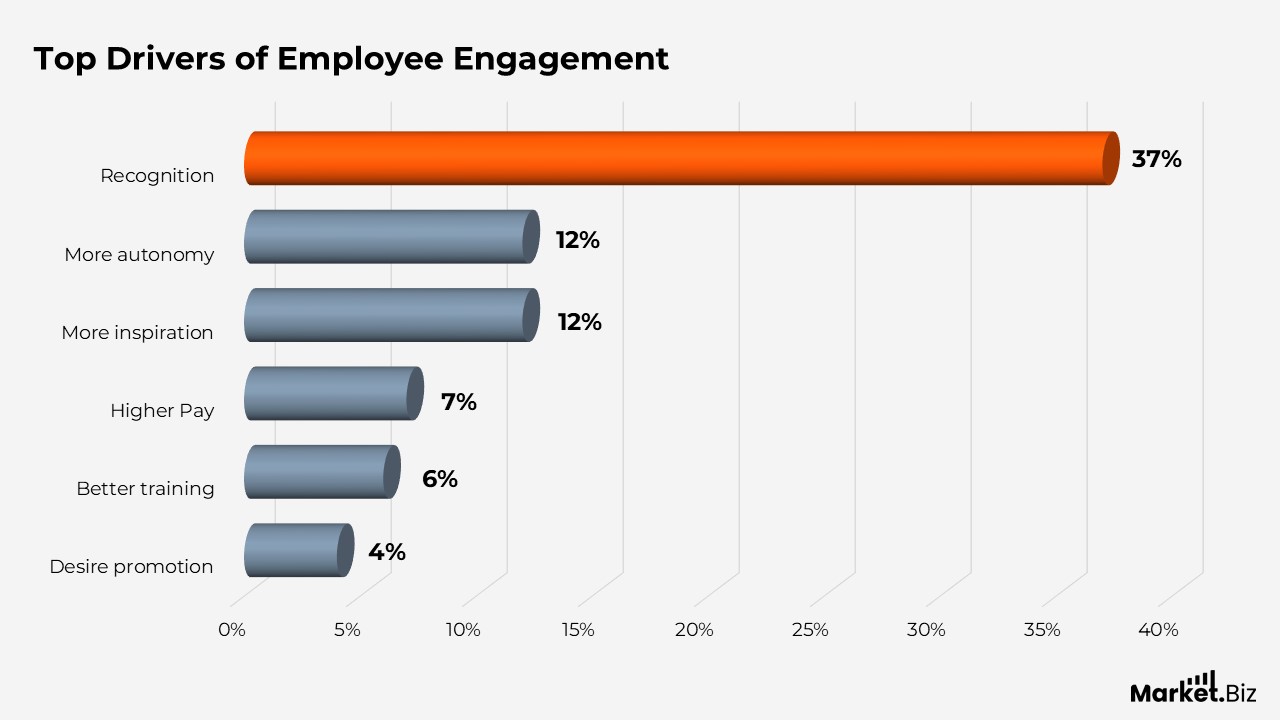
(Source: 99Firms)
The Impact of Recognition on Employees’ Performance
- When their work is recognized, employees are 70% more likely to set and achieve higher performance goals.
- Employees say they perform better when their contributions are recognized, with 65% reporting improved overall results.
- Employees who feel valued through recognition are 3 times more likely to deliver higher quality work than those who don’t.
- 73% of employees report a noticeable improvement in their performance when recognition is frequent and consistent.
- Employees say they become more productive when their efforts are acknowledged, with 56% noting an improvement in performance.
- Recognition increases employees’ sense of accountability, with 80% of employees saying it positively impacts their performance.
- Companies that provide recognition see 20% higher performance from employees, particularly in goal-driven environments.
- 85% of employees claim recognition programs directly boost their motivation, helping them exceed performance expectations.
- Employees agree their performance improves when they receive feedback and acknowledgment, with 61% of them reporting an impact.
- Recognition boosts employees’ confidence, with 78% of employees reporting that it drives them to deliver better results.
- Employees say that recognition makes them feel a greater sense of responsibility for their performance, with 66% agreeing.
- 74% of employees perform at a higher level when they know that their achievements will be noticed and appreciated.
- Recognition leads to stronger focus and increased efficiency, with 58% of employees reporting improvement in task completion.
- Employees report that recognition increases their commitment to meeting or surpassing work performance standards, with 69% agreeing.
- Employees who are regularly recognized are 27% more likely to achieve individual performance targets than those who aren’t.
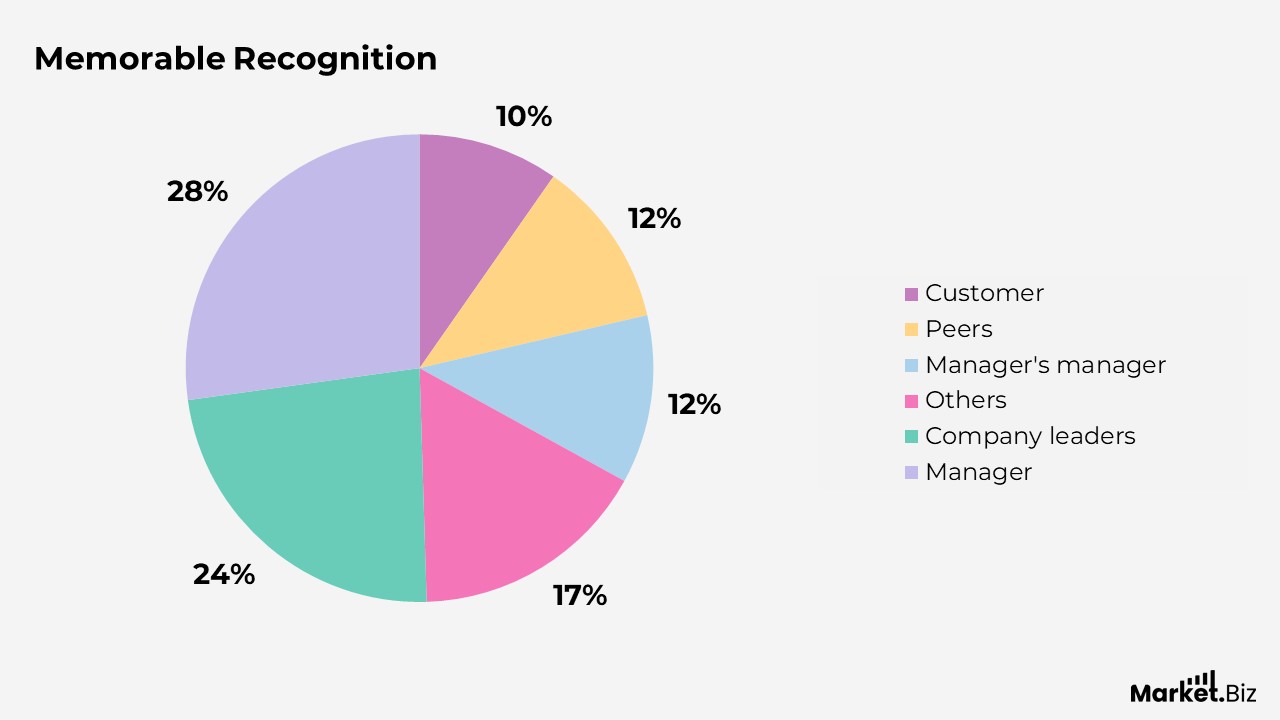
(Source: Zippia)
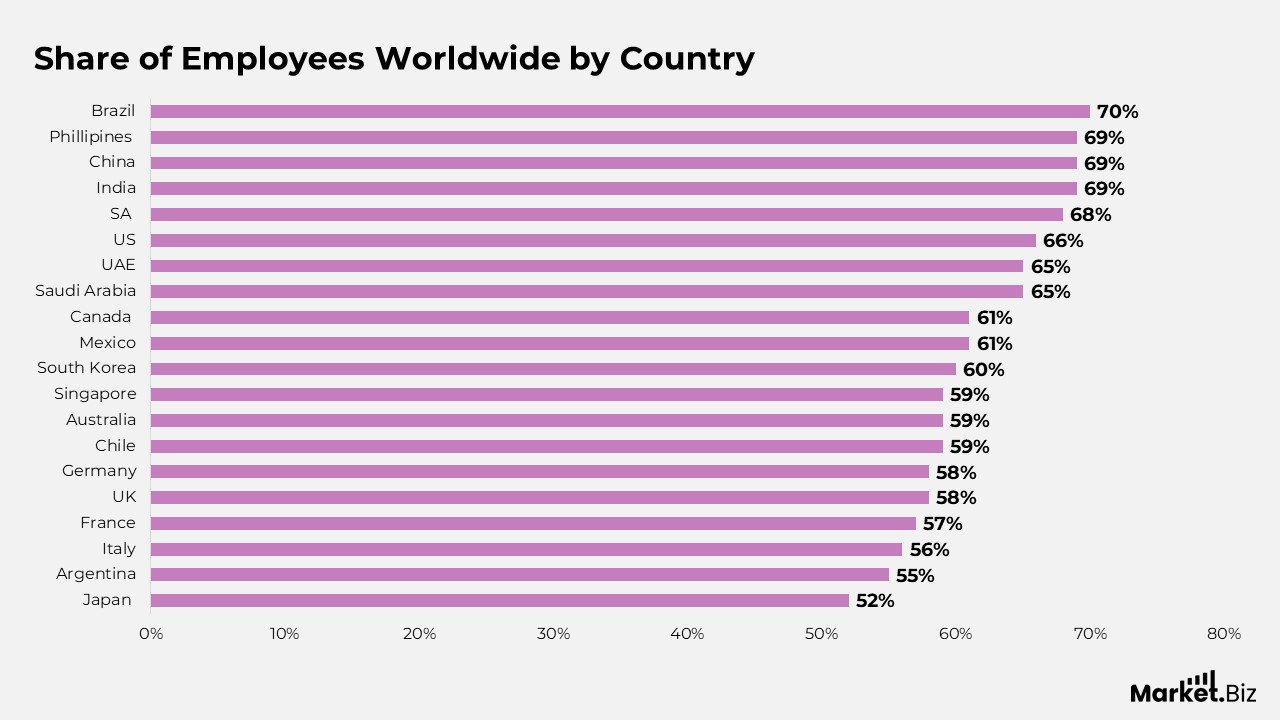
Global Share of Employee Statistics
- Employees globally feel more engaged when their performance is recognized, leading to improved productivity and retention, with 73% reporting this impact.
- Organizations report that performance recognition programs directly impact employee satisfaction and engagement, with 65% of them agreeing.
- 58% of employees worldwide say that regular feedback on their performance motivates them to perform better.
- In North America, employees believe performance recognition significantly influences their job satisfaction and productivity, with 79% agreeing.
- 67% of employees in Europe state that performance-based recognition drives them to contribute more and deliver higher results.
- In Asia, 72% of employees report that their performance improves when they feel their efforts are acknowledged by management.
- Companies worldwide with performance recognition programs experience higher employee performance and productivity, with 63% reporting this outcome.
- In Latin America, 70% of employees feel that performance recognition boosts their sense of responsibility and engagement at work.
- Organizations in the Middle East say that recognizing employee performance leads to a reduction in turnover rates, with 54% agreeing.
- 75% of employees in Australia say that performance-based rewards significantly improve their overall job performance.
- Companies globally find that performance recognition programs increase team collaboration and work efficiency, with 68% of them reporting this benefit.
- In Africa, 82% of employees say that acknowledgment of their work performance has a direct effect on their motivation and focus.
- Employees in the global workforce agree that recognition for outstanding performance increases overall work morale, with 77% reporting this impact.
(Source: statista)
Challenges and Negative Impacts of Employee Recognition
Challenges in Employee Recognition
- Managers say that inconsistent recognition leads to confusion, making it harder to build a positive company culture, with 57% reporting this challenge.
- Employees feel that recognition is biased and lacks fairness, with 65% stating this leads to resentment among team members.
- Companies struggle with recognizing employees in a meaningful way, with 72% of businesses reporting a lack of clear recognition frameworks.
- A lack of time and resources prevents consistent and effective recognition, according to 50% of managers.
- Employees feel that recognition programs are not personalized enough, with 48% of employees expressing this concern, reducing their perceived value.
- 60% of employees believe that peer-to-peer recognition programs are not implemented properly, which makes them less effective.
- Employees feel recognition is often reserved for high-performing individuals, creating an exclusionary culture, with many reporting negative impacts.
- Recognizing only top performers leads to disengagement among others, with 55% of employees saying this causes them to feel overlooked.
- Companies report difficulty in measuring the effectiveness of their recognition programs, with 63% finding it hard to adjust strategies.
- Recognition efforts are often misaligned with company goals, with 51% of employees stating that recognition does not always reflect meaningful achievements.
Negative Impacts of Employee Recognition
- Excessive recognition of the same individuals can create unhealthy competition, with 43% of employees reporting this negative impact on team cohesion.
- Employees feel that receiving recognition too frequently can cause them to feel uncomfortable or pressured, with 68% of employees agreeing.
- Receiving generic or insincere recognition reduces its value and impact on motivation, according to 70% of employees.
- When recognition is based solely on individual achievements, it undermines teamwork and collaboration, with 54% of employees reporting this issue.
- Recognition focused on performance can lead to burnout and stress, especially for high achievers, with 58% of employees agreeing.
- Recognition without proper context creates confusion and negatively affects the sense of accomplishment, with 62% of employees agreeing.
- Lack of transparency in recognition programs fosters distrust among team members, with 59% of employees reporting this issue.
- Recognition programs are ineffective if not accompanied by meaningful rewards, with 49% of employees expressing disillusionment.
- Recognition based on personal preferences rather than achievements leads to feelings of unfairness, with 45% of employees agreeing.
- Employees feel overlooked or unappreciated if recognition programs do not reflect their contributions to the team, with 64% of employees stating this.
(Source: coolest-gadgets, wp-content)
Conclusion
Employee recognition is essential for boosting motivation and performance. 79% of employees would work harder if recognized, leading to higher job satisfaction. Companies with recognition programs see 31% lower turnover and 22% higher profitability.
Peer-to-peer recognition also plays a big role, with 82% of employees feeling more motivated by colleagues’ praise. However, fairness and consistency are key to avoiding negative effects like unhealthy competition. Overall, recognition enhances engagement, creates a positive environment, and drives business success.
FAQs
5x Workers who firmly believe that their co-workers provide them with insightful performance feedback are five times more likely to be engaged. 47% of workers are less likely to be looking for or monitoring a new position if they strongly agree that their company supports their learning of new skills.
Employees who receive monthly recognition are 22% more likely to be highly committed to their jobs and 36% more likely to report being engaged and productive. According to research, employee productivity is greatly enhanced by increasing the frequency of recognition, which also has a protective effect against turnover.
An employee recognition survey can be used by employers to get input from staff members regarding their program for rewards and recognition. The survey may inquire about the program’s fairness and consistency, the frequency and caliber of recognition, and the effect of recognition on employee motivation and job satisfaction.
People are more inclined to acknowledge the hard work of others when they feel valued and acknowledged. Being acknowledged makes you feel good, whether it’s for yourself or for someone else.