









Introduction
Workplace Ethics and Integrity Statistics: Though workplace ethics and integrity are critical to any organisational success, recent data shows that many hurdles are still being faced in this area.
The 2024 Global Business Ethics Survey by the Ethics & Compliance Initiative (ECI) reveals that around 28% of working folks across the world have been pressured to compromise in some way or form their ethical standards, whereas 65% have claimed that they have faced a situation of misconduct during the past year.
Though 93% were reportedly willing to report the wrongdoings, only 50% so glaring “speak-up” gap. The above figures imply that it is high time for organisations to nurture an ethical culture and encourage transparency as a way to curb risks and build more trust.
Editor’s Choice
- 76% of these companies have a chief ethics or compliance officer as a senior leader.
- 85% of employees think ethical behaviour is critical to organisational success.
- Gen Z is twice as likely to trust social media influencers with ethics issues as millennials.
- Gen Z is 30% more likely to value ethics in technology (data privacy and AI ethics) than millennials.
- If an AI system is trained on biased data, it could negatively affect diversity in the workplace.
- 12.5% of employees use technology to harass at the workplace, which shows that the abuse enabled by technology has increased.
- 48% of employees who observe unethical behavior think about leaving. So, ethics awareness.
- There were 41,270 cases resulting in at least one day away, with a median of 7 days away.
- 44% of remote workers had concerns for the security of company data while working remotely.
General Workplace Ethics and Integrity Statistics
- 76% of employees feel that their organisations have a strong ethical culture.
- 99% of the world’s most ethical companies offer ethics and misconduct training to their people managers.
- 76% of these companies have a chief ethics or compliance officer as a senior leader.
- 89% of ethics officials said that desk officers supported their ability to perform their job.
- 80% of organizations have a formal ethics program and compliance program.
- 46% of employees witnessed workplace misconduct in the last year.
- 24% of employees who reported misconduct experienced retaliation.
- 65% of employees believe that their organisations are committed to ethical behaviour.
- 55% of employees think that organisations effectively handle ethical issues.
- 70% of employees are aware of their organisation’s ethics and compliance program.
- 80% of employees think that their organisations reward ethical behaviour.
- 90% of employees believe their organisations have provided adequate training on ethical issues.
- 85% of employees think ethical behaviour is critical to organisational success.
- 95% of employees agree that a leader’s role model ethical behaviour.
- 98% of employees believe ethical behaviour and integrity are important to uphold a positive work environment.
- 100% of employees think that ethical behaviour is important to uphold an organisation’s reputation.
- 93% of these companies routinely have discussions with their third-party business partners related to environmental, social, and governance (ESG) issues.
- 92% of ethics officials believe that advisories help them fulfil their job duties.
Workplace Ethical Culture
- Toxic work environments are the number one reason that employees said they leave their job at 45%.
- In 2025, 65% of employees reported feeling burnt out at least once a week. This is a significant rise from 48% in 2023.
- 76% of employees feel that their manager sets the tone for the workplace culture, indicating how important personal leadership is.
- 42% of employees feel that executive leadership does not improve the company culture and feel captive to decisions that improve outputs only.
- Only 40% of employees who have witnessed unethical behaviour reported it, and this is down from previous years.
- An employee is 10.4 times more likely to leave a job because the culture is more toxic than they are for better pay.
- 65% of employees say that a negative culture takes away from their well-being and job satisfaction, as a direct consequence, performance declines.
- 89% of employees working in a toxic type of workplace culture respond that their workplace does not feel psychologically safe for them, contributing to them not engaging as much.
- 73% of workers say that workplace culture exemplifies their burnout, indicating workplace culture reform is necessary.
- 78% of employees believe a healthy and sustainable work culture is a fundamental support for their mental health, signifying the importance of workplace culture reform.
- 52% of C-suite executives and managers say that leadership development is the most effective replacement strategy to improve culture.
- 81% of employees say a lack of empathy in leadership affects toxic workplace cultures, which is a need for leadership compassion.
- Organisations that exist for higher ethical purposes can see a 25% increase in employee retention vs. organisations that have no ethics awareness.
- 48% of employees who observe unethical behavior think about leaving. So, ethics awareness.
- When an employee understands their role and responsibilities, they are 23% more likely to stay with the company. This creates an engagement culture.
Ethics Training in Top Companies
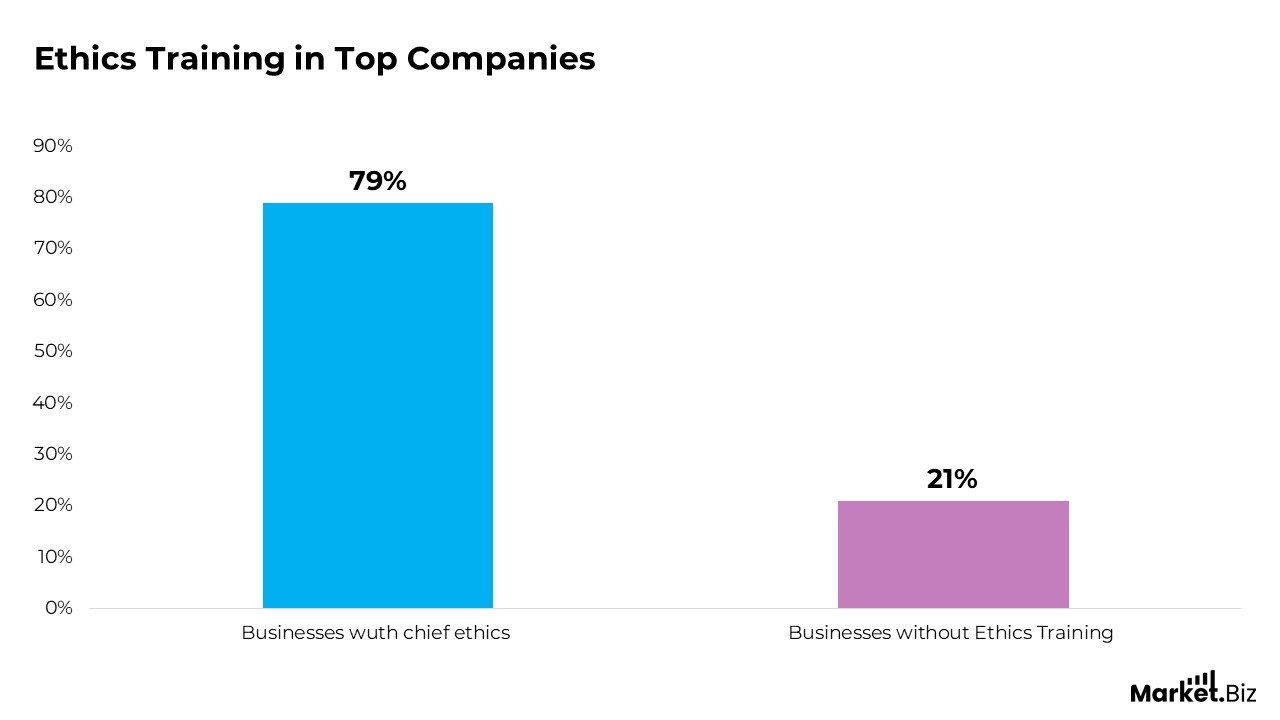
- 79% of leading ethical businesses now have a chief ethics or compliance officer overseeing their ethics program.
- 99% of the honourees provide designated ethics and misconduct training for their people managers.
- 87% of honouree organisations offer ethics training that is provided independently, or situation outside regular training, to their board members.
- 90% of the surveyed organisations stated their primary training objective is to “create a culture of ethics and respect”.
- 56% of trainers noted time in seat as an important obstacle to ethics training.
- 54% of respondents said they struggle to measure the effectiveness of their compliance and ethics training.
- 75% pf organisations are confident every strat employee got the ethics training they need to protect people and listing.
- 54% of ethics professionals fear their superb user is not receiving enough compliance or ethics training during the year.
- 30% of respondents said non-supervisory ranks could receive more training in ethics with frequency.
- 62% of organisations feel satisfied with the amount of ethics training they both provide to non-managerial sets.
- They spent an average 6 hours of compliance training on each employee of yearly duration.
- 76% of organisations offered 5 hours or fewer of training in ethics or compliance in each year.
- 96% of organisations offered fewer than 10 ethics or compliance courses during a year.
- 72% of organisations said they most commonly measure the success of their training through the completion of training.
- The top delivery method is online modules, with a more frequent use than live sessions or email reminders.
Workplace Violence Statistics
- During 2021-2022, in the US, there were 57,610 nonfatal workplace violence cases involving days away from work, job restrictions, or transfer.
- The annualized incidence rate for workplace violence in the US was 2.9 cases per 10,000 full-time employees for the same period.
- There were 41,270 cases resulting in at least one day away with a median of 7 days away.
- There were 16,340 cases that resulted in days of transfer or restriction for the employee with a median of 13 days.
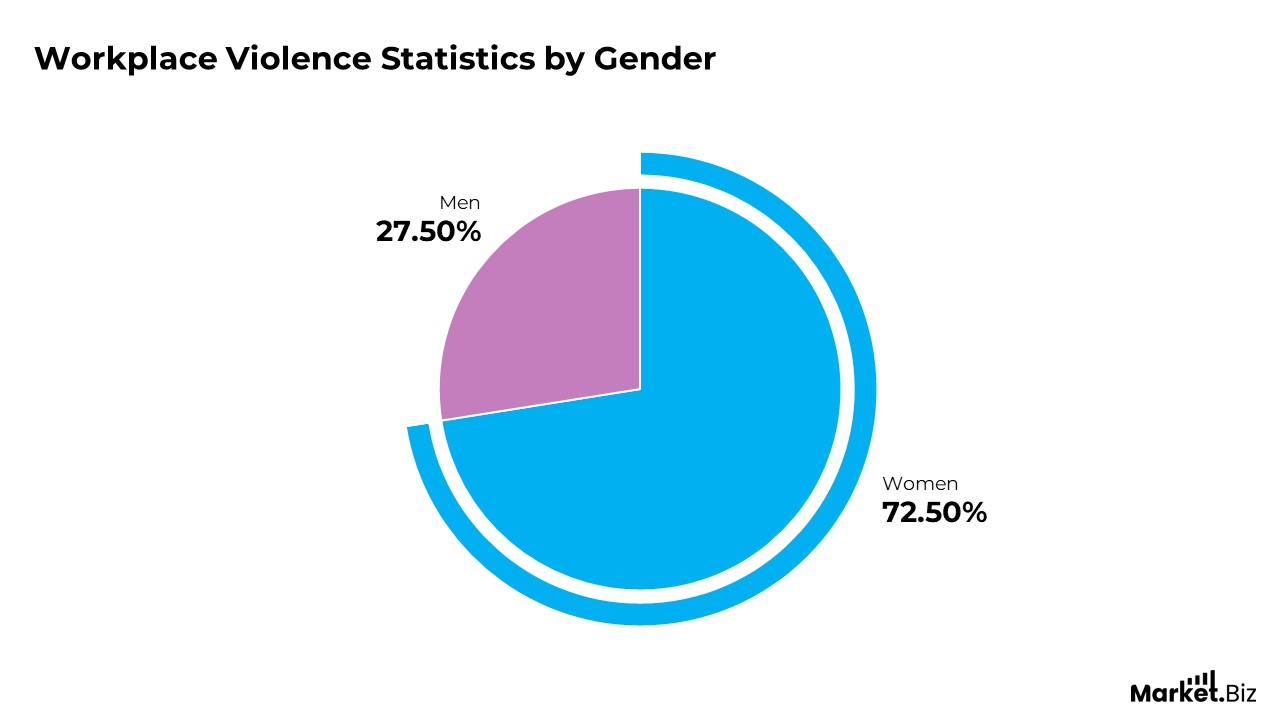
- Women were involved in 72.5% of all nonfatal workplace violence cases and have an annualized incidence rate of 5.0 cases per 10,000 full time workers.
- There were 41,960 nonfatal workplace violence cases in the health care and social assistance industry, 72.8% of all private industry cases of this type during the two-year period.
- The annualized incidence rate for workplace violence in the health care and social assistance industry was 14.2 cases per 10,000 full-time employees.
- There were 25,320 total DART cases accounting for intentional injury by another person in service occupations with an annualized incidence rate of 7.4 per 10,000 full-time employees.
- 543.6 DART rate per 10,000 full-time workers was the rate for psychiatric aides due to workplace violence, the highest rate detailed service occupations.
- 77.6% of all cases of workplace violence in educational services had days away from work, with an annualized incidence rate of 8.4 DART cases per 10,000 full-time workers.
- 69% of all cases of workplace violence in healthcare and social assistance had days away from work, with a median number of 7 days away.
- In transportation and material moving occupations, 81.6% of workplace violence resulted in days away from work.
- In sales and related occupations, 84.6% of cases of workplace violence led to days away from work.
- Vermont had the highest annualized incidence rate for workplace violence at 7.8 workplace violence cases for every 10,000 full-time workers.
- Arkansas and Nebraska had the lowest annualized incidence rate for workplace violence at 1.4 workplace violence cases for every 10,000 full time workers.
Ethical Challenges in Remote Work
- 60% of remote workers acknowledge they are not taking the appropriate steps to protect their data, which could lead to critical issues of privacy.
- Some employers have taken to overtly monitoring employees, which raises ethical concerns about autonomy and trust.
- 44% of remote workers had concerns for the security of company data while working remotely.
- Remote workers may not have an opportunity for upward career mobility due to their physical absence from the office.
- Remote workers may retreat from opportunities for networking and mentorship, limiting their development.
- When home and work are indistinguishable, it can produce more stress and burnout in remote employees.
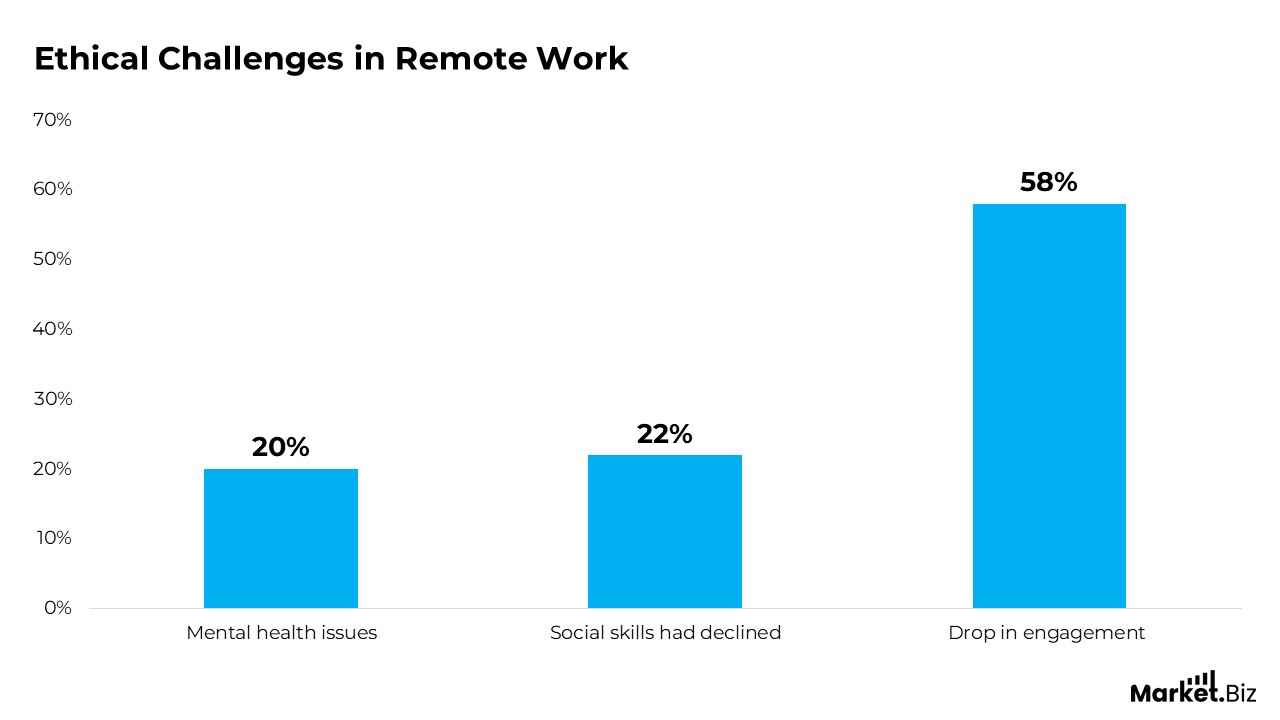
- 20% of remote employees indicated that their mental health has declined, with effects of isolation and lack of social connection contributing as factors.
- Some people may secretly work multiple jobs while working remotely and have ethical issues of honesty with their employer and potential conflicts of interest.
- 45% of remote workers have been victims of online harassment and frequently do not report it because of the virtual nature of the interaction.
- Many minority ethnic workers may be more likely to comply with in-office mandates such as going to the office, because there is a danger of losing their jobs or being discriminated against.
- Employees can feel the pressure of bending the rules when they see leaders exhibit a weak commitment to organisational values.
- Teams working remotely reported a drop in engagement of 58%, which has negatively affected their ability to make good ethical decisions.
- 22% of employees who worked remotely reported social skills had declined, and as a result, employees also reported feelings of disconnect and isolation.
- If working more than 55 hours each week is long-term in remote work, this can contribute to higher risks of health problems.
- Women, and especially women with children, may have a significantly larger burden of domestic work compared to men working remotely.
Differences between Gen Z and Millennials
- 72% of Gen Z say ethical behaviour is a key factor when choosing a brand, by contrast, 57 percent of Millennials said the same.
- 60% of Millennials prefer socially responsible brands, while 78% of Gen Z actively look for ethical brands.
- While 85% of Gen Z would by a sustainable product even if it costs more, only 66% of Millennials feel the same.
- Gen Z is 35% more likely than Millennials to boycott a brand due to the beliefs, values, or directives of their consumers not reflecting those of the brand or company.
- Millennials trust companies to act ethically 48%, while Gen Z trusts companies to lead to ethical issues 62%.
- 70% of Gen Z desire companies to be transparent on their social impact while only 55% of Millennials desire transparency.
- 80% of Gen Z ranked diversity and inclusion as a top ethical priority, while 65% of Millennials shared the same opinion.
- 60% of Millennials supported fair labor practices, while 75% of Gen Z actively look for companies with ethical labor policies.
- Gen Z were 40% more likely to prioritize environmental responsibility in their choice of a workplace than millennials.
- 65% of Millennials stated that when they observe companies acting ethically, it appears to benefit the company they are representing. Only 45% of Gen Z agreed this statement.
- 70% of Gen Z prefers brands that take specific political stands, as 50% of millennials said the same.
- Gen Z is 30% more likely to value ethics in technology (data privacy and AI ethics) than millennials.
- 80% of Gen Z state that employers need to have strong codes of ethics, while 60% of millennials concur.
- Gen Z is twice as likely to trust social media influencers with ethics issues as millennials.
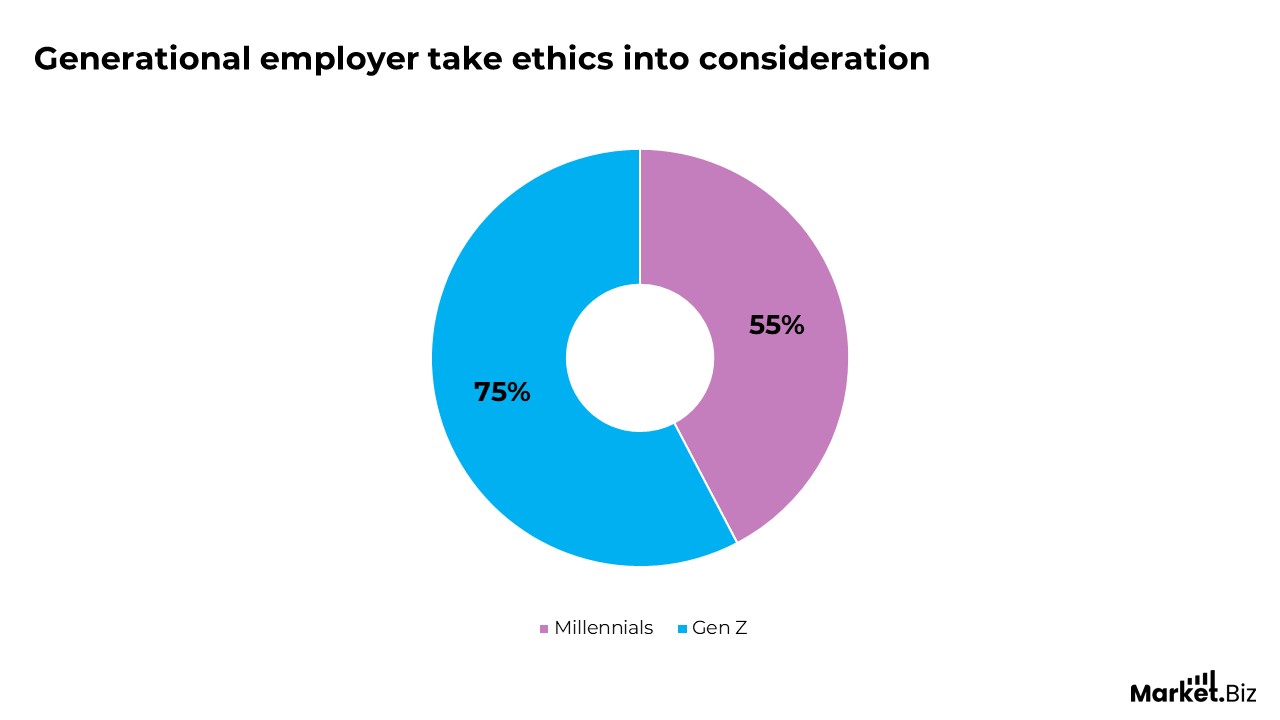
- 55% of millennials consider employer ethics when choosing a job, while 75% of Gen Z say it is the deciding factor.
Ethical Challenges in the Digital Workplace
- 80% of companies increased employee monitoring during the remote-work era, leading to privacy concerns.
- 59% of employees felt that monitoring online activities was ethically questionable. Note the concerns about trust.
- 45% of work cited negatively affecting employee well-being with the use of AI-based tracking tools.
- 29-34% of employees felt that productivity related AI demands were including greater stress, which links to mental health burdens.
- 57% of experts surveyed felt that cognitive technologies, like AI, pose serious ethical risks considering their positive potential.
- 12.5% of employees use technology to harass at the workplace, which shows that the abuse enabled by technology has increased.
- One in four employees experience tech use to harass, e.g., through inappropriate messages or calls.
- AI in hiring can maintain bias and unfairly characterize people.
- If an AI system is trained on biased data, it could negatively affect diversity in the workplace.
- Many employees felt that they couldn’t give meaningful consent to workplace monitoring tools, thus affecting their autonomy.
- Treating digital tools with no clear consent processes damages trust with digital workplace technologies.
- AI decisions can make employees less autonomous and impact their ability to be satisfied at work.
- Micro-usage of digital enabling tools can produce technostress and negatively affect employee health.
- Only 17% of organizations position ethical benchmarks as a priority for AI implementation, which illustrates the lack of ethical consideration.
AI’s Impact on Ethics and Integrity
- Only 48% of Americans believe AI has overall improved their lives, down sharply from the 20% who believe its overall positive impact on their life has been negative and 32% who believe it’s been neither positive nor negative.
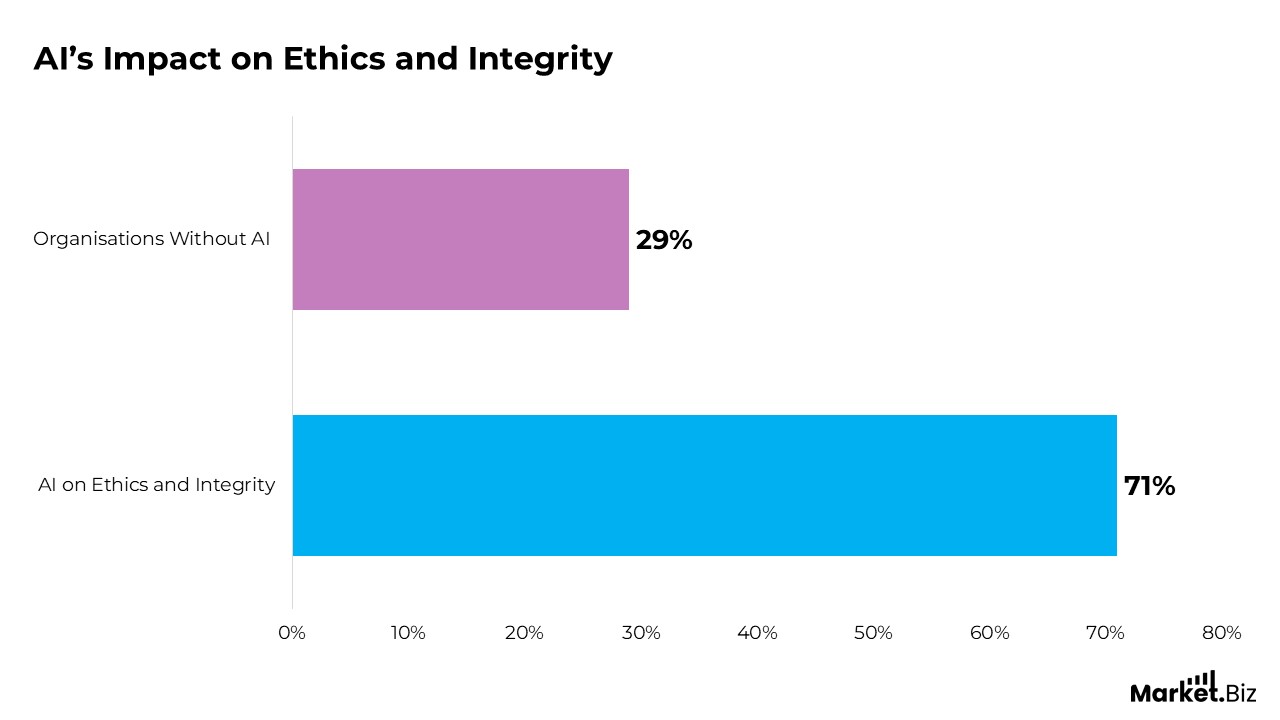
- 71% of organisations are already using AI in at least one business function, up from 65% only a few months earlier in early 2024.
- Less than 40% of corporate boards have a director conversant with the implications of AI ethics frameworks, highlighting the lack of ethical leadership at the top.
- The carbon footprint for training large, generative AI models is as high as 552 metric tons of CO2 equivalent, the annual emissions of 123 combusting cars. Its total estimated energy use could reach between 85-134 TWh in 2027, nearly 0.5% of global electricity usage.
- In the wrong hands, AI can reinforce existing biases found in the real world, leading to discrimination and human rights abuses, particularly in the absence of robust guardrails.
- An additional 63% of the UK public would not be comfortable with their data being used to train AI technologies, an indication that the public are concerned about how their data is used and shared.
- AI-generated written content only led to as much as a 700% increase in instances of academic dishonesty for some higher educational institutions between 2022-2023.
- AI models like ChatGPT have already hallucinated, or outright made up, citations, upending academic and scientific research missions.
- Rapid advancements in AI continue to fuel employee anxiety. About half (48%) of employee say they are more worried about AI development today than one year ago.
Conclusion
Integrity and ethics in the workplace are a great asset in establishing trust and creating a positive work environment. In the 2023 Global Business Ethics Survey done by the Ethics and Compliance Initiative, 56% if U.S. employees said their organisation has a strong or somewhat strong ethical culture compared to 60% in 2020.
The EY Global Integrity Report 2024 also found that 49% of respondents worldwide believe compliance with the integrity standards of their organization has again improved over the last two years. These reports demonstrate that there is still work to do while organisations are trying to improve ethics and integrity in the workplace.
FAQs
63% of employees say they feel some pressure to compromise workplace ethics to achieve operational goals. Which indicates growing concerns regarding integrity in the workplace.
About 41% of employees have seen some misconduct at their workplace and nearly 60% said that they chose to report it. Purpose of these stats is to highlight the need for policies in ethics training.
Yes, studies suggest that companies with clear ethics programs and backed by the support of leadership are likely to see up to a 40% decrease in misconduct with higher trust from employees and retention.