









Introduction
Pet Industry Statistics: The global pet industry is experiencing significant growth, fueled by the trend of “humanisation” of pets, an increase in pet ownership, particularly among Millennials and Gen Z, and a rise in disposable incomes.
This has resulted in substantial expenditures on high-quality food, healthcare, and services such as grooming and boarding, with projections indicating considerable market expansion and strong trends towards specialised products and online sales.
The pet industry represents a comprehensive market that includes all products and services related to companion animals, motivated by the bond between humans and animals, where pets are regarded as family members.
This sector encompasses pet food, supplies (including toys, beds, and grooming products), healthcare services (such as veterinary care and insurance), and an expanding array of services like boarding, training, pet sitting, and even luxury offerings like pet taxis, hotels, and technology solutions (such as smart feeders and trackers).
Prominent trends in this industry include the humanisation of pets (emphasising premium and personalised care), the growth of e-commerce, and an increasing demand for sustainable, health-oriented, and technology-driven solutions.
Editor’s Choice
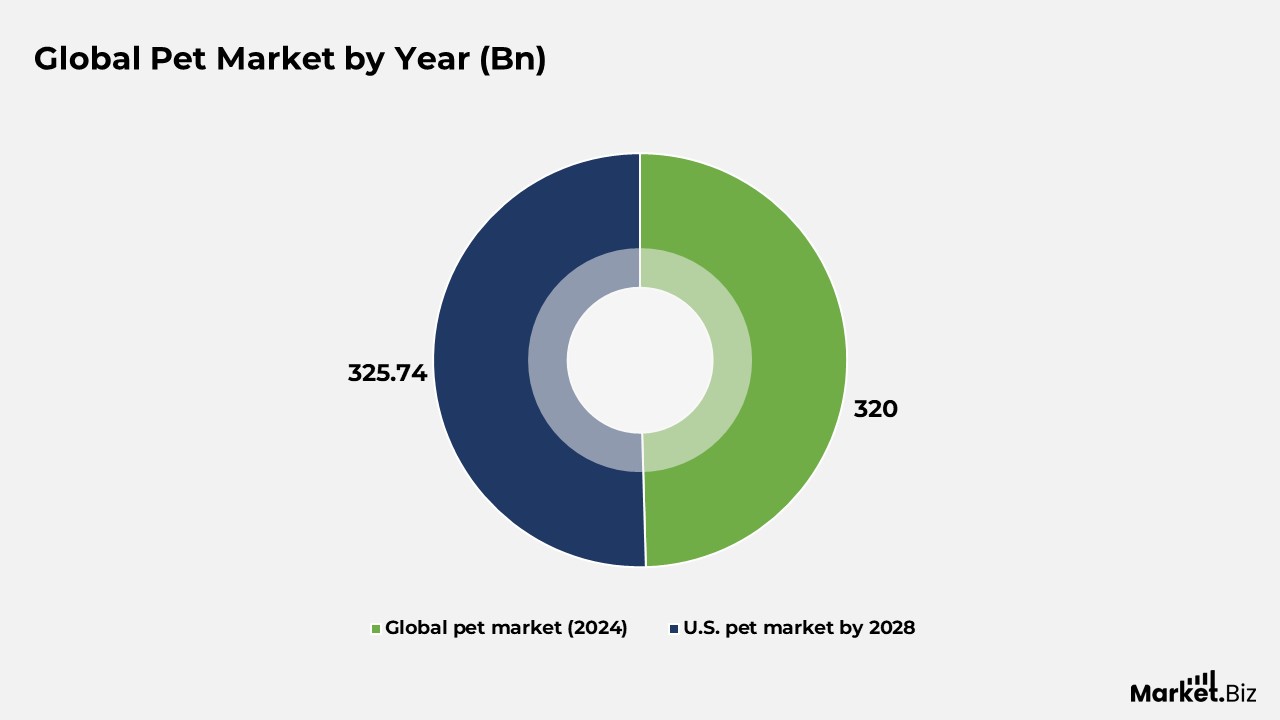
- The current global pet market is estimated to be valued at approximately $320 billion.
- In 2020, the industry recorded sales of USD 102.6 billion.
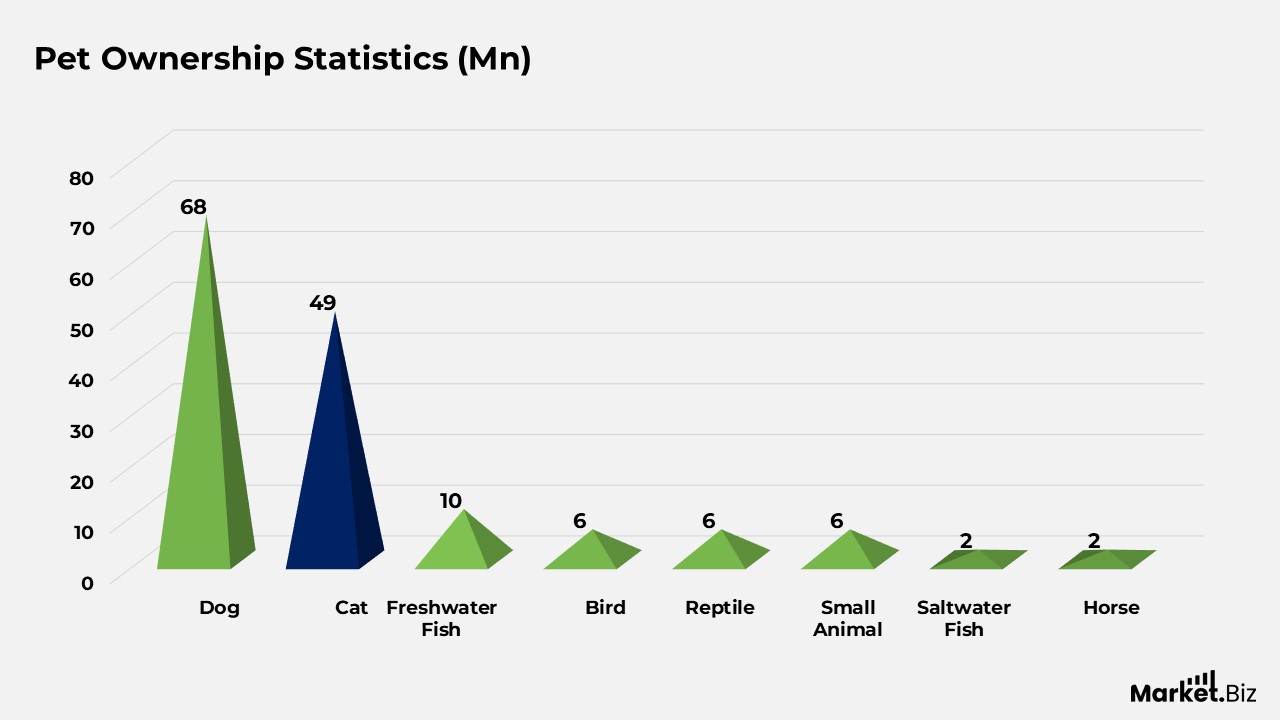
- Pet ownership is increasing, with 51% of U.S. households owning dogs (68 million) and 37% (49 million) of households owning cats.
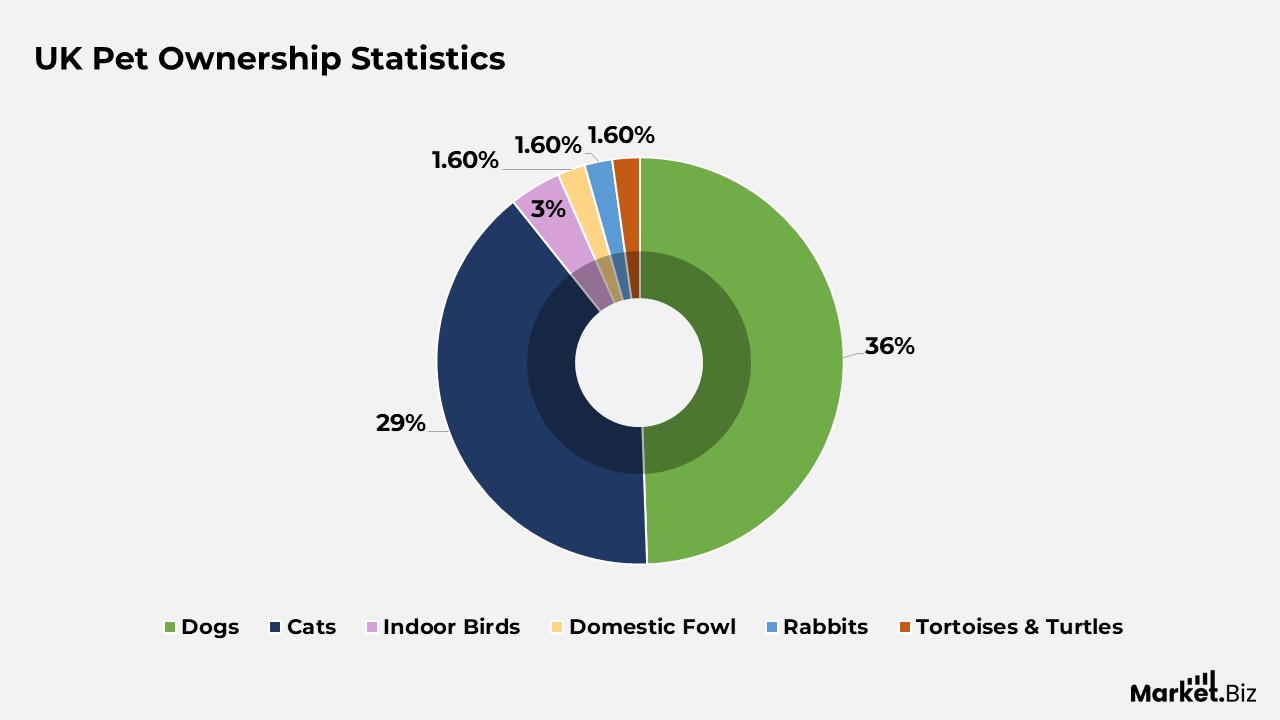
- In the U.K., there are 12.5 million households that own pet cats, accounting for roughly 29%.
- In 2024, citizens of the United States allocated 152 billion dollars for their pets, with projections indicating an increase to 157 billion dollars in 2025.
- 69 million families in the United States have at least one dog.
General Pet Industry Statistics
- The current global pet market is estimated to be valued at approximately $320 billion.
- The U.S. pet market is anticipated to reach $325.74 billion by the year 2028.
- Millennials represent 33% of pet ownership in the United States.
- It is expected that Millennials and Gen Z will contribute to a 14% increase in pet ownership by 2030.
- Pet ownership increased from 67% to 70% in 2020 as a result of the COVID-19 pandemic.
- By the end of 2023, the U.S. pet food market achieved a value of $43.9 billion.
- Around 0.2% of pet owners in the U.S. prepare meals for their pets.
- 43% of dog owners and 41% of cat owners opt for premium pet food products.
- Globally, organic and plant-based dog food sales are projected to reach $81 billion by 2031.
- 42% of pet owners express interest in refrigerated and human-grade pet food options.
- Approximately 5.36 million pets in the United States are covered by insurance policies.
- U.S. pet owners typically spend around $55,000 over the lifetime of a pet.
- 36% of dog owners rely on their veterinarians for their dogs’ dental care needs.
- The pet pharmaceutical market is expected to exceed $25 billion by 2030.
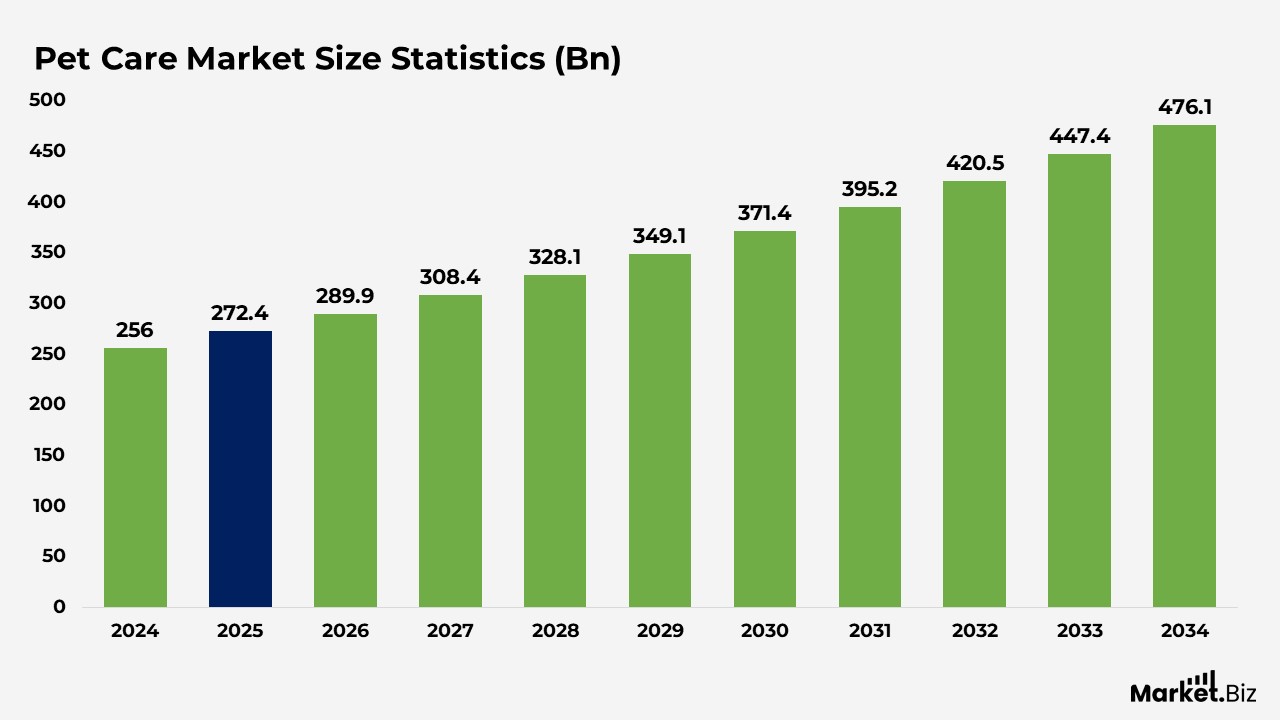
Pet Care Market Size Statistics
- The global pet care market is estimated to attain a value of USD 476.1 billion by the year 2034. Exhibiting a compound annual growth rate of 6.4% from 2025 to 2034.
- In 2024, dogs accounted for the largest segment of pet types, capturing a market share of 41.2%, a trend attributed to the increasing phenomenon of pet humanisation.
- The product segment was the most significant in the market during 2024, commanding a 54.6% share, which includes products such as pet litter. Grooming supplies, and various accessories.
- In 2024, online channels emerged as the leading distribution method, propelled by factors such as consumer convenience, competitive pricing, and a wide range of product offerings.
- North America stands as the foremost region in this market, holding a 45.3% market share valued at USD 115.2 billion, driven by a high rate of pet ownership and a strong demand for premium products.
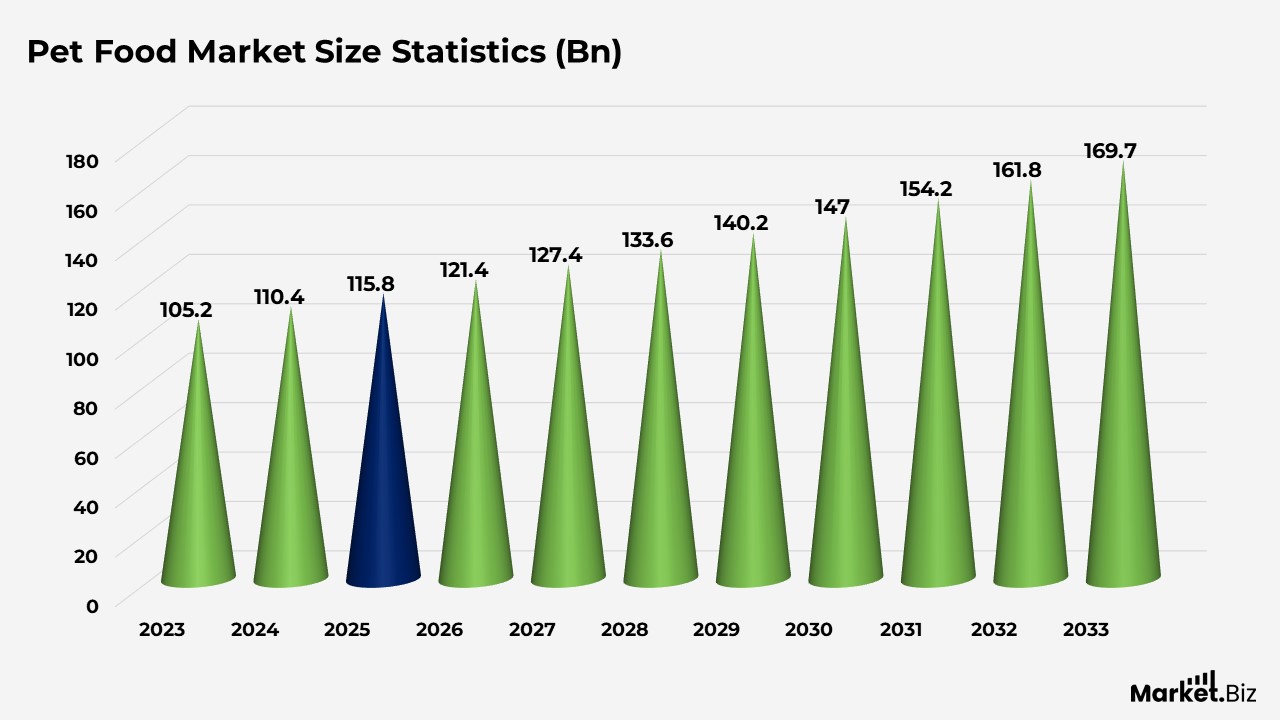
Pet Food Market Size Statistics
- The global pet food market has demonstrated an impressive growth trajectory in recent years. Achieving a compound annual growth rate (CAGR) of 5.6%.
- In 2018, the market’s revenue was recorded at USD 88.91 billion, and by the conclusion of 2019, it had risen to USD 98.57 billion.
- The year 2020 saw a significant increase, with the market reaching USD 111.90 billion.
- This upward trend persisted in 2021, as the market revenue escalated to USD 121 billion.
- Looking forward, the market is anticipated to continue its growth. Projected revenues are expected to be USD 133.70 billion in 2022 and USD 143.60 billion in 2023.
- The outlook for the upcoming years remains positive, with the pet food market forecasted to attain USD 149.90 billion in 2024, USD 158.60 billion in 2025, and a promising USD 167.70 billion in 2026.
- This growth is projected to continue, with revenues anticipated to reach USD 177.40 billion in 2027 and USD 186.10 billion in 2028.
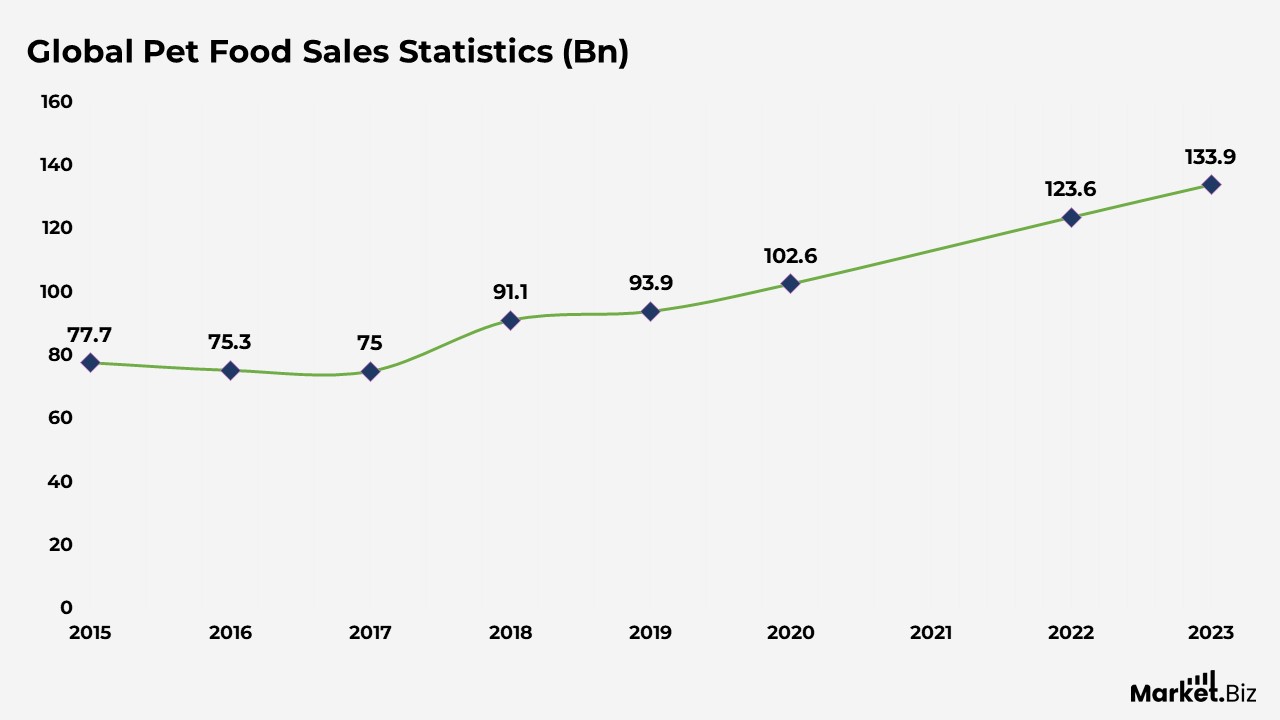
Global Pet Food Sales Statistics
- In 2010, the sales of pet food were valued at USD 59.3 billion, and this amount consistently rose in the following years.
- By 2014, sales had climbed to USD 73.3 billion, reflecting a burgeoning market.
- Although 2016 experienced a minor decline in sales to USD 75.25 billion, the trend reversed, and by 2018, the industry saw a remarkable increase with sales reaching USD 91.1 billion.
- This positive trend continued in 2019, with sales reaching USD 93.9 billion.
- In 2020, the industry recorded sales of USD 102.6 billion.
- Looking forward, the outlook is promising, with anticipated sales of USD 123.6 billion in 2022 and USD 133.9 billion in 2023.
Pet Industry Ownership Statistics
- According to the most recent statistics from the American Pet Products Association for 2025, 94 million households in the U.S., which accounts for 71%, have a pet. In contrast, 86.9 million U.S. households, approximately two-thirds or 66% of the population, owned a pet from 2023 to 2024.
- Pet ownership is increasing, with 51% of U.S. households owning dogs (68 million) and 37% (49 million) of households owning cats.
- Roughly 1 in 5 U.S. households acquired a dog or cat between March 2020 and May 2021.
- Homeowners are more likely to have pets than renters: 58% of homeowners own dogs, and 36% own cats, compared to 39% and 29% of renters, respectively.
- The American Veterinary Medical Association (AVMA) reports that 38% of dog adoptions and 40% of cat adoptions occurred through shelters or rescue organisations.
- As per the AVMA, 23% of dog owners obtained their dogs from breeders, whereas only 7% of cat owners did the same.
- In comparison to 6% of pet dogs, 27% of pet cats were previously strays, according to the ASPCA.
- Additionally, 25% of cats in the U.S. were obtained from family, friends, or relatives.
- Statistics from 2016 indicate that 76% of cat owners and 85% of dog owners view their pets as members of the human family.
UK Pet Ownership Statistics
- Approximately 13.5 million households in the U.K., representing 36%, had a pet dog. An earlier study indicated there were 13 million households in the U.K.
- In the U.K., there are 12.5 million households that own pet cats, accounting for roughly 29%.
- According to the EPFI, the U.K. boasts the largest population of pet reptiles at 2.2 million, while Russia follows with the second largest population at 1.1 million.
Pet Industry Expenditures Statistics
- In 2024, citizens of the United States allocated 152 billion dollars for their pets. With projections indicating an increase to 157 billion dollars in 2025.
- For the year 2025, the anticipated sales of pet food and treats are estimated to reach $67.8 billion, a rise from $65.8 billion in 2024.
- Sales from pet supplies, live animals, and over-the-counter medications are expected to amount to $34.3 billion.
- Veterinary care and product sales are projected to achieve a total of $41.4 billion.
- Additionally, other services are forecasted to contribute $13.5 billion.
- According to III, the expenditure within the U.S. pet industry saw a remarkable growth of 114% from 2010 to 2020.
- Statistics from 2019 indicate a significant rise in pet ownership in the United States, increasing from 56% in 1988 to 67% in 2019.
- III reported that the U.S. pet industry generated $123.6 billion in revenue in 2021, compared to $103.6 billion in 2020.
- Between the years 2020 and 2021, spending in the U.S. pet industry experienced a growth of 19%, as noted by III.
| Dogs | Cats | |
| Surgical Vet Visiting | $458 | $201 |
| Routine Vet | $242 | $178 |
| Food | $287 | $254 |
| etc | $90.5 | $94.5 |
Types of Pets in Pet Industry Statistics
- 69 million families in the United States have at least one dog.
- 45.3 million families in the United States have at least one cat.
- 11.8 million families in the United States have at least one freshwater fish.
- 9.9 million families in the United States have a bird.
- 5.7 million families in the United States have a reptile.
- There are more than 58.39 million pet cats in the United States.
- There are more than 76.81 million dogs in the United States.
- On average, a pet owner spends $1,201 annually on their dogs.
- On average, a pet owner spends $687 annually on their cats.
Pet Accessory Market Trends
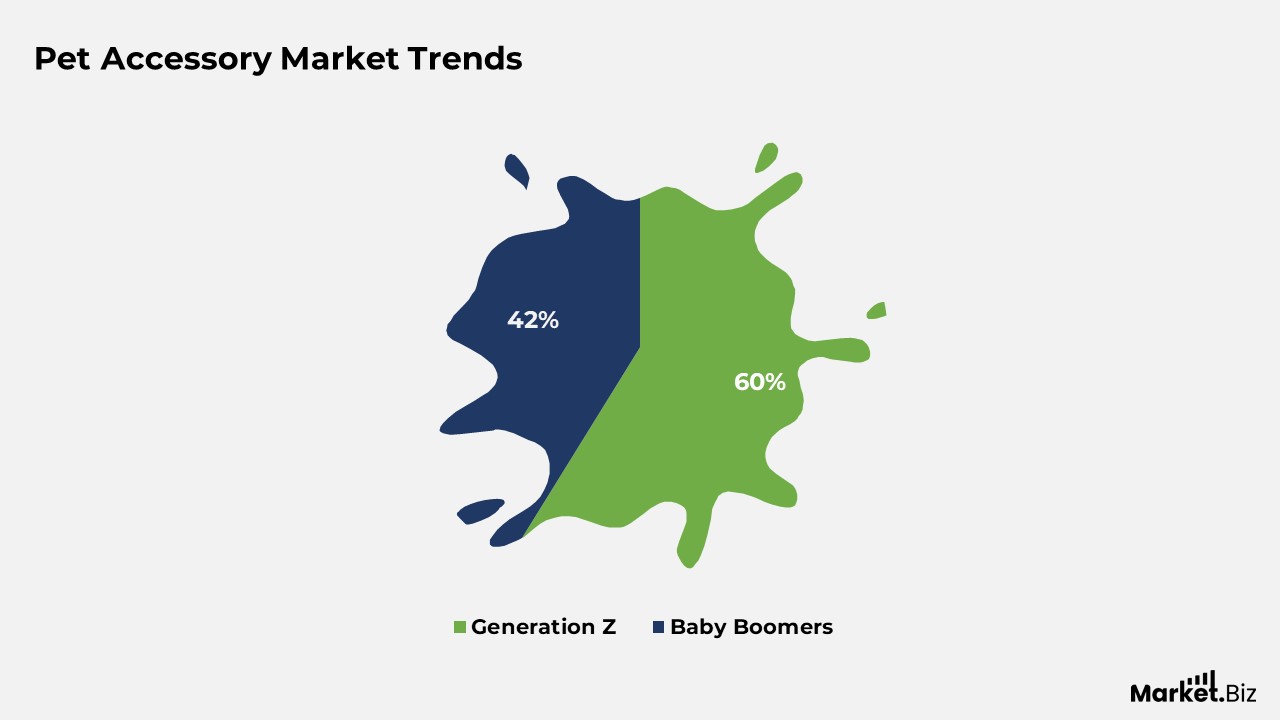
- 60% of Generation Z intend to buy birthday or Christmas presents for their pets.
- 44% of pet owners in the United States utilise CBD to alleviate stress and anxiety in their pets.
- The U.S. market for pet supplements is anticipated to reach $1.05 billion by the year 2027.
- The U.S. market for pet accessories is forecasted to increase by $9.20 billion from 2021 to 2025.
Recent Development
- The estimated US spending for 2024 is $152 billion, with food, treats, and veterinary care identified as the leading categories, according to the American Pet Products Association.
- In 2023, the global pet care market experienced growth, particularly in India, where it reached approximately $9.85 billion, fueled by increasing incomes and pet ownership.
Pet Industry Future Predictions
- The global pet care market is anticipated to exceed $250 billion by the year 2027.
- India is emerging as a key market, experiencing rapid growth fueled by the trend of smaller family units and increasing disposable incomes, which is expected to lead to substantial market size growth by 2028.
Conclusion
Pet Industry Statistics: The pet industry has become a vital component of the lives of millions across the USA. This sector is a vast and expanding enterprise that demonstrates no indications of deceleration.
Approximately 70% of households in the U.S. possess at least one pet, investing an average of $1,332 annually on their care. Consequently, the value of the U.S. pet industry has soared to $76.8 billion, with projections indicating a continued growth at a compound annual growth rate (CAGR) of 5.3% from 2020 to 2025.
FAQ’s
The worldwide pet industry attained a value of $261 billion in 2024, with the United States accounting for the largest individual market at around $147 billion. This expansion signifies not only a rise in pet ownership but also substantial increases in spending per pet across all categories.
In the United States, dogs are the most favoured pets, with 65.1 million families having a dog, followed by freshwater fish in 11.1 million households and 46.5 million households owning cats.
The most profitable pet businesses often centre on premium nutrition (especially subscription-based), health & wellness products (supplements, remedies), and high-demand services like mobile grooming, training, and pet sitting, capitalising on owners treating pets like family and seeking convenience/specialisation. Niche markets like pet tech, custom keepsakes, or even cremation services also show high profitability due to strong emotional and recurring revenue streams.