









Introduction
Mental Health Days Usage Statistics: Mental health days are an increasingly important feature of workplace wellness, mirroring a growing awareness that mental health affects employee productivity and the wider health of the organization.
In the UK, mental health problems such as stress, depression, and anxiety caused $17.1 million worth of working days to be lost due to ill health in the financial year 2022 to 2023, representing over half of all work-related ill health cases.
Moreover, women are disproportionately affected, with women over 55 estimated to have lost on average 1.31 workdays a year due to mental health issues, compared with men who lost an average of 0.44 workdays. With this in mind, it is clear that employers must support their workforce with mental health days to help create a healthier and more resilient workforce.
Editor’s Choice
- Mental disorders contribute to 1 in 6 years lived with disability globally.
- In 2022-2023, workers lost 17.1 million working days due to stress, depression or anxiety at work.
- 10% of children and young people aged 5-16 suffer from a clinically diagnosable mental illness.
- 50.5% of women said mental health days were “extremely important” and 46.3% said the same for men.
- The worldwide cost of lost productivity from depression and anxiety is US $1 trillion per year.
- Every year, 12 billion workdays are lost due to mental health conditions.
- US businesses waste an estimated US $300 billion per year due to worker absence related to mental health.
- Working while sick costs businesses around US $150 billion each year.
- Days off for mental health may only benefit you for a few days and may not help with underlying issues.
- Ongoing depression leads to a 35% decline in productivity for U.S. workers, costing the economy about $210.5 billion annually.
What is Mental Health Days Usage?
Mental health days are time off work that employees take to address their mental and emotional state of mind, similar to taking a sick day. These days can be paid or unpaid, based on company policy often intended to employ discharge stress, anxiety or some other mental health concern.
According to the World Health Organization, 12 billion working days are lost due to depression and anxiety worldwide, costing a loss of productivity in excess of US$1 trillion annually. Organizations implement mental health days as means to address employee burnout, productivity, and workplace culture. Mental health days is part of a larger strategy of wellness approach and has been shown to improve employee morale and retention.
General Mental Health Days Usage Statistics
- In 2022-2023, workers lost 17.1 million working days due to stress, depression or anxiety at work.
- In 2022-2023, 875,000 workers were experiencing work-related stress, depression, or anxiety in the UK.
- More than 1 billion people worldwide have mental health conditions, including metal, neurological, and substance use disorders.
- One in eight people worldwide are living with mental health conditions that are affecting their lives and livelihoods.
- In 2019, 970 million people worldwide were living with a mental disorder, with anxiety and depression being the most common.
- Mental disorders contribute to one in six years lived with disability globally.
- Individuals with severe mental health conditions may die between 10 to 20 years sooner than individuals without severe mental health conditions.
- In 2022/23, on average, 37.1% of women and 29.9% of men in the UK reported experiencing high levels of anxiety.
- Young people are far more likely to experience some form of anxiety. In 2021, 28% of individuals aged between 16-29 years were likely to experience anxiety.
- In any given year, one in 5 adolescents may experience a mental health problem.
- 50% of mental health issues develop before the age of 14, and 75% before age 24.
- 10% of children and young people aged 5-16 suffer from a clinically diagnosable mental illness.
- 70% of children and young people who experience mental health problems will not receive adequate interventions before the right age.
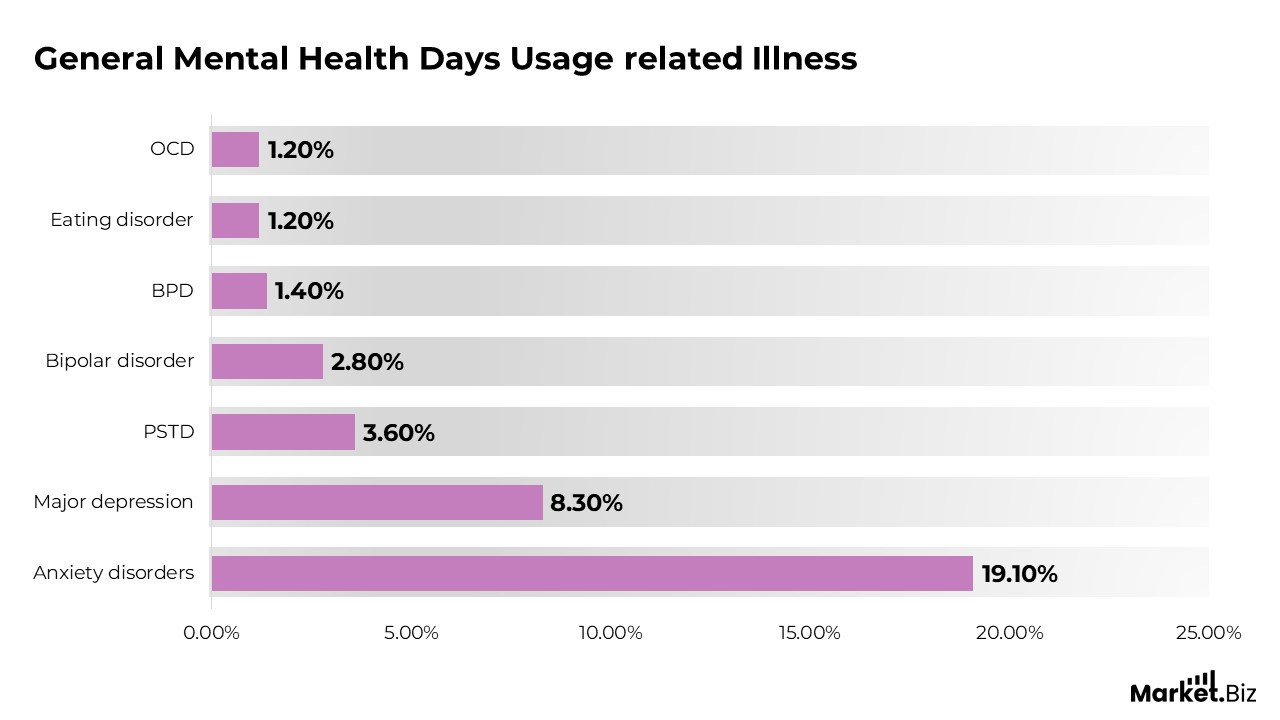
(Source: wp-content, USA.Edu)
Global Market Growth
- Worldwide, an estimated 12 billion working days are lost every year due to illness as a result of depression and anxiety, impacting efficiency.
- The global economy loses over $1 trillion per year to lost productivity as a result of mental health problems.
- In 2019, it was estimated that 970 million people in the world were living with a mental disorder, with anxiety and depression being the most common.
- Globally, mental disorders represent 1 in 6 years lived with disability, indicating the impact of mental disorders on people’s lives.
- The Mental Health Atlas 2020 includes data that represented 171 WHO Member States out of 194 WHO Member States, and to track developments in the global mental health agenda through WHO health targets.
- An estimated 15% of working-age adults live with a mental disorders which affects confidence, productivity and health and safety at work.
Moreover
- The COVID-19 pandemic saw an increase 25% in global depression cases in 2020-21, worsening the mental health emergency.
- The WHO has launched the special initiative for mental health (2019-2023) which aims to support 100 million more people in 12 priority countries to access quality mental health care.
- By 2030, depression is forecasted to be the most significant cause of disease worldwide, which demonstrates the urgency in tackling mental health problems.
- Each year there are over 700,000 deaths by suicide, which shows the extent of untreated mental health conditions that exist.
- The global cost of mental illness was estimated to be $2.5 trillion in 2010, and is projected to reach over $6 trillion by 2030.
- Mental health conditions related to work are preventable and supporting mental health at work can protect workers and benefit organisations, productivity, and business profits.
- The World Mental Health Report called for the transformation of mental health care by combining services with primary health care and community settings.
MHDU Demographics
By Age
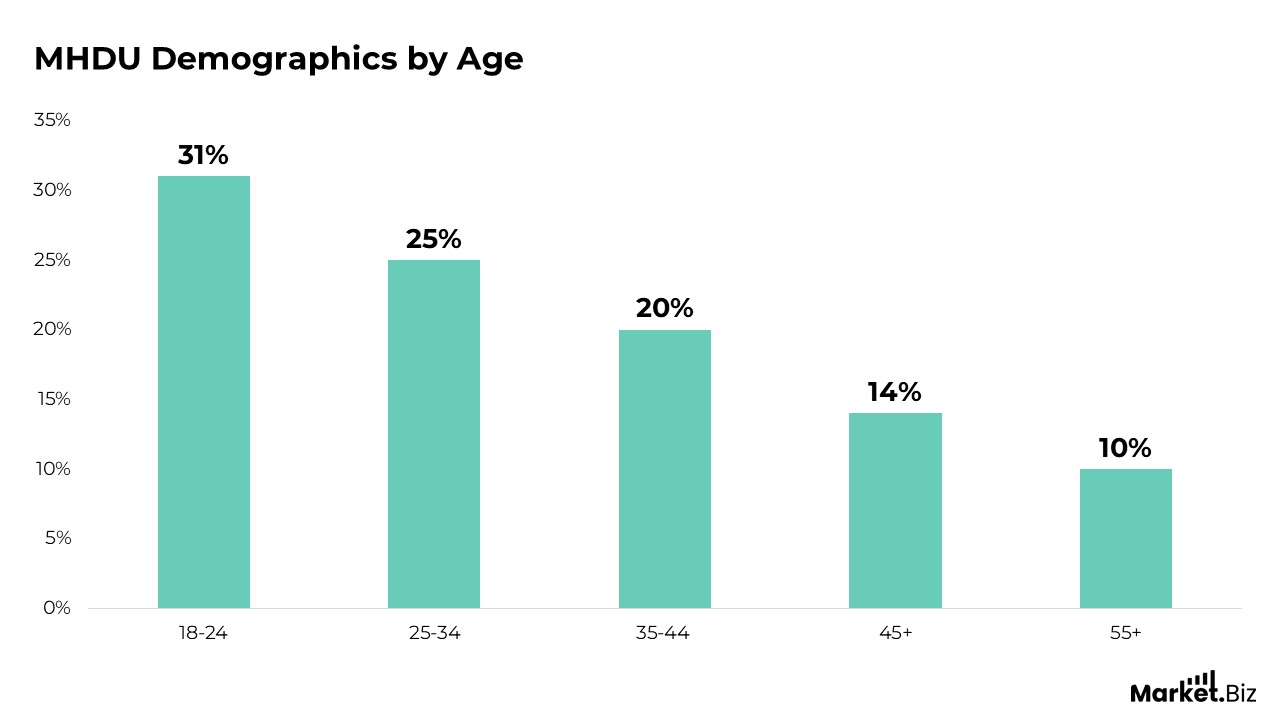
- In 2024, 31% of Gen Z workers aged 18-24 are taking time off because of stress, the highest rate of all age groups.
- The next youngest group, those aged 25-34, reported a rate of 25% taking time off due to mental health related issues, a pretty big concern for people in their early adult years.
- Those aged 35-44 reported a rate of 20% taking time odd for mental health reasons, which seems like a declining curve as the ages are increasing.
- Those aged 45 plus report a rate of 14% for mental health related absenteeism, perhaps indicating less reported stress with increasing age in the workplace, or simply underreporting in the older ages.
- Finally, 10% of those aged 55+ reported time away from work for stress reasons, which is again the lowest rate of absenteeism in comparison with the other age groups in the study.
- In the U.S., young adults (aged 18-25) had a rate of 24.4% of frequent mental distress which was the highest rate and then levels declined with age.
By Gender
- Women are twice as likely to take time off work as a result of stress, anxiety, or depression as a man.
- Women over 55 lost an average of 1.31 workdays per year due to mental health reasons, compared to 0.44 days for men.
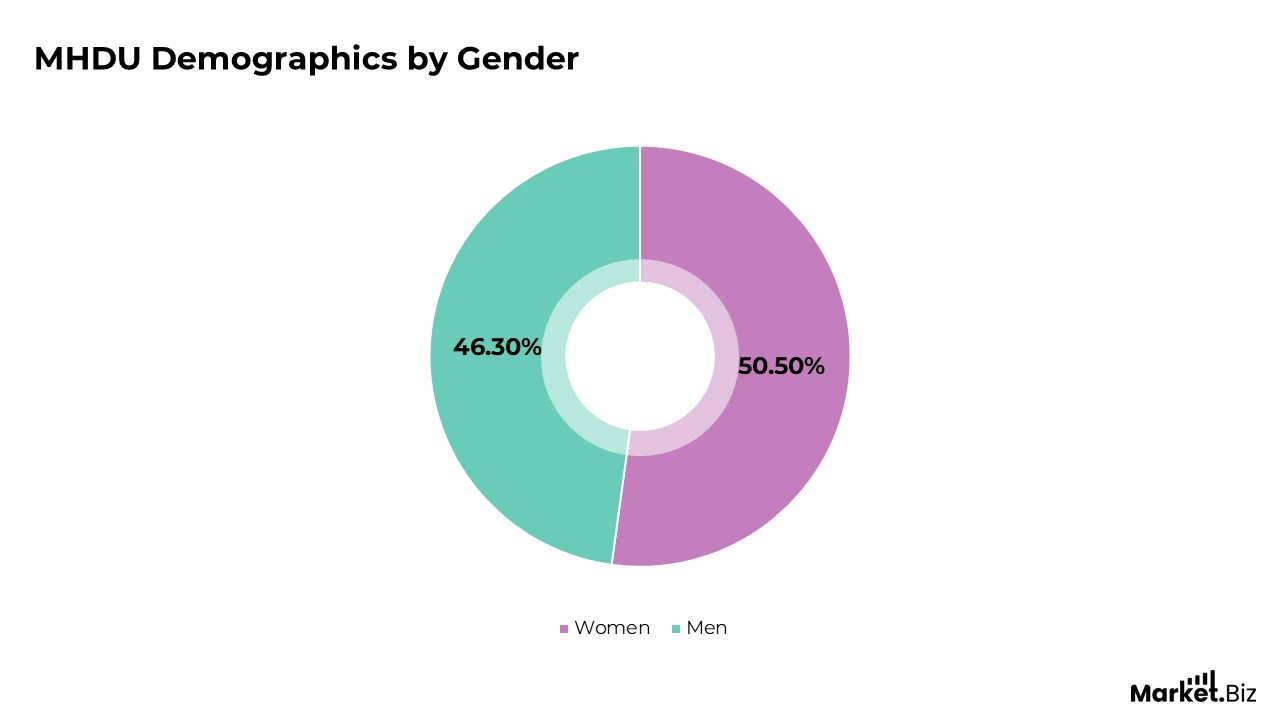
- 50.5% of women said mental health days were “extremely important” and 46.3% said the same for men.
- In the U.S., women are three times likely, compared to men, to experience common mental health issues.
- Women ages 18-44 reported their mental health was not good for 14 or more of the past 30 days 22.9% of the time.
- Men are nearly three times as likely as women to develop a dependence on alcohol and report frequently using drugs.
Economic Impact of MHI’s
Global Economic Impact
- The worldwide cost of lost productivity from depression and anxiety is US $1 trillion per year.
- Every year, 12 billion workdays are lost due to mental health conditions.
- The total recovery for mental disorders will be US $16 trillion over the next 20 years.
- For every US $1 spent to treat depression and anxiety, there is a return of US $4 in health and work capacity.
- One in eight people in the world has a mental health condition, which reduces work output and therefore work-related earning.
- By 2030, cumulative productivity losses due to mental health problems are estimated at US $6 trillion.
- The estimate of US $6 trillion is average US $300 billion annually until 2030.
- Mental disorders currently account for about 13 percent of total years lived with disability globally.
- Poor mental health can reduce annual GDP growth by 2-4 percent in low income countries.
- By 2030, depressions is likely to be the leading cause of global disease burden.
US-Specific Economic Impact
- Inequities in mental health already cost the US economy US $477 billion per year.
- If we continue to ignore this, total costs in the US could reach $14 trillion by 2040.
- The cost of emergency department visits for mental health alone is now US $5.3 billion per year.
- Costs for emergency department visits for mental health could reach US $17.5 billion by 2040.
- Only one in four US workers utilizes their available mental health benefits, which limits potential savings.
- US businesses waste an estimated US $300 billion per year due to worker absence related to mental health.
- Working while sick costs businesses around US $150 billion each year.
- 33.5 percent of adults with serious mental illness do not have treatment due to lack of access.
- This lack of available treatment options for adult mental health problems can lower productivity in the US workforce by as much as 5 percent annually.
- For every dollar US companies spend on workplace mental health and well-being programs, they may save as much as US $4, if the ROL observed internationally holds in the US.
MHDU by Countries
- On average, American workers use between 5 and 7 sick days a year. However, many low-wage earners, most commonly those working in retail and hospitality, do not receive paid sick leave, resulting in presentation and possible long-term health implications.
- British employees take an average of 4.6 sick days per year. The country has statutory sick pay for employees, but the workplace culture often discourage leave unless it is absolutely unavoidable.
- German employees take between 10 and 12 sick days a year. There is a generous paid sick leave benefit system and the stigma associated with taking time off for health reasons is not as pronounced.
- Japanese employees often take only 1-3 sick days per year. The workplace culture and strong work ethic placed on employee’s leads many to work who are unwell and hence, promotes presentism and reduces efficiency.
- Australian workers take an average of 9 to 11 sick days per year. Australia has very robust workers’ protections and laws around paid sick leave which support their health and well-being.
- Canadian employees also take an average of 9-11 sick days a year.
- Dutch employees can take up to 2 years of sick leave with 70% pay from employers during that time.
- Sweden spends 1.7% of its GDP on sick leave, which is substantial.
- Belgium introduced a law for workers being able to reclaim holiday days when sick. Belgium wants to combat “leisure sickness syndrome’, and as a country allows sick leave to be sick leave, which is important to recover/rest completely.
- ES/EEA governments budget 4.9% of their GDP on sickness and sick preference benefits. Of the EU members, Estonia is the lowest on sickness benefits, but represents the variation of preferences from country to country.
Pros & Cons of MHDU
Pros
- Taking a mental health day improved productivity and efficiency for 78% of workers.
- Almost 60% of employees have the potential to experience burnout and mental health days can offer a form of stress relief.
- Employees can take a mental health day and return to work more focused and engaged in their work.
- Taking a mental health day simplifies the complexity an employee faces of dealing with emotional issues, thus allowing them to be a better version of themselves.
- Having the chance to take a mental health day every once in a while may lessen the likelihood of longer length of leaves of absences to do poor mental health.
- Mental health days give employees an opportunity to engage in self-reflection, while practicing self-care habits and activities.
- When employees take an unaided time away from work, they can improve their sleeping habits that helps improve their wellness.
- Mental health days can also help with reducing stress levels which could help with mental clarity.
- If employees had the chance to take a regularly scheduled mental health day from time to time, they can achieve a healthier life/work balance.
- Giving employees the opportunity to take a mental health day will help with building a culture of discussing the topics of wellness and mental health at work.
Cons
- Days off for mental health may only benefit you for a few days and may not help with underlying issues.
- A worker could misuse it and take a mental health day when not necessary, which is not productive.
- Some employees may have a hesitance in using mental health days and fear they are being judged.
- Not all organizations even have mental health days in their policies or procedures, which can cause confusion.
- Some organisations and regions may have mental health days whereas some do not leading to disparities for workers who have these days.
- Relying solely on mental health days may mean that individual workers have bigger mental health issues that are not being addressed.
- Key members of the team continuing to take days off may be detrimental to team workflow, work environment, and project timelines.
- If you do take time off, you may come back to two days of tasks that will certainly elevate your stress levels again.
- Mental health days may not equal mental health success, especially without other mental health resources.
- Co-workers may perceive the number of mental health days taken as lack of commitment in their work.
Impact of MHDU on Workplace
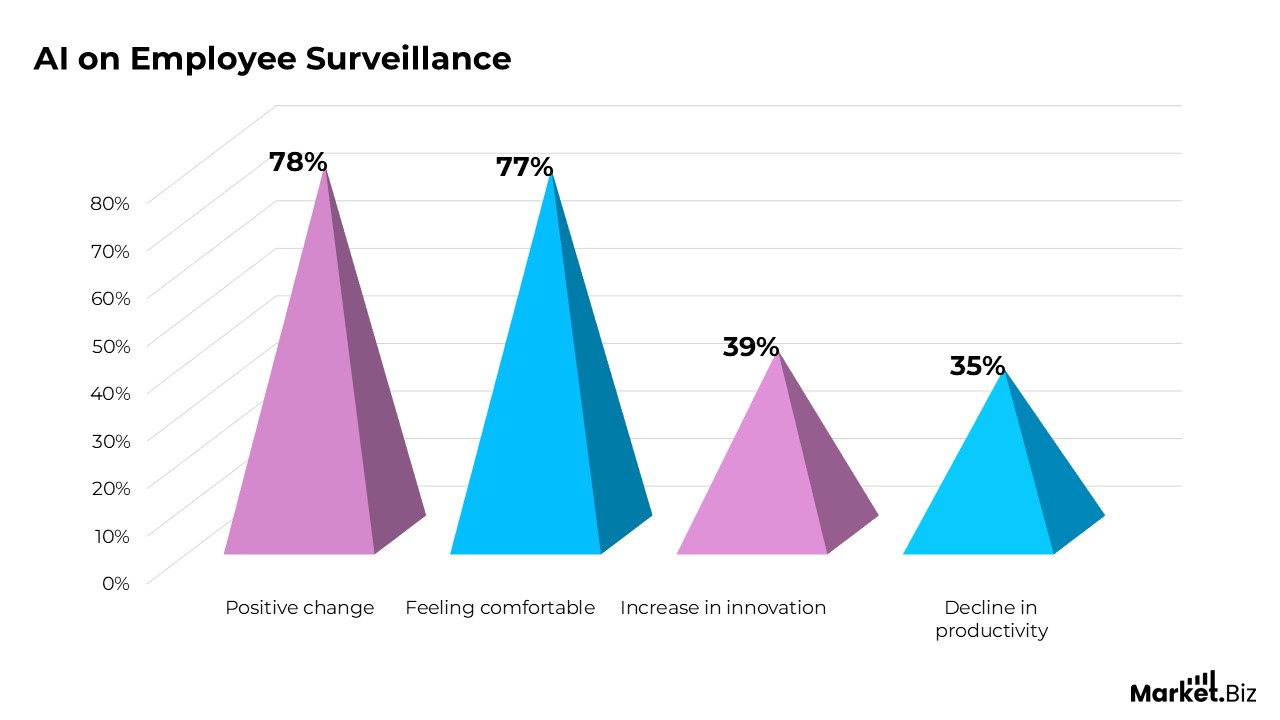
- 78% of employees saw a positive change in job performance after taking a mental health day. Companies that provide mental health days experienced a 31% reduction in employee burnout.
- Ongoing depression leads to a 35% decline in productivity for U.S. workers, costing the economy about $210.5 billion annually.
- Employees with bad mental health look almost 12 unplanned absences per employee on average each year compared to 2.5 days for the employee pool.
- Organizations that prioritise mental health realized a 39% increase in innovation.
- Addressing employee mental health will also address presenteeism, or when employees come to work but are not working to full potential.
- 1 in 4 employees have seriously considered quitting their job because of mental health reasons.
- 81% of workers are searching for organisations that support mental health.
- 77% of workers report feeling comfortable supporting a co-worker in mental health crisis, which shows how workplaces mental health is becoming more accepted.
- Through workplace health promotion programs, employers can realise savings of $15.60 for every dollar spent with on expenses.
- Happy employees are an estimated 13% more productive, showing the importance of mental well-being.
- Women are twice as likely as men to take time off for stress or worries demonstrating the need for workplace policy and leadership that will support mental health for both male and female employees.
- Engaging in mental health treatment early can reduce the likelihood of long-term work-limiting conditions by 68%.
Conclusion
Statistics related to the use of mental health days show an obvious increase, of workers taking mental wellness days. As understanding increases, companies are starting to notice their products stay healthy and increased employee productivity, reduced absence, and increased employee morale.
Mental health has improved in part due to reduced employee burnout and even the decreased ability to focus, as mental health remember this is one contributing part to employee wellness in the workplace.
Also, there is a need to continue to build policies for clear guidelines on mental health days for various reasons but also because more and more the statistics around mental wellness positively indicate an emphasis on an employee’s mental health or wellness will be the global standard.
So, we can utilize this time to clearly track mental health days for future workplace planning. Employers that adapt sooner will create stronger teams and improved success in the longer teams.
FAQs
A mental health day is a day away from work to mentally rest and recuperate to better manage stress or emotional well-being. It is a proactive step to lessen lengthy feelings of stress and burnout, and help maintain emotional balance.
Mental health days are not uncommon these days. Surveys show that about 50% of employees have taken a mental health day, and the number of employees taking these days continues to grow as awareness of mental health issues in the workplace improves.
No. It is widely reported that employees who report taking a mental health day also report improved focus and productivity, stress relief and improved job performance.
Demographics report that millennials and Gen Z are the most likely to take mental health days, with over 60% indicating they may have taken mental health days in the past year.
Tracking mental health days can help support employee well-being, as companies can find trends related to burnout, and potentially create better wellness policies around this information to achieve higher employee satisfaction.