









Introduction
Recreational Vehicle Statistics: Recreational Vehicle Statistics: Recreational vehicles (RVs) encompass a diverse range of types, from camper vans to motorhomes and modular trailers, offering mobile housing for leisure travel.
These vehicles generally feature sleeping areas, climate control, bathrooms, kitchens, and entertainment systems. When contemplating ownership, it is essential to consider factors such as size, towing capacity, storage, maintenance, and budget.
Rovers often frequent national parks, campgrounds, and resorts, in addition to engaging in events and festivals. A huge number of Americans, whether they are campers, snowbirds, or travel enthusiasts, enjoy the experience of living and traveling with a recreational vehicle (RV).
RVs are available in various sizes, shapes, and levels of luxury. Models vary from towable toy haulers to fully-furnished motor homes. The RV industry is fiercely competitive, featuring hundreds of manufacturers and brands throughout the country. People enjoy the flexibility and camaraderie that RV travel provides. RVs offer a comfortable and convenient means to experience adventure and outdoor living, whether embarking on a cross-country road trip or enjoying a weekend getaway.
Editor’s Choice
- Approximately 11.2 million families in the United States possess a recreational vehicle (RV).
- The RV industry is projected to grow at a compound annual growth rate (CAGR) of 7% from 2021 to 2026.
- In 2022, the market produced $60.8 billion.
- In 2023, RV manufacturers shipped approximately 313,000 units, which amounted to a retail value of $20.27 billion. This represents a 36.5% decline in shipments compared to the previous year, when manufacturers dispatched 493,268 units.
- In March 2024, a total of 32,243 RV units were dispatched, representing a 1.2% rise from the 31,869 units dispatched in March 2023.
- A total of 2,046 RV dealer firms existed, with male ownership being the majority at 1,353 firms.
- According to a report from an RV industry association published in 2021, nearly 50% of RV purchasers are under the age of 55, with more than 20% of them aged between 18 and 34 years.
General Recreational Vehicle Statistics
- Approximately 11.2 million families in the United States possess a recreational vehicle (RV).
- The North American RV market is valued at nearly $20 billion and is projected to expand to $29 billion by the year 2029.
- In 2023, the leading RV manufacturers in the U.S. were Forest River, Keystone RV, and Grand Design RV.
- The industry experienced a 36.5% decline in wholesale RV shipments from 2022 to 2023.
- RV ownership has reached an all-time high, with 11.2 million families owning an RV as of 2021.
- Around 1 million Americans reside in recreational vehicles on a full-time basis.
- More than 40 million Americans frequently engage in RVing, with over 25 million participating annually.
- Among the 40 million American citizens who own an RV, 38% are Millennials.
- Approximately 9% of households in the United States own an RV for leisure activities.
- At the end of 2020, the RV industry was valued at $31 billion, and it is anticipated to grow to $48 billion by 2026.
- The RV industry is projected to grow at a compound annual growth rate (CAGR) of 7% from 2021 to 2026.
- Roughly 30,000 RVs are produced each month, encompassing a diverse array of RV types.
- In recent years, California has been the state with the highest RV sales, totaling $500 million.
- The top two states for RV purchases are Montana and Texas, with Montana leading Texas in RV acquisitions.
- There are only 26 RV-related fatalities each year, marking one of the lowest fatality rates among automobiles.
Market Growth Statistics
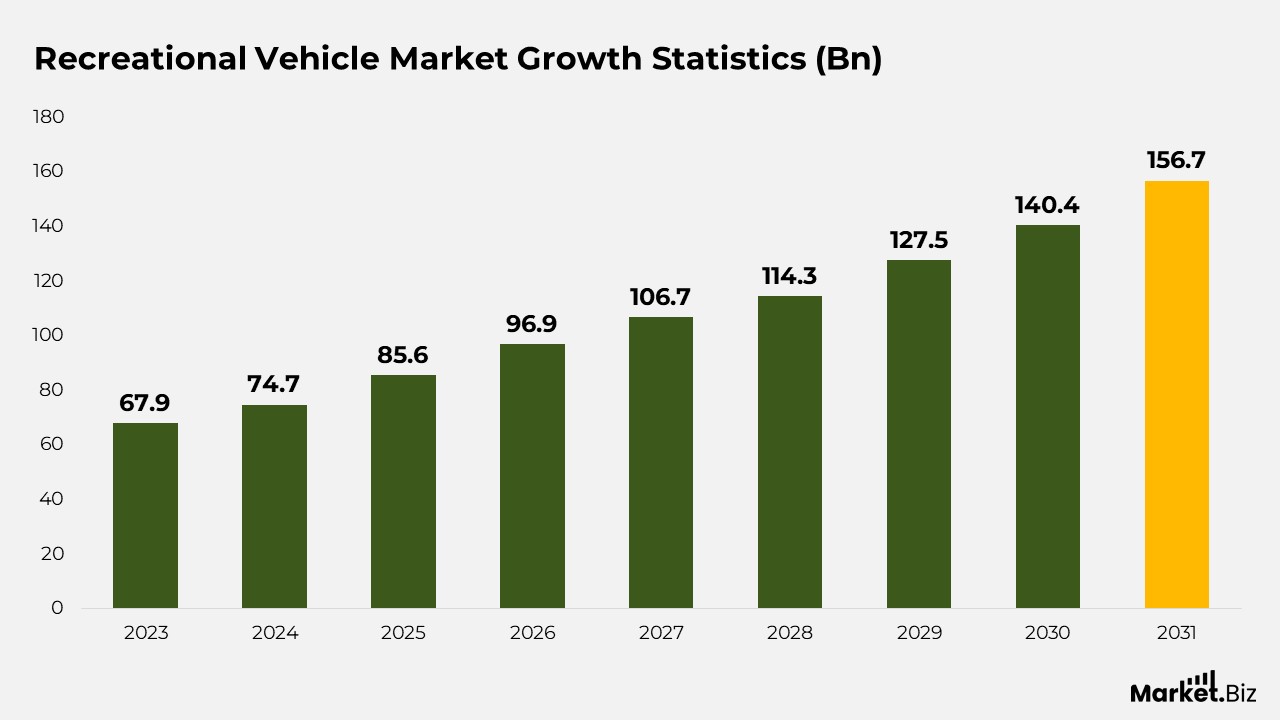
- The global recreational vehicle market has shown significant growth, with revenues consistently rising over the past decade at a rate of 11.6%.
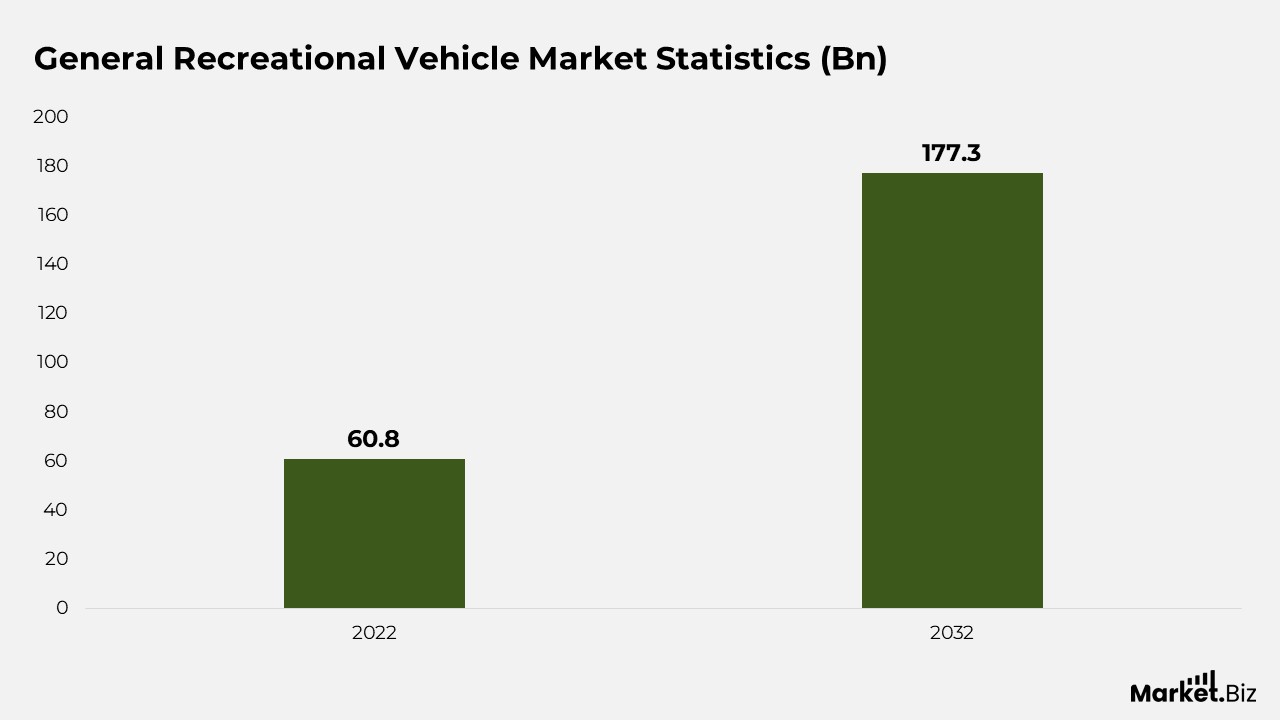
- In 2022, the market produced $60.8 billion.
- This amount increased to $67.9 billion in 2023, followed by an additional rise to $74.7 billion in 2024.
- The upward trend persisted, with revenues reaching $85.6 billion in 2025, $96.9 billion in 2026, and $106.7 billion in 2027.
- By 2028, the market’s revenue was anticipated to be $114.3 billion.
- A notable increase was recorded in the following years, with revenue climbing to $127.5 billion in 2029, $140.4 billion in 2030, and $156.7 billion in 2031.
- The market is projected to sustain this growth trajectory, culminating in a revenue of $177.3 billion by 2032.
Recreational Vehicle Shipment Statistics
- The RV Industry Association monitors wholesale shipments within the RV sector, specifically the quantity of units that wholesalers distribute to retailers.
- In 2023, RV manufacturers shipped approximately 313,000 units, which amounted to a retail value of $20.27 billion. This represents a 36.5% decline in shipments compared to the previous year, when manufacturers dispatched 493,268 units.
- Towable RVs experienced the most significant decline; shipments fell by 38.5% from 2022 to 2023. Shipments of motor homes also decreased by 21.5%, while park model RVs experienced a modest increase of 7% in shipments.
- Despite the downturn in shipments for 2023, Craig Kirby, the CEO of the RV Industry Association, expressed optimism for 2024 during the company’s December 2023 manufacturer survey.
- “RV shipments for the last two months of 2023 demonstrated an increase compared to the previous year,” he stated, “and our forecasts suggest that we should continue to observe rising shipments and retail sales in 2024, especially in the latter half of the year.”
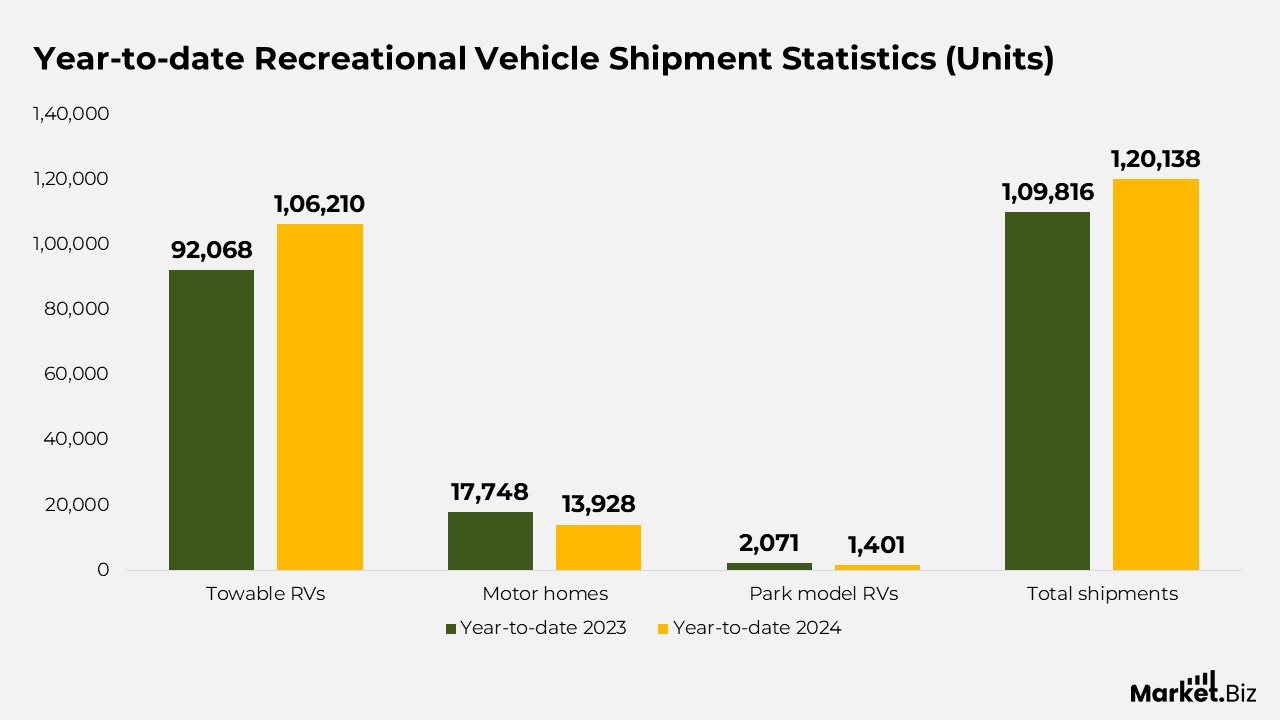
- By April 2024, there were approximately 106,000 wholesale shipments of towable RVs, reflecting a 15.4% increase compared to April 2023. Conversely, shipments of motor homes and park model RVs declined by 21.5% and 32.4%, respectively. Nevertheless, total shipments reached 120,000 units, marking a 9.4% rise from the previous year.
RV Monthly Shipment Statistics
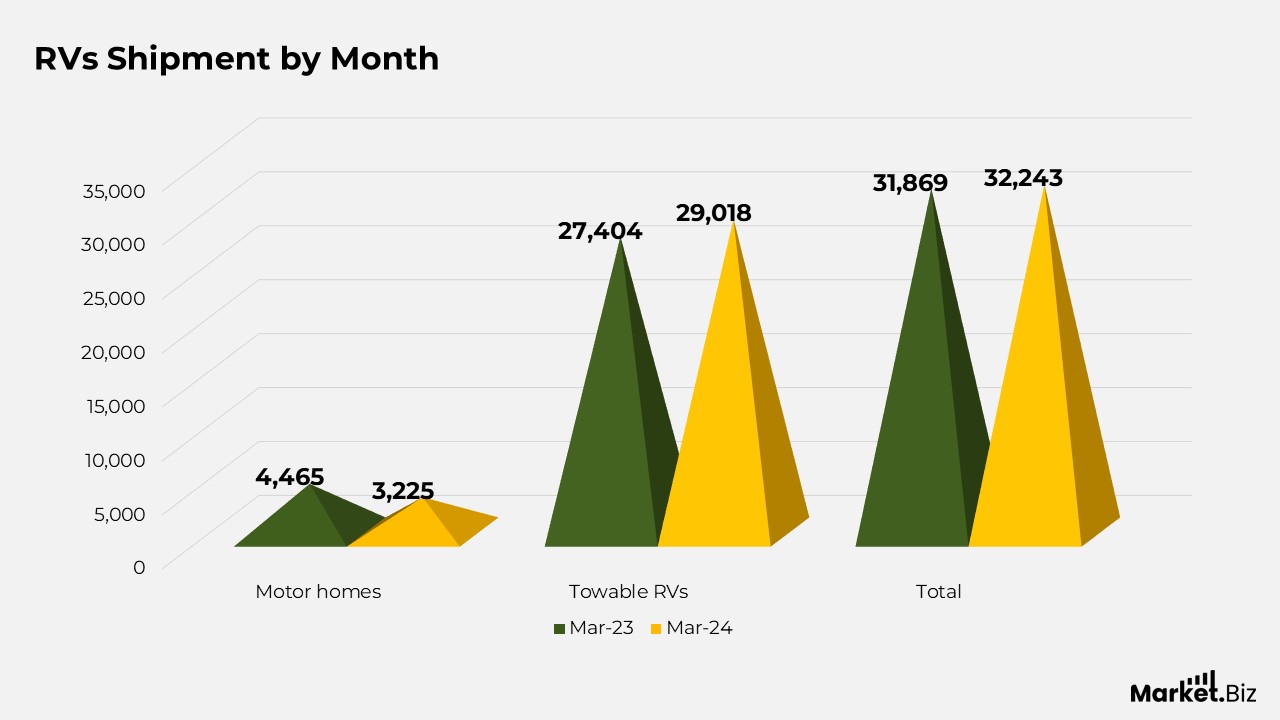
- In March 2024, a total of 32,243 RV units were dispatched, representing a 1.2% rise from the 31,869 units dispatched in March 2023.
- Towable RVs experienced growth, with shipments increasing by 5.9% to 29,018 units compared to the figures from March of the previous year.
- Conversely, motor home shipments faced a significant drop in March 2024, decreasing by 27.8% to 3,225 units compared to the same month in the previous year.
- During the first quarter of 2024, RV shipments amounted to 85,941 units, indicating a 9.3% increase compared to the same timeframe in 2023.
Recreational Vehicle Price Statistics
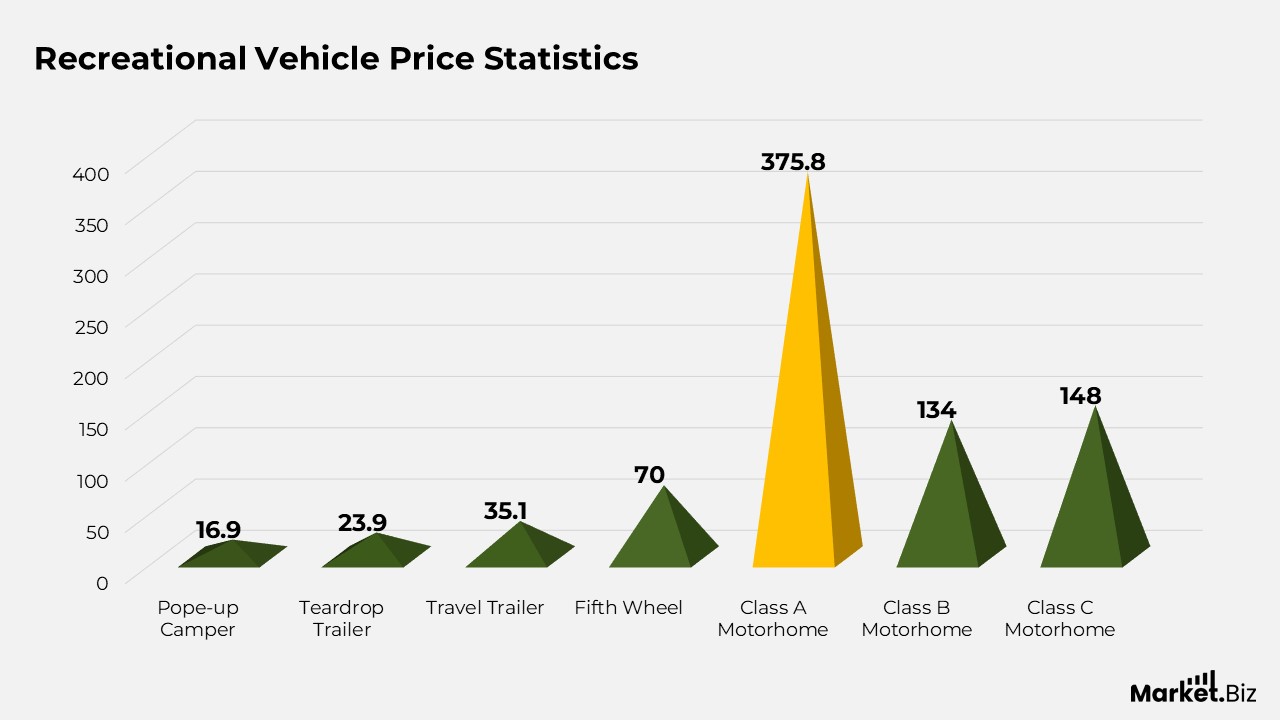
- The typical costs associated with recreational vehicles (RVs) exhibit considerable variation based on their type and features. Pop-up campers, recognized for their cost-effectiveness and straightforward design, generally have an average price of around $16,900.
- Slightly higher in price, teardrop trailers, which are both compact and efficient, usually retail for approximately $23,900.
- Travel trailers, offering increased space and amenities, have an average cost of $35,100.
- For individuals desiring more substantial and luxurious living arrangements, fifth wheels are priced at an average of $70,000.
- Motorhomes, which deliver the most extensive features for long-distance travel, are categorized into three classes with markedly different price ranges:
- Class A motorhomes, being the largest and most costly, average $375,800,
- Class B motorhomes, which are more compact and easier to maneuver, typically cost around $134,000; and
- Class C motorhomes, which provide a compromise between size and price, generally average about $148,000.
Recreational Vehicle Users Demographics
By Gender
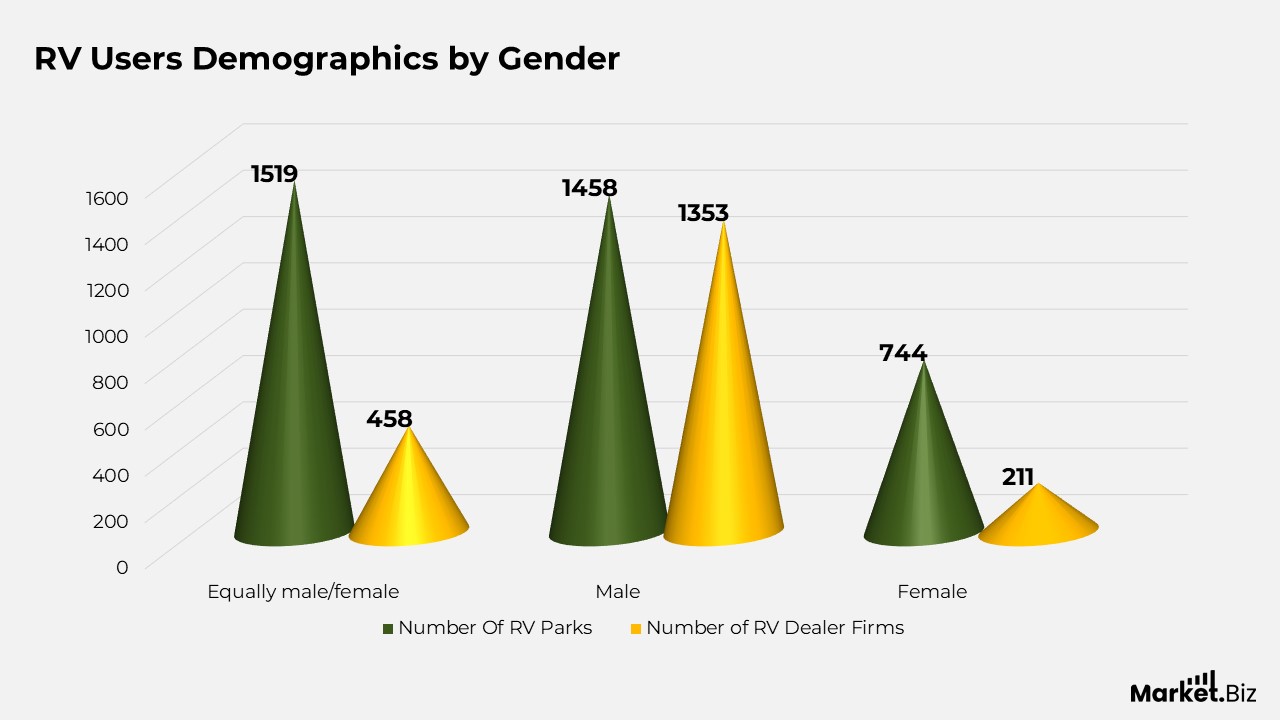
- A total of 2,046 RV dealer firms existed, with male ownership being the majority at 1,353 firms.
- In comparison, women owned 211 of these firms. Furthermore, 458 firms had equal ownership between males and females.
- As for RV parks, the people’s diversity was also diverse; 1,458 parks were owned by males, 744 were owned by females, and both equally owned 1,519 parks.
By Age
- According to a report from an RV industry association published in 2021, nearly 50% of RV purchasers are under the age of 55, with more than 20% of them aged between 18 and 34 years.
- Younger consumers, especially those from Gen Z and millennials, are anticipated to demonstrate a greater willingness to invest in recreational vehicles and boats in the upcoming year compared to Gen X and baby boomers.
- The market for boats and RVs is projected to grow to include Gen Z, millennials, Gen X, and baby boomers over the next few years.
- With millennials now representing the largest demographic group in the United States, having surpassed baby boomers in 2019, they are expected to lead the market for these recreational vehicles until approximately 2036, at which point Gen Z is forecasted to emerge as the dominant consumer segment.
Camping Revenue Statistics
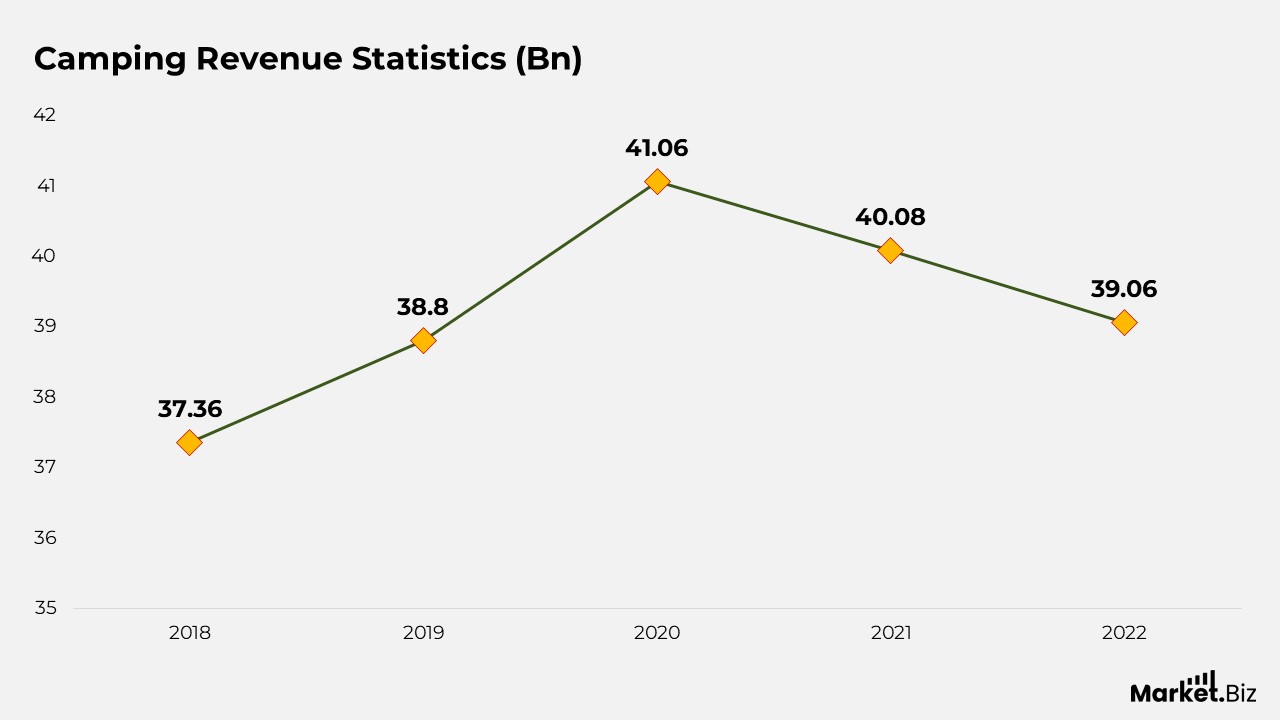
- In 2018, the figure was $37.36 billion, indicating the start of a steady upward trajectory. This growth persisted into 2019, as revenues climbed to $38.8 billion.
- Despite worldwide economic variations and the emergence of the COVID-19 pandemic in 2020, the camping industry demonstrated resilience, achieving a significant revenue increase to $41.06 billion.
- Nevertheless, the subsequent years experienced a minor downturn. With revenues falling to $40.08 billion in 2021 and further decreasing to $39.06 billion in 2022.
RV Parks & Grounds Revenue
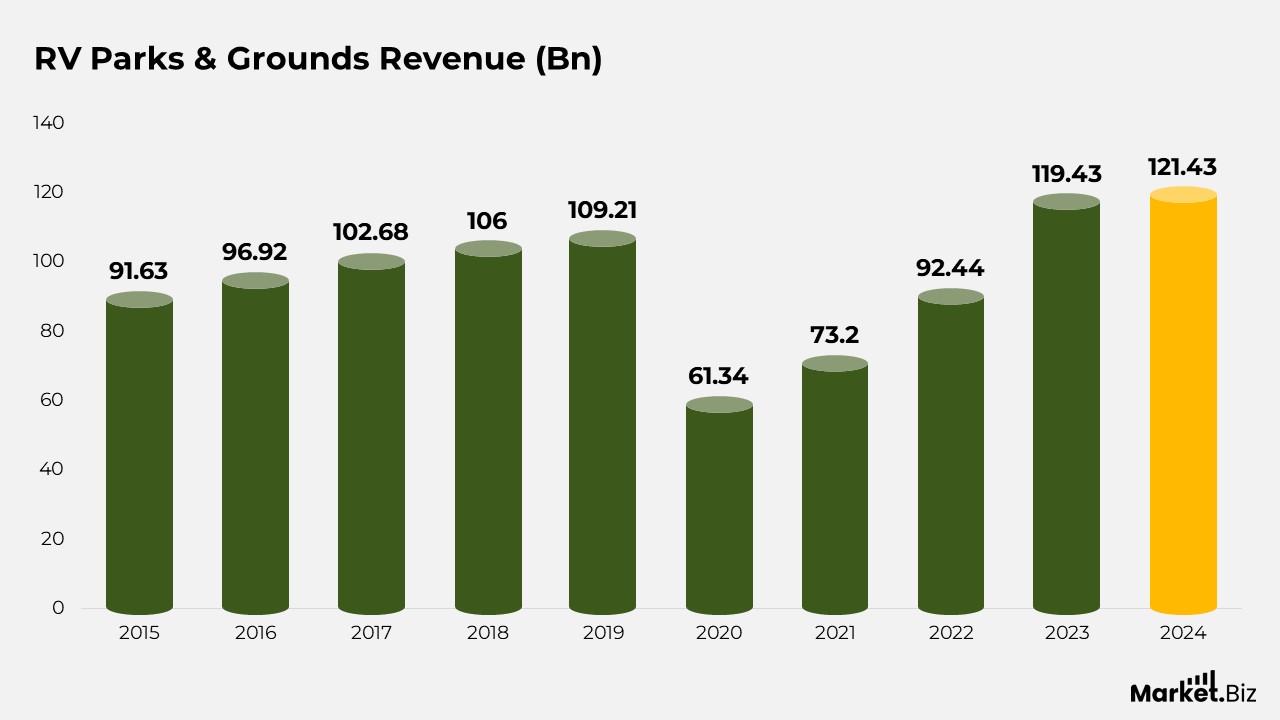
- Beginning at $86.82 million in 2014, the revenue experienced a steady rise to $109.21 million by 2019, reflecting consistent growth within the sector.
- Nevertheless, in 2020, a significant downturn was observed, with revenue dropping to $61.34 million, likely attributable to the effects of the COVID-19 pandemic, which disrupted travel and tourism activities.
- In spite of this challenge, the industry demonstrated resilience, recovering to $73.2 million in 2021. Following this, in 2022, revenue increased to $92.44 million, signifying a notable recovery.
- This positive trend persisted into 2023 and 2024, with revenue reaching $119.43 million and $121.43 million, respectively, indicating a strong resurgence and the potential for sustained growth in the recreational vehicle parks and campgrounds sector in New York.
Recreational Vehicle Sale Statistics
- In California, RV sales have reached around $500 million, with projections indicating a continued increase in the coming years driven by various trends and consumer preferences.
- Among all the states in the United States, Hawaii records the lowest RV sales revenue.
- According to state regulations, the leading states for RV purchases are Montana and Texas; however, Montana significantly outpaces Texas in terms of RV sales.
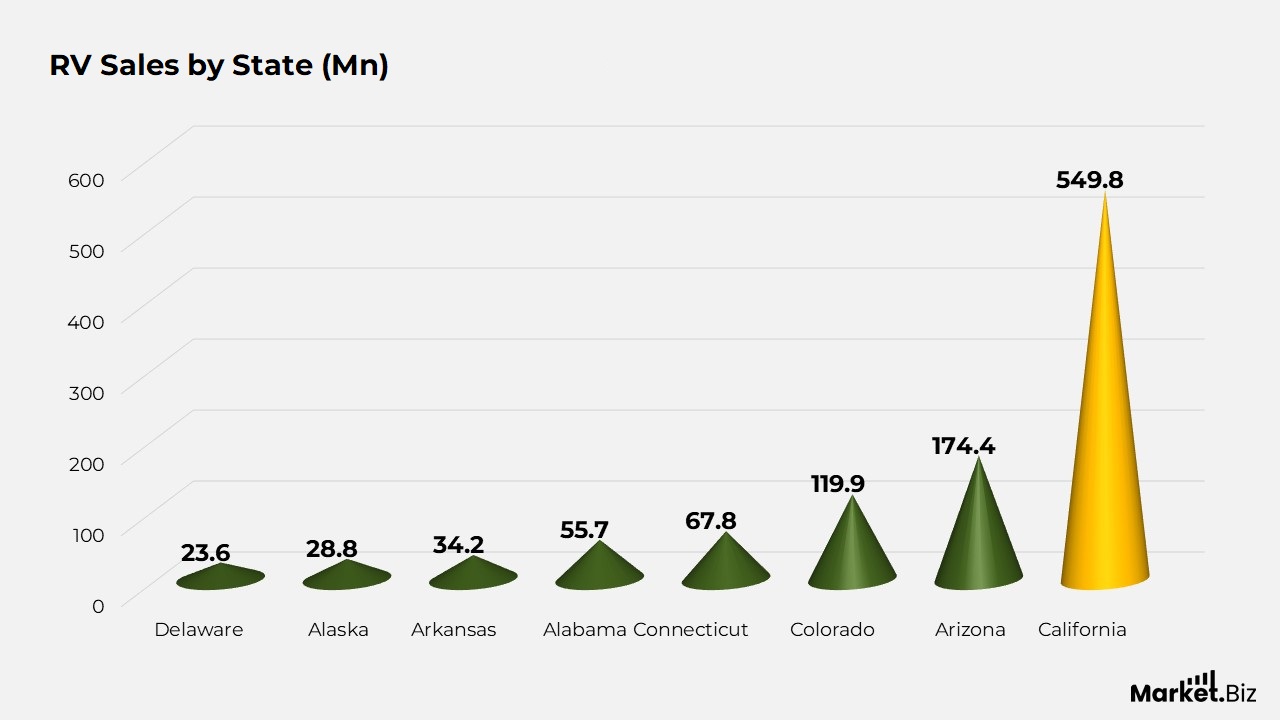
RV Sales by State
- Delaware $23.6 million
- Alaska $28.8 million
- Arkansas $34.2 million
- Alabama $55.7 million
- Connecticut $67.8 million
- Colorado $119.9 million
- Arizona $174.4 million
- California $549.8 million
Recreational Vehicle by Country
UK
- According to the latest reports, around 3% of households in the U.K. possess an RV or Caravan, which is the term commonly used in this country.
- The estimated size of the RV market in the U.K. was about $25 billion at the close of 2020.
- While it does not match the CAGR of the United States, the RV sector in the U.K. is projected to experience a growth of approximately 1.5% from now until 2026.
- In the U.K., the theft rate for RVs or Caravans stands at roughly 6%, attributed to the size of these vehicles, which makes them challenging to steal and resell profitably.
Canada
- According to the latest statistics, around 2.1 million households in Canada possess an RV, representing roughly 14% of the total Canadian population. This figure is similar to that of the United States, although it remains slightly lower in absolute numbers.
- As of the end of 2020, the Canadian RV market was valued at approximately 9.6 billion Canadian dollars, and it is anticipated to expand in the coming years, driven by the increasing popularity of RVs and the growth associated with that trend.
- Analyzing the data and forecasts, the RV industry is projected to experience an average growth rate of 1.7% from 2020 to 2026. While this may not seem like a substantial increase, it is quite significant given Canada’s population size.
- The rate of RV theft in Canada can fluctuate based on how one defines an RV; however, it is estimated that about 3% of RVs are stolen in Canada. This rate is considerably lower than in many other countries and in comparison to other types of vehicle thefts within Canada.
Recent Developments
- In May 2025, Winnebago, a company with over 60 years of experience in manufacturing recreational vehicles, launched the Thrive. A lightweight travel trailer that emphasizes comfort and modern design.
- In September 2024, THOR unveiled a hybrid Class A coach constructed on Harbinger’s electric vehicle chassis, boasting a range of 500 miles and set for delivery in 2025.
- In April 2024, the Los Angeles City Council broadened its overnight RV parking regulations to encompass 30 more streets for vehicles longer than 22 feet, effective from 2 a.m. to 6 a.m.
- In December 2024, RollAway began accepting reservations for electric RV rentals that utilize GM BrightDrop vans. This provides a range of 270 miles along with hotel-style concierge services.
Conclusion
Recreational Vehicle Statistics: In summary, the recreational vehicle (RV) sector is witnessing substantial growth, propelled by an increasing interest in outdoor pursuits, experiential travel, and the demand for versatile vacation options. The COVID-19 pandemic has further intensified the demand for RVs as safer alternatives to conventional travel methods.
Despite facing supply chain obstacles, the market continues to show resilience, bolstered by technological innovations and environmentally friendly features. Looking forward, favorable economic conditions and an emphasis on sustainability are anticipated to maintain this growth trajectory.
Nevertheless, stakeholders must stay alert to regulatory shifts and consumer trends to seize emerging opportunities. Overall, the future outlook for the RV market appears optimistic, with ongoing innovation and adaptation being crucial for sustained success.
FAQs
A recreational vehicle, also known as an RV, is a motor vehicle or trailer that is equipped with living quarters intended for accommodation. The various types of RVs encompass motorhomes, coaches, campervans, caravans (also known as travel trailers and campers), popup campers, fifth-wheel trailers, and truck campers.
For Class A RVs (motorhomes), the typical mileage ranges from 6 to 10 miles per gallon (mpg). Whereas Class B models (camper vans) generally achieve 15 to 22 mpg, and Class C RVs (medium-sized motorhomes) typically yield between 9 to 16 mpg.
As per the latest research conducted by the RV Industry Association (RVIA), 84% of new RV purchasers in 2022 were Millennials and Generation X. This recent study indicates that Millennials have surpassed all other generations by a margin of more than double.

