









Introduction
Electric Toothbrush Statistics: The worldwide market for electric toothbrushes was assessed at USD 3.44 billion in 2024 and experienced a compound annual growth rate (CAGR) of 4.78% from 2025 to 2034. It is anticipated that the market will attain a value of USD 5.48 billion by 2034. The increasing awareness regarding oral health and its influence on overall wellness will propel the expansion of the global electric toothbrush market.
An electric toothbrush is a device powered by batteries that employs automatic bristles to generate oscillating movements for effective teeth cleaning. The motor regulates the speed according to the user’s preferences. Statistics indicate that the electric toothbrush ranks among the most favored devices for oral health care.
As we progress, we will explore the pertinent elements of the oral health devices sector and assess its overall performance. Understanding the future trajectory of this industry is important.
Editor’s Choice
- The global electric toothbrushes market was valued at $3.2 billion in 2023.
- North America holds the leading position with 35% of the worldwide revenue from electric toothbrushes.
- The electric toothbrush market in the Asia-Pacific region was expected to grow by 8.5% in 2024.
- Oral-B holds a 35% share of the global market.
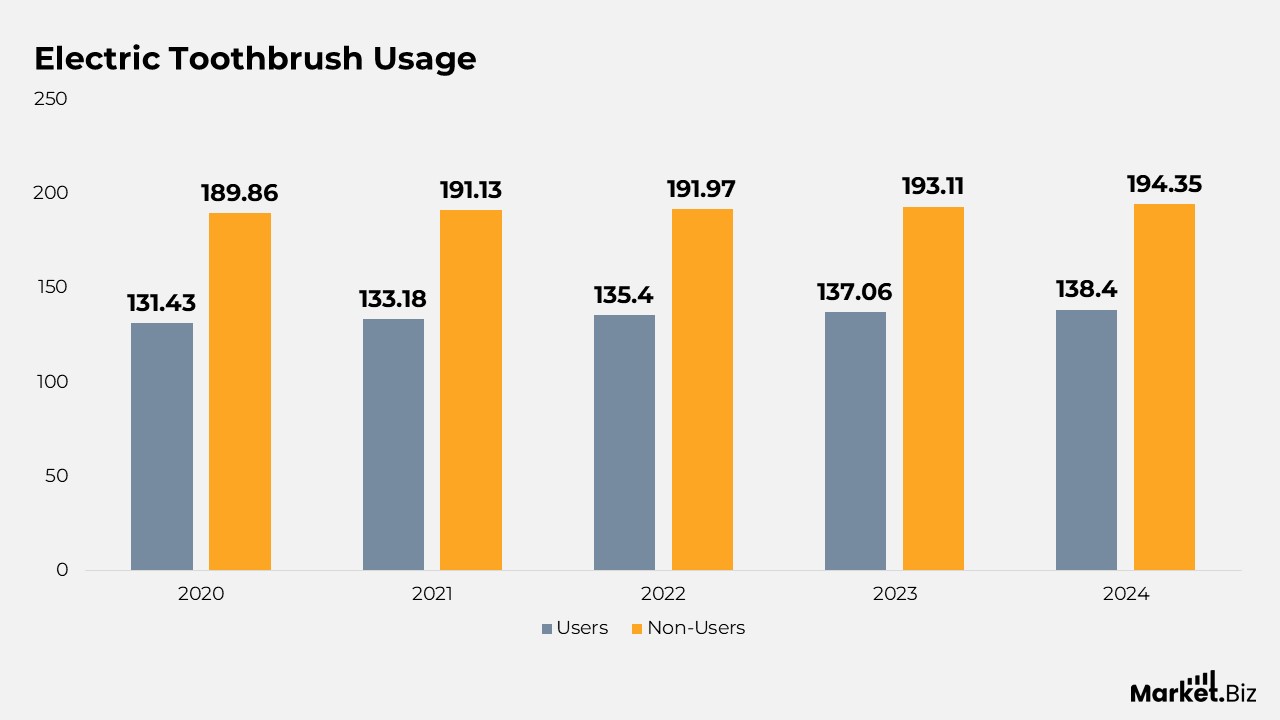
- In 2023 and 2024, the user count reached 137.06 million and 138.4 million, respectively, while the number of non-users saw a slight increase to 193.11 million in 2023 and 194.35 million in 2024. The uncertain category remained consistent at 11.29 million in 2023 and 11.36 million in 2024.
- In 2025, the market is expected to continue its upward trend, reaching USD 4.4 billion, and it is forecasted to expand further to USD 4.8 billion by 2026.
- The ownership of electric toothbrushes in France saw considerable growth between 2014 and 2020, indicating an increasing trend in the acceptance of modern oral hygiene solutions.
- In 2024, Budweiser, a brand under Anheuser-Busch, introduced a new range of alcohol-free beers specifically targeting Gen Z and millennials.
General Electric Toothbrush Statistics
- The global market for electric toothbrushes was valued at $3.2 billion in 2023.
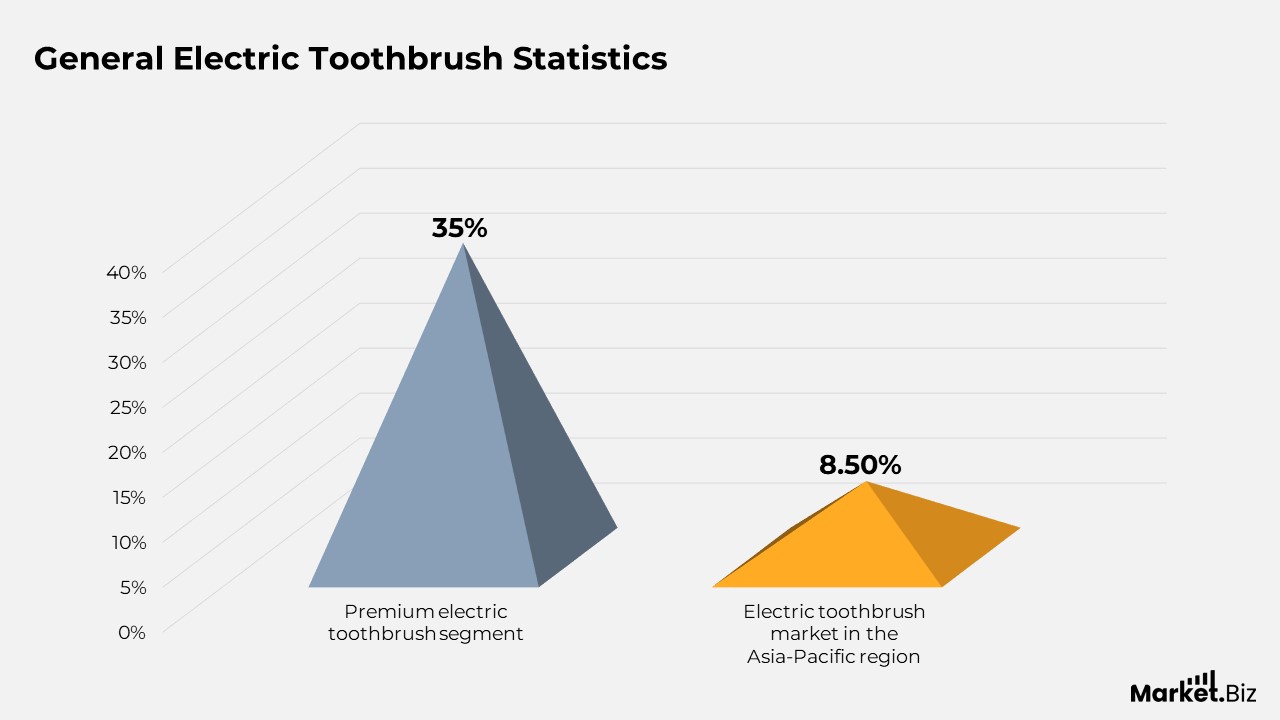
- North America holds the leading position with 35% of the worldwide revenue from electric toothbrushes.
- Europe accounts for 30% of the global market share, which translates to $960 million in 2023.
- The electric toothbrush market in the Asia-Pacific region was expected to grow by 8.5% in 2024.
- Rechargeable electric toothbrushes make up 65% of total sales.
- In 2023, e-commerce represented 45% of all electric toothbrush sales.
- The premium segment comprised 30% of the overall market in 2023.
- Oral-B holds a 35% share of the global market.
- Philips Sonicare has a 28% share of the global market.
- The adoption rate of electric toothbrushes in the United States exceeds 42%.
- The European electric toothbrush market was projected to reach $1.01 billion in 2024.
- China and Japan collectively account for 65% of the market share in the Asia-Pacific region.
- Battery-operated electric toothbrushes represent 35% of the market.
- The premium electric toothbrush segment is anticipated to rise to 35% in 2024.
Electric Toothbrush Usage
- This upward trajectory persisted in 2018, with the number of users reaching 118.16 million, while the count of non-users further declined to 196.98 million, and those who were uncertain fell to 12.02 million.
- In 2019, the user base had grown to 123.61 million, alongside a decrease in non-users to 195.68 million and a reduction in the uncertain group to 10.98 million.
- The increase in power toothbrush usage was particularly significant from 2020 to 2024. In 2020, the number of users rose to 131.43 million, with 189.86 million non-users decreasing and 11.34 million remaining uncertain.
- This pattern continued in 2021, with 133.18 million users, 191.13 million non-users, and 11.18 million uncertain individuals. In 2022, the user base expanded to 135.4 million, while the number of non-users stabilized at 191.97 million, and 11.22 million individuals remained uncertain.
- In 2023 and 2024, the user count reached 137.06 million and 138.4 million, respectively, while the number of non-users saw a slight increase to 193.11 million in 2023 and 194.35 million in 2024. The uncertain category remained consistent at 11.29 million in 2023 and 11.36 million in 2024.
- These statistics illustrate a distinct and steady rise in the adoption of power toothbrushes, indicating a heightened awareness of oral health and the accessibility of advanced dental care products in the United States over the years.
Electric Toothbrush Market Share
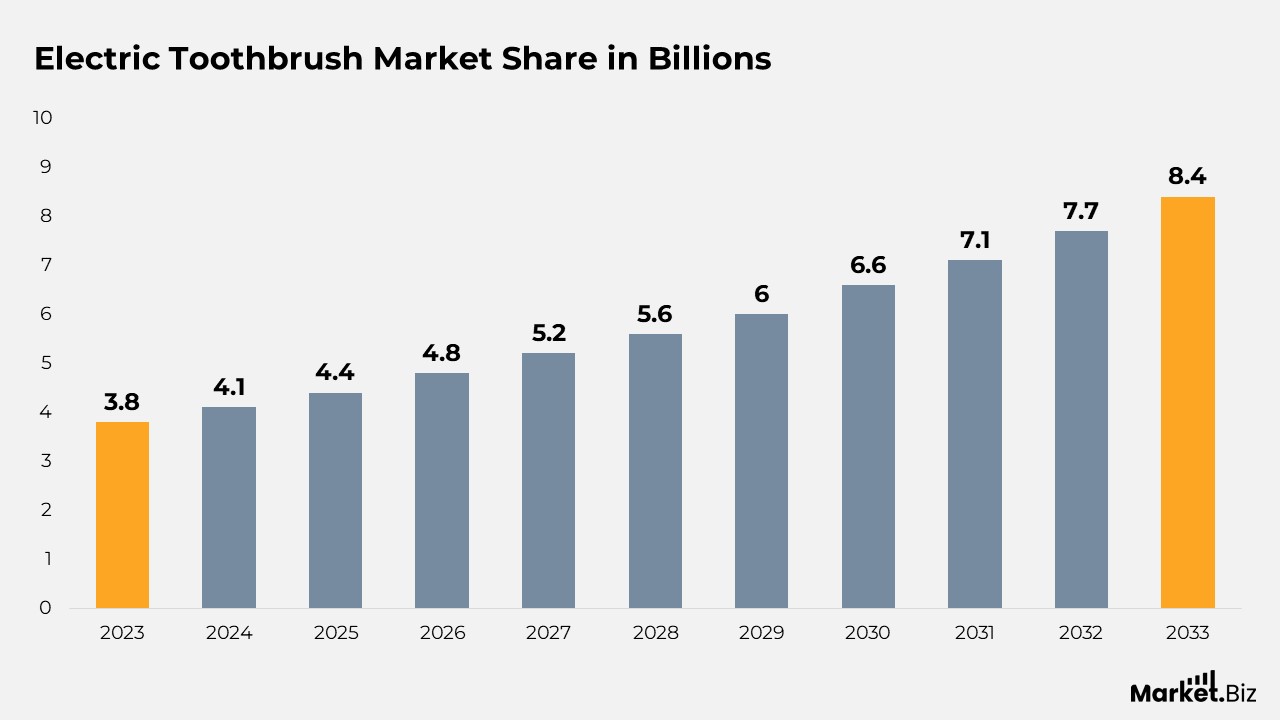
- The worldwide market for electric toothbrushes is anticipated to witness consistent growth in the upcoming years, with a compound annual growth rate (CAGR) of 8.2%.
- In 2023, the estimated market size stands at USD 3.8 billion, and it is projected to increase to USD 4.1 billion in 2024.
- In 2025, the market is expected to continue its upward trend, reaching USD 4.4 billion, and it is forecasted to expand further to USD 4.8 billion by 2026.
- In the subsequent years, the market is likely to sustain a favorable growth path, rising to USD 5.2 billion in 2027 and USD 5.6 billion in 2028.
- The market is predicted to exceed USD 6 billion by 2029, with forecasts suggesting a size of USD 6.6 billion in 2030.
- This positive trend is set to persist into the 2030s, with the market projected to attain USD 7.1 billion in 2031 and USD 7.7 billion in 2032.
- By 2033, the global electric toothbrush market is anticipated to reach a size of USD 8.4 billion.
Oral Care Market Revenue
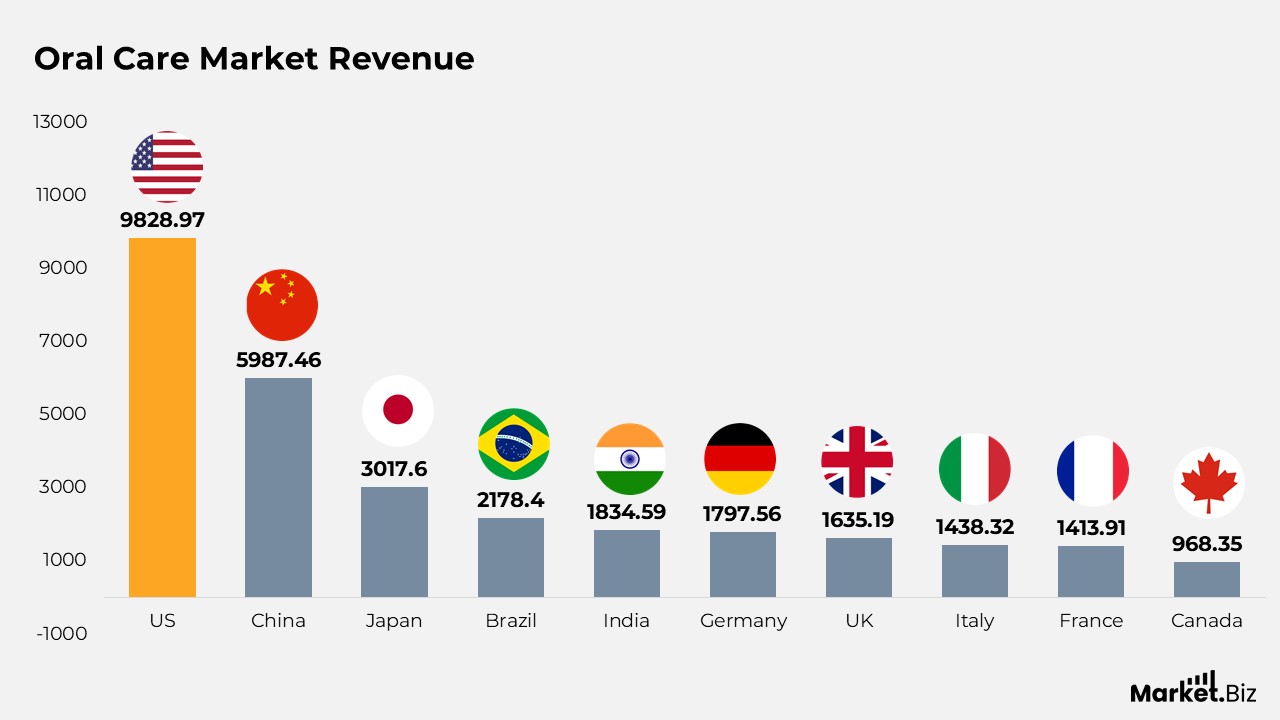
- Electric Toothbrush Statistics indicate that India, the United Kingdom, France, Japan, Canada, Germany, the United States, Italy, China, and Brazil are among the leading countries in the oral care market.
- The United States leads in revenue within the oral care market, generating $9828.97 million, followed by China at $5,987.46 million, Japan at $3,017.6 million, Brazil at $2,178.4 million, India at $1,824.59 million, Germany at $1,797.56 million, the United Kingdom at $1,635.19 million, Italy at $1,438.32 million, France at $1,413.91 million, and Canada at $968.35 million.
Electric Toothbrush Ownership Statistics
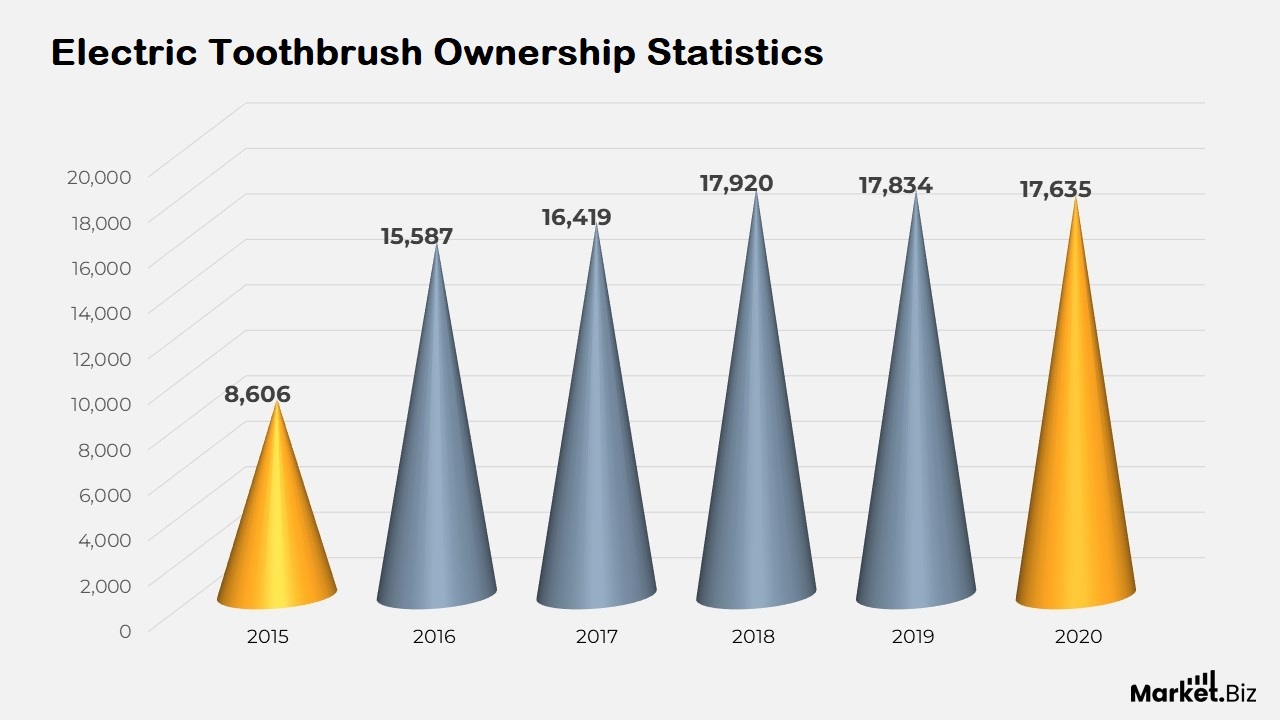
- The ownership of electric toothbrushes in France saw considerable growth between 2014 and 2020, indicating an increasing trend in the acceptance of modern oral hygiene solutions.
- In 2014, around 8,060 thousand individuals possessed electric toothbrushes, which marked the beginning of this upward trend.
- In 2015, this number had risen slightly to 8,606 thousand, reflecting a steady yet gradual increase in consumer interest.
- A significant spike was observed in 2016, with ownership figures nearly doubling to 15,587 thousand, highlighting a major shift in consumer preferences towards electric dental care products.
- This positive trend persisted into 2017, as ownership numbers rose further to 16,419 thousand, demonstrating robust year-on-year growth.
- In 2018, the total number of individuals owning electric toothbrushes in France peaked at 17,920 thousand, signifying widespread acceptance and enhanced market penetration.
- However, a slight stabilization occurred thereafter, with ownership figures experiencing a minor decline to 17,834 thousand in 2019 and a further slight decrease to 17,635 thousand in 2020.
- Despite the minor downturn in 2019 and 2020, the overall trend from 2014 to 2020 underscores a substantial increase in the adoption of electric toothbrushes, propelled by factors such as heightened awareness of oral hygiene, technological advancements, and the introduction of innovative products.
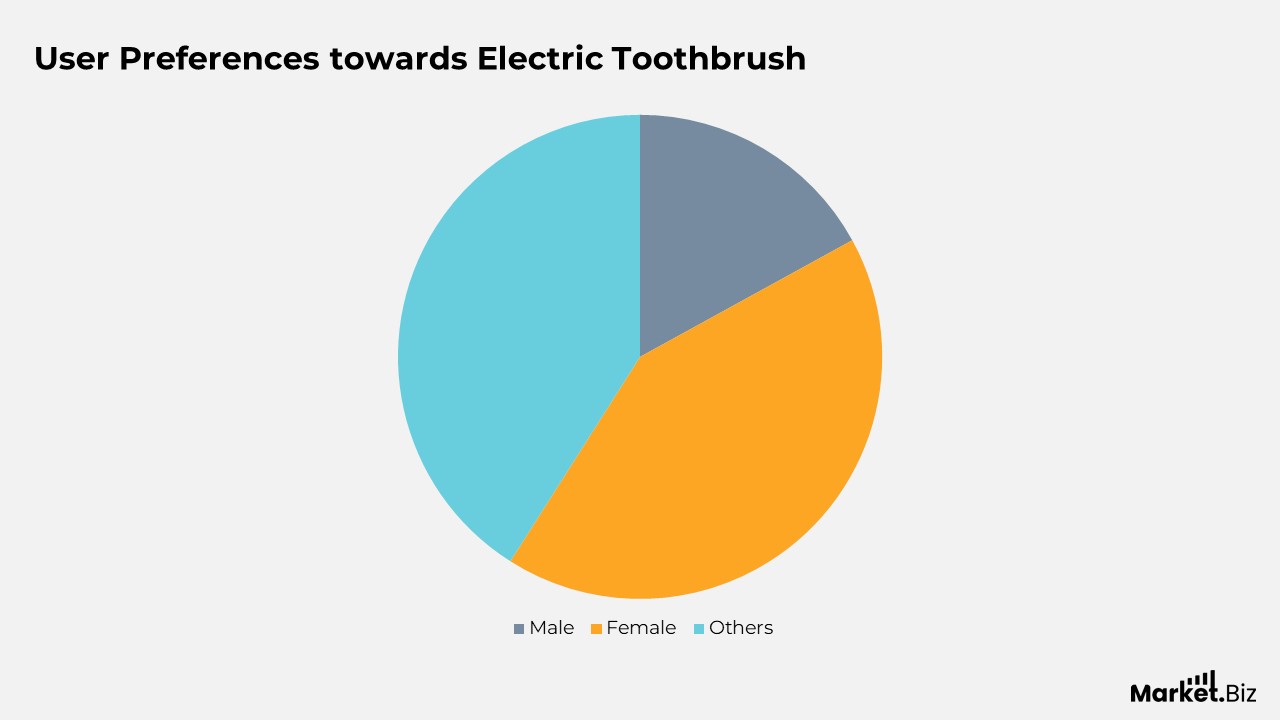
User Preferences towards Electric Toothbrush
- The readiness of consumers to buy electric toothbrushes demonstrates notable variations based on gender.
- Among men, 17% showed a willingness to purchase an electric toothbrush, whereas 12% conveyed a lack of interest in acquiring one.
- In contrast, female consumers showed significantly greater interest, with 42% indicating their readiness to buy an electric toothbrush.
- Nevertheless, a significant 30% of women expressed reluctance to make such a purchase. This information underscores that female consumers are generally more inclined to contemplate investing in electric toothbrushes compared to their male counterparts.
- The increase among women may be linked to a heightened awareness of the benefits of oral hygiene or a stronger preference for more dental care products.
- On the contrary, the lower percentages of both willingness and reluctance among men suggest a more neutral attitude towards the adoption of electric toothbrushes.
- Recognizing these gender-based differences can assist manufacturers and marketers in refining their strategies to better cater to the preferences and concerns of each demographic group.
Recent Developments
- In 2024, Budweiser, a brand under Anheuser-Busch, introduced a new range of alcohol-free beers specifically targeting Gen Z and millennials.
- The company has experienced an increase in interest in non-alcoholic beverages, particularly as research indicates a decrease in drinking rates among teenagers.
- A 2023 report indicated that almost 60% of teenagers favored non-alcoholic drinks, prompting brands like Budweiser to create products that cater to younger, health-conscious consumers.
- In 2023, Anheuser-Busch InBev purchased the non-alcoholic beverage company, Athletic Brewing Co., for an undisclosed sum.
Conclusion
The market for electric toothbrushes is experiencing steady growth, fueled by heightened awareness of oral hygiene, advancements in technology, and an increase in dental health concerns. Rechargeable and automatic toothbrushes are the most popular, with a higher adoption rate among women compared to men.
Although branded products dominate the market, private labels are becoming more appealing to budget-conscious consumers. Challenges such as high costs, perceived inferior quality, and inconvenience remain, yet they also create opportunities for innovation.
Research indicates that electric toothbrushes, especially those featuring oscillating-rotating or sonic vibrations, significantly reduce plaque and gingival inflammation, particularly in the short term. While some differences may be minor in clinical environments, electric toothbrushes generally provide a more effective method for maintaining oral hygiene and enhancing gum health.
FAQs
Electric toothbrushes, although they provide certain benefits, also come with several drawbacks. These drawbacks include higher initial and ongoing expenses, the possibility of over-brushing leading to gum damage, and the necessity for charging or replacing batteries. Additionally, they may be cumbersome and noisy, and some users might find the vibrating sensation to be uncomfortable.
Certainly! Daily use of an electric toothbrush is generally advised and can significantly aid in maintaining proper oral hygiene. Regularly using an electric toothbrush effectively removes plaque, reaches hard-to-access areas, and enhances overall cleaning compared to traditional manual brushing.
The inception of the electric toothbrush can be traced back to 1954 when Dr. Phillipe-Guy Woog developed the first model in Switzerland. The primary issue with the initial design was its dependence on an electrical outlet for power. Later, Broxo S.A. introduced the device to the American market.
Risk of Damage to Teeth and Gums. Although electric toothbrushes are designed for safe operation, they can still pose a risk of harm to both teeth and gums if not utilized properly. Users may exert too much pressure while brushing, particularly if their toothbrush is equipped with a pressure sensor that fails to provide sufficient feedback.