








Introduction
Workplace Safety Statistics: Workplace safety remains a critical issue globally, with millions of workers experiencing injuries each year. In 2023, the International Labour Organization (ILO) reported over 2.3 million fatal work-related accidents, alongside approximately 340 million non-fatal injuries. These statistics highlight the urgency of improving safety standards across industries.
Effective safety protocols, employee training, and regulatory compliance can significantly reduce these numbers. By focusing on preventive measures, businesses not only protect their workforce but also enhance productivity and reduce financial losses from workplace incidents.
Editor’s Choice
- Over 2.3 million workers die annually from work-related accidents, with 340 million non-fatal injuries reported worldwide.
- Slips, trips, and falls account for 25% of workplace injuries, with construction workers making up 20% of all fatalities.
- U.S. employers spend $170 billion annually on workplace injuries, covering medical costs and lost productivity.
- PPE use can prevent 60% of workplace injuries, particularly in construction and manufacturing.
- Companies with safety training programs experience 50% fewer injuries than those without formal training.
- Mental health issues increase injury risk, with stressed workers being 30% more likely to get injured.
- Slips and falls make up 25% of all workplace injuries, with falls causing 17% of all U.S. workplace fatalities.
- Manufacturing accounts for 12% of workplace injuries in the U.S., with over 300 fatalities annually.
- Gender-sensitive safety policies can reduce injury rates by 20%, especially with improved PPE design.
- Implementing safety audits and proper hazard assessments can reduce injury rates by up to 20%.
General Workplace Safety Statistics
- Over 2.3 million workers die annually due to work-related accidents or diseases, according to the ILO.
- The ILO estimates that around 340 million non-fatal workplace accidents happen each year worldwide.
- Slips, trips, and falls account for approximately 25% of all workplace injuries.
- Construction workers represent about 20% of all fatal workplace injuries, despite making up only 6% of the workforce in the U.S.
- Work-related diseases cause over 160 million illness cases annually across the globe.
- The transportation and warehousing sector accounts for nearly 40% of all U.S. workplace fatalities.
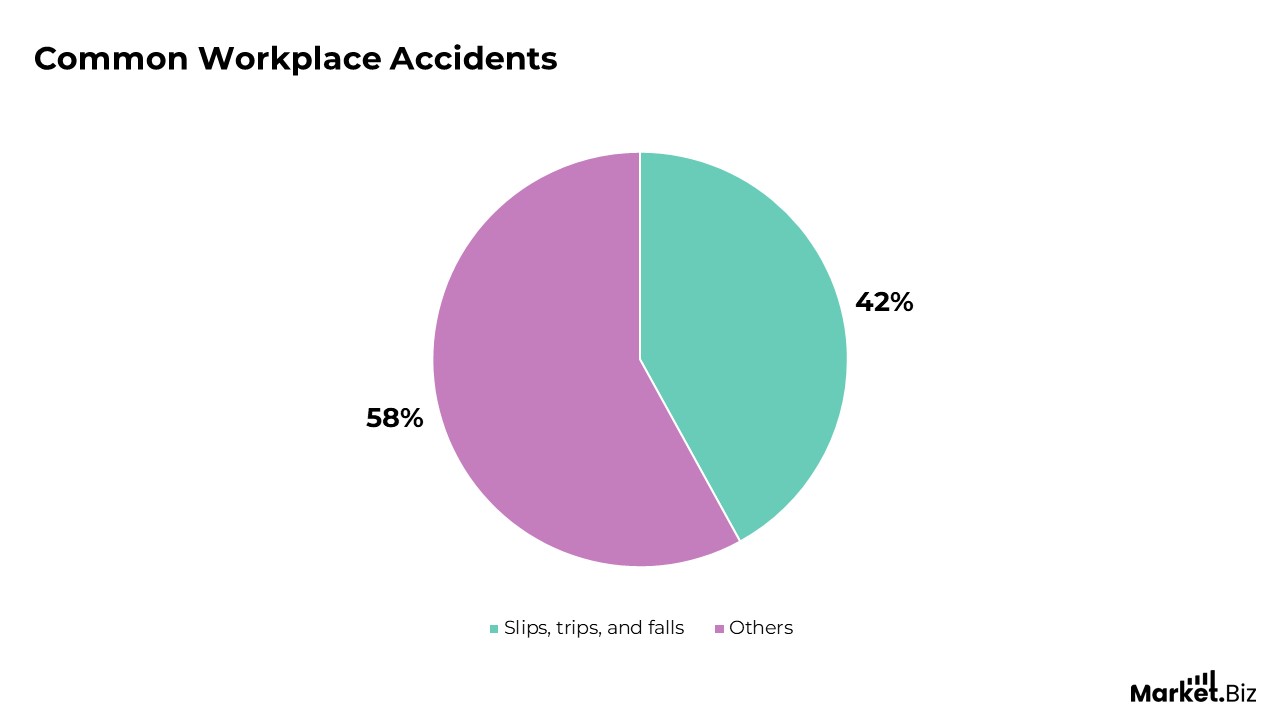
- Overexertion, including lifting, pushing, and carrying, is responsible for 25% of all workplace injuries in the U.S.
- Workplaces with safety training programs experience 50% fewer injuries than those without formal programs.
- Over 60% of workplace injuries could be mitigated with the proper use of PPE, like helmets and gloves.
- U.S. employers spend roughly $170 billion annually on workplace injuries, including medical costs and lost productivity.
- Manufacturing accounts for approximately 12% of all workplace injuries in the U.S., with over 300 fatalities annually.
- Mental health issues increase the likelihood of workplace accidents, with workers suffering from stress being 30% more prone to injury.
- Regular safety audits can reduce injury rates by up to 20%, ensuring hazards are identified and addressed.
- Older workers, particularly those over 55, are 33% more likely to sustain serious injuries compared to younger employees.
- Companies with low injury rates see a 10-15% increase in overall productivity due to fewer lost workdays and lower absenteeism.
Common Workplace Accidents
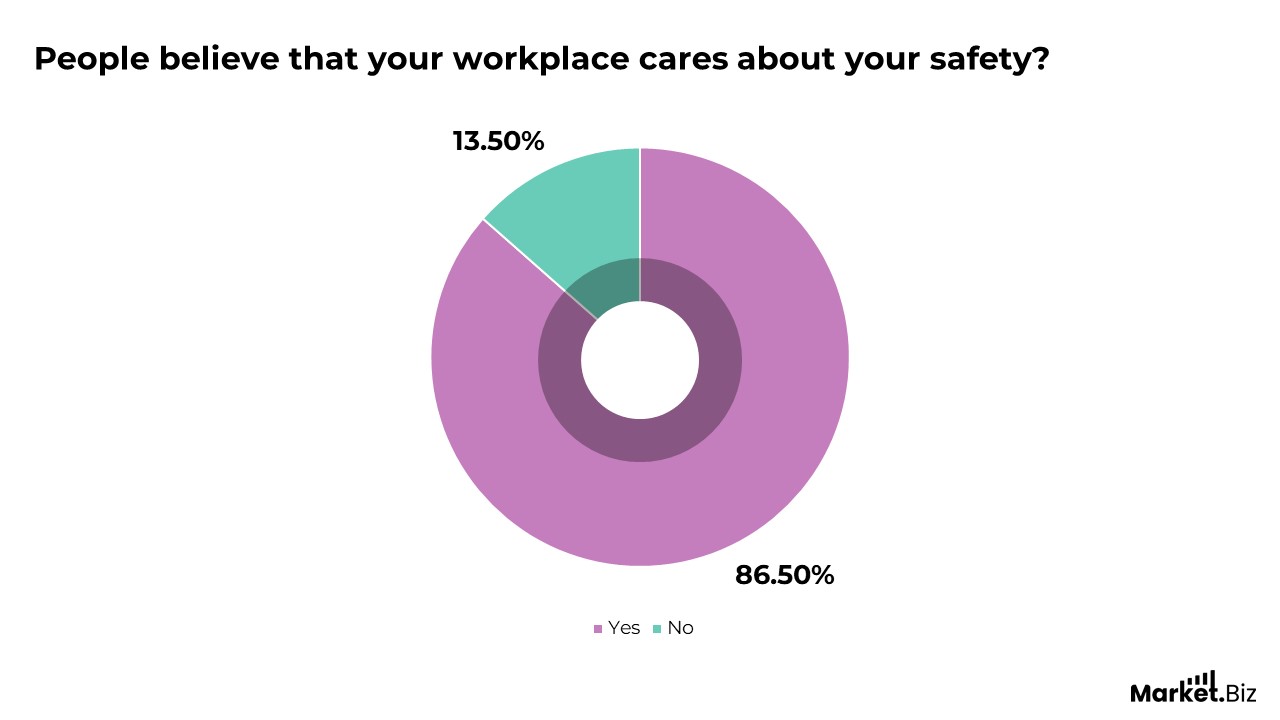
- Slips, trips, and falls are responsible for nearly 25% of all workplace injuries, with falls accounting for 17% of all workplace fatalities in the U.S. annually.
- Overexertion from lifting, pushing, or pulling accounts for about 25% of all workplace injuries in the U.S., leading to long recovery times.
- In industries like construction and manufacturing, being struck by moving objects contributes to 14% of all workplace accidents.
- Vehicle accidents, including crashes and collisions, are a leading cause of workplace fatalities, particularly in the transportation and logistics sector, making up around 40% of fatalities in the U.S.
- Machinery-related incidents cause approximately 20% of all workplace fatalities in manufacturing, often resulting in amputations or severe injuries.
- Repetitive strain injuries (RSIs) from tasks like typing or assembly line work affect millions of workers annually, contributing to over 50% of musculoskeletal disorders.
Moreover
- Falls from ladders, roofs, and scaffolding are responsible for nearly 20% of construction site fatalities, making them a key concern in high-risk industries.
- Burns caused by exposure to hot surfaces, chemicals, or fires make up about 5% of workplace injuries in industries like food service and manufacturing.
- Electrical accidents cause about 2% of workplace fatalities each year, primarily in construction and maintenance work.
- Workers colliding with fixed objects, such as walls or doors, result in about 5% of all workplace injuries, often leading to contusions and fractures.
- Workplace violence, including physical assaults, is responsible for around 10% of all workplace fatalities in the U.S., especially in healthcare and retail sectors.
- Chemical exposure, such as inhalation of toxic fumes, leads to chronic illnesses and injuries in industries like manufacturing and healthcare, accounting for 6% of all workplace injuries.
- Falling on the same level (e.g., slipping on wet floors) leads to significant injury, making up 20% of all workplace injuries in industries like hospitality and retail.
Causes of Workplace Injury
- Nearly 25% of workplace injuries occur due to employees not receiving adequate safety training, leading to preventable accidents.
- Around 30% of workplace injuries are related to repetitive motion or heavy lifting, often resulting in long-term disability or chronic pain.
- Workers without proper personal protective equipment (PPE), such as helmets or gloves, are 60% more likely to suffer serious injuries in construction or manufacturing industries.
- Transport-related accidents in the workplace cause around 40% of fatalities in industries like construction and warehousing.
- Malfunctioning or improperly maintained machinery is responsible for 12% of workplace injuries, including amputations, fractures, and severe lacerations.
- Over 20% of workplace injuries are linked to high stress levels, which impair concentration and increase accident rates.
- In industries with low levels of supervision, the likelihood of injury increases by 45%, often due to unsafe work practices being overlooked.
- More than 15% of workplace injuries are attributed to employee fatigue, especially in healthcare and transportation sectors, where long shifts contribute to poor decision-making.
- Exposure to toxic chemicals, excessive noise, and extreme temperatures causes nearly 10% of all workplace injuries, particularly in industrial settings.
(Source: Coolest Gadgets, WP-Content)
Workplace Injury by Industry
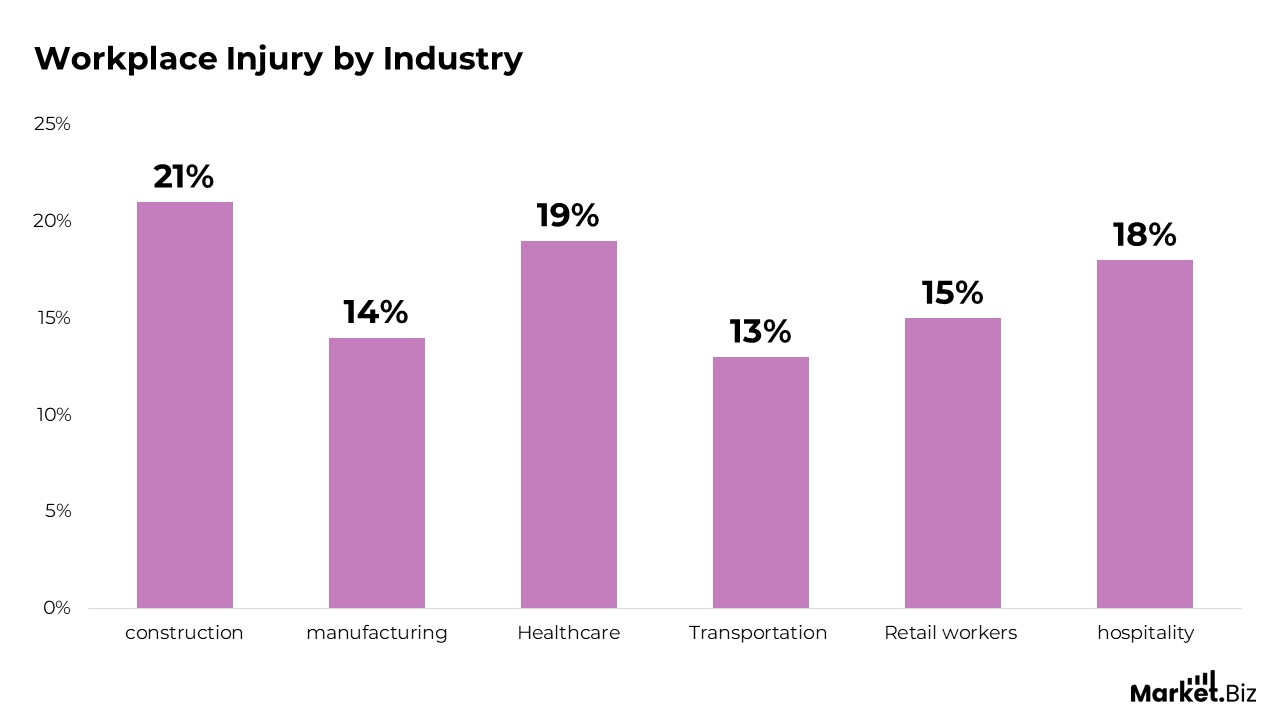
- The construction sector accounts for 21% of workplace fatalities, mainly from falls, machinery accidents, and electrocutions.
- In manufacturing, over 14% of injuries result from musculoskeletal disorders and machine-related accidents.
- Healthcare workers face high injury rates, with lifting and moving patients responsible for over 19% of injuries.
- Transportation and warehousing make up 13% of injuries, mainly from vehicle accidents, heavy lifting, and falls.
- Agriculture, forestry, and fishing have a high fatality rate, with injuries from equipment accidents, falls, and chemicals.
- Retail workers account for 15% of injuries, mainly from slips, trips, and falls.
- Mining is extremely hazardous, with fatality rates 7 times higher than average, mainly due to cave-ins and explosions.
- Trade services in construction (e.g., electricians) experience frequent injuries from falls, burns, and electrical shocks.
- In hospitality, over 18% of injuries are from slips, trips, falls, and handling hot surfaces or heavy objects.
- Public administration workers (law enforcement, emergency services) suffer injuries mainly from vehicle accidents and physical altercations.
Safety Culture at Workplace
- Companies with strong safety cultures see 52% fewer workplace injuries compared to those with weaker safety programs.
- A well-established safety culture can reduce accident-related costs by up to 24%, enhancing overall business profitability.
- 48% of workers report feeling safer in workplaces that actively promote safety training and communication.
- Organizations with safety committees experience 33% fewer incidents than those without such committees in place.
- Companies with proactive safety programs report 5 to 7 times fewer employee absentee days related to injuries.
- Research shows that when leadership is involved in safety initiatives, workplace injury rates decrease by 30%.
- Engaging employees in safety programs can result in 40% fewer workplace injuries and an increase in employee satisfaction.
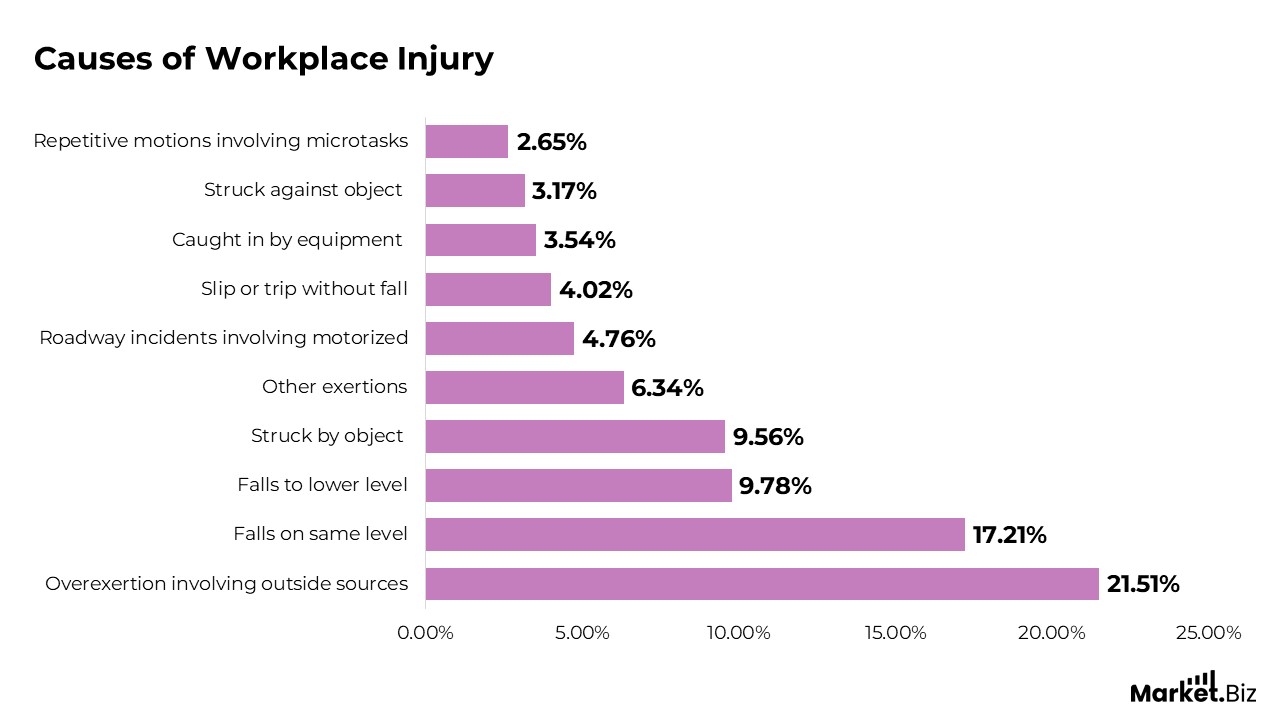
- Workers who feel their workplace prioritizes safety are 18% more likely to report unsafe conditions, preventing potential accidents.
- Regular safety audits are shown to reduce injuries by 27%, as they identify hazards before they cause harm.
- In industries with a strong safety culture, like construction, the injury rate can be reduced by up to 30% through consistent training.
- Safety culture is linked to employee retention; workplaces with good safety cultures have a 10-15% higher employee retention rate.
- Over 90% of employees in companies with a safety-first mindset report a greater sense of well-being and job satisfaction.
- 75% of workplace injuries are avoidable with proper safety measures, training, and a culture of vigilance.
- A positive safety culture contributes to a 15-20% increase in operational efficiency due to fewer disruptions caused by injuries.
Workplace Safety Regulations
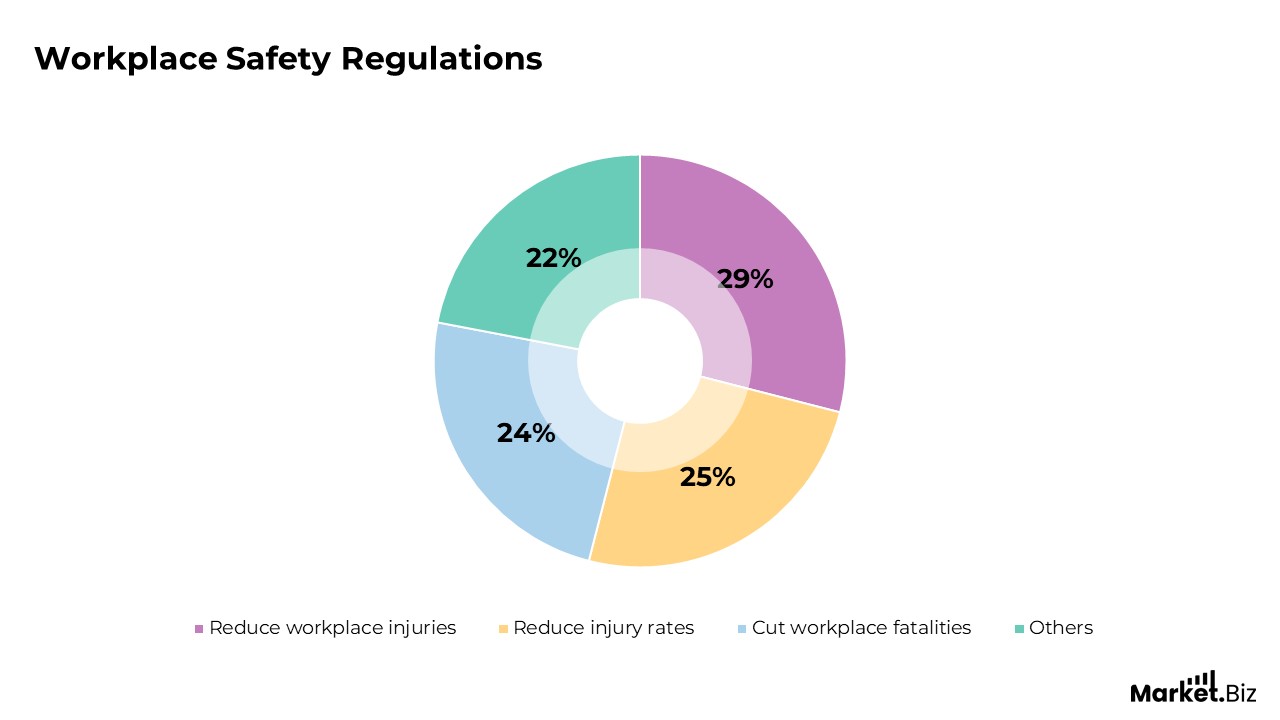
- OSHA regulations have been shown to reduce workplace injuries by 29%, ensuring safer work environments across high-risk industries like construction and manufacturing.
- Adherence to safety standards can cut workplace fatalities by 24%, particularly in sectors such as mining, where strict regulations on equipment and safety protocols are enforced.
- Regular training sessions required by safety regulations reduce injury rates by 25%, as workers are more equipped to handle potential hazards.
- Workplaces following safety regulations experience 30% fewer lawsuits related to accidents, minimizing both legal risks and financial liabilities.
- Safety regulations that mandate regular equipment checks help reduce machinery-related accidents by 35%, especially in sectors like manufacturing and transportation.
- Implementation of safety regulations in the healthcare sector has decreased needle-stick injuries by 40%, improving worker safety and reducing healthcare costs.
- More than 70% of companies that comply with safety regulations report improved employee retention, as workers feel safer and more valued in regulated environments.
- Regulations requiring workplace hazard identification and risk assessments lead to a 20% reduction in incidents tied to environmental risks, such as chemical exposure.
- According to studies, companies that maintain safety certifications see a 15% increase in productivity, as fewer injuries lead to fewer work disruptions.
- 85% of companies that follow safety guidelines report a decrease in insurance premiums, as compliant workplaces are considered lower-risk for insurers.
Workplace Safety by Demographics
Gender and Workplace Safety
- Men account for 93% of workplace fatalities, with construction and manufacturing sectors being the highest contributors.
- Women in healthcare and service industries face 30% of all musculoskeletal injuries among female workers.
- Female office workers report 15% higher rates of repetitive strain injuries due to long computer use.
- Men suffer more traumatic injuries, while women experience more occupational diseases like repetitive stress injuries.
- 60% of women in industrial jobs report ill-fitting PPE, leading to a higher injury rate.
- Women in agriculture are 25% more likely to experience hearing loss due to noise exposure.
- Men are more prone to fatal accidents, with construction and transportation contributing to 40% of male fatalities.
- Gender-sensitive safety policies can reduce injury rates by 20%, particularly through better PPE design.
Age and Workplace Safety
- Workers over 65 face injury rates 2.5 times higher than younger workers, especially in physically demanding roles.
- Workers aged 16-24 experience 15% of workplace injuries due to lack of experience and inadequate training.
- Workers over 55 are more likely to suffer musculoskeletal injuries, accounting for 30% of injuries in this age group.
- Older workers are 40% more likely to experience falls and fractures compared to younger workers.
- Young workers (under 25) in construction face 50% higher injury rates due to inexperience and risk-taking.
- Workplace modifications for older workers, like ergonomic designs, reduce injury rates by 20%.
- Workers aged 45-54 report 15% more vehicle-related accidents due to fatigue and long hours.
- Safety training for younger workers reduces injuries by 20%, particularly in high-risk industries.
Costs per Workplace Accident by Injury Type
- Falls account for nearly 15% of all workplace injuries, with the average cost per fall-related accident reaching $40,000, factoring in medical costs and lost productivity.
- Musculoskeletal injuries, such as strains and sprains, are responsible for 33% of all workplace injuries, costing employers an average of $28,000 per incident.
- Accidents involving vehicles, including forklifts and company cars, can cost an average of $100,000 per incident, considering medical, legal, and insurance costs.
- Injuries caused by being struck by objects account for 10% of all workplace accidents, with the average cost per incident estimated at $44,000.
- The cost of treating cuts and lacerations in industries like manufacturing averages $27,000 per injury, considering hospital bills and downtime.
- Chemical and thermal burns can cost up to $220,000 per incident, depending on the severity of the injury and the long-term treatment required.
- Repetitive strain injuries, such as carpal tunnel syndrome, have an average cost of $53,000 per case, factoring in medical costs and potential long-term disability.
- Exposure to hazardous substances, like asbestos or chemicals, can result in an average cost of $72,000 per incident, including treatment and regulatory fines.
- Electrocution injuries, though less frequent, can be catastrophic, with average costs exceeding $138,000 due to severe injuries, legal fees, and settlements.
- Workplace stress and trauma-related injuries can cost upwards of $97,000 per case, factoring in therapy, legal claims, and long-term disability claims.
Safety Challenges in Developing Countries
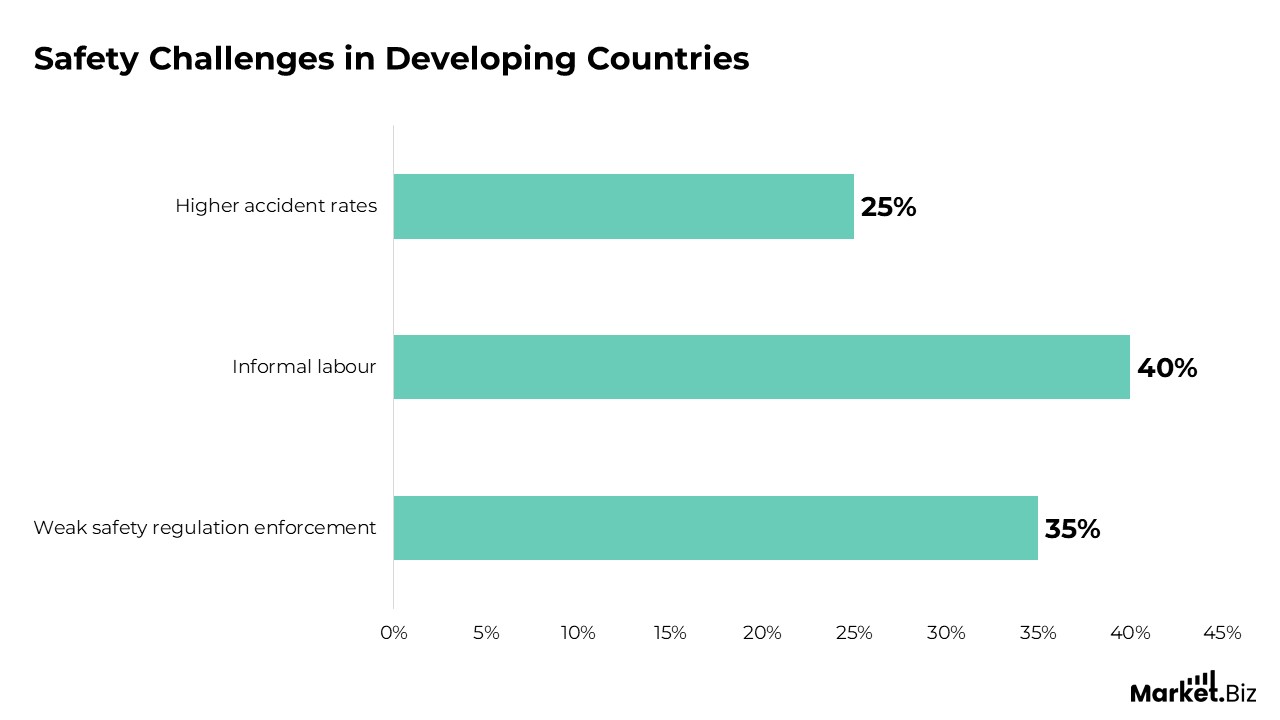
- Developing countries account for over 35% of global workplace fatalities, largely due to weak safety regulation enforcement.
- Workplace injury rates in low-income countries are up to 10 times higher than in high-income nations due to inadequate safety training and measures.
- Over 60% of workers in developing countries lack basic personal protective equipment (PPE), increasing injury risks in sectors like construction and agriculture.
- Informal labour, which lacks safety oversight, accounts for 40% of all workplace accidents in developing nations.
- Only 25% of workers in developing countries receive formal safety training, contributing to higher accident rates.
- Agricultural workers face higher fatality rates, with pesticide-related deaths increasing by 15% annually in regions with weak safety regulations.
- Faulty machinery and unsafe environments in industries like mining and manufacturing significantly raise injury risks.
- Around 70% of construction sites in developing countries lack proper safety measures, leading to frequent accidents.
- Poor monitoring systems result in non-compliance with safety regulations, increasing preventable accidents.
- Long hours and high stress lead to a 20% higher injury rate, especially in sectors like textiles and agriculture.
- Child labour in unregulated sectors contributes to double the injury rate compared to adults in developing countries.
- Limited healthcare access for injured workers increases the long-term impact of accidents and recovery costs.
- Inadequate workplace insurance in developing countries forces workers to bear the financial burden of injuries, with 50% of informal workers unable to afford treatment.
Safety Protocols for Handling Materials
- Proper material handling training can reduce injuries by 30%, especially in high-risk sectors like construction and manufacturing.
- The use of mechanical aids, such as forklifts and cranes, can cut manual handling injuries by 40%, improving worker safety.
- Overexertion and repetitive lifting cause nearly 25% of workplace injuries, but implementing ergonomic protocols can reduce these by up to 20%.
- 50% of musculoskeletal disorders (MSDs) in warehouses and factories are related to improper lifting techniques, highlighting the need for regular safety training.
- Safety guidelines for hazardous materials handling, like the use of PPE (personal protective equipment), reduce exposure-related accidents by 60%.
- Having clear signage and labelling for hazardous materials, as mandated by OSHA, can reduce chemical spill incidents by 45%.
- Proper stacking and securing of materials can reduce falls from height by 35%, a major safety concern in warehouses and construction sites.
- Handling bulky or heavy materials without safety protocols increases injury risks by 50%, particularly in manual labour-intensive environments.
- Worker fatigue, often due to inadequate breaks and improper load distribution, contributes to 20% of material handling accidents.
- Following guidelines for handling flammable or toxic materials reduces fire-related accidents by 40%, preventing costly damage and injuries.
- Regular safety audits and inspections ensure compliance with handling protocols, reducing accident rates by up to 25% and minimizing liability.
Prevention Measures of Workplace Injury
- Safety training programs can reduce injuries by 30%, especially in high-risk sectors like construction.
- Regular risk assessments and hazard identification prevent 40% of workplace accidents by addressing potential dangers early.
- PPE use can prevent 30% of injuries in industries like construction and manufacturing.
- Ergonomic designs reduce musculoskeletal injuries by 25%, particularly for office and repetitive task workers.
- Clear emergency procedures and drills reduce injury severity by 20%, especially in factories and healthcare settings.
- Frequent breaks and job rotation reduce fatigue-related injuries by 15%, improving safety and productivity.
- Proper lighting in work areas can lower slip and fall accidents by 30%, especially in warehouses and offices.
- Regular equipment maintenance can prevent mechanical failures, reducing accidents by up to 40%.
- Clear communication and safety signage reduce accidents by 25% by eliminating confusion.
- Encouraging hazard reporting can reduce accidents by 35%, fostering a proactive safety culture.
- Health and wellness programs, including mental health support, can reduce stress-related injuries by 20%.

Conclusion
Workplace safety remains a global concern, with millions of injuries and fatalities reported each year. Effective protocols like training, PPE usage, and regular risk assessments can significantly reduce these numbers. Industries such as construction, manufacturing, and transportation face high risks, with overexertion and slips being major contributors.
A strong safety culture, regulatory compliance, and proactive measures can lower injury rates, boost productivity, and reduce costs. Addressing demographic factors and improving safety standards in developing countries are crucial steps to further reduce workplace injuries worldwide.
FAQs
Workplace injuries are commonly caused by a lack of safety training, repetitive tasks, and overexertion, improper use of PPE, and environmental hazards like machinery malfunctions and slip/trip hazards.
Construction, manufacturing, and transportation sectors report the highest injury rates, with construction accounting for a significant portion of fatalities due to falls and machinery accidents.
Organizations with strong safety cultures experience up to 50% fewer injuries. Regular safety training, clear protocols, and active leadership involvement can significantly reduce incidents.
Workplace injuries cost employers billions annually, factoring in medical expenses, legal claims, lost productivity, and workers’ compensation. The U.S. alone spends around $170 billion each year on these costs.
Developing countries can reduce workplace injuries by enforcing stronger safety regulations, providing PPE, offering training programs, and addressing unsafe working conditions in informal labour sectors.