









Introduction
Employee Burnout Statistics: Employee burnout has become a significant concern across industries, with recent statistics shedding light on its widespread impact. Around 76% of employees experience burnout on the job at least sometimes, with 28% reporting it as a frequent occurrence.
Studies show that 60% of employees cite work-related stress as the main contributor to burnout, which often leads to decreased productivity and higher turnover rates. With over 1 in 4 employees considering leaving their current roles due to burnout, organizations face a pressing need to address mental well-being. Understanding employee burnout statistics is crucial for developing effective solutions to improve workplace health and performance.
Editor’s Choice
- 76% of employees experience burnout at least occasionally, with 28% facing it frequently.
- Millennials and Gen Z report the highest burnout levels, with 40% of millennials affected.
- Work-related stress is the main cause of burnout for 60% of employees.
- Burned-out employees are 63% more likely to take sick days, impacting productivity.
- 70% of workers experiencing burnout report symptoms of anxiety or depression.
- Excessive workload is the primary factor contributing to burnout for 70% of employees.
- 55% of employees cite lack of managerial support as a significant burnout factor.
- Burnout-related conditions cost U.S. companies over $190 billion annually.
- 45% of remote workers report burnout due to blurred work-life boundaries.
- Healthcare, education, and technology sectors saw a 25% increase in burnout during the pandemic.
- Strategies like flexible work hours and mental health support have reduced burnout by 25-30%.
- Employee turnover rose by 30% due to burnout, as workers sought better mental health support.
General Employee Burnout Statistics
- Approximately 76% of employees experience burnout at least sometimes, with 28% experiencing it frequently.
- Millennials and Gen Z are most susceptible to burnout, with 40% of millennials reporting high burnout levels.
- 60% of employees identify work-related stress as a primary cause of burnout.
- Burned-out employees are 63% more likely to take sick days, reducing productivity.
- 70% of employees with burnout report experiencing anxiety or depression symptoms.
- Employees suffering from burnout are 2.5 times more likely to quit their jobs.
- 70% of workers claim excessive workload is the top factor contributing to burnout.
- Only 33% of employees feel they have a good work-life balance, which exacerbates burnout risk.
- 55% of employees say lack of managerial support contributes significantly to burnout.
- Chronic burnout can lead to a 50% decrease in employee engagement over time.
- 45% of remote employees report feeling burned out due to blurred boundaries between work and home life.
- Burnout-related conditions cost U.S. companies over $190 billion annually in healthcare expenses and lost productivity.
- In 2020, 43% of workers in about 100 nations reported feeling burned out at work. From 39% in 2019, this percentage increased.
- Burnout causes 31% of workers to lose interest in their work, 21% to procrastinate more, and 33% of workers to indicate they are less focused at work.
- In the UK, burnout affects at least 79% of workers, with about 35% experiencing extremely high or intense degrees of burnout.
Factors Contributing to Employee Burnout
- Excessive workload is the top contributor to burnout, with 70% of employees reporting it as the primary cause.
- Long working hours increase burnout risk, with 61% of employees working more than 40 hours a week experiencing higher stress.
- Lack of control over job responsibilities affects 53% of employees, contributing to feelings of burnout.
- Unclear job expectations cause confusion, with 40% of workers reporting burnout due to unclear goals.
- Inadequate support from managers leads to burnout for 55% of employees, who feel unsupported in their roles.
- Poor work-life balance contributes to burnout, as 65% of employees struggle to separate personal and professional lives.
- Toxic work culture is a significant factor, with 48% of employees citing a negative work environment as contributing to burnout.
- Poor communication from leadership affects 46% of employees, leaving them feeling disengaged and overworked.
- Lack of recognition for hard work causes burnout for 40% of employees who feel their efforts are unappreciated.
- Job insecurity increases stress, with 37% of employees fearing layoffs, which worsens burnout levels.
- Remote work burnout is rising, with 45% of remote workers feeling disconnected and overwhelmed due to blurred boundaries.
- Insufficient resources and training leave 38% of employees feeling ill-prepared to handle their job demands, leading to burnout.
- Lack of career growth opportunities contributes to burnout for 30% of employees who feel stagnant in their roles.
- High job demands without corresponding rewards are a key factor in burnout, affecting 50% of employees.
- The feeling of being undervalued at work leads to burnout for 42% of employees, impacting their engagement and performance.
Stress at Work Statistics
- Over 80% of workers report experiencing stress at work, with 25% of them feeling stressed every day.
- Chronic work stress is linked to a 50% higher risk of developing heart disease and other health problems.
- 60% of employees state that excessive workload is a major source of stress, leading to burnout and productivity decline.
- 60% of employees experiencing high levels of stress are 3 times more likely to report low job satisfaction.
- 45% of remote employees face stress due to a lack of boundaries between work and personal life.
- Women are 20% more likely than men to report work-related stress, with work-life balance being a major factor.
- 55% of employees believe that a toxic work culture significantly increases stress levels and decreases overall well-being.
- Employees experiencing high stress are 30% less productive, resulting in an overall loss in performance.
- High stress is one of the leading causes of employee turnover, with stressed employees being 2.5 times more likely to quit.
- Work-related stress costs U.S. businesses nearly $300 billion annually in lost productivity, absenteeism, and healthcare costs.
- There’s a reason why only 13% think burnout has improved. Employees reported a 21% rise in burnout overall between December 2020 and July 2021.
- Eighty-three percent of Americans experience stress at work. Furthermore, 25% of respondents say their job is the biggest source of stress in their lives, and 40% say their employment is “very stressful.”
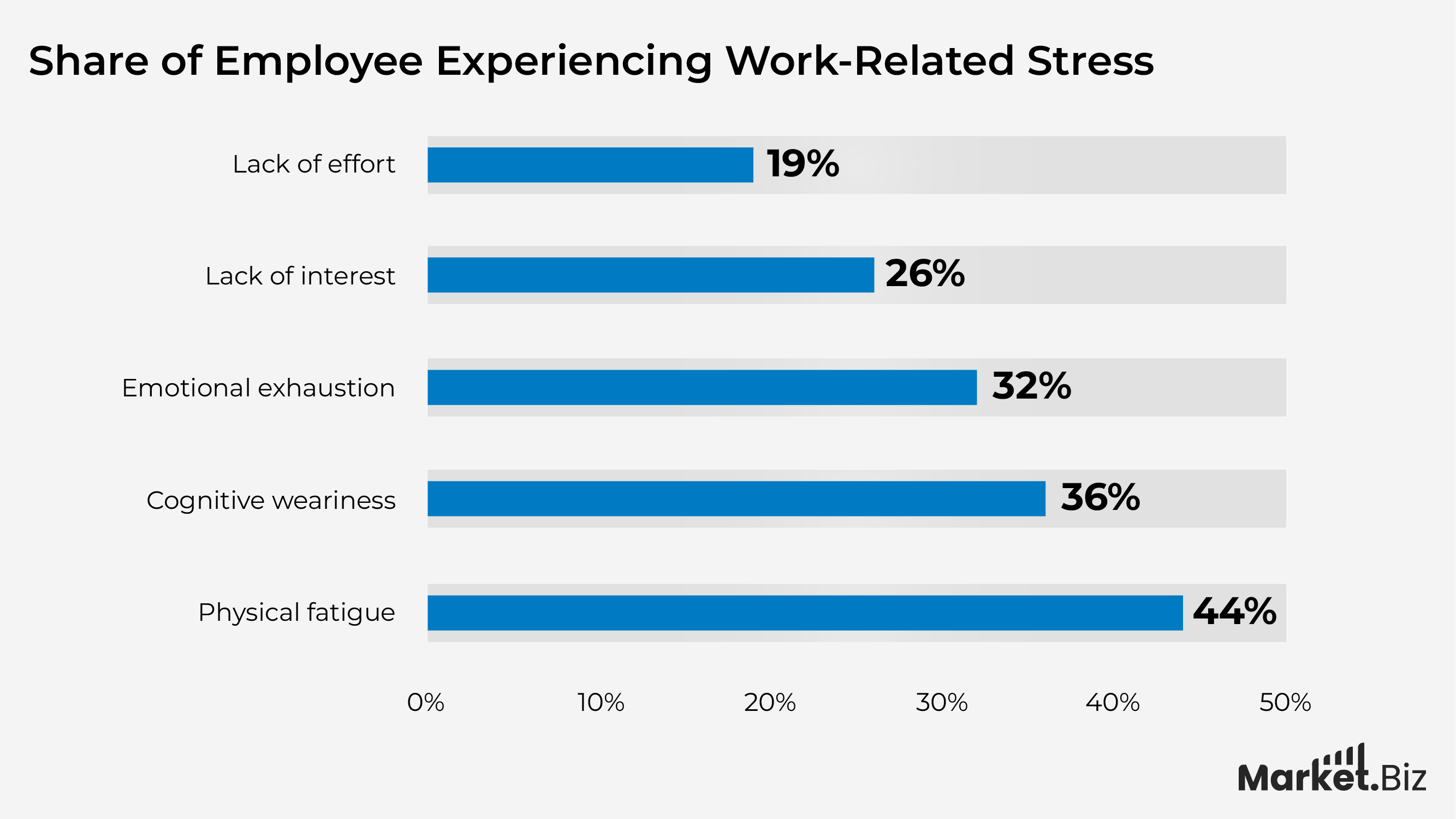
- Stress at work causes physical exhaustion for 44% of workers.
- Additionally, workers report feeling emotionally and cognitively exhausted (36%), lacking passion, drive, or vitality (26%), and not trying hard enough at work (19%).
(Source: zippia, Wp-content)
Burnout by Demographics
By age and gender
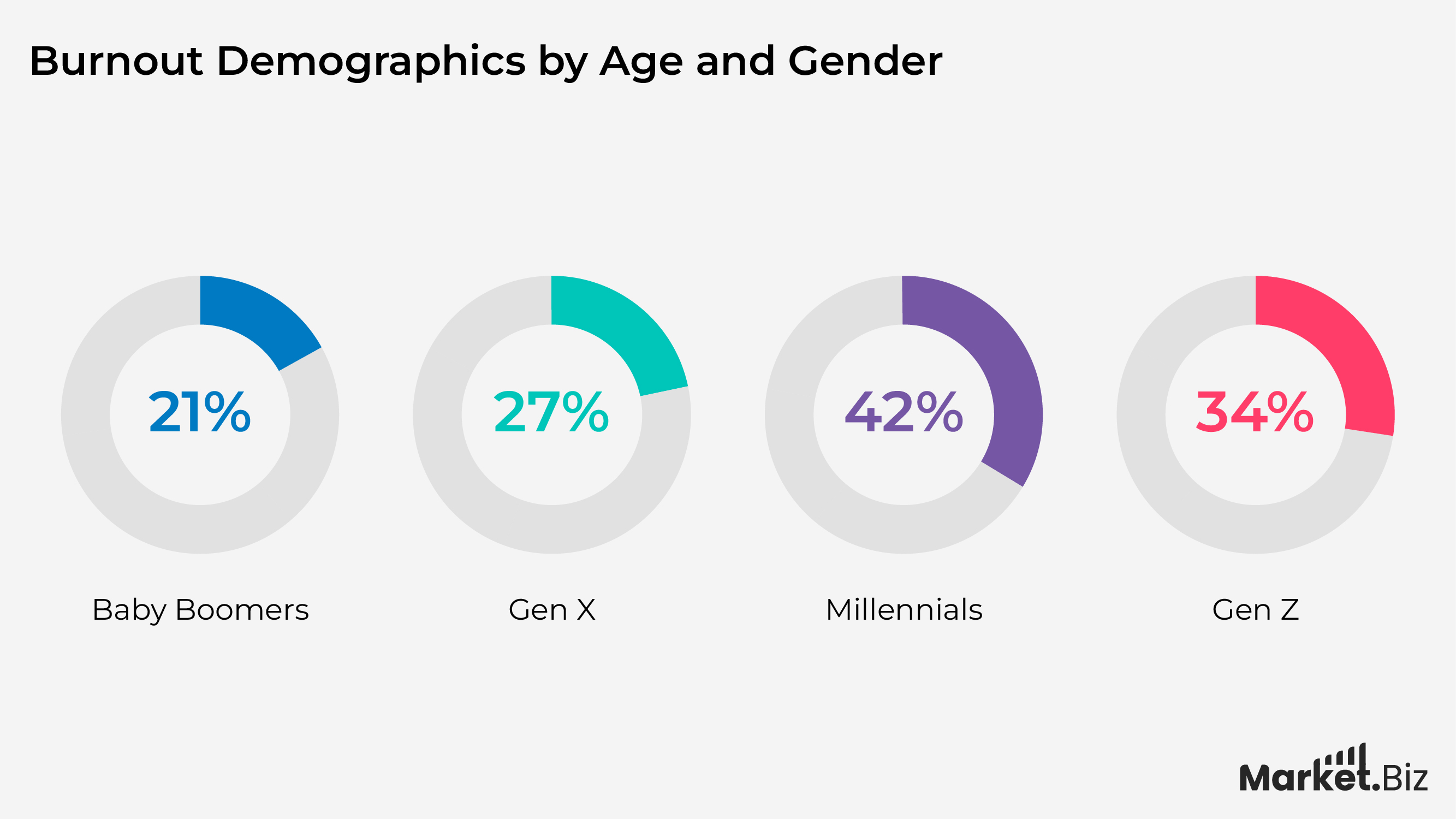
- Millennials report the highest burnout rates, with 42% stating they often feel burned out at work.
- Gen Z is closely behind, with 34% of workers in this group citing high levels of burnout due to work-related stress.
- Gen X reports 27% burnout rates, where Baby Boomers report 21%.
- Older employees (ages 55+) experience less burnout, with only 25% reporting high burnout levels compared to younger generations.
- Women are more likely to experience burnout, with 42% reporting high levels compared to 32% of men.
- In particular, working mothers face increased burnout, with 49% reporting significant burnout symptoms due to balancing work and family.
- 33% of female employees in managerial roles report higher burnout rates than their male counterparts.
- Millennials in leadership roles report burnout at a rate of 45%, significantly higher than older generations in leadership positions.
- 27% of employees between ages 30–44 cite workload and lack of work-life balance as primary burnout contributors.
- Younger employees (18-29) tend to experience burnout more frequently due to job insecurity, with 50% reporting burnout symptoms.
- Gender disparities in burnout are linked to additional stressors, such as gender bias and unequal pay, which affect 41% of women.
(Source: zippia, Wp-content)
By job type and work environment
- 35% of managers experience burnout, primarily due to decision-making pressures, long working hours, and organizational stress.
- Employees in customer-facing roles, such as retail and hospitality workers, report burnout at a rate of 40%, often due to emotional labor and high customer expectations.
- 43% of freelancers face burnout, largely because of job insecurity, inconsistent workloads, and the pressure to continuously find new clients.
- 30% of full-time employees experience burnout, with workload imbalance and lack of autonomy being significant contributing factors.
- 38% of part-time employees report burnout, often because of juggling multiple jobs and low control over schedules.
- Employees working irregular hours, such as in healthcare or manufacturing, report burnout at 45%, mainly due to disrupted sleep cycles and physical fatigue.
- 45% of remote workers experience burnout, driven by the blurring of work and personal life boundaries and isolation from colleagues.
- Creative professionals, such as graphic designers and writers, report burnout at a rate of 37%, with tight deadlines and high creative demands being key factors.
- 50% of employees in sales and marketing roles experience burnout, often due to pressure to meet sales targets and client expectations.
- 41% of IT and tech support staff report burnout, mainly due to constant problem-solving demands, long hours, and stress from high customer expectations.
The Causes of Burnout
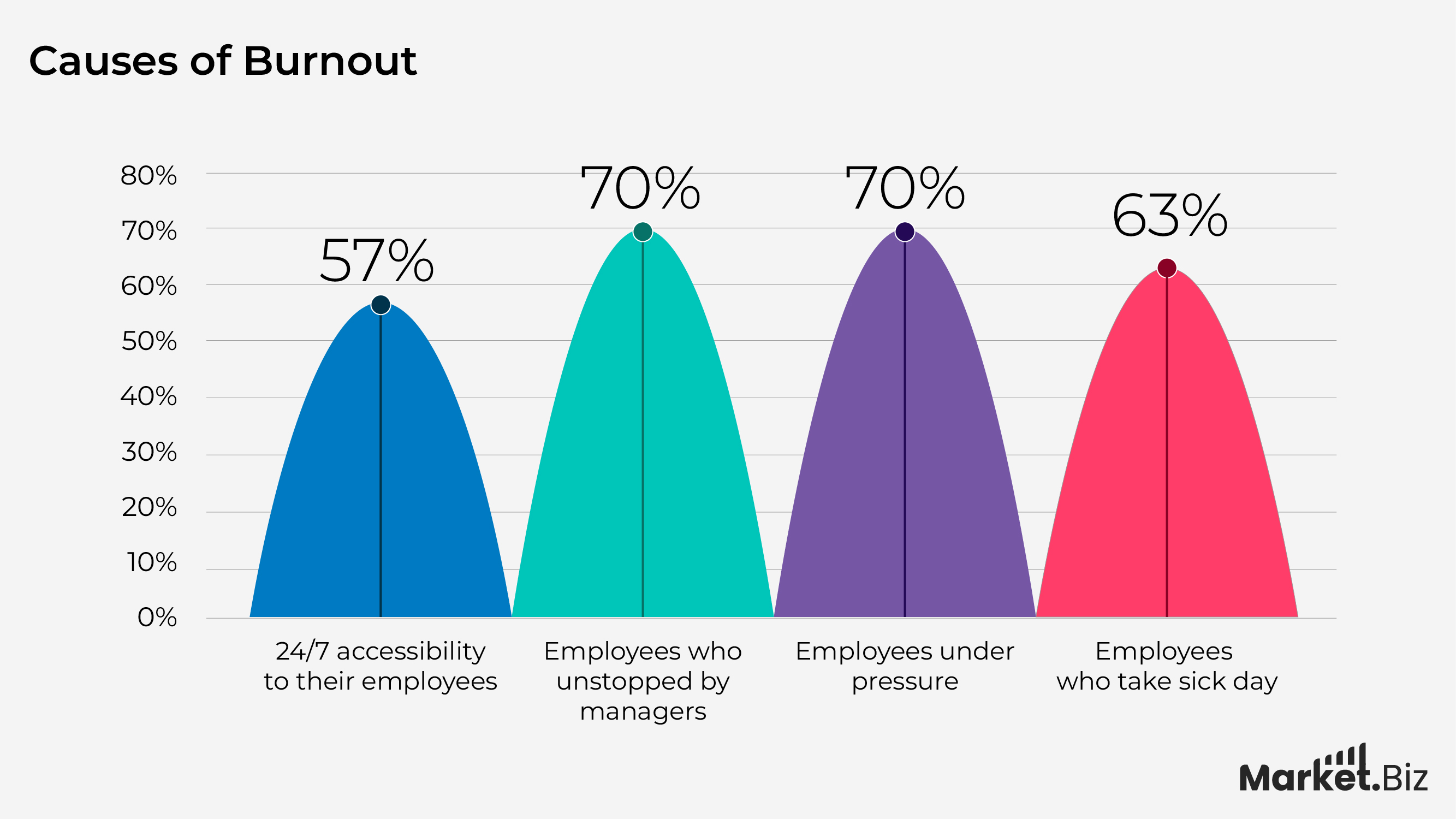
- 63% of employees report burnout due to constant workload demands, often resulting from unrealistic expectations and tight deadlines.
- 50% of employees experiencing burnout say it’s caused by lack of autonomy, feeling micromanaged and unable to make decisions in their roles.
- 40% of workers cite lack of support from management as a key factor in burnout, where employees feel neglected and undervalued.
- 52% of employees are burned out due to a mismatch between their skills and job requirements, feeling overwhelmed by tasks beyond their capabilities.
- 58% of employees say the lack of clear career progression or growth opportunities leads to burnout, as they feel stuck in their positions.
- 45% of employees report burnout due to insufficient resources or training to perform their jobs effectively, increasing stress and frustration.
- 68% of employees working in high-pressure sales environments report burnout due to aggressive performance targets and customer demands.
- 38% of employees in the tech industry experience burnout from constantly evolving technology, leading to job insecurity and pressure to stay updated.
- Over 60% of healthcare workers experience burnout due to emotional exhaustion from dealing with patient needs, long shifts, and trauma exposure.
Moreover
- 47% of employees in remote roles report burnout due to lack of social interaction, feeling isolated and disconnected from colleagues.
- 55% of employees believe that the lack of work-life balance, with continuous work emails or calls outside office hours, leads to burnout.
- 30% of employees in creative fields report burnout due to pressure to produce innovative ideas constantly, leading to mental and creative fatigue.
- 70% of employees in leadership positions report burnout due to the constant stress of decision-making, responsibility, and managing teams.
- 42% of employees experience burnout when there is a lack of recognition for their efforts, leading to feelings of being unappreciated and undervalued.
- 55% of workers in fast-paced industries experience burnout from constant multitasking and juggling multiple high-priority projects simultaneously.
- 48% of employees report burnout due to the lack of flexibility in their schedules, causing stress from rigid work hours and personal life conflicts.
- 50% of employees cite feeling disconnected from company values and culture as a major factor contributing to burnout, especially in large organizations.
(Source: Flair)
Burnout Statistics by Industry
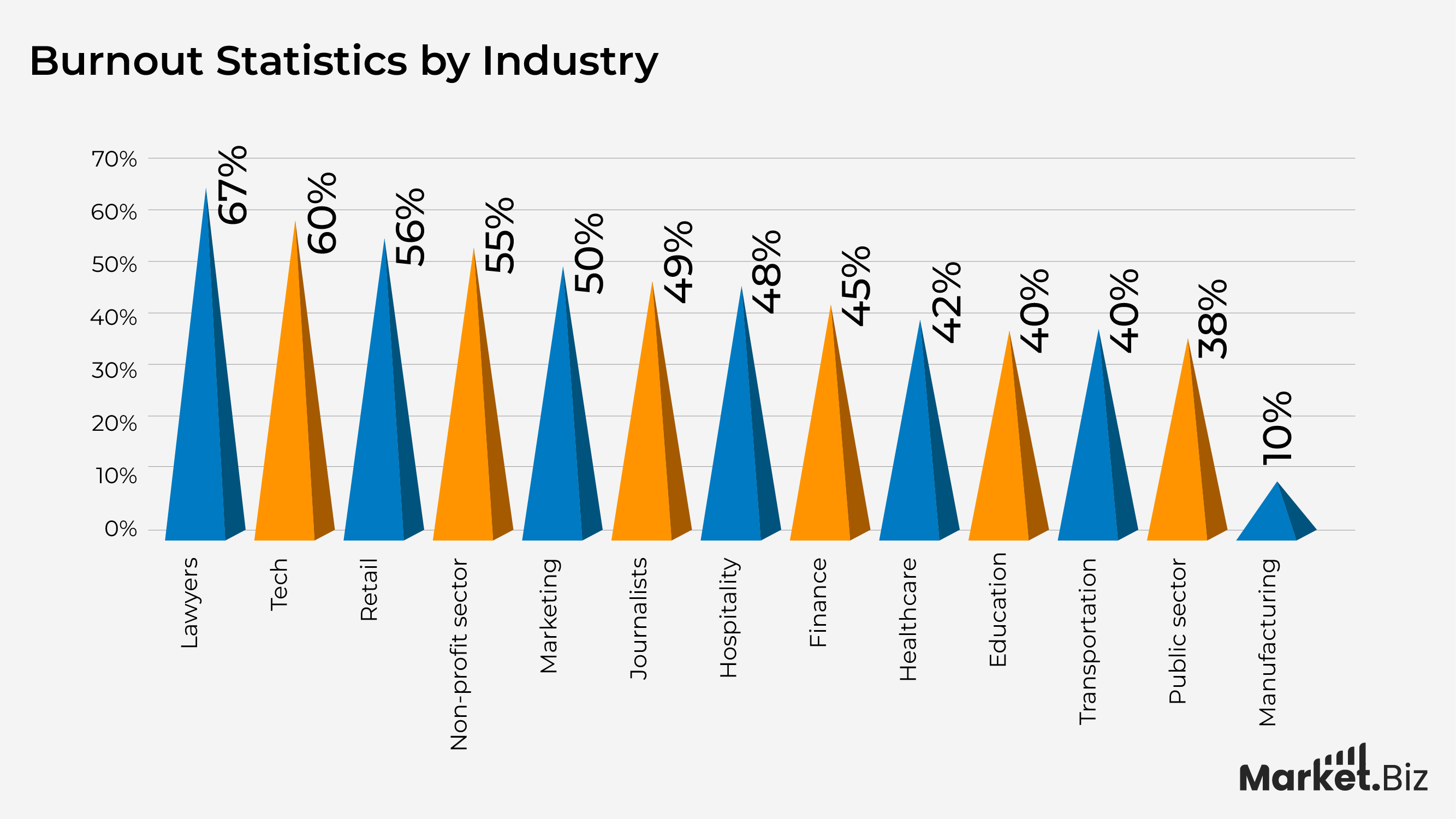
- Healthcare workers are at the highest risk of burnout, with 42% of physicians reporting burnout in recent studies.
- In the tech industry, burnout affects nearly 60% of workers, with long hours and high stress contributing to 3 in 5 developers experiencing fatigue.
- Teachers are facing a burnout crisis, with 40% of educators reporting high levels of stress and burnout, especially post-pandemic.
- Over 56% of retail workers experience burnout due to low wages, long shifts, and customer-related stress.
- About 45% of finance professionals report burnout symptoms due to intense workloads and pressure to meet targets.
- The burnout rate in manufacturing has increased by 10% over the past five years, with over 35% of employees experiencing emotional exhaustion.
- 67% of lawyers face significant burnout, largely due to high workloads and pressure to bill hours.
- More than 50% of marketing professionals report burnout, driven by tight deadlines, client demands, and constant creativity required.
- The hospitality industry sees a burnout rate of 48%, with workers often experiencing emotional and physical exhaustion due to irregular hours and high customer interaction.
- Around 40% of truck drivers and transportation workers report burnout, mainly due to long hours on the road and isolation.
- Over 55% of employees in the non-profit sector experience burnout due to the emotional demands of the work and underfunding.
- Public sector employees face a burnout rate of approximately 38%, largely attributed to job insecurity and high-pressure responsibilities.
- Journalists report a 49% burnout rate, with factors like constant deadlines, emotional labor, and job instability driving exhaustion.
COVID-19’s Impact on Burnout
- The COVID-19 pandemic led to a 25% increase in burnout rates across various industries, with healthcare, education, and technology being the most affected sectors.
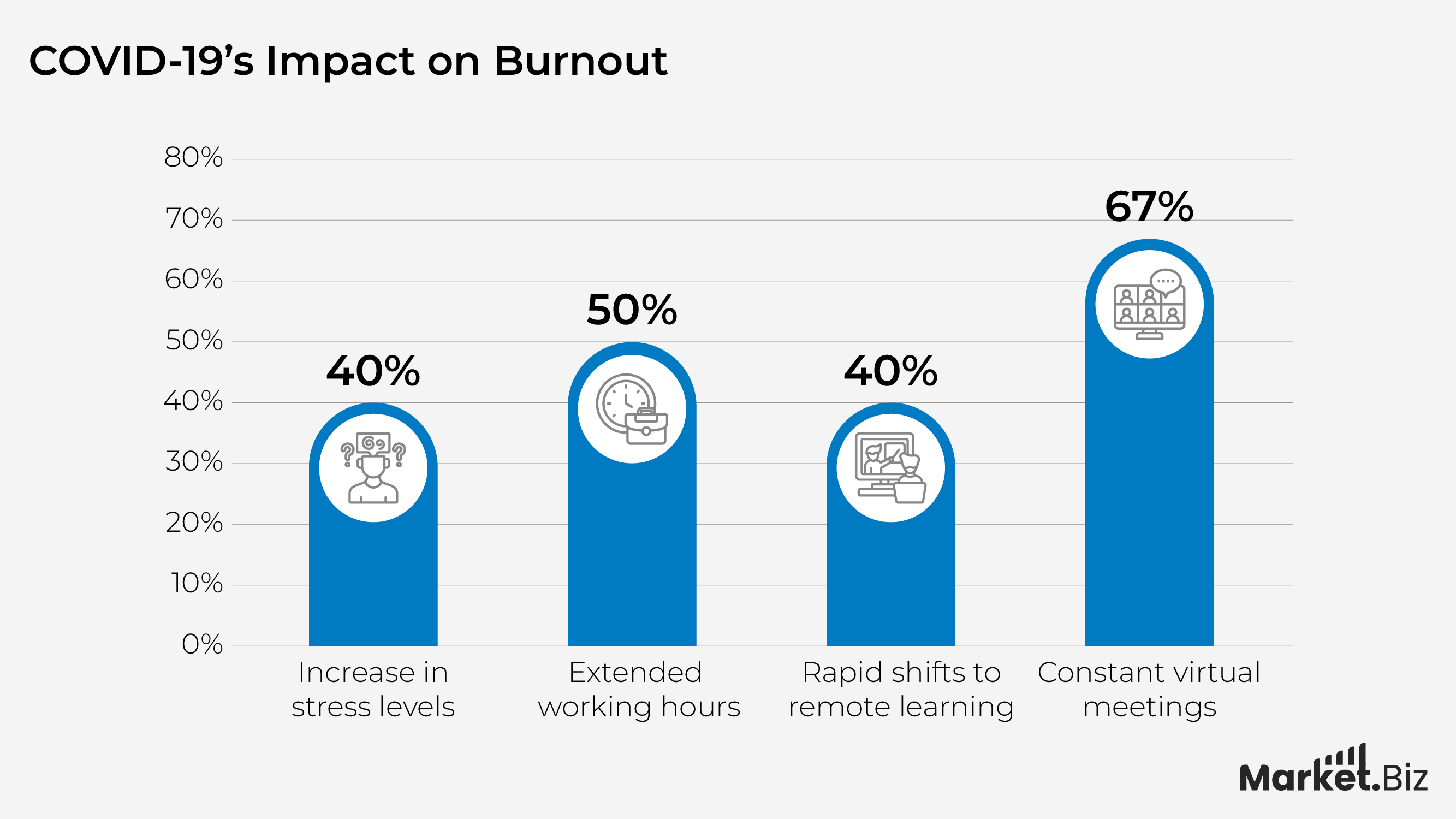
- During the pandemic, 40% of employees reported an increase in stress levels, with remote work and the blurring of work-life boundaries contributing significantly.
- A study revealed that 50% of healthcare workers experienced burnout during the pandemic, largely due to extended working hours, patient overload, and emotional strain.
- Teachers faced a 40% increase in burnout during the pandemic due to rapid shifts to remote learning, increased workloads, and heightened anxiety around student engagement.
- In the tech industry, burnout doubled during COVID-19, with employees citing long hours, constant virtual meetings, and lack of work-life separation as key factors.
- The pandemic worsened mental health issues, with 60% of workers in industries like finance and law reporting anxiety, depression, and burnout symptoms.
- As a result of COVID-19, 1 in 3 workers globally said they felt emotionally exhausted, with many facing an increase in workload and a sense of uncertainty about job security.
- Remote work, although initially viewed as a positive, resulted in a 30% increase in burnout rates, as employees struggled with isolation and difficulty disconnecting from work.
Further
- A global survey found that 55% of women experienced more burnout than men during COVID-19, driven by increased caregiving responsibilities and work-from-home challenges.
- In the hospitality industry, burnout surged by 45% during the pandemic, as many employees faced health risks and job instability while dealing with a reduced workforce.
- The gig economy saw a 20% rise in burnout cases, with workers struggling to balance multiple jobs and deal with fluctuating incomes during the pandemic.
- A report on remote work during COVID-19 showed that 40% of employees experienced burnout within the first six months of working from home, citing lack of routine and personal space.
- In sectors like retail and customer service, 35% of employees reported burnout during COVID-19 due to increased safety concerns and the challenges of managing customer expectations remotely.
- The pandemic led to a shift in workplace culture, with 28% of workers reporting they felt overwhelmed by the pressure to perform, as employers demanded high productivity in uncertain times.
- Burnout due to COVID-19 also contributed to a 30% rise in employee turnover, with workers seeking new roles that offered better mental health support and work-life balance.
Strategies to Combat Burnout
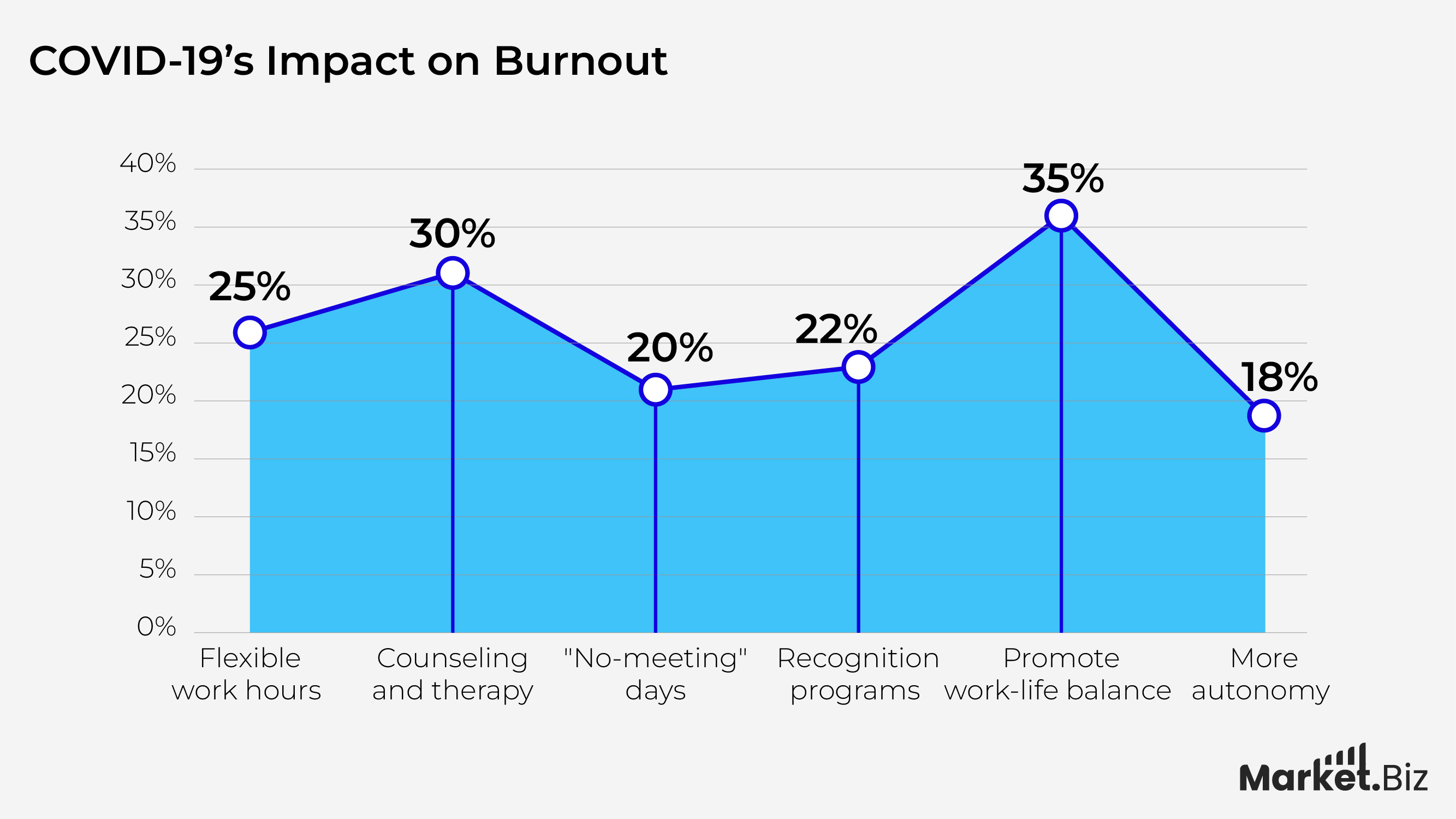
- Companies offering flexible work hours saw a 25% decrease in burnout, as employees could manage their work-life balance more effectively.
- Providing mental health resources, such as counseling and therapy, has led to a 30% improvement in employee well-being and a reduction in burnout symptoms.
- Encouraging employees to take regular breaks, including “no-meeting” days, helped reduce burnout by 20%, improving productivity and focus.
- Organizations that implemented recognition programs saw a 22% decrease in burnout, with employees reporting higher satisfaction and engagement.
- Companies that actively promote work-life balance through paid time off and well-being initiatives observed a 35% reduction in burnout rates.
- Giving employees more autonomy in their roles, including decision-making power, reduced burnout by 18%, fostering a greater sense of control and job satisfaction.
- Setting clear and realistic expectations helped reduce burnout by 15%, as employees felt more equipped to manage their workload effectively.
- Organizations that trained managers to identify signs of burnout and support employees saw a 40% decrease in burnout across teams.
- Encouraging social interactions and team bonding activities reduced burnout by 25%, fostering stronger workplace relationships and emotional support.
- Introducing mindfulness and meditation programs led to a 30% reduction in burnout, improving focus and reducing stress levels.
- Companies offering wellness programs, including gym memberships and health screenings, reported a 20% decrease in burnout among employees.
- Effective workload management through task prioritization and realistic deadlines resulted in a 28% reduction in burnout, as employees felt less overwhelmed.
Conclusion
Employee burnout is a pervasive issue, with a significant portion of the workforce experiencing it at least occasionally, and many reporting frequent burnout. Work-related stress, excessive workloads, and lack of support are the main contributors, with stress being a primary cause for many employees. The impact is considerable, leading to reduced productivity, increased turnover, and high healthcare costs.
The COVID-19 pandemic has worsened burnout, especially in sectors like healthcare and education. However, implementing strategies such as flexible work hours, mental health resources, and workload management has proven effective in reducing burnout. Addressing these challenges is crucial for maintaining employee well-being and organizational performance.
FAQ’s
Employee burnout is primarily caused by work-related stress, excessive workloads, lack of support, and poor work-life balance. High expectations, long working hours, and a toxic work culture further exacerbate burnout symptoms, leading to anxiety, depression, and a decrease in productivity.
Healthcare, education, technology, and retail industries are significantly impacted by burnout. Healthcare workers face emotional exhaustion, while tech and education sectors experience increased workloads and stress, especially during the COVID-19 pandemic.
The pandemic led to a significant increase in burnout, especially in industries like healthcare, education, and technology. Remote work, blurred work-life boundaries, and heightened stress levels were major contributors to the rise in burnout rates during this period.
Companies can combat burnout by implementing flexible work hours, providing mental health support, encouraging regular breaks, and promoting work-life balance. These strategies help reduce stress, increase engagement, and improve overall employee well-being.
Burnout significantly contributes to higher turnover rates. Employees who experience burnout are more likely to quit their jobs, seeking roles with better mental health support and a healthier work environment, ultimately affecting organizational stability and performance.