









Introduction
Remote Work Statistics: Remote work has become a significant trend in the global workforce, with 40% of the global workforce working remotely at least part-time as of 2024. In the United States, 35% of the workforce is working remotely full-time as of 2024. Looking ahead, in 2025, an estimated 32.6 million Americans, equating to about 22% of the workforce, are projected to work remotely.
This shift is influenced by technological advancements, changing employee preferences, and the adoption of digital nomad lifestyles, with 18.1 million American digital nomads in 2024. These statistics underscore the evolving nature of work and the growing importance of understanding remote work dynamics.
Editor’s Choice
- In 2024, 40% of the global workforce and 35% of the U.S. workforce will work remotely, with 32.6 million Americans expected to work remotely in 2025.
- 73% of U.S. employees prefer a hybrid work model, combining office and remote work.
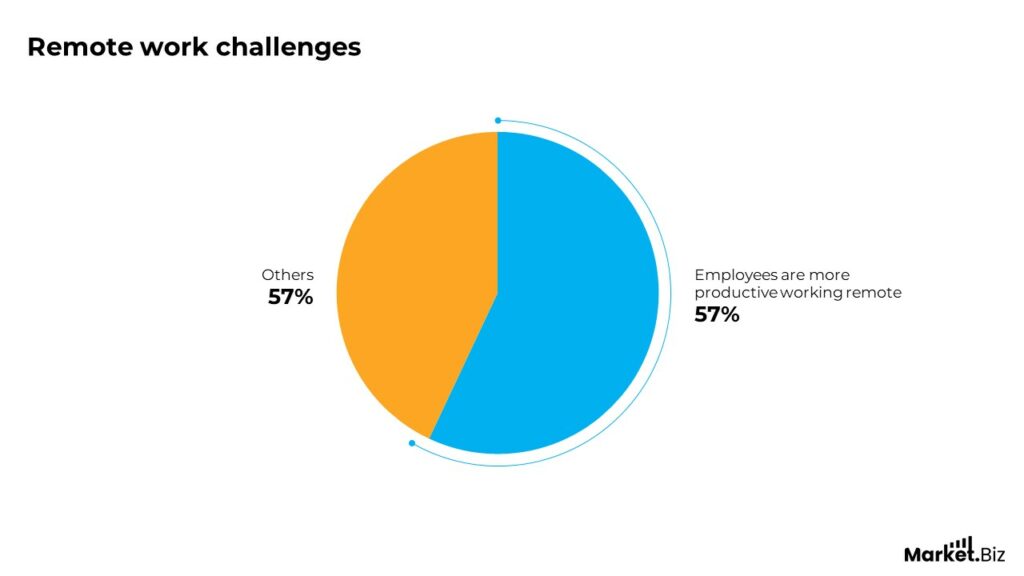
- Remote workers are 47% more productive than in-office employees.
- Women make up 61% of remote workers, driven by flexible work options.
- 80% of tech employees and 52% in professional services work remotely.
- Remote workers save 54 minutes daily by eliminating commuting.
- Businesses save $11,000 annually per employee working remotely part-time, and 35% are reducing office space.
- 54% of remote workers report lower stress levels compared to office workers.
- 74% of remote workers are more likely to stay in their jobs due to flexibility.
- Remote job postings rose 173% between 2020 and 2022, with further growth expected.
- 90% of remote workers are projected to use AI tools in 2025.
- 82% of business leaders believe remote work boosts employee satisfaction and retention.
(Source: coolest-gadgets, wp-content)
General Remote Work Statistics
- In 2024, 25% of the U.S. workforce is expected to be working remotely full-time, up from 17% in 2021.
- As of 2024, 40% of the global workforce works remotely at least part-time.
- 73% of employees in the U.S. prefer a hybrid work model, where they split time between office and remote work.
- Businesses can save an average of $11,000 annually for each employee who works remotely half-time.
- Remote workers reported being 47% more productive compared to their in-office counterparts in 2020.
- 74% of remote workers stated that they are more likely to stay at their current job due to the flexibility of remote work.
- 61% of remote workers are women, reflecting the growing appeal of flexible work options.
- Over 85% of remote workers rely on collaboration tools like Zoom and Slack to stay connected with their teams.
- In 2024, there are 18.1 million digital nomads in the U.S., highlighting the increase in mobile remote work.
- 54% of remote workers report feeling less stressed than their office-based counterparts.
- As remote work becomes more common, 35% of companies are reducing their office space requirements.
- 85% of remote workers say that remote work improves their work-life balance.
- 30% of employees in the UK work remotely at least once a week, with similar rates in the Netherlands and Germany.
- Remote job postings increased by 173% between 2020 and 2022.
- In 2025, approximately 32.6 million Americans, or 22% of the workforce, will be working remotely full-time.
(Source: Buttercms)
Remote Work by Industry
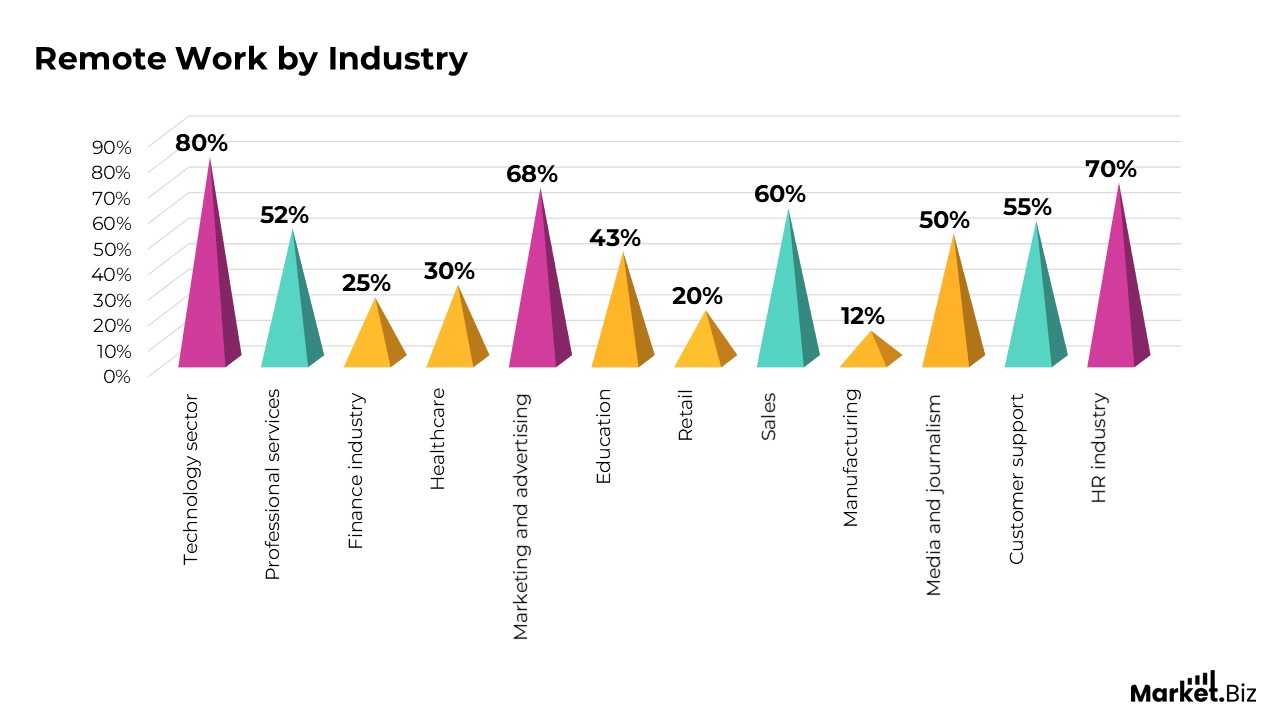
The technology sector leads remote work adoption, with 80% of tech employees working remotely at least part-time in 2024.
- About 52% of employees in professional services, such as consulting and law, work remotely, thanks to the nature of their work being easily digitized.
- The finance industry has seen a slower adoption of remote work, with only 25% of financial services employees working remotely full-time as of 2024.
- While clinical roles cannot be remote, telemedicine has expanded remote work in healthcare, with around 30% of healthcare professionals now working remotely in administrative and support roles.
- 68% of marketing and advertising professionals work remotely, driven by the need for creative collaboration tools and digital platforms.
- Remote learning and administrative work in education have surged, with 43% of educators and administrators working remotely in 2024.
- Retail workers in administrative and corporate roles have increasingly moved to remote positions, with 20% of retail employees working remotely, mainly in support and management functions.
- Remote work in sales roles is widespread, with 60% of sales professionals working remotely, particularly in B2B and SaaS industries.
- Remote work adoption in manufacturing is limited to roles such as design, supply chain management, and customer service, with only 12% of manufacturing employees working remotely.
- Remote work in media and journalism has increased, with over 50% of media professionals, including writers and editors, working from home post-pandemic.
- Over 55% of customer support roles are remote, especially in industries like software, e-commerce, and telecom, where most interactions are handled via chat, email, or phone.
- The HR industry has embraced remote work, with 70% of HR professionals now working remotely, as recruitment, on-boarding, and employee relations can be effectively managed online.
Remote Work Benefits for Employers
- Employers can save up to $11,000 per year per remote employee by reducing overhead costs like office space and utilities.
- Remote work leads to higher employee retention, with 74% of remote workers reporting they are more likely to stay at their current job due to flexible working options.
- By offering remote work, companies can tap into a larger talent pool, with 32% of job seekers specifically looking for remote opportunities.
- Remote work has been shown to increase productivity, with remote employees being 47% more productive than their in-office counterparts.
- With remote work, businesses can reduce absenteeism, as employees have more flexibility to manage personal matters while staying on top of work.
- Remote work supports business continuity during disruptions, such as natural disasters or public health emergencies, by enabling employees to continue working from home.
- Companies can scale more easily, as remote work eliminates the need for additional office space, reducing costs associated with expansion.
- Remote work promotes a more diverse workforce, with 66% of companies reporting they have more diverse teams when they offer flexible work options.
- Offering remote work can improve employee satisfaction, with 85% of remote workers saying it positively impacts their work-life balance.
- With remote work, employers can reduce commuting-related costs, including travel stipends and time off, which can result in a more efficient and cost-effective workforce.
Remote Work Benefits for Employees
- Remote workers report a 54% decrease in stress levels compared to their in-office counterparts, contributing to a better work-life balance.
- 85% of remote workers say that working from home improves their work-life balance, giving them more flexibility to manage personal and professional commitments.
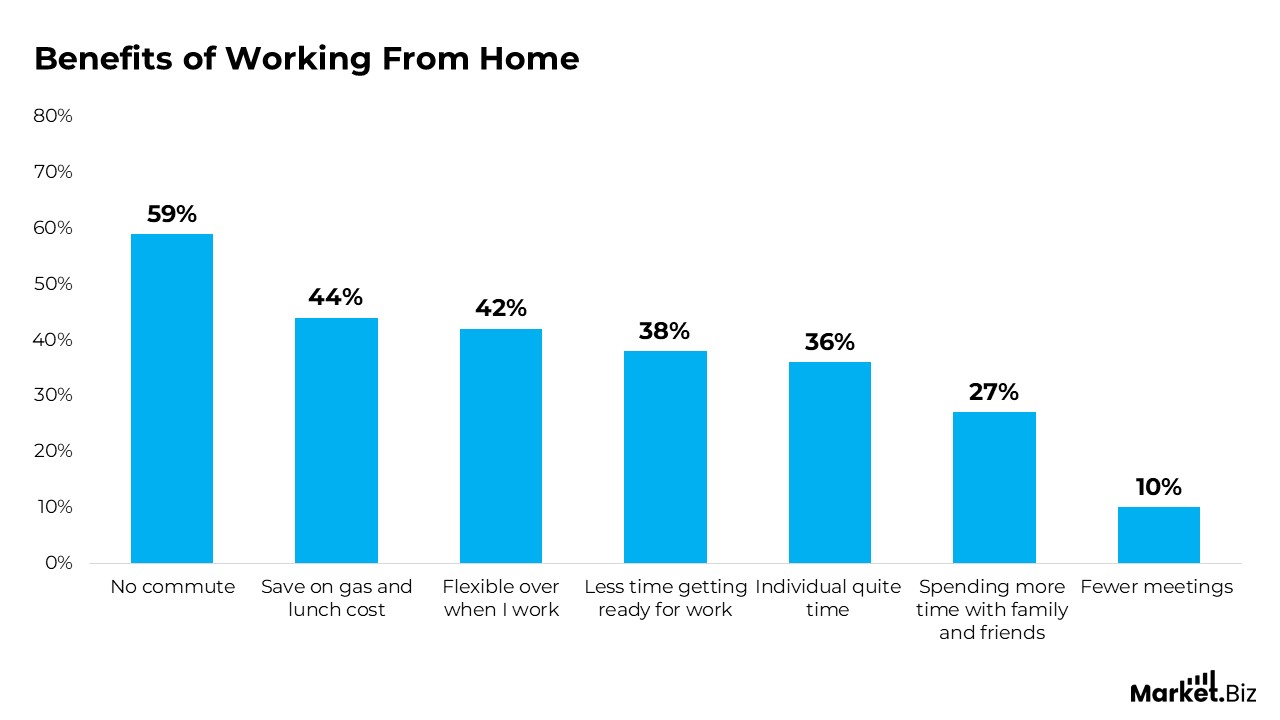
- Remote work eliminates commuting time, with employees saving an average of 54 minutes per day, allowing for more personal or productive time.
- Employees who work remotely are 47% more productive, as they experience fewer distractions and can create a customized work environment.
- 60% of remote workers report being able to spend more time with their family, which is one of the top reasons they prefer remote work.
- Remote work allows employees to work from anywhere, providing more opportunities for travel or relocation without disrupting their careers.
- 74% of remote workers report higher job satisfaction due to the flexibility and autonomy that remote work offers.
- 68% of remote workers state they are able to maintain a healthier lifestyle, thanks to the flexibility to exercise or prepare healthier meals.
- Employees working remotely often experience greater job security, as companies may value the efficiency and cost-saving benefits that remote work provides.
- Remote workers have the opportunity to work in a more personalized environment, with control over factors like lighting, temperature, and noise, which can lead to higher comfort and focus.
- Remote work can offer employees more career opportunities, as they are no longer limited to jobs within commuting distance.
- 76% of remote workers report that they feel trusted by their employer, fostering a greater sense of responsibility, ownership, and job satisfaction.
(Source: Backlinko)
Challenges of Remote Work
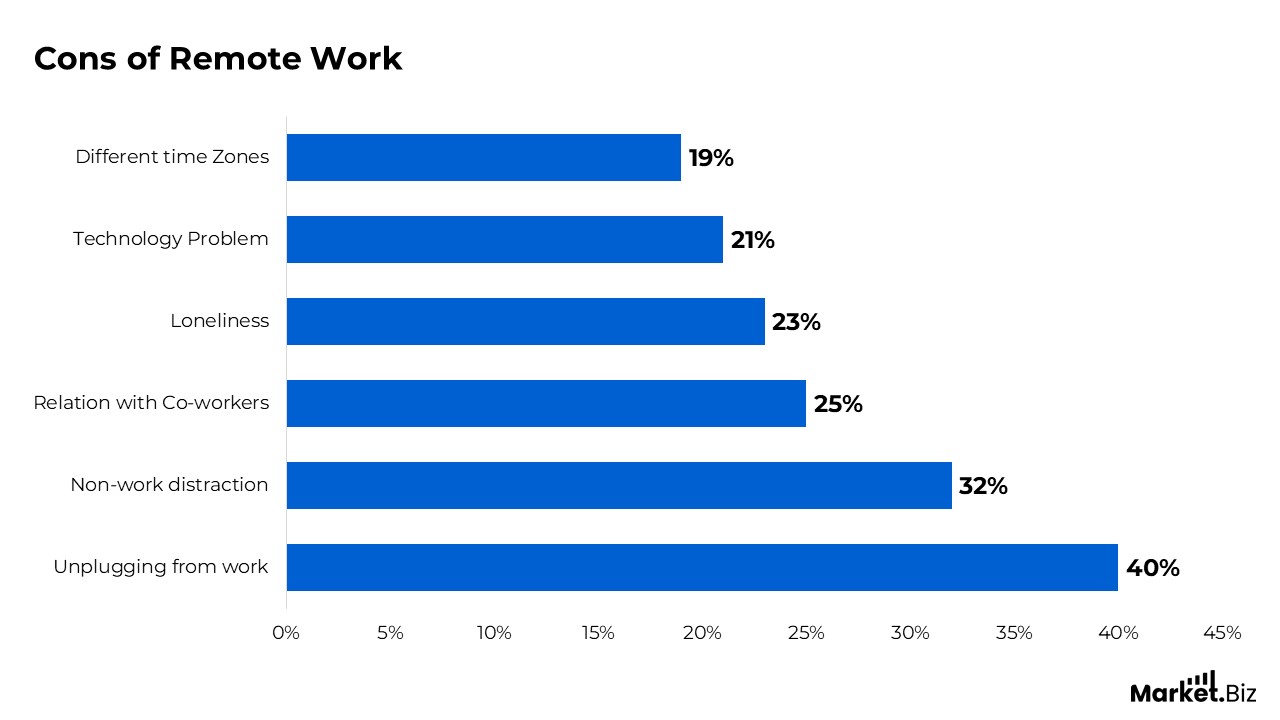
- About 20% of remote workers report feeling isolated, which can negatively impact their mental health and reduce overall job satisfaction.
- Maintaining work-life balance proves challenging for approximately 40% of remote workers, as the lines between personal and professional life often blur.
- Around 30% of remote workers struggle with communication, as remote work can lead to misunderstandings and a lack of face-to-face interaction.
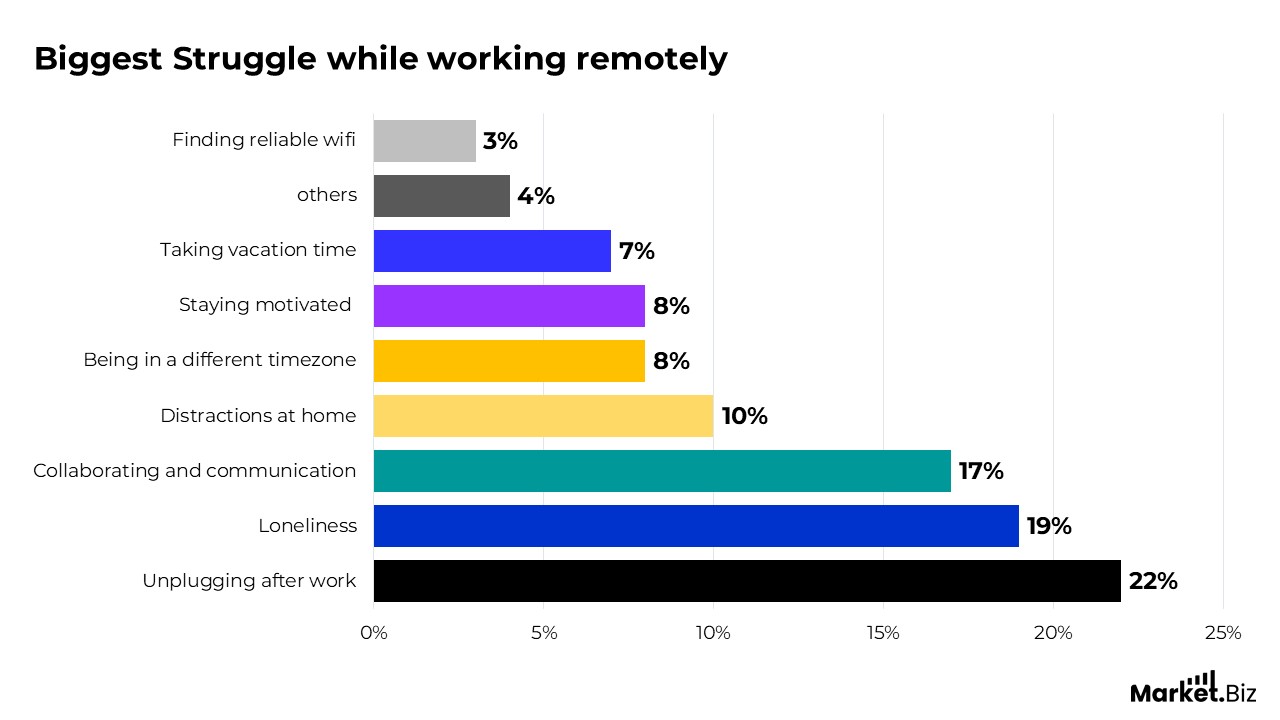
- Loneliness is a significant issue for 19% of remote workers, who feel disconnected from their teams and isolated in their work environment.
- Approximately 25% of remote employees experience burnout, as the lack of structured office hours often leads to overwork and difficulty disconnecting.
- Around 15% of remote workers face challenges related to access to reliable technology and internet, which can hinder productivity and cause frustration.
- For about 32% of remote workers, distractions at home—such as family, pets, and household chores—interfere with their ability to focus on work.
Moreover
- About 22% of remote workers find it difficult to stay motivated without the direct oversight and structure typically provided in an office setting.
- Time zone differences and communication gaps make effective collaboration difficult for approximately 18% of remote employees.
- Missing the social aspects of work is a concern for 28% of remote workers, who feel disconnected from their company culture.
- Approximately 35% of remote employees feel it is harder to advance in their careers, as they lack in-person networking and mentorship opportunities.
- Around 12% of remote workers face issues with maintaining a proper workspace, such as inadequate home office setups or lack of privacy.
- Managing personal and professional tasks is a struggle for 30% of remote employees, who find it challenging to stay organized while working from home.
- About 16% of remote workers feel unsupported by their employers, particularly when it comes to mental health resources and remote training.
(Source: Notta)
Remote Work Demographics
By Age Group
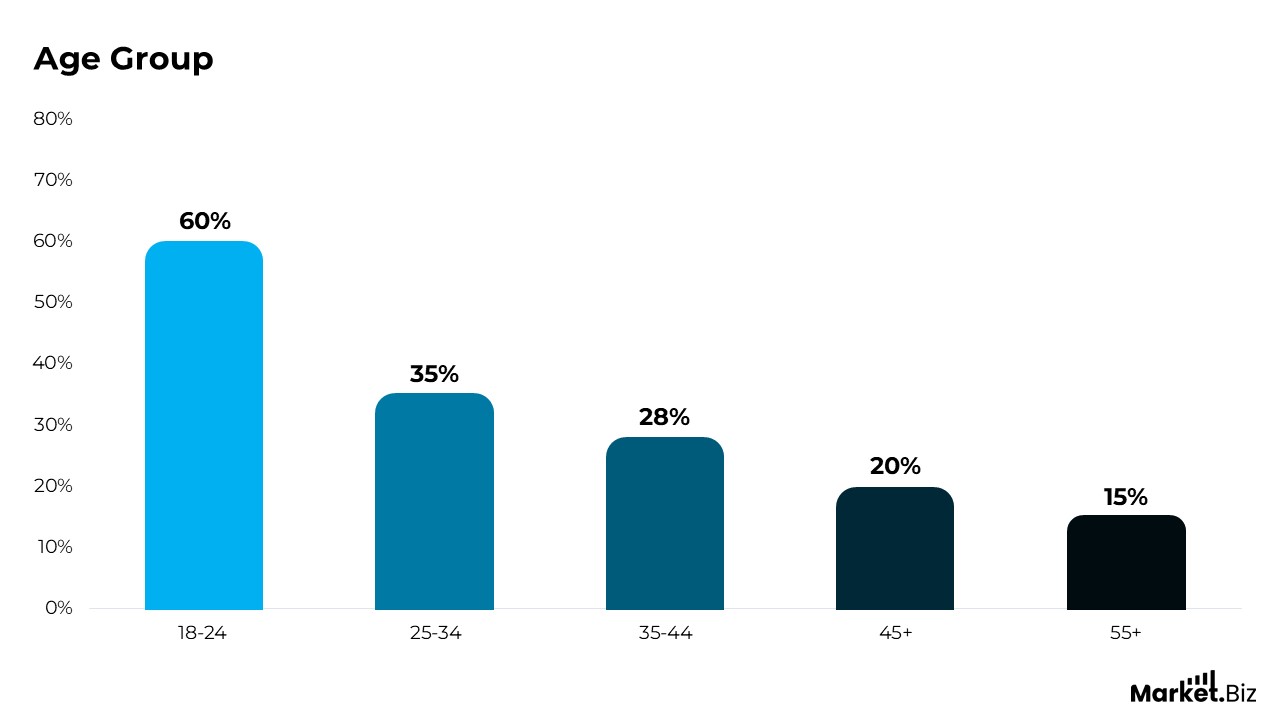
- Among remote workers, 35% are aged between 25 and 34, making it the most common age group for remote work in 2024.
- The 35-44 age group follows closely, with 28% of remote workers falling into this bracket.
- 60% of employees aged 18-24 have expressed interest in remote work, though fewer have transitioned to fully remote roles.
- Remote work adoption drops among older age groups, with only 15% of employees aged 55 and above working remotely full-time.
- Millennials (aged 25-40) are the largest group working remotely, accounting for over 50% of remote workers in 2024.
- 20% of remote workers are aged 45 and above, with many in this group preferring hybrid or part-time remote arrangements.
- 30% of remote employees between 25-44 report they are more productive while working remotely compared to in-office.
- Gen Z, those aged 18-24, is increasingly entering remote work, with 18% of this demographic already working remotely full-time.
- The shift towards remote work is highest in the 25-34 age range, where job flexibility is a key deciding factor for career choices.
By Gender and Education
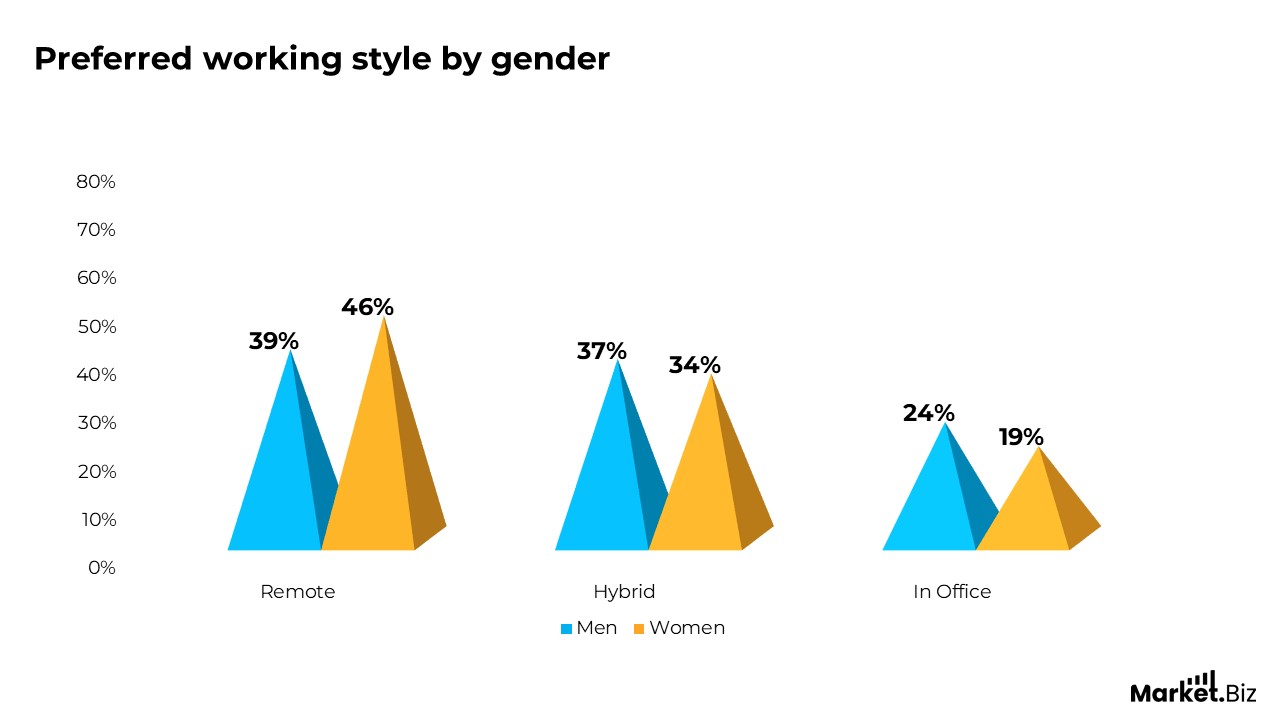
- Women represent 61% of the remote workforce, with flexible work options particularly attractive to mothers and caregivers.
- 72% of remote jobs are filled by women in industries like marketing, customer service, and education, where remote roles are common.
- 54% of men report preferring remote work, although they make up a slightly smaller portion of the remote workforce compared to women.
- Remote work adoption is higher among college-educated individuals, with 60% of those with a bachelor’s degree or higher working remotely.
- 40% of remote workers hold advanced degrees (master’s, Ph.D.), showing a correlation between higher education and remote work opportunities.
- 30% of women working remotely report improved job satisfaction due to a better work-life balance and flexibility.
- Remote work is increasingly accessible to those with higher education, with 50% of remote employees having a degree in specialized fields like technology or business.
- 68% of remote employees report their educational background has helped them secure a remote position, particularly in tech and creative fields.
- People with no college education make up about 18% of the remote workforce, typically in roles such as customer support or sales, where experience can be more important than formal education.
(Source: Notta)
Technology’s Role in Remote Work
- Over 80% of remote workers rely on communication tools like Slack and Zoom for daily interaction with teams, highlighting the importance of seamless technology in remote work.
- Cloud computing has been a game-changer for remote work, with 70% of remote employees using cloud-based software to store and share documents.
- The use of project management tools like Asana and Trello has increased by 50%, helping remote teams stay organized and meet deadlines.
- Virtual private networks (VPNs) are essential for remote work security, with 60% of remote workers using VPNs to protect sensitive information and maintain privacy.
- Video conferencing platforms have become the backbone of remote work, with Zoom usage increasing by 30% globally between 2020 and 2024.
- 65% of remote workers use collaboration platforms like Microsoft Teams for document co-editing, file sharing, and real-time communication.
- The demand for cybersecurity solutions has surged, with 55% of remote companies investing in advanced security measures to safeguard remote work environments.
Moreover
- 72% of remote workers report that the adoption of digital collaboration tools has improved their productivity, enabling them to work efficiently across locations.
- Automation tools have gained popularity in remote work environments, with 40% of remote employees using them to handle repetitive tasks, freeing up time for more strategic work.
- Remote work technology is essential for work-life balance, with 48% of remote employees saying tools like scheduling apps help them manage their time more effectively.
- 50% of remote teams now use cloud-based communication tools to conduct team meetings and maintain workflow continuity, regardless of physical location.
- Artificial intelligence (AI) is enhancing remote work by automating customer service, with 37% of remote employees in customer-facing roles using AI-powered catboats.
- High-speed internet has become a necessity for remote work, with 65% of remote employees saying they need fast and reliable internet to be productive.
- Remote work platforms like GitHub and Git Lab are crucial for software developers, enabling them to collaborate on coding projects remotely with a 45% increase in usage over the last three years.
- Mobile apps are also playing a significant role in remote work, with 55% of remote workers using smartphones for work-related tasks, especially for communication and quick updates.
Future of Remote Work
- In 2025, it’s expected that 32.6 million Americans will be working remotely full-time, making up 22% of the workforce.
- Hybrid work models are predicted to be the dominant arrangement, with 74% of global employees expecting a mix of in-office and remote work post-pandemic.
- Remote job postings have increased by 173% since 2020, and this trend is expected to continue as companies expand their remote work options.
- 70% of companies anticipate that remote work will remain a permanent option, with a focus on flexible work schedules and digital collaboration.
- By 2026, 50% of the global workforce will likely be working remotely at least part-time, driven by the continued evolution of digital tools and workplace technology.
- As technology advances, 90% of remote workers are expected to use AI-based tools for collaboration, data analysis, and task automation in 2025.
- 68% of workers say they are more productive when working remotely, and this will drive more companies to adopt flexible work policies in the future.
Moreover
- The shift to remote work is leading to increased job mobility, with 41% of remote workers stating they are more likely to switch jobs in search of better work-life balance.
- Remote work is contributing to the rise of digital nomads, with 45% of remote workers expressing interest in traveling while working, fuelling the digital nomad economy.
- 82% of business leaders agree that remote work improves employee satisfaction, making it a critical strategy for attracting and retaining top talent in the future.
- The use of virtual reality (VR) and augmented reality (AR) in remote work environments is expected to grow by 40% by 2027, offering immersive collaboration experiences.
- 58% of remote workers say they would consider relocating to more affordable or desirable locations, indicating that remote work could reshape global talent distribution.
- The remote workforce is expected to become more diverse, with 66% of companies reporting greater diversity in remote teams compared to in-office teams.
Conclusion
Remote work continues to reshape the global workforce, with a significant portion of workers already working remotely at least part-time. This trend is expected to accelerate, with millions of Americans projected to work remotely full-time in the coming years. Hybrid work models are gaining traction, with many employees preferring a blend of office and remote work.
Technology plays a crucial role in enabling this shift, with tools like Zoom, Slack, and AI-powered platforms enhancing productivity and collaboration. As remote work becomes a permanent fixture, businesses benefit from cost savings, improved employee retention, and access to a broader talent pool. With many remote workers reporting greater job satisfaction, it is clear that the future of work is becoming more flexible and technology-driven.
FAQ’s
As of 2024, 40% of the global workforce works remotely at least part-time. This number is expected to grow as remote work becomes increasingly popular and businesses adopt flexible work models.
35% of the U.S. workforce is working remotely full-time, with projections indicating that 32.6 million Americans, or 22% of the workforce, will be working remotely in 2025.
Remote workers have been shown to be 47% more productive than their in-office counterparts, due to fewer distractions and the ability to create personalized work environments.
The technology sector leads remote work adoption, with 80% of tech employees working remotely at least part-time, followed by professional services and marketing, where over 50% of workers are remote.
Remote work provides numerous benefits, including a 54% decrease in stress, improved work-life balance, and the ability to save an average of 54 minutes per day by eliminating commuting. Many employees also report higher job satisfaction and better health outcomes.