









Introduction
Job Satisfaction Statistics: Job satisfaction plays a key role in how engaged and productive employees are at work. Recent reports show that only about 20% of employees worldwide feel truly engaged.
Which points to a big opportunity for improvement. In the U.S.,53% of workers say they’re satisfied with their jobs, with factors like work-life balance, salary, and career growth influencing their feelings.
When companies focus on job satisfaction, they often see lower turnover rates, happier employees, and better performance overall. Understanding job satisfaction statistics is becoming important for businesses that want to meet the needs of their teams and boost workplace morale.
Key Takeaways
- Only 20% of global employees feel truly engaged at work, signaling a significant opportunity for businesses to improve employee satisfaction.
- In the U.S., 53% of workers report being satisfied with their jobs. With factors such as work-life balance, salary, and career growth playing a key role.
- Companies with higher job satisfaction levels experience 25-65% less turnover, highlighting the financial and operational benefits of prioritizing employee contentment.
- 74% of remote workers report higher job satisfaction, with work-life balance and flexibility contributing significantly to their contentment.
- Competitive salaries are a major factor in job satisfaction, with 60% of employees citing salary as a key contributor to their overall job satisfaction.
- 75% of employees emphasize the importance of work-life balance. With many reporting it as a crucial factor in their job satisfaction.
- 70% of employees feel that having a supportive manager enhances job satisfaction. Demonstrating the significance of good leadership in fostering workplace morale.
- 68% of remote workers report improved mental health, contributing to higher job satisfaction by reducing stress and promoting well-being.
- Job satisfaction varies across industries, with tech employees at 74%, healthcare at 64%, and retail at a low 50% satisfaction rate, influenced by pay, work conditions, and job flexibility.
- 60% of employees report that recognition from management significantly boosts their job satisfaction, underscoring the importance of acknowledging employee contributions.
General Job Satisfaction Statistics
- Only 20% of global employees are engaged at work, according to Gallup’s State of the Global Workplace report.
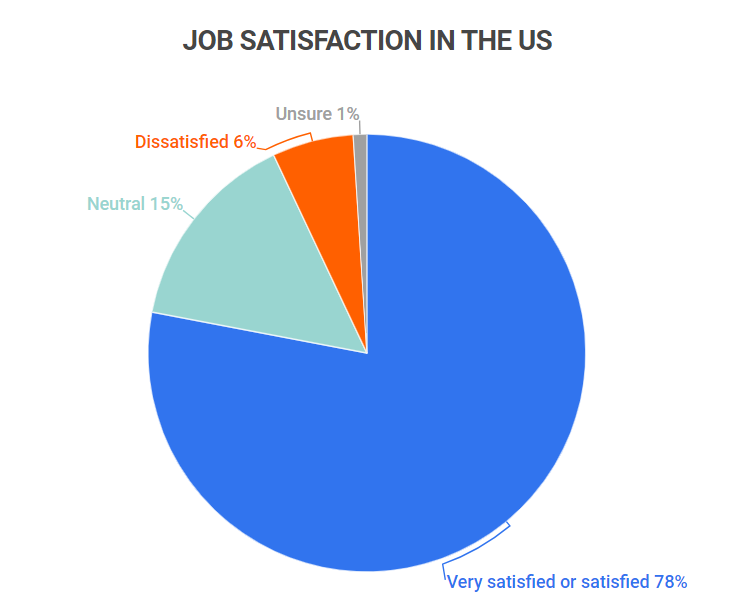
- In the U.S., 53% of workers reported being satisfied with their jobs in 2023.
- Companies with higher job satisfaction levels see 25-65% less turnover, as per SHRM’s 2023 Employee Benefits Survey.
- 75% of employees value work-life balance, with 47% citing it as a major factor in their job satisfaction.
- Around 60% of employees say a competitive salary is a key factor in job satisfaction.
- 72% of workers in the U.S. view job security as an essential factor contributing to their job satisfaction.
- 52% of employees are more likely to be satisfied with their job when they feel they have opportunities for career growth.
- 70% of employees report that having a supportive manager improves their job satisfaction.
- 65% of employees consider flexible work hours an important job satisfaction factor.
- Employees who feel connected to their company’s culture are 30% more likely to be satisfied with their job.
- 60% of employees say recognition from management increases their job satisfaction.
- 74% of employees report greater job satisfaction when offered the option to work remotely.
- 80% of employees say having control over their daily tasks significantly boosts job satisfaction.
- 61% of workers report that health and wellness programs influence their satisfaction levels.
- 67% of employees feel more satisfied when they work in a diverse and inclusive environment.
(Source: Cdn Prod)
How Remote Work Impacts Job Satisfaction Statistics
- 74% of remote workers report higher job satisfaction compared to those working in-office.
- 82% of remote workers say they have better work-life balance, leading to improved job satisfaction.
- 77% of remote employees claim they are more productive when working from home, which increases job satisfaction.
- 63% of remote workers report significant reductions in stress and time lost due to commuting, enhancing their overall job satisfaction.
- 87% of employees prefer flexible remote work options, with job satisfaction increasing when employers offer flexibility.
- 58% of remote workers feel more loyal to their company, boosting job satisfaction and retention.
- 68% of remote employees report improved mental health, contributing to greater job satisfaction.
- Remote work reduces absenteeism by up to 35%, which is linked to higher job satisfaction levels.
- 70% of remote workers feel they have more control over their work environment, increasing their job satisfaction.
- 59% of remote employees report fewer distractions, leading to increased focus and job satisfaction.
- 30% of remote workers are less likely to seek new employment due to job satisfaction compared to their in-office counterparts.
- Remote work helps reduce burnout, with 61% of employees saying it provides a better work-life balance and less emotional exhaustion.
- 66% of employees who can work remotely report a higher sense of job satisfaction than those without flexible arrangements.
- According to Buffer, 58% of remote workers say the availability of better technology and tools improves their job satisfaction.
- 72% of remote workers report that working from home allows them to spend more time with family, improving their overall satisfaction with their job.
Factors Influencing Job Satisfaction Statistics
- 60% of employees cite competitive pay as a key factor in their job satisfaction, with those earning higher salaries reporting better satisfaction levels.
- 75% of employees say work-life balance significantly impacts their job satisfaction, with flexible schedules being highly valued.
- 52% of workers report higher job satisfaction when they feel they have opportunities for career advancement and skill development.
- 68% of employees are more satisfied when they feel secure in their roles, with job insecurity leading to lower engagement and job satisfaction.
- 70% of employees report that having a supportive manager positively affects their job satisfaction, highlighting the importance of effective leadership.
- 65% of employees are more satisfied when they work in a company with a positive and inclusive culture, where they feel valued.
- 60% of employees say that regular recognition and appreciation from managers lead to improved job satisfaction and higher engagement.
- 78% of employees experience higher job satisfaction when they have control over their daily tasks and work environment.
- 72% of workers report that a comfortable and well-equipped workplace is a key driver of job satisfaction, affecting both their performance and well-being.
- 63% of employees report that positive relationships with colleagues contribute to their job satisfaction, leading to better teamwork and morale.
Consequences of Low Job Satisfaction Statistics
- Dissatisfied employees are 43% more likely to leave their jobs within a year, leading to increased recruitment and training costs.
- Employees who aren’t happy at work are 18% less productive, which can hurt a company’s overall performance.
- Employees with low job satisfaction are 37% more likely to miss work, creating disruptions in operations.
- 70% of disengaged employees are less motivated, which means they’re contributing less to the company’s success.
- Discontented employees can drag down the mood of the entire team, creating a toxic work environment.
- Employees who are unhappy with their jobs are more stressed, leading to a 20% rise in healthcare-related expenses for companies.
- 60% of unhappy employees provide worse customer service, which can hurt a company’s reputation and client satisfaction.
- Employees who dislike their jobs are 50% more likely to produce lower-quality work, which affects overall output.
- Dissatisfied employees are 68% more likely to experience burnout, leading to exhaustion and a lack of enthusiasm for their tasks.
- Companies with low job satisfaction often struggle with a poor public image, making it harder to attract top talent.
- Employees who are dissatisfied are 25% less likely to offer new ideas or solutions, limiting creativity and innovation within the company.
- Companies with widespread job dissatisfaction can lose up to 15% of their competitive advantage due to lower employee engagement.
Job Satisfaction Statistics in Different Industries
- Employees in the tech industry report a 74% job satisfaction rate, with strong emphasis on innovation and work flexibility as key factors.
- 64% of healthcare workers express high job satisfaction, particularly valuing patient impact and team support, despite the stress.
- Only 50% of retail employees report being satisfied with their jobs, with pay and long hours being common dissatisfaction factors.
- Job satisfaction in the finance sector stands at 70%, with competitive salaries and career progression opportunities being the top influencers.
- Teachers and educators report 63% job satisfaction, driven by meaningful work but affected by workload and compensation concerns.
- Manufacturing employees have a 58% job satisfaction rate, with job stability and safety being major satisfaction drivers.
- Job satisfaction in the hospitality industry is at 56%, with many employees citing long hours and low pay as sources of dissatisfaction.
- 65% of employees in construction report high job satisfaction, particularly appreciating job variety and the tangible results of their work.
- Public sector employees show 72% job satisfaction, often linked to job stability, benefits, and work-life balance.
- 78% of non-profit employees report high job satisfaction, primarily driven by a sense of purpose and community impact, despite lower pay.
- In the legal field, job satisfaction sits at 68%, with compensation and work-life balance playing major roles in employee happiness.
- Job satisfaction in real estate is at 65%, with flexible hours and income potential being key satisfaction factors, though stress levels can be high.
- Transportation workers report 60% job satisfaction, with safety and job security being top drivers, although irregular hours remain a challenge.
- Job satisfaction in marketing and advertising stands at 71%, with creative freedom and career advancement opportunities influencing satisfaction levels.
- 69% of employees in telecommunications report being satisfied with their jobs, with strong benefits and career growth options being key factors.
(Source: Flair)
Most Satisfying and Least Satisfying Jobs in the World
Most Satisfying Jobs
- Doctors, nurses, and other healthcare workers consistently rank high in job satisfaction, with 80% of nurses and 85% of doctors reporting satisfaction due to their ability to make a direct impact on patients’ lives.
- Education professionals report 71% job satisfaction, driven by the reward of shaping students’ futures and making a difference in their communities.
- Employees in non-profit organizations report 78% job satisfaction, largely because of the meaningful and impactful nature of their work, despite lower salaries.
- Designers, writers, and artists report 75% job satisfaction, with creative freedom and autonomy being major contributing factors.
- Tech professionals, especially those in software development, report 74% job satisfaction, driven by high salaries, career growth, and flexibility.
Least Satisfying Jobs
- Retail employees have some of the lowest satisfaction rates, with only 50% reporting satisfaction, often due to low pay, long hours, and limited advancement opportunities.
- Job satisfaction among food service employees is also low, with only 55% of workers feeling fulfilled in their roles, often due to long hours, low wages, and high stress levels.
- This role has a 57% satisfaction rate, with challenges including dealing with irate customers, lack of control, and routine work.
- Although job security is high, truck drivers report only 60% job satisfaction due to long hours on the road and isolation from family.
- Call center employees report some of the lowest job satisfaction levels, with only 53% feeling satisfied, citing monotonous tasks and stressful environments as major factors.
Countries with the highest job satisfaction
- Denmark ranks #1 in job satisfaction, with 82% of workers reporting high job contentment, driven by a strong work-life balance and a supportive welfare system.
- Finland boasts 79% job satisfaction, with its employees valuing flexible working hours and a healthy work environment, making it one of the happiest workforces globally.
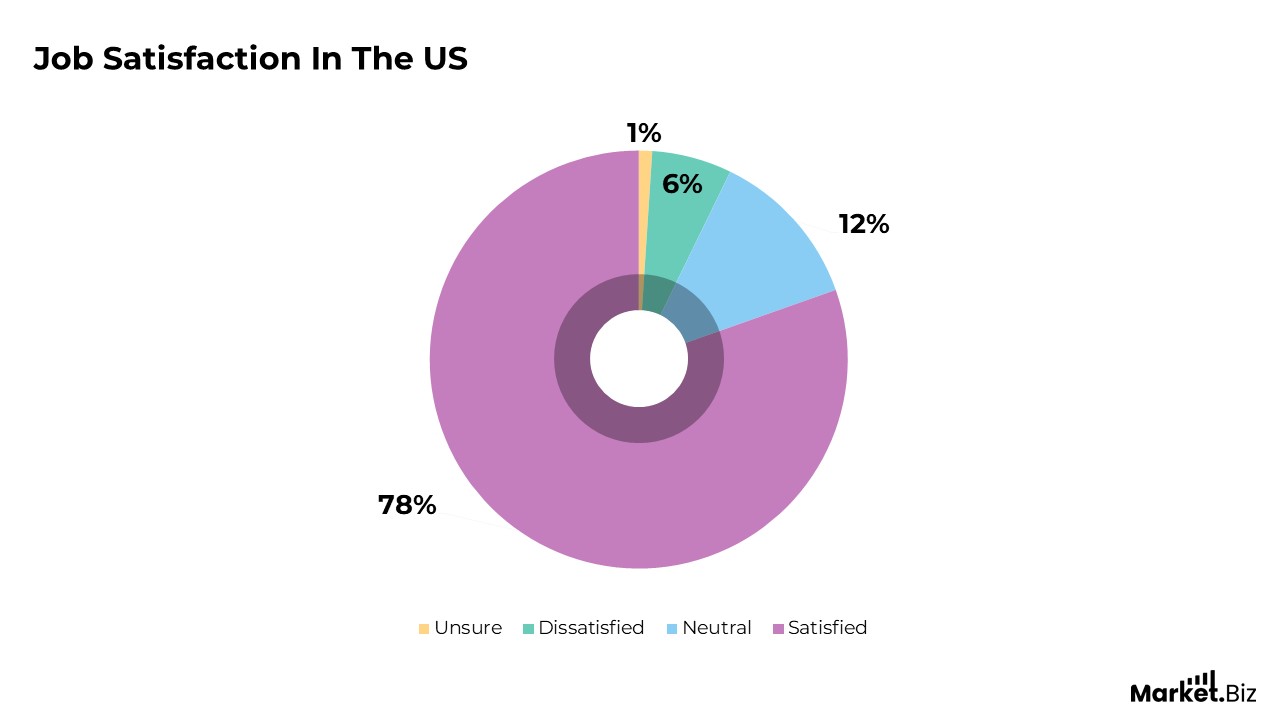
- In the U.S., 78% of employees report being satisfied with their jobs. With job security and career advancement opportunities being the top factors.
- In Sweden, 77% of employees report high job satisfaction, influenced by government benefits, equality in the workplace, and a culture of work-life balance.
- Switzerland ranks high in job satisfaction, with 75% of employees satisfied, particularly due to strong wages, job security, anda high quality of life.
- 74% of workers in Norway express high job satisfaction, fueled by a combination of high income, job stability, and a focus on employee well-being.
Moreover
- The Netherlands boasts a 72% job satisfaction rate, with employees valuing flexibility and part-time opportunities that allow for a healthy work-life balance.
- Australians enjoy 71% job satisfaction, with strong emphasis on fair pay, job security, and employee rights contributing to a positive work environment.
- 70% job satisfaction, Canadian workers appreciate a high standard of living, government-provided healthcare, and inclusive work policies.
- 69% of employees in New Zealand report high job satisfaction, largely attributed to work-life balance and a supportive work culture.
- Germany ranks at 68% job satisfaction, with workers valuing job stability, fair compensation, and opportunities for advancement.
- Icelandic employees report a job satisfaction rate of 67%, with high levels of trust in employers and a focus on family-friendly policies.
- Luxembourg has a job satisfaction rate of 65%, driven by a strong economy, high wages, and a good quality of life.
- Singapore shows 62% job satisfaction, fuelled by high salaries, efficient working conditions, and opportunities for personal growth.
- The UK reports a 60% job satisfaction rate, with employees citing job security, workplace culture, and career development as key satisfaction drivers.
Statistics on How Remuneration Impacts Job Satisfaction
- 60% of employees report that salary is the most significant factor influencing their job satisfaction, with competitive pay being linked to increased loyalty and productivity.
- 70% of employees say pay equity positively affects their job satisfaction, with a clear link between perceived fairness in pay and higher engagement levels.
- Employees who receive performance-based bonuses are 40% more satisfied with their jobs compared to those on fixed salaries, as they feel their effort is directly rewarded.
- 64% of employees state that a competitive base salary is a critical factor in their overall job satisfaction, as it reflects their skills and market value.
- 55% of employees report greater job satisfaction when offered comprehensive benefits (healthcare, retirement plans), with some seeing it as more important than salary alone.
- Companies with transparent salary structures see 30% higher employee satisfaction, as it reduces ambiguity and fosters trust between employees and management.
- Employees who are compensated for overtime work report 45% higher job satisfaction, as fair compensation for extra effort is highly valued.
Moreover
- 50% of employees who receive regular salary increases are more likely to stay in their current role, which boosts both job satisfaction and retention rates.
- 38% of employees who feel underpaid report lower job satisfaction, with dissatisfaction leading to higher turnover intentions.
- 62% of workers who receive annual bonuses report higher job satisfaction, as it serves as both recognition for past efforts and a motivation for future productivity.
- Employees in high-paying industries such as technology, finance, and healthcare report 15-20% higher job satisfaction compared to lower-paying sectors, largely due to better compensation packages.
- 47% of women report lower job satisfaction when they believe there is a gender pay gap in their workplace, demonstrating the significant impact of equitable pay on employee morale.
- Employees who consider their total compensation package (salary + benefits + bonuses) report 10% higher satisfaction than those focused on salary alone.
- 72% of employees with more than 10 years of experience report higher job satisfaction when their compensation reflects their expertise, signaling the value of experience in pay structures.
Job Satisfaction Affects Employee Retention
- 84% of employees who report high job satisfaction are less likely to leave their organization, as they feel valued and engaged.
- Employees who are satisfied with their jobs are 50% less likely to consider leaving. Highlighting the direct connection between satisfaction and retention.
- Companies with a positive workplace culture experience 20% lower turnover rates. As employees are more committed when they feel a sense of belonging.
- 65% of employees satisfied with their compensation package are 30% more likely to stay with their employer compared to those dissatisfied with pay.
- 69% of employees who believe there is room for career advancement in their current roles report higher job satisfaction and are 40% more likely to stay with the company.
- Employees with a good work-life balance are 22% more likely to stay at their current job. As it enhances both job satisfaction and overall well-being.
- Employees who feel their contributions are recognized are 41% more likely to stay at their job. As recognition is a key driver of satisfaction and engagement.
- Job satisfaction tied to a sense of security leads to 35% lower turnover rates. As employees are less likely to leave when they feel stable and secure in their roles.
- 72% of employees who are satisfied with their relationship with their direct supervisor are more likely to stay with the company, underlining the importance of good leadership.
- Engaged employees are 87% more likely to stay with their employer, as engagement boosts both satisfaction and retention by aligning employees with company goals.
Conclusion
Job satisfaction is essential for boosting employee productivity and retention. While only 53% of U.S. workers are satisfied with their jobs, key factors like competitive pay, work-life balance, career growth, and job security play a significant role in how employees feel. For instance, 74% of remote workers report greater satisfaction due to the flexibility remote work offers.
Companies that focus on improving these areas not only lower turnover rates but also create a more engaged and loyal workforce, leading to better overall performance and fewer absences. A supportive, positive work environment is key to maintaining high employee morale and satisfaction.
FAQs
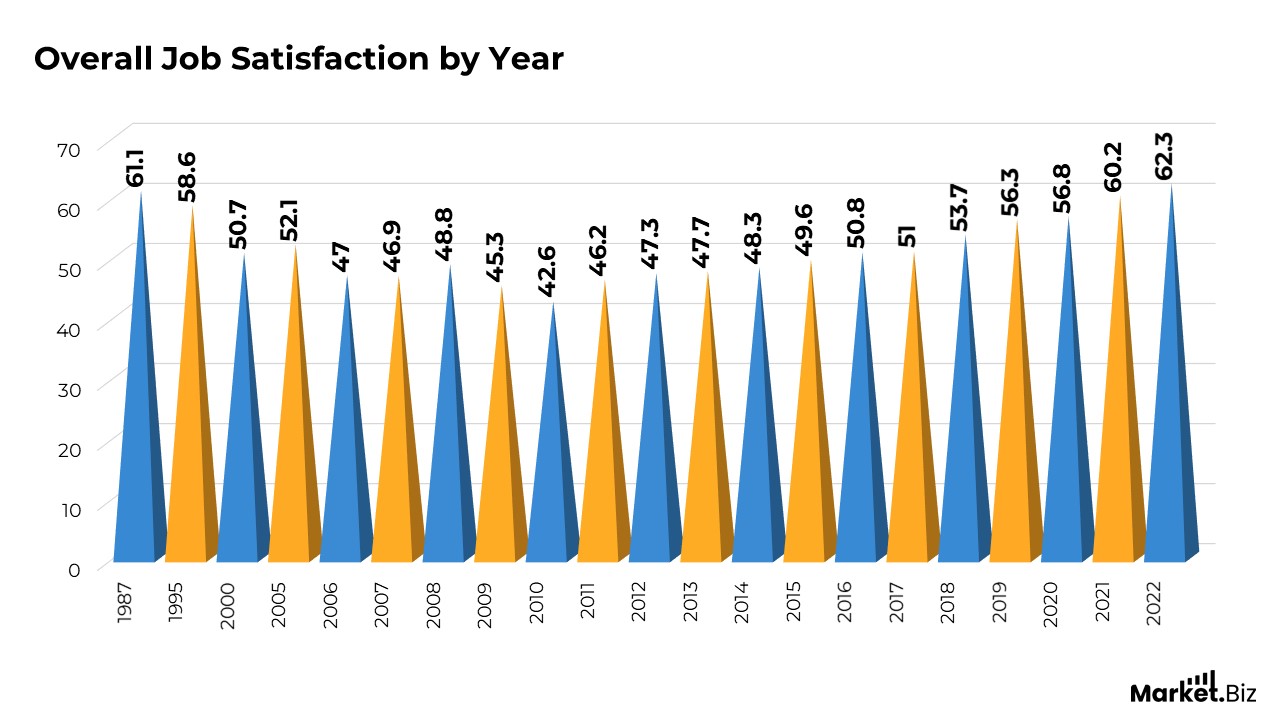
According to their most recent statistics, which were based on data from 2022, 62.3% of workers are generally happy.
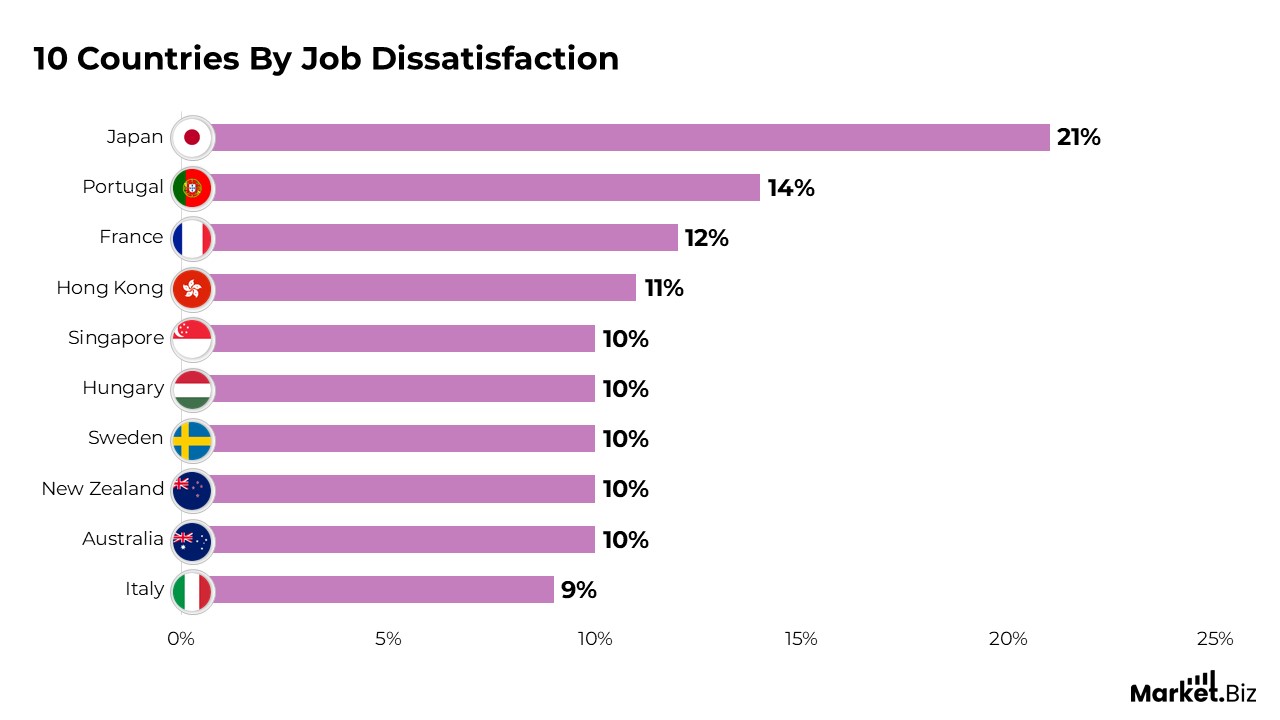
India leads the world in job happiness, whereas Japan has the least satisfied workforce. Possibly as a result of its reputation for having high standards for its workers.
Additionally, construction workers expressed the highest levels of satisfaction with their industry’s cultures and values (74.9) and pay (73.1). Accounting and taxation was the second most satisfied industry (71.92), and it also had the greatest career opportunities score (75.3).