









Introduction
Employee Layoff Statistics: Employee Layoff Statistics have been a critical indicator of economic health and business performance, especially in the wake of global challenges. In 2023, approximately 300,000 employees were laid off in the U.S. alone, with tech companies leading the trend, accounting for over 50% of all job cuts. This rise in layoffs reflects not only corporate restructuring but also economic uncertainty and shifting market demands.
Monitoring these statistics helps both businesses and policymakers understand labour market dynamics, workforce trends, and the overall impact of such layoffs on the economy. By analysing these figures, companies can strategize better to mitigate potential workforce disruptions and their consequences.
Editor’s Choice
- U.S. tech companies led layoffs, accounting for over 50% of the 300,000 total job cuts.
- 2024 saw a significant surge in layoffs, with U.S.-based companies announcing 761,358 job cuts, marking the highest in 15 years.
- The tech sector faced 95,667 layoffs in 2024, contributing heavily to the overall employment reductions.
- In the U.S., the retail sector experienced a sharp rise in layoffs, influenced by the continued growth of e-commerce.workforce trends
- 30% of layoffs in tech were voluntary, with employees opting for severance packages amid economic uncertainty.
- 25% of layoffs were caused by corporate restructuring and mergers, as companies streamlined their operations.
- Automation, AI, and robotics played a significant role in 25% of job losses, especially in manufacturing and IT sectors.
- The financial sector saw 25,000 job cuts in 2023, with many companies reducing staff in response to economic volatility.
- In 2024, U.S. tech companies experienced over 281,000 layoffs globally, with over half occurring in the U.S. alone.
General Employee Layoff Statistics
- In 2023, over 300,000 employees were laid off in the U.S., marking a significant increase from the previous year.
- The tech sector accounted for more than 50% of all layoffs in 2023, with companies like Meta, Amazon, and Microsoft leading the cuts.
- The highest number of layoffs in the U.S. occurred in the first quarter of 2023, with nearly 100,000 job losses.
- Global layoffs were also high, with companies around the world cutting approximately 650,000 jobs in 2023.
- In the U.S., the retail industry saw a sharp rise in layoffs, particularly in department stores and brick-and-mortar retailers, as e-commerce continues to grow.
- The financial sector experienced around 25,000 job cuts in 2023, due to restructuring and cost-cutting efforts.
- The manufacturing industry experienced a decline in layoffs, with a 10% decrease compared to previous years.
- In 2023, 67% of employees laid off were from mid-level positions, reflecting a focus on higher-level strategic restructuring.
- Employee layoffs in the U.S. surged by 22% in the second quarter of 2023, indicating rising economic uncertainty.
Moreover
- A major cause of layoffs in 2023 was automation, with many companies replacing manual labor with AI and robotics in industries like logistics and manufacturing.
- In 2022, the global tech industry experienced its largest wave of layoffs, with over 200,000 tech jobs lost.
- Research indicates that companies that announce large-scale layoffs often face a 20% decrease in employee morale and productivity.
- According to a 2023 survey, 45% of laid-off employees found new jobs within six months, indicating a relatively quick recovery in the job market.
- Remote working trends influenced layoffs in the office space sector, with a 15% decline in office leasing, prompting cost-cutting by real estate firms.
- In the U.S., 30% of layoffs in 2023 were voluntary, where employees opted for severance packages or early retirement due to uncertain work environments.
- Temporary and contract workers were disproportionately affected by layoffs in industries like hospitality and transportation, making up 40% of all job cuts.
- Start-ups accounted for around 20% of layoffs in the tech sector, as many faced financial challenges and the need to scale back operations.
- Public sector layoffs remained low in 2023, with government agencies opting for budget adjustments rather than workforce reductions.
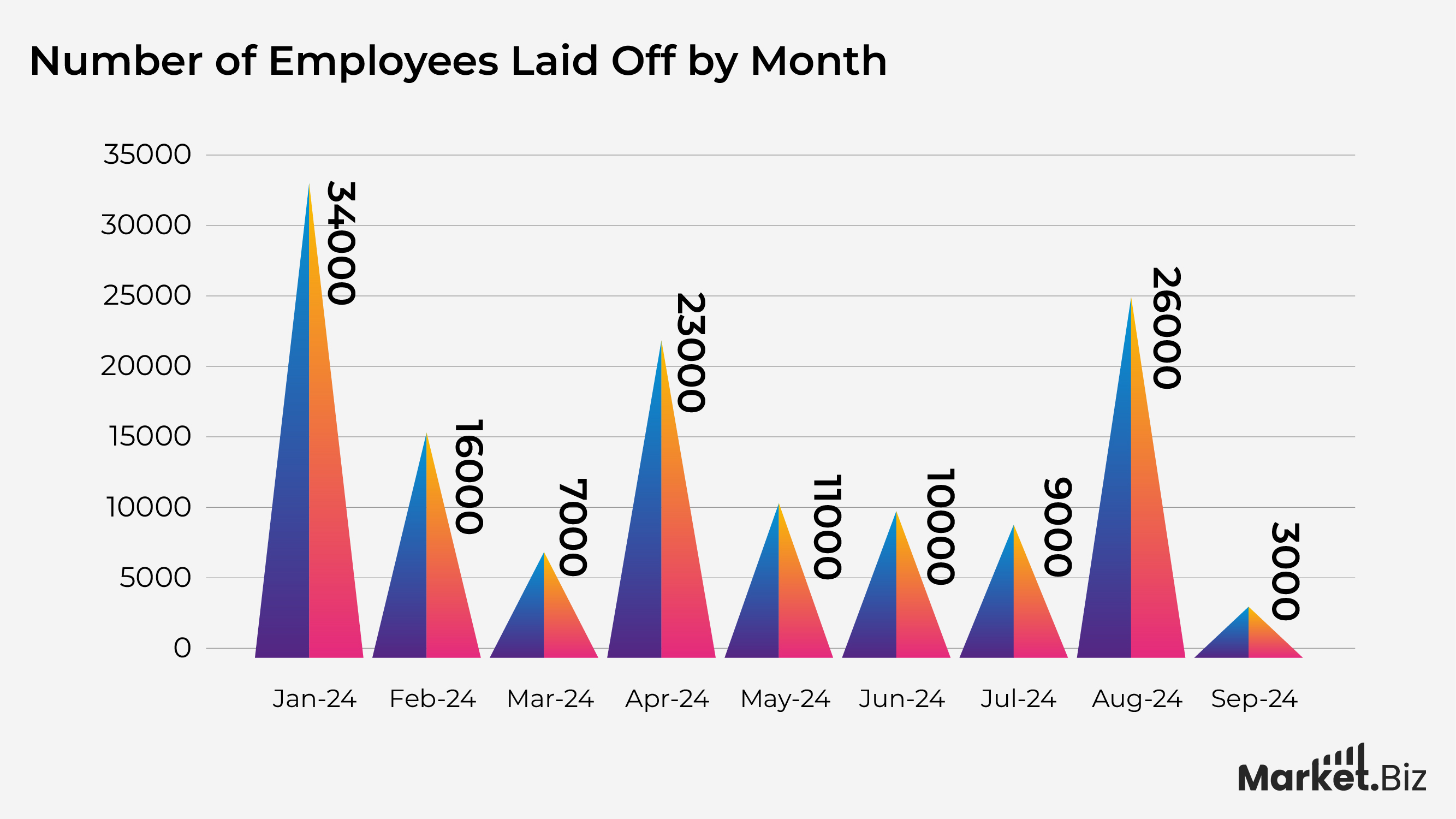
Number of Employees Laid Off by Month
(Source: Demandsage, WP-Content)
Recent Layoff Trends
- In 2023, tech companies led global layoffs, with over 150,000 job cuts across major firms like Meta, Amazon, and Google, driven by cost-cutting measures and economic uncertainty.
- The rise in remote work influenced a 20% reduction in office-related job positions, as many companies transitioned to hybrid or fully remote models.
- Layoffs in the financial sector saw a 15% increase in 2023, particularly due to market volatility and restructuring within banks and investment firms.
- The wave of layoffs in the tech industry peaked in the first quarter of 2023, with 100,000 job cuts in just three months, marking the highest quarterly figure in a decade.
- The healthcare industry experienced fewer layoffs, with a 7% decrease in job cuts in 2023, despite ongoing challenges from rising costs and staffing shortages.
- Automation continues to be a major factor in layoffs, with an estimated 25% of jobs in manufacturing being replaced by AI and robotic technologies over the past two years.
Further
- The retail sector saw significant layoffs in 2023, as e-commerce growth continued to displace traditional brick-and-mortar jobs, leading to a 12% decrease in in-store retail staff.
- In 2023, about 45% of layoffs were from companies in the startup phase, many of which struggled with securing funding and sustaining operations during a tightening economy.
- The gig economy has grown while traditional job layoffs have surged, with nearly 10% of all gig workers in the U.S. being displaced or facing reduced hours as companies scale back.
- Large multinational corporations (MNCs) accounted for around 60% of all global layoffs in 2023, as many focused on global restructuring and streamlining operations.
- Approximately 20% of layoffs in the tech sector were voluntary, with employees opting for severance or early retirement packages amid a volatile job market.
- Social media and tech industries also saw a rise in job cuts, as companies like Twitter and LinkedIn reduced their workforce by more than 10% in 2023, focusing on restructuring and adapting to shifting business models.
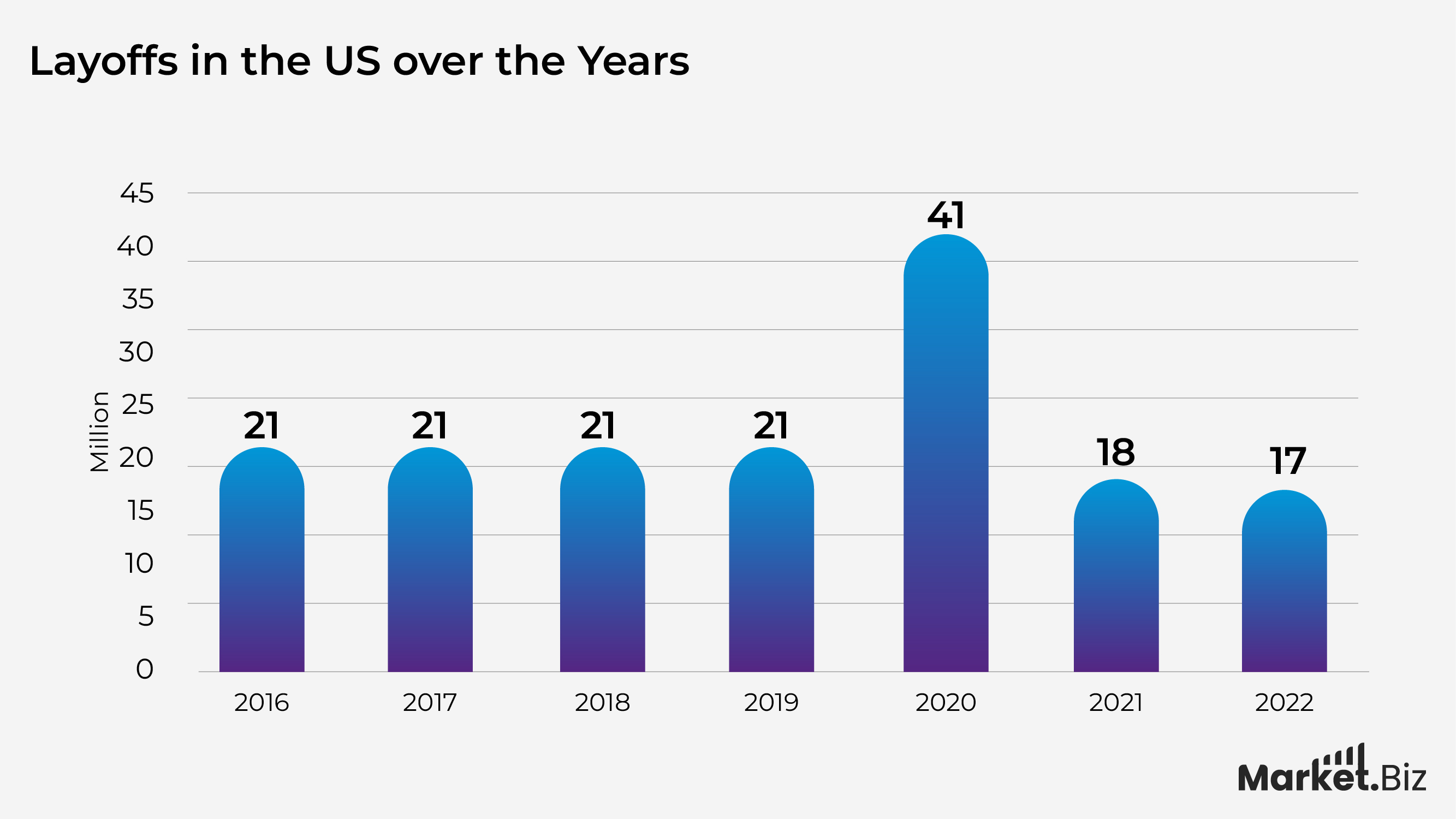
Layoffs in the US over the Years
(Source: Demandsage, WP-Content)
Industrial Layoff Statistics
- In 2024, U.S.-based employers announced 761,358 job cuts, marking the highest annual total in 15 years, according to Challenger, Gray & Christmas.
- The technology sector was notably affected, with at least 95,667 layoffs across 542 companies, averaging approximately 262 job cuts per day.
- Major companies such as Meta, IBM, Google, Microsoft, and Tesla implemented significant layoffs, citing the integration of artificial intelligence and strategic restructuring as contributing factors.
- In the manufacturing sector, companies like Boeing and ExxonMobil announced substantial job cuts, aiming to streamline operations and enhance efficiency.
- The retail industry also experienced workforce reductions, with retailers like Nike and Walmart adjusting their staffing levels in response to changing consumer behaviour’s and economic pressures.
- Financial institutions, including Goldman Sachs and Citi, reduced their workforce by focusing on cost optimization and adapting to evolving market conditions.
- In the transportation manufacturing industry, the Boeing strike in October 2024 significantly impacted employment figures, contributing to a rise in the unemployment rate from 4.05% to 4.14%.
- The warehouse construction sector saw a decline, with operators eliminating 11,000 jobs in September 2024 due to reduced demand and increased vacancy rates.
- Despite the high number of layoffs, the public sector added 40,000 jobs in October 2024, partially offsetting private sector job losses.
- Overall, the widespread nature of layoffs across various industries in 2024 underscores the dynamic and evolving challenges within the U.S. labour market.
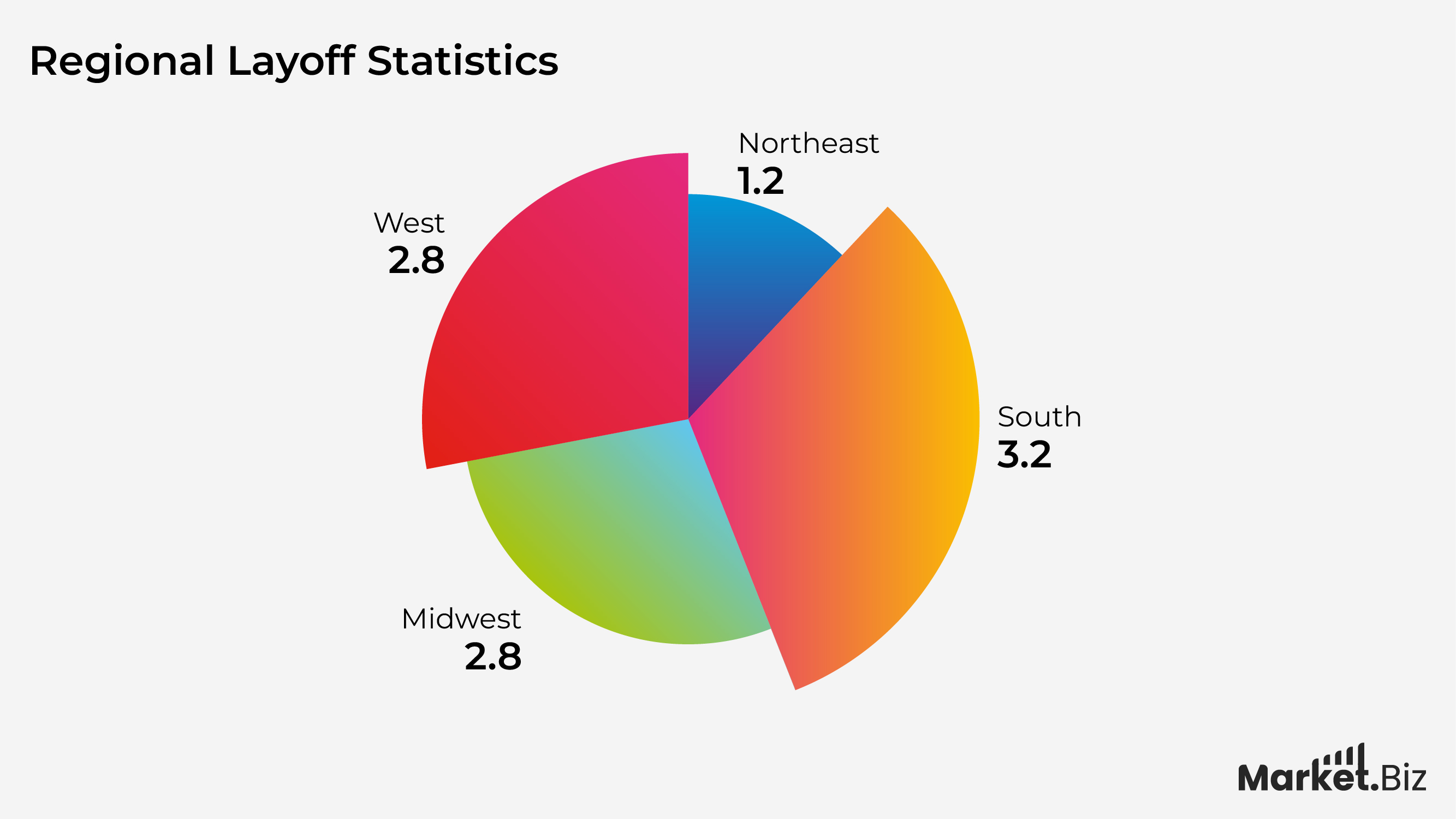
Regional Layoff Statistics
- In 2024, the Northeast U.S. region saw a significant rise in layoffs, with over 60,000 job cuts in sectors like tech and finance, mainly in New York and Boston.
- California experienced the highest number of layoffs in the tech industry, with nearly 90,000 workers losing their jobs, particularly in Silicon Valley, as companies adjusted to economic uncertainty and automation trends.
- The Midwest U.S. recorded approximately 50,000 layoffs in 2024, with Michigan, Ohio, and Illinois bearing the brunt due to manufacturing plant closures and automotive sector reductions.
- In Texas, layoffs surged by 12% in 2024, primarily within the oil and gas sector, as global energy shifts and declining fossil fuel demand impacted the region’s workforce.
- The Southeast U.S. saw layoffs in retail and hospitality sectors, with Florida and Georgia reporting over 25,000 job cuts, driven by changing consumer preferences and economic pressures.
Moreover
- In Southern California, around 35, 000 workers in the entertainment and media industries were laid off, particularly within film studios and tech-driven production companies adapting to digital transformations.
- The Pacific Northwest faced significant tech sector layoffs, with Seattle alone accounting for over 40,000 job losses, due to major restructuring at companies like Microsoft and Amazon.
- Florida’s tourism and hospitality industry was hit hard, with 10,000 job losses reported in 2024, reflecting a decline in travel spending following the post-pandemic recovery phase.
- The Great Plains region, including Kansas and Nebraska, experienced a moderate increase in industrial layoffs, with around 15,000 positions cut, especially in agriculture-related manufacturing jobs.
- The Mountain West (Colorado, Arizona) saw a rise in layoffs within the renewable energy and mining sectors, with approximately 8,000 workers laid off due to fluctuating energy prices and environmental policies.
- The Rust Belt, which includes parts of Pennsylvania, Ohio, and West Virginia, faced a 10% increase in manufacturing layoffs, as traditional industries struggled with automation and supply chain disruptions.
(Source: Demandsage)
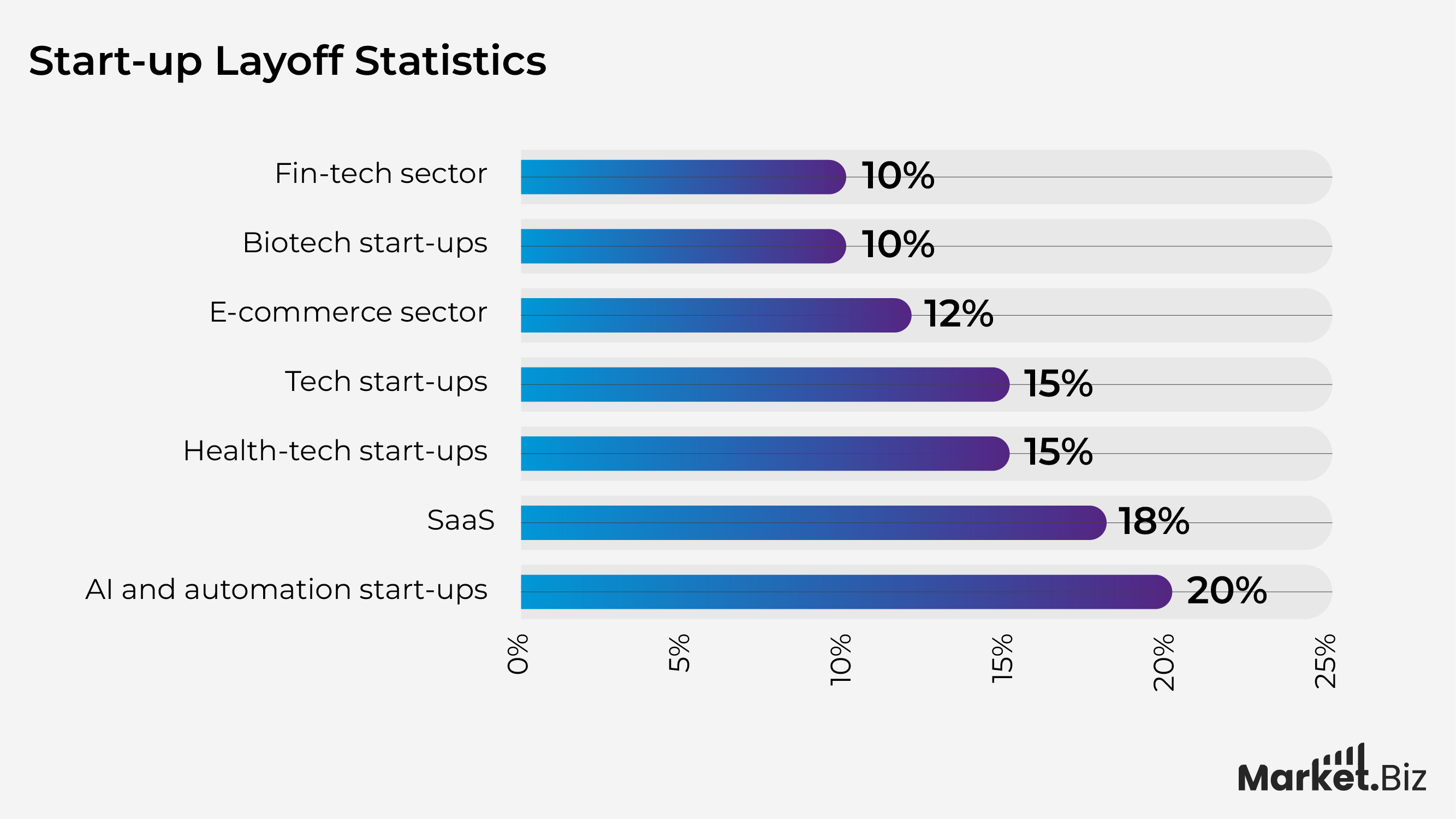
Start-up Layoff Statistics
- Start-ups in the U.S. experienced over 100,000 job cuts, a significant rise compared to previous years, primarily due to economic challenges and tightening venture capital funding.
- Tech start-ups accounted for 15% of all layoff announcements in 2024, with companies like Stripe, Plaid, and Gusto cutting thousands of jobs as they streamlined operations.
- The fin-tech sector saw a 10% increase in layoffs, as smaller start-ups struggled to secure additional funding and faced growing competition from established financial institutions.
- Health-tech start-ups experienced a 15% reduction in staff in 2024, with many companies scaling back their operations due to regulatory challenges and slower-than-expected market adoption.
- A report indicated that in 2024, AI and automation start-ups were responsible for 20% of the layoff activity, as automation technologies replaced manual roles within these growing companies.
- SaaS (Software-as-a-Service) companies made up 18% of all layoffs in start-ups, with many cutting staff in response to changing subscription models and pressure to achieve profitability.
- Start-ups in the e-commerce sector faced a 12% increase in layoffs in 2024, as customer spending slowed and competition from larger players intensified.
- Biotech start-ups reported a 10% decrease in workforce numbers in 2024, as many faced challenges in clinical trial outcomes and delays in product development timelines.
- Approximately 70% of start-up layoffs in 2024 occurred in companies with less than 50 employees, indicating that smaller start-ups were hit hardest by funding shortages and operational inefficiencies.
- Start-ups in the green tech and renewable energy space saw a 10% rise in layoffs, largely due to fluctuating government incentives and slower adoption of alternative energy solutions.
- The global start-up ecosystem also experienced significant layoffs, with over 50% of laid-off workers coming from countries like India, the UK, and Germany, reflecting the global tightening of venture capital investments.
Layoff Statistics Demographics
Age and Experience Demographics
- Workers aged 25-34 made up 30% of all layoffs, showing that younger employees are more vulnerable to job cuts in tech and service sectors.
- Employees aged 45 and above accounted for 25% of layoffs, as many older workers faced early retirement offers or were impacted by restructuring efforts in large corporations.
- Employees with 5-10 years of experience were the hardest hit in 2024, comprising 35% of all layoffs due to their positioning in middle-management roles, where companies often reduce headcount for cost-saving purposes.
- Entry-level workers (0-2 years of experience) faced a 20% increase in layoffs, as companies prioritized cost-saving strategies over hiring new talent, especially in the tech and retail sectors.
- Layoffs among workers aged 55+ saw a significant rise, contributing to 18% of all job cuts, with many companies opting for younger, less expensive alternatives.
- Mid-career employees (10-20 years of experience) experienced 22% of layoffs, with industries such as manufacturing and finance trimming their workforce for efficiency gains.
- Senior-level executives made up about 7% of layoffs, with major tech firms cutting back on high-salary positions as part of their cost-cutting strategies.
- The Generation X (born 1965-1980) demographic accounted for 20% of layoffs, as this group often falls between newer, younger hires and older workers with longer tenure.
- Among tech companies, millennial workers (ages 25-40) represented 60% of layoffs in 2024, reflecting the industry’s restructuring as it focuses on automation and reducing operational costs.
Gender and Ethnicity Demographics
- Men accounted for 58% of all layoffs in 2024, with higher representation in sectors like manufacturing and construction, traditionally male-dominated fields.
- Women made up 42% of layoffs, with retail and hospitality sectors showing the largest gender disparity in job cuts due to economic shifts in consumer behaviour.
- Among ethnic groups, White workers experienced 35% of layoffs, reflecting the continued dominance of this group in certain industries, like finance and technology.
- Black workers represented 12% of layoffs in 2024, a disproportionate percentage compared to their overall workforce participation, especially in tech and retail sectors.
- Hispanic workers made up 14% of layoffs in 2024, with a notable concentration in construction, agriculture, and hospitality industries.
- Asian workers experienced a relatively lower percentage of layoffs at 8%, with many being employed in tech roles that are less susceptible to mass layoffs.
- LGBTQ+ employees were disproportionately affected, accounting for 6% of layoffs, often due to their higher representation in hospitality, entertainment, and creative industries.
- In industries like tech, minority workers faced higher-than-average layoff rates, with Hispanic and Black employees being laid off 1.5 times more often than their White counterparts.
- Veterans were impacted by layoffs in 2024, with an estimated 4% of the total layoffs occurring among military veterans, particularly in manufacturing and logistics roles.
Tech Industry Layoff Statistics
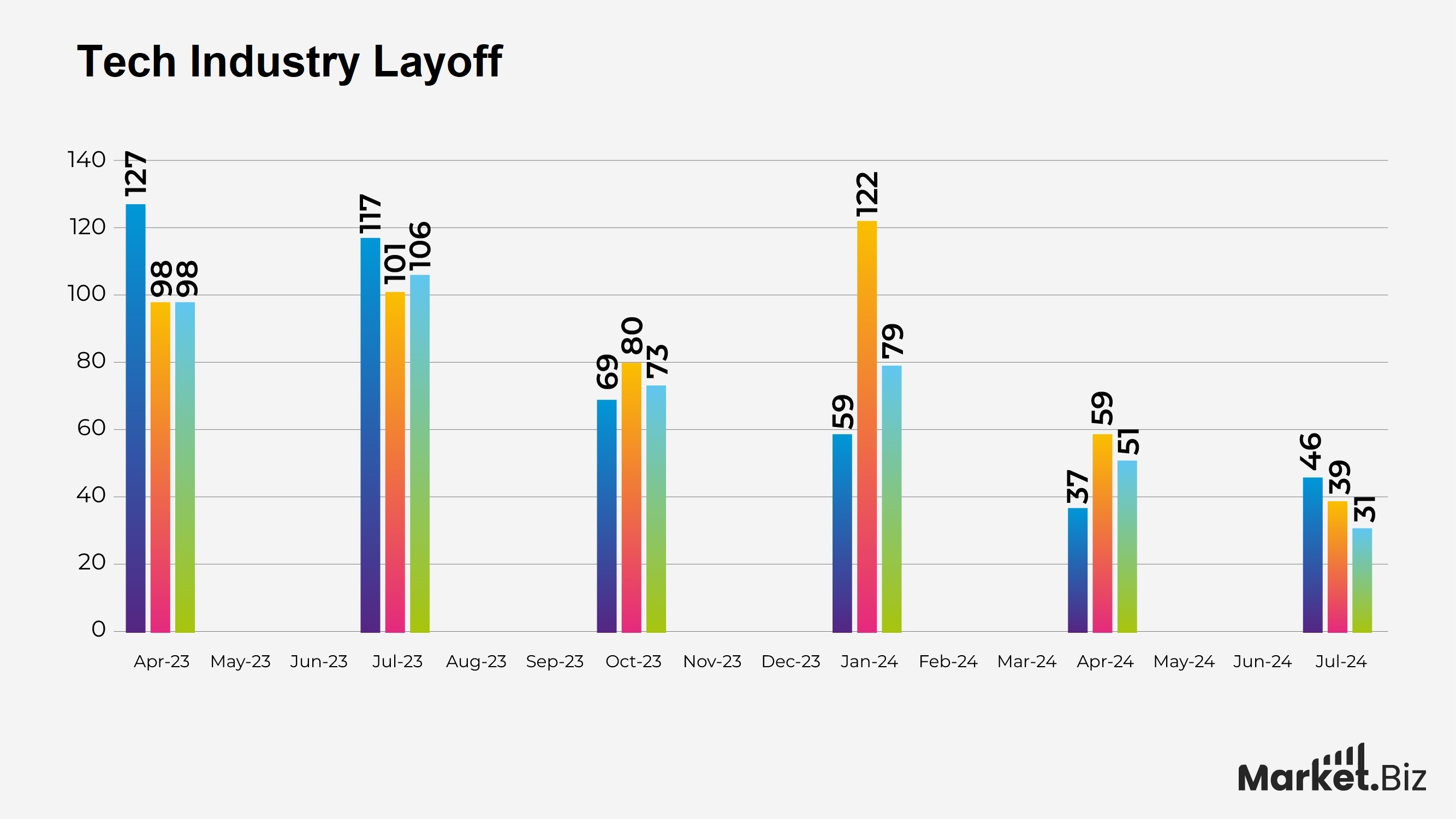
- In 2024, U.S.-based tech companies laid off approximately 95,667 workers, with the trend continuing into 2025.
- Globally, the tech sector experienced around 281,000 layoffs in 2024, with more than half of these cuts occurring within the United States.
- Over 29,500 tech industry layoffs were recorded, with U.S.-based companies accounting for approximately 20,000 of these cuts.
- As of February 2025 78 tech companies had laid off 19,487 employees, highlighting ongoing workforce reductions in the sector.
- Major Bay Area tech companies Autodesk and HP announced significant layoffs, with Autodesk cutting about 1,350 jobs and HP planning to eliminate an additional 1,000 to 2,000 positions.
- TikTok’s Irish operations faced potential redundancies affecting up to 300 roles, representing 10% of its Dublin workforce, as part of a broader restructuring plan.
- Despite these layoffs, the U.S. labour market remains relatively robust, with unemployment claims rising to 242,000, the highest level in three months, but still within a healthy range observed over the past three years
- The rise of AI-powered coding tools like ChatGPT has sparked discussions about their potential impact on programming jobs, with some estimates suggesting that up to 30% of such roles might be affected due to automation.
- Advances in AI are predicted to potentially automate the equivalent of 300 million full-time jobs globally, raising concerns about widespread job displacement across various sectors, including technology.
- Despite the significant layoffs, the IT job market grew by more than 11,000 positions in January 2025, according to a report by Janco, indicating a complex and evolving employment landscape within the tech industry.
- Overall, the tech industry continues to navigate challenges related to economic uncertainty, automation, and shifting market dynamics, leading to significant workforce adjustments both in the U.S. and globally.
(Source: Coolest-Gadgets)
Causes of Layoff Statistics
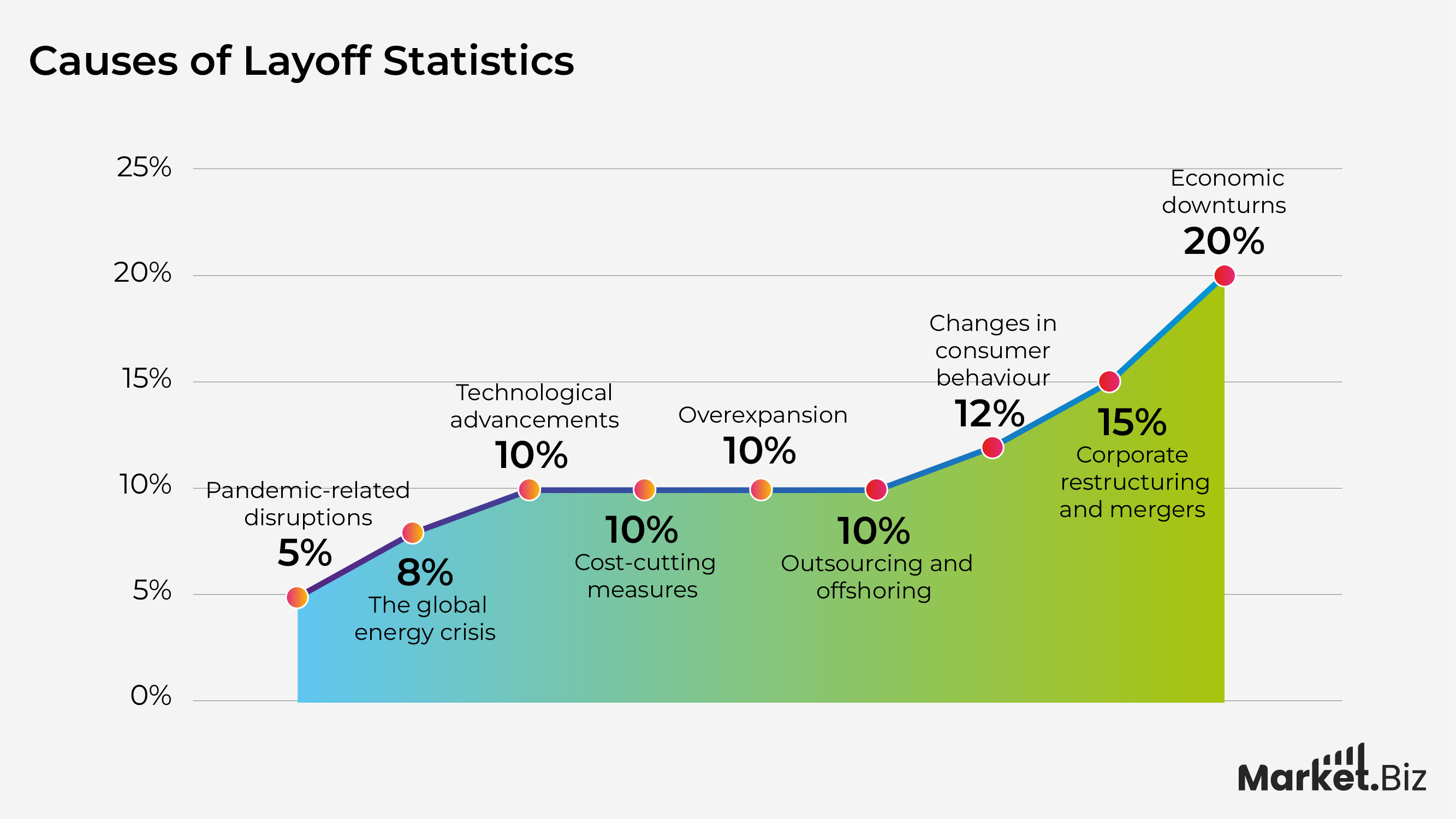
- Economic downturns were responsible for 20% of layoffs, with companies cutting back to reduce expenses during periods of slow growth or recession.
- Technological advancements, particularly automation and AI, led to a 10% increase in layoffs in the manufacturing and IT sectors in 2024, as businesses streamline operations.
- Corporate restructuring and mergers & acquisitions resulted in 15% of layoffs, as companies eliminate redundant positions to consolidate resources.
- Cost-cutting measures in response to rising inflation and supply chain disruptions were responsible for 10% of tech industry layoffs in 2024.
- Overexpansion led to a 10% rise in layoffs, as companies like Peloton and Meta faced the fallout of hiring too aggressively during the pandemic.
- Changes in consumer behaviour, such as reduced spending, led to 12% of layoffs in retail sectors, as businesses adjusted to lower demand for non-essential goods in 2024.
- The global energy crisis in 2024 contributed to 8% of layoffs in the energy sector, as companies like ExxonMobil scaled back operations due to price fluctuations.
- Outsourcing and offshoring saw a resurgence in 2024, accounting for 10% of layoffs in IT and customer service industries as companies moved jobs to lower-cost regions.
- Pandemic-related disruptions continued to affect 5% of layoffs in 2024, particularly in hospitality and travel sectors, as businesses slowly returned to pre-pandemic staffing levels.
Conclusion
The rise in layoffs across various sectors in recent years reflects significant economic and technological shifts. The tech industry, including major companies like Meta and Amazon, accounted for a substantial portion of these reductions. Automation, AI advancements, and corporate restructuring emerged as key drivers of layoffs, contributing to a large share of job cuts.
While tech start-ups and the retail sector were heavily impacted, the public sector and healthcare showed resilience. As businesses adapt to economic uncertainties and changing market demands, these layoffs highlight the evolving workforce landscape and emphasize the importance of strategic planning to mitigate disruptions.
FAQ’s
In December or January, layoffs are most likely to take place. On average, 12.6% of all layoffs occur in December, compared to 12.2% in January. August has the lowest percentage of layoffs at just 5.3%, and no other month has a higher percentage than 10%.
No, according to industry experts, a tech company’s cash-flow problems are unlikely to be resolved by a sale. This is particularly true given that the current downturn is resulting in fewer startup M&A deals.
Mass layoffs have occurred in the technology sector, which was once a growth engine. Layoffs have a profoundly personal cost in addition to a financial one. India experienced a wave of layoffs in several industries between 2023 and 2024, with the technology sector taking the brunt of this.