









Introduction
Job Market Trends and Employment Growth Statistics: The global job market is continuously evolving, influenced by economic shifts, technological advancements, and demographic changes. According to recent data, global employment is projected to grow by 3.5% annually through 2027, with sectors like healthcare, technology, and renewable energy leading the charge. The rise of automation and AI is reshaping traditional roles, creating new opportunities while phasing out certain jobs.
Additionally, remote work trends continue to surge, with 30% of the workforce expected to work remotely by 2027. These factors collectively impact employment patterns, requiring both workers and organizations to adapt in order to thrive in the changing landscape.
Editor’s Choice
- Global job market expected to grow 3.5% annually through 2027, driven by healthcare, tech, and renewable energy.
- Automation may displace 85 million jobs by 2030, but 97 million new tech-related roles will emerge.
- Healthcare sector to grow 16% by 2030, adding 2.6 million jobs.
- By 2027, 30% of the workforce is projected to work remotely.
- 54% of employers face difficulty filling roles, particularly in IT, healthcare, and engineering.
- U.S. gig economy grew 22% in five years, with freelancers expected to make up 50% of the workforce by 2030.
- Diversity-driven companies report 25% higher profitability.
- Cybersecurity jobs are growing at 31% annually, reflecting increasing security needs.
- Youth unemployment reached 13.5% globally in 2023.
- Renewable energy sector expected to add 85 million jobs by 2030.
- 70% of remote workers report better work-life balance.
- AI to create 97 million new jobs by 2030, especially in tech and cybersecurity.
General Statistics
- The global job market is expected to grow at a rate of 3.5% annually through 2027, driven by expanding sectors like healthcare and technology.
- Over 85 million jobs could be displaced by automation by 2030, but 97 million new roles are projected to emerge in tech-related industries.
- The healthcare industry is expected to grow by 16% from 2020 to 2030, adding 2.6 million jobs, the fastest-growing sector in the economy.
- By 2027, 30% of the workforce is projected to work remotely, continuing the trend accelerated by the COVID-19 pandemic.
- 54% of employers globally report difficulty filling open positions due to a lack of skilled workers, particularly in IT, healthcare, and engineering.
- The gig economy continues to rise, with 36% of the U.S. workforce engaged in freelance or contract work, up from 34% in 2020.
- Companies prioritizing diversity have 25% higher profitability, with increasing emphasis on inclusive hiring practices.
- The renewable energy sector is expected to add 85 million new jobs by 2030, driven by the global push for sustainable development.
- Unemployment among youth (ages 15-24) is significantly higher, with global youth unemployment rates reaching 13.5% in 2023.
Moreover
- AI adoption is anticipated to create 13 million jobs by 2030, particularly in data analysis, cybersecurity, and AI management fields.
- The demand for cybersecurity professionals is growing rapidly, with a projected 31% job growth from 2019 to 2029, driven by increasing cyber threats.
- The retail industry is shifting towards e-commerce, with online retail employment expected to grow by 14% between 2020 and 2030, while traditional retail jobs decline.
- Remote job postings have increased by 50% from 2019 to 2023, reflecting the lasting impact of the pandemic on work preferences.
- The manufacturing sector is witnessing a shift towards automation, with an expected 5% decline in factory jobs but a rise in automation-related roles.
- In 2025, the gig economy is expected to contribute $455 billion to the U.S. economy, demonstrating the sector’s growing economic influence.
- In the next decade, the demand for data analysts and data scientists will grow by 22%, as more companies seek to harness big data for decision-making.
- The senior care industry is seeing a 25% increase in job openings due to an aging population, with a particularly high demand for home health aides and nursing assistants.
- Employment in environmental sciences is projected to grow by 8% from 2020 to 2030, as businesses and governments prioritize sustainability initiatives.
Current Job Market Trends
- Remote work has increased by 159% since 2005, and by 2027, 30% of the global workforce is expected to work remotely on a regular basis.
- Automation and AI are predicted to displace 85 million jobs by 2030, but will also create 97 million new roles focused on AI, data science, and cybersecurity.
- The healthcare sector is projected to grow by 16% from 2020 to 2030, creating 2.6 million new jobs, largely driven by the aging population.
- In the U.S., 36% of the workforce participates in gig work, and the sector is expected to generate over $455 billion in 2025.
- Companies focusing on diversity and inclusion see a 25% higher likelihood of profitability, making diversity a key factor in recruitment strategies.
- Cybersecurity employment is forecasted to grow by 31% from 2019 to 2029, reflecting increasing concerns over data breaches and cyber threats.
- Global youth unemployment remains high, with 13.5% of individual’s aged 15-24 unemployed as of 2023, presenting challenges for entry-level job seekers.
- A global shortage of tech talent is evident, with 54% of employers struggling to fill roles in IT, data analysis, and software development.
- The green economy is booming, with 85 million new jobs expected in renewable energy and sustainability sectors by 2030 as nations focus on climate action.
- The freelance workforce in the U.S. has grown by 22% in the past five years, with more companies offering contract-based positions for flexibility.
- The manufacturing industry is undergoing a digital transformation, with automation reducing manual labour jobs but increasing demand for tech-savvy professionals.
- About 40% of workers are considering a career change post-pandemic, with many seeking roles in healthcare, technology, and remote-friendly industries.
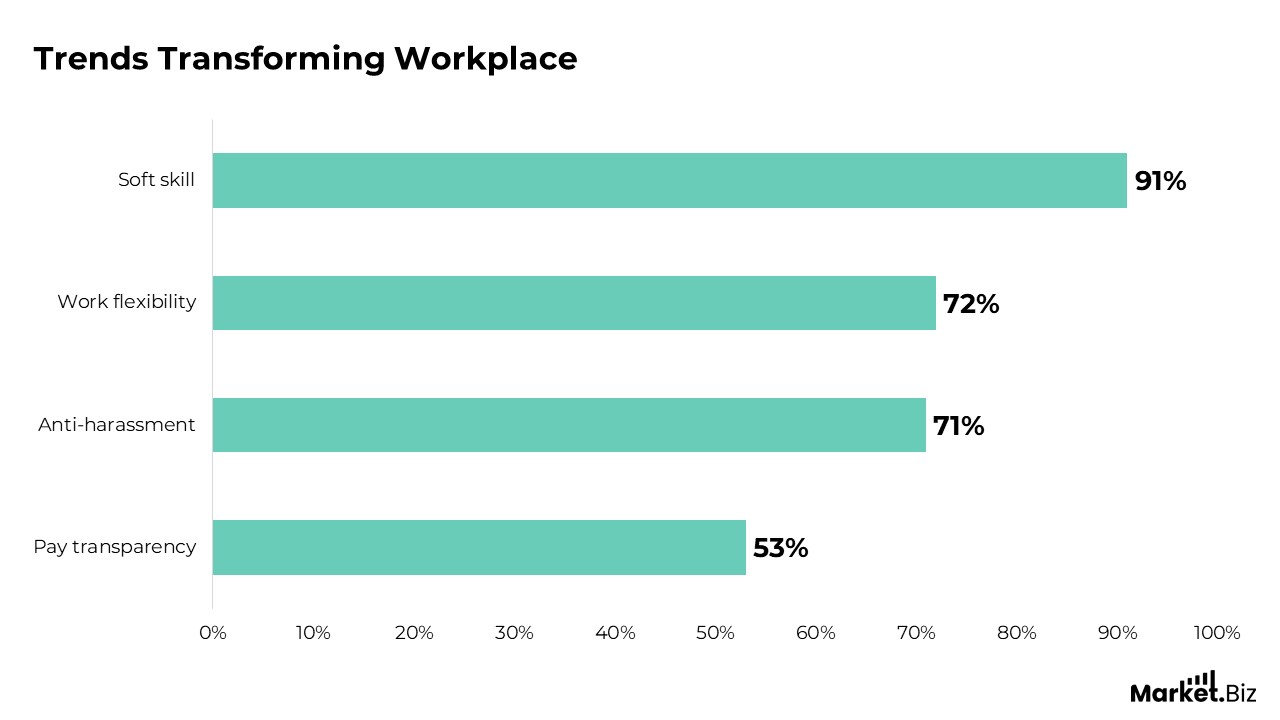
(Source: WeForum)
Globalization on Job Market Dynamics
- Globalization has led to a 25% increase in international job opportunities, particularly in tech and engineering sectors, as companies seek to expand their talent pool.
- The rise of global trade has contributed to 60% of job growth in export-driven sectors, as companies increasingly look for international markets to drive demand.
- Offshoring and outsourcing have shifted 22 million U.S. jobs abroad over the past two decades, particularly in manufacturing and customer service industries.
- Global mobility has increased, with over 260 million people living and working abroad in 2020, leading to more diverse talent pools and cultural exchange in the workforce.
- Digital platforms like LinkedIn have enhanced global recruitment, with 50% of job seekers now searching for international opportunities online.
- Remote work driven by globalization has led to a 300% increase in cross-border freelancing, allowing companies to hire talent without geographical limitations.
- The gig economy has seen a 15% growth in global freelance workers, as companies embrace flexible labour models and access international skill sets.
- Multinational corporations now represent 30% of global employment, illustrating how globalization fosters job creation in large, international organizations.
- Automation and globalization are transforming labour markets, with 75 million jobs at risk of displacement due to AI and machine learning by 2030, particularly in low-skill sectors.
- Global talent shortages in specific sectors like IT and healthcare have led to a 40% increase in international job postings to fill the gaps.
- The rise of global supply chains has created millions of logistics and supply chain management roles, with the industry growing by 5% annually since 2015.
- Emerging markets, particularly in Asia and Africa, are seeing job growth rates exceeding 7%, driven by globalization and foreign investment in these regions.
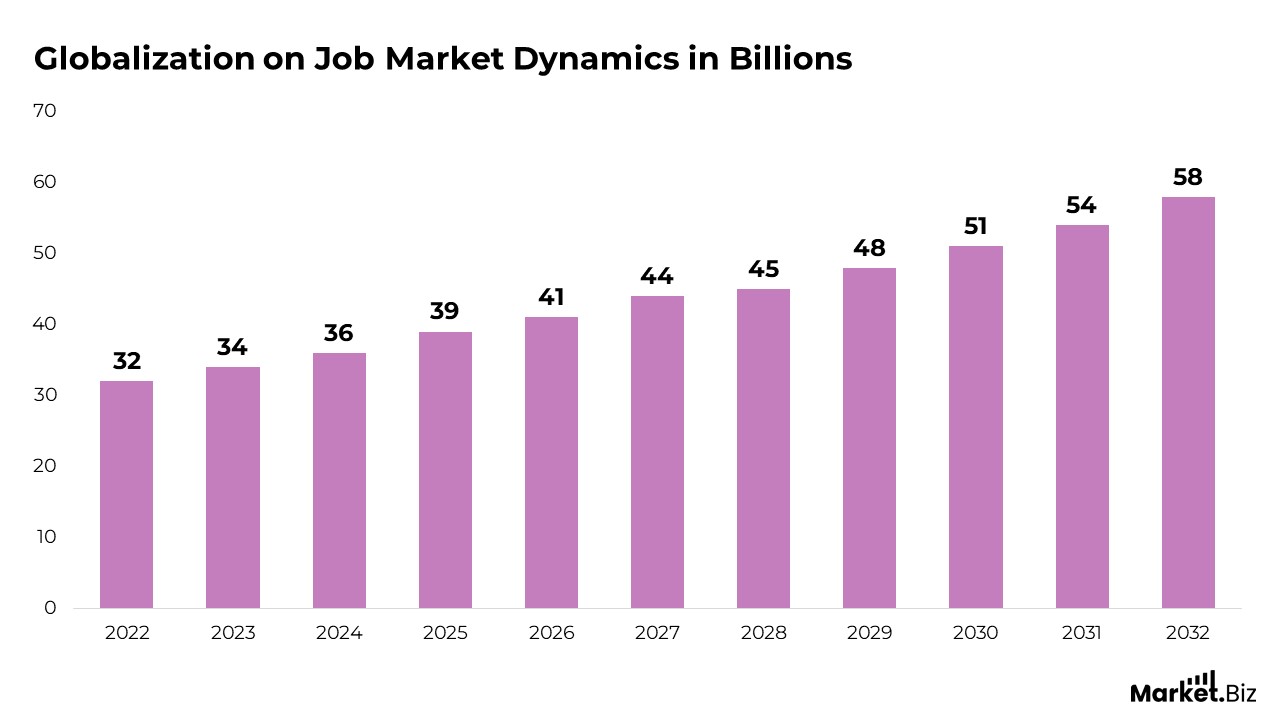
(Source: Market.US)
Post-pandemic Job Market Recovery
- The global job market was expected to grow by 4.5% in 2023, with strong growth in tech, healthcare, and renewable energy post-pandemic.
- U.S. unemployment has dropped to 3.7% in 2023, near pre-pandemic levels, driven by demand in retail, healthcare, and construction.
- Remote work remains strong, with 32% of workers globally in remote roles in 2023, reflecting lasting work preference shifts.
- The gig economy has grown by 20% post-pandemic, with more people taking freelance roles in tech, marketing, and delivery.
- The tech industry has seen an 18% increase in job openings since 2020, fuelled by digital transformation and cybersecurity needs.
- Hospitality and tourism jobs grew by 14% in 2023 as travel and events rebound to pre-pandemic levels.
- Career changes have surged, with 38% of workers considering new industries, particularly in healthcare and tech.
- Labour shortages are widespread, with 58% of employers struggling to fill roles in IT, healthcare, and manufacturing.
- Mental health jobs have risen by 12% since the pandemic, reflecting growing focus on workplace wellness.
- Logistics and supply chain jobs grew by 9% as e-commerce continues to expand, requiring more warehousing and delivery workers.
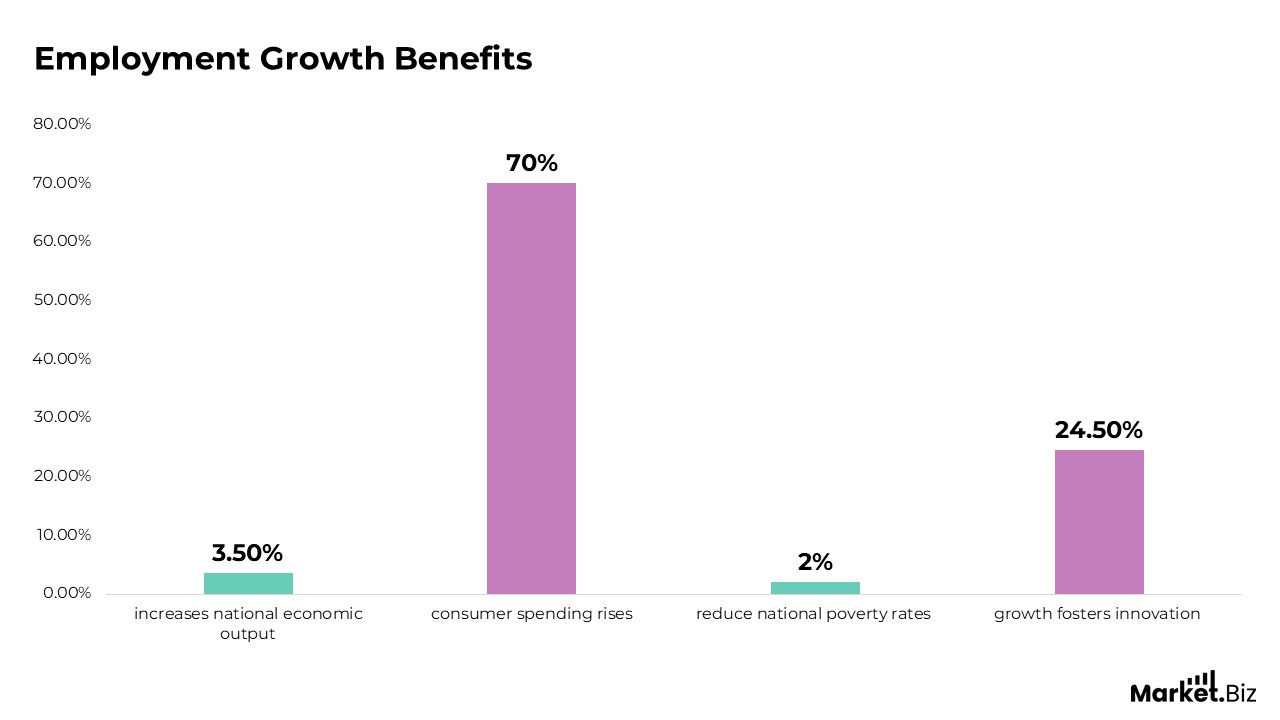
Employment Growth Benefits
- Employment growth increases national economic output, with each 1% increase in employment contributing an estimated 2.5% boost to GDP.
- As employment grows, consumer spending rises, accounting for 70% of the U.S. economy, thus fuelling business expansion and driving further job creation.
- Employment growth in the healthcare sector is projected to add 2.6 million new jobs by 2030, providing opportunities in high-demand areas like nursing and medical technology.
- A 5% rise in employment can reduce national poverty rates by 2%, helping to lift millions of people above the poverty line and improving living standards.
- Job creation helps reduce government welfare spending, as employed individuals rely less on unemployment benefits, saving governments billions annually.
- With the global gig economy expected to grow by 22% in 2025, employment growth in this sector provides flexible work opportunities for millions.
- Employment growth in STEM fields is projected to increase by 8% by 2029, creating opportunities for high-paying, sustainable careers in technology and engineering.
- Growth in the education sector, which is projected to grow by 9% by 2030, ensures access to quality teaching jobs and supports future workforce development.
- As employment expands in industries like renewable energy, the clean energy sector is expected to create 85 million new jobs by 2030, promoting sustainable economic growth.
- Employment growth fosters innovation and entrepreneurship, with small businesses accounting for 24.5% of U.S. job creation in recent years, driving local economies.
Changing Demographics on Employment Trends
- The aging population, expected to double by 2050, is increasing demand for healthcare and eldercare jobs.
- By 2030, millennials and Gen Z will make up 75% of the global workforce, driving remote work and flexible job trends.
- Women will comprise 50% of the U.S. workforce in 2025, increasing demand for family-friendly policies and gender equality in the workplace.
- The labour force participation of women has risen by 13% in the last 30 years, leading to greater opportunities across industries.
- Immigrant workers account for 17% of the U.S. labour force, particularly impacting agriculture, construction, and hospitality sectors.
- Dual-income households are increasing demand for flexible and part-time jobs, especially in education and customer service.
- In 2025, Gen Xers will hold 35% of managerial roles, influencing leadership styles and corporate culture.
- Remote work is expected to comprise 30% of the global workforce by 2027, especially among younger generations.
- Urbanization is pushing demand for skilled workers in cities, with over 55% of the global population living in urban areas.
- Single-person households will make up 31% of U.S. households by 2035, affecting industries like real estate and personal services.
- The LGBTQ+ workforce, comprising 4.5% of U.S. adults, is pushing for inclusive hiring practices and workplace diversity.
- By 2030, some group of people will make up 40% of the U.S. labor force, prompting more inclusive policies and workplace innovation
- The rise in higher education attainment is fuelling demand for knowledge-based jobs in tech, healthcare, and education.
- Retirees seeking flexible work are driving job growth in part-time and gig economy positions, particularly in customer service.
- The digital nomad workforce, expected to reach 35 million in the U.S. in 2025, is reshaping job structures and flexibility.
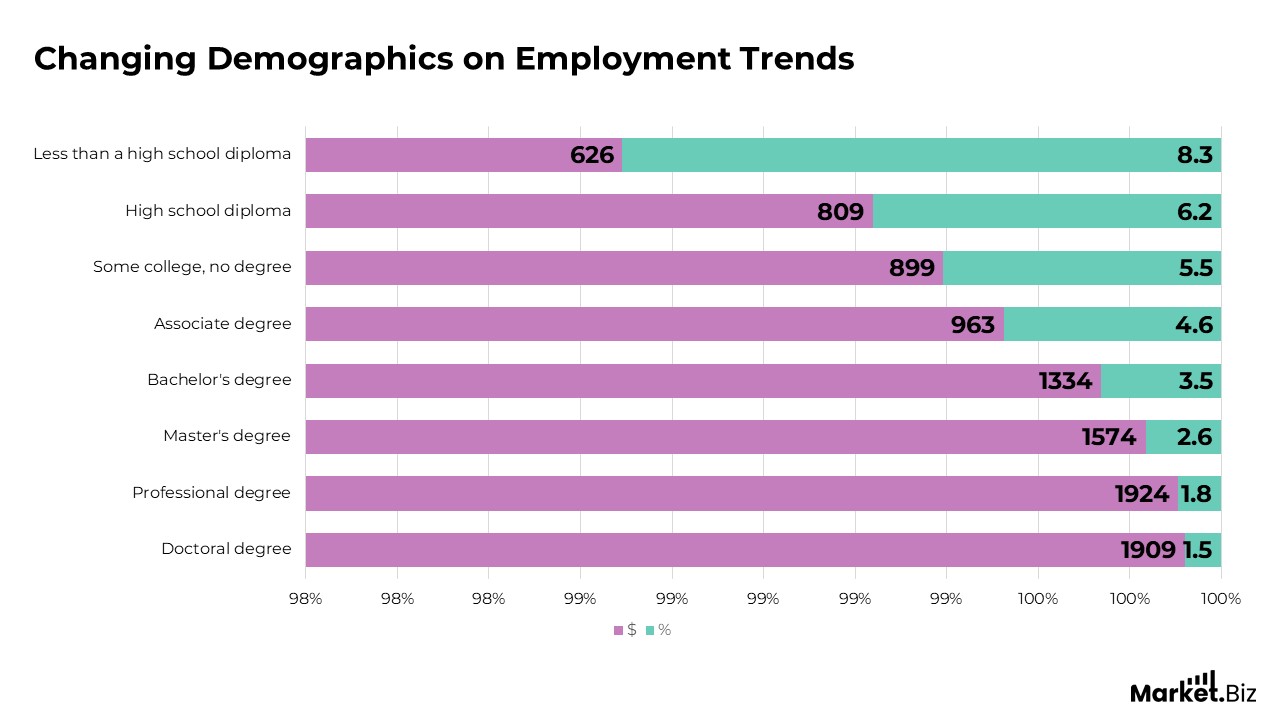
(Source: EnterpriseAppsToday)
Impact of AI on Employment Growth
- AI is expected to create 97 million new jobs by 2030, primarily in AI development, data analysis, and cybersecurity.
- Automation and AI are predicted to displace 85 million jobs by 2030, especially in manufacturing and administrative roles.
- The demand for AI and machine learning specialists is expected to grow by 35% annually over the next five years.
- AI in healthcare is expected to create 2.3 million jobs in 2025, particularly in diagnostics, medical data analysis, and telemedicine.
- AI is transforming customer service, with 70% of customer interactions expected to be automated in 2025, requiring fewer human agents.
- AI-driven automation will reduce labour costs by 15-20%, making businesses more efficient but requiring new roles in AI oversight.
- The AI-powered robotics market is projected to generate 12 million new jobs in manufacturing, logistics, and healthcare by 2030.
- AI in finance is expected to create 400,000 new jobs in 2025, focusing on algorithmic trading, fraud detection, and financial analysis.
- AI is driving job growth in industries like e-commerce, where 35% of retail jobs will require AI skills in 2025.
- The rise of AI tools in marketing is anticipated to create 800,000 new roles in digital marketing, data analysis, and content creation by 2027.
- AI adoption in the automotive industry is expected to create 15% more jobs in electric vehicle production and maintenance by 2030.
- By 2030, AI is projected to contribute $15.7 trillion to the global economy, with substantial job creation in tech, health, and customer service sectors.
Remote Work Market Trends
- 30% of the global workforce is expected to work remotely by 2027, up from 24% in 2019, reflecting the lasting impact of the pandemic.
- In 2023, 42% of U.S. workers are working remotely, a significant increase from 24% pre-pandemic, with a strong preference for hybrid models.
- 70% of remote workers report improved work-life balance, leading to higher job satisfaction and lower turnover rates.
- Remote job postings increased by 300% from 2019 to 2023, with tech and healthcare sectors leading the demand for remote talent.
- The global remote work market is projected to reach $98 billion by 2027, driven by increased demand for flexible working arrangements.
- 60% of companies globally are adopting permanent remote work policies, with 36% offering hybrid work models as a long-term strategy.
- Remote work has saved companies an average of $11,000 per employee annually in office space and operational costs.
- 55% of remote workers say they are more productive at home, especially in tech, marketing, and creative industries.
- 80% of remote workers express interest in continuing their remote work arrangement, with 39% willing to take a pay cut for the option.
- Remote work is expected to account for 22% of U.S. jobs in 2025, particularly in sectors like IT, education, and finance.
- 42% of remote workers experience challenges related to isolation and collaboration, prompting businesses to invest in virtual team-building tools.
- The global demand for remote work tools and software is expected to grow by 17% annually, fuelled by the need for enhanced communication and productivity tools.
- The rise of digital nomads has led to a 49% increase in workers seeking remote jobs while traveling, reshaping traditional work environments.
Remote Work Employment Growth
- Remote work employment has grown by 159% since 2005, with 30% of the global workforce expected to work remotely by 2027.
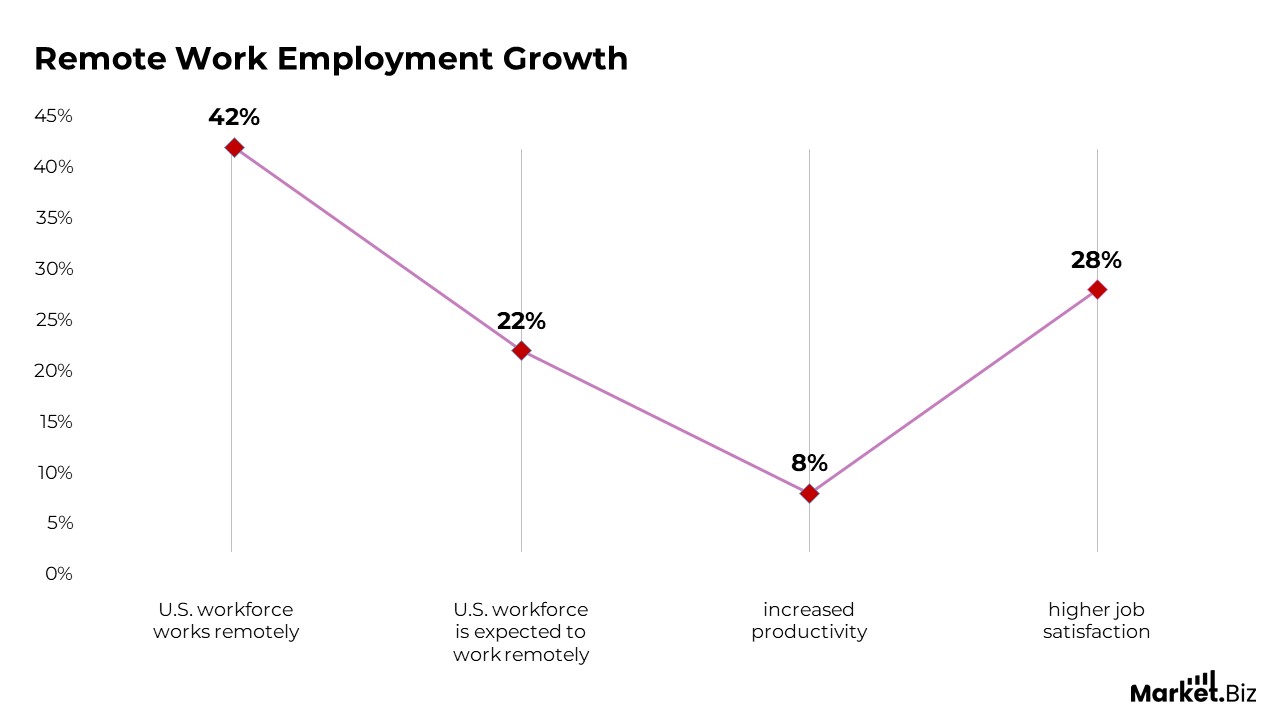
- In 2023, 42% of the U.S. workforce works remotely, up from 24% in 2019, reflecting a permanent shift toward flexible work.
- Remote job postings surged by 300% from 2019 to 2023, driven by demand in tech, marketing, and healthcare.
- In 2025, 22% of the U.S. workforce is expected to work remotely, marking a significant change in employment trends.
- 70% of companies globally are adopting permanent remote or hybrid work models, boosting remote job opportunities.
- Remote work has increased productivity by 8%, particularly in tech, finance, and customer service sectors.
- 28% of remote workers report higher job satisfaction, contributing to lower turnover and better retention rates.
- The remote work tools market is expected to grow by 17% annually, supporting continued employment growth.
- In 2025, 35 million Americans are expected to work remotely while traveling, further driving the rise of remote jobs.
Future of Job Market Trends & Employment Growth
- By 2030, the global workforce is expected to reach 3.5 billion people, with 75% of new job growth in tech, healthcare, and renewable energy sectors.
- The rise of automation will displace 85 million jobs by 2030 but is also expected to create 97 million new roles, particularly in AI, data analysis, and cybersecurity.
- The gig economy will grow by 17% annually, with freelance workers projected to make up 50% of the global workforce by 2030, reshaping traditional employment models.
- Remote work is expected to account for 22% of all U.S. jobs in 2025, with hybrid models becoming the standard for many industries, especially tech and finance.
- The healthcare industry will add 2.6 million new jobs by 2030, driven by aging populations and advancements in medical technologies and services.
- Green jobs in renewable energy and sustainable technologies are projected to grow by 25% by 2030, with an estimated 85 million new positions in the sector.
- STEM jobs are expected to grow by 8% by 2029, fuelled by the increasing demand for workers skilled in AI, machine learning, and software development.
- 40% of U.S. jobs will require advanced skills in data analytics and digital literacy, leading to a significant shift in educational and workforce training priorities.
Conclusion
The global job market is undergoing significant transformation, with sectors like healthcare, technology, and renewable energy driving growth. While automation is expected to displace a large number of jobs, it will also create new opportunities, particularly in AI, cybersecurity, and data analysis.
Remote work trends continue to rise, with an increasing share of the workforce adopting flexible work models. Despite challenges such as skills shortages and high youth unemployment, these shifts emphasize the need for adaptability from both workers and employers in navigating the evolving job landscape.
FAQs
Automation is expected to displace millions of jobs, particularly in sectors like manufacturing and administration. However, it will also create new roles, especially in AI, data science, and cybersecurity.
Sectors like healthcare, technology, and renewable energy are leading job growth, with healthcare alone projected to add millions of jobs by 2030 due to aging populations and medical advancements.
Remote work is on the rise, with an increasing percentage of the workforce expected to work remotely. This trend is driven by technological advancements and changing worker preferences for flexibility.
Employers are struggling to fill roles due to a global skills gap, particularly in tech, healthcare, and engineering. This shortage is driving the demand for more specialized education and training programs.
Companies that prioritize diversity see a significant boost in profitability. Research shows that businesses with diverse workforces are more likely to perform better and drive innovation.