









Introduction
Employee Wellness Statistics: Employee wellness is a crucial aspect of organizational success, with recent statistics highlighting its growing importance. Around 70% of companies now offer wellness programs, with more than half reporting improved employee engagement as a result. Mental health support is becoming a central focus, with 43% of employees citing stress as a significant concern in the workplace.
Companies investing in wellness also see a 21% increase in productivity. As organizations recognize the long-term benefits, employee wellness initiatives are evolving to include not just physical health, but also emotional and financial well-being.
Editor’s Choice
- Around 70% of companies now offer wellness programs, leading to improved employee engagement and a 21% productivity boost.
- 43% of employees report workplace stress as a significant concern, emphasizing the need for robust mental health support.
- Companies save $3 for every $1 spent on wellness programs, highlighting the financial benefits of such initiatives.
- 60% of employees participating in wellness programs report improved physical health, with 60% also experiencing better work-life balance.
- Mental health support will be the primary focus for 86% of companies in 2025, as businesses recognize its growing importance.
- 30% of businesses have begun offering virtual wellness programs, catering to remote and hybrid workforces.
- 60% of employees say that wellness programs improve their sense of community and relationships with co-workers.
- Companies with wellness programs report a 25% reduction in healthcare-related costs and a 30% improvement in employee productivity.
- Businesses will increase their wellness spending by 20% in the next five years, integrating comprehensive health plans.
- The adoption of AI and wearable technology in wellness programs is set to grow by 65% by 2026, offering personalized health insights for employees.
General Employee Wellness Statistics
- Employees who participate in wellness programs report higher job satisfaction and engagement, with 69% seeing positive results.
- Companies that prioritize wellness experience an overall productivity boost of 21%.
- Workplace stress is the top mental health concern for 43% of employees.
- Employee wellness programs have been shown to reduce absenteeism by as much as 28%.
- Businesses save $3 for every $1 spent on wellness programs, thanks to reduced healthcare costs.
- With strong wellness initiatives in place, 88% of employees are more likely to stay with their company longer.
- After participating in wellness programs, 60% of employees report improved physical health.
- Financial stress affects the productivity of 60% of employees, underscoring the need for financial wellness programs.
- Achieving work-life balance is key to well-being for 55% of employees.
- Wellness programs help improve performance, with 67% of employees showing better results at work.
Moreover
- Stress is the most common contributor to burnout, which affects 52% of workers.
- 40% of companies have started offering virtual wellness programs as an alternative to in-person options.
- 30% of employees take mental health days to manage stress or burnout.
- 75% of employees believe that incorporating physical activity during work hours boosts their energy and focus.
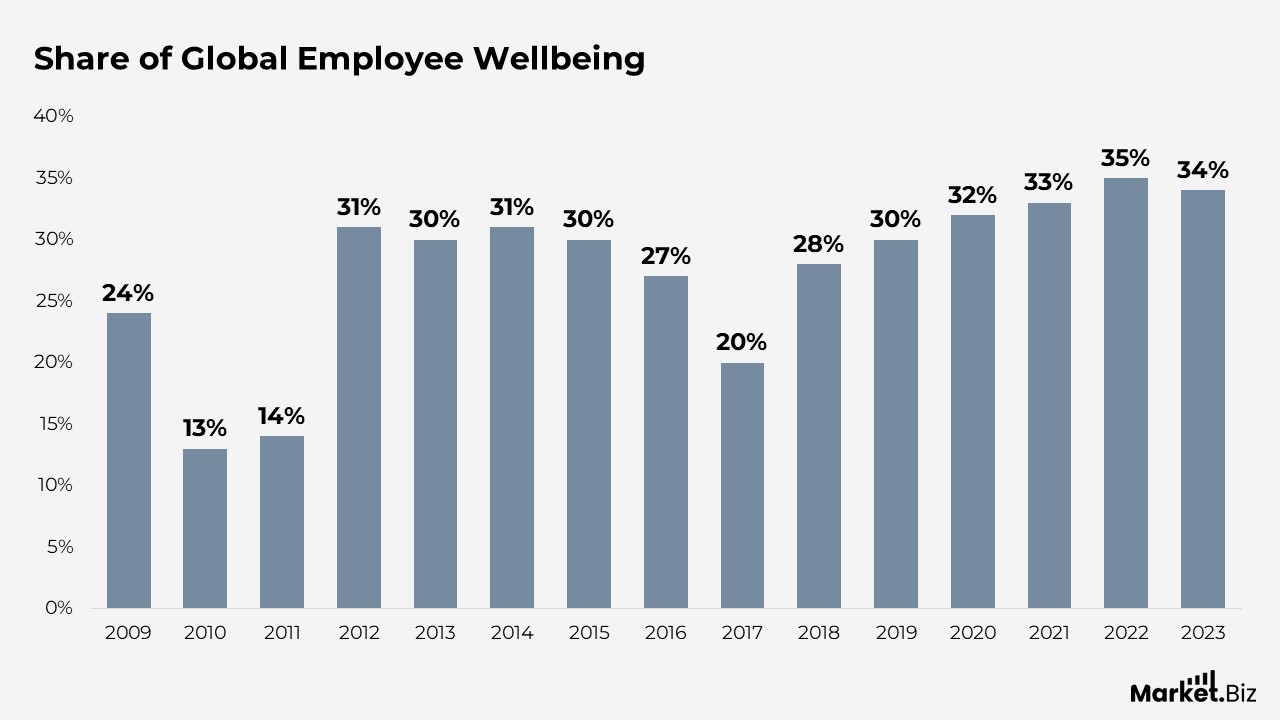
- The percentage of workers who felt they were thriving fell dramatically from 24% in 2009 to 13% in 2010.
- In 2011, there was a slight increase to 14%.
- There was a significant increase to 31% by 2012, and a slight decline to 30% in 2013.
- In 2014, this level of thriving was sustained; however, in 2016, it fell to 27% once more.
- Before rising to 28% in 2018, the percentage fell even further to 20% in 2017.
- The percentage increased to 32% in 2020 and returned to 30% in 2019.
- Following a slight decline to 34% in 2023, the upward trend continued with 33% in 2021 and peaked at 35% in 2022.
(Source: Media.Market.US)
Employee Wellness Industry Investment
- According to 64% of brokers, businesses plan to increase their investments in wellness engagement initiatives by 2025.
- According to 95% of brokers, some or all of their clients spend money on incentives and rewards to make the most out of their wellness initiatives.
- According to brokers, the most popular benefit category for employees in 2025 will be mental health and well-being, with 86% of them saying that businesses are increasing their investment in these benefits.
- In 2025, the benefit that will grow the fastest is weight management. Compared to brokers polled in 2023, 75% of brokers this year reported higher client investment in weight management, a 109% increase.
- Employer investment in preventive health programs has increased, according to 66% of brokers, and 16% point to notable growth in this area.
- In 2025, 58% of companies intend to increase funding for disease management initiatives that address long-term ailments like diabetes and high blood pressure.
- Employers are giving priority to scalable and easily accessible solutions in order to counteract the rising rates of burnout in 2025. 89% of brokers say that their clients are spending more money on mental health programs. They are particularly investing in resilience and stress management (70%) and mindfulness and meditation (55%).
Mental Employee Wellness Statistics
- In spite of this, only 61% of workers have access to benefits that cover mental health treatment.
- Just 54% of small business employees report having access to mental health coverage, which is an even lower percentage.
- The fact that more than one-third of workers (37%) have put off getting treatment for a mental health problem because they are unclear if their health insurance plan covers it lends even more credence to these alarming figures.
- From 47% in 2022 to 41% in 2023, fewer workers now believe their employer is concerned about their welfare.
- 98% of workers admit that global trends have an impact on their mental health at work, and 90% think their employer ought to attend to their needs during major world events.
- In the past year, 97% of workers say their manager’s actions have negatively impacted their mental and emotional health, with 43% pointing to a lack of knowledge about work-life balance and unfair treatment of team members as important contributors.
- According to 68% of employees, revealing a mental health issue could damage their reputation in the workplace.
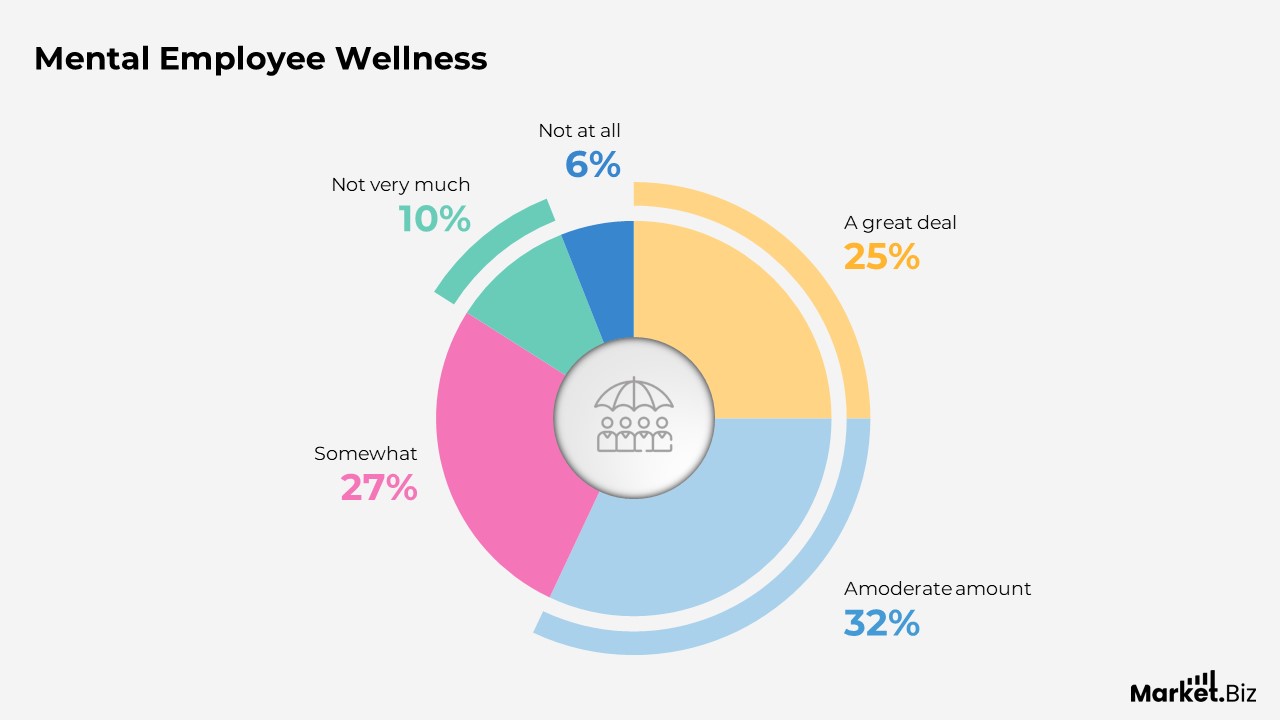
- 10% of workers thought their employer cared very little about their well-being, while 6% thought their employer did not care at all.
- A higher percentage, 27%, believed that their employer was at least somewhat concerned about their welfare.
- Furthermore, 32% of workers thought their employer was somewhat concerned about their general mental and physical health, and 25% thought their employer was very concerned.
(Source: Media.Market.US)
Types of Employee Wellness Statistics
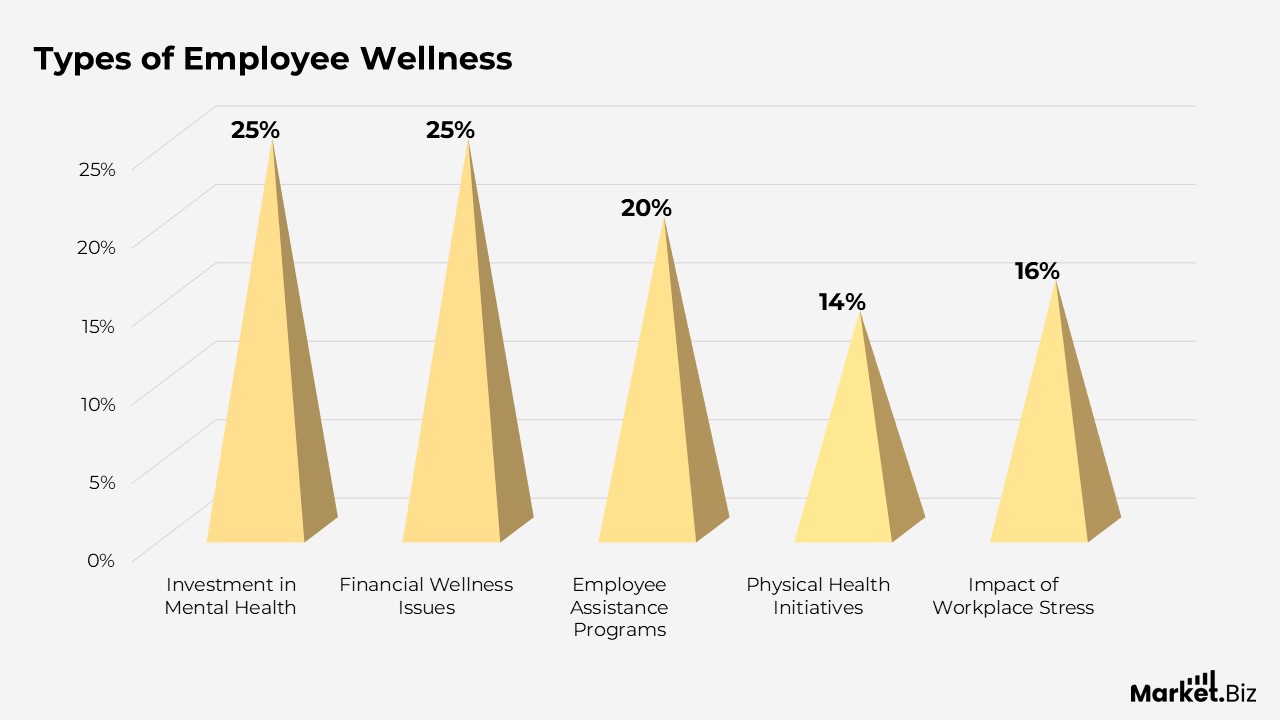
- Investment in Mental Health: Approximately 25% of businesses are increasing their expenditures on employee mental health support.
- Financial Wellness Issues: Better financial programs are needed, as evidenced by the nearly 25% of employees who experience financial stress.
- Employee Assistance Programs (EAPs): To assist staff members with mental and emotional difficulties, approximately 20% of employers provide EAPs.
- Physical Health Initiatives: To encourage better health and cut down on sitting time, roughly 14% of organizations offer standing desks.
- Impact of Workplace Stress: According to 16% of American employees, work-related stress negatively affects their relationships.
- Engagement of Employees: Organizations with wellness initiatives
Wellness Programs Statistics
- About 70% of companies now offer employee wellness programs, understanding their impact on productivity and engagement.
- Mental health support is a key focus, with 55% of companies increasing their efforts in supporting employee well-being.
- Employees participating in wellness programs report a 20% decrease in stress levels and improved work-life balance.
- Companies that invest in wellness programs experience a 25% reduction in healthcare-related costs over time.
- 60% of organizations offer flexible wellness benefits like gym memberships or mental health resources to support their staff.
- Wellness programs play a role in retention, with 50% of employees saying these programs influence their decision to stay with their employer.
- Workplace wellness initiatives have been shown to reduce absenteeism by up to 27%, positively impacting employee retention.
- 85% of employees say wellness programs are crucial for their job satisfaction and overall engagement with the company.
- Wellness programs focused on physical health can lead to a 65% increase in employee energy levels.
- 30% of businesses are incorporating wellness programs into their corporate culture to attract top talent and boost morale.
(Source: Coolest-Gadgets.com, WP-Content)
Employees Benefit from Wellness Programs
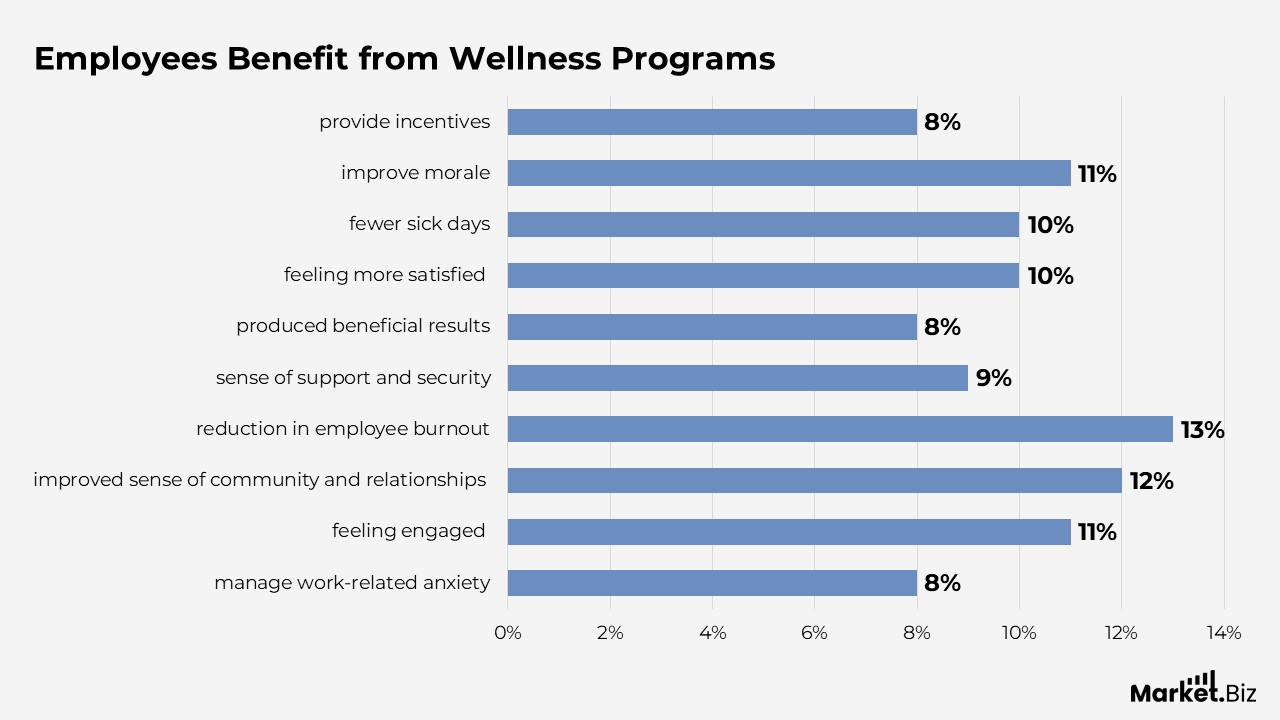
- 68% of employees feel that wellness programs help them manage work-related anxiety, resulting in a calmer work environment.
- Employees with access to wellness programs are 45% more likely to report feeling engaged and connected to their work.
- 62% of employees say wellness programs improve their sense of community and relationships with co-workers.
- Wellness initiatives lead to a 25% reduction in employee burnout, contributing to a more sustainable work environment.
- 58% of employees report that wellness programs provide a sense of support and security, improving their overall job satisfaction.
- 78% of companies prioritize employee wellness programs, which have produced beneficial results.
- 70% of people who participate in wellness programs report feeling more satisfied than those who do not.
- According to employee wellness statistics, 56% of employees report taking fewer sick days, and 54% believe that these initiatives improve morale.
- Larger businesses frequently provide incentives; 20% offer more than $1,000, while some give as little as $150.
Employers Benefit from Wellness Programs
- Employers that implement wellness programs see a 30% increase in employee productivity due to improved physical and mental health.
- Companies offering wellness initiatives experience a 23% decrease in employee turnover, reducing recruitment and training costs.
- Employers report a 25% reduction in healthcare costs as a direct result of wellness program participation.
- 80% of employers believe wellness programs positively impact employee morale and engagement, leading to a more motivated workforce.
- Organizations with wellness programs experience a 22% increase in employee attendance, reducing absenteeism-related losses.
- 70% of employers claim that wellness programs help attract top talent, providing a competitive advantage in the job market.
- Employers offering wellness benefits see a 21% improvement in employee retention, fostering long-term workforce stability.
- Businesses with wellness programs report a 20% rise in team collaboration and communication due to improved mental health.
- Employers can save an average of $2.73 for every dollar spent on wellness programs, thanks to increased productivity and reduced healthcare expenses.
Demographics of Employee Wellness
Employee Wellness by Age Group
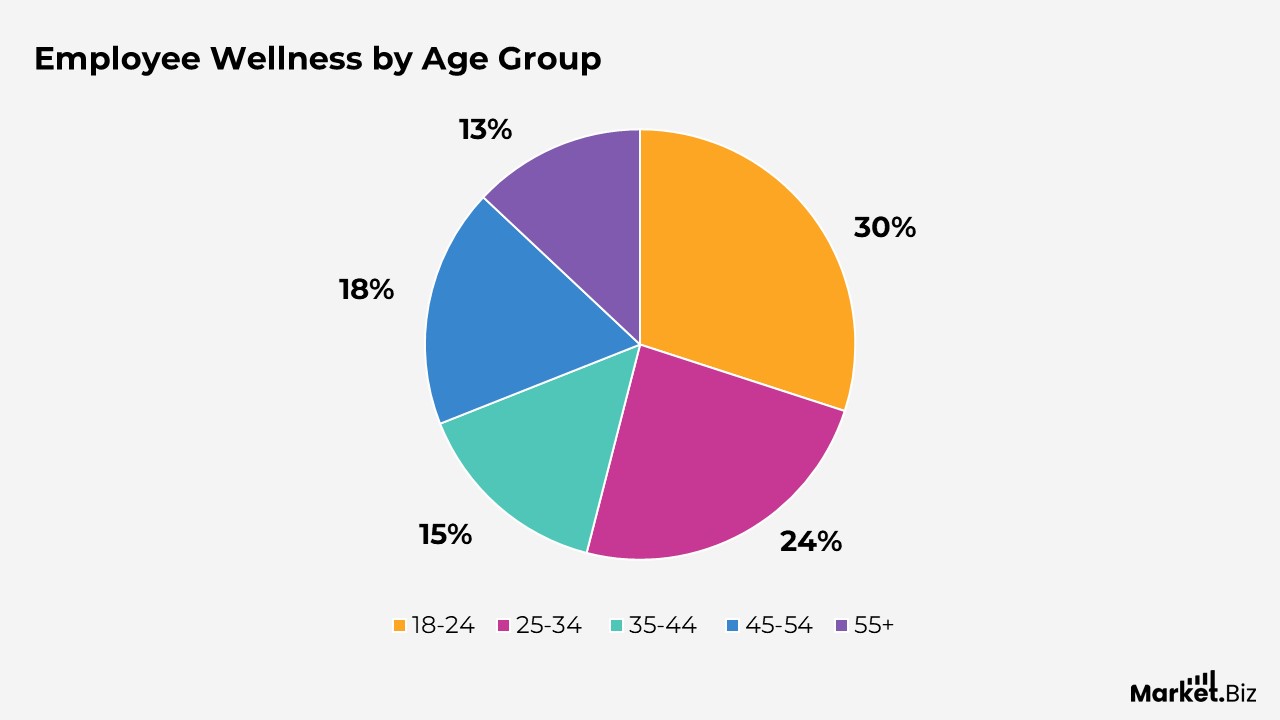
- Employees aged 25-34 report the highest levels of stress, with 24% stating it significantly impacts their well-being.
- 30% of employees aged 18-24 feel mental health support is essential, with many seeking workplace counselling resources.
- Employees in the 35-44 age range show a 15% higher likelihood of participating in wellness programs compared to younger generations.
- Workers aged 45-54 are more likely to experience physical health concerns, with 1v8% reporting chronic conditions such as back pain or high blood pressure.
- 13% of employees aged 55+ report that wellness programs have a direct impact on maintaining their physical fitness as they age.
- Younger employees, aged 18-34, are 30% more likely to prioritize work-life balance as a key factor in wellness programs.
- Employees between the ages of 25-44 are most likely to seek wellness benefits related to stress management and mental health support.
- Older employees, particularly those 55+, value retirement and financial wellness programs, with 48% citing these as crucial benefits.
- In the 35-44 age group, 40% report that wellness programs help reduce work-related burnout and fatigue.
- 72% of workers aged 18-24 find wellness programs focused on fitness and nutrition to be highly effective in improving their overall well-being.
Employee Wellness by Gender
- Women are 25% more likely than men to experience work-related stress, with 52% reporting it negatively impacts their well-being.
- 60% of female employees say they would participate in wellness programs if mental health services were offered, compared to 45% of men.
- Men are 20% more likely than women to take advantage of physical wellness programs, such as gym memberships and fitness challenges.
- Female employees aged 25-34 report the highest levels of work-life imbalance, with 47% seeking wellness programs to address this issue.
- 50% of male employees prefer wellness programs that focus on physical health, including gym facilities and nutrition classes.
- Women report higher levels of burnout (43%) compared to men (38%), making mental health initiatives especially important for them.
- 55% of women aged 45-54 say wellness programs addressing menopause-related issues would be beneficial to their overall well-being.
- Men are more likely to use wellness programs for weight management, with 42% of male employees focusing on fitness goals.
- 60% of women state that wellness programs addressing flexible work schedules would enhance their ability to balance work and family life.
- 40% of male employees prefer wellness programs that support workplace stress management and resilience training, as opposed to fitness-focused initiatives.
Wellbeing Statistics by Country
- Finland ranks first in the World Happiness Report, with 7.8 out of 10, due to strong social support, high trust, and a balanced work-life culture.
- Denmark follows closely with a happiness score of 7.6, driven by its comprehensive welfare system and emphasis on well-being.
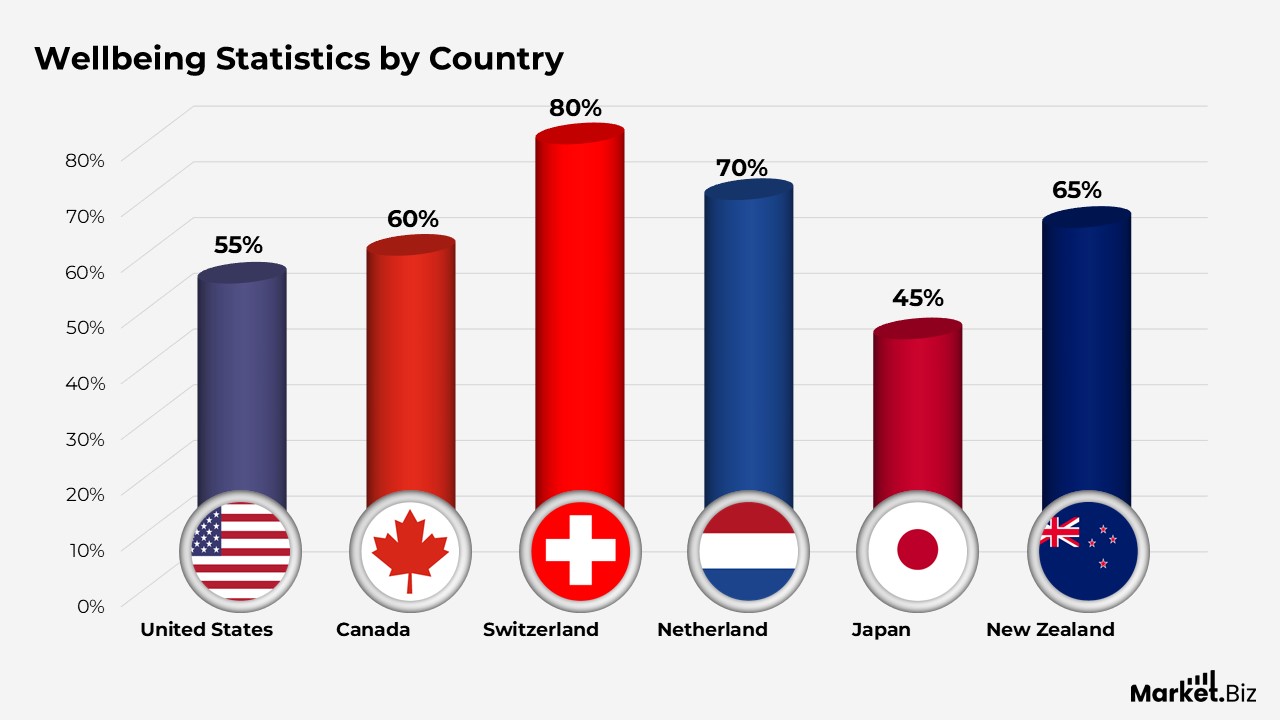
- In the United States, 55% of employees report high levels of stress, significantly affecting both their work performance and personal health.
- Canada has seen a 16% increase in mental health awareness since 2020, with 60% of Canadians supporting government-funded wellness initiatives.
- Australia’s well-being score sits at 7.3, with a strong focus on outdoor activities and mental health support in the workplace.
- Switzerland ranks among the top countries for well-being, with 80% of workers feeling satisfied with their work-life balance.
- The Netherlands stands out with 70% of employees saying they have a good work-life balance, which correlates with a national happiness score of 7.4.
- In Japan, 45% of employees report burnout as a significant concern, impacting both personal well-being and workplace productivity.
- Sweden’s high level of well-being is reflected in its 7.5 happiness score, supported by generous parental leave policies and a strong healthcare system.
- In New Zealand, 65% of employees feel their employer actively promotes mental well-being, contributing to the country’s 7.4 well-being rating.
Employee Wellness Statistics by Costs
- On average, companies spend between $150 to $1,500 per employee annually on wellness programs, depending on the size and scope of the initiatives.
- For every $1 invested in wellness programs, companies save $3 in healthcare costs, demonstrating the long-term financial benefits.
- U.S. companies spend approximately $8 billion annually on employee wellness programs, with a growing focus on mental health resources.
- Studies show that wellness programs can reduce absenteeism costs by up to 25%, resulting in significant savings for employers.
- Health-related productivity losses cost U.S. businesses $1,685 per employee per year, highlighting the importance of investing in wellness.
- Businesses that implement comprehensive wellness programs see a 30% reduction in healthcare costs over the long term.
- Companies spend an average of $500 to $1,000 per employee per year on fitness-related wellness benefits like gym memberships and fitness classes.
- Mental health programs within wellness initiatives can reduce employee turnover by up to 12%, reducing recruitment and training expenses.
- Wellness programs can lead to a 21% improvement in productivity, which directly offsets the costs associated with their implementation.
- A report estimates that companies lose about $225 billion annually due to employee stress, underscoring the cost-saving potential of wellness programs.
Future Updates in Employee Wellness
- 65% of companies are planning to integrate AI and wearable technology into wellness programs by 2026, offering personalized health insights to employees.
- Mental health will become a primary focus, with 70% of employers expected to expand mental health support services in the next five years.
- The use of virtual wellness platforms is projected to grow by 35% over the next three years as remote and hybrid workforces seek accessible health resources.
- By 2028, 50% of companies will offer financial wellness programs, with a focus on retirement planning and managing student loan debt.
- 60% of businesses plan to enhance workplace flexibility, including mental health days and reduced hours, as part of their wellness initiatives.
- Companies are set to increase wellness program spending by 20% over the next five years, focusing on comprehensive, multi-faceted employee health plans.
Further more,
- 48% of employees expect wellness programs to address personal development, such as career growth and stress management, within the next decade.
- The demand for holistic wellness programs, including mindfulness and emotional well-being, is anticipated to grow by 40% by 2027.
- 55% of businesses are expected to introduce wellness programs tailored to different employee demographics, addressing age, gender, and cultural needs.
- Artificial intelligence will play a larger role in wellness assessments, with 63% of companies incorporating AI-driven tools for personalized wellness tracking in 2025.
- Wellness apps and platforms are predicted to see a 30% increase in adoption, allowing employees to track mental, physical, and financial well-being in real-time.
- 40% of companies are projected to offer wellness programs that focus on developing soft skills like resilience and communication within the next 3 years.
- Sustainability will become a key component of wellness programs, with 50% of organizations integrating eco-friendly wellness practices by 2026.
- By 2030, 70% of employees are expected to have access to on-demand wellness resources, allowing for greater flexibility and autonomy in managing their health.
Conclusion
Employee wellness remains a crucial focus for organizations, with many companies implementing wellness programs that significantly improve productivity and overall employee satisfaction. Mental health support is becoming a key priority as stress continues to be a major concern for employees.
Companies are increasingly investing in wellness initiatives, recognizing their impact on reducing healthcare costs and absenteeism. Moving forward, the integration of advanced technologies and virtual wellness platforms, along with an increased emphasis on mental well-being, will define the future of employee wellness programs.
FAQ’s
Employees are more engaged, less stressed, and more productive when workplace wellness is prioritized and they have access to wellness resources and support. On the other hand, neglecting or undervaluing wellbeing can result in increased absenteeism, lower productivity, and a drop in employee morale and job satisfaction.
Physical, emotional, social, intellectual, occupational, environmental, and spiritual are the seven aspects of workplace wellbeing. Depending on who you ask, these can differ. For example, according to some sources, one of the seven dimensions is financial wellbeing.
Happiness, purpose, satisfaction, and stress are the main work wellbeing outcomes that are measured by Indeed’s Work Wellbeing Score, a composite metric. When an Indeed user goes to write a review for their employer, the survey shows up.
According to the NHS, a BMI score of 18.5 to 24.5 is ideal. Any higher score puts you at risk for some of the leading causes of death, such as diabetes, heart disease, cancer, and conditions linked to obesity.