








Introduction
Virtual Reality in Workplace Training Statistics: A new paradigm is opened up with Virtual Reality (VR) by making the training of the workforce immersive and cost-effective.
In 2025, more than 53% of companies around the world would be using VR as a means of employee training, and an additional 77% are gearing towards more investment in this technology. As reported, training through the use of VR enhances retention rates of learned information by as much as 75% and it also cuts the time needed to train employees up to 60%.
As the market is anticipating for global VR training to amount to $12.6 billion by 2026, organizations are adopting the technology mostly for increasing engagement and also reducing mistakes while working. Of particular interest is the impact of virtual reality in high-risk industries, such as healthcare, manufacturing and logistics that allow work done through simulation for safer performance.
Editor’s Choice
- In 2025, 53% of companies adopted VR training and 77% of them planned to scale up.
- It cuts on-boarding by as much as 60%, fast-tracking the path to employee readiness.
- Moreover, this form of training improves knowledge retention by 75%, which makes it much more effective than regular training.
- The VR training market is forecasted to grow at the strong pace of $12.6 billion by 2026 for global demand.
- VR turned out to save 52% of costs at scale as compared to classroom training.
- According to PwC and Accenture figures, soft skills VR training raised confidence by 275% in trainees.
- After 10-15 % performance gain in VR, companies experienced benefits.
- Use of VR safety simulation resulted in a drop in accidents in workplaces by 43%.
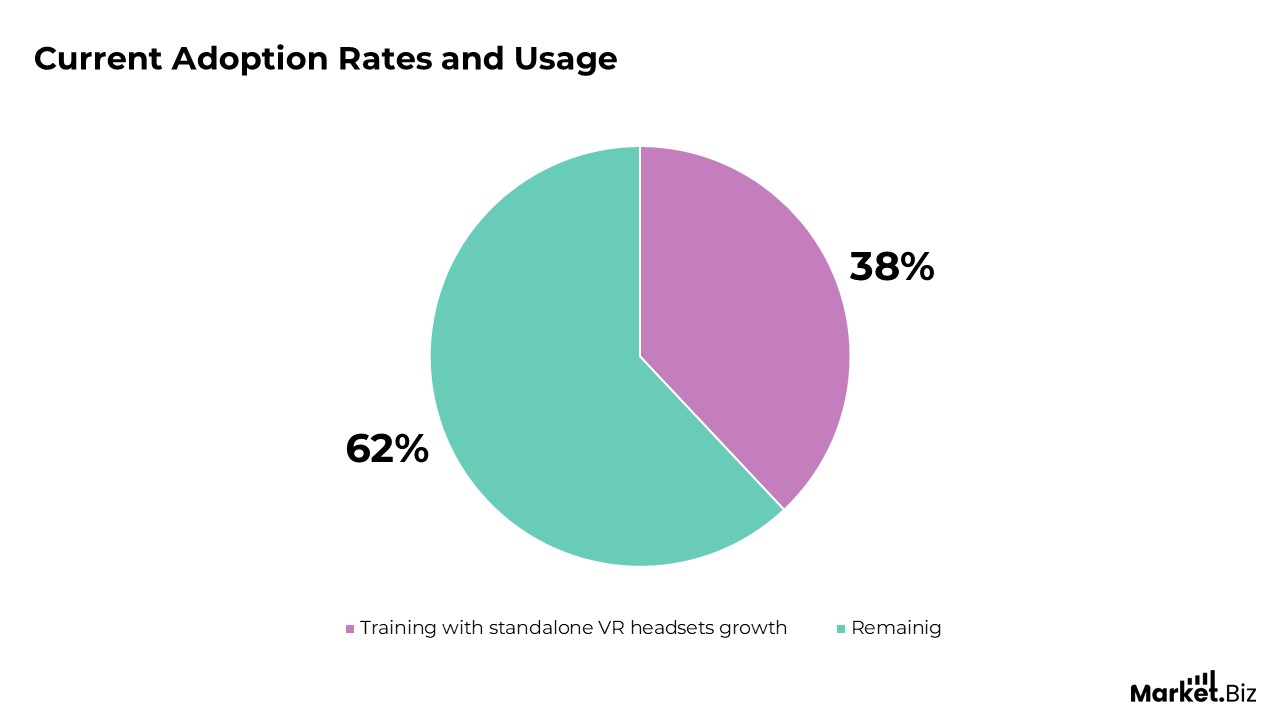
- Adoption rates of standalone headset grew by 38%, knocking down hardware barriers.
- VR reduced the employee errors by 12%, which in turn increased accuracy in task performance.
- Intel, Walmart, and Airbus invested millions, and they claimed as much as a 300% ROI.
- The learning in AI-backed VR rose around 40% to support a smarter, more adaptive learning.
General VR in Workplace Training Statistics
- In-house trainings and development programs are being utilized by 53% of companies worldwide.
- Retention of knowledge acquired through VR training methods is better than that of conventional methods by as much as 75%.
- VR learning shrinks the number of training hours in new hires by 40-60%, according to firm reports.
- The global market for VR commercial training will reach 12.6 billion USD by 2026.
- 82% of employees are more engaged with VR training than with conventional training.
- VR training reduces operational errors by as much as 12%, thus enhancing operational efficiency.
- Companies have been able to increase performance by 10-15% in the use of VR training.
- Some 77% of organizations are planning to increase their investment in immersive learning technologies.
- VR training saves 52% more than instructor-led training when created in large-scale designs with 3,000 learners or more.
- VR simulation-trained employees scored 30% higher on tests.
- In safety-critical areas, VR safely simulates hazardous scenarios to diminish the risks of incidents.
- The use of VR on-boarding programs can speed up readiness time for the employee by as much as 50%.
- Industries such as healthcare and manufacturing started using VR to imitate real-life procedures for training.
- 88% of L&D professionals believe VR will greatly influence effectiveness in training.
- UPS and Walmart have claimed demonstrable increases in efficiency and engagement through VR training.
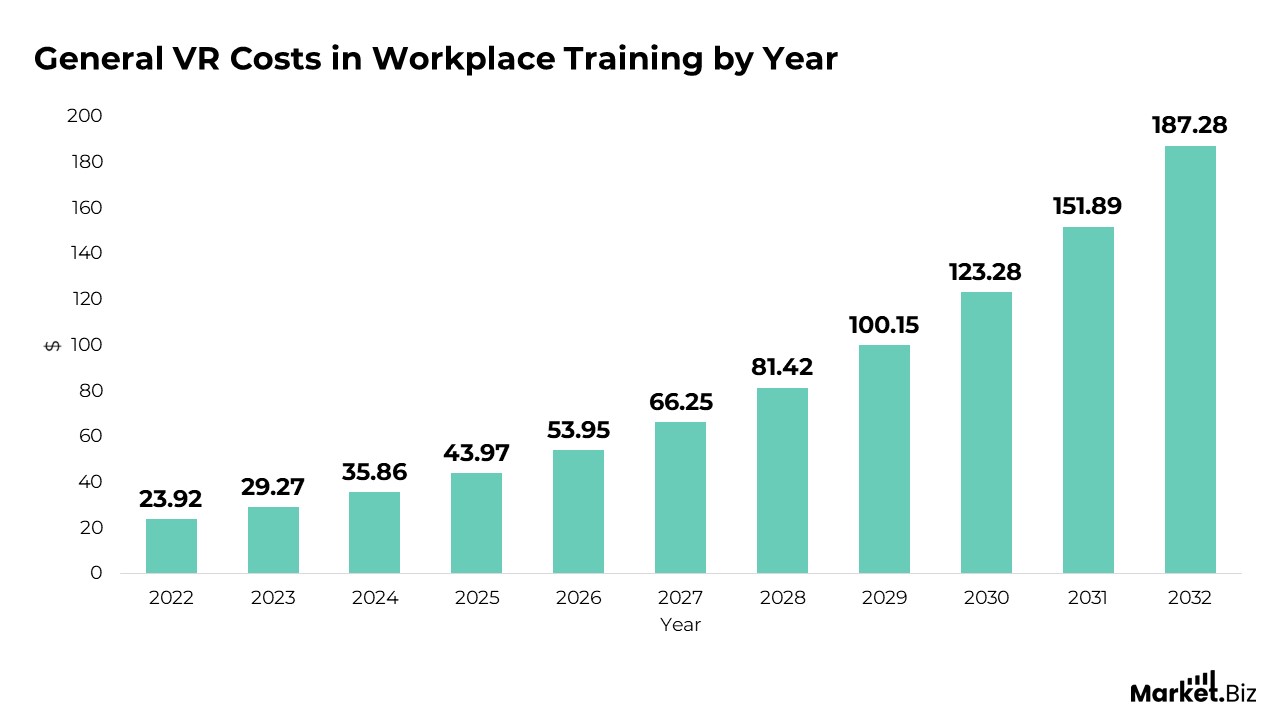
(Source: VirtualSpeech)
Current Adoption Rates and Usage
- In 2024, 53% of global enterprises had adopted VR technologies for employee training.
- 77% of organizations are aiming to increase their investments in VR training in the next two years.
- Almost one in three corporations employs VR in their learning strategies in the U.S.
- There was a 42% increase in company-wide VR training practices in the Asia Pacific last year.
- VR is being used in training and actuation chilling processes by more than 35% of Fortune 500 course designers.
- For 48% of firms in the manufacturing sector, VR looks after day-to-day productive action simulation and safety.
- A 30% increase has been reported in the retail sector in terms of forms of VR-based customer service and compliance training.
- 45 percent of healthcare institutions say they adopt VR for surgical and emergency response training.
- 58 percent of those HR leaders who took part affirmed by saying that VR would become a common tool for training by 2026.
- Logistics is also catching up, with companies like UPS mounting VR usage concerning logistics and safety training; a 25% increase has been given by the respondent.
- Education and corporate L&D should totally be two biggest fan adopters of VR, their global numbers accounting for 60% of usage and adopted amount, respectively.
- Corporate training with standalone VR headsets has grown by 38% in the past year.
VR in Workplace Training by Cost
Investment and Operation Costs
- Notably, the full-scale cost of the VR training setup may range somewhere between $40,000 and $150,000, depending on how complicated the content can be.
- Basic standalone corporate VR headsets go for between $400 and $1,200 per unit.
- Typical custom development costs for a VR training module run between $10,000 and $50,000 per module.
- Between $5,000 and $15,000 are spent by companies each year on software licensing and platform access.
- Enterprise-level VR platforms may charge $2000-$8000 as a setup fee, excluding contents.
- The complex simulations for medical or high-tech training can ultimately cross an entry point of over 200,000 dollars.
- Hardware maintenance and upgrades can add 10-15 percent to the annual cost of total VR infrastructure.
- Most small to medium companies would run their first VR program on a budget between $20,000 and $40,000.
Cost Benefits and Long-Term ROI
- Through VR training, up to 50% can be reduced for on-board costs, saving thousands in annual costs per new recruit.
- Most companies with large workforces report 52 percent less cost than the traditional classroom at scale training.
- Using VR, those are the averages; travel and facility costs are reduced to $2,000 per employee for live training.
- VR has reported up to 43% savings in accident-related costs in high-risk industries from safety training.
- Businesses see a return on investment from three years for their VR training implementations in high-revolving industries.
- It reduces the instructor’s teaching time by 40%, thus cutting the costs of labour-for-training by a huge margin.
- Walmart has saved millions in HR and logistics by using VR training for over 1 million employees.
- Continuous training on VR will eventually reduce the cost to $100-200 per employee annually after the initial investment.
- A company will thus see a productivity gain of 10 to 15 percent converted into financial terms.
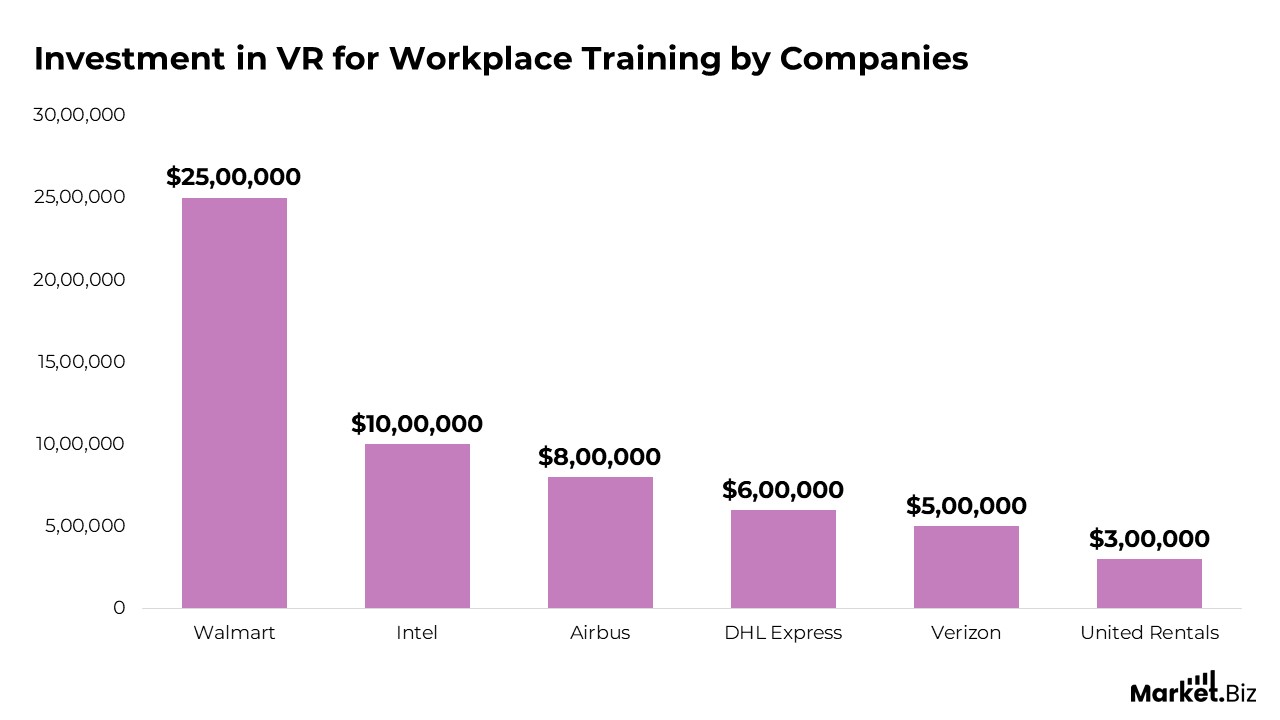
Investment in VR for Workplace Training by Companies
- Walmart- $2.5 million
- Intel- $1 million
- Airbus- $800,000
- DHL Express- $600,000
- Verizon- $500,000
- United Rentals- $300,000
Impact of VR in Employee Performance
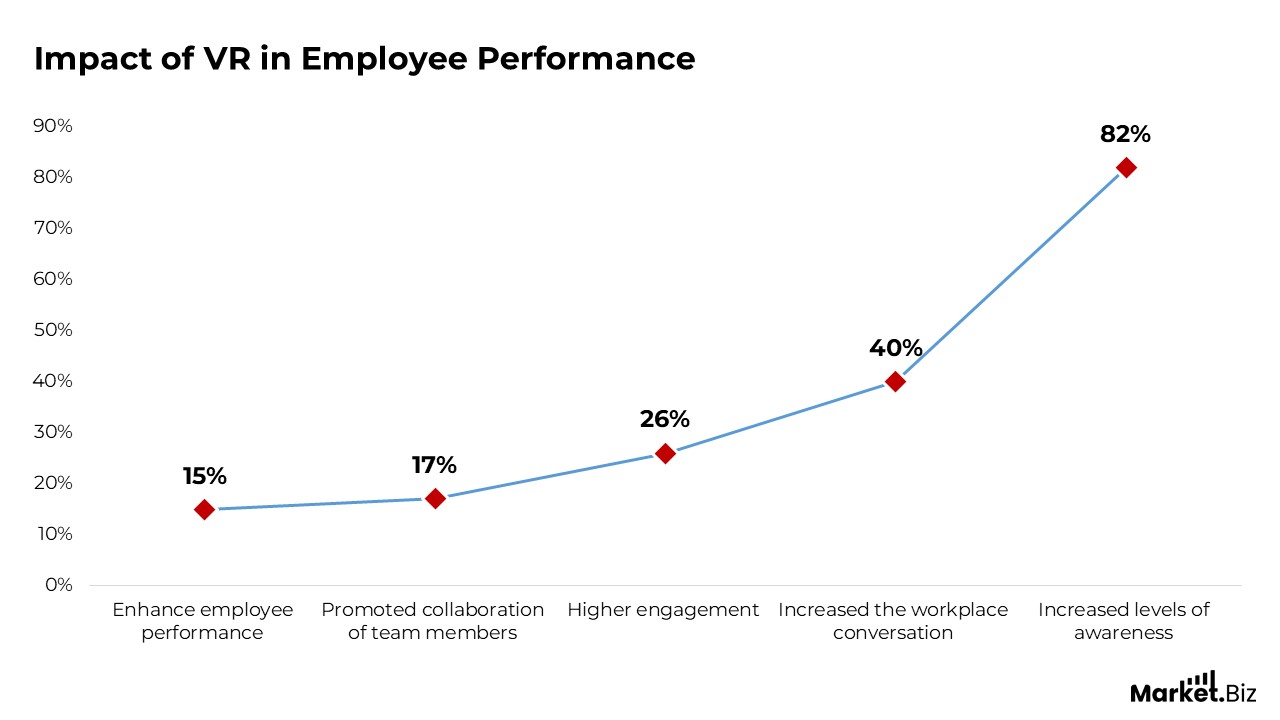
- Virtual reality training tends to enhance employee performance by 15%, particularly in regards to task execution and speed.
- A VR learner was likely to be 275% more confident in implementing acquired skillsets as opposed to classroom learners.
- As compared to non-VR counterparts, trained employees performed 30% faster in completing tasks.
- Increased levels of awareness were felt by 82% of the employees after completing VR modules compared to traditional training.
- The specious actions by the workers are reduced to twelve percent with the VR training, which has boosted fidelity within operational quality.
- This training about soft skills through VR increased the workplace conversation by 40%.
- Those who learned in VR retained things for four times longer with better performance stability.
- Improvement of on-boarding time with virtual reality has improved productivity time by even 50% and has dramatically improved the employee readiness to get into the fold.
- Employees trained with VR showed 26% higher engagement directly correlated to job satisfaction and output.
- 43% reduction in incidents for safety-critical roles when trained with VR simulation.
- Customer-facing staff improved service quality by 20 to 25 percent, post undergoing the VR interaction scenarios.
- Companies employing the VR slightly increased performance by 35 percent in realizing the learning effects on real application in the enterprise.
- The training by VR promoted 17% collaboration of team members on the group or team performance.
VR Training Programs by Companies
- Over 17,000 VR headsets were rolled out by Walmart to train 1 million employees for customer service and compliance.
- In Bank of America’s introduction of 20 VR training simulations in 4,300 branches, the firm extended coverage to over 50,000 employees.
- Driving new recruits through hazard-recognition training, UPS cuts instructor-led training time in half.
- Verizon’s VR-based armed robbery training scenario for employees included 22,000 people in 1,600 stores.
- Intending to gain about 300% ROI in five years, Intel launched a VR-based semiconductor safety training course.
- The VR escape-room simulation initiated into KFC encompassed teaching engagement for the main cooking process.
- VR was used by DHL Express in warehouse logistics, entailing a 90% improvement in employee efficiency.
- Airbus employs VR to train technicians in aircraft maintenance with a reduction in training time of 25%.
- Workers trained in VR have been reported by PWC to finish the training 4 times faster than those undergoing traditional classroom learning.
- Improvements in new hire satisfaction were noted to the tune of 30% after Accenture’s investment in VR on-boarding experiences.
- Lloyds Banking Group uses VR to train their staff to ensure better customer interaction, thus developing empathy and retention.
- VR safety training applications were developed by Ford in collaboration with Oculus to reduce incidences on the assembly line.
- After using VR for training, Home-grown Restaurants recorded a 27% for on-boarding success.
Challenges in VR Training
- The upfront cost for an average VR training setup is between $40,000 and $150,000. This is a considerable financial barrier especially with small businesses.
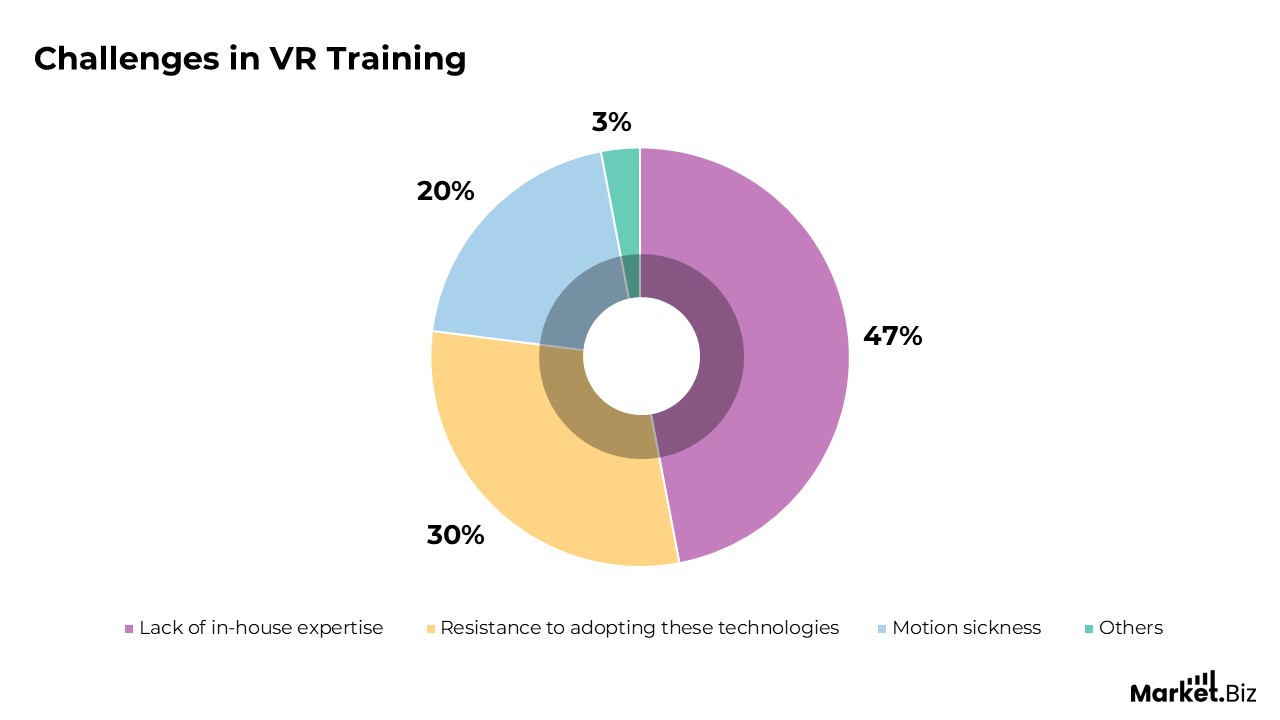
- 47% of organizations mention lack of in-house expertise as a major concern regarding deploying VR training programs.
- VR content development is generally tedious and takes up to 8-12 weeks per module to add tweaks and tests.
- Hardware compatibility issues across devices and platforms can create time-lags when deploying and increase IT overhead.
- Motion sickness of up to 20 percent in users may limit session time as well as certain employees’ effectiveness.
- The issue of data privacy and user tracking in virtual realities raises concerns over compliance on GDPR and regulatory issues in some industries.
- An even larger problem is that arising when trying to scale up from a small team-does distance virtual reality training across huge, multi-site workforces.
- Continuous updates and high maintenance costs (averaging between 10 and 15% per year) can be a big factor on the long-term affordable alternative of owning a VR.
- VR does not provide real-time feedback of any instructor, which may affect learning outcomes especially in soft skills or judgment-based training.
- As much as we have various types of people, there is still a resistance to adopting these technologies as almost 30% of employees feel hesitant or uncomfortable using such immersive technologies.
Benefits of VR Training in Workplace
- VR training can retain employee knowledge by almost 19%, a number that has broken traditional training by far.
- Moving to immersive VR platforms, organizations say that 14% decrease in training times.
- VR replicated hazard scenarios about which accidents happening even in workplaces are reduced by 13%.
- VR training brings about greater cognitive engagement; 22% of users would feel much more engaged, unlike traditional.
- Companies that have incorporated VR into their procedures register about 30% increase in training satisfaction scores, thus improving how overall employees feel.
- Soft skills learning in terms of VR has been seen to increase individual confidence levels by founding studies in PwC of up to 275%.
- By reducing on-boarding by as great as 50% VR speeds up productivity for new hires.
- With VR modules available remotely, training can be scaled across territories without incurring extra cost of travel.
- As Walmart and UPS announced after their VR systems’ similar implementations, they saved millions in annual cost.
- VR encourages participation in learning by doing that leads to four times quicker knowledge absorption as compared to e-learning.
- Tailored VR environments provide realistic, repetitive practice to help acquire mastery of skills.
- Employee performance improved task speed and accuracy with about 15 to 20% increase.
- VR exposes learning by experience, holding greater retention for more complex procedures and compliance training.
- Organizations that have used VR report better 21% collaboration and communication across teams after their staff training.
Recent Developments in VR Training
- The $4.1 billion enterprise VR training market was expected to reach in 2024, with piloting in manufacturing. defence, and health, including the top names like Boeing and Wal-Mart that have leveraged VR for 30 percent quicker onboarding.
- Within a year in 2024, AI-tailored adaptive VR training increased its penetration rate by 40 percent, such that it personalizes in real-time depending on user performance and behaviour analytics.
- VR soft skills training in topics of leadership and diversity increased by 32% within 2024, and Accenture announced a 275% increase in confidence retention among trainees.
- Since 2022 standalone VR headsets such as Meta Quest 3 and Pico 4 have cut the hardware costs by 25% to make the VR training accessible to medium enterprises.
- This immersive medical training simulation gives 85 percent skill transfer efficiency, mostly in surgical VR platforms like Osso VR and PrecisionOS.
- VR safety training in construction and mining is very valuable to the incident rate. Some companies using systems from modules such as ForgeFX and PIXO VR report up to 43% reduction in incident rates.
- Cross-platform compatibility has increased with the WebXR and OpenXR frameworks that allow an experience to be the same across Oculus, HTC Vive, and mobile VR environments.
- Remote VR training deployments increased 48% in 2023 due to hybrid trends leading to an increase in remote hiring, especially in logistics. For example, UPS uses virtual training to develop its drivers.
- Gamification in VR training-points prize systems, leader boards, and the branching of scenarios increased engagement rates within enterprise L&D units by more than 60%.
Conclusion
VR redefines training in organizations indeed by immersing trainees into very scalable and really lively learning experiences. There have been increasing companies that have added up VR within the training strategies with the idea that improving the performance of employees could minimize the efforts of on-boarded employees. This has shown the way of long-term value in this area. That is, improvement in knowledge retention, reduction in time spent learning, and lessening of safety risks.
Healthcare, logistics, and manufacturing have quickly adopted this advancement in numerous areas, allowing the participants to put theory into action through realistic simulations or hands-on learning. AI-driven personalization advances along with hardware becoming cheaper have found widespread adoption among companies, regardless of size because of this shift brought upon by data-required experiential development in corporate learning.
FAQs
The most vibrant engagement and retention of knowledge can be purposely kept by this hands-on learning through valuable time reductions in training delivery and across many industries.
With the increasing levels of acceptance and exploitation of VR in an industry, increased safety measures that can be availed by too-high-risk, complex, or just repetitive procedural tasks, for instance, using healthcare, manufacturing, and logistics.
VR improves the accuracy of tasks, builds soft skills, and shortens training time. Together, these features produce more productive workers with even fewer error rates.
From the high initial costs of setting up, VR training will begin to become much cheaper as one scales it; travel, instructor time, and facility expenses are all eliminated.
The implementation of AI personalization, gamification, and standalone headset adoption continues to expand as consideration toward improving corporate learning outcomes.