









Introduction
Skills-Based Hiring Statistics: Hiring for skills instead of hiring for a degree or title is changing the future of recruiting. Skills-based hiring focuses on skills and real-world examples of ability instead of degree or previous job titles. The increasing use of skills-based hiring is apparent.
In its 2024 Global Hiring Report, TestGorilla reported that 82% of employers do skills-based hiring because they believe it helps facilitate better quality hiring and protects against retention risk, 88% of employers feel they have had fewer mis-hires and 84% feel that the approach has a positive effect on workforce diversity. In some regions, the transition to skills based hiring is even more impressive in Australia and Latin America 91% and 94% of employers respectively report adopting skills-based hiring.
It is clear that hiring for skills is more inclusive, and can also be more predictive of job performance, especially as organizations continue to suffer from talent shortages.
Editor’s Choice
- 72% of employers use skills assessments compared to this time last year.
- 89% of hiring organizations with skills-based hiring cite improved employee performance.
- 94% of employers in Latin America have used skills-based hiring and are also the highest globally.
- In North America, 87% of employers put skills over degrees in hiring.
- 88% of healthcare organizations are using skills-based hiring to identify talent for support and medical roles.
- Employers who use skills testing are 50% more likely to keep their hires long-term.
- Women are 27% more likely to successfully progress their jobs in companies that hire skills first.
- 70% of recruiters believe AI helps reveal hidden skills that candidates don’t include on resumes.
- 65% of Gen Z applicants are more likely to consider employers that emphasize skills and abilities, rather than degree attainment.
- 55% of organizations have used AI-powered tools for skill testing to increase accuracy.
General Skills-Based Hiring Statistics
- For employers, 82%state they are now using skills-based hiring in order to have better candidates.
- 88% of hiring organizations have decreased their bad hires by measuring skills instead of simply reviewing resumes.
- 84% of employers indicated that using skills-based hiring methods helps them build diverse teams.
- 91% of employers believe that skills tests give them better outcomes rather than looking at education alone.
- 72% of employers use skills assessments compared to this time last year.
- 78% of hiring managers think that skills tests enable them to make fairer hiring decisions.
- 81% of companies feel more confident in their hiring decisions using skills-based methods.
- 80% HR teams feel that hiring based on skills leads them to better teams.
- 67% of employers will be using skills assessments more over the next 12 months.
- 89% of hiring organizations with skills-based hiring cite improved employee performance.
- 60% of organizations have improved time to hire by using skill-based methods.
- 91% of remote/hybrid teams prefer to utilize skills-based hiring to pre-screen candidates.
- 93% of hiring teams using multi-measure testing make more confident hires than teams that don’t.
- 95% of marketing teams have adopted skills-based hiring for better results.
- 94% of employers in Latin America use skills tests in hiring, which is the highest of any region globally.
- 91% of companies in Australia are ahead of the curve in skills-based hiring today.
- 83% of job seekers feel criteria based more on skills more fairly evaluate their abilities.
- 92% of companies using skills tests report that they will continue long term.
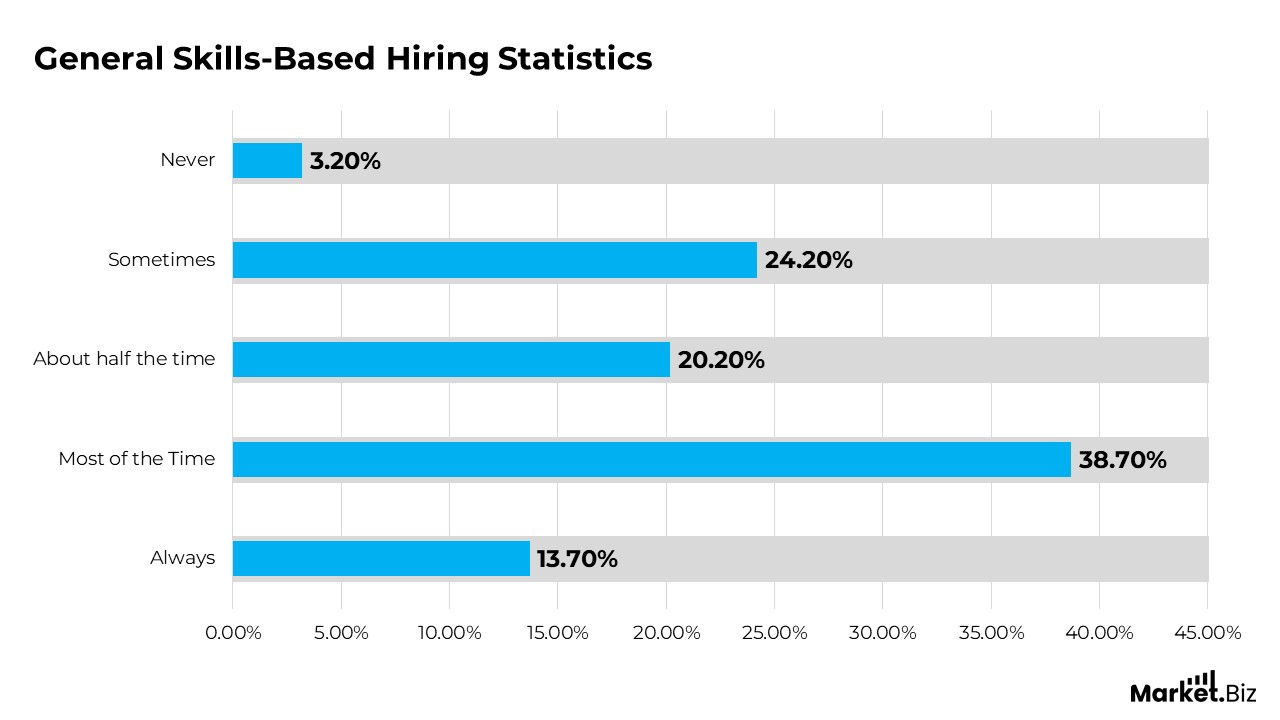
(Source: Naceweb)
Global Adoption Rate
- 82% of all global employers use skills-based hiring instead of hiring just by resumes.
- 94% of employers in Latin America have used skills-based hiring and are also the highest globally.
- 91% of companies in Australia use skills-based hiring.
- 88% of employers in the Asia-Pacific region are using skills-based hiring.
- In North America, 85% of businesses are using skill assessments.
- In Europe 81% of companies are using a skills-focused approach to hiring.
- In Africa 80% of employers are using skills-based hiring that is showing an upward trend.
- 68% of employers surveyed globally say they are now relying on skills tests more than before, anecdotally, reports a year ago were that 33% of employers relied solely on resumes.
- 91% of remote-first companies on average globally are using skills assessments for their recruitment selections.
- 95% of marketing firms on average globally are using skills-based hiring practices for increases results on recruitments.
- 90% of companies in South America have reported using based screening tools in a survey.
- 67% of employers surveyed in all sectors worldwide reported plans to increase their skill-based hiring practices in the coming calendar year.
- 91% of reported hybrid teams globally reported they preferred hiring based on real skills versus education credentials.
- 93% of employers who report using multi-skilled assessments report using multi-skilled assessments report improved hiring decisions across regions of the world.
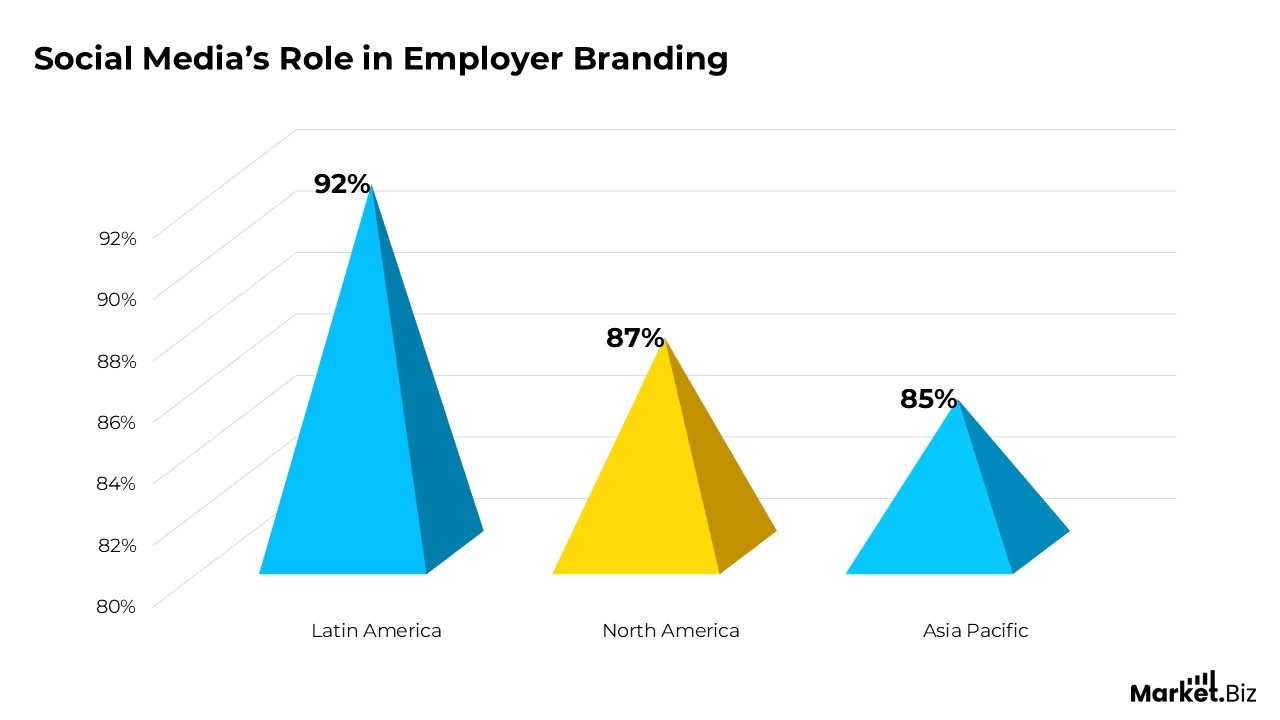
Skill-Based Hiring by Region
- Latin America leads the pack with 92% of companies using skills-based hiring to find the right candidate.
- In North America, 87% of employers put skills over degrees in hiring.
- Europe had an 80% adoption of skills first hiring, which was more prevalent in countries like Germany and UK that are more technology driven.
- Australia’s adoption rate of 90% is driven by, again, a strong demand for tech and digital skills.
- In the Asia Pacific region, 85% of companies reported they are using skills based hiring, particularly in India and Singapore.
- In Africa, about 70% of employers reported they focus more on candidates’ skills than on traditional forms of qualifications.
- In the Middle East, companies reported an embrace of skills-based hiring at an adoption rate of 78% because of need to fill roles quickly due to talent shortages.
- In Southeast Asia, there has been a rapid rise in recruitment based on skills tests and practical tests, without as much of a need for qualifications, with 88% of recruiters admitting to this.
- Globally, remote first companies reported an implementation rate of 90% in using skills-based hiring that supports filtering candidates.
- Finally, across regions, 83% of HR leaders report that skills based hiring helps improve workforce diversity and inclusion.
Skill Based Hiring by Industry
- 96% of tech employers today are using skills-based hiring to fill roles in software development and data science.
- In advertising and marketing, 91% of employers place more value on candidates’ actual abstract and analytic reasoning skills than they do on their degree.
- 89% of finance and accounting firms have transitioned to skills first hiring to evaluate candidates for analytical positions.
- 88% of healthcare organizations are using skills-based hiring to identify talent for support and medical roles.
- In the retail industry, 84% of companies now hire based on communication and sales skills rather than education.
- 87% of logistics and supply chain companies report adopting skills-based hiring and improved job performance in their workforce.
- 82% of manufacturing employers are now adopting skills-based hiring methods and are paying more attention to candidates’ mechanical and technical skills.
- 90% of information technology services companies are now adopting coding tests and other technology assessments.
- 83% of educational institutions are adopting skills-based hiring for administrative and digital learning positions.
- 85% of HR and recruitment agencies feel they can reduce some bias toward candidates by using a skills first approach.
- In hospitality, 79% of hiring managers assess problem-solving skills and service abilities before hiring.
- 88% of engineering companies are using skills assessments for roles in civil, design and engineering for mechanical.
- 81% of legal services are screening candidates for writing abilities and critical thinking skills, rather than ranking individuals based on their law school.
- 86 percent of companies in media and communications priorities content vreation and digital skills while hiring.
Benefits of Skill Based Hiring
- 92% of employers say skill-based hiring allows them to find more qualified candidates.
- Companies utilizing skills-based hiring are 60% more likely to create successful hires.
- 89% of business report that skills-based hiring reduces employee turnover.
- 84% of hiring managers believe employees that were skills tested prior to being hired have performed better on the job.
- Skills-based hiring cuts the time-to-hire cycle by 25% and saves recruitment hours.
- 75% of companies say skills-based hiring expands their candidate pool a diversity standpoint.
- 88% of organizations have seen skills-based hiring improve employee productivity.
- Employers who use skills testing are 50% more likely to keep their hires long-term.
- 79% of HR leaders say skills-based hiring reduces unconscious hiring bias.
- Companies that utilize skills testing reported a 36% increase in job satisfaction amongst new hires.
- 82% of employers believe that they are better able to match candidates to job needs through skills-based screening.
- Skills-based hiring increases access to non-traditional candidates by 63%, including career changers or individuals without degrees.
- Skills-based hiring can reduce cost-per-hire by up to 30%, which can improve overall recruitment.
- 93% of employers believe that skills-based hiring allows them to stay competitive in a rapidly changing job market.
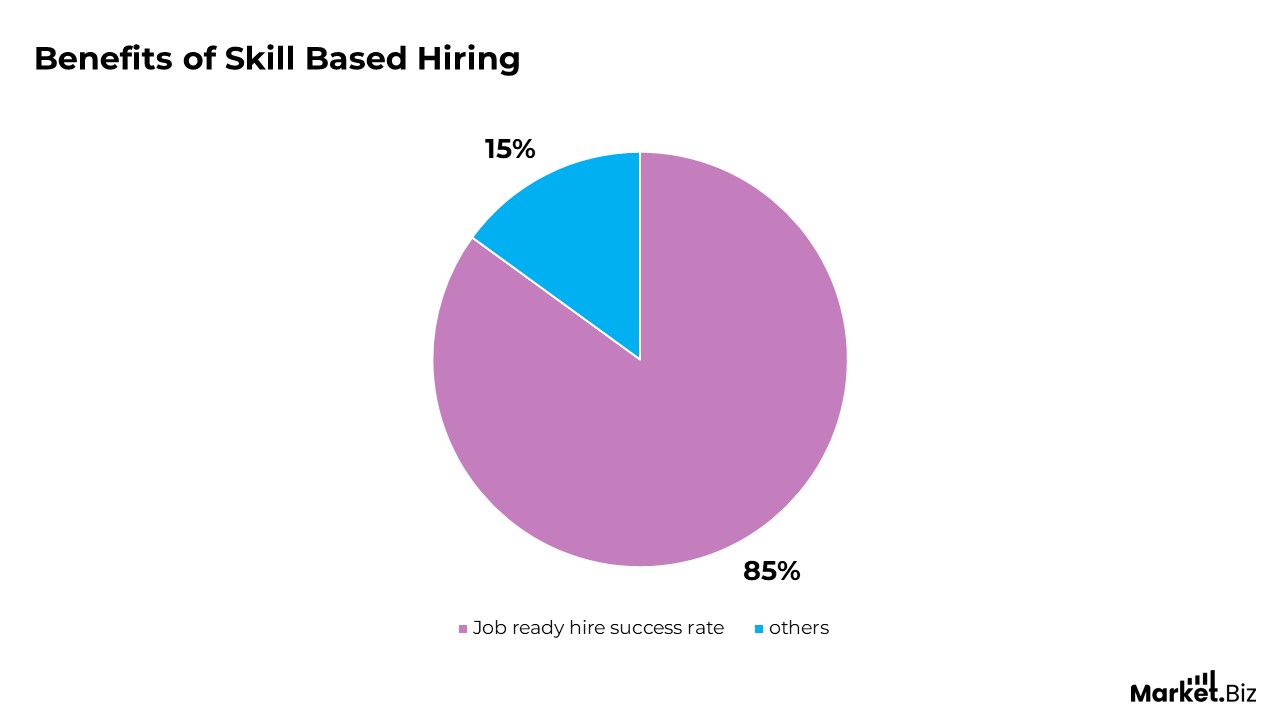
(Source: Softwareoasis, WP-Content)
Impact on Career Opportunities
- There has been a 20% increase in jobs due to a change in skills hiring.
- 75% of jobseekers say that skills-based positions give them a fair opportunity no matter their education background.
- Candidates with non-traditional backgrounds are 63% more likely to be hired under skills-based hiring processes.
- 59% of workers say they feel a lot more confident applying for skills-based roles vs being qualified by a specific degree.
- Career changers were 50% more likely to get hired by employers that use skills-based hiring.
- 76% of employees in skills-based jobs grow their careers faster and are more likely to be promoted.
- Women are 27% more likely to successfully progress their jobs in companies that hire skills first.
- People from under-represented groups are 3x more likely to be hired through skills first hiring processes.
- 82% of Gen Z candidates prefer jobs that highlight skill set rather than education.
- Skills-based hiring increased access to remote and freelance jobs to a 40% level.
- Workers with micro-credentials or online certificates are 45% more likely to be hired for skills based roles.
- 67% of jobseekers feel skills-based hiring allows for more flexibility in their career path.
- 86% of jobseekers feel skills-based job descriptions are easier to read and more motivating.
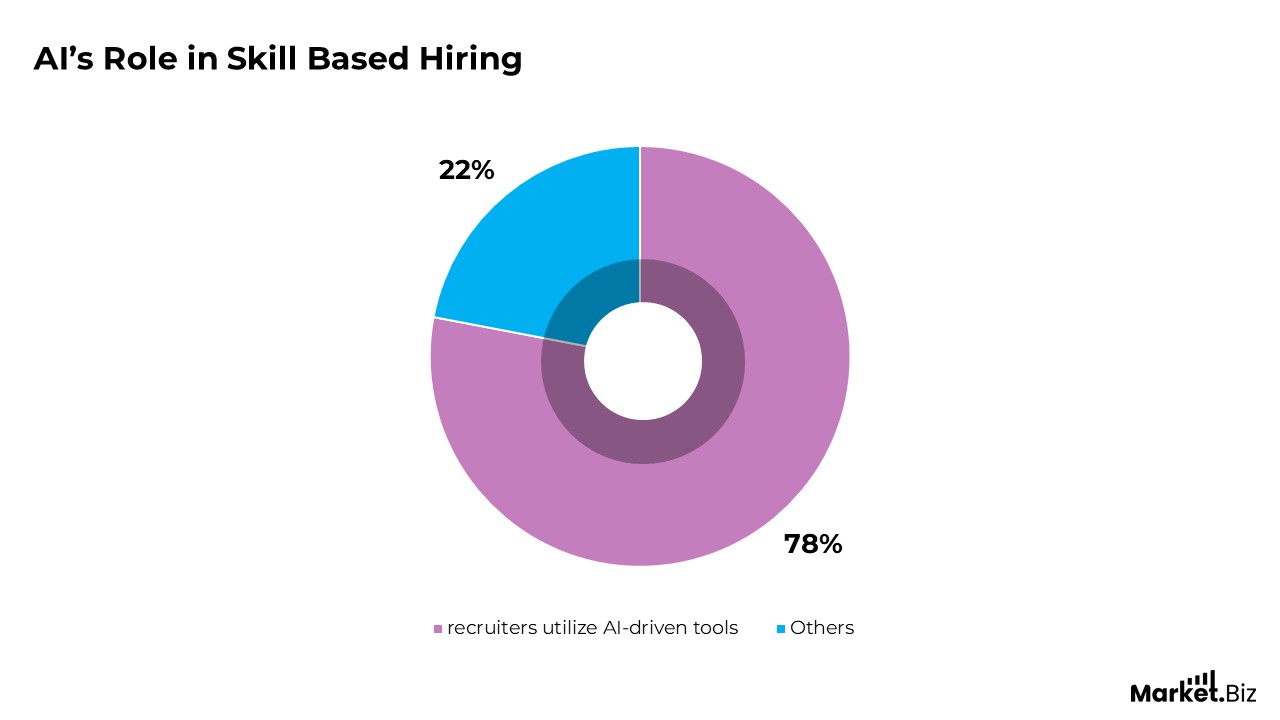
AI’s Role in Skill Based Hiring
- 78% of recruiters utilize AI-driven tools to screen potential candidates based on skills, not resumes.
- AI technology based assessments have been shown to reduce hiring bias on average by 35%, improving fairness when assessing skills.
- When companies choose to use AI for hiring purposes, they are reporting a 40% faster screening process for skill-based candidates.
- 64% of HR leaders indicated that using AI can improve the accuracy of skill matching between candidates and jobs.
- AI skill testing increases the likelihood of hiring top talent by 30%.
- 55% of companies are using AI-based chatbots to measure candidates’ skills in the early stages of recruitment.
- AI reduces time-to-hire by 25%, based on skill in the recruitment process.
- 70% of recruiters believe AI helps reveal hidden skills that candidates don’t include on resumes.
- AI tools are capable of analysing thousands of skill-based assessments in minutes. AI improves hiring efficiency by 45%.
- 60% of employers are adopting AI to assess a candidates probability of success based on the data derived from a skill assessment.
- AI utilizes candidate skill data to provide more personalized job recommendations based on role requirements in 85% of cases.
- 50% of organizations report that AI improves candidate experience in skill-based hiring processes.
- AI adoption in skill-based hiring will continue to grow by 35% per year for the next 5 years.
Skill Based Hiring on Remote Work
- 72% of employers, when hiring for remote positions, state a preference for hiring candidates based on skills, rather than degree.
- When hiring based on skills rather than a traditional hire, we open up 45% of the remote job market to non-traditional candidates.
- 80% of remote employees say that skills assessments help them find remote jobs that match their capabilities and skill set.
- Employers who use skills-based hiring have an increase of 30% productivity compared to other employees.
- 65% of remote teams are now formed by skills-first hiring as opposed to traditional resumes.
- Skills-based hiring lead time for remote roles is on average 25% faster than a traditional hire.
- 78% of companies state that skills-based hiring helps improve diversity, inclusion and belonging with remote teams.
- Remote workers hired based on skills are 40% more likely to stay with the company.
- 70% of remote job postings now have a skills test requirement as a prerequisite before candidates are considered for the role versus having a formal qualification.
- Skills-based hiring increases the talent pool for remote roles by an additional 50% of people on a global scale.
- 60% of remote managers said they trust skills assessments more than interviews for hiring decisions.
- Remote workers hired by the skills method report a 35% increase in job satisfaction.
- Skills-based hiring assures remote work by 42% reduction bias hires on a global scale.
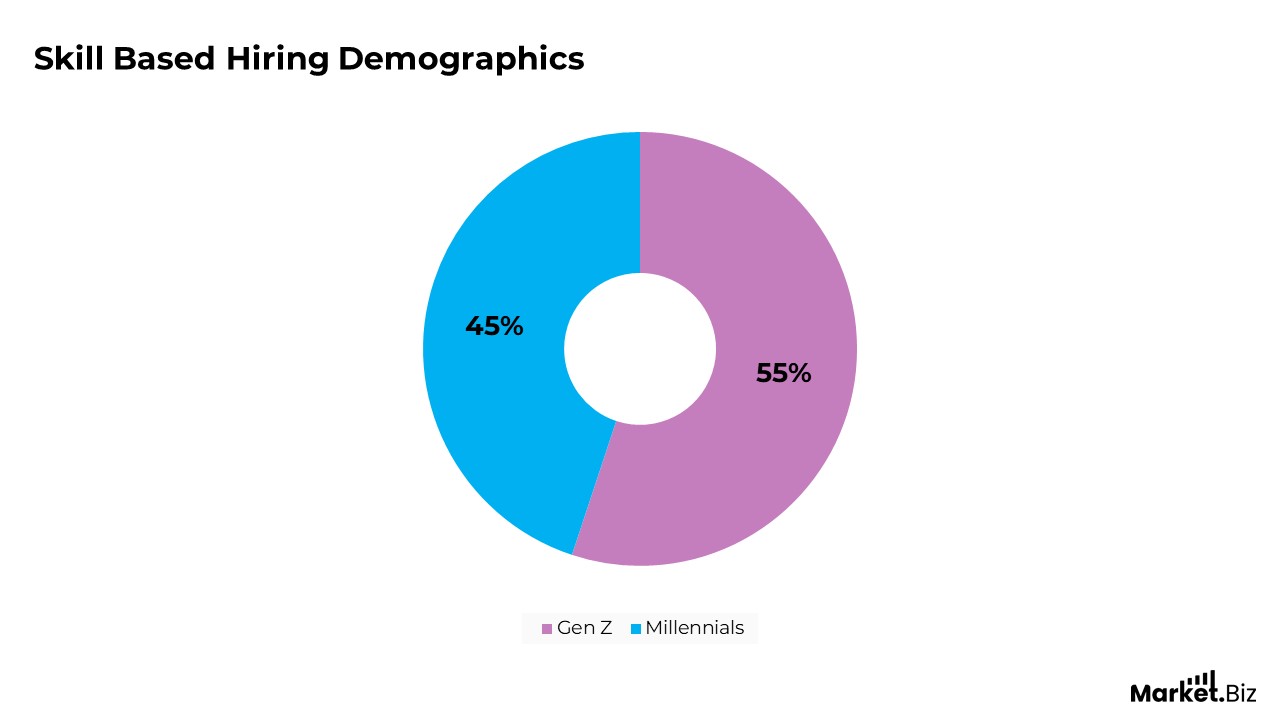
Skill Based Hiring Demographics
- 65% of Gen Z applicants are more likely to consider employers that emphasize skills and abilities, rather than degree attainment.
- Job candidates between 25-34 years old are 40% more likely to be hired using a skills based approach to recruitment.
- 53% of Millennials prefer skills assessment, rather than interviews, when applying for jobs.
- Only 28% of employers require candidates to hold a degree if they demonstrate skills or competencies in assessments.
- Candidates who don’t have a degree are now 20% more likely to be hired via skills-based approaches to recruitment.
- 70% of workers aged 45+ say skill-based recruitment processes put them in a better position to find employment.
- For 60% of employers using skills-first recruitment practices, education is no longer the number one consideration.
- Job applicants with technical certification are 35% more likely to be offered a role using skills-based recruitment.
- 45% of companies are using skills assessment to promote internal candidates regardless of educational qualifications.
Requirements for Skill Based Hiring
- 85% of HR leaders reported that clear definition of skills are an important factor to hiring successfully based on skills.
- A large number of employers (70%) need to have standardized assessments of skills to appropriately assess candidate qualifications without risk of bias or uncertainly.
- 65% of recruiters noted that having the job description focus on skills rather than simply education and/or qualifications is essential for recruitment.
- 55% of organizations have used AI powered tools for skill testing to increase accuracy.
- 60% of companies will continue to have employees trained so that they maintain their skillset due to the changing nature of work.
- 72% of HR departments noted they must reliably collect data sets related to skills to make appropriate hiring decisions.
- 50% of employers have used skill tests in combination with behavioural interviews to assess candidates in totality.
- Being clear about appropriate skills to candidates allowed organizations to significantly improve hiring outcomes by 30%.
- 58% of recruiters expect the validation of skills through realistic work samples or simulations.
- 62% of organizations engaging in skills based hiring require access to labor market skill data to remain relevant.
- 40% of organizations will require cross-functional collaboration to derive core skills related to specific jobs.
- Skill-based hiring requires buy-in-from leadership and 68% of HR leaders said leadership buy-in was a key motivation for skills-based hiring.
- A legal requirement for many firms (45%) is that any skill assessments undertaken must be legally compliant and free from discrimination.
Recent Developments
- 75% of businesses have verified recent gains in funding for AI-enabled skill evaluations since 2022.
- 20% of employers have used virtual reality skills testing to evaluate physical skill sets.
- 60% of recruiters say they are using micro-credentialing and digital badges to validate skills as part of the hiring process more now than at any time before in recent memory.
- Platform services that offer skill-based hiring and credential verification using block chain technology have grown by 30%.
- Remote skills assessments have increased by 50% due to the rise of workers seeking remote jobs.
- 40% of organizations are now using AI video interviews to evaluate communication abilities and skills in musicians at the same time.
- For companies employing skills-first hiring, hiring speeds are reported to be up to 35% faster than processes using non-skills-first methodologies.
- Gamified skills tests make up 25% of skills assessments as part of the talent evaluation process to generate a candidate’s engagement in their evaluation.
- 55% of employers are also evaluating soft skills as part of their hiring process along with technical skill evaluation.
Conclusion
Skills-based hiring is transforming hiring companies that have focused on a traditional talent approach which only focused on education or pedigree. Evidence and statistics suggest a skills-based hiring process will increase diversity, decrease time to hire, and increase new hire retention. Talent acquisition is increasingly turning to skills-based hiring approaches for the right candidates to join their teams regardless of their location thanks to advances in remote working environments or technology.
AI and other tools are becoming better at administering skills assessments in ways that are reliable, accurate and fair. Skills-based hiring ultimately allows companies to build a stronger, more productive workforce, and candidates need a career opportunity in today’s world. Skills-based hiring approaches are expected to rapidly grow in future years.
FAQs
Skills-based hiring is selecting candidates based on their competency and skills instead of just degrees or work experience.
It helps employers quickly find the best talent, increases diversity and reduces hiring biases, according to recent data.
Around 70% of global companies in all sectors use skills-based hiring to optimise their recruitment processes.
Yes, over 50% of organisations in all sectors use skills-based hiring to optimise their recruitment processes.
AI is used by nearly 60% of companies to accurately assess skills and reduce bias within the screening process.