









Introduction
Autonomous Vehicles Statistics: Autonomous vehicles, commonly known as self-driving cars, operate independently by utilizing advanced sensors, cameras, radar, and artificial intelligence technology. These vehicles are categorized into six levels of autonomy, ranging from basic driver assistance to complete automation. They possess the capability to handle all driving tasks in any situation.
Key components consist of environmental sensors, AI for decision-making processes, and connectivity for the exchange of real-time data. The advantages include enhanced safety, efficient traffic management, improved accessibility, and potential benefits for the environment.
However, challenges such as regulatory complexities, technological limitations in difficult conditions, and the need for public trust continue to pose significant hurdles. Despite these challenges, continuous advancements in autonomous driving technology by companies such as Waymo and Tesla are propelling progress in this domain.
Editor’s Choice
- The global revenue for the autonomous vehicles market reached USD 208 billion in 2023.
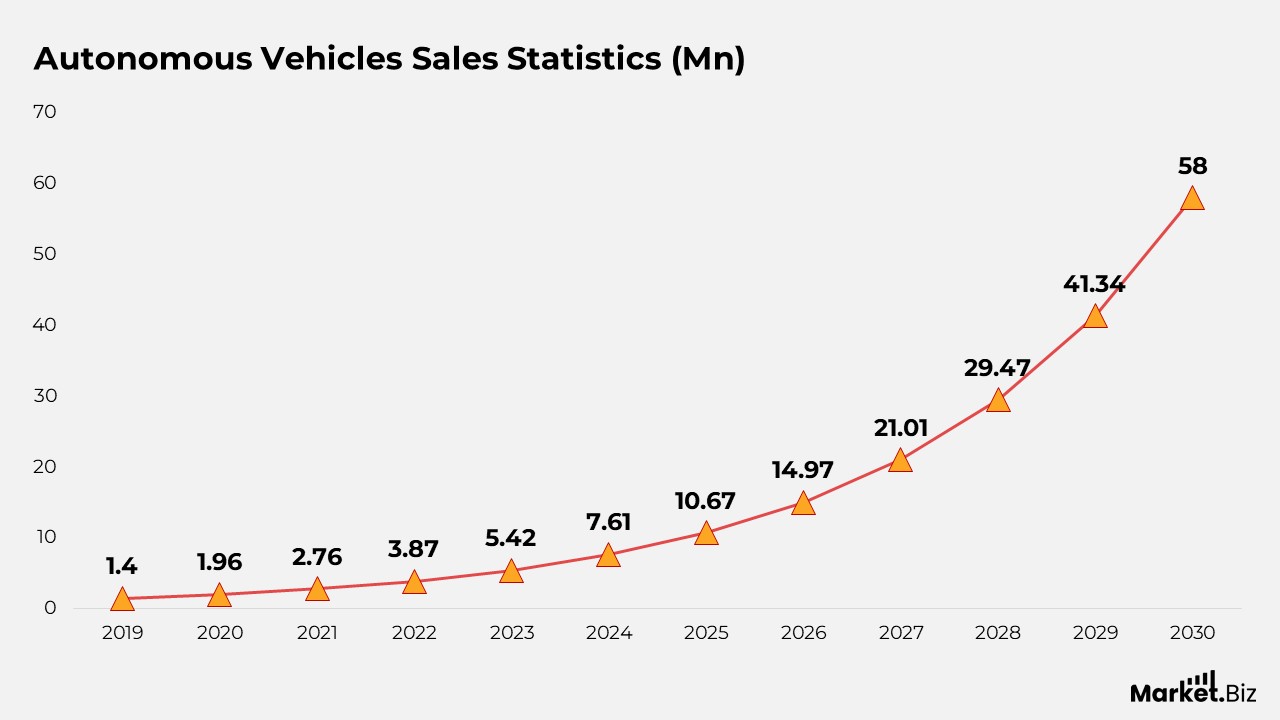
- By 2029, sales of autonomous vehicles are projected to soar to 41.34 million units, and by 2030, they are expected to achieve a remarkable 58 million units.
- In 2022, there were around 16,960 autonomous vehicles operating globally.
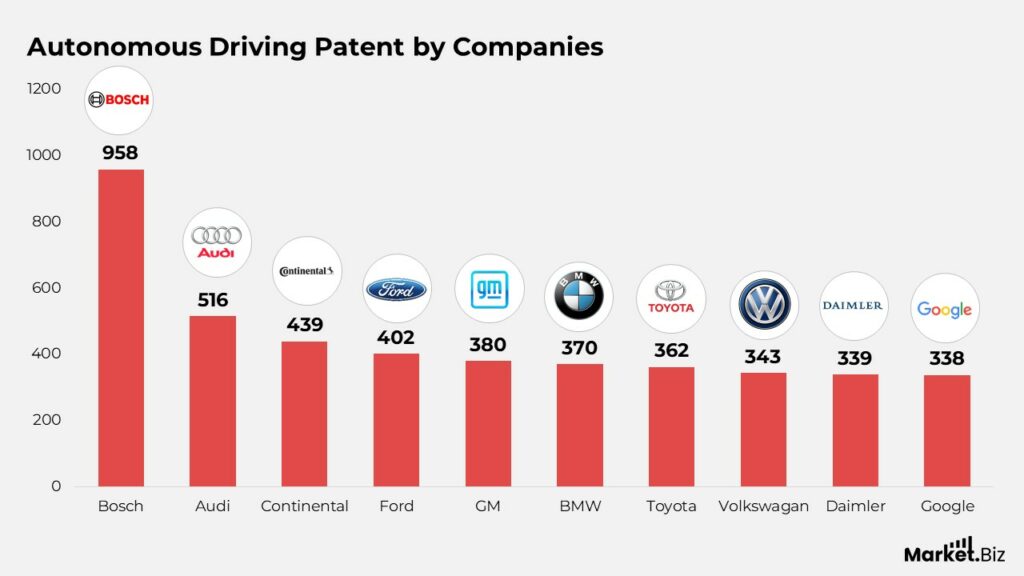
- Bosch led the world in patent applications related to autonomous driving, accumulating a total of 958 patents.
- In 2019, sales amounted to 1.4 million units, which rose to 1.96 million units in 2020.
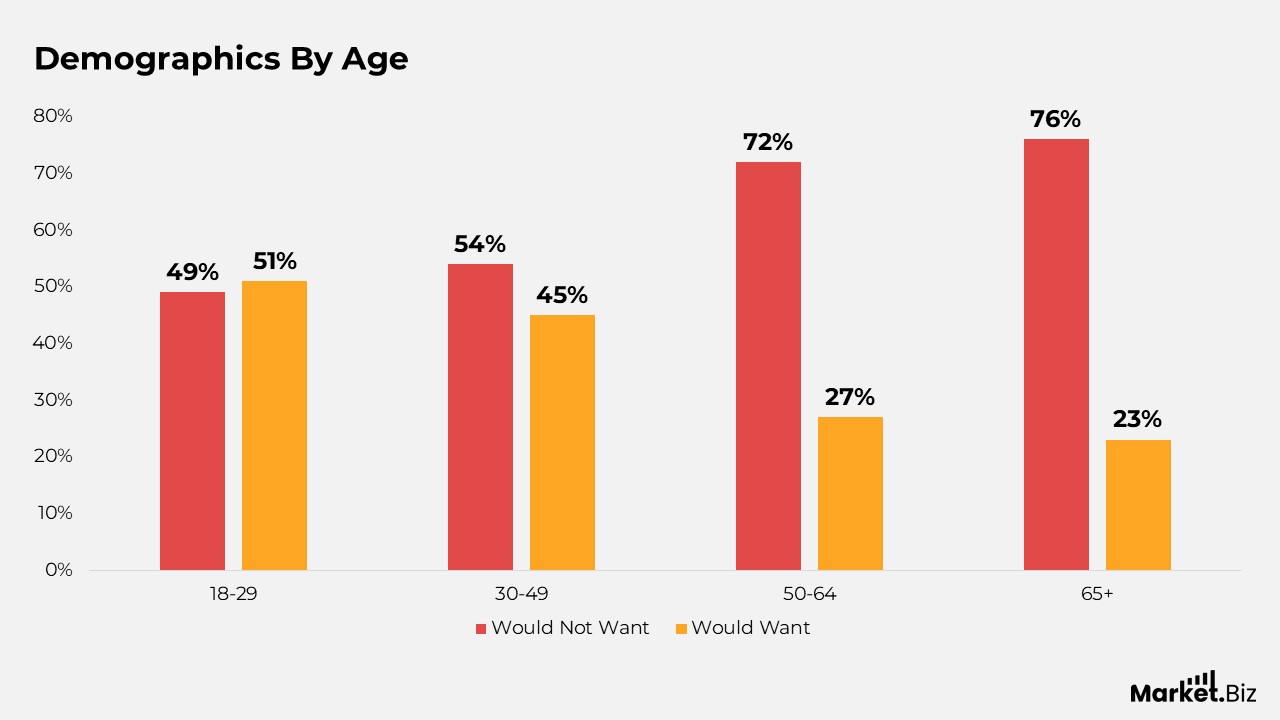
- In the age bracket of 18-29, 51% indicate that they would either definitely or probably be interested in riding in a driverless vehicle, whereas 49% show hesitation.
General Autonomous Vehicles Statistics
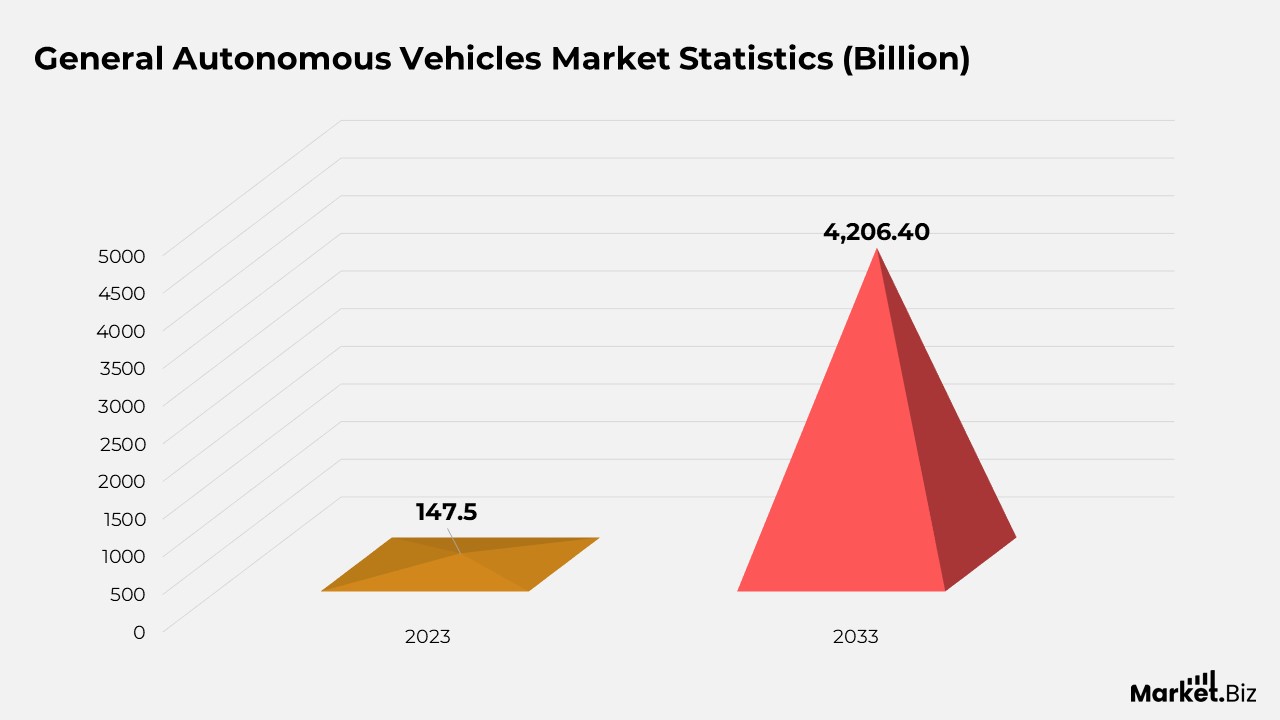
- The global revenue for the autonomous vehicles market reached USD 208 billion in 2023.
- The market is projected to maintain its rapid expansion, with expectations of reaching USD 2,874 billion by 2031 and USD 4,206.4 billion by 2032.
- Semi-autonomous vehicles are anticipated to contribute USD 2,326.14 billion, while fully autonomous vehicles are expected to generate USD 1,880.26 billion.
- In the realm of autonomous vehicles, transportation applications dominate, accounting for 65% of the market share.
- By the end of the decade, it is anticipated that the global count of autonomous vehicles will reach 125,660 units by 2030, highlighting the swift progress and acceptance of autonomous vehicle technology.
- From January 2010 to July 2017, Bosch was at the forefront of global patent applications concerning autonomous driving, amassing a total of 958 patents.
- By 2029, sales of autonomous vehicles are projected to soar to 41.34 million units, and by 2030, they are expected to achieve a remarkable 58 million units.
- Several factors have been recognized that could enhance consumer confidence in autonomous vehicles (AVs). According to survey participants, 64% assert that a substantial improvement in safety is crucial.
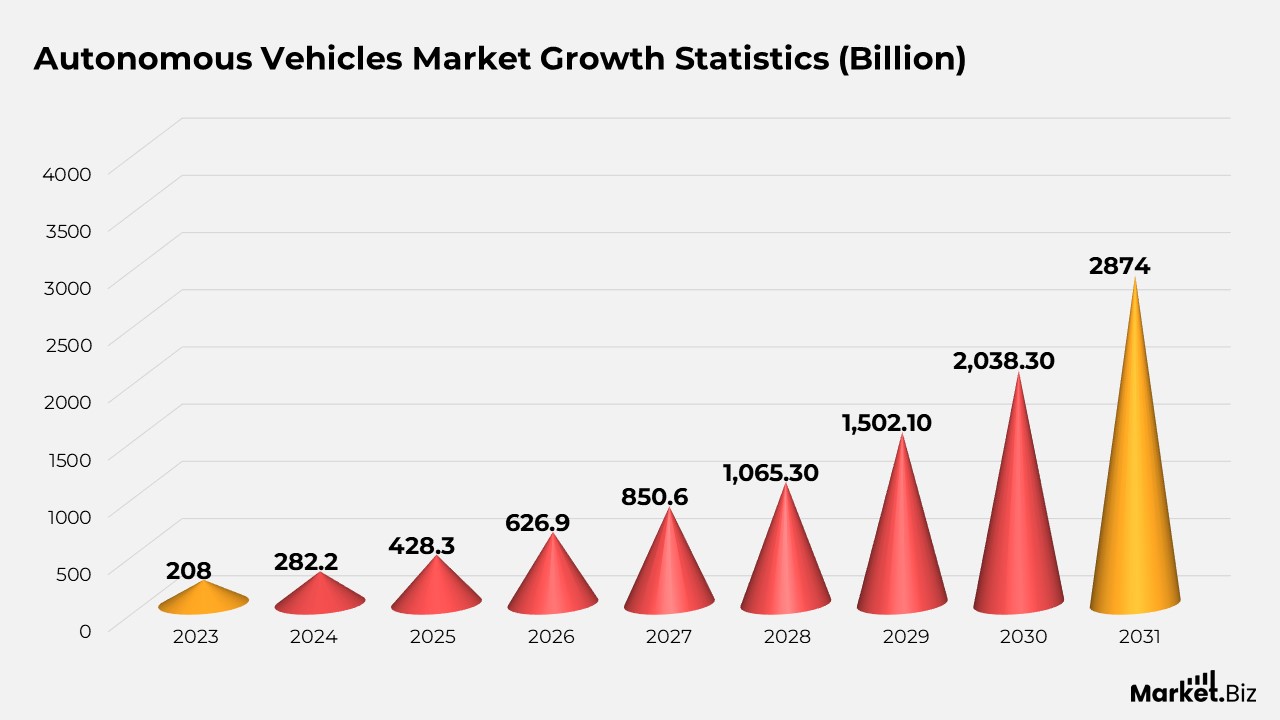
Autonomous Vehicles Market Growth Statistics
- The global market for autonomous vehicles has experienced significant growth over the last ten years, achieving a compound annual growth rate (CAGR) of 41%. Revenue has risen from USD 147.5 billion in 2022 to USD 208 billion in 2023.
- This positive trend is expected to persist, with projections indicating that the market will reach USD 282.2 billion in 2024.
- By 2025, revenue is forecasted to more than double, reaching USD 428.3 billion.
- The growth trajectory of the market remains strong, with estimates suggesting USD 626.9 billion in 2026 and USD 850.6 billion in 2027.
- This expansion is anticipated to accelerate further, with revenues expected to reach USD 1,065.3 billion in 2028 and USD 1,502.1 billion in 2029.
- By the conclusion of the decade, the market is projected to achieve an impressive revenue of USD 2,038.3 billion in 2030.
- The momentum is expected to carry into the early 2030s, with the market anticipated to generate USD 2,874 billion in 2031 and a remarkable USD 4,206.4 billion by 2032.
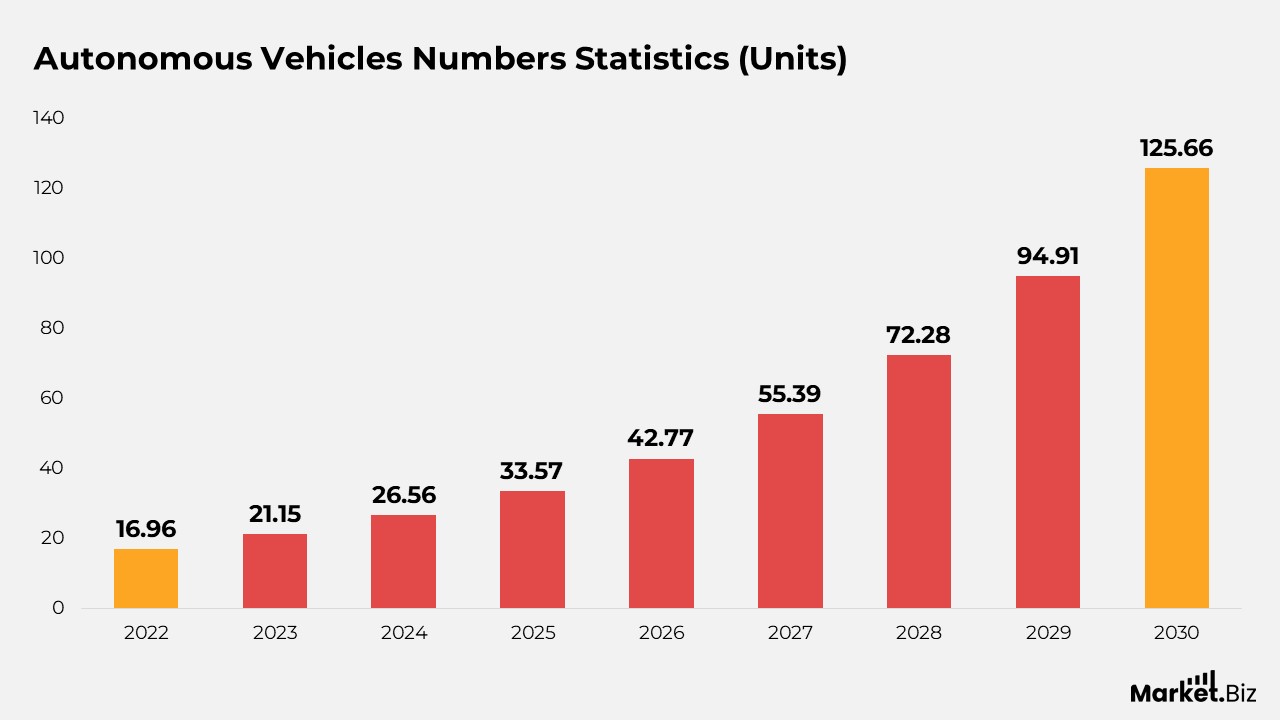
Statistics of Autonomous Vehicles Numbers
- In 2022, there were around 16,960 autonomous vehicles operating globally.
- This figure increased to 21,150 units in 2023, indicating a rising acceptance of autonomous technology.
- The trend is projected to persist, with the number of autonomous vehicles expected to hit 26,560 units in 2024.
- By 2025, the fleet is forecasted to grow to 33,570 units, showcasing a notable upward trend.
- This expansion is anticipated to quicken, with the number of autonomous vehicles likely to reach 42,770 units in 2026 and 55,390 units in 2027.
- By 2028, the worldwide total is expected to climb to 72,280 units, and by 2029, it is projected to further rise to 94,910 units.
- By the end of the decade, the global count of autonomous vehicles is expected to reach 125,660 units in 2030, highlighting the swift progress and acceptance of autonomous vehicle technology.
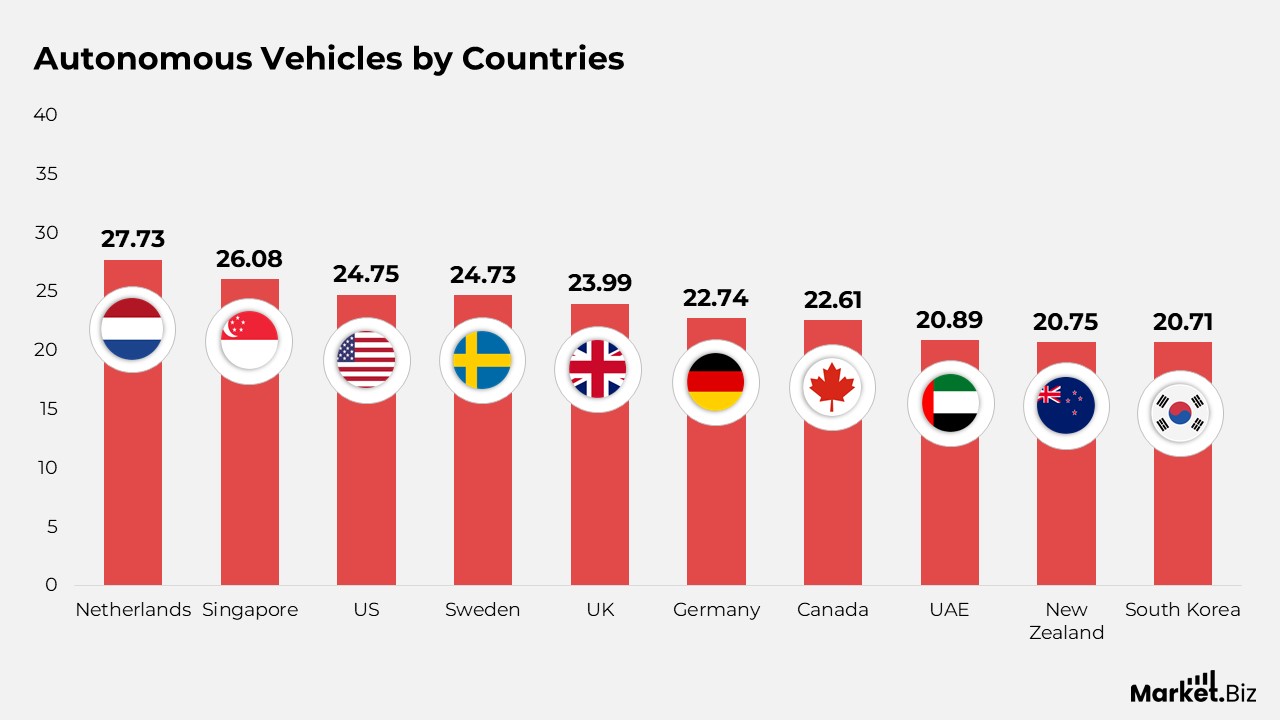
Autonomous Vehicles by Countries
- The Netherlands secured the top position in the rankings with a score of 27.73, demonstrating its sophisticated infrastructure and a favorable regulatory framework for autonomous vehicles.
- Singapore ranked closely behind with an index score of 26.08, underscoring its considerable investments in technology and innovation.
- The United States attained a score of 24.75, reflecting significant advancements in its preparedness for autonomous vehicles.
- The United Kingdom and Sweden exhibited comparable levels of preparedness, attaining scores of 23.99 and 24.73, respectively.
- Canada and Germany also demonstrated considerable readiness, with scores of 22.61 and 22.74.
- New Zealand and the United Arab Emirates recorded scores of 20.75 and 20.89, respectively, reflecting their growing dedication to the progression of driverless car technology.
- South Korea secured a position in the top ten with an index score of 20.71, highlighting its continuous progress in the development of autonomous vehicle infrastructure and related policies.
Autonomous Driving Patent by Country
- The United States leads with an impressive total of 135,828 patents, closely trailed by China, which holds 132,844 patents.
- Japan has a total of 57,065 patents, demonstrating its strong position in this field.
- South Korea and Germany have also made significant contributions, with patent totals of 38,097 and 33,512, respectively.
- Canada and Australia each have noteworthy patent counts, amounting to 14,585 and 14,026, respectively.
- The Russian Federation has gathered 12,121 patents, while France and Spain possess 9,488 and 7,145 patents, respectively.
Companies Patent by Autonomous Driving
- Bosch led the world in patent applications related to autonomous driving, accumulating a total of 958 patents.
- Audi followed in second place with 516 patents, demonstrating its strong commitment to innovation in this sector.
- Continental filed 439 patents, while GM and Ford contributed 380 and 402 patents, respectively.
- BMW and Toyota also stood out as significant contributors, with 370 and 362 patents submitted.
- Volkswagen and Daimler filed 343 and 339 patents, respectively.
- Google, a prominent non-automotive player in this area, submitted 338 patents.
Autonomous Vehicles Sales Statistics
- In 2019, sales amounted to 1.4 million units, which rose to 1.96 million units in 2020.
- This upward trend persisted in 2021, with sales hitting 2.76 million units.
- By 2022, sales further increased to 3.87 million units, and in 2023, they reached 5.42 million units.
- Sales are anticipated to grow substantially in the coming years, with projections of 7.61 million units in 2024 and 10.67 million units in 2025.
- The positive trend is expected to continue, with forecasts of 14.97 million units in 2026, 21.01 million units in 2027, and 29.47 million units in 2028.
- By 2029, sales are predicted to soar to 41.34 million units, and by 2030, they are expected to achieve an impressive 58 million units.
ADAS Features Statistics & Autonomous Driving
- In the year 2020, the Multi-View Camera System achieved a rate of 28.8%. This figure is expected to rise to 40.8% by 2022 and reach 51.8% by the year 2025.
- The Adaptive Driving Beam feature, beginning at 25.8% in 2020, is expected to rise to 35.8% in 2022 and 47.8% in 2025.
- Lane Departure Warning systems, with a penetration rate of 30.7% in 2020, are projected to achieve 40.7% in 2022 and 49.7% by 2025.
- Likewise, Lane Changing Assist is forecasted to grow from 25.2% in 2020 to 31.2% in 2022 and 36.2% in 2025.
- Traffic Sign Recognition, starting at 11% in 2020, is expected to reach 21% in 2022 and 32% by 2025.
- Rear Cross Traffic Alert systems, at 16.6% in 2020, are projected to increase to 26.6% in 2022 and 37.6% by 2025.
- It is important to highlight that the adoption rate for Cruise Control is projected to decrease markedly from 40.5% in 2020 to 25% in 2022, and further to 5% by 2025.
- Lane Keeping Assist systems are anticipated to grow from 23.3% in 2020 to 33.3% in 2022 and 48.3% by 2025.
- Autonomous Emergency Braking, which had the highest initial rate of 41.7% in 2020, is projected to rise to 53.7% in 2022 and 69.7% by 2025.
- Finally, Adaptive Cruise Control, starting at 27% in 2020, is expected to increase to 43% in 2022 and 69% by 2025.
Autonomous Vehicle Demographics
By Age
- In the age bracket of 18-29, 51% indicate that they would either definitely or probably be interested in riding in a driverless vehicle, whereas 49% show hesitation.
- For individuals aged 30-49, the willingness to ride decreases to 45%, with 54% expressing a desire not to participate.
- The reluctance escalates in the 50-64 age category, where 72% are opposed to riding in a driverless vehicle, leaving only 27% who are open to the idea.
- Among older aged 65 and above, 76% are not inclined to ride in a driverless vehicle, with merely 23% showing interest.
By Gender
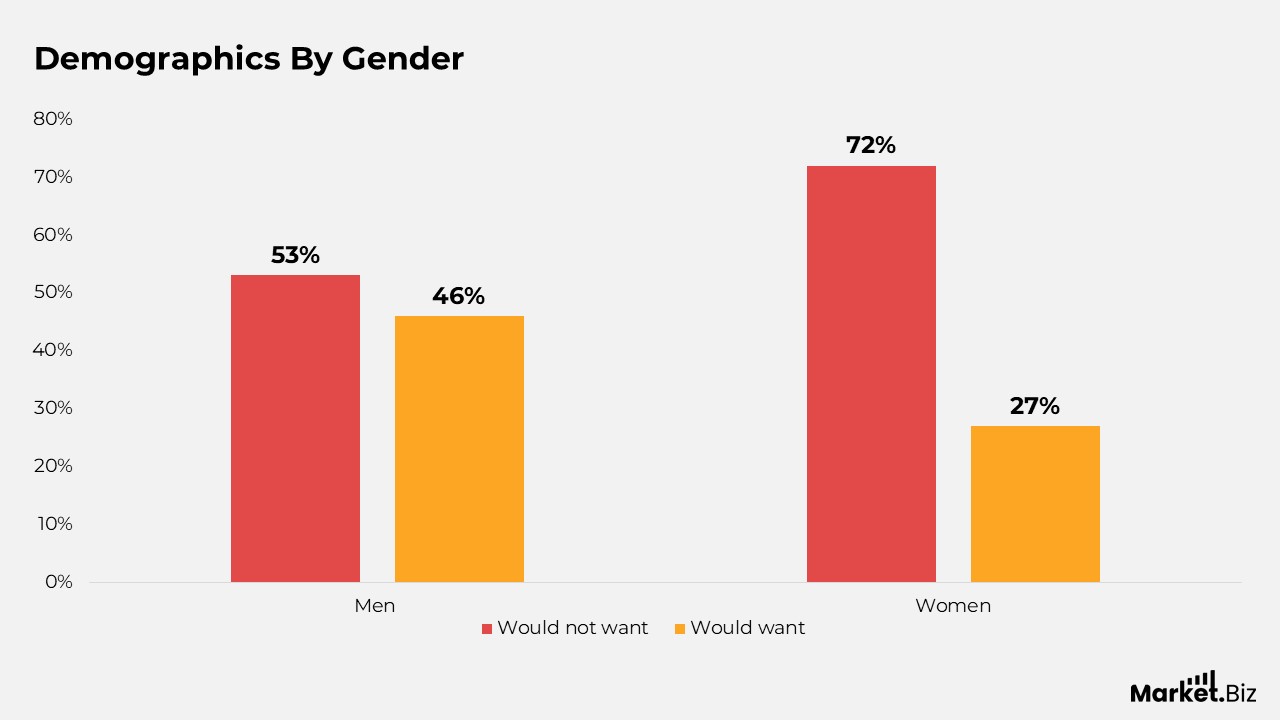
- Among men, 46% express that they would either definitely or probably be interested in riding in a driverless passenger vehicle if the opportunity arose, whereas 53% indicate they would prefer not to.
- In contrast, a significant majority of women exhibit greater unwillingness, with 72% stating they would not wish to ride in a driverless vehicle, while only 27% show interest.
Future of Autonomous Vehicles Statistics
- In India, 9% of participants believe that these services will be accessible before 2025, while 28% anticipate their availability between 2025 and 2030. Furthermore, 35% expect them to be available between 2030 and 2035, 23% predict that they will be accessible after 2035, and 5% think that it will never occur.
- In Western Europe, 15% foresee availability before 2025, 40% expect it between 2025 and 2030, 32% predict it between 2030 and 2035, 11% believe it will be available after 2035, and 2% think it will never happen.
- In Japan, 20% anticipate these services will be available before 2025, 40% expect them between 2025 and 2030, 28% foresee availability between 2030 and 2035, 11% predict it will be after 2035, and 1% think it will never occur.
- In the United States, 26% foresee these services being available before 2025, 39% expect them between 2025 and 2030, 26% predict availability between 2030 and 2035, 8% believe it will be after 2035, and 1% think it will never occur.
Recent Developments
- In June 2024, Amazon.com’s robotaxi division, Zoox, revealed its intention to commence testing autonomous vehicles in Austin, Texas, and Miami. This initiative will represent its inaugural trial locations beyond the western United States. Zoox plans to utilize a fleet of modified Toyota Highlanders, which will include human safety drivers, in designated areas close to the business and entertainment sectors of both cities.
- In May 2024, Japan’s Defense Ministry disclosed its strategy to establish a technology research center in the upcoming fall, aimed at developing applications for innovations such as artificial intelligence. This initiative seeks to foster collaboration with the private sector, similar to the partnerships observed in the United States.
- In June 2024, Tesla introduced a new tab that launched a software update for its in-car navigation system in China on Friday. This update incorporates new functionalities, including the ability to display lane markings on its maps that align with the actual lanes present on the road.
Conclusion
Autonomous Vehicles Statistics: Autonomous vehicles signify a revolutionary change in transportation, providing greater safety, enhanced mobility, and decreased congestion through cutting-edge technologies such as AI, machine learning, and 5G.
However, despite their promise, the broad acceptance of these vehicles encounters considerable obstacles, including the need to ensure safety, create comprehensive regulations, tackle cybersecurity issues, and build public confidence.
The economic implications, including job displacement and emerging opportunities in technology and infrastructure, are also vital factors to consider. By addressing these challenges through innovation and collaboration, we can achieve safer roads and more efficient transportation systems, fundamentally transforming our travel experience.
FAQs
AI facilitates the safe navigation of self-driving cars, trucks, and buses on roads through the use of sensors, cameras, and deep learning algorithms.
According to the National Law Review, there are 9.1 crashes involving self-driving cars for every 1 million miles traveled. In contrast, traditional human-operated vehicles experience a crash rate of 4.1 per million miles.
Autonomous vehicles offer enhanced mobility and independence to individuals who are unable to drive due to age, disabilities, or other circumstances. These self-driving vehicles provide a safe and convenient transportation option for those who may otherwise face challenges in their ability to travel.

