









Introduction
Breakfast Cereal Statistics: Breakfast cereals consist of processed grains such as wheat, corn, oats, and rice, which are shaped into flakes, puffs, or various forms, making them a convenient meal option that is typically consumed cold with milk or yoghurt. These cereals are often sweetened and enriched with vitamins and minerals, serving to break the overnight fast and provide quick energy.
Statistics regarding breakfast cereals indicate a rapidly expanding global market, which is expected to exceed $100 billion by 2032. This growth is fuelled by urbanisation, hectic lifestyles, and an increasing awareness of health, resulting in a heightened demand for convenient yet nutritious choices such as oats, muesli, and fortified cereals that supply essential vitamins, fiber, and whole grains. These options are particularly advantageous for enhancing children’s nutrient intake.
Notable trends indicate that supermarkets are the primary sales channels; however, e-commerce is on the rise, accompanied by a shift towards healthier selections. Despite this, sweetened varieties continue to enjoy considerable consumer preference, which affects health metrics such as Body Mass Index (BMI).
Editor’s Choice
- The creation of cereal can be traced back to the 1860s, a time when Americans predominantly consumed meat for breakfast rather than foods abundant in grains and fiber.
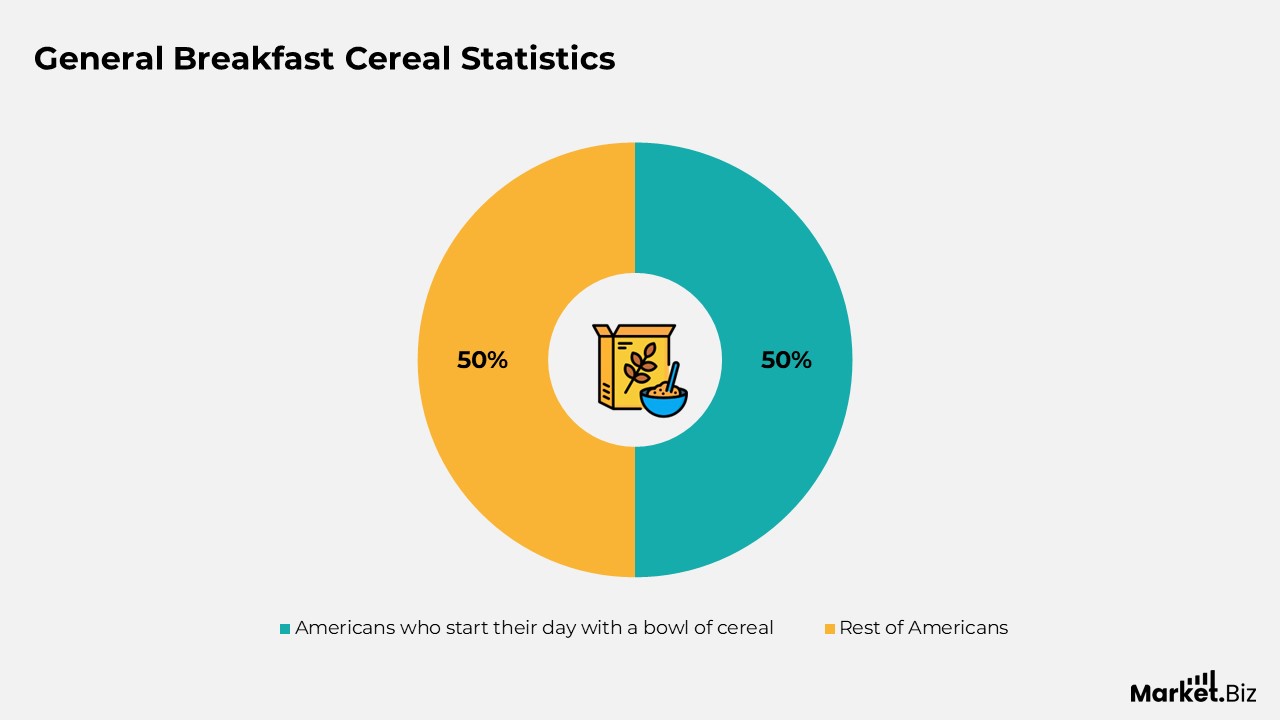
- About 50% of Americans start their day with a bowl of cereal.
- The average volume per person in the Breakfast Cereals market is expected to be 8.3 kg in 2024.
- In the United States, cold cereals continue to represent over 80% of cereal sales.
- On average, an American consumes about 14 pounds of cereal each year.
Cereal Historical Facts
- The creation of cereal can be traced back to the 1860s, a time when Americans predominantly consumed meat for breakfast rather than foods abundant in grains and fiber.
- The demand for healthier breakfast alternatives resulted in the emergence of cereal, initially referred to as Granula, a term derived from granulates.
- The term “cereal” is derived from Ceres, the Roman goddess associated with harvest and agriculture.
- In 1897, Grape-Nuts™ cereal was introduced as one of the first ready-to-eat cereals, enabling consumers to enjoy it without any cooking required.
General Breakfast Cereal Statistics
- About 50% of Americans start their day with a bowl of cereal.
- It is estimated that the typical American consumes around 160 bowls of cereal annually.
- During the pandemic, as more individuals remained at home and decreased their reliance on fast food and on-the-go breakfasts, there was a notable increase in cereal consumption. Sales rose by 12% compared to the previous year.
- A COVID-19 recovery tracker indicated that 65% of US consumers reported that the familiarity, trustworthiness, or perceived safety of a product frequently influences their purchasing decisions.
- A study conducted by the World Health Organization (WHO) in 2018 revealed that 66.5% of school children had ready-to-eat cereals for breakfast.
- The cereal industry utilises approximately 816 million pounds of sugar each year.
- Most Americans buy at least one box of cereal during their shopping trips, resulting in a total of 2.7 billion boxes of cereal sold each year.
- On average, an American consumes about 14 pounds of cereal each year.
- 2018 study stated that cereals marketed to children contained significantly higher amounts of total sugar and lower levels of protein and dietary fiber compared to other cereals.
Moreover
- From 2003 to 2018, the use of refined grains in cereals decreased by an average of 45%, while whole grains were introduced at a rate of 1.45 times to compensate for the reduction in refined grains.
- The Breakfast Cereals market is projected to reach a volume of 109.7 billion kg by 2029, with an anticipated growth of 0.5% in volume by 2025.
- The average volume per person in the Breakfast Cereals market is expected to be 8.3 kg in 2024.
- Battle Creek, Michigan, is recognised as the “Cereal Capital of the World” due to being the birthplace of Kellogg’s and Post, two of the four largest cereal manufacturers globally.
- Sales of organic and non-GMO cereals have been increasing, with a reported rise of over 25% in the last five years.
- Approximately 34% of cereals available in the market are specifically aimed at children, featuring colourful packaging and added sugars.
Global Breakfast Cereal Market
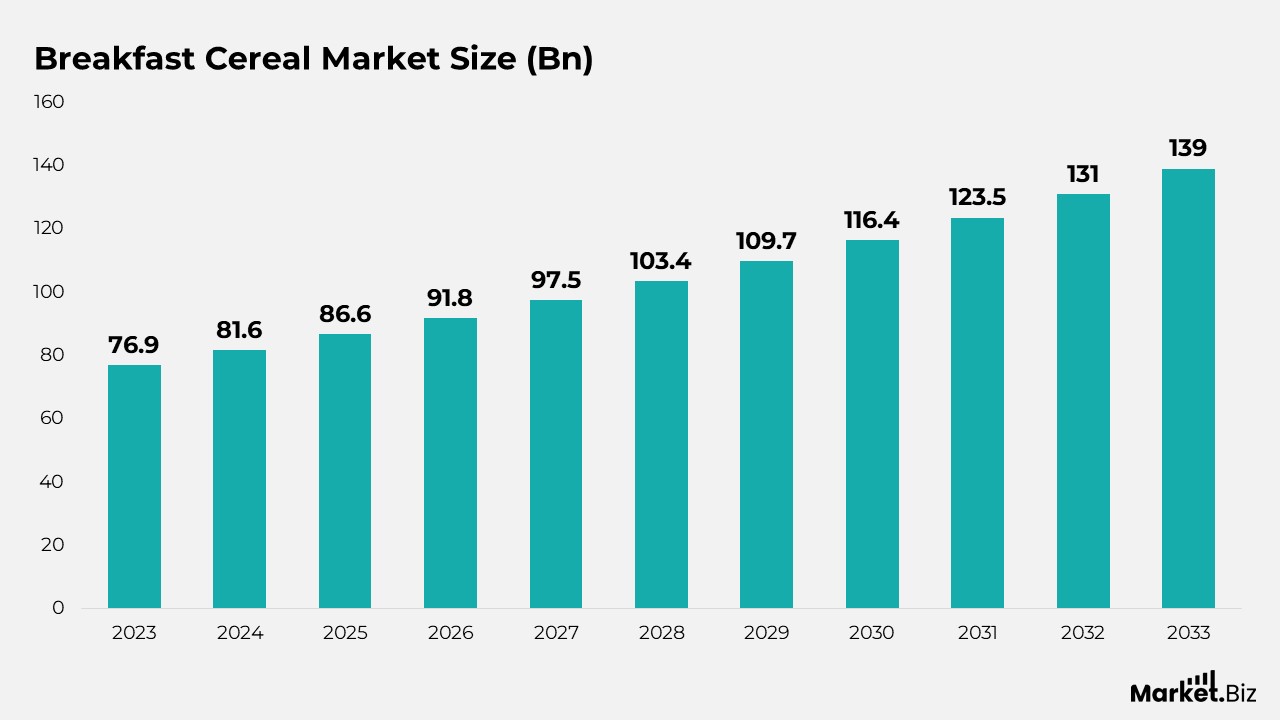
- The worldwide breakfast cereal market was estimated to be approximately $81.6 billion in 2024 and is anticipated to reach a value of $116.4 billion by 2030.
- North America holds the largest portion of the global cereal market.
- In the United States, cold cereals continue to represent over 80% of cereal sales.
- 43% of consumers indicate that they consume cereal as a snack.
- According to data from Tastewise, the three primary attributes that consumers desire in a cereal are: “Healthy,” “Tasty,” and “Protein.”
- Cereal is ranked 6th among the top 10 favorite breakfast foods of Americans.
- Members of Generation Z are less inclined to have breakfast and generally consume less cereal compared to individuals from other generations.
Regional Statistics
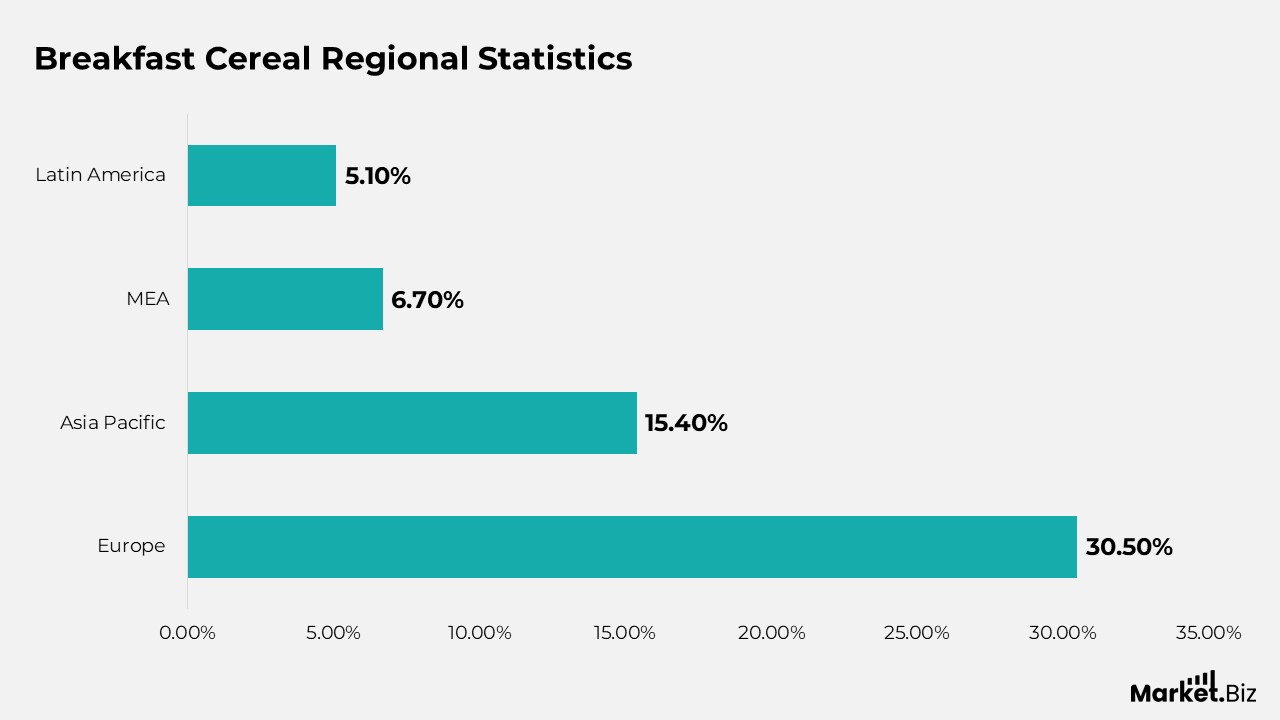
- Europe commands a market share of 30.5%, fueled by a robust demand for organic and natural cereals.
- The market is distinguished by a high level of consumer awareness regarding health benefits and a preference for quality ingredients.
- The market value is anticipated to expand at a CAGR of 2.8%.
- Asia Pacific represents 15.4% of the market share, with rapid urbanisation and rising disposable incomes propelling growth.
- This region is witnessing a transition towards Western dietary habits, including the consumption of breakfast cereals.
- The market is projected to grow at a CAGR of 5.1%, indicating substantial growth potential.
- The Middle East & Africa region accounts for a 6.7% market share. The market is expanding due to heightened health consciousness and increasing urbanisation.
- Nevertheless, growth is comparatively slower than in other regions, with a projected CAGR of 2.4%.
- Latin America holds a 5.1% market share. The growth in this region is driven by a rising consumer awareness of health and wellness, alongside a burgeoning middle class.
- The market is expected to grow at a CAGR of 3%, bolstered by the development of retail infrastructure and increasing disposable incomes.
Breakfast Cereal Consumption Statistics
- Historically, North America exhibits a significant level of cereal consumption per capita, with the average consumer in the U.S. consuming approximately 250 bowls of cereal annually, as indicated by industry statistics.
- Children under the age of 12 account for nearly 37% of breakfast cereal consumption in certain markets, underscoring the ongoing importance of cereal in the nutrition of young individuals.
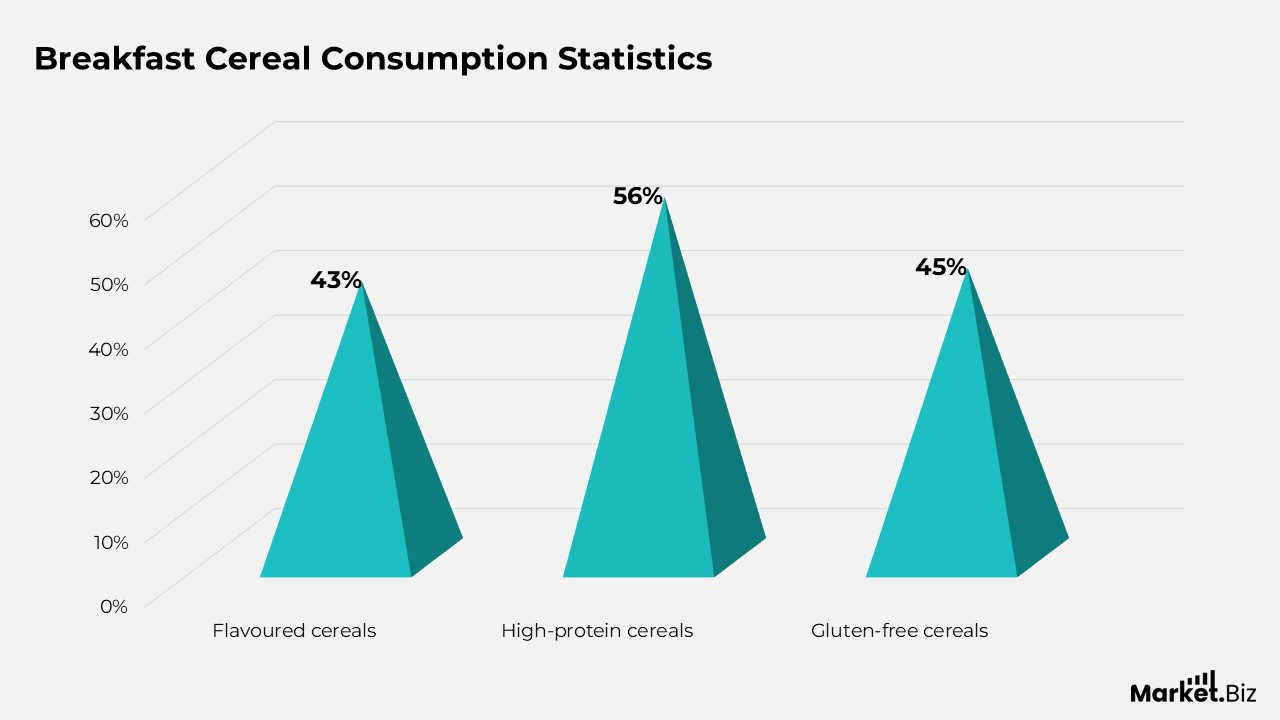
- Flavoured cereals constitute around 43% of the overall cereal sales in North America, emphasising the attractiveness of flavour and novelty.
- Sales of organic cereals have experienced an annual growth rate of about 7–8%, propelled by trends focused on wellness and health-conscious consumers.
- The demand for high-protein cereals has surged by approximately 56%, reflecting a shift in priorities towards fitness and satiety in breakfast selections.
- In recent years, gluten-free cereals have expanded by about 45%, contributing to the diversification of the broader market.
- Cereals made from plant-based and alternative grains, such as oats and quinoa, are increasingly popular as dietary trends shift towards sustainability and digestive health.
Breakfast Cereal Import & Export Statistics
- According to extensive global trade statistics, from June 2024 to May 2025, the world breakfast cereals market experienced 5,299 shipments imported, facilitated by approximately 330 exporters to 377 international buyers.
- During this timeframe, global cereal imports reflected a -5% change in comparison to the previous 12 months, signifying a decrease in shipment volume.
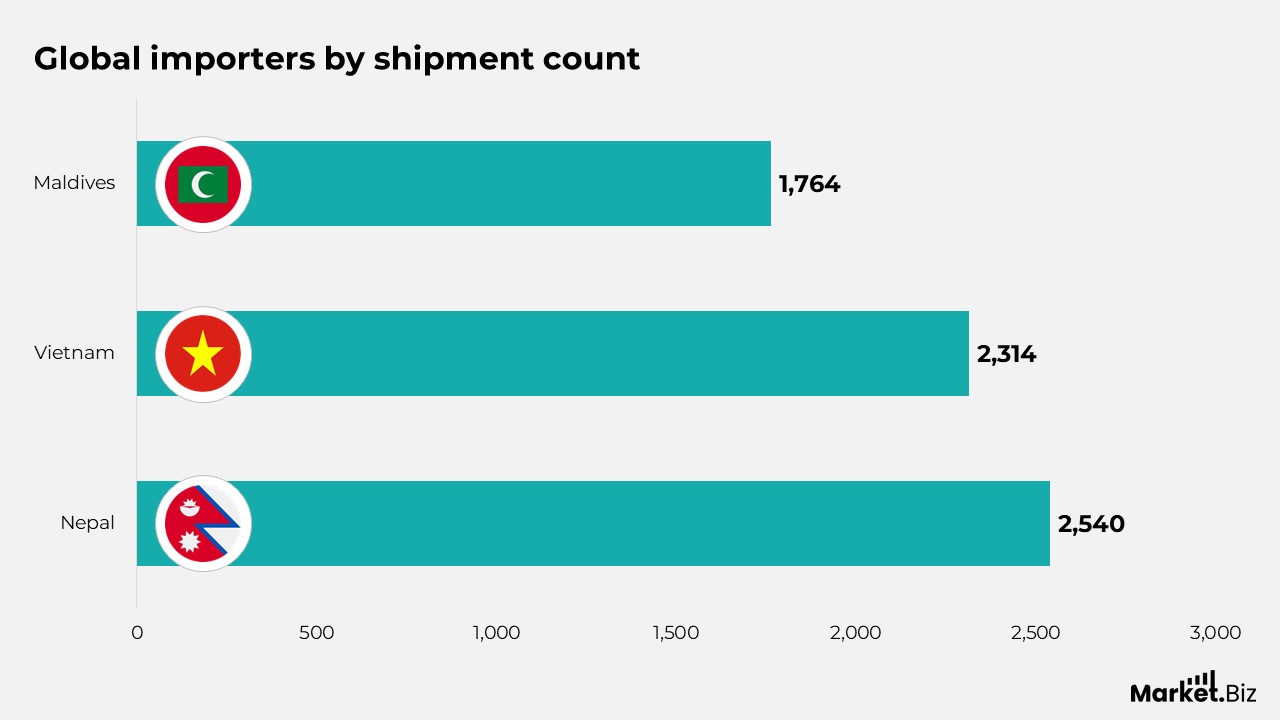
- The leading three global importers by shipment count during this period were Nepal (2,540), Vietnam (2,314), and the Maldives (1,764), together representing a significant portion of total imports.
- From the same dataset, 67 countries participated as exporters of breakfast cereals in the global market, while 105 countries engaged in imports, illustrating a broad involvement in international trade.
- In terms of overall trade tonnage, the highest national import volumes in 2024 were recorded for the United States (319 K tons), Canada (180 K tons), and Germany (151 K tons), which together accounted for approximately 29% of global imports.
- Countries such as the Netherlands (111 K tons), Belgium (102 K tons), China (84 K tons), and Spain (67 K tons) also reported smaller yet significant import volumes.
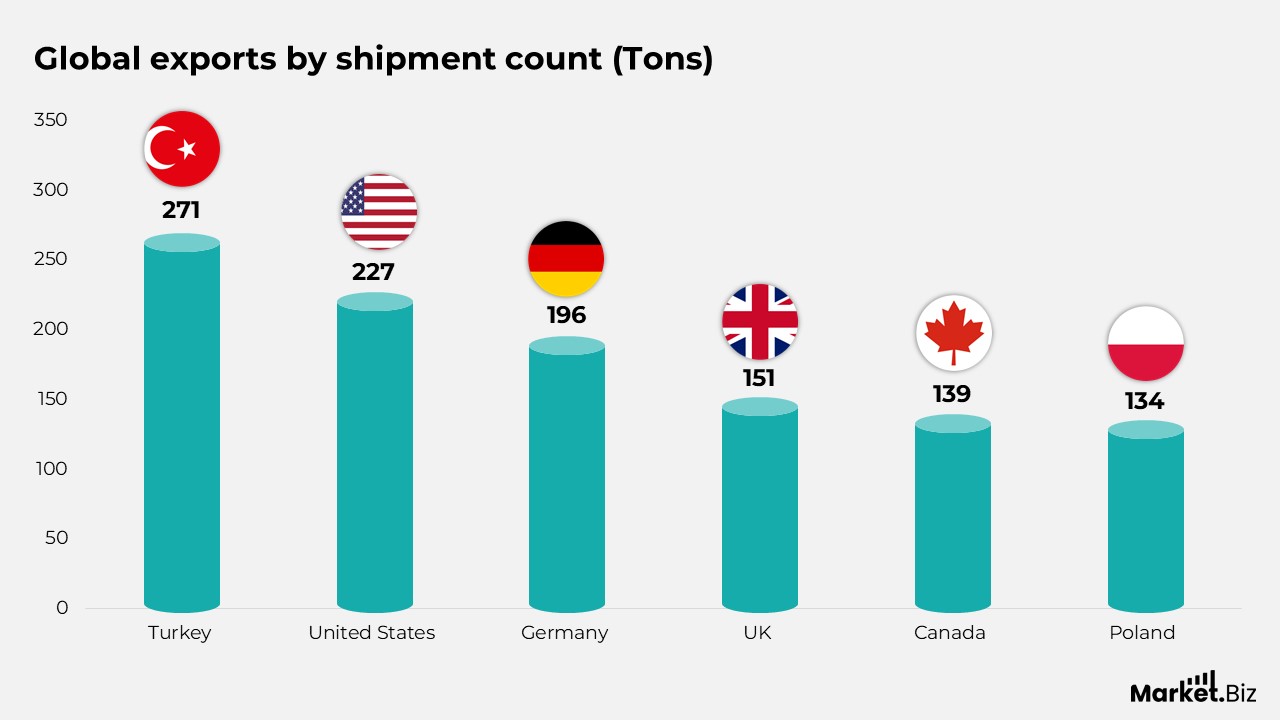
- On the export front in 2024, key shipping nations included Turkey (271 K tons), the United States (227 K tons), and Germany (196 K tons), collectively responsible for around 57% of the total exported volumes.
- Other notable exporters that year comprised the UK (151 K tons), Canada (139 K tons), and Poland (134 K tons), underscoring the diverse supply networks across various continents.
Import & Export by Countries Statistics
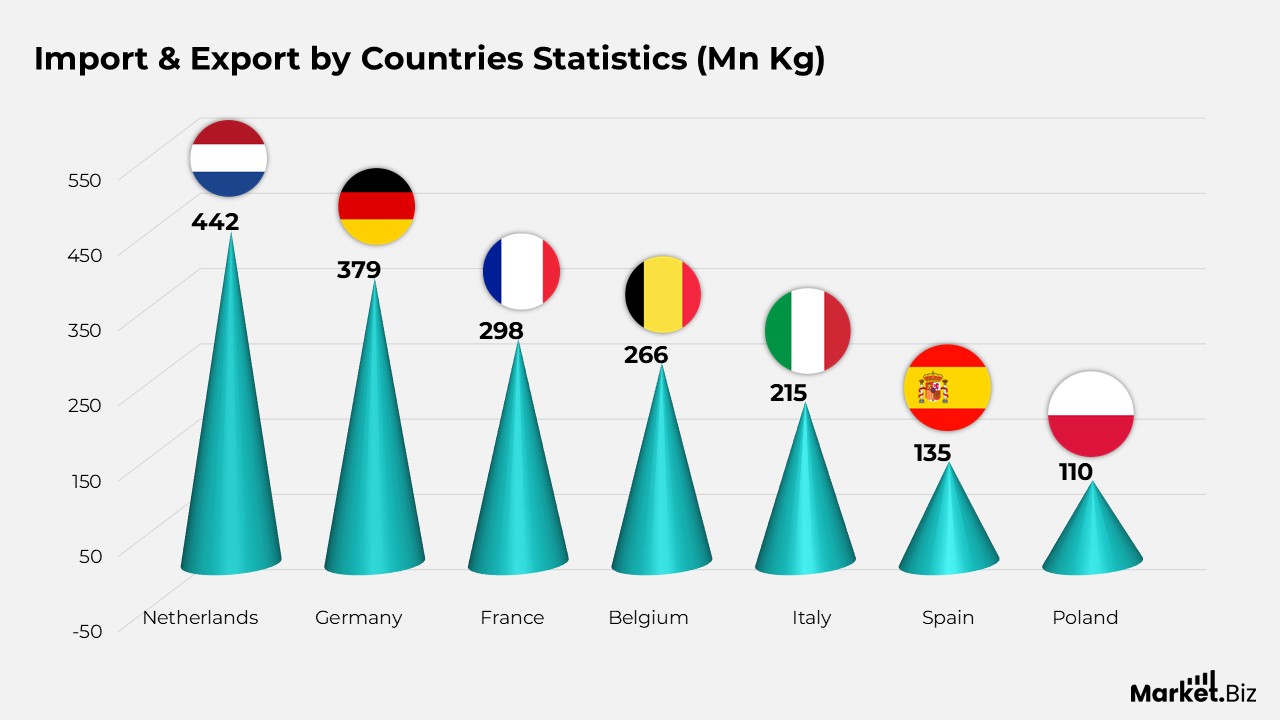
- In 2023, various countries in Europe imported substantial amounts of breakfast cereals: the Netherlands led with 442 million kg, followed by Germany with 379 million kg and France with 298 million kg.
- Belgium imported 266 million kg, while Italy brought in 215 million kg, indicating a robust demand for cereals throughout Western Europe.
- Spain and Poland also made significant imports of 135 million kg and 110 million kg, respectively, whereas Ireland and Austria imported 107 million kg and 74 million kg.
- In addition, European exports of cereal grain products in 2023 were considerable, with Germany being the largest exporter in the region at 523 million kg.
- Belgium and the Netherlands followed, exporting 359 million kg and 297 million kg respectively, which highlights strong trade flows within the continent.
- The UK contributed notably with 285 million kg of cereal products exported, despite a slight variation compared to the previous year.
- Other significant European cereal exporters in 2023 included Poland with 225 million kg, Spain with 211 million kg, and France with 236 million kg.
- Denmark distinguished itself with 136 million kg exported, showcasing a niche yet expanding strength in regional trade.
Breakfast Cereal Recent Development
- In April 2024, Kellogg’s India introduced a new breakfast cereal product called Froot Loops aimed at consumers. This product is specifically designed for children and offers a fruity and vibrant selection for its audience.
- In January 2024, WK Kellogg Co. unveiled new, healthier cereal options available in chocolate and fruit flavours. These products are particularly targeted at Gen Z consumers who favour protein-rich, zero-sugar alternatives, providing a substitute for their other sugar-laden offerings.
- In December 2023, the U.K.-based breakfast cereal company Weetabix acquired the local cereal manufacturer Deeside Cereals, thereby enhancing its footprint in the U.K. market.
- In February 2021, Tata Consumer Products Ltd (TCPL), based in India, finalised an agreement with Kottaram Agro Foods to purchase a 100% stake in its Soulfull brand, which specialises in breakfast cereals and millet-based snacks.
Conclusion
The breakfast cereal industry is witnessing consistent growth, fuelled by a rising consumer preference for convenient and nutritious food choices. Innovations in product lines, including gluten-free, organic, and high-fibre cereals, have drawn the attention of health-conscious consumers and broadened market offerings. Moreover, the increasing popularity of on-the-go breakfast options has further propelled market growth.
Nevertheless, challenges such as variable raw material costs and fierce competition persist. In summary, the market is anticipated to maintain its upward trend, bolstered by changing consumer preferences and continuous product development initiatives.
FAQ’s
More than half partake in it weekly, although only a small fraction (12%) opt for cereal daily. These statistics have largely remained stable over the last two years. Despite rising economic pressures affecting grocery purchasing behaviours, cereal continues to be a significant breakfast staple.
Members of Gen Z are less inclined to have breakfast at all, and when they do, they prefer eggs, fruit, toast, and pancakes over cereal, as indicated by YouGov’s research. Additionally, they incorporate more vegetables into their breakfast compared to older generations.
According to YouGov Profiles, eggs rank as the most favoured breakfast item among Gen Z, with 46% including them in their morning meals. Fruit is the next most popular choice at 33%, followed by toast (30%) and pancakes (28%), which are also frequently consumed.