









Introduction
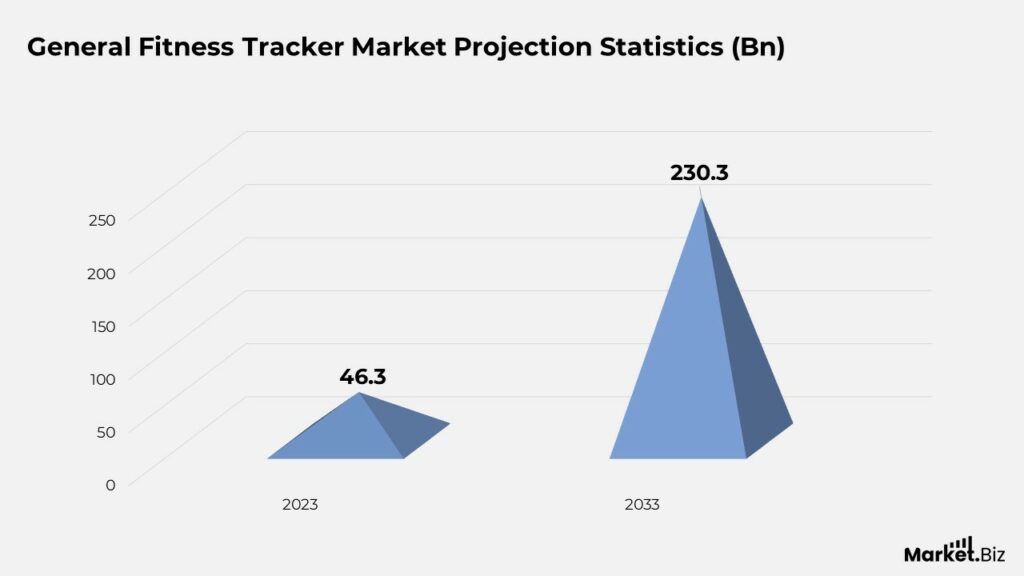
Fitness Tracker Statistics: This Fitness Tracker Market is projected to reach approximately USD 230.3 billion by 2033, up from USD 46.3 billion in 2023, reflecting a compound annual growth rate (CAGR) of 17.4% during the forecast period from 2024 to 2033. In 2023, North America accounted for a significant 43.2% of the market share, generating USD 20.0 billion in revenue within the Fitness Tracker Market.
Fitness trackers serve various functions, from tracking distances walked or run to monitoring heart rates and blood oxygen levels, as well as recording calorie intake and sleep patterns, thereby helping users manage their wellness and fitness activities effectively. As part of the broader wearable technology sector, fitness trackers primarily take the form of wristbands, although they can also be found as clip-on devices, earbuds, smart rings, and garments made from smart fabrics.
Users can monitor their metrics through dedicated applications, typically installed on smartphones, which utilize the built-in features of the devices. With health and fitness gaining prominence, fitness trackers have become some of the most favored devices among consumers, and the market is anticipated to expand in the forthcoming years.
Editor’s Choice
- The worldwide market for fitness trackers is projected to attain USD 46.3 billion by the end of 2023.
- Reports indicate that the North American region holds the largest share of the global fitness tracker market, achieving a CAGR of 15.5% from 2023 to 2031.
- The segment dedicated to running is projected to experience the highest growth, with an annual growth rate (CAGR) of 16.3% from 2023 to 2031.
- Hispanic adults show a higher frequency of fitness tracker usage than white adults (26% versus 20%), while black adults fall in between at 23%.
- Younger individuals tend to be more receptive to data sharing; 47% of those under 50 endorse it, whereas only 35% of individuals aged 50 and above agree.
- In 2023, all segments experienced growth, with smartwatches reaching 42.7 million, smart bands at 26.23 million, and smart scales at 6.42 million users.
- The main age demographic is 45-55 years old, accounting for 21%, followed closely by the 26-35 age group at 20% and the 36-46 age group also at 20%.
- As of June 2024, the distribution of the most popular eHealth trackers and smartwatches by brand in the United States reveals a strong preference for Apple, which accounts for 58% of the shares among respondents.
General Fitness Tracker Statistics
- The worldwide market for fitness trackers is projected to attain USD 46.3 billion by the end of 2023.
- The anticipated annual growth rate from 2023 to 2028 is 15.70%.
- In 2033, the market size is estimated at USD 230.3 billion.
- Prominent players in the fitness tracker sector include Apple Inc., Fitbit Inc., Garmin Ltd., and Xiaomi.
- According to a report from Statista, the global revenue generated by fitness or activity-tracking wrist wearables has reached USD 19.3 billion, with total shipment units amounting to 305 million.
- Reports indicate that the North American region holds the largest share of the global fitness tracker market, achieving a CAGR of 15.5% from 2023 to 2031.
- The revenue from fitness wristbands and smartwatches is expected to exceed USD 63 billion by the end of 2023.
- In 2023, analysis reveals that fitness bands, activity monitors, smart glasses, smart clothing, and smartwatches have generated the highest revenue in the global fitness tracker market, which is estimated at USD 46.3 billion.
The growth trajectory of the global fitness tracker industry is anticipated to escalate in:
- USD 53.3 billion in 2024
- USD 65 billion in 2025
- USD 77.7 billion in 2026
- USD 89.4 billion in 2027
- USD 98.9 billion in 2028
- USD 116 billion in 2029
- USD 135.5 billion in 2030
- USD 156.5 billion in 2031
- USD 187.2 billion in 2032
- The market is categorized into three segments: smart bands, smart scales, and smartwatches.
- Consequently, the global revenue from the smart fitness trackers market is projected to reach USD 22 billion in 2023.
Moreover, in the upcoming year, the market’s revenue is expected to increase further, followed by:
- 2024- USD 62 billion
- 2025- USD 81.84 billion
- 2026- USD 89.01 billion
- 2027- USD 96.06 billion and
- 2028- USD 103.27 billion
Fitness Tracker Market Statistics
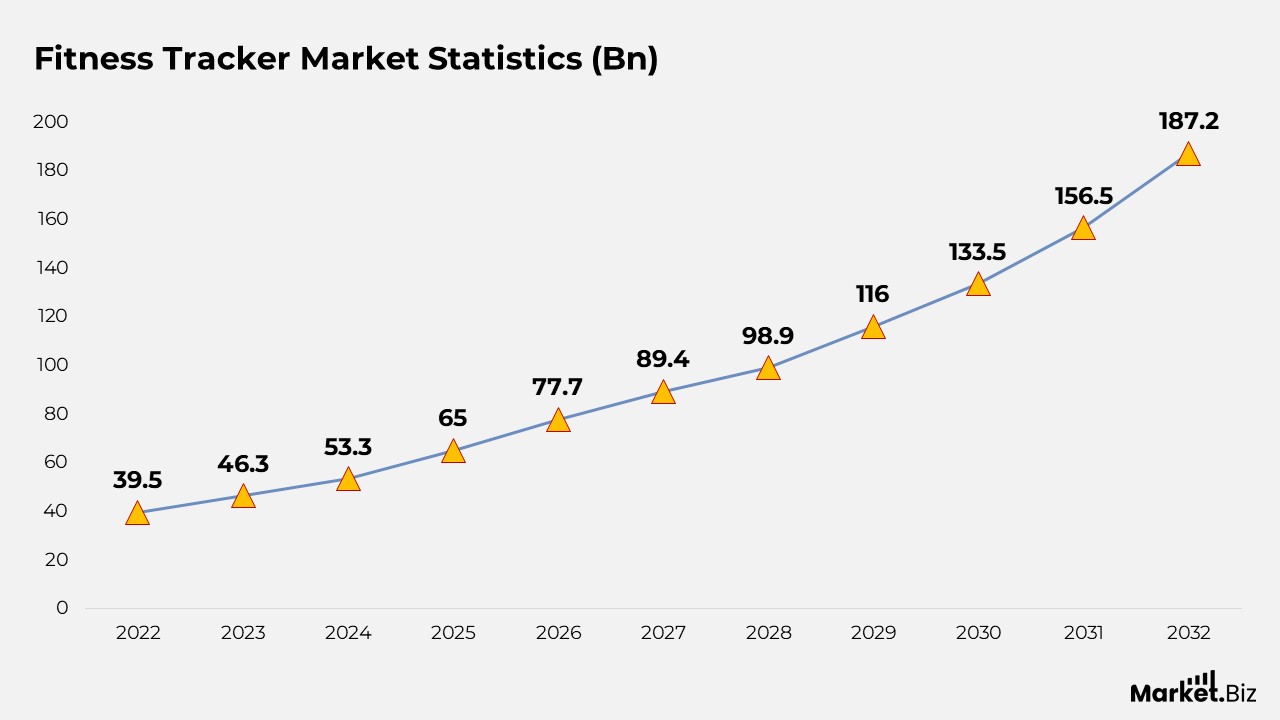
- The worldwide fitness tracker market achieved a revenue of USD 39.5 billion in 2022, reflecting a compound annual growth rate (CAGR) of 17.3%.
- This amount rose to USD 46.3 billion in 2023 and is expected to maintain its upward trend, reaching USD 53.3 billion in 2024.
- By 2025, market revenue is anticipated to further increase to USD 65.0 billion, followed by USD 77.7 billion in 2026 and USD 89.4 billion in 2027.
- The market is projected to experience substantial growth in the coming years, with revenues estimated to hit USD 98.9 billion by 2028 and USD 116.0 billion by 2029.
- By 2030, the global fitness tracker market is predicted to attain USD 133.5 billion, continuing its strong growth to USD 156.5 billion in 2031 and culminating at an impressive USD 187.2 billion by 2032.
Fitness Tracker by Segmentation
- The segment dedicated to running is projected to experience the highest growth, with an annual growth rate (CAGR) of 16.3% from 2023 to 2031.
- Regarding sales channels, physical retail stores are anticipated to hold the biggest market share, increasing at a CAGR of 16.5% throughout this timeframe.
- Among various device categories, smartwatches are expected to make the most significant contribution, with a CAGR of 16.6%.
- The hardware segment is forecasted to represent the largest portion of the market, with a growth rate of 16.9% CAGR.
- In terms of connectivity, Bluetooth is set to lead, with an estimated growth rate of 17.1% CAGR.
Adoption Statistics of Fitness Trackers
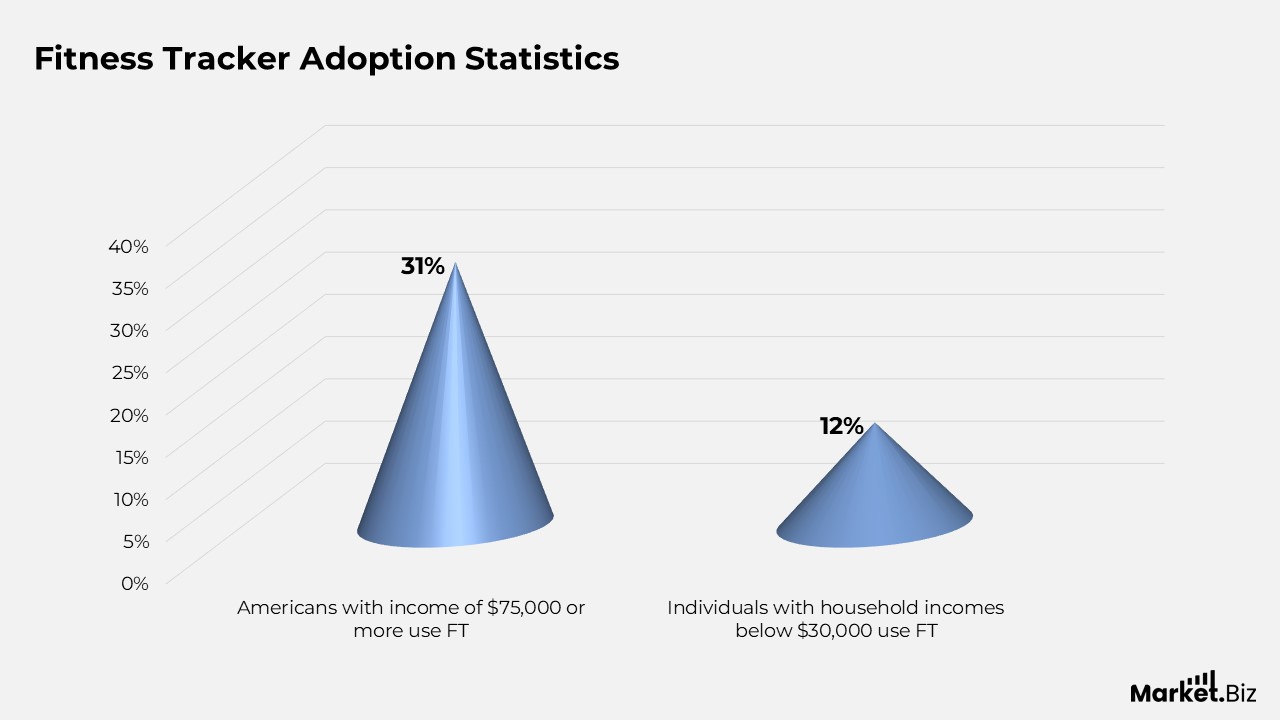
- According to Fitness Tracker Adoption Statistics, approximately 31% of Americans earning a yearly household income of $75,000 or more report that they regularly utilize a smartwatch or fitness tracker.
- In contrast, merely 12% of individuals with household incomes below $30,000 engage in similar practices.
- A comparable trend is observed when examining educational attainment, as college graduates tend to use these devices more frequently than those who possess only a high school diploma, based on a survey conducted with 4,272 U.S. adults.
- The disparities between genders and ethnicities are less pronounced. Women are more inclined than men to consistently use these devices (25% compared to 18%).
- Hispanic adults show a higher frequency of fitness tracker usage than white adults (26% versus 20%), while black adults fall in between at 23%.
- Depending on the sophistication of the device, fitness trackers are capable of gathering various types of data regarding the user’s activities.
- Users can access this information through an application, where they also have the option to input additional details about their lifestyle.
- Consequently, fitness tracker manufacturers accumulate substantial amounts of user data that can be utilized in multiple ways.
Fitness Tracker Shipment Statistics
- According to Fitness Tracker Adoption Statistics, approximately 41% of individuals in the U.S. believe it is permissible for fitness tracker companies to share user data with medical researchers who are investigating the relationship between exercise and heart disease.
- Conversely, around 35% consider this practice unacceptable, and 22% are uncertain about their stance on the matter.
- Perspectives on this issue differ among various demographic groups. For instance, 39% of white adults express that sharing such data is not acceptable, in contrast to 31% of Black adults and 26% of Hispanic adults.
- Younger individuals tend to be more receptive to data sharing; 47% of those under 50 endorse it, whereas only 35% of individuals aged 50 and above agree.
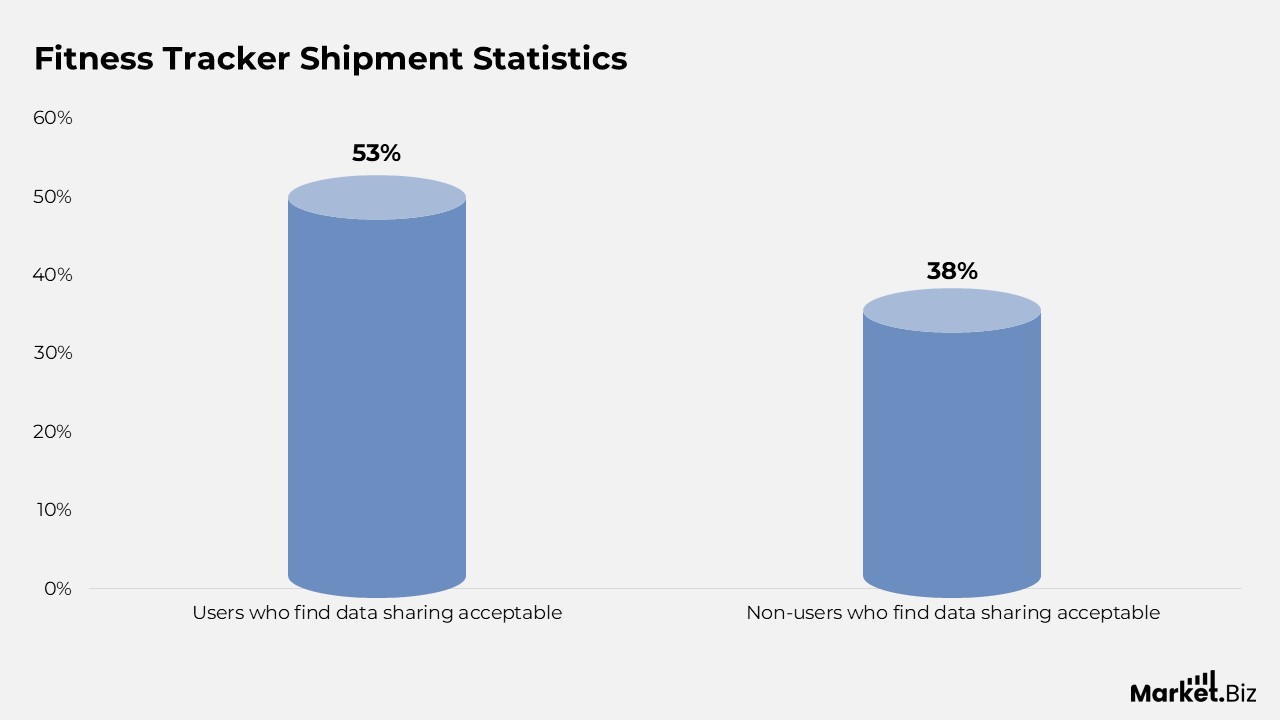
- Furthermore, individuals who utilize fitness trackers are more inclined to approve of data sharing. Approximately 53% of users find it acceptable, while merely 38% of non-users share this view.
Fitness Tracker User Statistics
- In 2017, the user count for smart bands was approximately 10.63 million, while smart scales had 3.44 million users, and smartwatches reached 21.19 million users.
- For smart bands, these numbers increased to 13.32 million by 2018, 27.55 million for smartwatches, and 4.47 million for smart scales, reflecting significant growth across all categories.
- The upward trend persisted into 2019, with smart band usage rising to 16.12 million, smart scales to 5.36 million, and smartwatches to 32.49 million.
- In 2020, there was a notable increase, especially in smartwatches, which soared to 39.92 million users, while smart bands got 20.4 million, and smart scales saw a slight rise to 5.43 million.
- The growth continued into 2021, with smartwatches achieving 41.29 million users, smart bands at 22.57 million, and smart scales at 6.23 million.
- By 2022, user figures were slightly revised, with smartwatches at 42.14 million, smart bands at 24.38 million, and smart scales decreasing to 6.15 million.
- In 2023, all segments experienced growth, with smartwatches reaching 42.7 million, smart bands at 26.23 million, and smart scales at 6.42 million users.
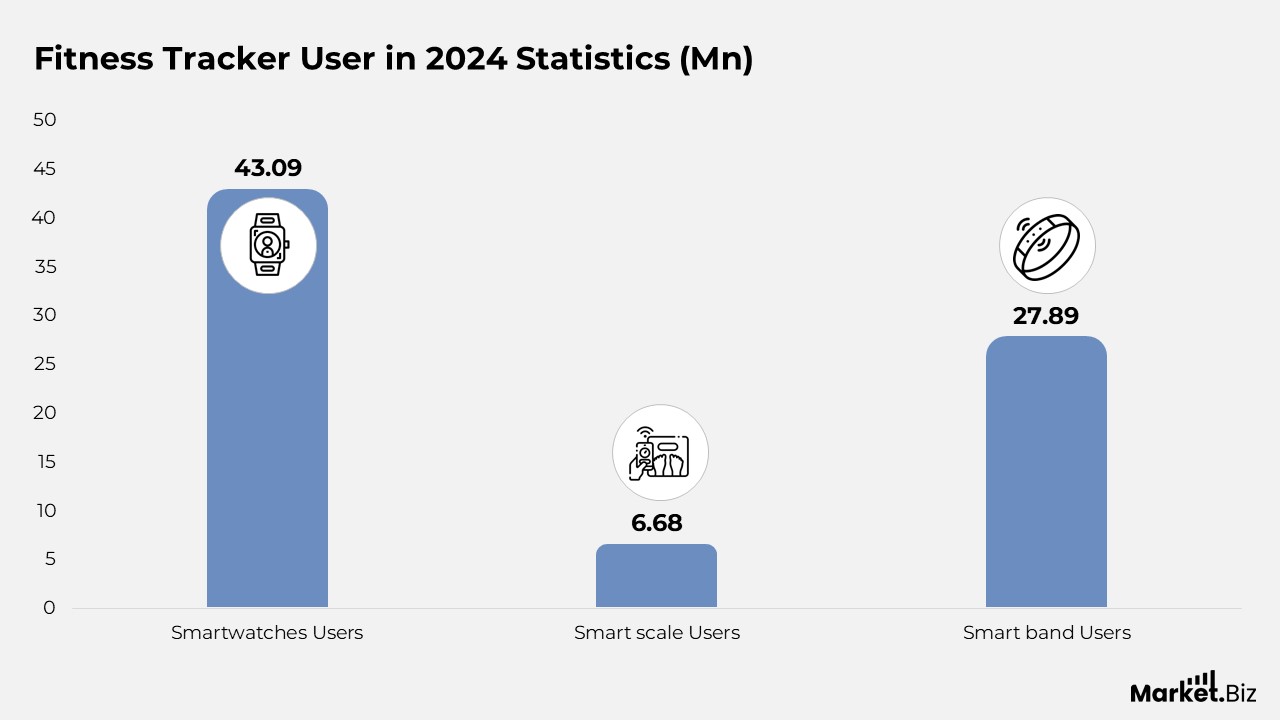
- Estimates for 2024 suggest a continued rise, with smartwatches anticipated to reach 43.09 million, smart scales at 6.68 million, and smart bands at 27.89 million.
- The forecast for 2025 and beyond indicates steady but moderate growth, culminating in 2028, with smartwatches expected to reach 43.41 million users, smart bands at 32 million, and smart scales at 7.17 million.
Demographics of Fitness Tracker User
- A study conducted by the United States National Center for Biotechnology Information indicates that, when categorized by race and ethnicity, Hispanic individuals constitute 39% of users, followed by non-Hispanic Black or African American individuals at 36%, and non-Hispanic White Americans at 15%.
- Regarding educational attainment, high school graduates exhibit the highest usage rate at 44%, with both two-year and four-year college graduates at 20% each, and individuals with less than a 9th-grade education at 13%.
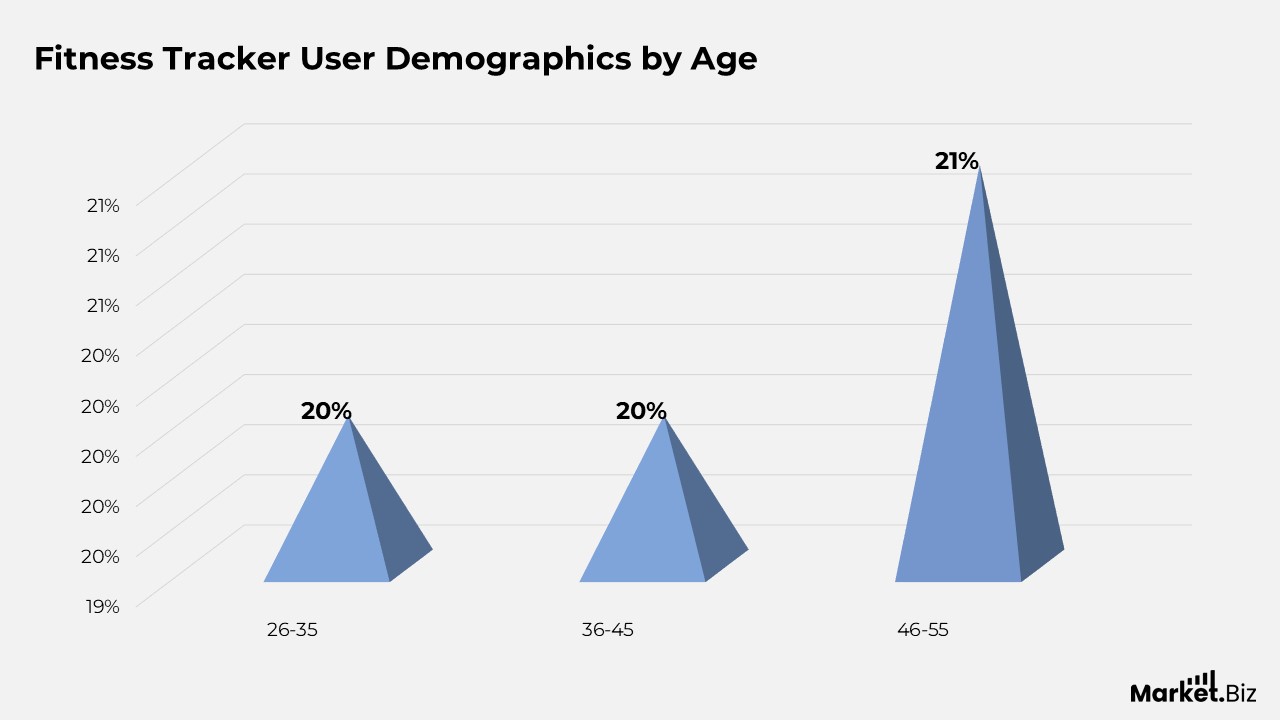
- The main age demographic is 46-55 years old, accounting for 21%, followed closely by the 26-35 age group at 20% and the 36-45 age group also at 20%.
- In terms of gender, women utilize fitness trackers significantly more than men, with usage rates of 71% and 25%, respectively.
Fitness Tracker Brands Statistics
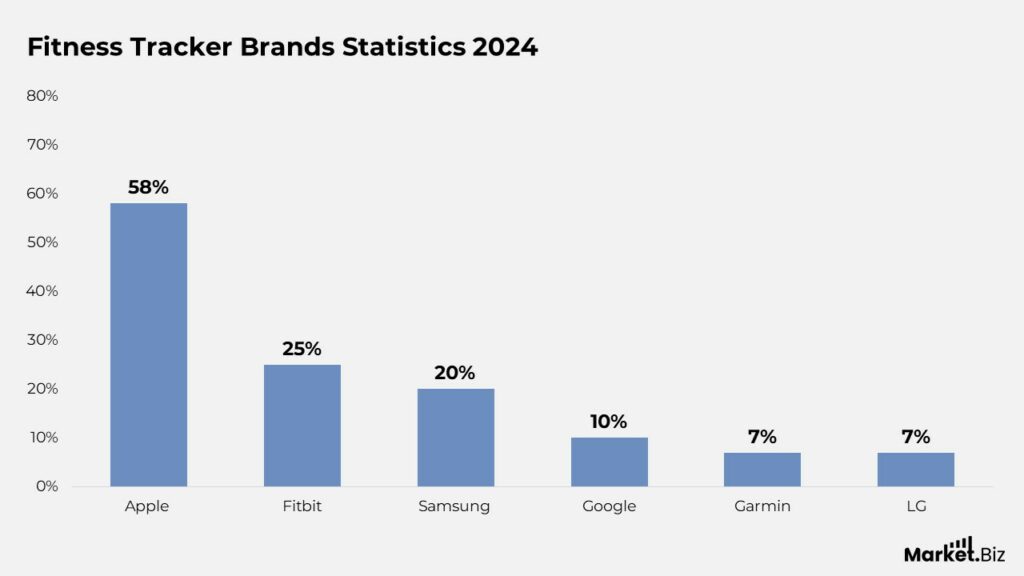
- As of June 2024, the distribution of the most popular eHealth trackers and smartwatches by brand in the United States reveals a strong preference for Apple, which accounts for 58% of the shares among respondents.
- Fitbit follows with a notable 25% share, while Samsung captures 20% of the market among users.
- Google, Garmin, and LG each possess smaller shares at 10%, 7%, and 7% respectively.
- Other brands, including Amazfit and ASUS, each hold 6% of the user base, and Fossil has a 5% share.
- Lower percentages are observed for brands such as Huawei and Honot, each at 3%, and Polar, Misfit, and Xiaomi/Mi, each at 2%.
- Brands like Tozo and Moov are at the lower end with 1% each.
- The category labeled ‘Other’ comprises 4% of the market, and 2% of respondents are uncertain about their device brand.
Fitness Tracker Sales by Regions
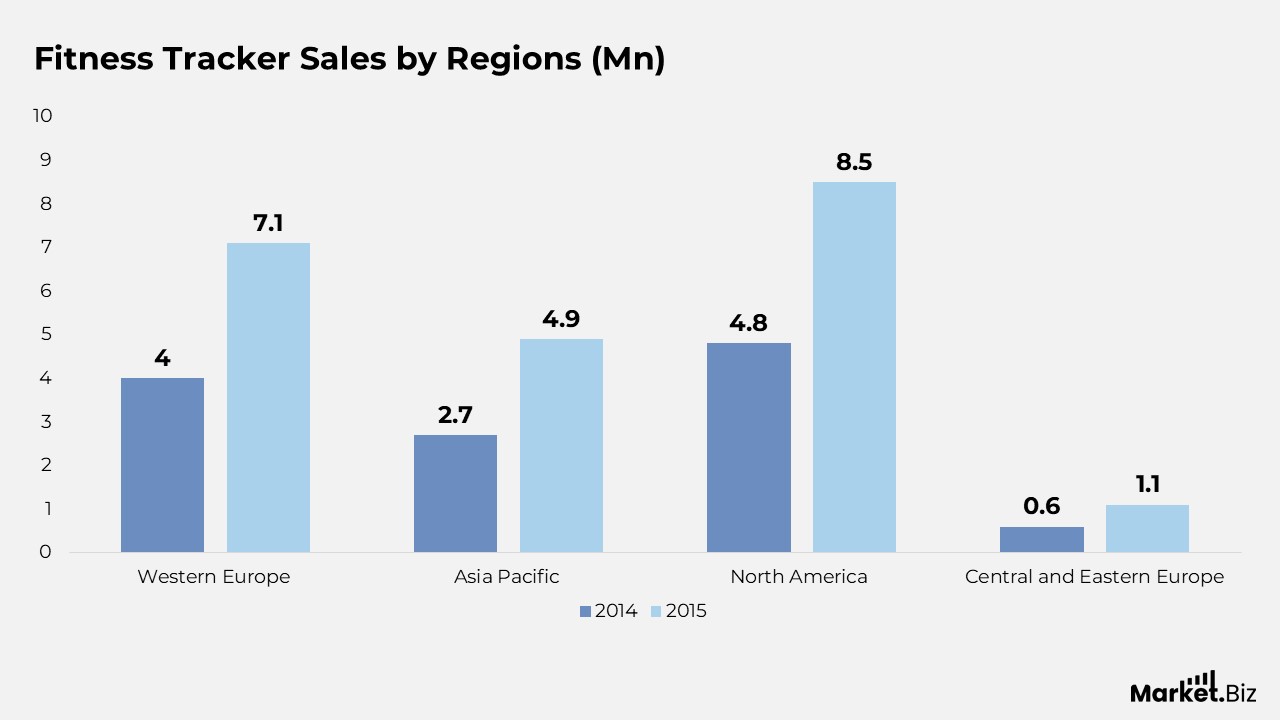
- In 2014, Western Europe saw sales of 4 million units, which considerably increased to 7.1 million by 2015.
- The Asia Pacific region also saw a notable rise from 2.7 million units in 2014 to 4.9 million in 2015.
- North America reported a substantial increase in sales, from 4.8 million units in 2014 to 8.5 million units in 2015.
- Central and Eastern Europe, though smaller in volume, showed growth from 0.6 million units in 2014 to 1.1 million in 2015.
- China’s market almost tripled, with sales growing from 0.9 million units to 2.3 million units over the same period.
- The Middle East, South America, and Africa, though smaller markets, also showed growth; South America’s sales increased from 0.2 million to 0.5 million units, and the Middle East and Africa increased from 0.3 million to 0.6 million units.
Recent Products
- In February 2024, the Amazfit Active Smartwatch was launched by Zepp Health, which provides advanced functionalities such as stress tracking, heart rate monitoring, and sleep analysis.
- In mid-2024, Apple unveiled Watch OS 10, emphasizing the integration of mental health tools, improved health features, and sophisticated sleep tracking.
- In 2022, Xiaomi globally launched its latest fitness tracker, the Band 7. This device is equipped with an AMOLED display and supports over 100 sports modes.
Conclusion
The fitness tracker market has experienced substantial growth, fueled by heightened health awareness and advancements in wearable technology. This market is expanding into various segments, including smart bands, smartwatches, and smart scales, each providing distinct functionalities for health monitoring.
Consumer preferences have shifted towards devices that incorporate a wider range of smart features, such as mobile payment capabilities and social media connectivity. Ongoing technological improvements have enhanced device accuracy, ease of use, and compatibility with other technologies, rendering them vital tools for proactive health management.
Moreover, despite facing challenges such as concerns regarding data privacy, the industry is presented with considerable opportunities for innovation, especially through potential collaborations with healthcare providers and progress in health monitoring technologies.
FAQs
As of January 2022, a worldwide survey indicated that 53.70% of participants reported using a wearable device to track their fitness activities, demonstrating a significant adoption of technology for health monitoring. In contrast, 46.30% of the respondents indicated that they do not employ any wearable devices for these purposes.
As of 2025, there are 454.69 million smartwatch users globally, representing a 41% increase from the 323.99 million users recorded in 2023. Looking forward, the number of smartwatch users is projected to keep growing, potentially reaching approximately 740.53 million by 2029.

