









Introduction
Digital Health Statistics: Digital health has quickly become essential in transforming the healthcare sector, fundamentally changing how healthcare services are provided and managed.
By leveraging technologies such as mobile health applications, wearable devices, telemedicine, and electronic health records (EHRs), digital health is enhancing patient care, improving accessibility, and reducing healthcare costs. The digital health market is experiencing rapid growth, driven by the widespread use of smartphones, advances in healthcare IT systems, rising healthcare costs, and the growing burden of chronic diseases.
As the digital health landscape evolves, it enables more personalized care, boosts patient engagement, and facilitates continuous health monitoring. Additionally, advancements in artificial intelligence and machine learning are crucial in optimizing diagnostics, treatments, and overall healthcare management, further accelerating the industry’s transformation.
Editor’s Choice
- Global telemedicine use has experienced significant growth, with telehealth consultations rising by as much as 30% annually, signaling a shift toward remote healthcare services.
- In 2024, more than 48% of pharmaceutical and life sciences firms in India had incorporated AI into healthcare, highlighting the growing reliance on artificial intelligence to enhance patient care and streamline operations.
- With a growing emphasis on mental well-being, more consumers are turning to digital health solutions such as meditation apps, online therapy platforms, and AI-driven mental health tools, driving increased demand for these technologies.
- The adoption of wearable health technologies is rising as more consumers use devices like smartwatches and fitness trackers to track vital health metrics, including heart rate, sleep patterns, and physical activity levels.
Digital Health Market Size
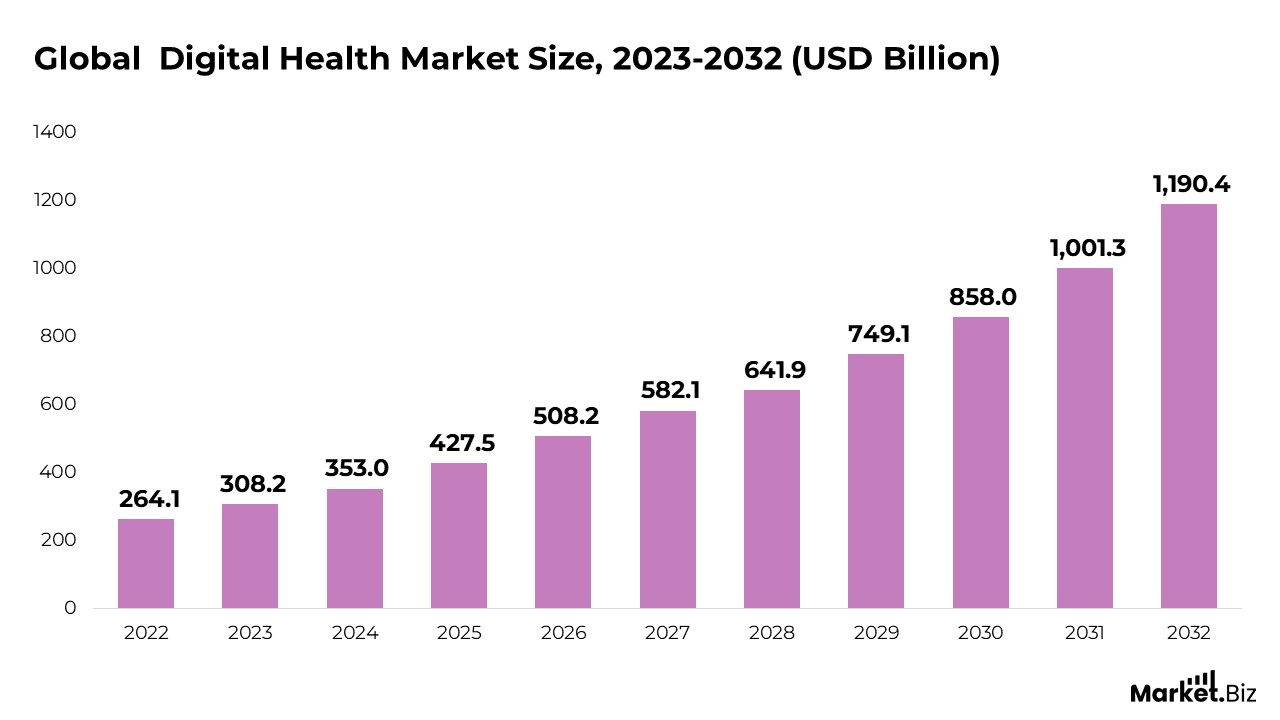
- According to Market.us, the global digital health market is projected to grow from $427.5 billion in 2025 to $1,190.4 billion by 2032, reflecting a compound annual growth rate (CAGR) of 16.7% from 2022 to 2032.
- Market growth is driven by the widespread adoption of smartphones, enhanced internet connectivity (including 5 G and 4 G), advances in healthcare IT infrastructure, rising healthcare costs, the rising incidence of chronic diseases, and broader access to virtual healthcare solutions.
- Telehealthcare technologies dominate the market, accounting for 42.5% of revenue. Demand for telehealth services is surging, driven by the need to securely store and monitor health data, manage population health, and provide real-time monitoring.
- The service component sector accounts for the largest revenue share at 44.5%, driven by rising demand for training, staffing, and maintenance services. This is largely due to advances in software solutions, which have increased installation and training requirements.
- In 2022, the healthcare providers segment emerged as the dominant player in the market, a trend expected to continue through the forecast period. This dominance is attributed to the growing prevalence of chronic diseases, the rising use of mHealth apps, and ongoing innovations in healthcare technology.
- North America accounted for the largest market share in 2022, with 45.3% of revenue. The region was the first to adopt smart healthcare technologies like wearables and mobile applications, driven by factors such as widespread smartphone use, improved network coverage, the aging population with higher rates of chronic diseases, escalating healthcare costs, a shortage of primary caregivers, and the increasing demand for preventive care and chronic disease management.
- The Asia-Pacific region is poised for the fastest growth over the forecast period, driven by the increasing adoption of eHealth platforms and rising healthcare spending.
(Source: Market.us)
mHealth Market Size
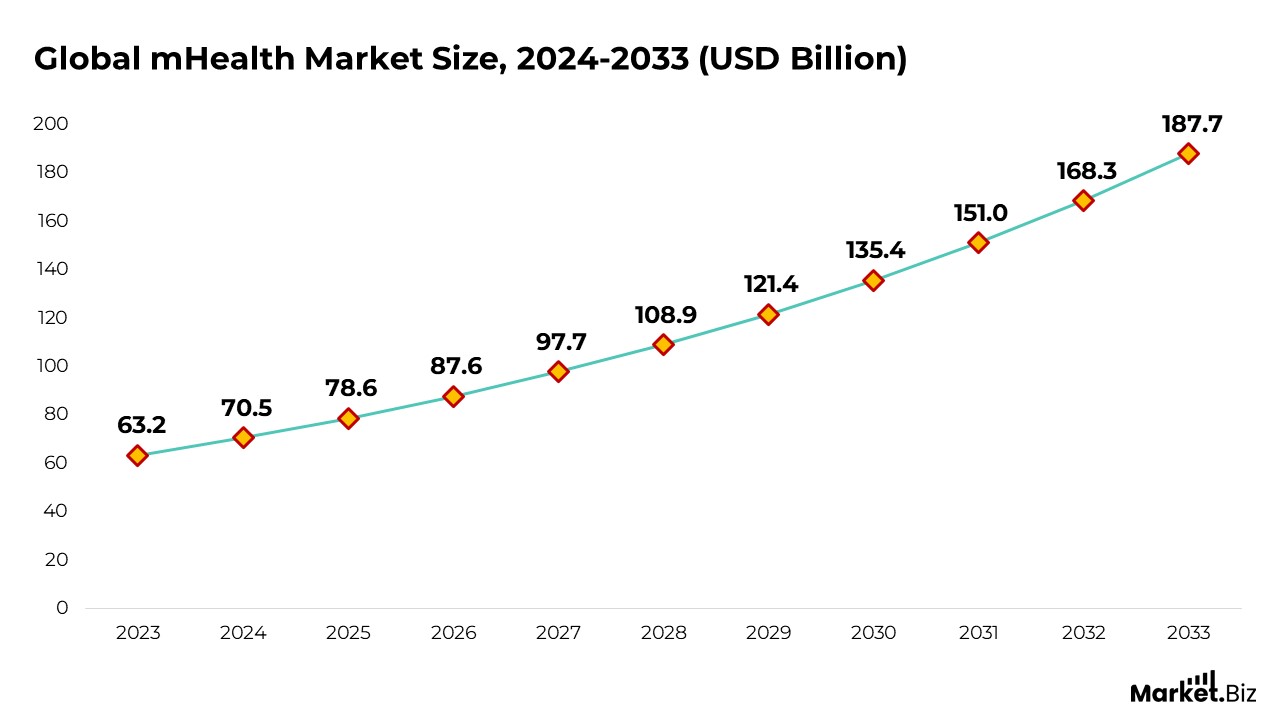
- According to Market.us, the global market for mHealth is projected to expand from $427.5 billion in 2025 to $1,190.4 billion by 2032, reflecting a compound annual growth rate (CAGR) of 16.7% from 2022 to 2032.
- The mHealth market is fueled by smartphone adoption, increasing health awareness, and rising demand for remote monitoring solutions.
- In 2023, mHealth apps dominated the market with a 74.4% share, offering personalized functionalities that cater to diverse user needs.
- The monitoring services captured over 62.4% of the market in 2023, providing vital real-time health tracking for patients and healthcare providers.
- The Mobile operators held a 47.2% market share in 2023, supporting mHealth services through strong infrastructure and extensive network coverage.
- North America accounted for 36.8% of mHealth market revenue in 2023, driven by high healthcare spending, high prevalence of chronic diseases, and robust network infrastructure.
(Source: Market.us)
Telemedicine Market Size
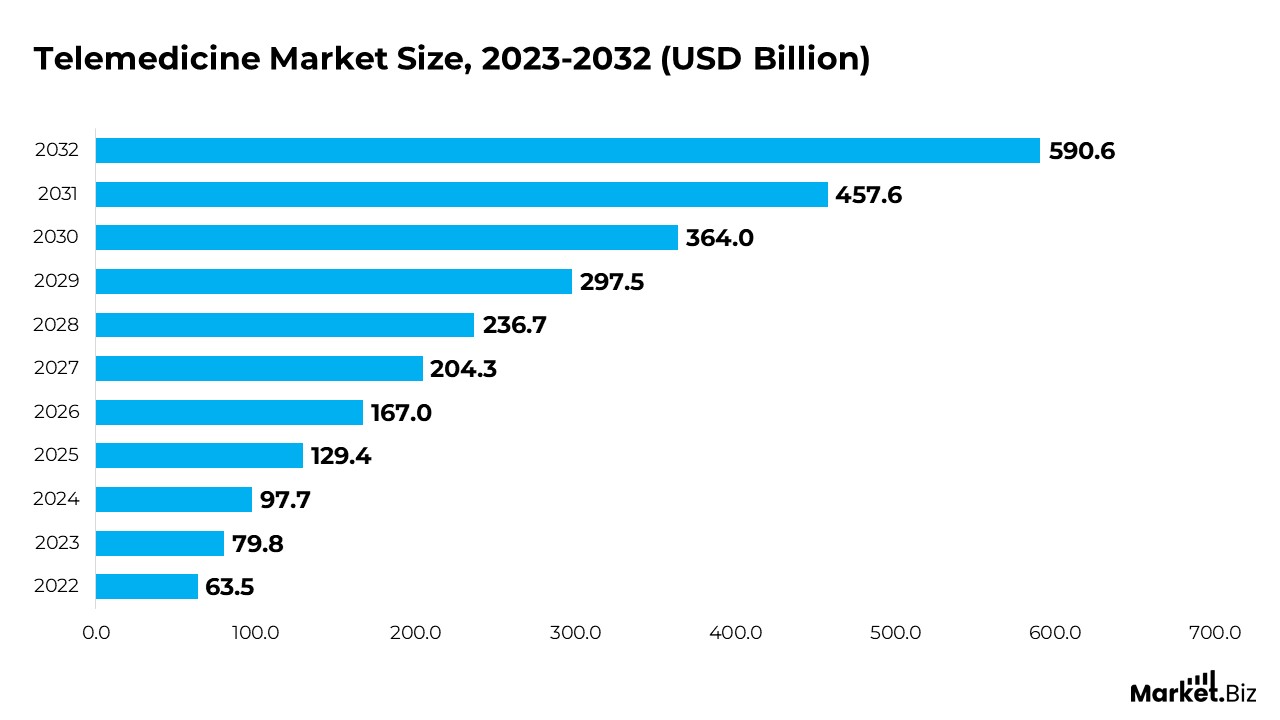
- The global telemedicine market is projected to grow from $129.4 billion in 2025 to $590.6 billion by 2032, with a CAGR of 25.7% from 2023 to 2032.
- Rising healthcare costs, the chronic disease burden, technological advancements, and the increasing adoption of remote patient monitoring are driving market growth.
- The services sector is projected to grow at a strong CAGR of over 21% during 2023–2030, while products accounted for 45.7% of the market share in 2022.
- Hardware components such as medical peripherals and videoconferencing tools led the market in 2021, owing to their critical role in enabling virtual consultations.
- The teleradiology segment dominated with a 26.9% revenue share in 2022, driven by growing standardization and regulatory support in radiology services.
- Real-time telemedicine emerged as the leading model owing to the surge in mHealth applications, video consultations, and real-time healthcare services.
- Web and mobile platforms are expected to lead in 2023, capturing over 74.05% of global revenue, driven by smartphone proliferation and rising mHealth engagement.
- Remote hospital facilities accounted for more than 50.5% of the market in 2021, supported by government initiatives and the increasing adoption of digital healthcare solutions.
- The patient segment accounted for more than 42% of the market in 2022, as telemedicine became a primary modality for routine and urgent healthcare needs.
- North America led the global telemedicine market in 2022 with over 36% share, driven by advanced infrastructure, digitization, and high adoption rates.
(Source: Market.us)
Utilization and adoption of mHealth Apps
- In 2024, global downloads of health and wellness apps reached 3.6 billion, representing a 6% increase from the previous year.
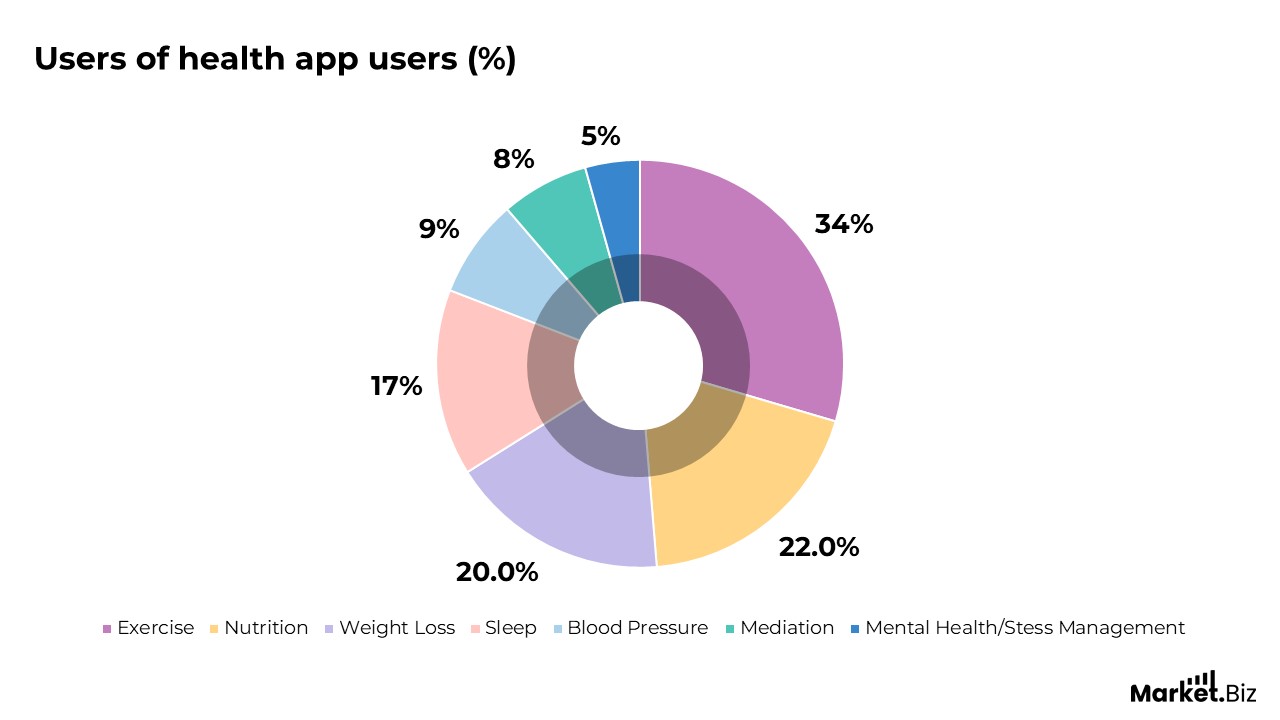
- 34% of adults use health apps to enhance their exercise routines, emphasizing the growing reliance on technology for fitness tracking and motivation.
- 22% of health app users rely on these platforms for nutrition management, underscoring the growing role of digital tools in monitoring and improving dietary intake and eating habits.
- 20% use health apps for weight management, reflecting the widespread adoption of digital solutions to achieve weight-related goals.
- 17% of users rely on apps to improve their sleep quality, underscoring the widespread adoption of these tools for sleep monitoring and enhancement.
- 9% of users report using health apps to track blood pressure, underscoring the vital role of mHealth applications in managing key health metrics, particularly for cardiovascular health.
- 8% engage with health apps for meditation, aligning with the rising trend of utilizing digital tools for stress relief and mental wellness.
- 5% of users rely on health apps to manage chronic mental health conditions or stress, showcasing the growing importance of these tools for mental health support.
Reasons to Use mHealth Apps
(Source: Statista, Business of Apps, Vicert Inc, National Poll on Healthy Aging)
Count of mHealth Apps Available on Google Play Store
mHealth App Statistics on Google Play Store from Q1 2015 to Q3 2024
- In the most recent period, the Google Play Store featured 36,260 healthcare and medical apps, reflecting a small decline compared to the previous quarter.
- From early 2020 to late 2021, the number of health apps available to Android users on the Google Play Store grew substantially, exceeding expectations.
(Source: Statista)
RPM: Trends in Adoption and Usage
Remote patient monitoring (RPM) involves utilizing technology to gather health information from patients in non-clinical environments and sending this data to healthcare professionals for evaluation and ongoing monitoring.
- In 2024, 30 million U.S. patients used RPM services and tools.
- 80% of Americans support remote patient monitoring, with over half strongly endorsing its integration into healthcare services.
- 88% of patients surveyed reported utilizing remote healthcare services at least once in the past year.
- 90% of healthcare providers surveyed reported having already invested in remote patient monitoring technologies.
- The percentage of physicians who believe that digital health tools enhance patient care increased from 85% in 2016 to 93% in 2022, with similar patterns across physician specialities and age groups.
- 70% of healthcare professionals evaluated telemedicine positively during the COVID-19 pandemic.
- The Asia-Pacific region experienced a 52% increase in telehealth access for primary care services, rising from 4% to 56%.
- Research indicates that by 2020, more than 23 million patients will be utilizing remote monitoring tools, with projections suggesting this number will exceed 30 million by 2024.
- The proportion of virtual visits reported by physicians increased from 14% to 80% from 2016 to 2022, while the proportion of remote monitoring devices more than doubled from 12% to 30% during the same period.
- University of Pittsburgh Medical Center accomplished patient approval scores of over 90% by providing patients with remote monitoring devices and tablets.
(Source: nonagon, Market.us)
Technology for Enhancing Mental Health
- A May 2022 survey on mental wellness in India revealed that 61% of female and 55% of male respondents reported using digital technologies, such as mobile apps and smart devices, to help manage their mental well-being.
- More than 10,000 mental health apps are currently available on major app stores.
- AI and machine learning are increasingly valuable in developing predictive models for mental health conditions. For example, AI algorithms have demonstrated the ability to predict the onset of psychosis with an accuracy of 93%.
- Nearly 44% of individuals with mental health conditions do not receive treatment, facing obstacles such as stigma, high costs, and limited access to healthcare providers.
- Around 70% of individuals expressed comfort with the idea of seeking mental health support through a chatbot.
- User penetration for mental health apps is projected to be 0.13% in 2023, with an expected rise to 0.15% by 2027.
- In 2024, only 24% of adults are expected to have consulted a mental health professional in the past year.
- According to Deloitte, more than 20,000 mental health apps are available across leading online platforms.
- Calm and Headspace are the most widely used mental health apps globally. As of April 2023, Calm.com generated USD 7 million in revenue, with USD 6 million from iOS and USD 1 million from Android. The app reached 800,000 downloads in April 2023.
(Source: Statista, American Psychiatric Association, The Bridge Chronicle, National Institute of Health, Pew Research Center, Statista, Analytics Insight)
Utilization and Embracing of IoMT Technologies
- Patients are adopting IoMT technologies, with approximately 64% using at least one IoMT device daily.
- As per Deloitte Insights, the global market for wearable devices in the medical sector is growing. Matched to 275 million units in 2021, it is expected to reach approximately 440 million in 2024.
- 59% of healthcare providers reported already implementing IoMT solutions in their organizations.
- IoMT is being used by around 60% of healthcare organizations worldwide in 2024.
(Source: Deloitte, Market.us, ScienceDirect)
Transforming Digital Health through AI Statistics
Artificial intelligence in healthcare involves leveraging sophisticated algorithms and machine learning methods to process data within the healthcare industry, ultimately enhancing the quality of healthcare services. AI enables healthcare professionals to deliver more precise and timely diagnoses, customize treatment strategies, and enhance patient safety by detecting health risks at earlier stages.
- A Deloitte survey of 1,100 U.S. managers from organizations already implementing AI revealed that 63% of these companies utilize machine learning.
- The same Deloitte survey found that 63% of U.S. companies pursuing AI integrate machine learning into their business practices.
- U.S. healthcare expenditures are projected to reach $6.8 trillion annually by 2030.
- By August 2024, over 80% of pharmaceutical and life sciences companies in India had adopted artificial Intelligence (AI) to some extent.
- Furthermore, over 50% of these organizations have allocated specific budgets for AI initiatives. The integration of AI in healthcare is advancing rapidly, and the market is expected to reach $1.6 billion by 2025.
(Source: Deloitte, Market.us, ScienceDirect, Bill Gosling Outsourcing, Statista)
Digital Health Trends by Country Statistics
The U.S.
The United States has emerged as a frontrunner in digital health, fostering a dynamic landscape of health tech start-ups, substantial investments in healthcare technologies, and extensive use of telemedicine and health information exchange. The country hosts leading companies and research organizations at the forefront of digital health innovations.
- In 2022, 572 digital health start-up deals were funded in the United States.
- The total value of venture capital invested in the digital health sector in the United States was approximately 29 billion U.S. dollars in 2021.
- Telemedicine practice improved with age and was more advanced among women (42.0%) than among men (31.7%).
- The percentage of adults who utilized telemedicine increased with education level and diversity by family income.
(Source: Statista, Centers for Disease Control and Prevention)
The U.K
The UK has actively embraced digital health solutions, such as electronic health records, telehealth, and mobile health apps. The National Health Service (NHS) has driven and implemented digital health initiatives nationwide.
- Revenue in the Digital Health market is estimated to reach US$197.88bn in 2025.
- Revenue is expected to grow at a CAGR of 6.88% (2025-2029), resulting in a projected market volume of US$258.25bn by 2029.
- In 2021, 35% of respondents in the United Kingdom reported using virtual consultations with a medical provider in the past year.
- Clinicians surveyed in the United Kingdom reported using electronic health records.
- According to the NHS Digital Apps Library, more than 480 apps were listed in 2021, covering various health-related topics such as mental health and chronic disease management.
(Source: Statista, Market.us)
China
China has experienced notable growth in digital health, driven by its large population, increasing smartphone adoption, and government support for healthcare technologies. The country has seen the emergence of telemedicine platforms, health apps, and AI-driven healthcare solutions.
- By December 2022, over 363 million people in China had utilized online medical services, accounting for approximately 34% of the total population.
- Around 84% of healthcare professionals in China anticipate that patients will have seamless access to remote monitoring tools within the next decade to evaluate their health and well-being.
- The Internet of Medical Things (IoMT) market in China is expected to generate an income of USD 7.68 billion in 2023.
- Market revenue is projected to grow at a compound annual growth rate (CAGR) of 13.17% from 2023 to 2028.
- The medical devices division in China is projected to generate USD 31.24 billion in revenue in 2023.
- Approximately 84% of Chinese clinicians anticipate that, over the next 10 years, patients will have easier access to remote monitoring solutions for managing their health.
(Source: China Internet Network Information Center, Statista)
Recent Developments
Product Launches
- In July 2024, Mobile Health, a digital health, wellness, and virtual care SaaS solutions provider, unveiled a new virtual care service to manage chronic health conditions such as diabetes, hypertension, musculoskeletal issues, weight management, depression, anxiety, and prenatal care.
- In April 2024, the Indian government launched the myCGHS app for iOS to enhance access to electronic health records and patient information.
Investments and Fundings
- In May 2025, Dawn Health secured €11.5 million in funding to expand its platform and product suite for next-generation digital health solutions in the pharmaceutical sector.
- In October 2024, Minze Health raised USD 5.3 million to advance the development of prescription digital therapeutics and accelerate its commercialization efforts in the U.S. market.
Acquisitions and Mergers
- In June 2024, Digital Health Acquisition Corp. merged with Digital Health Acquisition Corp. and VSee Lab, Inc. to drive innovation and deliver cutting-edge solutions that enhance patient outcomes and streamline telemedicine delivery.
- In December 2024, Bayer AG, the German multinational pharmaceutical and biotechnology company, acquired HiDoc Technologies to begin commercializing the digital health app Cara Care. Cara Care is the prescribed digital health app for treating irritable bowel syndrome (IBS), offering a novel and holistic therapeutic approach for IBS patients.
Consumer Trends
- Increasing mental health awareness has led to greater adoption of digital health solutions, including meditation apps, online therapy services, and AI-powered mental wellness tools.
- The rising demand for digital health solutions has accelerated the adoption of telemedicine and remote patient monitoring, with telehealth consultations increasing by 30% year over year.
Regulatory Landscape
- Regulatory bodies have issued guidelines on telemedicine reimbursement and data privacy, ensuring compliance with quality standards and safeguarding patient confidentiality in the delivery of digital healthcare services.
Conclusion
Digital Health Statistics: Digital health is revolutionizing healthcare by improving accessibility, enhancing patient outcomes, and driving substantial cost efficiencies. The rapid adoption of innovations such as telemedicine, wearable devices, and mobile health applications is expected to drive the market’s continued expansion, supported by the rise in smartphone use, advances in healthcare IT infrastructure, and the increasing prevalence of chronic conditions.
With the integration of artificial intelligence and machine learning, digital health is poised to transform diagnostics and treatment, positioning it as a cornerstone of future healthcare systems.
Government support and the global growth of eHealth platforms underscore the transformative power of digital health in overcoming global healthcare challenges. As these technologies evolve, they will further promote patient engagement, enable personalized care, and provide real-time health monitoring, ultimately paving the way for a more efficient, accessible, and sustainable healthcare model.
FAQ’s
Digital health involves the use of technological innovations to enhance healthcare outcomes. This encompasses mobile health applications, telemedicine, electronic health records, wearable devices, and other digital platforms that improve the delivery and management of healthcare services.
Digital health is transforming the healthcare sector by streamlining care delivery, improving patient outcomes, increasing accessibility, and driving cost-efficiency. It facilitates remote health monitoring, customizes treatment plans, and enhances communication between patients and healthcare providers.
Notable trends in digital health include the expansion of telemedicine, the growing popularity of wearable health technology, the integration of artificial intelligence and machine learning in personalized healthcare, a heightened emphasis on mental health services, and the widespread adoption of electronic health records (EHR).
Digital health tool usage varies globally. For example, by 2024, over 80% of pharmaceutical and life sciences firms in India have incorporated AI in healthcare, while over 363 million people in China have engaged with online medical services.
Commonly used digital health technologies include telemedicine platforms, mobile health applications for fitness and wellness monitoring, wearable devices such as fitness trackers and smartwatches, and AI-driven tools designed to provide personalized healthcare solutions.