









Introduction
Employee Financial Stress Statistics: Employee money stress has escalated as a key workplace concern with negative effects on productivity and general health. The #1 reason that employees were stressed, causing 57% to be stressed, was finances in their life. This stress is not contained to low-wage workers, either, as higher earners are increasingly feeling the pinch.
And 56% of financially stressed workers have spent three hours or more a week on personal finance, while they should be focused on their job, cutting into productivity. 34% of employees say that financial pressure has a serious or significant impact on their mental health. These findings make it clear that employers should pay attention to financial wellness not just to promote health in the workplace, but to make it work better.
Editor’s Choice
- About 70 percent of couples have clashed over money in the past year.
- 56% of stressed workers devote three or more hours a week to personal finances while at work.
- Just 52% of Gen Z workers can afford to pay a $200 to $600 surprise bill in cash.
- 47% of employees who earn $100,000 or more a year are still struggling with financial stress.
- 80% of workers feel ‘productivity anxiety’, impacting their health and productivity.
- 76 percent feel isolated in dealing with money stress.
- Almost 20 percent of households that earn upward of $150,000 are living from day to day.
- Around half (47%) of all millennials (ages 29-44) report money is a source of stress in their life.
General Employee Financial Stress Statistics
- 57% of employees report that money is their leading source of stress.
- 60 percent of workers say they live paycheck to paycheck, unable to afford basic expenses.
- 34% of workers say that financial stress has taken a toll on their mental health.
- 44% of financially stressed employees say that money concerns are distracting at work.
- Financial stress has decreased productivity for 33% of full-time workers.
- 56% of stressed workers devote three or more hours a week to personal finances while at work.
- 74% of employees want their employer to help them with financial concerns.
- 73% of employees are more likely to be attracted to employers who are concerned about their financial well-being.
- Just 52% of Gen Z workers can afford to pay a $200 to $600 surprise bill in cash.
- 47% of people with incomes of $100,000 or more remain worried about their finances.
- 28 percent of full-time workers frequently or “always” have no money left over from their paychecks.
- 23% are delaying retirement because of financial pressure.
- 53 percent of money-stressed workers are seeking a new job.
- 42% of HR pros say financial stress causes workers to take unexcused absences.
- Employers know that 96% of American employers consider themselves responsible for their employees’ financial well-being, yet only 40% provide any type of financial wellness program.
- 44% of workers say that money issues affect their health.
productivity
(Source: PWC)
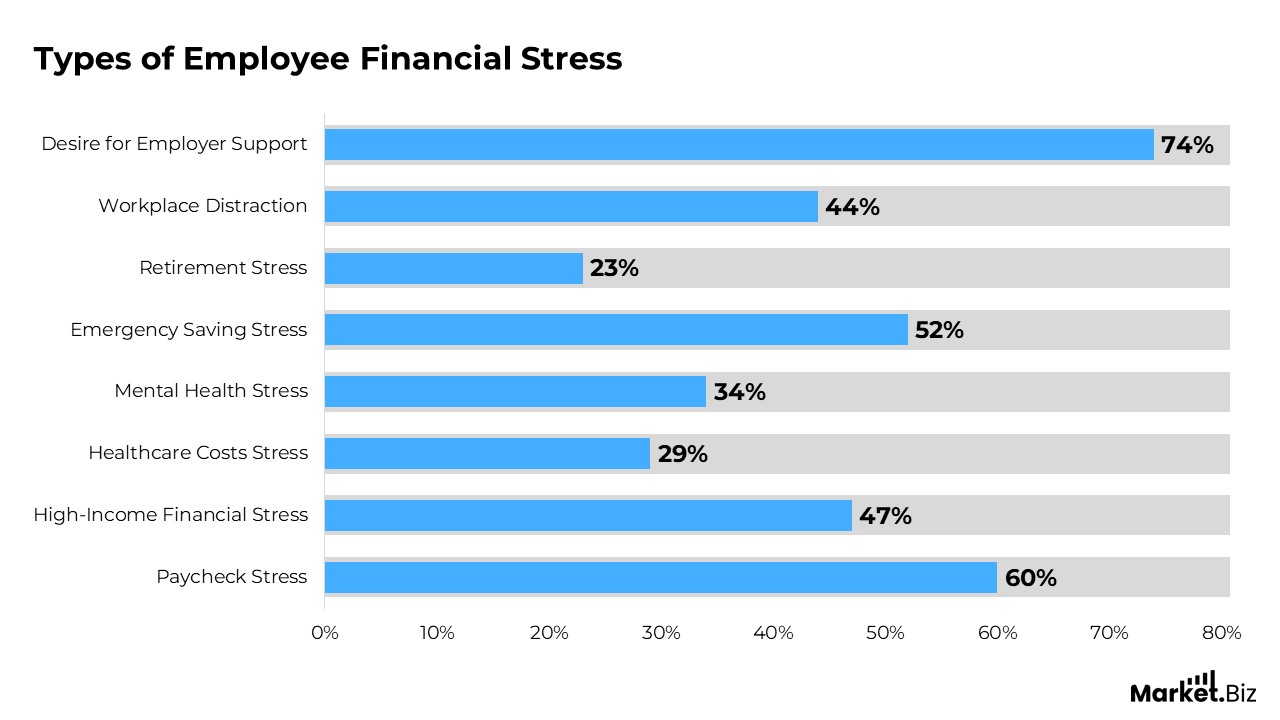
Types of Employee Financial Stress
- Paycheck Stress
60% of full-time workers say they live paycheck to paycheck, revealing financial insecurity in various wage brackets.
- High-Income Financial Stress
47% of employees who earn $100,000 or more a year are still struggling with financial stress.
- Healthcare Costs Stress
The cost of healthcare is a concern, with 29% saying they find it too expensive to get professional care.
- Mental Health Stress
The impacts are also felt in mental health, for which 34% of employees report severe or major impacts.
- Productivity Loss Stress
The average U.S. employee losses more than seven hours of productive work time each week as a result of financial stress, and the total cost to U.S. employers is nearly $183 billion per year.
- Sleep Trouble Stress
Many employees who are stressed about their finances have trouble sleeping and this can result in a loss of focus and productivity as well as reduced overall health.
- Emergency Saving Stress
A mere 52% of Gen Z workers are able to pay for an emergency expense of between $200 and $600 in cash, showing a lack of financial readiness.
- Debt Stress
Heavy debt burdens on personal accounts lead to financial stress that impacts employees’ savings and planning.
- Retirement Stress
Almost a quarter of the workforce (23%) is pushing back retirement due to money worries, which points to deeper financial instability.
- Workplace Distraction
44 percent of financially stressed employees acknowledge that money concerns distract them at work, blocking their job performance.
- Desire for Employer Support
More than 74% of the workforce want assistance with financial concerns from their employer, which confirms the need for employer-based financial wellness programs.
- Gender Differences Stress
53% of women and 47% of men experience financial stress, which shows the differences between genders around money.
How Does It Affect Workplace Productivity?
- Work-related stress affects 83% of US workers, and it’s taking a toll on their health as well as their productivity.
- US employers lose more than $300 billion each year to job stress in the form of absence, turnover, diminished productivity, and medical, legal, and insurance costs.
- 80% of workers feel ‘productivity anxiety’, impacting their health and productivity.
- It has been found that the more stress individual employees have lower their productivity scores.
- 54% of workers say stress impacts their home life, showing evidence of a spill-over effect outside the workplace.
- Over 50% of employees are not engaged at work because of stress, which results in regular productivity loss.
- 76 percent of employees experience burnout on the job at least sometimes, with 28 percent who say they are often or always burned out, and this diminishes productivity.
- Presenteeism, in which employees work while they are sick, is also associated with substantial productivity losses, amounting to $255 per employee per year.
- Depression and anxiety, frequently associated with stress in the workplace, cost the global economy an estimated $1 trillion per year in lost productivity.
- Workplaces that make mental health a priority are 13 percent more productive and employees are 2.3 times less likely to report feeling stressed.
- Roughly a million Americans are absent from their jobs due to stress each day.
- 41% of workers under stress cite stress as the reason for a decrease in productivity, so the case for stress management is clear.
- Work-related stress affects more than 40 million workers in the EU, with an estimated cost of 20 billion euro per year to the economy in lost productivity.
- An enhancement of an organisation’s psychosocial safety climate is said to contribute to reductions of 43% in presenteeism, which thereby brings financial benefits to a company or working environment.
Stress on Mental and Physical Health
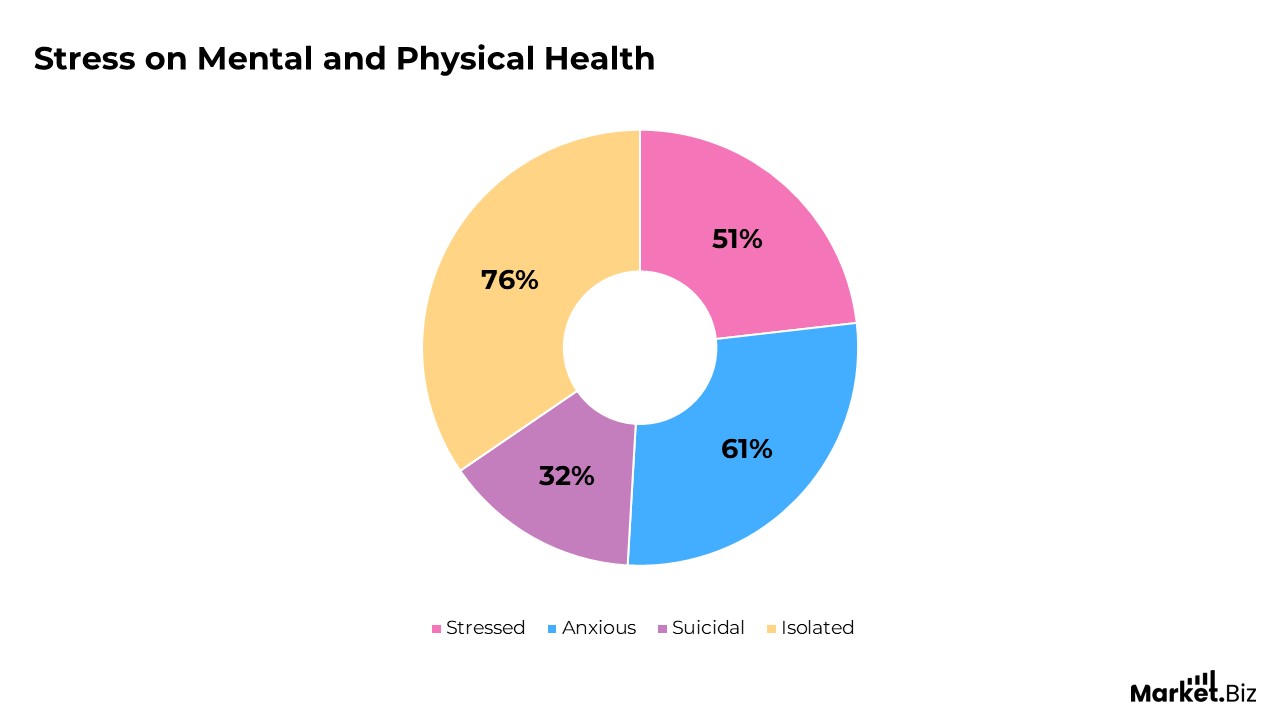
- Among adults who were stressed, 51% said they were depressed, and 61% said they were anxious.
- Suicidal thoughts and feelings were reported by 32% of distressed participants.
- 76 percent feel isolated in dealing with money stress.
- U.S. Workers 83% of U.S. workers have work-related stress, and 54% say work stress causes them to lose sleep at night.
- 40% of people have missed work or school and stayed home at least once in the last 12 months because of stress.
- Almost one quarter of NHS nurses’ sick days are related to poor mental health, including anxiety and depression.
- It’s against this backdrop that the figure of 41% is taken by one person affected by financial stress. These are the 41% of people who are coping with chronic pain as a physical symptom of stress.
- Working long hours and being stressed can contribute to serious health conditions, such as a higher risk for stroke and heart disease.
- 37 percent of adults who experienced stress had also felt lonely as a result.
- Stress interferes with the balance in the gut microbiota and the time of the bowels, which can result in constipation.
- Muscle cramps and pain associated with conditions such as back and neck pain are caused by chronic stress.
- 70 percent of Americans suffer from financial stress.
- Stress can also cause sleep difficulties if there is too much of it, which can impact every aspect of health.
- Persistent stress can suppress the immune system and leave people vulnerable to illness.
- Stress can cause bad eating habits, which can gain or lose weight.
Living Paycheck to Paycheck
- In 2024, 65% of consumers in the U.S. are paycheck to paycheck, showing a national financial problem.
- 35 percent of households earning less than $50,000 a year spend more than 95 percent of their income on personal essentials. Bank of America reports that the more you spend, the less you’re able to hold back for a rainy day.
- Almost 20 percent of households that earn upward of $150,000 are living from day to day.
- The likelihood of living paycheck to paycheck also increases with age, and Baby Boomers are most likely by the numbers, but Gen X has the most when excluding working-age adults.
- Only 27% of adults have emergency savings, and nearly 50% carry credit card debt, leaving them helpless to unforeseen costs.
- Half of American credit cardholders are unable to pay off their debt from one month to the next, a condition that can contribute to financial insecurity.
- Prices have risen around 21 percent since the start of the pandemic in Feb 2020, meaning that households would have to come up with an extra $210 for every $1,000 of what they used to spend.
- And there are also regional differences in the share of households living on the edge of financial disaster, with some of the highest numbers concentrated in states across the South because of regional economic differences.
- Though many people believe they live paycheck to paycheck to paycheck, the data on actual spending indicate that only about 26% of households disburse 95% or more of their income on necessities, indicating a perception-reality gap.
Lack of Emergency Savings
- One in four Americans used emergency savings to meet basic living needs over the last year.
- A majority of 54% of Americans are stressed out because they don’t have enough money saved for crises.
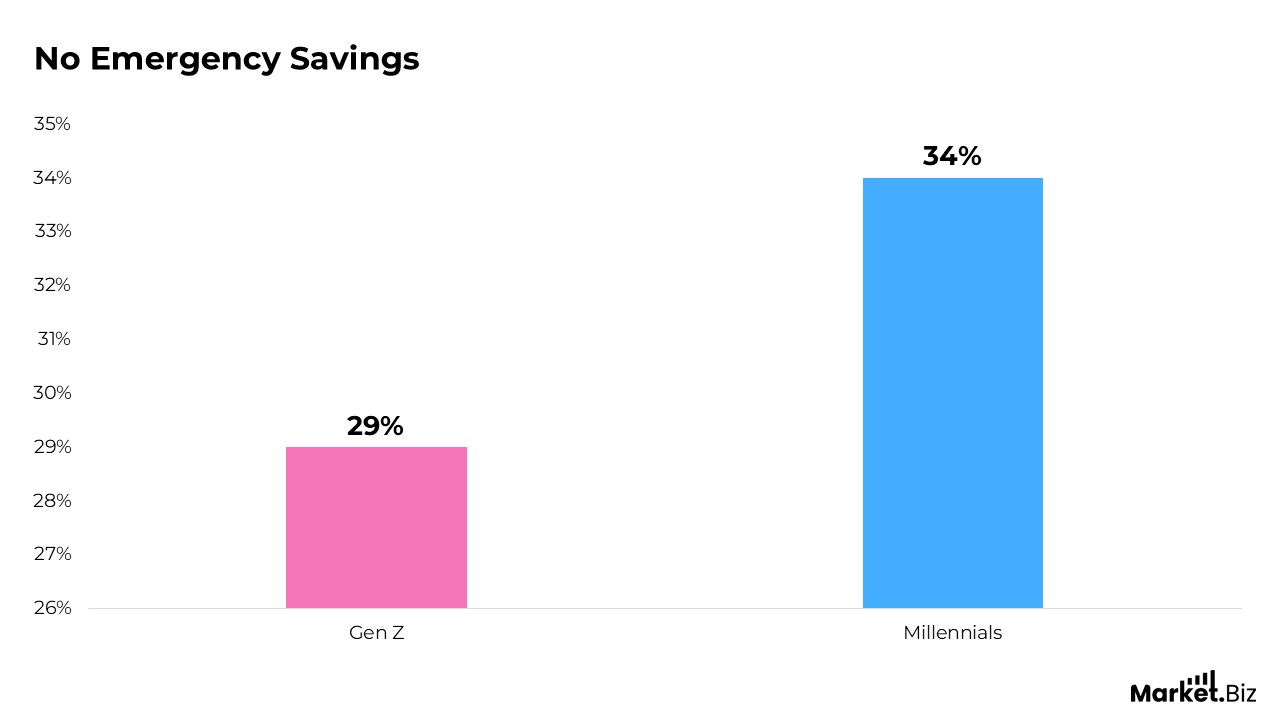
- Among younger Americans, 29 percent if Gen Z and 34 percent of millennials report having no emergency savings, showing generational divides.
- Some 27% of American adults have no emergency savings whatsoever, that’s the highest number since 2020.
- Only 41 percent use savings to pay for a $1,000 emergency expense, compared with 44 percent in 2014.
- Almost 73% of them are saving less for emergencies due to inflation, higher expenses, and income or employment changes.
- Over two-thirds (69%) of Americans say they would be very or somewhat concerned about paying their main source of income.
- The typical savings for all Americans in case of an emergency is $600, Baby Boomers have the most at $1,000, while Gen Z has the least at $200.
- About 37 percent of Americans report that they can’t cover an emergency expense of $400 or more.
Financial Stress Demographics
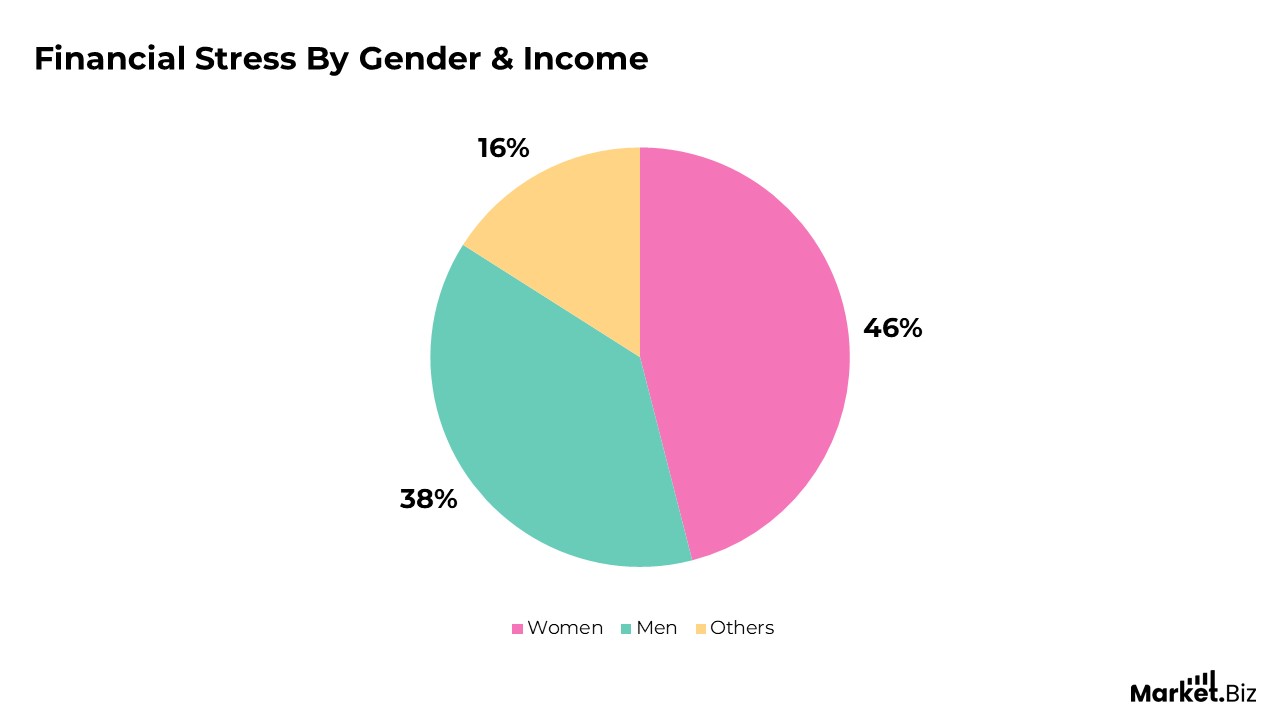
By Gender & Income
- Money issues have harmed the mental health of 46% of women, versus 38% of men.
- For Americans who earn less than $50,000 a year, 53% said money is negatively affecting their mental health, showing the pressure for lower-income Americans.
- And even for those making $80,000 or more. More than a third said money hurts their mental health, a sign that income level is relatively unimportant to the problem of stress around money.
- About 69%, who say money negatively impacts their mental health points to inflation and increasing prices as a major source of stress.
- Of those feeling the strain of financial stress, about 57% say this is because they do not have enough emergency savings.
- Some 43% of those experiencing financial stress cite being in debt for example, credit card or student’s loan, as causing them anxiety.
- About 37% of those struggling financially say that covering housing, rent or mortgage is a challenge that would have a major impact on their stress levels.
- Around 46% of the financially troubled say they don’t have enough money to pay for nonessential items as a contributing factor to their stress level.
- Job security is a major property-related concerns for almost 21% of Australians, who are financially stressed.
By Age & Generation
- By generation, 49% of Gen X (ages 45-60) say money hurts their mental health, the most among age groups.
- Around half (47%) of all millennials (ages 29-44) report money is a source of stress in their life.
- Approximately 46% of Gen Z (18-28 years old) say financial concerns affect their mental health.
- Negative impact on mental health causes 34% of Baby Boomers, ages 61-79, say money affects their mental health negatively, the lowest of the generations surveyed.
- High housing costs are a significant source of financial stress for about 67% of Gen Z and millennials.
- Almost 32% of Gen Z and 20% of millennials say that they’re stressed by comparing their financial situations to those of others, especially on social media.
- Student loans are a drag on some young adults’ sense of financial wellbeing, 32% of Americans say student loans have had at least some impact on their ability to feel financially secure or meet others financial goals.
- Over half of Gen Z (56%) and millennials (51%) say they have lost sleep because of financial worries
Financial Stress on Social Relationships
- Close to 3 in 4 married or cohabiting Americans say financial decisions are a source of tension in their relationship.
- About 70 percent of couples have clashed over money in the past year.
- Two in five relationships could break down due to financial stress.
- Parenthood results in financial burdens that largely affect relationships.
- The more stressed people are about money, the less likely they are to discuss money with a romantic partner.
- 47 percent of American adults said money is a major source of stress, including stress from their overall finances.
- Financial strain may lower sexual interest and increase irritability towards partners.
- Having different financial situations to your friends can also cause stress, anxiety, guilt and self-esteem problems.
- A lot of young adults are holding off getting married, buying a home, and moving in with a partner because of money matters.
- People overwhelmed with financial stress might withdraw from their friends and social occasions, creating feelings of isolation.
- More than half of Gen Z (56%) and Millennials (51%) say they lose sleep over financial concerns.
- Opinions around social relationships are just as bound to financial well-being, with those who feel in good financial shape also reporting that they have better relationships.
Financial Stress on Healthcare Costs
- Around half of U.S. adults say it is difficult to afford health care expenses, and one in four report difficulty paying for medical care in the past year.
- Medical debt troubles about 41 percent of adults, from unpaid credit card bills and collection agency accounts to debts owed to family and friends and to banks and other lenders.
- 52% of Americans reported that paying for medical bills has been a concern and a source of stress in the past six months.
- Out-of-pocket costs (33 percent) and deductibles (31 percent) are unaffordable, according to about one third of respondents.
- At least one-in-four report that in the last 12 months they or a family member skipped or delayed needed medical care and more than one-in-ten who had a serious illness suffers because they did so, likely resulting in long-term health consequences.
- The share with such problems is 49 percent among the uninsured.
- Those with annual household incomes below $40,000 are more than three times as likely as those in households making $90,000 or more to say paying their health care costs is difficult (69% vs. 21%).
More Stats
- Research has shown that 63 percent of adults with medical debt delayed or avoided seeking further medical care, compared to 19 percent of those without medical debt.
- Medical debt has been identified as the leading cause of personal bankruptcy, with over 60 percent of Americans exhausting their savings because of unexpected health care costs.
- A new poll has found 70% of us are suffering financial stress and it’s playing absolute havoc with our mental and physical health.
- Having higher medical bills that are more difficult to pay off, women are also more likely to incur and struggle with healthcare debt.
- Employees’ absence and lateness has increased 34% as a result of financial stress.
- The highest burden of health-related financial stress is at 400% of FPL: 16-35% of adults in these income groups struggle to pay for health care.
- Labor costs at hospitals rose by over $42.5 billion over 2021 and 2023, raising costs, chipping away at hospitals’ ability to maintain patient access to care and to continue investing money in treatment and technology.
Conclusion
There’s a growing problem among employees that’s affecting individuals and businesses. High levels of money stress result in lack of focus and lack of productivity and decreased well-being for employees. Many workers, including some in higher income brackets, are living paycheck to paycheck and suffering from diminished mental health because of financial stress.
Financial wellness programs can help employers increase retention and job satisfaction. Assisting employees with money management is no longer a nice to do, it’s a bottom-line, good for business strategy. Focusing on employee financial stress can lead to a healthier, more focused, and loyal workforce.
FAQs
Financial stress among employees means employees are concerned or anxious about money, which can impact their concentration, health, and job performance.
More than half of workers say money is their biggest stressor good salaries notwithstanding.
Yes, a third of workers spend every week suffering work hours due to their money woes.
Financially stressed workers are more likely to call out from work, walk off the job, and underperform, data have shown.
Providing financial wellness programs and tools can aid employees in managing money more effectively.