








Introduction
Social Media at Workplace Statistics: Social media has become a significant part of daily life, and its presence in the workplace is growing. Recent studies show that 79% of employees use social media at work, with 60% spending at least 30 minutes a day on these platforms. While some companies leverage social media for marketing and employee engagement, 54% worry about its potential to cause distractions.
In fact, 43% of businesses have noticed its impact on productivity. To balance the benefits and challenges, 56% of companies have implemented social media policies. These numbers highlight how crucial it is for businesses to manage social media use in the workplace.
Editor’s Choice
- 79% of employees use social media during work hours.
- With 60% spending at least 30 minutes daily on these platforms.
- 43% of employers report that social media usage negatively impacts productivity, raising concerns about distractions in the workplace.
- To mitigate potential risks, 54% of companies have implemented formal social media policies, helping to regulate employee usage.
- 73% of businesses leverage social media for marketing and brand promotion, recognizing its power to reach broader audiences.
- Around 79% of job seekers use social media in their job search.
- With 92% of recruiters relying on platforms like LinkedIn to find candidates.
General Social Media at Workplace Statistics
- 79% of employees use social media at work, with 60% spending over 30 minutes daily on these platforms.
- 43% of employers believe social media has a negative impact on productivity.
- To regulate employee usage 54% of companieshave developed formal social media policies.
- Only 25% of workers admit to using social media for non-work-related purposes during work hours.
- Moreover, 73% of businesses use social media for marketing and brand promotion in the workplace.
- 70% of employees access social media on their mobile devices during work hours.
- To ensure compliance with corporate policies 57% of companies monitor employees’ social media activity.
- 52% of organizations believe that social media use can enhance employee collaboration and communication.
- 32% of businesses have experienced a social media-related security breach due to employee activity.
- 61% of employees think social media use boosts creativity and innovation at work.
- 45% of employers report that social media helps attract top talent and recruits.
- 37% of employees claim that social media helps them stay connected with co-workers during remote work.
- To stay updated on company news and announcements 64% of workers use social media.
- 90% of marketers believe social media is important for promoting a positive work culture.
- During working hours to reduce distractions 80% of employers block access to certain social media sites.
Social Media and employee engagement statistics
- 82% of employees feel more engaged when their company has an active social media presence.
- Companies using internal social networks report a 20% increase in employee engagement.
- 70% of employees say recognition on social media boosts their morale.
- 64% of millennials prefer companies with strong social media engagement for internal communication.
- Organizations with social collaboration tools see a 25% rise in productivity.
- 31% of employees share company content on social media, enhancing brand visibility and engagement.
- 78% of remote workers feel more connected through social media platforms.
- 56% of employees value social media as a platform for providing feedback to employers.
- Companies with active social media engagement experience 40% higher employee retention.
- 65% of employees find social media useful for accessing training and development resources.
Recruitment and Branding Statistics
Social Media in Recruitment
- Around 79% of job seekers use social media in their job search, making it a vital tool for recruitment.
- Recruiters report that 92% of them use social media platforms, especially LinkedIn, to find candidates.
- 50% of employers have successfully hired employees through social media channels, with LinkedIn being the most popular platform for recruitment.
- About 60% of job seekers find that company social media profiles significantly influence their decision to apply.
- 85% of companies say social media improves their ability to attract passive candidates, those not actively looking for a job.
Social Media in Branding
- 75% of businesses agree that social media plays a key role in enhancing their employer brand and reputation.
- 66% of job seekers say that they would not apply to a company with a poor social media presence or a negative online reputation.
- To build brand awareness and engagement, attracting potential candidates and customers alike 67% of companies use social media.
- 60% of businesses believe that a strong employer brand, promoted through social media, helps retain top talent.
- More than 50% of companies leverage social media platforms for employer branding by sharing employee stories and company culture.
Average Time Spent on Social Media at Workplace
Time Spent By Employees
- Employees spend an average of 2 hours a day on social media at work, with 60% using it for personal purposes.
- 56% of employees use social media for professional networking and industry updates, spending about 1 hour per day on work-related tasks.
- 45% of workers admit to spending more than 30 minutes daily on social media during work hours, often leading to distractions.
- 31% of employees report using social media for job searching, which contributes to their time spent online during work hours.
- On average, 26% of employees check social media during meetings, impacting their focus.
- 43% of employees access social media multiple times per hour, averaging around 45 minutes per session.
- 35% of employees say they use social media to stay connected with co-workers, especially in remote work settings.
- 78% of younger employees (aged 18-34) report spending up to 3 hours a day on social media while at work.
Time Spent By Employers
- 52% of employers report that employees spend about 1-2 hours daily on social media during work hours, which affects productivity.
- Around 58% of employers say social media can improve employee engagement, with moderate use averaging around 45 minutes per day.
- 40% of employers monitor employees’ social media usage to maintain productivity, with some reporting time spent on social media as unproductive.
- 67% of employers find social media useful for recruitment, but 39% still see it as a major time-waster for employees.
- 30% of companies have blocked access to social media sites to reduce time spent on non-work-related activities.
- 54% of employers believe social media platforms enhance team collaboration and knowledge sharing, leading to 1 hour of beneficial use daily.
- 22% of employers say employees’ social media usage during work hours leads to improved creativity and problem-solving, typically using around 1 hour daily.
- 60% of companies have introduced social media policies to regulate use, allowing up to 30 minutes for personal browsing during breaks.
Reasons for the Usage of Social Media at Workplace
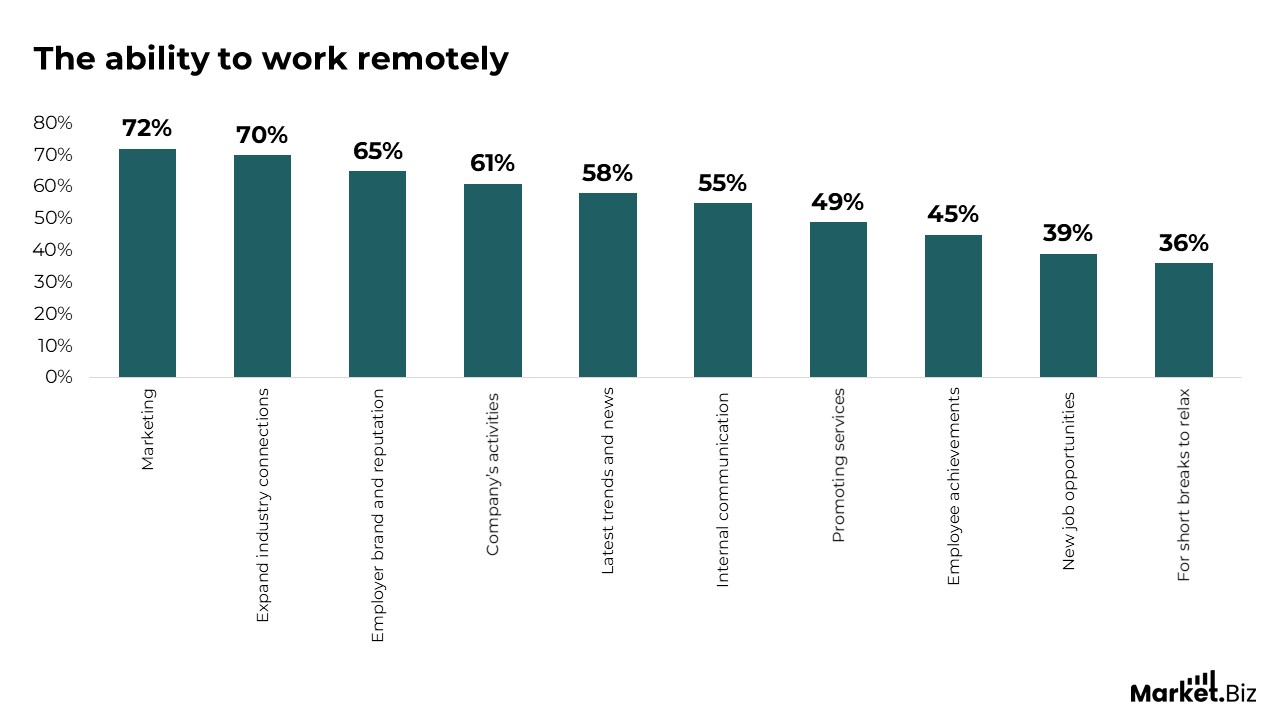
- 70% of employees use social media for professional networking and to expand industry connections.
- 58% of employees follow industry-specific pages on social media to stay informed about the latest trends and news.
- 61% of workers report using social media at work to stay engaged with their company’s activities and events.
- 72% of businesses use social media for marketing and brand promotion, with employees contributing to content sharing and engagement.
- 55% of employees use social media tools for internal communication and collaborating with team members, especially in remote work settings.
- 39% of employees admit to using social media to explore new job opportunities while still employed.
- 45% of businesses use social media to recognize employee achievements and boost morale.
- 27% of employees use social media during breaks to unwind and maintain work-life balance.
- 49% of employees engage with social media for customer service purposes, answering inquiries or promoting services.
- 58% of employers use social media to post job openings and recruit potential candidates.
- 65% of companies encourage employees to use social media to enhance the company’s employer brand and reputation.
- 36% of employees use social media at work for short breaks to relax and relieve stress.
Social Media at Workplace Statistics by Employee Perception
- 63% of employees believe social media improves communication and collaboration within their team.
- 51% of employees think social media helps foster a positive work culture by keeping employees connected.
- 41% of workers agree that social media boosts their productivity, as it helps with time management and quick information sharing.
- 69% of employees feel more engaged with company events and announcements when shared through social media.
- 55% of employees view social media as a useful tool for professional networking and career development.
- 34% of workers believe social media helps them stay updated on industry trends, making it a valuable resource.
- 40% of employees think social media can be a distraction, leading to lower productivity during work hours.
- 48% of employees feel social media fosters a sense of community and connection among remote workers.
- 29% of employees report using social media at work to unwind and reduce stress during breaks.
- 53% of employees see social media as a vital tool for sharing work-related achievements and recognition.
- 47% of workers believe social media provides valuable opportunities for skill-building through online communities and learning groups.
- 37% of employees feel that social media increases transparency in their company, especially regarding leadership decisions.
- 62% of employees think their employer could do a better job of using social media to engage and communicate with the team.
Workplace Social Media Usage Statistics by Industries
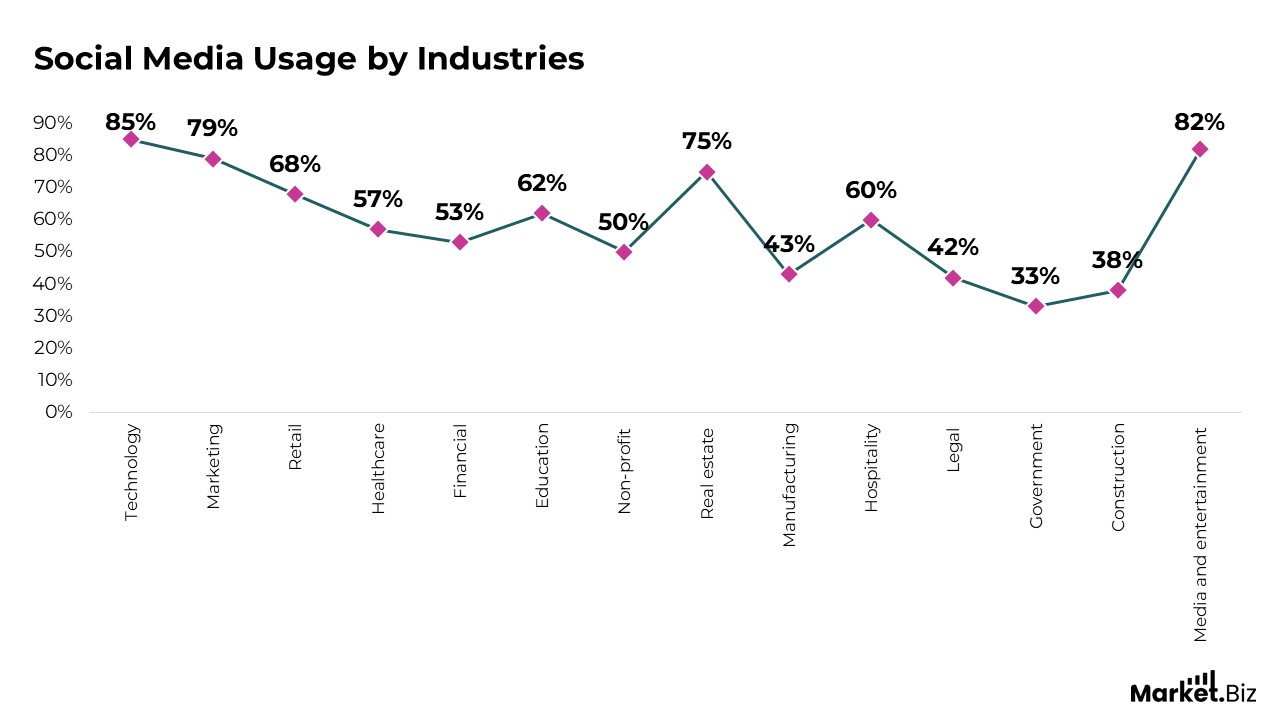
- Technology companies lead in social media usage, with 85% using platforms for team communication and project management.
- In the marketing industry, 79% of professionals use social media regularly to promote campaigns and engage with clients.
- Retail businesses report 68% of employees use social media to improve customer service and share product updates.
- Healthcare organizations use social media for patient engagement, with 57% of healthcare professionals utilizing it for educational purposes.
- Financial services see 53% of employees using social media for networking, professional development, and to track industry trends.
- The education sector has 62% of staff using social media for collaboration, sharing resources, and staying updated on new teaching methods.
- Non-profit organizations report 50% of employees using social media to engage supporters and raise awareness for causes.
- Real estate professionals rely heavily on social media, with 75% using it for lead generation, property marketing, and client interaction
- In the manufacturing industry, 43% of workers use social media to improve supply chain communication and stay informed on product developments.
- Hospitality companies have 60% of employees using social media to manage customer feedback and promote special events.
- Legal professionals report 42% using social media to connect with clients and share updates on legal trends and cases.
- Government organizations see 33% of employees using social media primarily for research, communication, and policy updates.
- Construction industry workers use social media for project management, with 38% engaging with platforms to share job-site updates and safety tips.
- Media and entertainment industries have 82% of employees using social media to share content, engage with audiences, and track emerging trends.
Popular Social Media Platforms in the Workspace
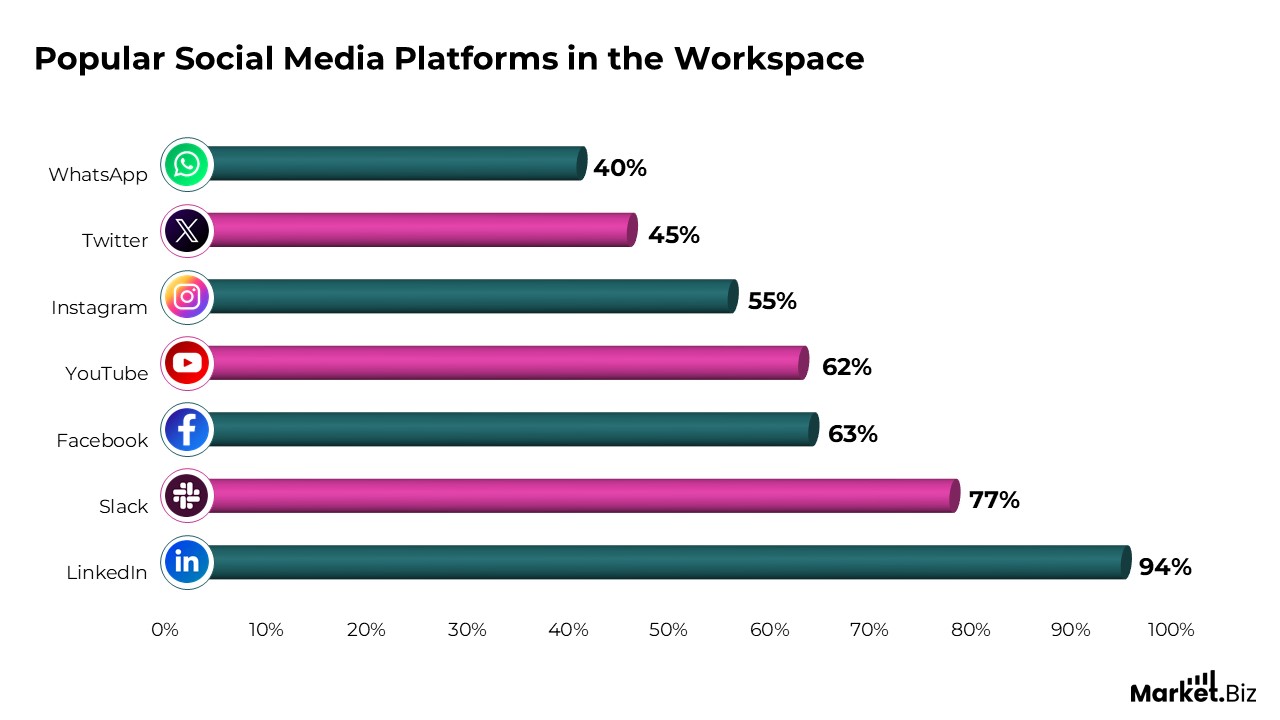
- LinkedIn remains the most widely used platform for professional networking, with 94% of recruiters using it to find candidates.
- Facebook is commonly used for company groups and employee communication, with 63% of employees using it for work-related purposes.
- Twitter is favoured by 45% of businesses for quick communication, news updates, and brand promotion.
- Slack is a leading team communication tool, with 77% of employees using it for messaging and collaboration within teams.
- Instagram is increasingly used by brands for visual marketing, with 55% of marketers utilizing it for business purposes.
- YouTube is widely used for employee training and sharing instructional content, with 62% of businesses leveraging it as an educational tool.
- WhatsApp is preferred for informal communication in workplaces, with 40% of employees using it for team chats and quick coordination.
- Microsoft Teams has become one of the most popular platforms for remote work collaboration, with 50 million daily active users.
Pros and cons of using social media at work
Pros
- 70% of employees feel social media improves internal communication and team collaboration.
- 61% of workers believe social media keeps them more engaged with company activities and events.
- 85% of professionals use platforms like LinkedIn to expand their professional network, leading to better career opportunities.
- 55% of employees use social media for industry insights, allowing them to stay updated on trends.
- 45% of employees find social media inspiring and use it to gather new ideas and perspectives.
- 78% of employers leverage social media for recruitment, finding it easier to reach potential candidates.
- 62% of companies encourage employees to use social media to promote company culture and brand.
- 50% of employees use social media for customer service and to engage directly with clients, enhancing customer satisfaction.
- 40% of employees use social media to search for new job opportunities, giving them access to broader networks.
- 55% of businesses use social media to recognize and celebrate employee achievements, improving morale.
- 46% of employees report that social media helps in team-building activities, especially in remote work settings.
- 60% of companies use platforms like YouTube and LinkedIn for employee training and development, improving skill sets
Cons
- 58% of employees admit to spending over 1 hour daily on personal social media, leading to decreased productivity.
- 53% of organizations worry about the potential security risks associated with employees using social media at work.
- 42% of employees are concerned about their personal information being shared or exposed on social media platforms.
- 39% of employees have reported conflicts arising from inappropriate content or arguments on social media.
- 37% of employers have made hiring decisions based on the content found on social media profiles, which can harm candidates.
- 30% of workers feel overwhelmed by constant notifications and updates from social media, increasing workplace stress.
- 41% of employees say that social media negatively impacts their ability to focus on work tasks.
- 29% of employees feel that social media reduces in-person interactions, weakening personal connections.
- 25% of workers report spending excessive time on social media during work hours, often leading to addiction.
- 49% of employees admit to using social media for non-work-related purposes during work hours, which can affect overall productivity.
- 38% of employers worry about employees sharing inappropriate or unapproved content that could harm the company’s image.
Age of Social Media Users at Work
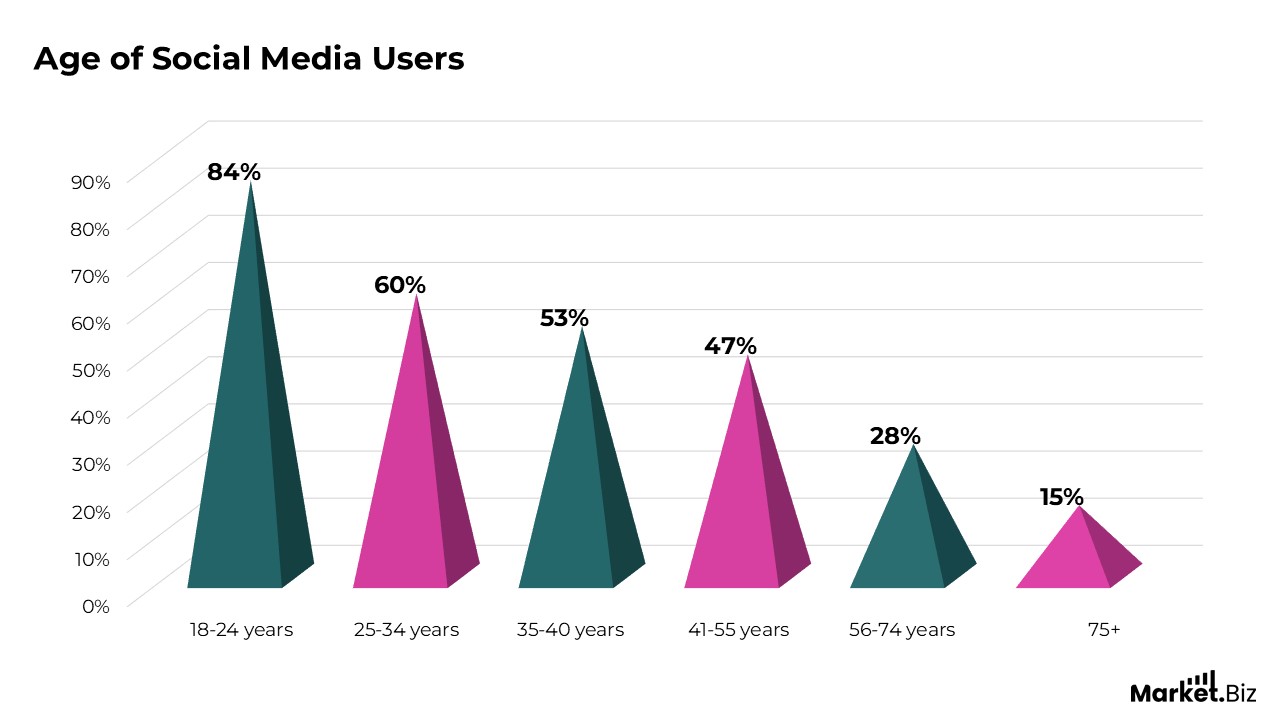
- Younger employees (25-34 years) make up 60% of social media users at work, spending an average of 3 hours daily on platforms for both personal and professional purposes.
- Millennials (35-40 years) are 53% more likely than Gen X or Baby Boomers to use social media for networking and career development at work.
- Generation Z (18-24 years) spends up to 4 hours (84%) daily on social media at work, often using it to stay connected with peers and industry trends.
- Gen X employees (41-55 years) report 47% usage of social media for professional networking, though they tend to spend less time than younger generations.
- Baby Boomers (56-74 years) use social media the least in the workplace, with only 28% reporting regular usage for business-related activities.
- Older workers aged 75 and above have a significantly lower engagement with social media at work, with only 15% actively using platforms for job-related activities.
Conclusion
In conclusion, social media has become a major part of the workplace, with 79% of employees using it during work hours. While many companies see benefits, like improved collaboration and engagement, 43% of employers are concerned about its effect on productivity. To manage this, 56% of companies have created social media policies.
Industries vary in their use, with tech companies leading the way, as 85% use social media for team communication. Social media is also widely used for marketing, with 73% of businesses using it for branding purposes. Ultimately, companies need to find a balance between using social media effectively and minimizing its potential distractions.
FAQs
Employees may feel under pressure to stay on social media at all times to prevent social media being ruled out. This can worsen stress levels and lead to disproportionate work plans for working life that can affect general health and wells.
Social Media Hours: The average time for social media employees during work hours increased from 1.7 hours a day in 2023 to 1.9 hours in 2024 these platforms.
Social media platforms are useful for posting job openings, finding talent, and informal networking. Employers, for instance, can post difficult technical questions on social networking sites and then get in touch with the people who have the best answers.
77% of workers acknowledge using social media while at work. On social media, 54% of companies encourage staff members to share branded content. Employee engagement at work can rise by 20% when social media is used. Strict social media policies have been put in place by 38% of employers to stop abuse.
Studies show that 60% of employees use social media during work hours, with some employers reporting a decrease in productivity. However, when managed properly, social media can also boost employee engagement and creativity, fostering collaboration and innovation within teams.
Employees primarily use social media at work for networking, staying informed, and enhancing professional relationships. A 2024 survey revealed that 45% of workers use social platforms for career development, while 30% use them to stay updated on industry news.