







Introduction
Employer Branding Statistics: In the modern landscape of employment, employer branding is becoming increasingly integral to hiring and retaining top talent. The 2024 Randstad Employer Brand Research surveyed nearly 173,000 respondents across 32 global markets and found, “employer brand has a heavy influence on candidates’ decisions.”
The research uncovered that 75% of candidates will evaluate an employer’s brand after learning about a new job opportunity but before applying for the job. Strong employers’ brands improve how candidates perceive an organization, and ultimately play an important role in attracting the talent they are looking for. With a strong employer brand, organisations experience a 43% reduction in hiring costs as they capture a much larger pool of applicants that are qualified, which also reduces the fill time for job postings.
The findings cover a very compelling case for promoting employer branding, both for the image of the company to candidates, as well as for better recruitment costs.
Editor’s Choice
- 70% of candidates research a company’s culture through social media before applying.
- Employer branding initiatives emphasizing diversity attract 35% diverse candidates.
- A positive employer brand can result in a 28% decrease in turnover, therefore affecting talent retention.
- 67% of candidates read how companies respond to reviews when deciding on an employer.
- Social media posts featuring video content drive 48% more engagement by candidates versus just text.
- Strong employer branding can reduce the cost per hire by 50% and generate savings on recruitment costs.
- Engaged employees are 21% more productive, phenomenal news for any organisation!
- Companies with a strong remote-friendly brand attract 40% more applications from remote job seekers.
- 42% of organisations utilise AI tools to help improve their employer brand and identify qualified candidates.
- Gen Z job seekers prefer video to text to learn about a company or job.
General Employer Branding Statistics
- A strong employer brand impacts 75% of job-seekers’ decisions on applying for a position.
- Companies with positive employer branding will experience a 43% reduction in their hiring costs.
- Around 90% of job seekers have the same level of trust in online reviews as they do in personal recommendations when assessing employers.
- 70% of candidates research a company’s culture through social media before applying.
- Companies with engaged employees grow revenue 2.5 times faster.
- Strong employer brand reduces employee turnover by 28%.
- Strong employer brands lead to 20% more employee productivity.
- Employer branding initiatives emphasizing diversity attract 35% diverse candidates.
- 58% of job seekers now search and apply for jobs using mobile devices.
- 60% of candidates abandon job applications due to a lack of satisfaction in the candidate experience.
- Companies with strong employer branding grow revenue twice as fast as competitors.
- Internal employer branding aligns employees with the organization’s goal and increases engagement by 22%.
- Companies are increasing their recruitment marketing budgets by 30% year over year to better create awareness of their employer brand.
- Companies with visible leaders on social media are seeing 50% more engagement from both job candidates and employee interactions.
- 72% of candidates are checking employee reviews on sites like Glassdoor before applying.
- Companies that market benefits and perks attract 25% more candidates.
- Remote-friendly employer brands see 40% more interest/job applications from top talent looking for flexible jobs.
(Source: Medium)
Importance of Employer Branding
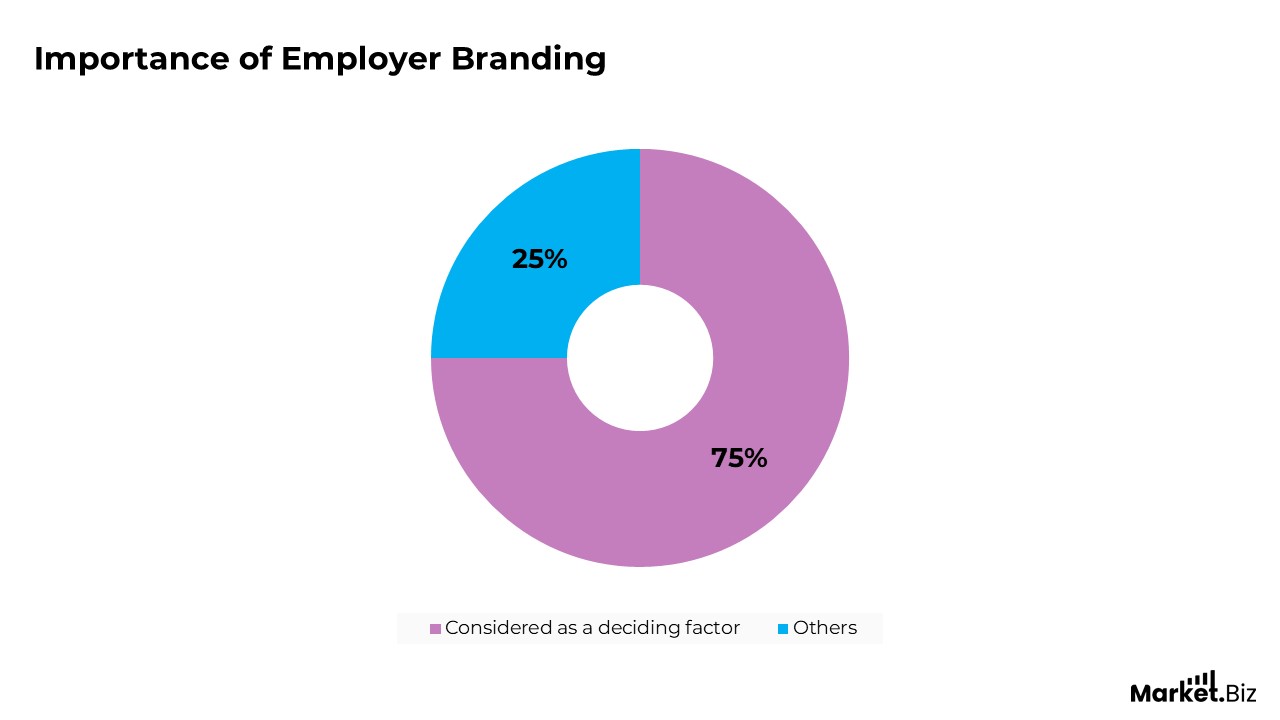
- 75% of job candidates consider an employer’s brand as a deciding factor for applying for jobs, meaning that a company’s image has to be positive.
- Companies that have good employer brands see a 50% decrease in cost-per-hire, making hiring overall cheaper.
- A positive employer brand can result in a 28% decrease in turnover, therefore affecting talent retention.
- Companies with good employer brands certainly receive 50% more qualified applicants, which can ultimately improve the overall quality of hire.
- 69% of applicants say they would not accept a job offer with a negative employer brand regarding faith in employment.
- Companies with positive employer brands receive double the number of applicants per job posting than companies with bad employer brands.
- 92% of people claim they would be willing to change jobs for the right role at a company with a good brand reputation.
- Strong employer brands can see a reduction of time/50% to hire someone, reducing the overall time it takes to recruit.
- 84% of job seekers claim the reputation of a company as an employer is important when contemplating where to apply.
- Companies that perform poorly in employer branding may need to recruit at 10% higher salaries to compete for talent.
- Organizations with weak employer branding may need to pay a 10% premium in order to hire top candidates.
- 72% of recruiting leaders globally believe that employer branding impacts the hiring process.
- 76% of candidates would like to understand the company culture and values prior to accepting a job offer.
- 67% of candidates read how companies respond to reviews when deciding on an employer.
- 56% of recruiters consider employer branding one of the top 2 priorities of their overall recruiting strategy.
Social Media’s Role in Employer Branding
- 92% of recruiters are searching and screening candidates via social media, therefore it is critical to employer branding.
- 70% of job seekers check out an employer’s social media profiles (or any place of their social media platform) before applying for a position within their company.
- Employers who actively use their social media receive 3x the amount of job applications compared to employers who don’t.
- 60% of candidates say that how a company presents its culture in its social media messaging influenced their decision to apply.
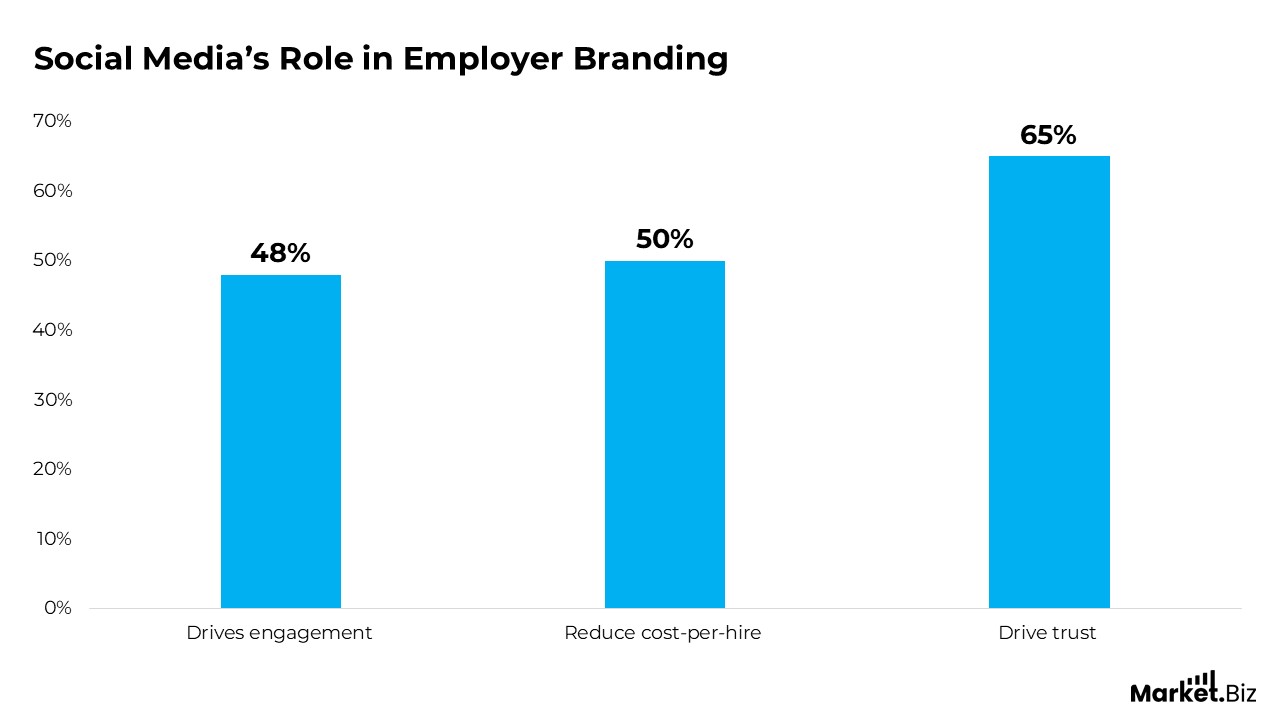
- Social media posts featuring video content drive 48% more engagement by candidates versus just text.
- Social media enables employers to tap into passive candidates, who represent 70% of the workplace.
- 82% of employers reported that using social media has improved awareness of their employer brand globally.
- Social media posts about employee stories can drive trust within a hiring demographic by 65%.
- Employers with a strong social media presence are able to reduce their cost-per-hire by 50%.
- 75% of candidates prefer employers who engage with social media and engage candidates with their social and environmental initiatives.
- Social media allows for easier job openings to be broadcast out. Social media has seen posts generate 30% more applications compared to print ads and job boards.
- Employee shared posts on social media provide 8 times more reach than employer-only interaction posts on social media.
- Social media campaigns around diversity and inclusion can drive brand favourability of an employer brand by an impressive 40%.
- 68% of employers find that social media helps drive their company culture positively externally.
Impact on Hiring Costs
- Strong employer branding can reduce the cost per hire by 50% and generate savings on recruitment costs.
- A strong employer brand can reduce employee turnover by 28%, thus providing savings because the company is hiring fewer new staff and conducting fewer training sessions.
- Strong employer brands receive 50% more qualified applicants, which then saves time and costs associated with the sourcing of candidates.
- Candidates will more likely accept an offer from you when they know your employer brand is strong and positive. This reduces the need to continue sourcing candidates if they decline.
- Employees from strong employer brands are also more likely to recommend someone else reducing recruitment agency use.
- Companies with weak employer brands may have to pay up to 10% higher salaries to attract talent thereby increasing hiring costs.
- Strong employer branding generates organic candidates and reduces reliance upon paid advertising which can be an avoidable expense.
- Strong employer brands can fill hiring 1-2 times faster which can save costs associated with prolonged vacant positions.
- Effective employer branding makes the recruitment process easier because it attracts candidates who already match the organisation’s values and culture.
- Employers with strong brands will rely less on paid job ads, thus reducing the marketing aspect of hiring.
- A desirable employer brand leads to more unsolicited job applications, therefore attracting better candidates without using a proactive search.
- Strong employer branding increases engagement on social media platforms, therefore widening the reach and attracting candidates for free.
- Employers with strong brands retain employees longer, effectively reducing the frequency and cost associated with recruiting replacements.
Employer Branding Benefits
- Strong employer brands attract 1.5 times more applicants, expanding the pool of candidates when recruiting.
- The investment in employer branding makes organizations 3 times more likely to hire quality candidates who are a better fit for the organization, and perform better.
- A strong employer brand can reduce recruitment costs.
- Organisations that have strong employer brands can fill roles up to 1-2 weeks sooner, which adds to the efficiency of the recruitment process.
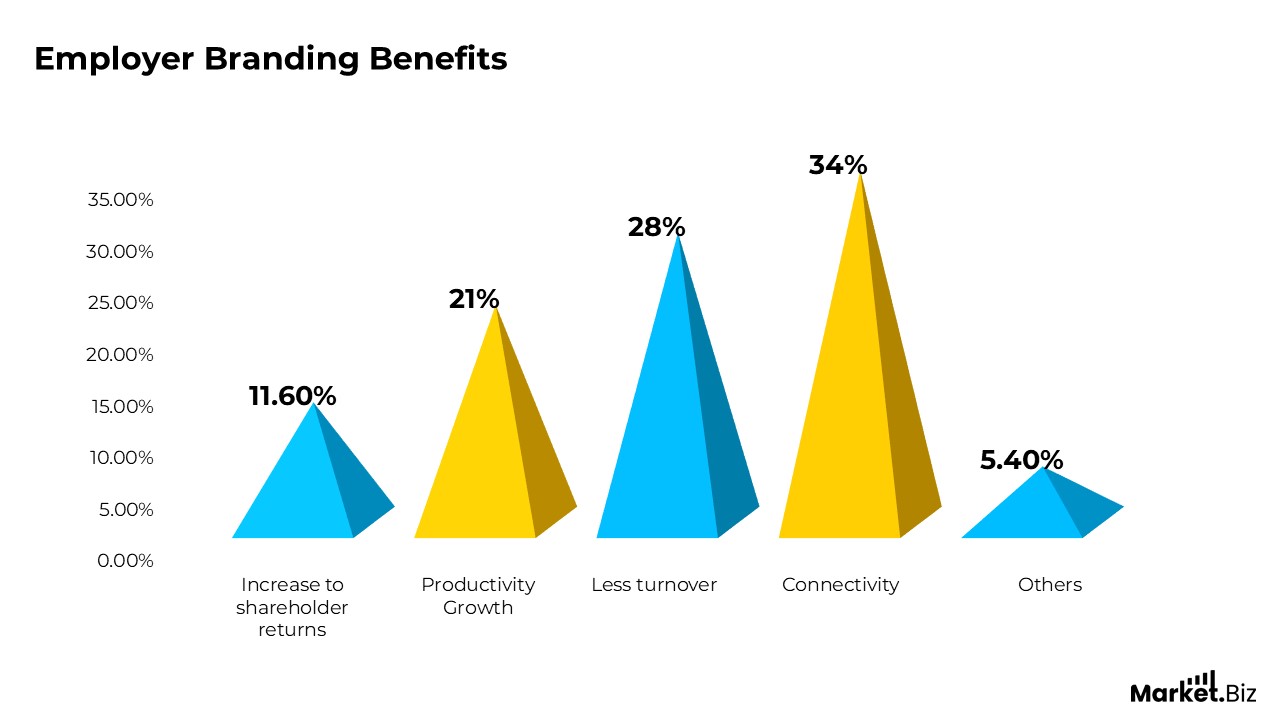
- Organisations with strong employer brand experience, on average, up to 28% less turnover, which means lower costs and more stability.
- Employees who understand the mission of the company and the values and connect with them are 67% more engaged, and engagement = productivity.
- Employees are 3 times more reliable than the company at providing information about what it is like to work there (this improves brand authenticity).
- 64% consumers will choose, switch, avoid, or boycott a brand based on whether they think the brand is doing the right thing by its employees.
- A strong employer brand could help attract passive candidates, who would be more likely to consider job offers from reputable organisations.
- Engaged employees are 21% more productive, phenomenal news for any organisation!
- 92% of candidates will quit their jobs to join a company that has a great reputation as an employer, which shows us how vital employer branding is.
- Companies with strong employer brand can reduce employee turnover by as much as 28%, therefore saving itself money and great staff stability.
- 75% of job seekers will apply to a role if it is obvious that the employer is managing its employer brand’s outcome.
- Strong employer brands also boast the ability to create an increase to shareholder returns of 11.6%, even more, proof that employer branding pays for itself.
Employer Branding in Remote Work
- 71% of remote employees indicate a company’s reputation impacts their decision to accept a remote job offer.
- Companies with a strong remote friendly brands attract 40% more applications from remote job seekers.
- 62% of remote employees feel more loyalty to companies with strong branding and clear remote work policies.
- Employer branding with an emphasis on flexibility results in a 50% increase in candidate interest for remote job seekers.
- 60% of remote employees prefer employers that promote work-life balance in their employer branding.
- Remote-friendly companies with strong employer branding have a 25% lower turnover rate.
- 48% of job seekers use social media to assess how remote work-friendly a company’s culture is.
- Employer branding videos about remote work receive 34% more applications than job posting that are text-only.
- 75% of HR leaders say promoting a remote work culture enhances their employer brand.
- Companies with strong employer branding that clearly communicate remote work practices experience a 40% increase in employee engagement.
- Remote workers are 3 times more likely to recommend employers with transparent remote work policies.
- Employer branding using remote work opportunities increases applications from Millennials by 30%.
- 58% of remote workers feel that company branding impacts their feeling of belonging to a company.
- Remote work branding that promotes trust and autonomy has been shown to reduce employee stress by 20%.
Use of AI in Employer Branding
- 42% of organisations utilise AI tools to help improve their employer brand and identify qualified candidates.
- AI-powered chatbots tackle 60% of candidate enquiries, providing a quicker communication experience, improving the candidate experience altogether.
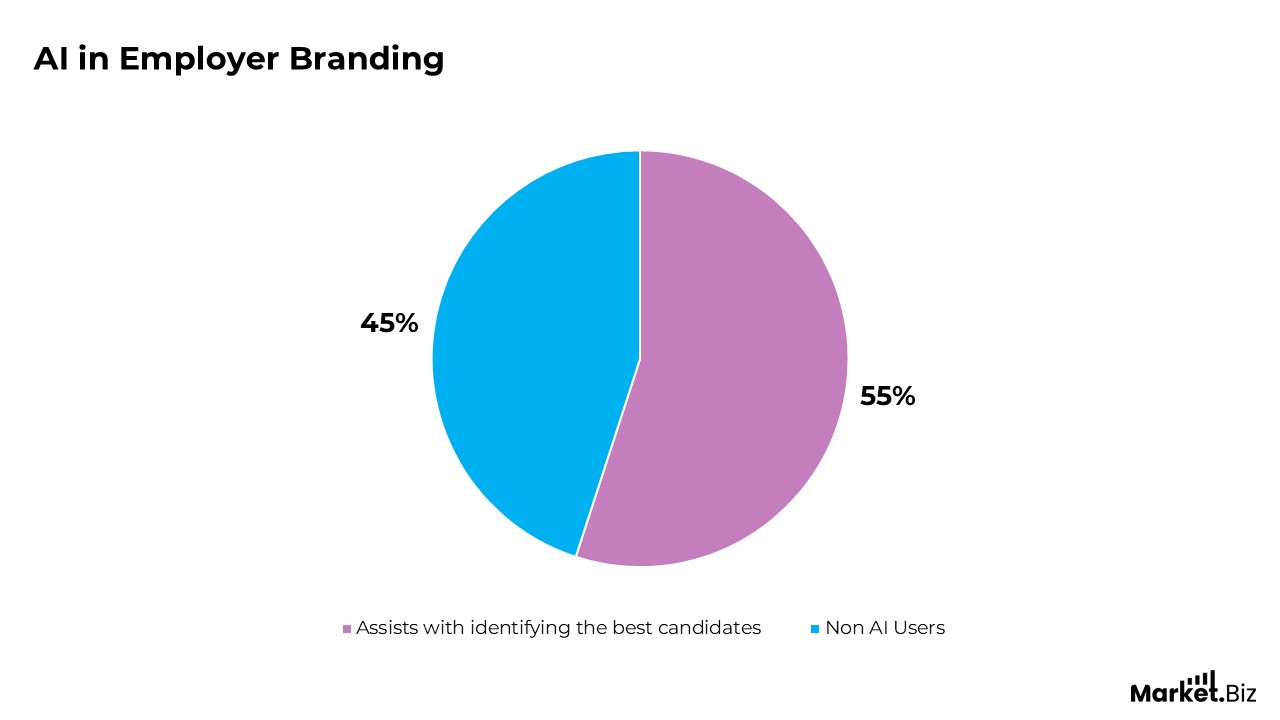
- 55% of recruiters believe AI assists with identifying the best candidates by analysing social media portfolios and their overall online presence.
- AI recruitment tools report an average 30% increase in reach of job ads, which brings in qualified applicants.
- Automated AI content generators can create 50% more personalized recruitment marketing messages.
- AI can measure candidate fit with 75% accuracy, giving the employer tools to select better hires.
- AI can create a 25% increase in engagement in employee retention activities by improving the matching of company culture in the recruitment process.
- AI-driven sentiment analysis tools allow organizations to monitor their employer brand reputation in real time, online.
- 48% of HR professionals reported the use of AI to support internal communication strategies and employer branding.
- AI tools can help organisations reduce time spent on screening resumes/applicants by 70% so that they can focus their time on the candidate engagement experience.
- 62% of organisations see AI being a critical element to producing more engaging employer branding content.
- AI-driven video interview assessment not only improves the candidate experience, they improves the experience of your employer brand by an average of 35%.
- AI can create tailor-made employee testimonial sources that help build trust in the employer brand by an average of 40%.
Video Employer Branding Trends
- Jobs that include videos in their job posting receive 34% more applicants than jobs that do not post video content.
- 83% of marketers believe videos shorter than 60 seconds are best at keeping “eyeballs” on the content.
- 91% of Instagram users watch videos every day.
- YouTube Shorts get 30 billion daily views, providing extensive reach for branding videos.
- 92% of mobile video viewers share the video, which helps boost employer branding visibility even further.
- 52% of marketers believe video builds top-of-mind trust between the company and the potential job seeker.
- 88% of people named as consumers indicated they want to see more branded video content from brands and companies.
- In fact, video content on social media gets shared 12x more than images or text, providing better branding visibility.
- Gen Z job seekers prefer video to text to learn about a company or job.
- Video provides job seekers with a fuller sense of what it might be like to work in the organisation.
Conclusion
Employer branding, or your company’s reputation as an employer, has become a critical part of getting and keeping good employees. According to an EY survey, 75% of job searchers look at your company brand before applying, and strong employer branding can reduce hiring costs. Organisations with a positive reputation attract better quality candidate pools and fill positions faster than their competitors.
As job markets become tighter and the competition increases, a strong employer brand helps your organisation stand out. Using tools like video, social media and employee stories/ experiences can help create additional trust and enhance the candidate experience. Building an employer brand isn’t just a nice thing to do, it’s a must-do if you plan to operate in the long term.
FAQs
A strong employer brand means better candidates, which equates to cheaper hiring on average better candidates can save a company 43% on their hiring costs by way of salaries. Strong employer brands also lead to better employee retention and a strong reputation as an employer.
Approximately 75% of job seekers do their own research regarding a company’s brand before they apply. Clearly branding plays a vital role in the hiring process.
Certainly, companies with strong employer brands hire faster because they are able to fill their roles with better-qualified candidates.