









Introduction
Recruitment Statistics: In 2025, recruitment is more than just filling jobs; it’s also about maintaining competitiveness in a candidate-driven, fast-paced world. With 75% of companies now using AI-driven hiring tools, the recruitment industry is shifting toward more data-backed decisions. In fact, 63% of job seekers report using social media platforms as their primary search tool, highlighting the importance of adapting to modern hiring practices.
Whether you’re an employer looking to attract top talent or a job seeker navigating this competitive job market, understanding the key recruitment statistics for 2025 is important. Stay ahead of others and make informed decisions with the latest insights on recruiting trends, candidate preferences, and industry predictions. Dive into our comprehensive guide to ensure you’re prepared for the recruitment industry of tomorrow.
Key Takeaways
- AI-driven recruitment tools are now used by 75% of companies, highlighting the importance of adopting technology for data-backed hiring decisions in 2025. Embrace AI to stay competitive.
- Social media is a top tool for job seekers, with 63% of candidates using platforms like LinkedIn for job searches. Employers must leverage these platforms for recruitment success.
- Job seekers’ preferences are shifting. 85% prefer working for a company with a strong employer brand. Prioritize branding to attract top talent in 2025’s competitive job market.
- Cultural fit is critical in hiring, with 84% of recruiters considering it a key factor. Foster an inclusive, diverse work environment to enhance recruitment and retention efforts.
- Passive candidates make up 73% of job seekers, meaning employers must proactively engage top talent even when they’re not actively applying. Use social media to connect with them.
- Mobile recruitment is essential for 45% of job seekers, so ensure your careers page is mobile-optimized. Mobile-first hiring experiences will attract the best talent in 2025.
- Employer brand reputation matters, with 75% of candidates investigating company culture before applying. Build a positive, transparent reputation to boost candidate interest and attract top talent.
- AI and automation will play a larger role in recruitment, with 80% of recruiters planning to increase investment in AI tools in 2025. Stay ahead by integrating AI into your hiring process.
- Recruitment challenges are increasing, with 58% of employers citing a lack of qualified candidates. Adapt by enhancing your talent search strategies and considering alternative hiring pools for future success.
- Job seekers are increasingly impatient, with 52% frustrated by poor communication during the hiring process. Improve candidate experience by responding promptly and offering transparency throughout recruitment stages.
General Recruitment Statistics
- 90% of HR managers struggle to find qualified candidates.
- A Glassdoor report revealed that 52% of recruiters face the challenge of hiring better candidates than their competitors.
- The average cost per hire in the United States is $4,700, according to the Society for Human Resource Management (SHRM).
- It costs three to four times as much to hire a new employee as the salary for that position.
- According to data from LinkedIn Talent Solutions, the average time it takes to fill a position is 42 days.
- According to LinkedIn’s Global Talent Trends, 73% of job seekers are passive candidates, meaning they’re not actively searching for work but are open to new opportunities if the right offer comes along.
- According to an Indeed survey, 75% of job seekers investigate a company’s employer reputation before applying for a position.
- 85% of job seekers prefer to work for a company with a strong employer brand.
- 50% of job seekers reject job offers due to applicant’s lack of experience.
- According to 76% of recruiters, in the last 12 months, talent acquisition has changed into a more strategic function.
- According to HR Dive, on average, a hiring managers look at a candidate’s resumes for 7 seconds.
- In 2024, 44% of workers worldwide reported a record high of having a high level of stress the day before.
- 97% of employers value soft skills more than hard skills.
- 90% of job seekers will accept a job offer faster if they hear from a recruiter.
- Only 45% of HR professionals believe their companies’ salaries are high enough to keep up with inflation.
Social Media and Online Recruitment Statistics
Job seeker social media statistics
- According to the ebn data, 73% of job seekers aged between 18-34 say they found their most recent job through social media.
- 79% of job seekers use social media to find employment, just as businesses use it to find potential candidates.
- Currently, 52% of recent job seekers use 4 or more resources while searching a job.
- Only 11% of job seekers using just one resource, using multiple resources to find a job is far more common than using just one.
- 75% of job seekers use LinkedIn to make career decisions. There’s a reason why LinkedIn-based recruiting is twice as attractive to employers.
- 83% of applicants are active on Facebook, and 81% of job seekers would like to see job posts on Facebook.
- 62% of Gen Z discover job opportunities on social media. 56% of Millennials discover opportunities, compared to just 12% of Baby Boomers.
Job Discoveries on Social Media by Generation
| Generation | % of those who discovered job opportunities on social media |
|---|---|
| Gen Z | 62% |
| Millennials | 56% |
| Gen X | 31% |
| Baby Boomers | 12% |
Employer social media statistics
- According to zippia, 84% of organizations actively use social media to recruit talent.
- 37% of U.S. workers are passive candidates who are interested in a new job but aren’t actively searching for one.
- Employers use social media sites to find talent 92% of the time.
- 9% of employers that don’t yet recruit through social media, they plan to do so in the future. Combined with the 84% that already use social media that makes a whopping 93% of employers using social media to recruit new applicants.
- 54% of employers have turned down applicants based on their social media presence.
Recruiter social media statistics
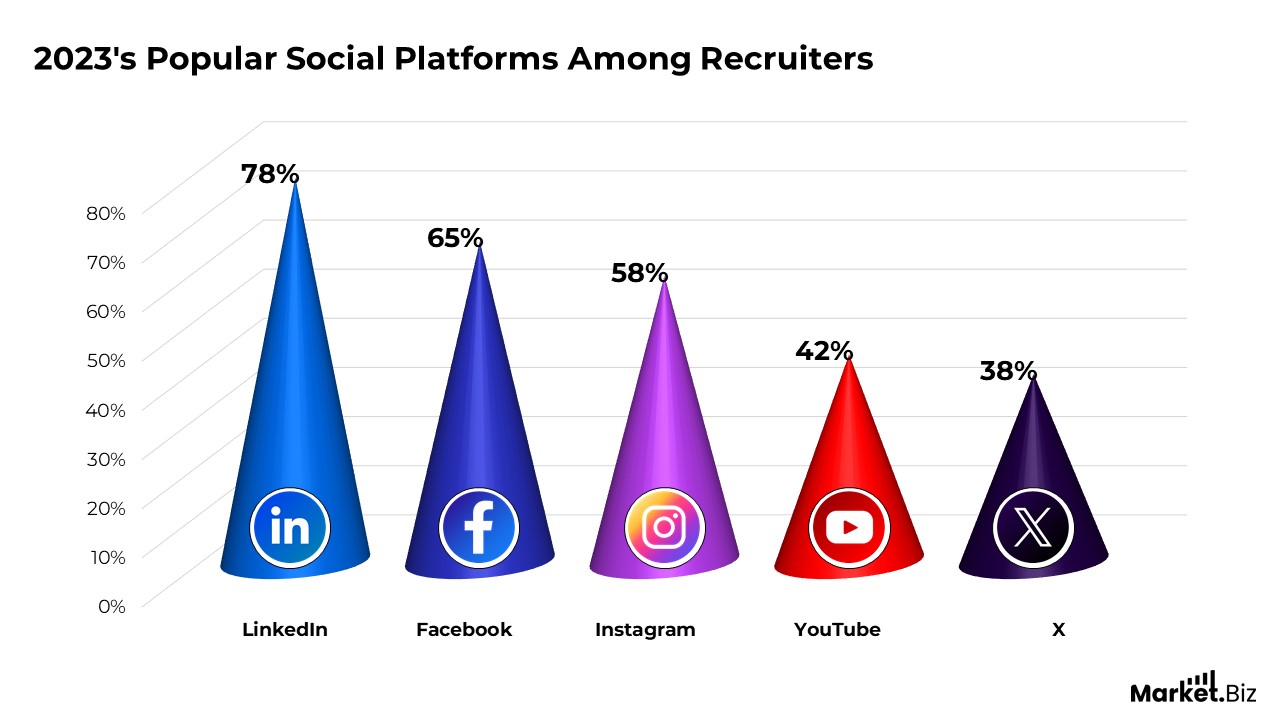
- In 2023, 78% of recruiters use LinkedIn to fill jobs, compared to 65% using Facebook and 38% using X.
- 73% of millennials found their current roles through social media channels.
- 56% of recruiters say they use social media to find the best candidates, while 37% say they find the best candidates on job boards.
- As of 2025, 90% of recruiters use LinkedIn to fill jobs, compared to 55% using Facebook, 47% using X and 11% using Instagram.
Top Social Media Sites for Recruiters
| Social Media Sites | % of Recruiters Who Use It |
|---|---|
| 90% | |
| 55% | |
| 47% | |
| 11% |
Work Culture in Recruiting Statistics
- 84% of recruiters report that cultural fit is a key factor in hiring.
- For 25% of respondents, a better company culture is the main reason for changing jobs.
- Two-thirds of job seekers said a diverse workforce is important when choosing a company.
- According to Mercer, 79% of companies are focusing on developing and nurturing their internal talent, and 48% are increasing recruitment from shallow talent pools.
- According to nearly 5,000 professionals, people looked for new jobs in 2018 because they were bored with their current jobs.
- One-third of respondents said they are seeking a new job because they are seeking a new challenge. Only 19% said their top priority in a new job would be a higher salary, fewer than the number who said they were looking for a new job because they lost or expected to lose their current job? 2017 marked the 4th consecutive year in which at least 2 million new jobs were created in the country.
- 72% of working Americans surveyed said they have considered or might consider leaving their company for a more inclusive one. Nearly one-quarter of respondents had already done so.
- A survey of 1,300 full-time U.S. employees found that an inclusive company culture is crucial to attracting and retaining top talent.
- 80% of respondents believe inclusivity is an essential factor in recruiting.
- Younger generations place more importance on an inclusive company culture: 53% of millennials said they would move to an inclusive company if they could find the same job.
- 30% of millennials surveyed have already left their jobs for another company with a more inclusive atmosphere.
- 33% of respondents moved to a more inclusive organization because they felt uneasy being themselves in their previous job. This was followed by feeling uncomfortable speaking and expressing their opinions, lack of integrative interactions in daily life, and lack of an environment that gives them meaning and impact (28% each).
- 12% of U.S. respondents cited diversity of demographic groups as the reason they left their previous organization for a more inclusive one.
- According to nearly half of respondents (47%), one of the most important characteristics of an inclusive workplace is an environment where you can be yourself.
- Nearly one-third of respondents (32%) believe that senior management has the greatest influence on workplace inclusion, but a similar number of respondents (34%) believe that everyone should play a role. In other words, achieving change must involve commitment at all levels in addition to action and direction from the top.
- 71% of respondents said they prefer companies whose leadership consistently demonstrates inclusivity over companies that offer a variety of initiatives.
- 57% of recruiters say their talent acquisition strategies are designed to attract candidates from diverse backgrounds.
- 52% of HR professionals say their companies retain employees even when they’re not a good fit with the company culture.
Trending Recruitment and Challenges Statistics
Recruitment Trends
- According to Glassdoor, 45% of job seekers use their mobile devices at least once a day, and 89% of them believe they are necessary for job searching.
- Only 29% of the largest companies in Australia, 30% of the largest companies in Hong Kong and 32% of US universities have fully mobile-optimized careers pages, and in Southeast Asia the numbers are even lower (10%).
- According to LinkedIn, the 3 HR trends most important to the future of recruiting and HR are soft skills (91%), work flexibility (72%) and pay transparency (53%).
- 80% of respondents said that soft skills such as creativity, adaptability and team spirit are becoming increasingly important to their company’s success.
- According to Jobvite, 54% of hiring managers expect their company’s recruiting spend to increase next year.
- 92% of corporate recruiters plan to hire someone with an MBA, 88% are looking for someone with a Master’s in Business Administration, and 86% are looking for someone with a Master’s in Data and Business Analytics.
- The most important skills for corporate talent acquisition managers are learning, motivation and leadership (62%), interpersonal skills (61%) and strategy and innovation (60%).
- Despite fears of a 2022 economic downturn and layoffs, 77% of employers have not cut back on hiring plans or implemented hiring freezes.
- Between Q2 and Q3 2022, there was an 8.7% increase in the number of job applications during the first 30 days.
- Globally, 60% of corporate recruiters consider online degrees to be same as in-person degrees.
Recruitment Challenges
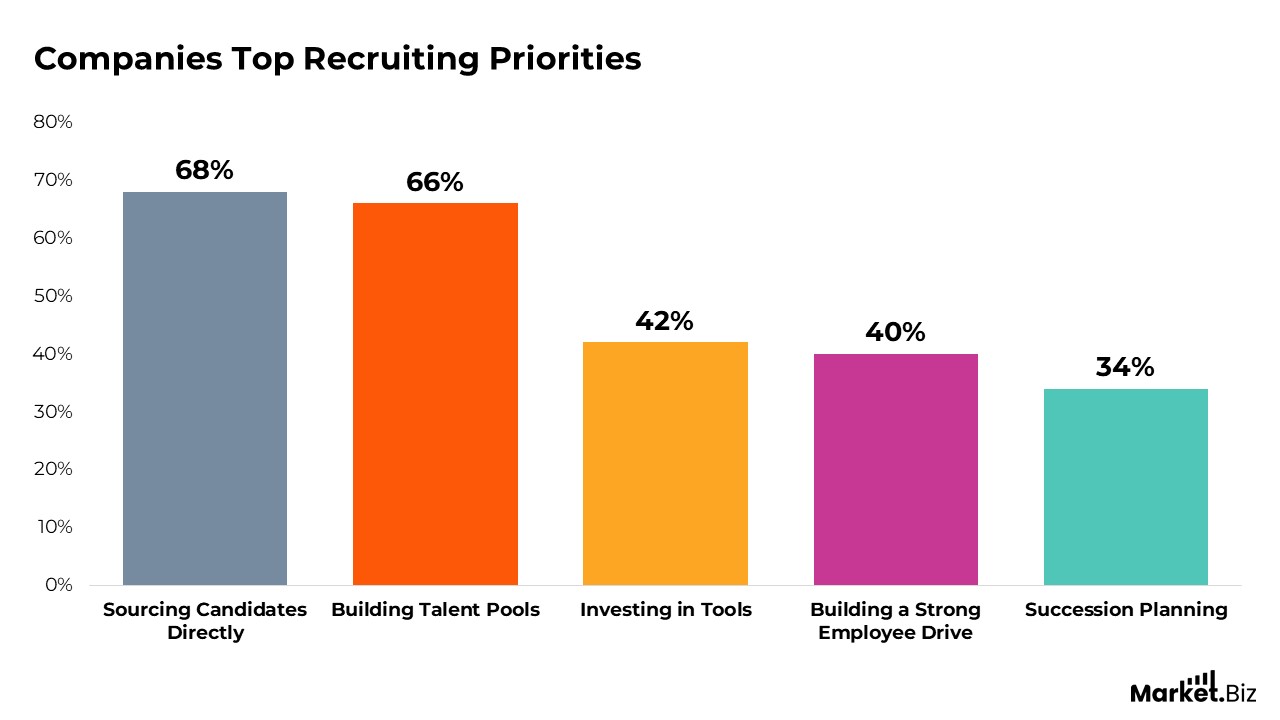
- The main reasons why recruiting will be equally or more difficult are a lack of qualified candidates (58%), turnover within the organization (47%), and a high number of vacancies (43%).
- 64% of applicants would tell a family member or friend about a negative application experience, and 27% would actively discourage others from applying to the same company.
- 52% of talent acquisition leaders say the biggest challenge in their jobs is selecting individual candidates from a sea of candidates.
- The roles that are hardest to find candidates for are “individual contributor” (69%) and “manager” (52%).
- Boomers, Gen X, and even some Millennials will most likely look for work on a desktop version of a careers page. But Generation Z won’t. People born between 1996 and 2012 prefer to search for jobs on their mobile devices.
- 88% of HR professionals believe recruiting in 2025 will be as difficult or more difficult than 2024.
- Recruiters believe the hardest positions to fill are professional or technical positions (64%), high-volume hiring positions (48%), and entry-level positions (41%).
- 65% of talent acquisition managers say their jobs have gotten more stressful in the last year.
- 45% of HR managers surveyed said they were unable to fill urgently needed positions due to a lack of qualified professionals.
- 50% of applicants say they wouldn’t work for a company with a bad reputation, even if it offered a big salary increase.
Technology in Recruitment Statistics
The Role of AI in Recruitment
- In 2025, 14% more recruiters will add AI skills to their LinkedIn profiles.
- 27% of talent professionals are considering Gen AI in their daily recruiting activities.
- 79% of recruiters believe that AI will soon be capable of making hiring and firing decisions.
- 35% of recruiters are concerned that AI will cause them to miss out on unique and unconventional talent.
- 96% of recruiters believe AI will help them in their jobs and make them easier, but 60% are concerned that AI will replace them.
- 45% of managers spend more than half of their time on administrative TA tasks that could be automated by AI.
- 60% of business leaders question a hiring decision six months after it was made, highlighting the need for AI-powered decision support.
- AI can improve equity and lessen prejudgment in the hiring process, as 20% of leaders find it difficult to comply with DEI regulations.
- According to a Deloitte survey, 80% of recruiters plan to increase their investment in AI and automation tools in 2025.
The Role of ATS in Recruitment
- Today, 99% of Fortune 500 companies use Applicant Tracking Systems (ATS) to manage their hiring process.
- Around 97.4% of Fortune 500 companies, or 487 out of 500, use an ATS.
- According to a Capterra report, companies that use an ATS achieve two to three times better results in quality of hire, time to hire, and employee retention.
- According to a Jobvite survey, while ATS use is nearly universal among large companies, only 35% of small businesses use an ATS.
- The global ATS market is expected to reach $3.2 billion by 2026.
- From 2023 to 2035, the global ATS market is projected to expand at a compound annual growth rate (CAGR) of 9.70%.
- Companies that use an ATS in their recruiting process achieve two to three times better results in terms of quality of hire, time to hire, and employee retention.
- With chat and text-driven automation, ATS innovations like conversational ATS can handle high-volume hiring and automate more than 90% of the hiring process.
COVID-19 Impact on Recruiting
- COVID-19 has led to a 135% increase in remote work job postings.
- Only 46% of U.S. HR professionals are willing to adapt to a virtual recruiting and hiring process.
- 78% of companies have changed their recruiting and hiring numbers, with the majority freezing or slowing down hiring.
- Due to the pandemic, short-term layoffs rose to 12.8%, while new hires were at 3.8%, meaning 3 new hires for every 10 layoffs.
- Due to the pandemic, 60% of companies have frozen hiring. Only 5% of organizations reported increasing hiring.
- Less than 2% of respondents said COVID-19 has not affected their recruiting and hiring process.
- The current unemployment rate in the United States was 13.3% as 2024.
- Approximately 42% of pandemic-related layoffs resulted in permanent job loss.
- Virtual hiring has become the most commonly used method of the recruiting process.
Recruitment Incentive Strategy Statistics
- An astounding 88% of companies worldwide have already integrated AI into various aspects of their HR processes.
- The use of AI in recruiting is widespread, with 100% of Chinese companies and 87% of US employers incorporating some form of AI into their recruiting process.
- About 44% of companies are leveraging publicly available data, such as information from social media profiles, to speed up the recruiting process.
- 67% of small businesses offer flexible work arrangements to their employees.
- An astounding 80% of millennials want to work internationally, indicating their interest in global employment opportunities. An astounding 80% of millennials want to work internationally, indicating their interest in global employment opportunities.
- A surprising 27% of employers are transparent about salary and salary range, giving job seekers a better understanding of compensation.
- The biggest frustration for 52% of job seekers is a lack of response from employers, highlighting the importance of communication during the recruiting process.
- About 47% of companies have established a formal communication process covering both pre- and post-hire periods to ensure a smooth transition for new employees.
- 82% of hiring managers place great importance on candidate experience throughout the recruiting process.
- A surprising 86% of candidates believe that employers should treat them the same as current employees, highlighting the importance of fair treatment in the recruiting process.
- In response to COVID-19, 58% of recruiters have adjusted their recruiting process and are now using social networks like Facebook, LinkedIn, and Instagram to identify potential candidates.
- A surprising 79% of job seekers say they intend to use social media platforms when searching for job opportunities.
- A whopping 78% of companies that use an ATS believe that recruiting technology has made the recruiting process easier.
- The most effective tools for talent branding include the company website (68%), online professional networks, and social media platforms.
- 55% of companies say that consistent recruiting efforts significantly reduce the time it takes to hire.
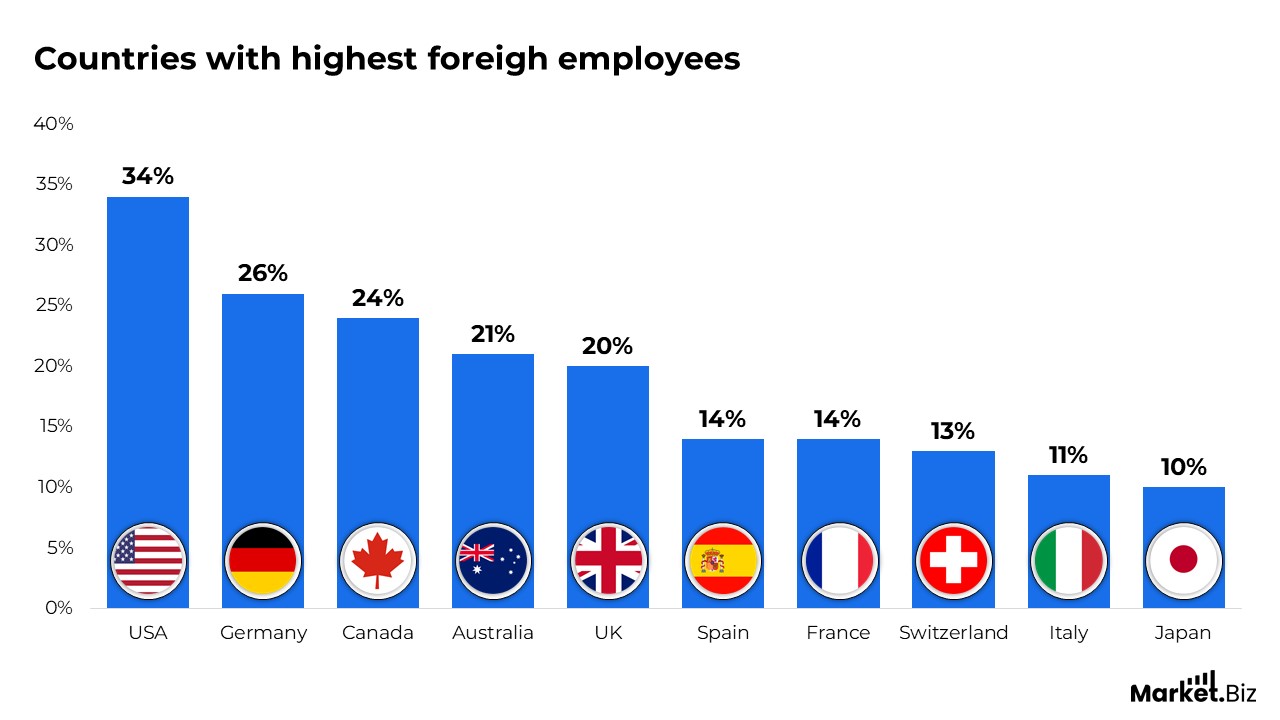
- 66% of companies are willing to provide training and hire candidates who lack certain skills but have potential.
Conclusion
Recruitment in 2025 is driven by technology, strategic sourcing, and the growing expectations of candidates. With 75% of companies embracing AI-driven hiring tools, staying ahead in this competitive industry is important.
Social media platforms continue to dominate, with 79% of job seekers leveraging them for job searches. As employers face challenges in attracting qualified talent, 64% of applicants report negative experiences impacting a company’s reputation.
To succeed, businesses must hold modern recruitment strategies, invest in AI, and prioritize candidate experience. Be proactive and adapt to these trends to ensure you’re attracting top talent in 2025 and beyond.
FAQs
While both involve hiring employees, recruiting is a linear process of filling open positions. At the same time, talent acquisition is a strategic and ongoing approach focused on finding experts, executives, or future managers for your business.
Effective recruiting ensures companies have the right talent to achieve their business goals. It helps reduce employee turnover, increase productivity, and promote a positive company culture.
Recruiters source candidates through job boards, company websites, LinkedIn, recruitment agencies, referrals, and social media.